Eye symptom urgency checker
Tick the eye symptoms you have right now. The checker tells you whether they point to a routine eye exam, same-day eye care, or emergency care.
Your symptoms
Result
Urgency
-
Warning signs ticked
-
Onset
-
Symptom score
-
Effect on vision
-
Severity
-
Warning signs found
What to do
What this pattern can point to
Self-checks while you arrange care
Breakdown
| Area | Value | Meaning |
|---|
How the checker decides
Emergency care now
- Sudden vision loss, even if it returns.
- Any chemical splash or eye injury.
- Severe eye pain with redness, blur, headache, nausea or contact lens wear.
- Sudden double vision.
- Vision change with face drooping, weakness or trouble speaking (call 911).
Same-day eye care
- A curtain, veil or shadow across vision.
- New or worsening flashes or floaters.
- Severe eye pain on its own, or a red eye with pain, light sensitivity or blur.
- New blurred or double vision.
- Contact lens wear with redness, pain, light sensitivity or blur.
On This Page – Quick Medical Summary
Sudden vision loss, a chemical splash, an eye injury and a painful red eye all need emergency care, and new flashes, floaters or a shadow over part of your vision need an eye doctor right away. Blur that has stayed the same for months, with no pain and no redness, is what a routine eye exam is for.
Get emergency care now if:
- a chemical got into your eye (rinse it under cool running water for 15 minutes before you leave)
- something cut, hit or went into the eye
- the eye is red and painful, or the pain comes with nausea or a headache
- your vision suddenly blurs, doubles or goes dark, even for a moment
- trouble seeing comes with face drooping, arm weakness or slurred speech
Call 911 for the last sign, or if you can’t get to an ER safely.
How the checker sorts your symptoms
Every result comes from a fixed rule about which boxes you tick. The symptom score never sets the level by itself.
| If you tick | Result | Why it sits there |
|---|---|---|
| Sudden vision loss, a chemical in the eye, an injury, or vision trouble with face drooping, weakness or slurred speech | Emergency | Chemical exposure, an object entering the eye and any change in vision are on the MedlinePlus emergency list |
| Severe eye pain plus redness, blur, headache, nausea or contact lenses | Emergency | A painful red eye, or eye pain that brings nausea or headache, belongs to that list too |
| Double vision that started suddenly | Emergency | Double vision is on that same emergency list |
| A curtain or shadow, or new or worsening flashes or floaters | Same day | These are the main signs of a detached retina |
| Severe eye pain alone, or a red eye with pain, light sensitivity or blur | Same day | Pain and redness at the front of the eye need an exam to find the cause |
| New blur or double vision that came on over days | Same day | Gradual vision symptoms still need an exam soon, just not in the ER |
| Contact lenses with redness, pain, light sensitivity or blur | Same day | These can be early signs of a corneal infection |
| None of the above | Routine | No warning pattern was ticked |
Sources: MedlinePlus, Eye emergencies; National Eye Institute (NEI), Retinal detachment; CDC, contact lens–related eye infections.
A same-day result means phoning an optometrist or ophthalmologist today, and going to the ER if nobody can see you. The score adds points for each warning sign, plus extra points for sudden onset, severe symptoms and a major effect on daily vision. Its job is to show how many warning signs you ticked.
Sample check: a contact lens wearer ticks “Very red eye” and “I wear contact lenses,” leaving onset at “Recent” and severity at “Mild.” The result is same day with a score of 2, and the advice box tells them to take the lenses out and call the eye clinic today.
Four warning signs that need care today
Flashes, floaters and a curtain over vision
A sudden increase in floaters, flashes of light in one or both eyes, and a shadow or curtain over part of your field of vision are the main symptoms of retinal detachment, and they often come on quickly. NEI advises going to your eye doctor or an emergency room right away.
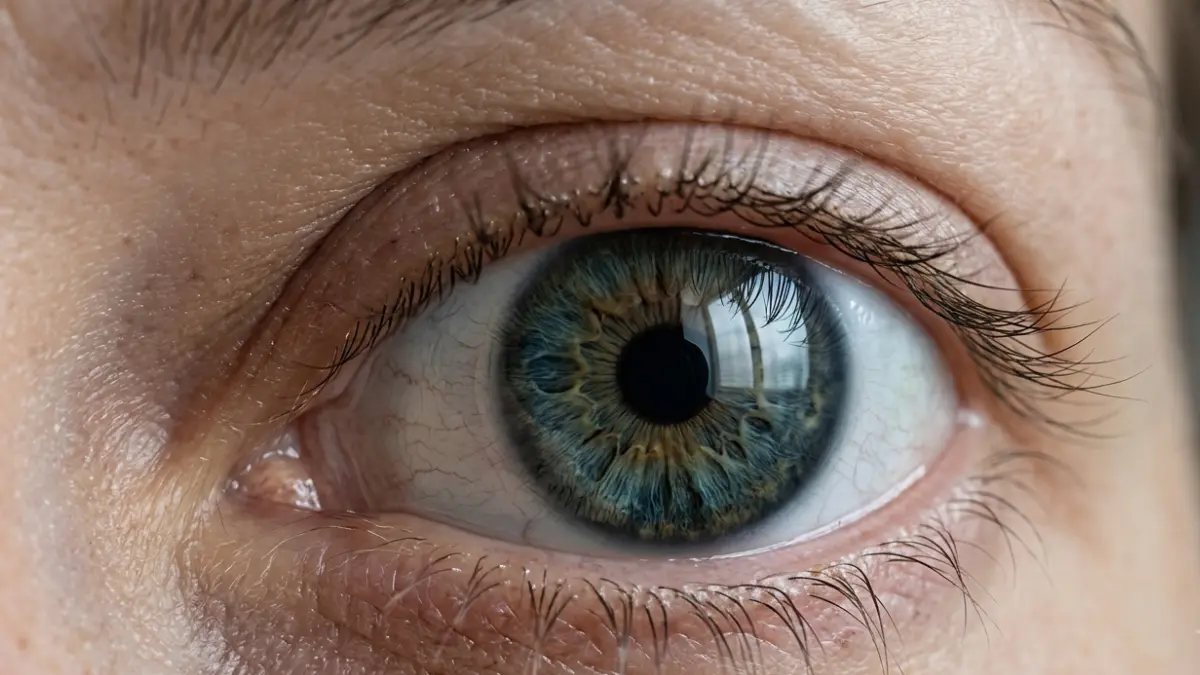
Treatment works well, especially when a detachment is caught early.
Floaters you have had for years, and that look the same as always, are a different matter. The warning sign is a sudden change.
Eye pain with nausea or headache is an emergency
MedlinePlus lists eye pain accompanied by nausea or a headache as a reason for emergency care, because the combination can be a sign of glaucoma or stroke. A red, painful eye without nausea qualifies as well. Don’t wait for the pain to ease before you go, and don’t drive yourself if your vision is affected.
Contact lenses and a red, painful eye
Wearing contact lenses raises the risk of keratitis, an inflammation of the cornea (the clear dome covering the iris and pupil). In its most severe infectious form, keratitis can lead to blindness or the need for a corneal transplant. One sign to watch for is pain that keeps getting worse after the lenses are out.
The CDC’s advice is to take the lenses out, call your eye doctor right away, and leave them out until the doctor says it is safe. Most contact lens complications can be treated easily, according to the CDC.
Rinse first after a chemical splash
Start rinsing before you travel. Turn your head so the injured eye is lower and to the side, hold the lid open, and let cool tap water run over the eye for 15 minutes. If contact lenses didn’t wash out, try to remove them once you have finished rinsing.

If something is stuck in the eye, leave it in place and don’t press on it. Loosely cover both eyes, which helps keep the injured one still, and get medical help without delay.
Alkaline products such as lime, lye and drain cleaners can cause permanent damage to the cornea, which is why the rinse comes before the drive.
How often should you get a routine eye exam?
Your risk sets the schedule more than your eyesight does. Many eye diseases cause no symptoms early, so the dilated eye exam is the only way to find them before vision is lost.
| Who | Dilated exam |
|---|---|
| Adults over age 60, or African American adults over age 40 | Every 1–2 years |
| Anyone with a family history of glaucoma | Also every 1–2 years |
| People with diabetes or high blood pressure | At least once a year for most |
Source: NEI, Get a dilated eye exam.
Outside those groups, how often to go depends on your personal risk rather than a fixed number of years. Ask your doctor whether your family history, blood pressure or diabetes status puts you in one of the groups in the table.
People with diabetes get the yearly row because the eyes are one of the places where the long-term effects of high blood sugar show up.
Inside a dilated exam
Reading letters up close and far away comes first. The eye doctor then checks your side vision, asks you to follow a moving object to test the eye muscles, and shines a small light into each pupil to see how it reacts.
Eye pressure is measured next, with a quick puff of air or a gentle touch from a small instrument. It doesn’t hurt.
Drops then widen your pupils so the doctor can look at the back of the eye. Dilation is how diabetic retinopathy, glaucoma and age-related macular degeneration are found, often before you notice anything. For a few hours afterward, your vision may be blurry and bright light may bother you, so bring sunglasses and arrange a ride home.
If the exam finds a refractive error, such as nearsightedness, you may leave with a prescription for glasses or contact lenses.
Medicare pays for a yearly glaucoma test in high-risk groups
Part B covers a glaucoma test once every 12 months if at least one of these applies to you: you have diabetes, you have a family history of glaucoma, you are African American and 50 or older, or you are Hispanic and 65 or older.
After you meet the Part B deductible, you pay 20% of the Medicare-approved amount, plus a copayment if the test is done in a hospital outpatient department. An eye doctor who is legally allowed to perform glaucoma tests in your state must do or supervise the test.
What you owe also depends on whether the doctor accepts assignment, so ask the office about that when you book.
More questions about eye symptoms
Does this checker test my eyesight?
No. It sorts the symptoms you report. Measuring sight and looking at the retina happen in person, during the exam described above.
Can blood sugar problems blur your vision?
Blurred vision appears among the symptoms of high blood sugar. The checker still treats new blur as a same-day problem, because blood sugar is only one of several possible causes.
Calling the eye clinic: what to have ready
Start the call with which eye is affected and exactly when the symptoms began, in minutes, hours or days. Then give the details the clinic needs to decide how fast to see you:
- whether you see a curtain, flashes, new floaters, double vision or a missing patch
- how bad the pain is, and whether the eye is red or light hurts it
- whether you wear contact lenses, and whether they are still in
- diabetes, high blood pressure, past eye surgery or injury, and glaucoma in your family
The checker’s Download summary (CSV) button saves your answers, so you can read them out instead of recalling them under stress. If your result was same day or emergency and the clinic has no opening today, go to an emergency room rather than waiting for the next available slot. For symptoms elsewhere in the body, the Symptom Checker works through them the same way.
Want to see our guides first on Google?
Found this helpful? See more of our guides on Google.
About this content
How this article was put together: researched from recognised health sources, drafted with the help of AI tools, and edited by hand, with sources linked throughout.

Dr. Pooja Sahu, MBBS, is a medical reviewer for MyMedicineAdvisor. She is a clinical physician whose experience includes serving as a Junior Resident in Nephrology at Dr. Ram…
Medical disclaimer
The content on My Medicine Advisor is provided for general informational and educational purposes only and is not a substitute for professional medical advice, diagnosis, or treatment. Health information on this website should not be used to diagnose, treat, cure, or prevent any condition without guidance from a qualified healthcare professional. Always seek the advice of your doctor, physician, or another licensed healthcare provider with any questions you may have regarding a medical condition, symptoms, medications, or treatment decisions.