

On This Page – Quick Medical Summary
Your AST/ALT ratio is above 2: what to know first
A flagged liver result is stressful, and this ratio is easy to misread.
What AST and ALT are
AST and ALT are enzymes that enter your blood when cells are injured. ALT sits mostly in the liver; AST is also in heart and muscle. AST divided by ALT is the De Ritis ratio.
What this guide covers
A ratio above 2 is often linked with alcohol-related liver injury, but it is a clue, not a verdict. With yellow skin or eyes, start with the right next step for jaundice and high liver enzymes.
ℹ️ Medical Disclaimer: This article is educational. It does not provide diagnosis, treatment, medication or alcohol-use guidance, procedure or testing decisions, or insurance advice. Review your results with a board-certified gastroenterologist or hepatologist, or your primary care clinician, before acting, and seek emergency care for urgent symptoms.
What does an AST/ALT ratio above 2 mean?
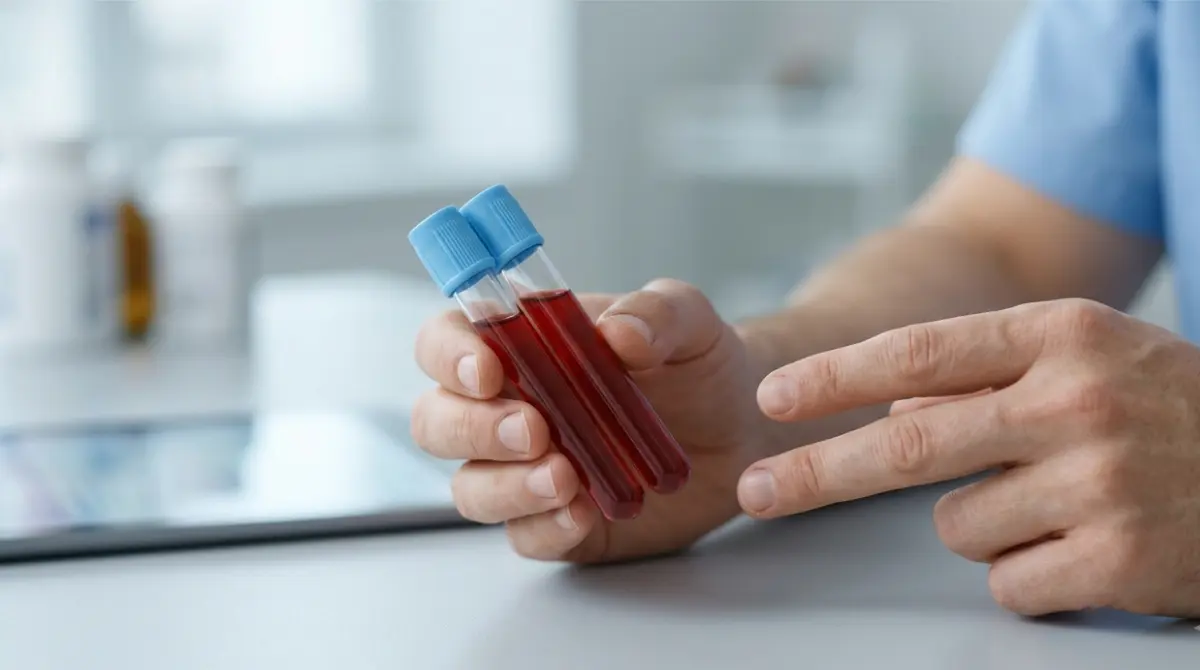
An AST/ALT ratio above 2 is often seen in alcohol-related liver injury, especially advanced disease. It is a clue rather than a diagnosis, because other conditions can produce the same pattern.
How to calculate the ratio
An AST of 90 and an ALT of 40 gives 2.25 (illustrative numbers). Our AST/ALT ratio explainer walks through more examples.
The NIAAA hepatitis criteria
The National Institute on Alcohol Abuse and Alcoholism’s consortium definition of alcoholic hepatitis uses AST above 50, a ratio above 1.5, both enzymes below 400, bilirubin above 3 mg/dL, recent jaundice, and sustained heavy drinking. It is a research definition for clinical trials, not a clinical guideline.
Why alcohol pushes AST higher than ALT
In alcoholic hepatitis, AST tends to run above ALT, a pattern the Cleveland Clinic Journal of Medicine (2018) ascribes to low liver vitamin B6.
Vitamin B6 and ALT activity
Both enzymes need pyridoxal 5′-phosphate, the active form of vitamin B6. A clinical biochemistry review of the De Ritis ratio advises B6-supplemented lab assays for people who may be B6-depleted, including those with alcohol-related disease.
Two forms of AST
The same review describes AST as two distinct isoenzymes, one in the cell’s fluid and one in its mitochondria.
🔬 How It Works: Both enzymes need vitamin B6 to work. One proposed explanation, though the exact cause is not fully understood, is that alcohol-related B6 shortage blunts ALT activity, so ALT rises less than AST and the ratio climbs.
Does a ratio above 2 mean cirrhosis or heavy drinking?

A high ratio says more about how advanced liver injury is than about how much someone drinks.
What the Nyblom data show
📊 Clinical Data Point: In 313 people with alcohol dependence admitted for withdrawal, 64% had a ratio at or below 1.0; among 48 admitted with alcohol-related cirrhosis, 69% had a ratio of 2 or more — Source: Nyblom et al., Alcohol and Alcoholism, 2004.
These were hospital patients, not a screening population, so the percentages describe those groups only.
Why a normal ratio isn’t reassurance
The authors concluded that most heavy drinkers without severe liver disease do not have a ratio above 1. NIAAA defines heavy drinking as 4+ standard drinks in a day or 8+ a week for women, and 5+ or 15+ for men; one standard drink holds 14 grams of alcohol.
Other reasons your AST is higher than your ALT
Because AST is also found in heart and muscle, several non-alcohol causes can push it above ALT.
Muscle, exercise, and medicines
- Muscle disease or injury
- Exercise or pregnancy
- Heart attack
- Medicines toxic to the liver, including acetaminophen
Other liver conditions
NIAAA’s criteria treat ischemic hepatitis, drug-induced injury, Wilson disease, and alpha-1 antitrypsin deficiency as confounders, and enzyme levels above 400 point away from alcoholic hepatitis. Our guide to why AST can run high with a normal ALT covers more.
Fatty liver vs alcohol
In a 1999 matched comparison of 70 patients per group, a ratio below 1 suggested fatty-liver hepatitis (called NASH in older studies, now MASH) and 2 or more strongly suggested alcohol-related disease (Sorbi et al.). Another study found the ratio tracked severity rather than cause.
Which blood tests and scans follow a high AST/ALT ratio
No single test confirms alcohol-related liver disease, so doctors combine your history, blood work, and imaging.
What doctors combine with the ratio
When cirrhosis is a concern, MedlinePlus lists tests such as prothrombin time, albumin, hepatitis virus and autoimmune checks, iron studies, ultrasound, CT, MRI, or FibroScan.
Questions to bring to your appointment
Describe your drinking honestly; it changes how results are read. Our questions to ask your doctor about liver enzymes can help you prepare.
✅ Patient Action: Ask a gastroenterologist or hepatologist: “Given my AST/ALT pattern and drinking history, which other tests rule out other causes, and do I need imaging or a fibrosis assessment?”
Signs your liver results need urgent attention
Some symptoms alongside abnormal liver results need emergency care.
Red-flag symptoms
MedlinePlus lists these as emergency signs in cirrhosis:
- New or quickly worsening yellow skin or eyes
- New or worsening abdominal swelling
- Confusion or a change in alertness
- Vomiting blood or rectal bleeding
Before you change how you drink
⚠️ Clinical Warning: After heavy drinking, stopping suddenly can trigger withdrawal, including seizures and delirium tremens, a medical emergency. Ask your primary care clinician or an addiction-medicine specialist whether you need supervised withdrawal, and tell hospital staff if you’ve been drinking heavily.
Our Symptom Checker can help you organize symptoms before you call; it is not for emergencies.
Frequently asked questions
1. What does an AST/ALT ratio above 2 mean?
An AST/ALT ratio above 2 often accompanies alcohol-related liver injury but isn’t a diagnosis; ask your clinician to interpret it with your history.
2. Does an AST/ALT ratio above 2 always mean alcohol?
No. An AST/ALT ratio above 2 can also reflect muscle injury or other liver conditions, so doctors rule out other causes first.
3. Can fatty liver cause an AST/ALT ratio above 2?
An AST/ALT ratio above 2 is less typical in fatty-liver hepatitis (NASH), though studies conflict; ask your clinician which pattern fits you.
4. Can a heavy drinker have a normal AST/ALT ratio?
Yes. In one study, 64% of people admitted for alcohol withdrawal had an AST/ALT ratio at or below 1.0.
5. What AST/ALT ratio defines alcoholic hepatitis?
NIAAA’s research criteria include AST above 50, AST/ALT above 1.5, both below 400, and bilirubin above 3 mg/dL; only clinicians diagnose.
6. Which tests go with the AST/ALT ratio?
Doctors combine your history, tests such as prothrombin time and albumin, and imaging, because no single test confirms alcohol-related liver disease.
7. Can exercise raise AST and change the ratio?
Yes. AST is also found in heart and muscle, and exercise may raise it, shifting the AST/ALT ratio without liver disease.
8. Does an AST/ALT ratio above 2 mean cirrhosis?
Not by itself. In one study, 69% of an alcohol-related cirrhosis group had an AST/ALT ratio of 2 or more; clinicians assess cirrhosis.
9. Is it safe to stop drinking suddenly after a high ratio?
Not always. After heavy drinking, stopping suddenly can cause dangerous withdrawal, including seizures; ask a clinician about supervised withdrawal first.
10. How much alcohol counts as heavy drinking?
NIAAA: heavy drinking is 4+ standard drinks in a day or 8+ weekly for women, and 5+ or 15+ for men.
11. When should I see a doctor about a high ratio?
Share any abnormal AST/ALT ratio with a clinician; seek urgent care for jaundice, confusion, vomiting blood, or abdominal swelling.
Your next step with a high AST/ALT ratio
An AST/ALT ratio above 2 is a clue about pattern and stage, not proof of cause. Bring your numbers and an honest drinking history to a gastroenterologist or hepatologist, and ask which tests should come next. If jaundice or other red flags appear, seek urgent care.
About this content
How this article was put together: researched from recognised health sources, drafted with the help of AI tools, and edited by hand, with sources linked throughout.

Sameer Patel is the founder and editor of My Medicine Advisor. He is not a doctor or medical professional — before starting this site he worked in banking,…
Medical disclaimer
The content on MyMedicineAdvisor is provided for general informational and educational purposes only and is not a substitute for professional medical advice, diagnosis, or treatment. Health information on this website should not be used to diagnose, treat, cure, or prevent any condition without guidance from a qualified healthcare professional. Always seek the advice of your doctor, physician, or another licensed healthcare provider with any questions you may have regarding a medical condition, symptoms, medications, or treatment decisions.