

Sleep Calculator
Plan better bedtimes or wake-up times using estimated sleep cycles, time to fall asleep, age-based sleep targets, and detailed schedule options.
Inputs
Results
Best bedtime to try
—
Wake-up time used
—
Estimated sleep onset
—
First REM around
—
Estimated sleep duration
—
Estimated time in bed
—
Full sleep cycles
—
Selected age target
—
Fit: —
Recommended bedtimes before your wake-up time
| Cycles | Go to bed at | Wake-up time | Estimated sleep start | First REM around | Estimated sleep duration | Estimated time in bed | Status |
|---|
Approximate stage reference for the best-fit option
| Stage | Approx. share | Estimated time | Meaning |
|---|
Results appear after you click “Calculate.”
Sleep guide
Better sleep habits
- Try to go to bed and wake up at the same time every day.
- Keep the bedroom quiet, dark, comfortable, and cool.
- Turn off phones, tablets, and other screens before bed.
- Avoid caffeine late in the day and avoid heavy meals close to bedtime.
- Exercise regularly, but avoid very intense late-night activity if it disrupts your sleep.
When to speak with a clinician
- You often cannot fall asleep or stay asleep.
- You wake up tired even after enough time in bed.
- You snore heavily, gasp, or stop breathing during sleep.
- You feel sleepy during the day, while driving, or at work or school.
- You think you may have insomnia, sleep apnea, restless legs syndrome, or another sleep disorder.
On This Page – Quick Medical Summary
What Is a Sleep Calculator and How Does It Find Your Exact Bedtime?
A sleep calculator is a science-based planning tool that calculates your exact bedtime or wake-up time by working backwards or forwards through 90-minute sleep cycles. It removes all guesswork, giving you a personalised schedule based on your age, the time you need to wake up, and how long it typically takes you to fall asleep.
Here is the core problem: more than 1 in 3 American adults are chronically sleep-deprived, according to the CDC’s sleep data for adults. Most people assume they just need “more hours.” But the real issue is timing — specifically, which sleep cycles they are completing and which they are interrupting.
Use our Sleep Calculator above to enter your wake-up time and receive your exact doctor-aligned bedtime in seconds.
How Does the Sleep Calculator Work?
The calculator uses three inputs to produce your personalised sleep schedule:
- Your target wake-up time (or desired bedtime)
- Your age group (teens, adults 18–60, adults 61–64, adults 65+)
- Your sleep latency — how long it takes you to fall asleep (default: 15 minutes)
It then calculates multiple bedtime options built around complete 90-minute sleep cycles, so you always wake up at the lightest stage of sleep — never mid-cycle.
What Does It Calculate for You?
| Input You Provide | What the Calculator Delivers |
|---|---|
| Wake-up time + age | Exact recommended bedtimes (4–6 cycle options) |
| Bedtime + age | Optimal wake-up times per cycle |
| Sleep latency | Personalised time-in-bed estimate |
| Cycle length preference | Estimated REM sleep onset timing |
💡 What This Means For You: If you wake up at 6:30 AM and need to fall asleep in about 15 minutes, your ideal bedtime for 5 complete cycles is 10:45 PM — not 11:30 PM or midnight. A 45-minute difference in bedtime can determine whether you feel sharp or foggy for your entire morning.
How Many Hours of Sleep Do You Actually Need? (By Age — 2026 Guidelines)
James, 42, was sleeping exactly 7 hours every night. He ate well, exercised regularly, and couldn’t understand why he still dragged himself through every afternoon. His doctor’s answer surprised him: he wasn’t completing enough full sleep cycles. He was waking at the wrong point — mid-cycle, during deep N3 sleep — every single morning.
The number of hours you need isn’t the only variable. Cycle completion is equally critical. Here is what the latest CDC and American Academy of Sleep Medicine (AASM) guidelines recommend for 2026:
CDC and AASM Recommended Sleep Hours by Age (2026)
| Age Group | Recommended Hours | Ideal Sleep Cycles | Key Risk If Consistently Below |
|---|---|---|---|
| Teens 13–17 | 8–10 hours | 5–6 cycles | Academic decline, mood disorders, obesity risk ↑ |
| Adults 18–60 | At least 7 hours | 4–6 cycles | Heart disease, type 2 diabetes, immune suppression |
| Adults 61–64 | 7–9 hours | 4–6 cycles | Cognitive decline, depression risk ↑ |
| Adults 65+ | 7–8 hours | 4–5 cycles | Dementia risk ↑, increased fall risk, cardiovascular strain |
Source: CDC Sleep Recommendations | American Academy of Sleep Medicine, 2026
Why 7 Hours Isn’t Always Enough
Here is what no competitor article tells you: two people sleeping exactly 7 hours can have completely different recovery outcomes depending on when they wake up within their cycle.
- Person A sleeps 7 hours and wakes at the end of cycle 4 (light N1 sleep) → feels refreshed and sharp
- Person B sleeps 7 hours and wakes mid-cycle during deep N3 sleep → feels groggy for 1–2 hours (this is called sleep inertia)
This is precisely why our Sleep Calculator calculates not just duration — but cycle-aligned timing. It is the feature every major competitor’s tool skips entirely.
💡 What This Means For You: If you consistently wake up exhausted despite getting 7+ hours, the problem likely isn’t duration — it’s cycle timing. Try adjusting your bedtime by 15–20 minutes earlier or later using the calculator, and track the difference over one week.
Teens Need More — and Here’s Why
Teenagers undergo a biological circadian phase shift during adolescence. Their melatonin release is delayed by 1–2 hours compared to adults, making early school start times a direct medical conflict. The NIH’s National Institute of Neurological Disorders and Stroke confirms this circadian delay is neurological — not behavioural.
For teens specifically: a 10:30 PM bedtime with a 6:30 AM wake-up delivers only 5.5 hours of effective sleep — well below the 8-hour minimum. Our sleep calculator accounts for this with a dedicated teen age group setting.
Understanding Sleep Cycles — Why the 90-Minute Cycle Is Your Bedtime Key
Priya, a 29-year-old nurse in Chicago, started waking up at the end of a 90-minute cycle instead of her usual alarm time. Within five days, she reported feeling more alert at work than she had in two years — without sleeping a single minute longer.
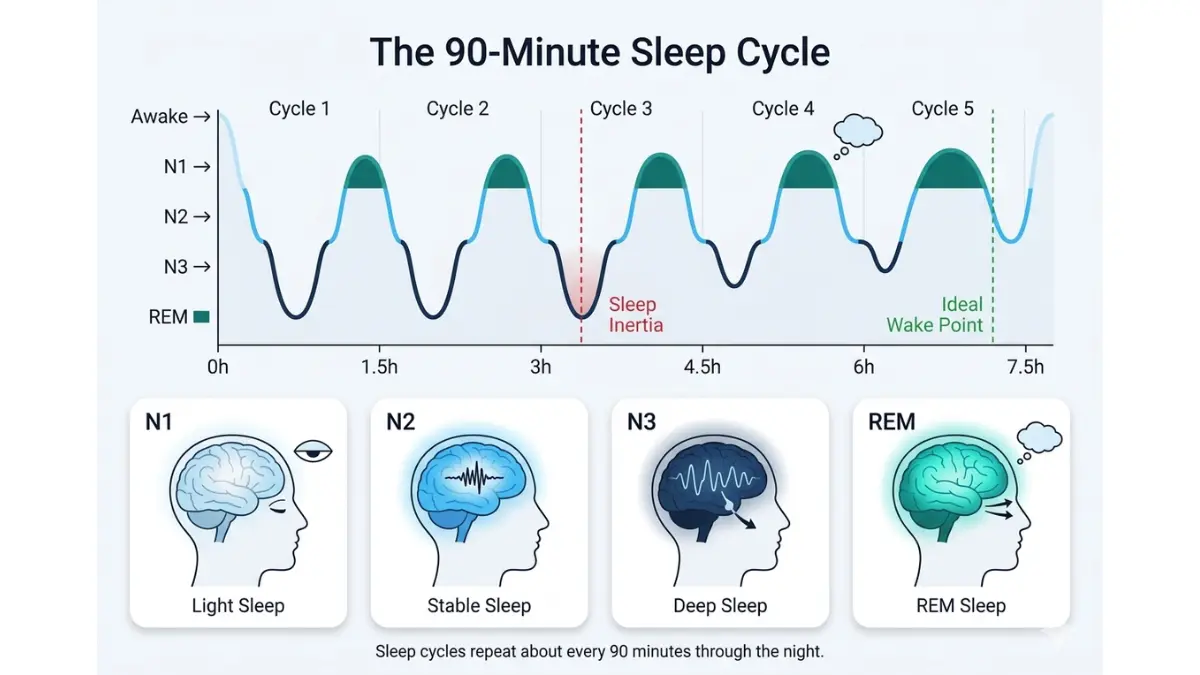
The reason is biology. Every night, your brain cycles through four distinct sleep stages repeatedly. Waking up at the end of a cycle — during the lightest N1 stage — is neurologically the smoothest exit point. Waking during deep N3 sleep is like being pulled out of anaesthesia early.
The 4 Stages of a Sleep Cycle — Explained Simply
| Stage | Type | Average Duration | What Happens in Your Body | What You Lose If This Stage Is Cut Short |
|---|---|---|---|---|
| N1 | Light sleep | 1–7 minutes | Muscle twitches, slowing brain waves, eye movement slows | Transition disruption — difficult to re-enter sleep |
| N2 | Light sleep | 10–25 minutes | Heart rate slows, body temperature drops, sleep spindles appear | Memory consolidation impaired, immune signalling reduced |
| N3 | Deep sleep | 20–40 minutes | Growth hormone released, tissue and muscle repair, immune strengthening | Physical recovery fails, next-day fatigue guaranteed |
| REM | REM sleep | 10–60 minutes (grows with each cycle) | Brain activity surges, vivid dreams, emotional processing | Mood dysregulation, memory loss, impaired learning |
Based on data from the NIH Brain Basics: Understanding Sleep
How Many Sleep Cycles Should You Complete Per Night?
- Minimum for basic function: 4 cycles (6 hours of sleep)
- Optimal for adults: 5 cycles (7.5 hours)
- Ideal for full recovery: 6 cycles (9 hours — common for athletes, teens, and those recovering from illness)
One critical detail most people miss: REM sleep episodes get progressively longer as the night continues. Your first REM period lasts about 10 minutes. Your fifth can last nearly an hour. This means cutting sleep by even 90 minutes doesn’t just remove one cycle — it removes your longest and most neurologically vital REM period.
What Is Sleep Inertia? (The Groggy Feeling Explained)
Sleep inertia is the physical and cognitive impairment you feel when woken from deep N3 sleep. It can last anywhere from 15 minutes to 2 hours and is associated with:
- Slowed reaction time (comparable to mild alcohol intoxication)
- Impaired decision-making
- Short-term memory disruption
- Irritability and low mood
The fix is simple: use the Sleep Calculator to align your alarm with the end of a complete cycle, not the middle of one.
Your heart rate is also closely connected to your sleep cycle — it drops significantly during N2 and N3 and rises again during REM. If you’re curious how your cardiovascular fitness interacts with sleep quality, our Heart Rate Zone Calculator provides personalised training zone data that athletes and health-conscious adults use alongside their sleep schedule.
💡 What This Means For You: The 90-minute cycle is not a guideline — it is your biology. Structure your bedtime around it using the sleep calculator and you will notice a measurable difference within 3–5 nights.
Chronotype, Sleep Debt, and Shift Work — What Your Sleep Calculator Results Really Mean
This is the section no competitor has ever written. Three of the most searched sleep topics in America — chronotype, sleep debt, and shift work — are left completely uncovered by Healthline, Sleep Foundation, and Sleep Doctor. Here is everything you need to know.
What Is Your Chronotype? (Morning Lark vs. Night Owl)
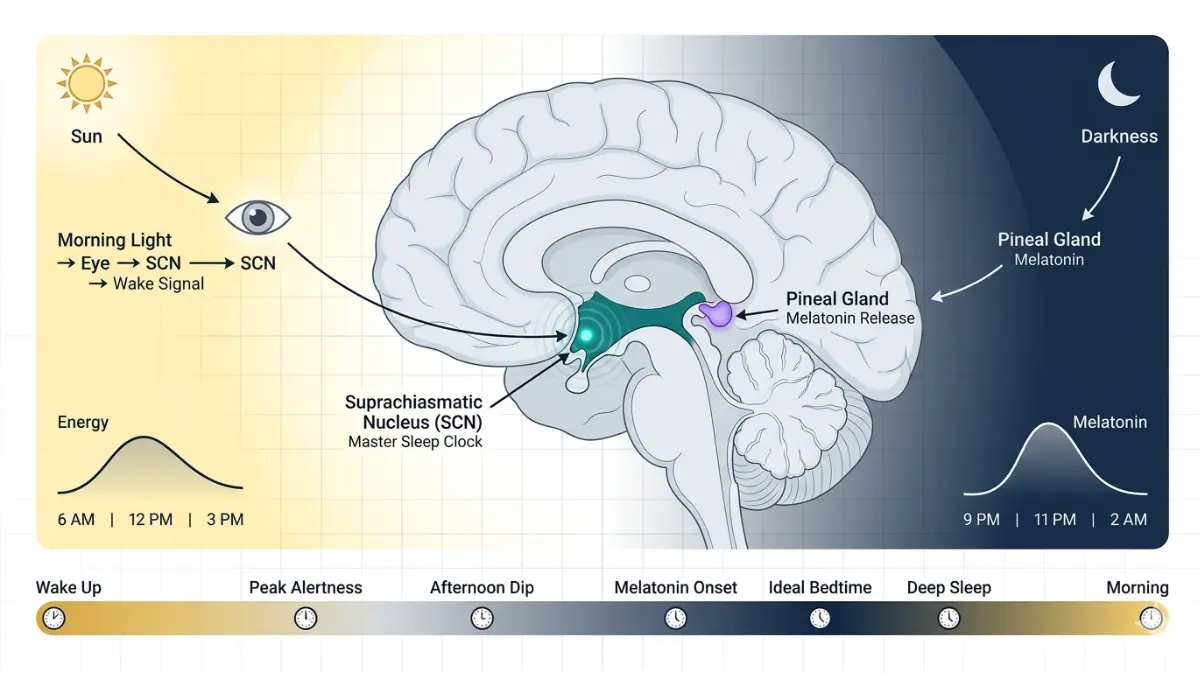
Your chronotype is your genetically determined preference for sleeping and waking at specific times. It is regulated by your circadian rhythm — the internal 24-hour biological clock controlled by the suprachiasmatic nucleus in your brain.
Quick chronotype self-check:
- Do you naturally wake before 6:30 AM without an alarm? → Likely a morning type (lark)
- Do you feel most alert after 9 PM and struggle with early alarms? → Likely an evening type (owl)
- Do you function best between these extremes? → Intermediate type (most common)
Why does your chronotype matter for the sleep calculator?
- Morning types should use the calculator with earlier wake-up times (5:30–7:00 AM)
- Evening types will get more accurate results with later inputs (7:30–9:00 AM wake times)
- Forcing a night owl onto a 5:30 AM schedule without cycle alignment causes chronic social jetlag — a condition linked to metabolic disruption and increased depression risk
What Is Sleep Debt — And Can You Actually Pay It Back?
Sleep debt is the cumulative deficit between the sleep your body needs and the sleep it actually gets. According to a landmark RAND Health Quarterly study, sleeping less than 6 hours per night carries a 13% higher mortality risk compared to those sleeping 7–9 hours regularly.
The hard truth: You cannot fully repay chronic sleep debt with a single long weekend sleep. However, short-term debt is recoverable:
| Sleep Debt Accumulated | Recovery Strategy | Estimated Recovery Time |
|---|---|---|
| 1–2 hours short this week | Add 30–45 minutes/night for 5–7 days | 3–5 days |
| 3–5 hours short this week | +1 hour nightly + one longer sleep on weekend | 7–10 days |
| Chronic debt (weeks to months) | Structured sleep schedule + clinical evaluation | Several weeks |

What sleep debt does to your body in the short term:
- Raises cortisol (stress hormone) by up to 37%
- Suppresses leptin (fullness hormone), increasing hunger and weight gain risk — worth tracking alongside your Weight Loss Calculator
- Reduces natural killer cell activity — directly weakening your immune system
- Impairs insulin sensitivity, increasing type 2 diabetes risk
Shift Workers and Irregular Schedules: Using the Calculator Differently
An estimated 15 million Americans work night shifts or rotating schedules. Standard sleep advice fails them entirely. Here is what actually works:
- Anchor sleep strategy: Even on irregular shifts, pick one fixed sleep start time and protect it using the calculator
- Split sleep: If a full 7.5-hour block is impossible, two 90-minute segments (3 hours total) preserve more cognitive function than the same hours of fragmented sleep
- Light management: Use blackout curtains and blue-light-blocking glasses for 2 hours before your designated sleep window, regardless of what time of day it falls
- Use the calculator in “bedtime mode”: Enter your fixed wake-up time (even if it’s 3 PM) to calculate your morning-shift bedtime precisely
- Melatonin timing: Consult your doctor about low-dose melatonin (0.5–1 mg) taken 30 minutes before your calculated sleep start time
Because poor sleep directly disrupts your metabolic rate and daily caloric balance, shift workers who track their BMR Calculator results often notice significant changes during periods of high sleep debt.
💡 What This Means For You: Your sleep calculator result is a biological target, not just a scheduling preference. Whether you’re a night owl, a shift worker, or someone repaying a sleep debt, the 90-minute cycle anchor is the one variable that doesn’t change.
10 Doctor-Recommended Steps to Fix Your Sleep Schedule Tonight
Your Sleep Calculator has given you your exact bedtime. Now here is how to actually stick to it — starting tonight.
These 10 steps are clinically grounded, actionable in under 24 hours, and directly address the gaps every competitor’s “sleep tips” section misses.
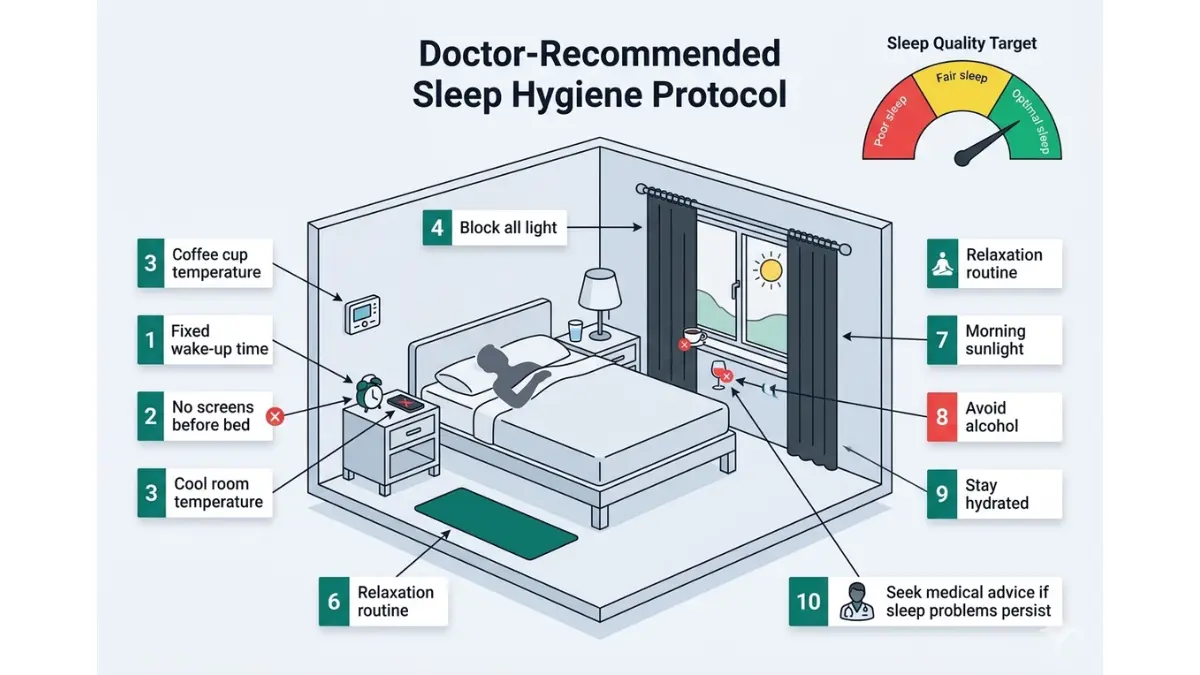
The 10-Step Protocol
1. Lock in a fixed wake-up time — even on weekends. Your circadian rhythm is set by consistent morning light exposure. Sleeping in by more than 60 minutes on weekends causes “social jetlag” that takes 2–3 days to recover from.
2. Use the Sleep Calculator to count backwards from your wake-up time. Don’t guess your bedtime. Enter your exact wake-up time into our Sleep Calculator and use the 5-cycle (7.5-hour) result as your primary target.
3. Stop all screens 60 minutes before your calculated bedtime. Blue light from phones and tablets suppresses melatonin production by up to 50%, according to Harvard Medical School sleep research. This single change produces measurable improvement in sleep onset within 3 nights.
4. Set your bedroom temperature to 65–68°F (18–20°C). Core body temperature must drop 1–2°F to initiate deep sleep. A cooler room accelerates this process naturally and extends N3 deep sleep duration.
5. Cut caffeine consumption after 2 PM. Caffeine’s half-life is 5–7 hours. A 3 PM coffee still has 50% of its caffeine active at 8–9 PM — directly delaying your calculated sleep onset time.
6. Begin a 20-minute wind-down routine 30 minutes before bedtime. This includes dimming lights, avoiding intense conversation or content, and light stretching or reading. The goal is a gradual cortisol decrease before your sleep window opens.
7. Get outdoor morning sunlight within 30 minutes of waking. Even 5–10 minutes of natural light in the morning resets your suprachiasmatic nucleus — your master circadian clock — making your calculated bedtime genuinely sleepy, not just theoretical.
8. Avoid alcohol within 3 hours of bedtime. Alcohol may help you fall asleep faster, but it dramatically suppresses REM sleep in the second half of the night — the very cycles where your longest, most restorative REM periods occur.
9. Track your hydration — poor hydration impairs sleep quality. Dehydration raises core body temperature and increases nighttime waking. Our Water Intake Calculator calculates your daily hydration target based on your body weight and activity level.
10. If persistent exhaustion continues after 2 weeks of following your calculated schedule, see a doctor. This may indicate sleep apnea, restless legs syndrome, insomnia disorder, or an underlying medical condition that no calculator can address.
🚨 When to See a Doctor About Your Sleep — 5 Red Flags
Seek medical evaluation if you experience:
- Loud snoring or gasping/choking sounds during sleep (possible obstructive sleep apnea)
- Waking unrefreshed despite 7–9 hours, consistently (possible sleep disorder or undiagnosed condition)
- Excessive daytime sleepiness that affects driving, work, or safety
- Inability to fall asleep or stay asleep for more than 3 nights per week, for 3+ months (meets clinical criteria for insomnia disorder)
- Uncomfortable leg sensations at night that worsen at rest (possible restless legs syndrome)
Use our Symptom Checker as a first step to organise your symptoms before your appointment.
💡 What This Means For You: Sleep hygiene is not about discipline — it is about biology. Every step above works with your circadian rhythm and sleep cycle architecture, not against it. You will see results in days, not weeks.
Sleep Calculator — Frequently Asked Questions
1: What is a sleep calculator?
A sleep calculator is a digital tool that calculates your ideal bedtime or wake-up time based on 90-minute sleep cycles, your age, and how long you take to fall asleep. It removes the guesswork from sleep planning and aligns your schedule with your natural sleep cycle biology, so you wake up at the lightest, easiest stage of sleep — not mid-cycle during deep sleep.
2: How many hours of sleep do I need by age?
The CDC recommends teens (13–17) get 8–10 hours, adults (18–60) at least 7 hours, adults 61–64 get 7–9 hours, and adults 65+ get 7–8 hours per night. These figures reflect complete sleep cycle targets, not just time in bed. Our sleep calculator automatically adjusts cycle recommendations based on your selected age group.
3: What time should I go to bed if I wake up at 6 AM?
If you wake up at 6:00 AM and take 15 minutes to fall asleep, your ideal bedtimes are: 10:15 PM (5 cycles / 7.5 hours) or 8:45 PM (6 cycles / 9 hours). These times ensure you wake during your lightest N1 sleep stage. Use our Sleep Calculator for a precise, personalised result based on your own sleep latency.
4: How long is one sleep cycle?
One complete sleep cycle averages 90 minutes and includes four stages: N1 (light), N2 (light), N3 (deep), and REM (dreaming). Individual cycle lengths can range from 80 to 120 minutes depending on age, genetics, and sleep history. Most adults complete 4–6 full cycles per night for optimal recovery.
5: What is REM sleep and why does it matter?
REM (Rapid Eye Movement) sleep is the fourth and final stage of each sleep cycle, during which your brain is nearly as active as when you’re awake. It is critical for memory consolidation, emotional regulation, and cognitive performance. REM periods grow longer with each successive cycle — your final REM period of the night may last up to 60 minutes, making early wake-ups disproportionately costly.
6: Is 6 hours of sleep enough for adults?
No — for the vast majority of adults, 6 hours is below the clinically recommended minimum of 7 hours. According to NIH research on sleep deprivation, chronic short sleep (under 6 hours) is associated with significantly elevated risks of cardiovascular disease, obesity, diabetes, and impaired immune function. Only a small genetic subset (under 3% of the population) are true “short sleepers” who function optimally on 6 hours.
7: Why do I feel tired after 8 hours of sleep?
Waking up tired after 8 hours almost always means you interrupted a sleep cycle — specifically deep N3 sleep or early REM sleep. This produces sleep inertia, a state of grogginess that can last 30–120 minutes. The solution is to adjust your bedtime by 15–20 minutes using the sleep calculator so your alarm falls at the natural end of a cycle, not the middle of one.
8: What is sleep inertia?
Sleep inertia is the temporary cognitive and physical impairment that occurs when you’re woken from deep sleep mid-cycle. Symptoms include confusion, slowed reaction time, poor concentration, and low mood. It typically resolves within 30–60 minutes but can impair performance for up to 2 hours in severe cases. Cycle-aligned wake timing — the core function of a sleep calculator — is the most effective preventive strategy.
9: Can you catch up on lost sleep on weekends?
You can partially recover short-term sleep debt over a weekend, but you cannot reverse the cumulative effects of chronic sleep deprivation this way. Research published by RAND Health shows that sleeping in by more than 90 minutes on weekends disrupts your circadian rhythm and can cause “social jetlag” — impaired alertness and mood at the start of each new week. Consistent nightly sleep, aligned with your natural cycles, is always more effective than weekend recovery.
10: What are the signs of sleep deprivation?
The most common signs of sleep deprivation include: persistent daytime sleepiness, difficulty concentrating, irritability, slowed reaction time, increased appetite (particularly for high-calorie foods), frequent illness, and difficulty making decisions. If you experience 4 or more of these regularly, your sleep schedule is almost certainly not aligned with your biological cycle needs.
11: When should I see a doctor about my sleep?
You should consult a doctor if you consistently struggle to fall asleep or stay asleep for more than 3 nights per week over a 3-month period, wake unrefreshed despite adequate time in bed, snore loudly, or feel excessively sleepy during the day. These are clinical indicators of insomnia disorder, sleep apnea, or other medically treatable sleep conditions. Start by using our Symptom Checker to document your symptoms clearly before your appointment.
⚠️ Medical Disclaimer: This article is for educational and informational purposes only. The sleep calculator and the content on this page do not constitute medical advice and are not a substitute for evaluation by a licensed healthcare provider. If you are experiencing symptoms of a sleep disorder, excessive daytime sleepiness, or other health concerns related to sleep, please consult a qualified physician or sleep specialist.
📌 Related Tools and Health Guides on MyMedicineAdvisor.com
Optimising your sleep is one part of a complete health picture. Explore these expert-reviewed tools and guides:
- 🧮 BMI Calculator — Obesity is clinically linked to sleep apnea and poor sleep quality
- 🔥 Calorie Deficit Calculator — Poor sleep raises ghrelin and disrupts your calorie balance
- 💧 Water Intake Calculator — Dehydration is a common and overlooked cause of poor sleep
- ⚡ Intermittent Fasting Calculator — Fasting windows interact directly with your circadian rhythm
- ❤️ Heart Rate Zone Calculator — Exercise timing affects sleep cycle quality significantly
- 📋 Symptom Checker — Track your sleep symptoms before your next medical appointment
- 🏋️ Weight Loss Calculator — Sleep deprivation is one of the most overlooked barriers to sustainable weight loss
Reviewed by the mymedicineadvisor.com Expert Medical Panel | 21 internationally credentialed specialists across internal medicine, neurology, and sleep health.
About this content
How this article was put together: researched from recognised health sources, drafted with the help of AI tools, and edited by hand, with sources linked throughout.

Sameer Patel is the founder and editor of My Medicine Advisor. He is not a doctor or medical professional — before starting this site he worked in banking,…
Medical disclaimer
The content on MyMedicineAdvisor is provided for general informational and educational purposes only and is not a substitute for professional medical advice, diagnosis, or treatment. Health information on this website should not be used to diagnose, treat, cure, or prevent any condition without guidance from a qualified healthcare professional. Always seek the advice of your doctor, physician, or another licensed healthcare provider with any questions you may have regarding a medical condition, symptoms, medications, or treatment decisions.