
On This Page – Quick Medical Summary
AST over 1,000: what this number means right now
An AST over 1,000 U/L means liver or muscle cells were injured suddenly and severely, and doctors treat it as urgent. The MedlinePlus AST test overview puts normal at 8 to 33 U/L, so 1,000 is roughly 30 times the limit.
Where AST comes from
AST sits in the liver, heart and muscles, so one number cannot name its source. Below this range, see how AST severity tiers work.
Find your situation
- Relative in intensive care: read the shock liver section.
- Possible acetaminophen overdose: call Poison Help now.
- Hard exercise or muscle pain: read the muscle section.
- Yellow eyes, confusion or bleeding: go to an emergency department.
ℹ️ Medical Disclaimer: This article covers lab results, warning signs, medicines and antidotes for education only, not diagnosis or treatment. Ask a gastroenterologist, hepatologist or emergency physician before acting, and never stop a prescribed medicine on your own.
What usually causes AST over 1,000?
The most common cause is low blood flow or oxygen to the liver (shock liver), followed by drugs or toxins, viral hepatitis and a blocked bile duct.
| Cause | Pooled studies | One hospital cohort | Key Clinical Detail |
|---|---|---|---|
| Shock liver | 51% | 44% | Low blood pressure, heart failure or low oxygen |
| Drugs or toxins | 13% | 19% | Acetaminophen is the best-known |
| Viral hepatitis | 13.1% | 7% | Hepatitis A, B or E |
| Bile duct blockage | 7.8% | 16% | Usually a gallstone |
Sources: a 2023 review of studies on enzymes over 1,000; an Australian cohort of 287 patients that measured ALT, not AST.
Why studies rank them differently
Studies draw on different hospitals and some measured ALT, so trust the order more than the exact percentages. Compare ALT over 1,000 and its causes.
Shock liver: when low blood flow injures the liver

Shock liver, or ischemic hepatitis, happens when liver cells are starved of oxygen and AST jumps above 20 times normal.
Who gets it
In one study, every patient had underlying heart disease, and low blood pressure alone never caused it. In a hospital study of 287 patients, 77% of shock liver cases had low blood pressure, against 9% of other causes.
How fast AST rises and falls
AST climbs suddenly, then usually returns near normal within 7 to 10 days. Once circulation is stable, it typically halves within 72 hours.
🔬 How It Works: Cells around the centre of each tiny liver unit are injured first and spill AST into the blood. LDH usually rises even more steeply, a pattern doctors recognise.
✅ Patient Action: Ask the intensive care team: “Is the AST falling now that blood pressure and oxygen are stable?”
Can viral hepatitis push AST past 1,000?
Yes. Acute viral hepatitis accounts for roughly 7% to 13% of cases in the studies above.
Hepatitis A, B and E
The American College of Gastroenterology (ACG) guideline lists tests for acute infection: hepatitis A IgM, hepatitis B surface antigen with core IgM, and hepatitis E IgM after travel.
Autoimmune hepatitis and rarer causes
Autoimmune hepatitis is a rare cause. The ACG suggests ANA and smooth muscle antibody tests when it is suspected.
✅ Patient Action: Ask your gastroenterologist: “Have viral and autoimmune hepatitis tests been done?”
Can acetaminophen (Tylenol) cause AST over 1,000?
Yes. Emergency medicine guidance defines severe acetaminophen liver injury as an AST above 1,000 IU/L.
Why an overdose crosses 1,000
Injury can follow one large overdose or repeated doses above the label limit. At label doses, the NIH LiverTox acetaminophen entry describes rises that are usually mild; see how Tylenol label doses relate to AST.
Why timing matters
An antidote, N-acetylcysteine, works best when started early. Liver damage often appears one to three days later, so feeling well is not reassurance.
Other drugs and supplements
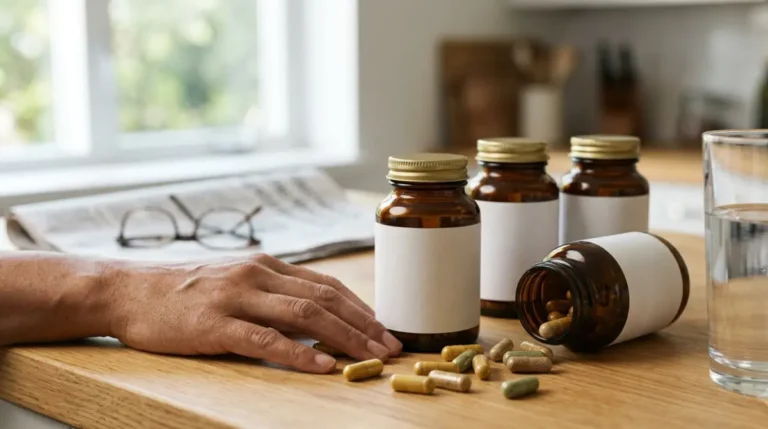
The ACG asks clinicians to check every non-prescribed medicine, herbal product and supplement.
⚠️ Clinical Warning: If too much acetaminophen may have been taken, call Poison Help at 1-800-222-1222 (free, 24/7) or go to an emergency department now.
✅ Patient Action: Ask the emergency physician: “Has an acetaminophen level been checked?”
Is it the liver, a gallstone or your muscles?
Two causes are easy to miss: a gallstone and muscle breakdown.
A stone blocking the bile duct
About a third of people with a common bile duct stone have AST or ALT above 500, and levels above 1,000 are not rare.
Muscle breakdown (rhabdomyolysis)
AST cannot show whether it came from liver or muscle, as a review of muscle injury and liver tests explains. In rhabdomyolysis, AST usually outpaces ALT; see rhabdomyolysis signs behind a high AST.
Tests that sort it out
- Creatine kinase (CK): muscle injury.
- Repeat AST, ALT and LDH: the rise-and-fall pattern.
- INR and bilirubin: how well the liver works.
- Acetaminophen level and hepatitis tests.
- Ultrasound: a blocked bile duct.
🔬 How It Works: CK is a muscle enzyme, so a very high CK alongside a high AST points to muscle as the source.
When AST over 1,000 is an emergency, and recovery
AST over 1,000 needs same-day care, and some signs mean go now.
Go to an emergency department now if you notice
⚠️ Clinical Warning: Yellow skin or eyes, confusion, vomiting blood, black stools, unusual bleeding or a swollen abdomen. See jaundice with high liver enzymes.
Can you recover?
Recovery depends mostly on the cause. Shock liver carries the highest risk because it reflects a serious heart or lung problem; viral, drug and gallstone causes carry far lower risk.
✅ Patient Action: Ask a hepatologist: “What is causing this, and what does recovery look like for that cause?”
AST over 1,000: questions, answered
1. What does AST over 1,000 mean?
AST over 1,000 means sudden, severe injury to liver or muscle cells, roughly 30 times normal. Ask your clinician which cause fits.
2. What causes AST over 1,000?
AST over 1,000 most often comes from shock liver, then drugs or toxins, viral hepatitis and a blocked bile duct.
3. Is AST over 1,000 an emergency?
Yes, AST over 1,000 needs same-day care. Yellow eyes, confusion or bleeding mean go to an emergency department now.
4. What is shock liver?
Shock liver is injury from low blood flow or oxygen that pushes AST over 1,000, above 20 times normal.
5. How fast does AST fall after shock liver?
After shock liver, AST over 1,000 usually returns near normal within 7 to 10 days once circulation recovers.
6. Can Tylenol cause AST over 1,000?
Yes, AST over 1,000 defines severe acetaminophen injury. If an overdose is possible, call Poison Help or go to an emergency department.
7. Can hepatitis A cause AST over 1,000?
Yes. Acute viral hepatitis causes about 7% to 13% of AST over 1,000 cases. Ask your gastroenterologist about testing.
8. Can a gallstone cause AST over 1,000?
Yes, a common bile duct stone can push AST over 1,000. Ask your clinician whether you need an ultrasound.
9. Can rhabdomyolysis cause AST over 1,000?
Yes, muscle breakdown can push AST over 1,000, usually with a high CK. Ask whether your CK was checked.
10. What tests follow AST over 1,000?
Clinicians commonly check CK, LDH, INR, bilirubin, acetaminophen level, hepatitis tests and ultrasound. Ask what each rules out.
11. Can you recover from AST over 1,000?
Recovery from AST over 1,000 depends on the cause. Ask your hepatologist what recovery looks like for yours.
Your next step with AST over 1,000
AST over 1,000 is frightening, but it signals sudden injury whose cause can usually be found. Keep each result with its date, because the trend says more than one number. Ask: “What is causing this, and is it falling?” Our free Liver Blood Test Results Tracker helps you log each draw.
About this content
How this article was put together: researched from recognised health sources, drafted with the help of AI tools, and edited by hand, with sources linked throughout.

Sameer Patel is the founder and editor of My Medicine Advisor. He is not a doctor or medical professional — before starting this site he worked in banking,…
Medical disclaimer
The content on MyMedicineAdvisor is provided for general informational and educational purposes only and is not a substitute for professional medical advice, diagnosis, or treatment. Health information on this website should not be used to diagnose, treat, cure, or prevent any condition without guidance from a qualified healthcare professional. Always seek the advice of your doctor, physician, or another licensed healthcare provider with any questions you may have regarding a medical condition, symptoms, medications, or treatment decisions.