
On This Page – Quick Medical Summary
Can supplements raise liver enzymes like AST?
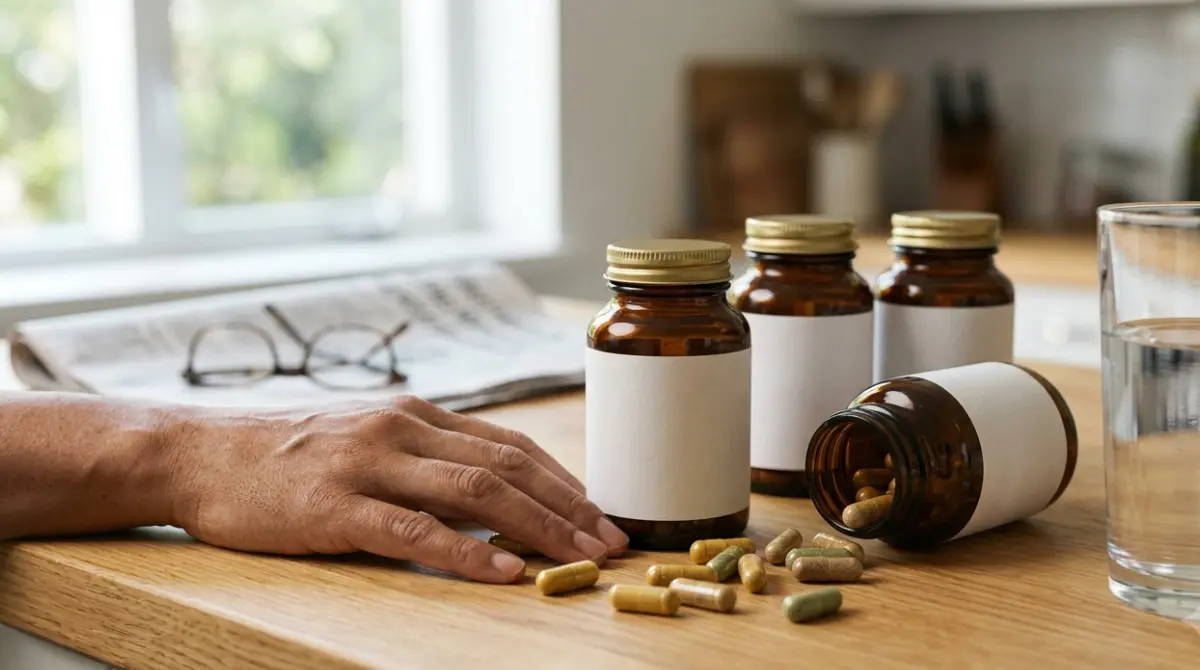
Yes. Some supplements raise liver enzymes, and NIH’s LiverTox database documents three especially well: kava, comfrey and high-dose vitamin A. Each leaves a different mark on your lab report.
The three with the strongest evidence
- Kava: rare, sometimes severe liver inflammation within months.
- Comfrey: blocks the liver’s smallest veins.
- Vitamin A: builds up slowly while AST rises only a little.
Find your situation
- Took kava or comfrey: read those sections.
- Take vitamin A pills or cod liver oil: read the vitamin A section.
- Yellow skin or confusion: jump to the warning signs now.
New to your result? Start with what a high AST result means.
ℹ️ Medical Disclaimer: This is general education, not a diagnosis, treatment or dosing recommendation; vitamin A amounts below are published toxicity ranges, not personal limits. Never stop a prescribed medicine on your own. Before acting, ask a gastroenterologist, hepatologist or the clinician who ordered your test.
How often do supplements cause liver injury?

Supplement-related liver injury is uncommon, but its share is growing.
What the US liver-injury network found
In the US Drug-Induced Liver Injury Network study of 839 patients (2004–2013), the share caused by herbal and dietary supplements rose from 7% to 20%.
📊 Clinical Data Point: Non-bodybuilding supplement injuries led to death or transplant in 13% of cases, versus 3% for medicines. These were referral-center patients, who are sicker than average. — Source: Navarro et al., Hepatology, 2014
Why “natural” isn’t checked before sale
Manufacturers, not the FDA, are primarily responsible for supplement safety. FDA research cited by the CDC suggests under 1% of severe supplement reactions get reported. Prescription medicines that raise liver enzymes are covered separately.
Can kava raise liver enzymes, and how fast?
Yes. LiverTox lists kava as a well-known cause of liver injury, usually appearing 2 to 24 weeks after starting.
Timing and lab pattern
Fatigue and nausea often come first, then sometimes jaundice. AST and ALT rise sharply while alkaline phosphatase barely moves.
🔬 How It Works: In this hepatocellular pattern, liver cells themselves are injured and spill AST and ALT. Why kava does this is unknown; LiverTox suggests an unpredictable, possibly immune, reaction.
Why the risk is debated
LiverTox estimates fewer than 1 case per 1,000,000 daily doses, and some researchers blame contaminants. Still, some cases ended in transplant or death, and several countries restricted kava. Most injuries settle within 1 to 3 months of stopping, per NIH’s LiverTox record on kava.
✅ Patient Action: Ask a hepatologist: “Does my pattern fit kava injury, and what else should we rule out?”
How comfrey damages the liver differently
Comfrey harms the liver’s blood vessels rather than mainly its cells.
Pyrrolizidine alkaloids and blocked liver veins
🔬 How It Works: Comfrey’s pyrrolizidine alkaloids damage the lining of the liver’s tiniest veins, causing sinusoidal obstruction syndrome. Blood backs up, and fluid can collect in the abdomen.
In one published case, a woman developed abdominal fluid about 6 months after starting comfrey tea and capsules. Roots carry more alkaloids than leaves.
Why oral comfrey products were pulled
In July 2001, the FDA advised supplement makers to remove comfrey products. Doctors confirm this injury with imaging and sometimes a biopsy, not with AST alone.
✅ Patient Action: Ask a gastroenterologist: “Should I have an ultrasound to check blood flow through my liver?”
How much vitamin A is too much for your liver?
The adult upper limit for preformed vitamin A is 3,000 mcg daily from all sources, per the NIH Office of Dietary Supplements.
The upper limit vs the toxic range
That limit is a safety ceiling, not where damage starts. NIH LiverTox on vitamin A toxicity says injury generally appears above about 40,000 IU (roughly 12,000 mcg) daily over months to years. Existing liver disease lowers that threshold.
Why mild AST can hide serious damage
🔬 How It Works: Extra vitamin A is stored in the liver’s stellate cells, which then lay down scar tissue. This can raise pressure in the liver’s main vein even before cirrhosis.
Yet AST usually rises only 1 to 4 times the upper limit, so “slightly high” isn’t reassurance here.
✅ Patient Action: Ask your primary care clinician: “Should we check my vitamin A level and stop every product containing it?”
Kava vs comfrey vs vitamin A: how the lab patterns differ
Each supplement leaves a different pattern, so your clinician reads the whole report.
| Supplement | Typical onset | Enzyme pattern | Key Clinical Detail | After stopping |
|---|---|---|---|---|
| Kava | 2–24 weeks | Sharp AST/ALT rise | Jaundice, nausea | Usually settles in 1–3 months |
| Comfrey | ~6 months (one case) | Confirmed by imaging, not AST | Abdominal fluid | Slow improvement |
| Vitamin A | Months to years | AST 1–4× limit | Enlarged liver | Reversible early, slowly |
Source: NIH LiverTox (Kava 2018; Vitamin A 2020; herbal overview 2022).
Reading your label for hidden vitamin A
Most multivitamins contain vitamin A, so total every product. The limit covers preformed forms like retinyl palmitate; beta-carotene has none, per the NIH vitamin A fact sheet. Read AST alongside the other tests on your liver panel.
Taking one of these with a high AST? What to do next
Bring the actual products so your clinician sees every ingredient and dose.
Bring the bottles, not just the names
- List each supplement’s dose and start date.
- Ask before stopping any prescribed medicine.
- Don’t restart kava after liver injury; it can return quickly.
- Ask your clinician to report it to FDA MedWatch.
Signs that need same-day care
⚠️ Clinical Warning: Yellow skin or eyes, confusion, a swollen abdomen or vomiting blood need same-day care. See jaundice with high liver enzymes, and log symptoms with our symptom checker tool.
Supplements and liver enzymes: questions answered
1. Can supplements raise liver enzymes?
Yes. Supplements can raise liver enzymes; LiverTox documents kava, comfrey and high-dose vitamin A. Ask your clinician whether yours fits.
2. Can kava raise liver enzymes?
Yes. Kava can raise liver enzymes sharply, usually 2 to 24 weeks after starting. Tell your clinician you take it.
3. How long after stopping kava do enzymes normalize?
Kava-related liver enzyme rises usually settle within 1 to 3 months of stopping. Ask your clinician when to retest.
4. Is kava safe for the liver?
Kava liver injury is rare, under 1 per million daily doses, but can be fatal. Ask your clinician before using it.
5. Why was comfrey taken off the market?
In 2001, the FDA advised removing comfrey supplements because its alkaloids can block the liver’s smallest veins.
6. Is comfrey tea safe to drink?
No. Published cases link comfrey tea to blocked liver veins and abdominal fluid. Tell your clinician if you’ve drunk it.
7. How much vitamin A is too much for the liver?
The adult upper limit is 3,000 mcg of preformed vitamin A daily; liver injury generally appears above about 40,000 IU daily.
8. Can a multivitamin raise liver enzymes?
Most multivitamins contain vitamin A, so stacked products add up toward the limit. Ask your pharmacist to total your daily intake.
9. Does beta-carotene damage the liver?
Beta-carotene has no upper limit; the vitamin A limit applies to preformed forms like retinyl palmitate. Ask your clinician about high doses.
10. Should I stop supplements before a liver test?
Don’t change anything alone. Ask the clinician ordering your liver test which supplements to pause, and keep prescribed medicines unless told otherwise.
11. Do supplements raise liver enzymes more than medicines?
Medicines cause most cases, but supplements’ share of liver injury in the US network study rose from 7% to 20%.
The one step to take before your appointment
A high AST while taking a supplement is a reason to look closer, not a verdict. List every supplement with its dose, bring the bottles, and ask: “Could any of these explain my result, and when should we retest?”
About this content
How this article was put together: researched from recognised health sources, drafted with the help of AI tools, and edited by hand, with sources linked throughout.

Sameer Patel is the founder and editor of My Medicine Advisor. He is not a doctor or medical professional — before starting this site he worked in banking,…
Medical disclaimer
The content on MyMedicineAdvisor is provided for general informational and educational purposes only and is not a substitute for professional medical advice, diagnosis, or treatment. Health information on this website should not be used to diagnose, treat, cure, or prevent any condition without guidance from a qualified healthcare professional. Always seek the advice of your doctor, physician, or another licensed healthcare provider with any questions you may have regarding a medical condition, symptoms, medications, or treatment decisions.