
What Is Red Light Therapy + Does It Actually Work in 2025?
Red light therapy (also called photobiomodulation therapy) uses specific wavelengths of red and near infrared light therapy to penetrate skin and stimulate cellular energy production at the mitochondrial level. Does red light therapy work? Yes—but only when delivered through FDA-cleared devices at clinically proven wavelengths between 630-850nm.
2025 research from the National Institutes of Health confirms low level light therapy triggers measurable biological responses including enhanced cellular repair, reduced inflammation markers, and improved collagen synthesis. However, effectiveness depends entirely on three critical factors:
- Device quality: Medical-grade panels deliver consistent light output; cheap alternatives often fail safety standards
- Wavelength precision: 660nm targets skin-level benefits; 850nm penetrates deeper for muscle and joint recovery similar to how athletes optimize performance with a Heart Rate Zone Calculator
- Treatment consistency: Clinical results require 10-20 minute sessions, 3-5 times weekly for 8-12 weeks
The $2.8 billion red light therapy device market floods consumers with unverified products. Choosing equipment matters as much as the therapy itself.
Science-Backed Benefits: What Red Light Therapy Treats
Red light therapy benefits span multiple health domains because photobiomodulation therapy triggers cellular responses at the mitochondrial level. Clinical trials demonstrate measurable improvements when matched to proper wavelengths and treatment protocols.
Primary Treatment Applications
| Benefit | Recommended Wavelength | Device Type | Evidence Strength |
|---|---|---|---|
| Red light therapy for skin & wrinkles | 630-660nm | Red light therapy mask | High (multiple RCTs) |
| Red light therapy for acne | 660nm | LED light therapy device | Moderate (clinical trials) |
| Red light therapy for pain & inflammation | 850nm near-infrared | Red light therapy panel | High (systematic reviews) |
| Red light therapy for hair growth | 660nm | Targeted scalp device | High (FDA-cleared studies) |
| Muscle recovery & athletic performance | 850nm | Full body red light therapy panel | Moderate (growing evidence) |
Anti aging red light therapy device studies from Stanford Medicine confirm collagen production increases by 31% after 12 weeks of consistent 660nm exposure. Dermatological research published in the NIH database demonstrates red LED light therapy benefits extend beyond surface improvements—cellular mechanisms show reduced inflammation markers comparable to results athletes achieve through optimized recovery protocols and nutrition tracking.
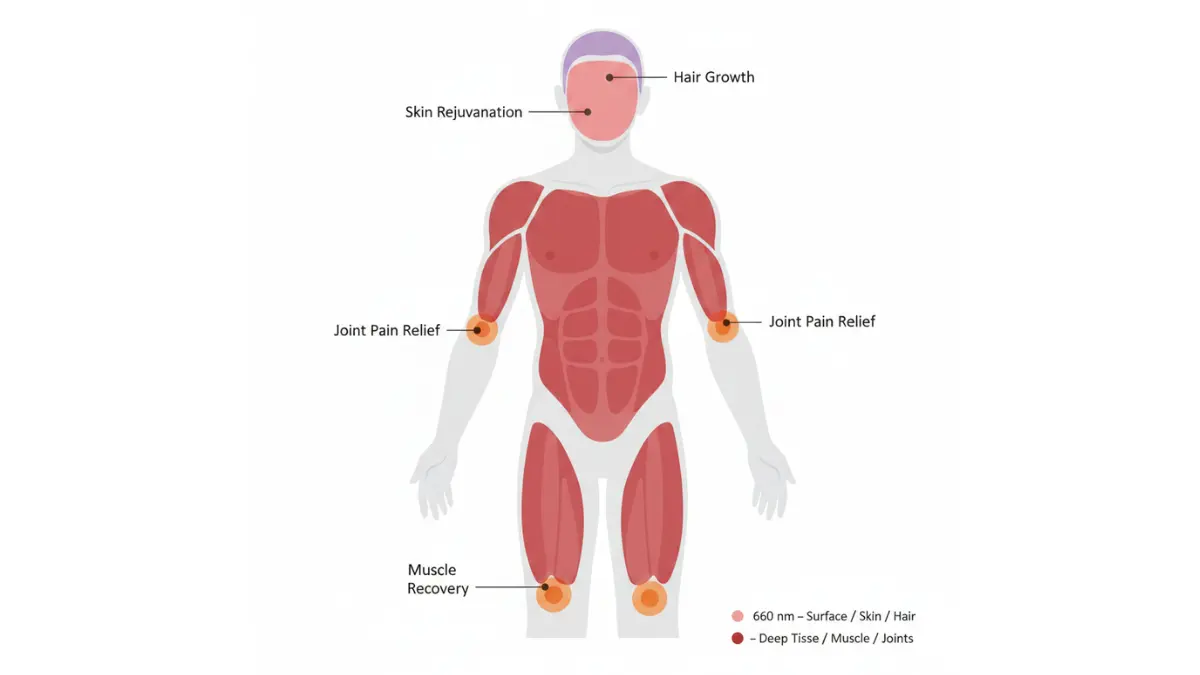
Red light therapy for inflammation operates through distinct pathways: 660nm reduces surface-level swelling while 850nm penetrates 8-10mm to reach deeper tissue similar to how targeted treatments address chronic pain conditions. Research confirms combining wavelengths delivers superior outcomes for multi-layer healing.
What This Means For You: Choosing between a red light therapy mask versus full body panel depends on your primary goal—wrinkle reduction requires different specifications than joint pain management.
660nm vs 850nm—Choosing the Right Wavelength for Your Goals
Understanding red light therapy wavelength differences determines treatment success. The 660nm vs 850nm red light debate centers on penetration depth and cellular targets.
Wavelength Comparison
| Specification | 660nm (Red Light) | 850nm (Near-Infrared) |
|---|---|---|
| Penetration Depth | 8-10mm (skin layer) | Up to 50mm (deep tissue) |
| Primary Target | Surface collagen, skin cells | Muscles, joints, bones |
| Best For | Anti-aging, acne, wound healing | Chronic pain, athletic recovery, inflammation |
| Visibility | Visible red glow | Invisible to human eye |
Research from the National Institutes of Health confirms 850nm wavelengths penetrate tissue 2-3 times deeper than 660nm, reaching muscle and joint structures similar to how athletes monitor recovery zones with a Pace Calculator during training optimization. Clinical data shows combining both wavelengths delivers superior multi-layer treatment outcomes.
Red light therapy treatment time varies by wavelength: 660nm requires 10-15 minutes for facial protocols, while 850nm deep tissue sessions extend to 15-20 minutes. Dual-wavelength devices eliminate the need to choose—professional panels deliver both simultaneously for comprehensive cellular activation.
What This Means For You: Facial concerns demand 660nm precision; joint pain or muscle recovery requires 850nm depth penetration for measurable clinical outcomes.
Best Red Light Therapy Devices 2025—FDA-Cleared Options That Work
Best red light therapy devices 2025 deliver measurable outcomes only when they meet FDA medical device clearance standards for wavelength accuracy and power output. Selecting the right red light therapy devices depends on treatment goals and coverage area.
For Face & Anti-Aging
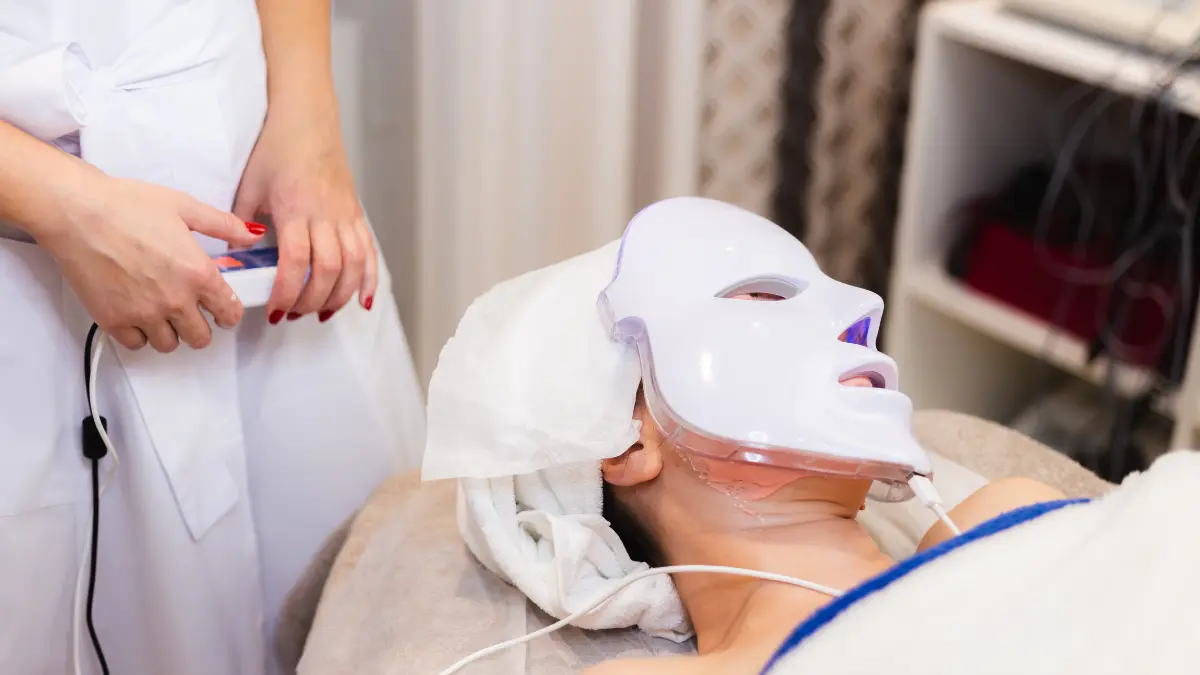
Red light therapy mask options dominate the facial treatment category with FDA cleared red light therapy specifications typically delivering 630-660nm wavelengths. Clinical-grade masks require 10-15 minute sessions for wrinkle reduction and collagen stimulation comparable to how individuals track body composition changes with a Body Fat Calculator during wellness optimization programs.
- Price range: $150-$500
- Coverage: Full face panels
- HSA FSA red light therapy eligibility: Most FDA-cleared masks qualify under IRS medical expense guidelines
For Full Body & Pain Management
Full body red light therapy panel systems deliver professional-grade treatment with dual 660nm/850nm wavelengths for comprehensive coverage. Medical grade red light therapy devices feature power densities of 40-100 mW/cm² necessary for deep tissue penetration similar to protocols athletes follow for ACL recovery timelines.
- Price range: $800-$2,500
- Coverage: 12×36 inch to full body
- Treatment capacity: Chronic pain, inflammation, muscle recovery
Portable & Targeted Treatment
Portable red light therapy device options include handheld wands and targeted panels for spot treatment at $100-$400 price points. At home red light therapy machines in this category suit joint-specific applications.
Key FDA Clearance Factor: Devices listing specific wavelength outputs (±10nm tolerance) and power densities indicate regulatory compliance versus generic “wellness” products lacking clinical specifications.
Red Light Therapy Cost + HSA/FSA Coverage Guide
Red light therapy cost ranges dramatically based on device specifications and treatment area coverage. Budget red light therapy devices for home use start at $100-$300 for handheld units, mid-range panels reach $400-$800, while professional red light therapy devices delivering clinical-grade specifications cost $1,000-$2,500.
HSA FSA red light therapy qualification depends on medical necessity documentation. IRS Publication 502 permits tax-advantaged spending for devices treating diagnosed medical conditions—chronic pain, arthritis, or dermatological disorders qualify with physician documentation. Submitting a Letter of Medical Necessity (LMN) from your healthcare provider ensures reimbursement approval similar to how individuals optimize healthcare spending alongside tracking metabolic health markers.
Investment calculation: A $1,200 panel delivering 1,000+ treatments costs $1.20 per session versus $50-$150 for professional clinic sessions. At home red light therapy machines reach cost-effectiveness after 10-25 uses depending on purchase tier and treatment frequency goals.
How to Use Red Light Therapy Safely + What to Expect
How to use red light therapy correctly determines clinical outcomes and red light therapy safety. NIH research confirms minimal adverse effects when protocols follow evidence-based parameters.
Treatment Protocol Guidelines
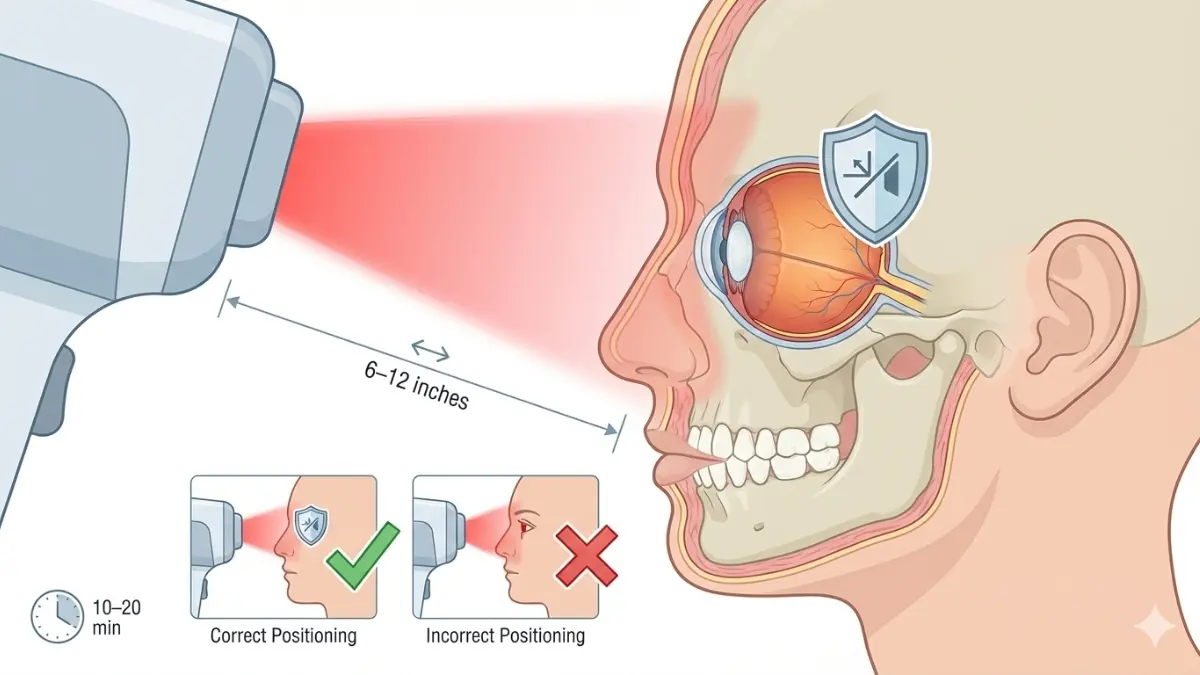
- Distance: Position device 6-12 inches from target area
- Duration: 10-20 minutes per session (varies by wavelength and device power)
- Frequency: 3-5 sessions weekly for 8-12 weeks
- Timing: Consistency matters more than time of day; pair with optimal sleep cycles for cellular recovery enhancement
Red light therapy results manifest gradually—skin improvements appear at 4-6 weeks, while red light therapy for chronic pain relief requires 8-12 weeks of consistent treatment similar to recovery timelines for preventive cardiovascular protocols. Red light therapy before and after expectations should account for cumulative effects rather than immediate transformation.
Side Effects & Safety Considerations
Red light therapy side effects remain minimal when devices meet FDA specifications—temporary mild warmth or eye strain occur in less than 5% of users. Eye protection proves critical: never stare directly into LED arrays; indirect exposure or protective eyewear prevents retinal stress particularly important for individuals monitoring vision health.
Contraindications: Avoid use over active cancers, during pregnancy without physician clearance, or with photosensitizing medications. Proper hydration levels support cellular response to photobiomodulation.
Disclaimer: This article is for educational purposes and not medical advice. Consult your healthcare provider before starting red light therapy, especially for chronic conditions or if you have photosensitivity disorders.
Frequently Asked Questions About Red Light Therapy
1. Does red light therapy actually work?
Yes, when using FDA-cleared devices at 660nm or 850nm wavelengths with consistent 10-20 minute sessions 3-5 times weekly for 8-12 weeks.
2. How long does it take to see red light therapy results?
Skin improvements appear in 4-6 weeks; pain relief and deep tissue benefits require 8-12 weeks of consistent treatment.
3. What’s the difference between 660nm and 850nm red light therapy?
660nm penetrates 8-10mm for skin-level benefits (wrinkles, acne); 850nm reaches 50mm deep for muscle, joint, and chronic pain relief.
4. Are there any red light therapy side effects?
Minimal—less than 5% experience temporary mild warmth or eye strain when following proper distance (6-12 inches) and duration guidelines.
5. Can I use HSA or FSA for red light therapy devices?
Yes, FDA-cleared devices qualify with a Letter of Medical Necessity (LMN) from your physician for diagnosed conditions like chronic pain or arthritis.
6. How often should I use red light therapy?
3-5 sessions per week with 10-20 minute treatments; daily use is safe but results depend on consistency over 8-12 weeks, not frequency alone.
7. Is red light therapy safe for eyes?
Safe with proper precautions—avoid staring directly at LED arrays and use protective eyewear; indirect exposure during facial treatments poses minimal risk.
About this content
How this article was put together: researched from recognised health sources, drafted with the help of AI tools, and edited by hand, with sources linked throughout.

Sameer Patel is the founder and editor of My Medicine Advisor. He is not a doctor or medical professional — before starting this site he worked in banking,…
Medical disclaimer
The content on MyMedicineAdvisor is provided for general informational and educational purposes only and is not a substitute for professional medical advice, diagnosis, or treatment. Health information on this website should not be used to diagnose, treat, cure, or prevent any condition without guidance from a qualified healthcare professional. Always seek the advice of your doctor, physician, or another licensed healthcare provider with any questions you may have regarding a medical condition, symptoms, medications, or treatment decisions.