
On This Page – Quick Medical Summary
The short answer: Yes — physical therapy works. Studies confirm a 68–72% overall success rate across most conditions. Back pain patients experience 40–50% pain reduction in just 4–6 weeks. Starting PT within 3 days of onset cuts surgery risk by 53% and total healthcare costs by 44%. Below is everything the research actually says — including when PT may not be the right call.
What Is Physical Therapy, Really?
The Definition That Actually Matters
Physical therapy (PT) is a licensed, evidence-based healthcare practice focused on restoring movement, reducing pain, and improving function. A physical therapist evaluates your condition and designs a personalized rehabilitation plan using exercises, manual therapy, and physical modalities.
It is not massage. It is not general exercise. It is a clinical intervention that addresses the root cause of your movement problem.
According to the NIH Clinical Center’s Physical Therapy Program, PT provides “state-of-the-art evidence-based treatments beginning with patient assessment and continuing with therapeutic interventions designed to result in the highest levels of functional activity individualized for each patient.”
Physical Therapy vs. Physiotherapy — Are They the Same?
Yes — the terms are used interchangeably. “Physical therapy” is the standard term in the USA. “Physiotherapy” is more common in the UK, Canada, and Australia. Both describe the same regulated healthcare profession.
As confirmed by the National Institutes of Health InformedHealth resource, both involve “exercises, massages, and treatments based on physical stimuli such as heat, cold, electrical currents, or ultrasound.”
What Does a Physical Therapist Actually Do?
A licensed physical therapist (DPT — Doctor of Physical Therapy) does far more than assign stretches. During your sessions, your PT will:
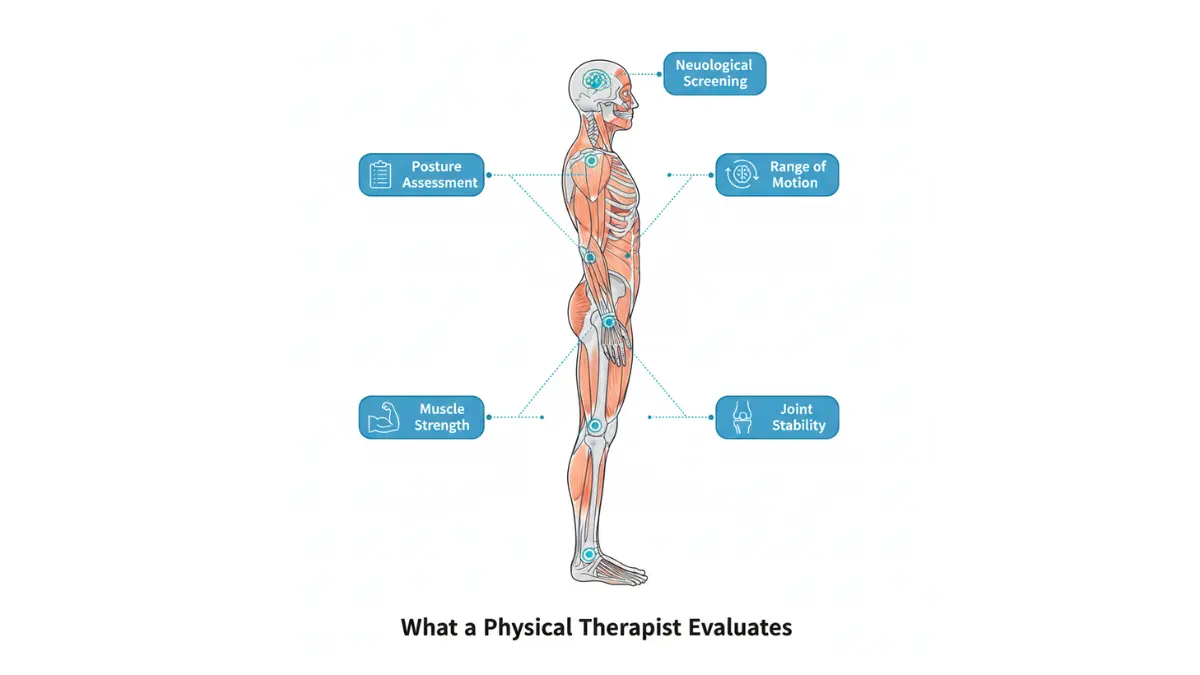
- Evaluate your posture, range of motion, strength, and movement patterns
- Diagnose what’s causing your movement dysfunction
- Design a personalized treatment plan with measurable goals
- Perform hands-on manual therapy, joint mobilization, or soft tissue work
- Guide you through therapeutic exercises tailored to your condition
- Monitor your progress and adjust the plan in real time
- Educate you on how to self-manage and prevent re-injury
If you’re unsure whether your current symptoms warrant a referral, use our Symptom Checker to get a clearer picture of what your body may be telling you.
Quick Comparison: PT vs. Similar Therapies
| Feature | Physical Therapy | Chiropractic | Occupational Therapy |
|---|---|---|---|
| Primary Focus | Movement & function | Spinal alignment | Daily life skills |
| Who Provides It | Licensed DPT | Licensed DC | Licensed OT |
| Treats Muscles? | ✅ Yes | Partial | Partial |
| Post-Surgery? | ✅ Standard | ❌ Rare | ✅ Yes |
| Insurance Covered? | ✅ 85% plans | Varies | ✅ Most plans |
| Evidence Base | Very High | Moderate | High |
8 Types of Physical Therapy — Which One Is Right for You?
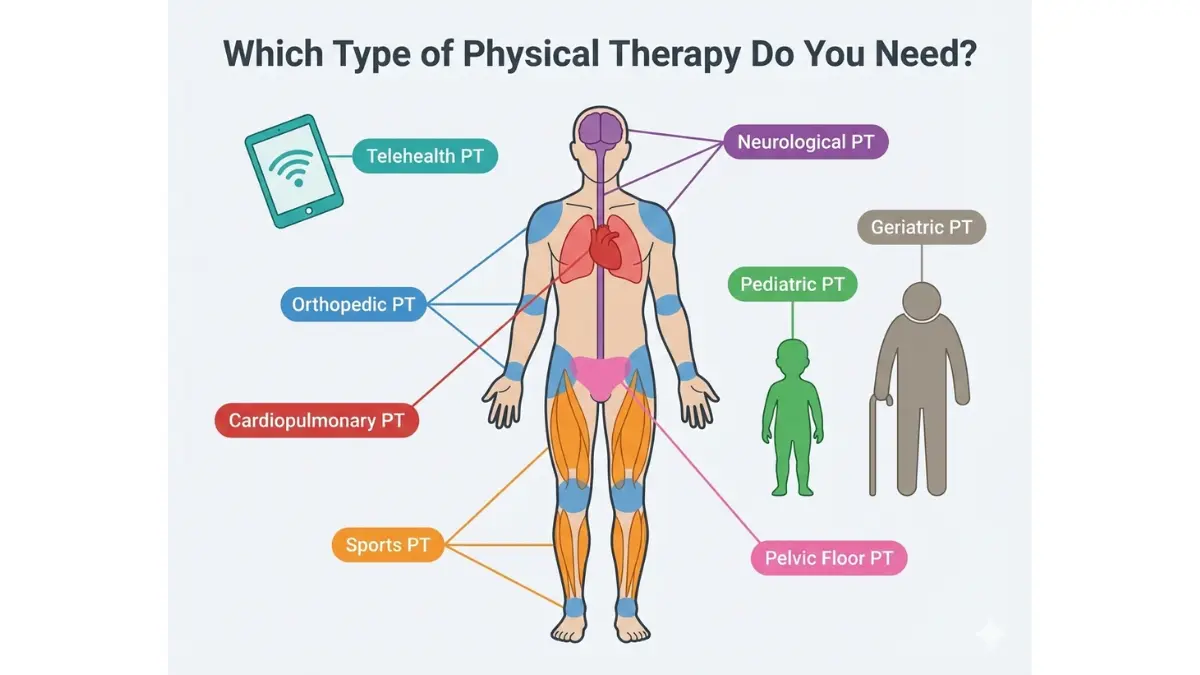
Not all physical therapy is the same. The type your doctor recommends depends entirely on your condition, age, and goals. Here are the 8 primary types practiced in the USA today.
1. Orthopedic Physical Therapy
The most common type. Treats musculoskeletal injuries including back pain, joint replacements, ACL tears, and fractures. If your doctor prescribed PT after a surgery or sports injury, this is likely what you’ll receive. Our guide on knee replacement recovery includes what orthopedic PT looks like post-operatively.
2. Neurological Rehabilitation Therapy
Designed for patients with stroke, Parkinson’s disease, multiple sclerosis, or traumatic brain injury (TBI). Focuses on retraining the brain-body connection through neuroplasticity-based approaches.
3. Pediatric Physical Therapy
Helps children with developmental delays, cerebral palsy, genetic disorders, or orthopedic conditions achieve age-appropriate motor milestones.
4. Geriatric Physical Therapy
Targets older adults facing arthritis, osteoporosis, balance issues, or post-hip-fracture recovery. Studies show early PT initiation after geriatric hip fracture surgery is associated with shorter hospital stays and lower readmission rates.
5. Cardiopulmonary Physical Therapy
Used after heart attacks, COPD, or cardiac surgery to rebuild aerobic capacity and breathing efficiency. During recovery, tracking your heart rate zones during exercise can help optimize your progress and avoid overexertion.
6. Pelvic Floor Physical Therapy
A widely-searched but underserved specialty. Treats urinary incontinence, pelvic organ prolapse, postpartum pain, and pelvic floor dysfunction. This type is gaining significant traction in the USA — yet none of the top competitor sites cover it in-depth.
7. Sports Physical Therapy
Focuses on athletic injuries, performance optimization, and return-to-sport protocols. Athletes recovering from injury can benchmark their strength milestones using our 1RM Calculator to track power output during sports physical therapy.
8. Telehealth Physical Therapy (The 2026 Game-Changer)
Virtual PT delivered via secure video platforms. Post-pandemic data confirms that nearly 47% of PT sessions now incorporate telehealth components. A 2025 randomized trial published in Current Reviews in Musculoskeletal Medicine (PMC) confirmed teleneurorehabilitation matches in-person therapy effectiveness for Parkinson’s disease patients.
Type Comparison at a Glance
| Type | Best For | Avg. Sessions | Telehealth Option? |
|---|---|---|---|
| Orthopedic | Back pain, joint injury | 12–24 | ✅ Partial |
| Neurological | Stroke, Parkinson’s | 20–40+ | ✅ Yes |
| Pediatric | Children, developmental | Variable | ✅ Yes |
| Geriatric | Falls, hip fracture | 12–20 | Partial |
| Cardiopulmonary | Post-cardiac | 12–18 | Partial |
| Pelvic Floor | Incontinence, postpartum | 8–12 | ✅ Yes |
| Sports | Athletic injury | 10–20 | ✅ Yes |
| Telehealth | Remote patients | Same as in-person | ✅ Fully |
Does Physical Therapy Actually Work? What 2026 Research Says
This is the question competitors refuse to answer directly. Here is what the data actually shows.
Overall Success Rates — The Numbers
Research consistently confirms physical therapy is effective across a wide range of conditions:
- 68–72% of patients report significant improvement following a full course of PT
- Back pain patients see a 40–50% reduction in pain intensity within 4–6 weeks
- Post-surgical rehabilitation reduces recovery time by 20–30% compared to no PT
- Adherence to a home exercise program increases successful outcomes by 70%
- 85% of patients with similar conditions report significant improvement after completing their prescribed PT course
Physical Therapy for Back Pain — What Studies Confirm
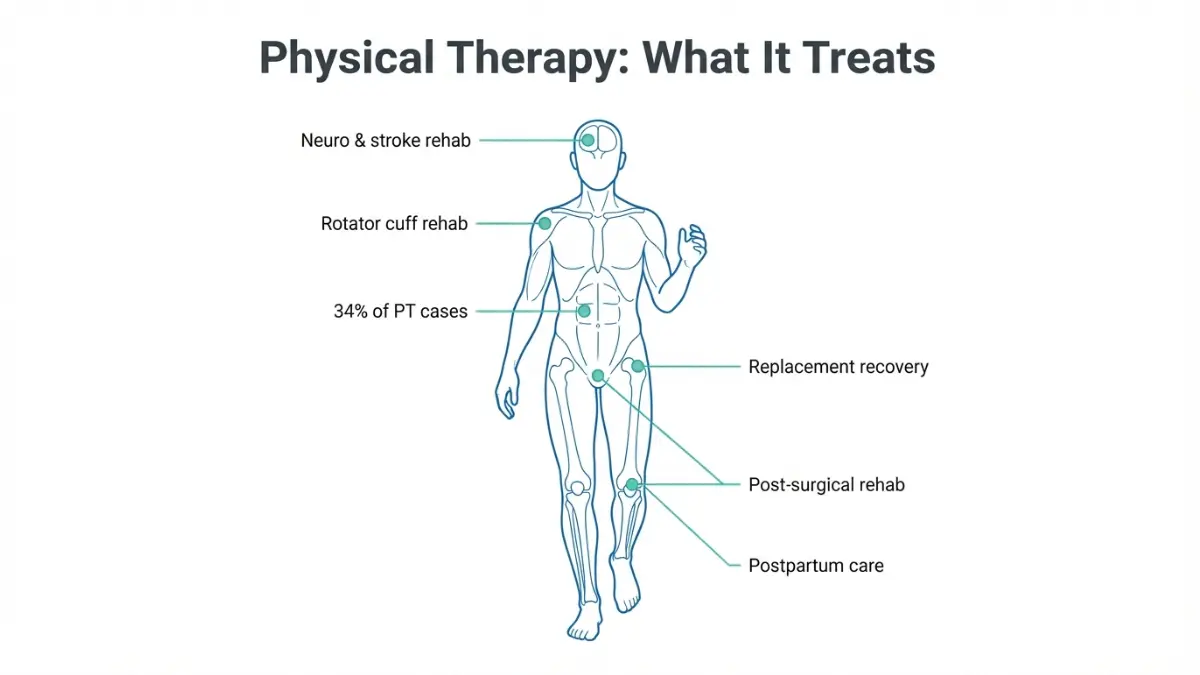
Back pain represents approximately 34% of all physical therapy cases in the USA.
Research published in peer-reviewed journals and summarized by the NIH Pain and Physical Therapy PMC resource confirms that PT is effective “in the management of chronic pain, particularly addressing the underlying physical, psychological, and social contributors.”
🔑 What This Means For You: People who begin physical therapy within 3 days of back pain onset have:
- 44% lower total healthcare costs
- 53% lower chance of needing surgery
- 55% lower risk of opioid use
Waiting even a few weeks dramatically worsens these odds.
PT After Surgery — Does It Speed Recovery?
Yes — and significantly. Key findings:
- Post-surgical PT reduces recovery time by 20–30%
- For total knee replacement, PT before and after surgery improves outcomes substantially (see our detailed guide on knee replacement recovery)
- For hip fracture, early PT initiation is associated with shorter hospital stays
- For shoulder surgery, 70% of rotator cuff patients avoid repeat surgery with proper PT
Physical Therapy for Chronic Pain — The Opioid Alternative
This is one of the most important public health stories in modern medicine:
- Prescription drug dependency among chronic pain patients dropped from 70% to 57% between 2016 and 2021 — largely attributable to expanded PT access
- PT directly targets the neurological, physical, and psychological components of chronic pain
- AI-integrated PT practices now achieve 35% better patient outcomes while reducing treatment time by 40%
Your BMI can also affect PT outcomes — patients with higher BMI may need modified exercise protocols. Track your baseline with our BMI Calculator before starting a program.
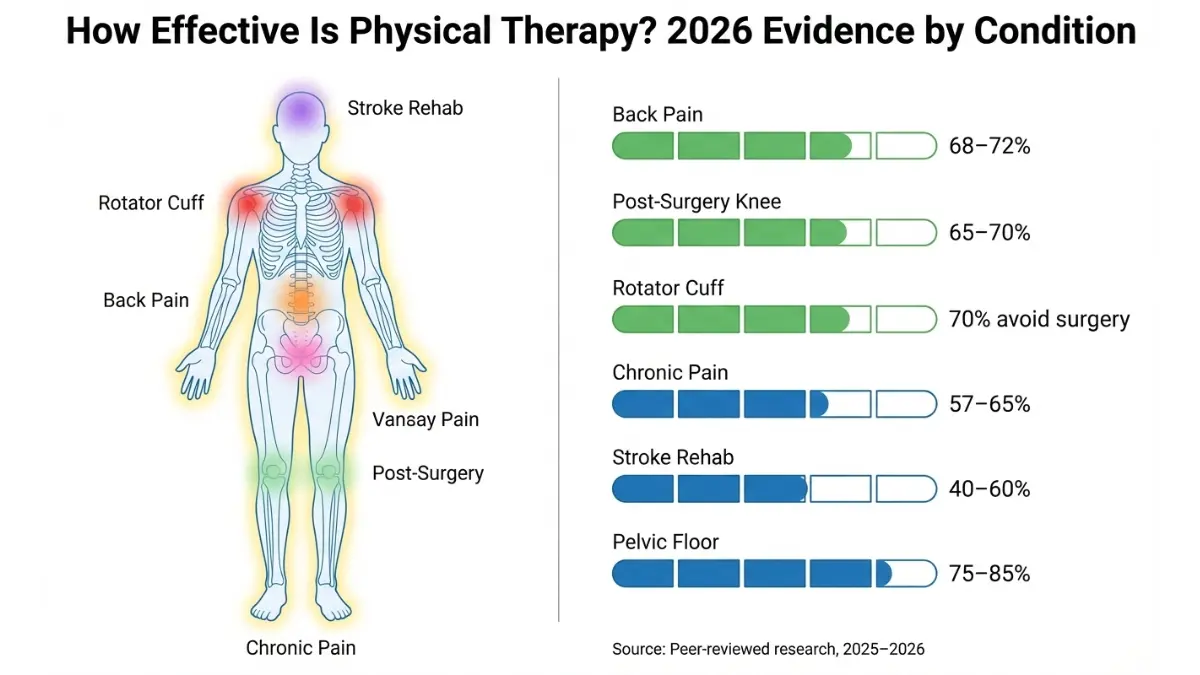
Evidence Summary Table — Condition by Condition
| Condition | Success Rate | Time to Results | Evidence Strength |
|---|---|---|---|
| Low Back Pain | 68–72% | 4–6 weeks | ⭐⭐⭐⭐⭐ Very High |
| Post-Knee Surgery | 65–70% | 8–12 weeks | ⭐⭐⭐⭐⭐ Very High |
| Rotator Cuff | 70% avoid surgery | 6–10 weeks | ⭐⭐⭐⭐⭐ Very High |
| Chronic Pain | 57–65% | 6–8 weeks | ⭐⭐⭐⭐ High |
| Stroke Rehab | 40–60% function restored | 12–24 weeks | ⭐⭐⭐⭐ High |
| Concussion | Faster by 3–4 weeks vs. rest | 2–4 weeks | ⭐⭐⭐ Moderate |
| Pelvic Floor | 75–85% | 8–12 weeks | ⭐⭐⭐⭐ High |
When Physical Therapy Does NOT Work
This is where your competitors go silent — and where we build your trust permanently.
PT is not effective or sufficient in the following situations:
- Severe structural damage requiring surgical correction (e.g., complete ligament rupture, advanced spinal stenosis with nerve compression)
- Active infection in the target area — PT can spread inflammation
- Unstable fractures that have not been surgically stabilized
- Certain cancers affecting bone — PT must be modified to avoid pathological fracture
- Non-adherence — PT consistently fails when patients skip sessions or ignore home exercises
🔑 What This Means For You: If you’ve done 6–8 weeks of consistent PT without measurable improvement, request a re-evaluation. A good physical therapist will refer you onward, not keep billing you. See also our related guide on shoulder surgery success rates for cases where surgery becomes necessary.
What to Expect at Your First Physical Therapy Session
71% of people who have never visited a physical therapist are afraid it will hurt. Most report the opposite. Here’s exactly what happens.
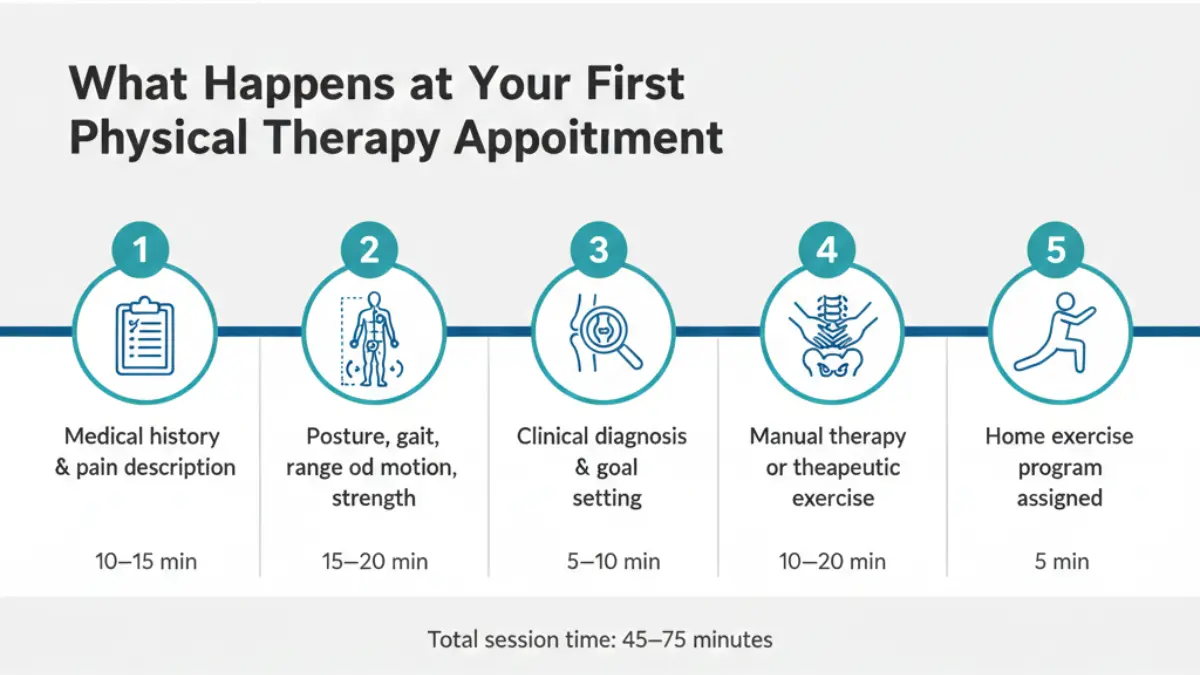
Step-by-Step: Your First PT Session (45–75 Minutes)
Step 1 — Intake & History (10–15 min) Your PT reviews your medical history, imaging reports, doctor’s referral, and your pain description. Be specific about when it hurts, what makes it better or worse, and your functional goals.
Step 2 — Physical Examination (15–20 min) Your PT observes your posture, gait, and range of motion. They may ask you to walk, bend, or perform basic movements to assess your movement patterns. Strength testing and sensory checks may be included.
Step 3 — Diagnosis & Goal Setting (5–10 min) Your PT explains what they found, gives you a clinical working diagnosis, and sets measurable short-term and long-term goals.
Step 4 — First Treatment (10–20 min) Most first sessions include a gentle introduction to your treatment. This may be manual therapy, basic therapeutic exercises, or education about posture and movement mechanics.
Step 5 — Home Program Assignment You’ll receive a home exercise program (HEP). Studies confirm that patients who adhere to their HEP have 70% better outcomes. Do not skip this.
Does Physical Therapy Hurt?
The honest answer: It can be uncomfortable — but it should never be sharply painful.
- “Therapeutic discomfort” is normal — a mild stretch or muscle fatigue is expected
- Sharp, shooting, or worsening pain is never acceptable — tell your therapist immediately
- The “no pain, no gain” rule does not apply to PT
- Soreness the day after treatment (like post-workout soreness) is common and normal
🔑 What This Means For You: A good physical therapist will constantly check in. If yours doesn’t — ask for adjustments. You are always in control of your care.
What to Bring to Your First PT Appointment
- ✅ Doctor’s referral or prescription (if required by your insurance)
- ✅ Insurance card and photo ID
- ✅ Any relevant imaging (MRI, X-ray reports)
- ✅ List of current medications
- ✅ Comfortable, loose-fitting clothing (shorts for leg issues, tank top for shoulder issues)
- ✅ Athletic shoes
Hydration tip: Proper hydration directly affects tissue recovery and joint lubrication. Before and after PT sessions, use our Water Intake Calculator to ensure your fluid levels support optimal healing.
Physical Therapy Cost in 2026 — How Many Sessions, With & Without Insurance
This is the section your doctor never explains and that WebMD and Healthline completely avoid. Here are the real numbers.
How Much Does Physical Therapy Cost Per Session? (2026 Rates)
| Scenario | Cost Per Session | Typical Total Cost |
|---|---|---|
| With Insurance (copay) | $20–$75 | $200–$1,450 |
| Without Insurance | $70–$160 | $840–$3,850 |
| Telehealth PT | $40–$100 | $320–$1,200 |
| Initial Evaluation | $150–$200 (one-time) | Added to first visit |
| Medicare Part B | 80% after deductible | Varies by annual usage |
| In-Home PT | $100–$150 per visit | Transportation may be added |
How Many Sessions Will You Need? (By Condition)
| Condition | Sessions/Week | Duration | Total Sessions |
|---|---|---|---|
| Back Pain (acute) | 2–3x | 6–8 weeks | 12–24 |
| Knee Injury | 2–3x | 6–8 weeks | 8–24 |
| Rotator Cuff | 2–3x | 8–12 weeks | 26–34 |
| Post-Stroke | 3–5x | 12–24 weeks | Variable |
| Pelvic Floor | 1–2x | 8–12 weeks | 8–12 |
| Concussion | 1–2x | 2–4 weeks | 4–8 |
| Post-Knee Replacement | 2–3x | 8–12 weeks | 16–24 |
Does Insurance Cover Physical Therapy?
Yes — in most cases. Key insurance facts for 2026:
- 85% of private health insurance plans include physical therapy benefits
- Medicare Part B covers 80% of approved PT costs after you meet your annual deductible
- Prior authorization is required by 62% of insurance policies — always confirm before your first session
- Annual visit limits typically range from 20–60 sessions per year
- Telehealth PT is now covered by 85% of major insurers
How to Reduce Your Out-of-Pocket PT Costs
- Use HSA or FSA funds — both can be applied to PT copays and out-of-pocket costs
- Ask about cash discounts — many clinics offer 30–50% reductions for cash payment
- Check community or university clinics — supervised student PTs offer lower-cost sessions
- Try telehealth PT — typically $40–$100 per session vs. $70–$160 in-person
- Buy a session bundle — many clinics offer package discounts for pre-paying multiple visits
- Review your plan’s deductible — if it’s already met, your out-of-pocket cost drops dramatically
For patients managing weight as part of their recovery, tracking your caloric needs during a PT program can support faster healing — our Calorie Deficit Calculator can help you balance nutrition alongside rehabilitation.
Physical Therapy in 2026 — New Treatments, AI Tools & When To Start
Physical therapy has undergone a transformation. What was once purely hands-on clinical care is now powered by artificial intelligence, virtual reality, and digital health platforms.
The 2026 Innovations Changing Physical Therapy
AI-Powered Motion Analysis Systems like SWORD Health’s wireless motion trackers use computer vision and machine learning to interpret movement patterns with 95% accuracy. Clinics using AI-integrated tools report 35% better patient outcomes and 40% shorter treatment times.
Virtual Reality (VR) Rehabilitation VR creates immersive therapy environments that dramatically improve adherence and reduce perceived pain. Patients report:
- 50–80% pain reduction during VR-assisted sessions
- 20 minutes of VR-guided PT feels like only 10 minutes subjectively
- Measurable improvements in six-minute walk tests of up to 19.55 meters
Telehealth PT Now a permanent fixture in US healthcare. Clinical data confirms telehealth matches in-person outcomes for most musculoskeletal and neurological conditions. Especially valuable for rural patients, post-surgical patients with limited mobility, and high-volume recovery programs.
Wearable Sensor-Guided PT Real-time biofeedback wearables guide patients through home exercise programs with precision monitoring — reducing incorrect technique and missed sessions.
When Should You See a Physical Therapist? — Decision Checklist
See a physical therapist if you experience any of the following:
- ✅ Pain that has lasted more than 2–3 weeks without improvement
- ✅ Pain that limits your daily activities (walking, stairs, sitting, sleeping)
- ✅ You’ve just had orthopedic surgery (knee, hip, shoulder, spine)
- ✅ You’ve had a stroke, TBI, or neurological event
- ✅ You experience repeated injuries in the same area
- ✅ Your doctor recommended PT and you haven’t started yet
- ✅ You have balance problems or a fear of falling
- ✅ You’re experiencing pelvic floor issues (incontinence, postpartum pain)
🔑 What This Means For You: PT in 2026 is not just a recovery tool — it is a prevention system. The earlier you start, the better your outcomes. Every week of delay reduces your statistical probability of avoiding surgery, opioids, and long-term disability.
Quick Comparison: Physical Therapy vs. Alternatives
| Feature | Physical Therapy | Chiropractic | Rest Alone | Pain Medication |
|---|---|---|---|---|
| Evidence Level | ⭐⭐⭐⭐⭐ | ⭐⭐⭐ | ⭐⭐ | ⭐⭐⭐ |
| Treats Root Cause | ✅ Yes | Partial | ❌ No | ❌ No |
| Reduces Surgery Risk | ✅ 53% lower | Limited evidence | ❌ No | ❌ No |
| Reduces Opioid Need | ✅ Significantly | Partial | ❌ No | N/A |
| Long-Term Results | ✅ Durable | Moderate | ❌ Temporary | ❌ Temporary |
| Insurance Coverage | ✅ 85% of plans | Varies | N/A | ✅ Most plans |
For related recovery guidance, explore our in-depth articles on ACL tear recovery time and hip replacement surgery recovery — both of which rely heavily on structured physical therapy protocols.
The American Physical Therapy Association’s Guide to Physical Therapist Practice (DA 72+, updated 2023) provides a comprehensive framework on how licensed PTs evaluate and treat patients across all specialties — a trusted resource directly from the governing professional body.
Frequently Asked Questions — Physical Therapy (2026)
Q1: Does physical therapy actually work?
Yes. Studies confirm a 68–72% overall success rate across most conditions. Outcomes improve significantly with early intervention and consistent adherence to the treatment plan.
Q2: How long does physical therapy take to show results?
Most patients notice meaningful improvement within 2–4 weeks. Back pain patients typically see 40–50% pain reduction within 4–6 weeks of starting treatment.
Q3: Is physical therapy painful?
Mild discomfort or muscle fatigue is normal. Sharp or worsening pain is not — tell your therapist immediately. Approximately 71% of new patients fear pain beforehand, but most report much less discomfort than expected.
Q4: How many sessions of physical therapy do I need?
It depends on your condition. Back pain typically requires 12–24 sessions over 6–8 weeks. Rotator cuff injuries may need 26–34 sessions. Your therapist will set a clear timeline at your initial evaluation.
Q5: Can physical therapy replace surgery?
In many cases, yes. 70% of rotator cuff patients avoid surgery with proper PT. People who start PT for back pain within 3 days have a 53% lower chance of eventually needing surgery.
Q6: What is the difference between PT and physiotherapy?
No clinical difference — the terms are synonymous. “Physical therapy” is used in the USA; “physiotherapy” is standard in the UK, Canada, and Australia.
Q7: Is physical therapy covered by insurance?
Yes — 85% of private plans cover PT. Medicare Part B covers 80% after deductible. Prior authorization is required by 62% of policies. Always verify with your insurer before your first appointment.
Q8: Can I do physical therapy at home?
Yes — telehealth PT is now mainstream and matches in-person outcomes for most conditions. Your therapist will also provide a home exercise program to supplement clinic sessions.
Q9: What conditions does physical therapy treat?
PT treats back pain, sports injuries, post-surgical recovery, stroke, Parkinson’s, pelvic floor dysfunction, vertigo, concussions, arthritis, osteoporosis, and many more conditions across all ages.
Q10: When should I stop physical therapy?
Stop when you’ve achieved your functional goals and your therapist confirms you can independently maintain progress. If you’ve completed 6–8 weeks without measurable improvement, request a re-evaluation or second opinion.
Q11: Is telehealth physical therapy as effective as in-person?
For most musculoskeletal and neurological conditions, yes. A 2025 randomized trial confirmed telehealth PT matches in-person effectiveness for Parkinson’s patients. It also offers lower cost, no travel time, and higher adherence rates.
⚠️ Medical Disclaimer: This article is for educational and informational purposes only. It does not constitute medical advice, diagnosis, or treatment. Always consult a licensed physical therapist or physician before beginning any rehabilitation program. Individual outcomes vary.
🔗 Related Articles on mymedicineadvisor.com:
- Knee Replacement 2026: Recovery & What to Expect
- Shoulder Surgery Success Rates 2026
- ACL Tear Recovery Time
- Hip Replacement Surgery 2026
About this content
How this article was put together: researched from recognised health sources, drafted with the help of AI tools, and edited by hand, with sources linked throughout.

Sameer Patel is the founder and editor of My Medicine Advisor. He is not a doctor or medical professional — before starting this site he worked in banking,…
Medical disclaimer
The content on MyMedicineAdvisor is provided for general informational and educational purposes only and is not a substitute for professional medical advice, diagnosis, or treatment. Health information on this website should not be used to diagnose, treat, cure, or prevent any condition without guidance from a qualified healthcare professional. Always seek the advice of your doctor, physician, or another licensed healthcare provider with any questions you may have regarding a medical condition, symptoms, medications, or treatment decisions.