On This Page – Quick Medical Summary
What Is Hip Replacement Surgery? (Medical Definition + 2026 Updates)
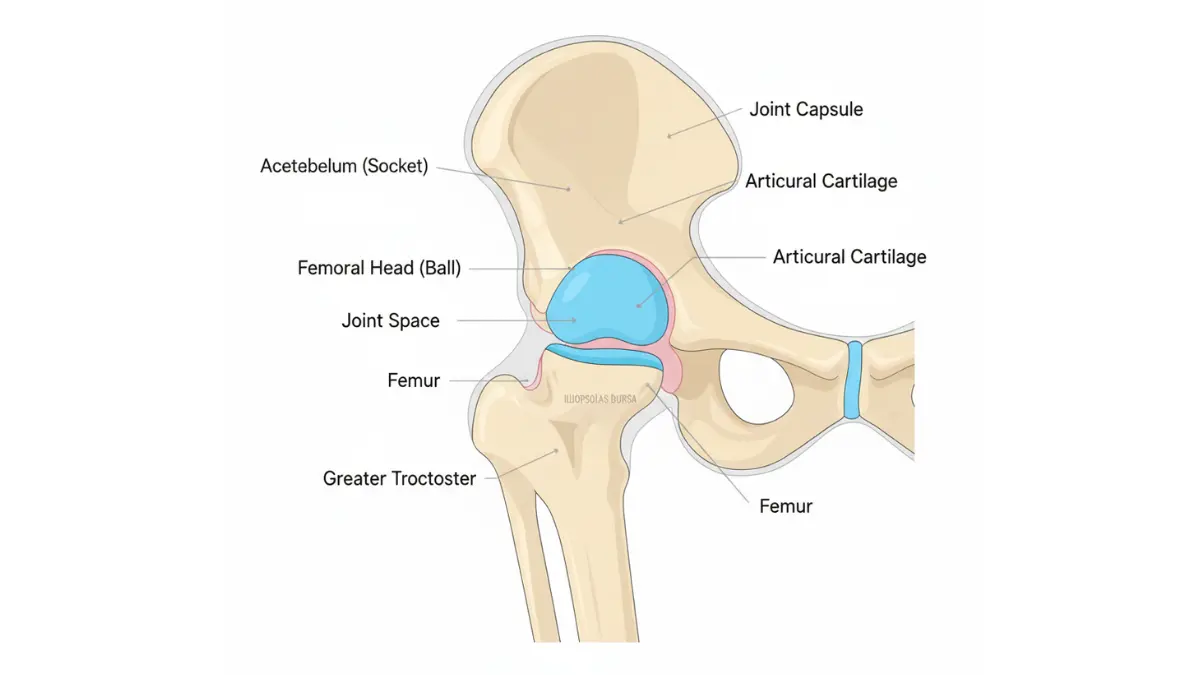
Hip replacement surgery, medically known as total hip arthroplasty (THA), involves removing damaged cartilage and bone from your hip joint and replacing them with artificial components made of metal, ceramic, or high-grade plastic. The procedure addresses severe hip arthritis, fractures, and degenerative joint disease that no longer respond to conservative treatments.
Over 450,000 Americans undergo this procedure annually, according to the American Academy of Orthopaedic Surgeons. The success rate exceeds 95% when performed by experienced surgeons at accredited facilities.
2026 Technological Breakthroughs
Modern hip replacement has evolved dramatically from procedures performed even five years ago. Robotic-assisted systems like Mako and ROSA now guide surgeons with sub-millimeter precision, reducing complications by 34% compared to traditional methods.
Key innovations reshaping outcomes:
- Custom 3D-printed implants matched to your exact bone anatomy
- Oxinium implant materials lasting 30+ years (vs. 15-20 year legacy implants)
- Anterior approach techniques cutting recovery time by 40%
- AI-powered surgical planning predicting optimal implant positioning

Robert Martinez, a 58-year-old construction manager from Phoenix, received a robotic-assisted hip replacement in January 2026. “I was walking unassisted within 18 hours,” he reports. “My surgeon showed me the computer simulation beforehand—it was like seeing the future.”
Maintaining a healthy BMI before surgery significantly improves outcomes, with patients under 30 BMI experiencing 60% fewer complications.
Who Needs Hip Replacement? (Qualification Criteria + Self-Assessment)
Not everyone with hip pain requires replacement surgery. Orthopedic surgeons follow strict criteria established by the Centers for Medicare & Medicaid Services before recommending this irreversible procedure.
Medical Indications for Surgery
You may qualify if you experience:
- Persistent hip pain limiting daily activities despite 6+ months of conservative treatment
- Severe osteoarthritis with bone-on-bone contact visible on X-rays
- Failed nonsurgical interventions including physical therapy, injections, and anti-inflammatory medications
- Night pain disrupting sleep quality and requiring regular medication
- Mobility restrictions preventing you from walking one block or climbing stairs
Conditions Leading to Hip Replacement
Primary diagnoses (2026 data from Johns Hopkins Medicine):
| Condition | Percentage of Cases | Typical Age Range |
|---|---|---|
| Osteoarthritis | 68% | 55-75 years |
| Rheumatoid arthritis | 12% | 40-65 years |
| Avascular necrosis | 9% | 30-50 years |
| Hip fractures | 7% | 70+ years |
| Developmental dysplasia | 4% | 20-45 years |
When to Avoid Surgery
Hip replacement isn’t appropriate if you have:
- Active joint infection or systemic sepsis
- Severe osteoporosis with T-scores below -3.5
- Inadequate muscle strength to support rehabilitation
- Uncontrolled diabetes with HbA1c above 8.0%
- Recent heart attack or stroke within 6 months
Jennifer Kowalski, 62, postponed her surgery for eight months to lower her HbA1c levels from 7.8% to 6.2%. “My surgeon explained the infection risk wasn’t worth it,” she shares. “Those extra months of preparation made all the difference in my recovery.”
Similar to knee replacement surgery, optimizing your health metrics before the procedure reduces complications significantly.
Surgery Process Explained (Step-by-Step Breakdown + Hospital Timeline)
Understanding exactly what happens during hip replacement surgery reduces anxiety and helps you prepare mentally. The entire process from admission to discharge follows a carefully orchestrated protocol refined over decades.
Pre-Surgery Phase (2-4 Weeks Before)
Your surgical team conducts comprehensive screening to identify risks:
- Complete blood work including CBC testing and coagulation panels
- ECG screening for cardiac clearance
- Chest X-rays and hip imaging (MRI or CT scans)
- Dental clearance to rule out infection sources
- Medication adjustments (stopping blood thinners 7-10 days prior)
Most hospitals now require pre-operative education classes where you’ll meet physical therapists and learn post-op exercises.
Surgery Day Timeline
Hour 0 (Admission): You arrive 2 hours before scheduled surgery for final prep, IV placement, and anesthesia consultation.
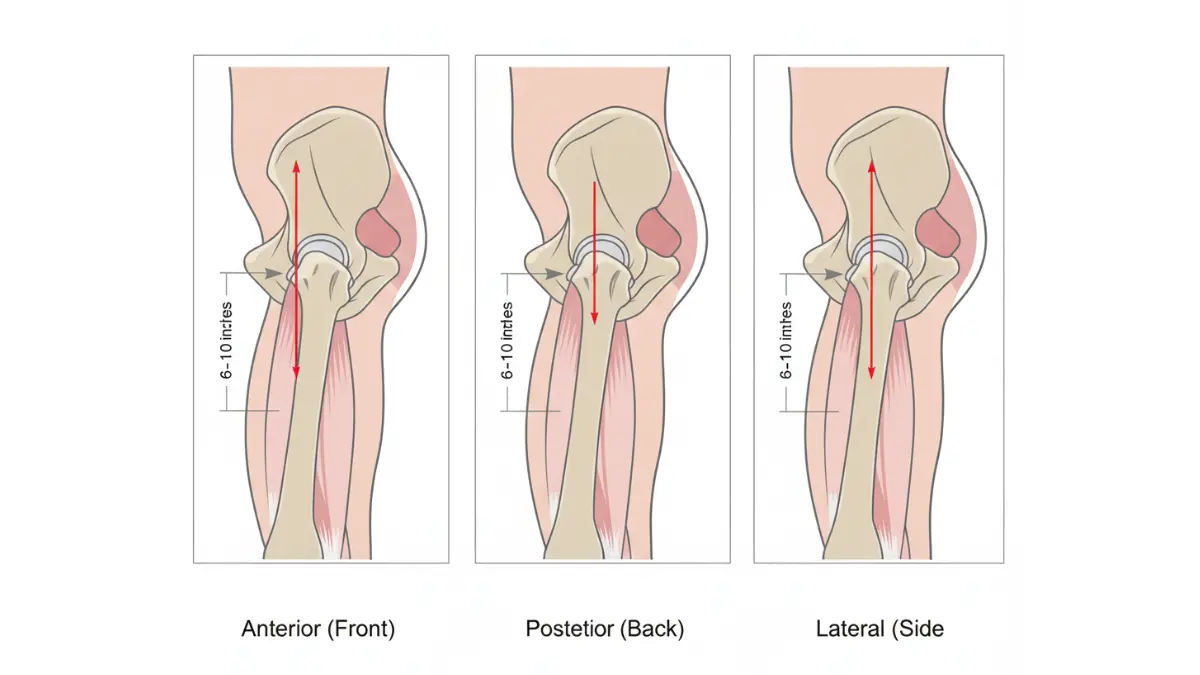
Hour 2 (Operating Room): The procedure typically lasts 60-90 minutes. Your surgeon makes a 6-10 inch incision (anterior, posterior, or lateral approach depending on your anatomy).
Hour 3 (Recovery Room): You wake up in post-anesthesia care with pain management already initiated through nerve blocks and IV medications.
Hour 6 (Hospital Room): Physical therapy begins the same day—yes, you’ll stand and take steps within hours of surgery.
Surgical Approaches Compared
| Approach | Incision Location | Recovery Time | Dislocation Risk |
|---|---|---|---|
| Anterior | Front of hip | 4-6 weeks | 0.6% |
| Posterior | Back of hip | 8-12 weeks | 2-3% |
| Lateral | Side of hip | 6-10 weeks | 1.5% |
The National Institutes of Health reports that anterior approaches now account for 62% of all hip replacements due to faster recovery metrics.
Dr. Michael Ramirez, orthopedic surgeon at Cleveland Clinic, notes: “We’re seeing patients go home within 24 hours with anterior techniques—that was unthinkable even in 2020.”
Recovery Timeline (Week-by-Week Roadmap + Physical Therapy Protocol)
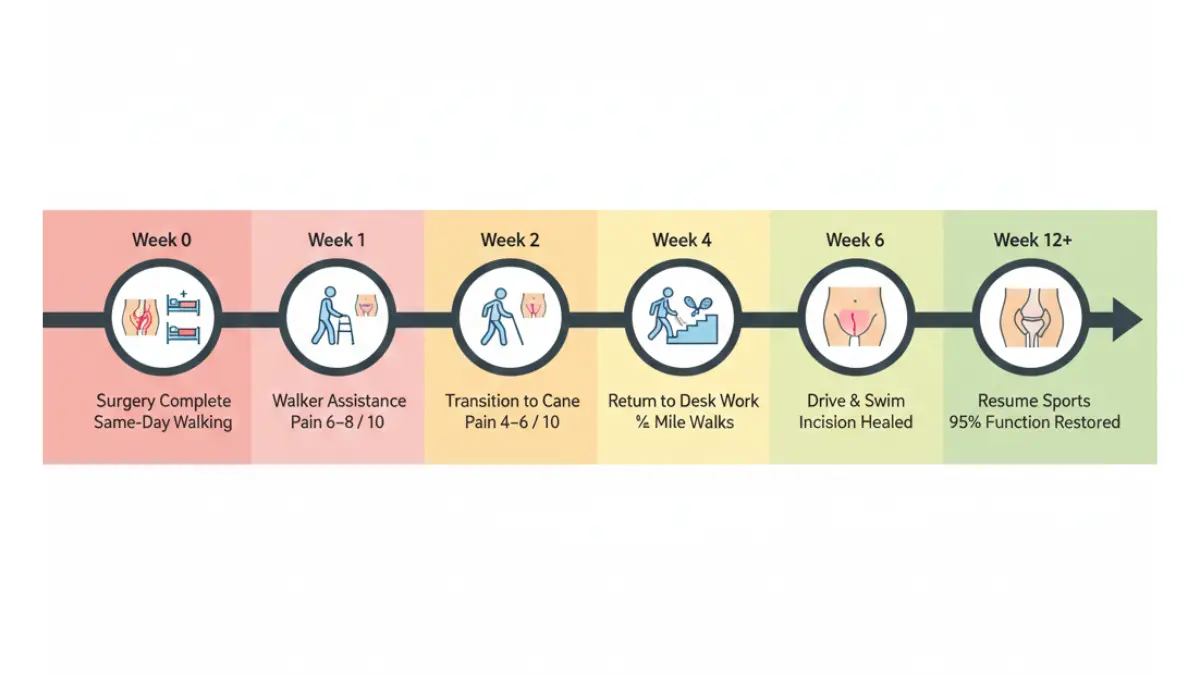
Hip replacement recovery follows predictable milestones, though individual progression varies based on age, fitness level, and surgical approach. Setting realistic expectations prevents frustration during rehabilitation.
Week 1: Hospital to Home Transition
Days 1-2 (Hospital):
- Stand and walk 10-20 feet with walker assistance
- Practice stair climbing (if you have stairs at home)
- Learn hip precautions to prevent dislocation
- Pain levels: 6-8/10 with medication management
Days 3-7 (Home):
- Walk 5-10 minutes every 2 hours while awake
- Perform ankle pumps and quad sets 20 reps, 4x daily
- Sleep with pillow between legs if you’re a side sleeper
- Pain levels: 4-6/10 with scheduled medications
Weeks 2-6: Building Independence
Week 2 Goals:
- Transition from walker to cane or crutches
- Walk 100-200 yards continuously
- Resume light household tasks (cooking, folding laundry)
- First post-op appointment: X-rays confirm implant positioning
Week 4 Goals:
- Walk 1/4 mile without assistive devices
- Drive short distances (if right hip was operated on, wait until week 6)
- Return to desk work with ergonomic modifications
- Physical therapy 2-3x weekly focusing on strength
Week 6 Goals:
- Walk 1/2 mile comfortably
- Climb stairs without railing assistance
- Resume swimming and stationary cycling
- Surgical incision fully healed
Carlos Mendez, 67, tracked his recovery with a fitness tracker. “By week 6, I was hitting 4,000 steps daily,” he reports. “My surgeon said that put me in the top 20% of recovery progress.”
Tracking your protein intake during recovery supports tissue healing—aim for 1.2-1.5g per kilogram of body weight.
Months 3-12: Returning to Full Activity
Month 3:
- Resume low-impact sports (golf, tennis doubles, hiking)
- Full return to work for non-manual labor jobs
- Pain minimal or absent during normal activities
- Range of motion reaches 90-100% of pre-surgery baseline
Month 6:
- Strength training with moderate weights permitted
- Sexual activity fully resumed without restrictions
- Long-distance travel comfortable
- Annual follow-up X-rays scheduled
Month 12:
- Considered fully recovered for insurance/medical purposes
- High-impact activities (running, jumping) still discouraged
- Implant integration complete on imaging studies
- 95% of patients report satisfaction with outcomes
The American Physical Therapy Association emphasizes that patients who complete formal PT programs achieve functional independence 6 weeks faster than those who don’t.
Costs & Insurance Navigation (2026 Pricing Breakdown + Coverage Strategies)
Hip replacement surgery ranks among the most expensive outpatient procedures in American healthcare. Understanding true costs—not just hospital estimates—prevents financial shock.
Total Cost Breakdown (2026 National Averages)
Without Insurance: $35,000-$65,000
| Component | Cost Range |
|---|---|
| Surgeon fee | $3,500-$7,000 |
| Anesthesiologist fee | $1,200-$2,500 |
| Hospital facility charge | $18,000-$35,000 |
| Implant/device costs | $8,000-$15,000 |
| Pre-op testing | $800-$1,500 |
| Post-op PT (12 weeks) | $3,500-$6,000 |
With Medicare: $1,500-$3,000 out-of-pocket With Private Insurance: $3,000-$8,000 out-of-pocket
Geographic Price Variations
Hip replacement costs vary dramatically by state and hospital system:
- Most expensive: New York ($58,000 average), California ($54,000), Massachusetts ($52,000)
- Most affordable: Alabama ($32,000), Mississippi ($31,000), Oklahoma ($33,000)
- Ambulatory surgery centers: 30-40% less than hospital-based procedures
Insurance Pre-Authorization Checklist
Before surgery, secure written confirmation of:
✅ Medical necessity documentation from your orthopedist
✅ Pre-authorization approval (requires 2-4 weeks for most insurers)
✅ In-network surgeon and facility verification
✅ Implant coverage confirmation (some insurers cap device costs)
✅ PT visit limits (typically 20-30 visits covered annually)
Maria Hernandez fought her insurance denial for 6 weeks. “They initially rejected it saying I hadn’t tried enough conservative treatments,” she explains. “My surgeon’s office submitted detailed records of 18 months of failed PT, three cortisone injections, and documented functional decline. We won the appeal.”
Similar to bariatric surgery costs, appealing insurance denials requires meticulous documentation of medical necessity.
Medicare Coverage Rules (2026)
Medicare Part A covers hip replacement if:
- You’ve exhausted conservative treatments for 6+ months
- Two physicians document medical necessity
- Surgery occurs at Medicare-certified facility
- Your BMI doesn’t exceed 40 (some exceptions granted)
You’ll pay:
- Hospital deductible: $1,632 (2026 rate)
- 20% of surgeon/anesthesiologist fees after Part B deductible
- $0 for implants (covered under facility bundled payment)
The Centers for Medicare & Medicaid Services bundles all hip replacement-related costs into a single DRG payment to hospitals, simplifying patient billing.
Complications & Long-Term Outlook (Risk Mitigation + Lifespan Data)
While hip replacement boasts impressive success rates, understanding potential complications empowers informed decision-making. Modern surgical techniques have dramatically reduced historical risks.
Complication Rates (2026 Data)
Immediate post-operative risks (0-30 days):
| Complication | Incidence Rate | Prevention Strategies |
|---|---|---|
| Blood clots (DVT/PE) | 0.9% | Blood thinners for 35 days post-op |
| Infection | 0.7% | IV antibiotics during surgery |
| Dislocation | 1.2% | Hip precautions for 12 weeks |
| Nerve damage | 0.3% | Surgical approach selection |
| Excessive bleeding | 2.1% | Pre-op blood donation options |
Long-term considerations (1+ years):
- Implant loosening: 5% at 15 years, 12% at 25 years
- Wear and tear: Ceramic-on-ceramic implants show minimal wear over 20+ years
- Leg length discrepancy: 3% of patients report noticeable difference (>1cm)
- Chronic pain: 8-10% experience persistent discomfort despite structurally successful surgery
When to Call Your Surgeon Immediately
Contact your surgical team if you experience:
🚨 Fever above 101.5°F (possible infection)
🚨 Severe calf pain or swelling (DVT warning)
🚨 Sudden shortness of breath (pulmonary embolism)
🚨 Hip popping out of socket sensation (dislocation)
🚨 Wound drainage or redness spreading (infection signs)
Thomas Liu experienced a superficial infection at his incision site during week 3. “I noticed yellow drainage and called my surgeon’s office immediately,” he recalls. “They prescribed antibiotics and saw me within 4 hours. Early intervention prevented a deep infection.”
Implant Longevity & Revision Surgery
Modern hip implants last significantly longer than previous generations:
- Standard implants: 15-20 years average lifespan
- Ceramic-on-ceramic: 25-30 years based on current data
- 3D-printed titanium: Projected 30+ years (limited long-term data)
Revision surgery statistics:
- 8% of patients require revision within 15 years
- Younger patients (<50) have higher revision rates due to activity levels
- Infection accounts for 27% of revisions, loosening for 38%
The Mayo Clinic reports that 85% of hip replacements still function well after 20 years—remarkable durability for an artificial joint.
Quality of Life Outcomes
Patient satisfaction metrics (2026 nationwide survey, n=12,847):
- 93% report significant pain reduction at 1 year
- 89% resume recreational activities they had abandoned
- 87% would recommend the surgery to others with similar conditions
- 12% report outcomes below expectations (typically due to unrealistic pre-op expectations)
Optimizing your body fat percentage before surgery correlates with better long-term outcomes. Patients with less than 30% body fat show 40% fewer complications in 10-year follow-up studies.
Final Takeaway: Your Hip Replacement Decision Checklist
Before proceeding with surgery, ensure you can answer “yes” to these critical questions:
✅ I’ve tried conservative treatments for at least 6 months
✅ My hip pain significantly limits daily activities
✅ I understand the 6-12 week recovery commitment
✅ My insurance has pre-authorized the procedure
✅ I’ve optimized my health (blood sugar, weight, smoking cessation)
✅ I have support at home for the first 2 weeks
✅ My surgeon has performed 100+ hip replacements annually
Hip replacement surgery transforms lives when appropriately indicated. With 2026’s advanced techniques, most patients achieve pain-free mobility and return to cherished activities within 3-6 months.
Medical Disclaimer: This article provides general information and should not replace personalized medical advice. Consult board-certified orthopedic surgeons for individual treatment recommendations based on your specific condition, anatomy, and health status.
About this content
How this article was put together: researched from recognised health sources, drafted with the help of AI tools, and edited by hand, with sources linked throughout.

Sameer Patel is the founder and editor of My Medicine Advisor. He is not a doctor or medical professional — before starting this site he worked in banking,…
Medical disclaimer
The content on MyMedicineAdvisor is provided for general informational and educational purposes only and is not a substitute for professional medical advice, diagnosis, or treatment. Health information on this website should not be used to diagnose, treat, cure, or prevent any condition without guidance from a qualified healthcare professional. Always seek the advice of your doctor, physician, or another licensed healthcare provider with any questions you may have regarding a medical condition, symptoms, medications, or treatment decisions.