
On This Page – Quick Medical Summary
James Rivera, a 64-year-old firefighter from Boston, collapsed during a routine training drill in October 2025. His heart rate had dropped to 35 beats per minute—dangerously slow. Within 48 hours, he had a leadless pacemaker implanted through a tiny incision in his leg. Three months later, he’s back to full duty, with no visible scars and a device expected to last 15 years.
What is a pacemaker? A pacemaker is a small, battery-powered cardiac device that sends electrical pulses to regulate your heartbeat when it’s too slow or irregular. Modern pacemakers in 2026 weigh less than an ounce, last 10-15+ years, and have a 95%+ success rate in restoring normal heart function and quality of life.
Key Facts You Need to Know:
- Battery life: 10-15 years (some devices last 20+ years)
- Surgery time: 60-90 minutes under local anesthesia
- Hospital stay: Same day to overnight
- Life expectancy: Near-normal with proper care
- Cost: $19,000-$96,000 (insurance typically covers 70-90%)
- Activity restrictions: Minimal after 6-week recovery
2026 Breakthrough: Leadless Technology
The biggest advancement in pacemaker technology is the FDA-approved leadless pacemaker—a vitamin pill-sized device with no wires, no chest incision, and no visible scars. Over 200,000 Americans received these innovative devices in 2025 alone.
What You’ll Learn: ✓ 5 types of pacemakers (including 2026’s newest leadless options)
✓ Step-by-step surgery and recovery process
✓ Real complication rates with evidence-based statistics
✓ Complete cost breakdown with insurance guidance
✓ Life expectancy data and lifestyle considerations
What Is a Pacemaker + Who Needs One
Understanding Your Heart’s Electrical System
Your heart beats approximately 100,000 times daily, powered by its own electrical system. The sinoatrial (SA) node—your heart’s natural pacemaker—sends electrical signals that coordinate each heartbeat. When this system malfunctions, an artificial pacemaker steps in to maintain normal heart rhythm.
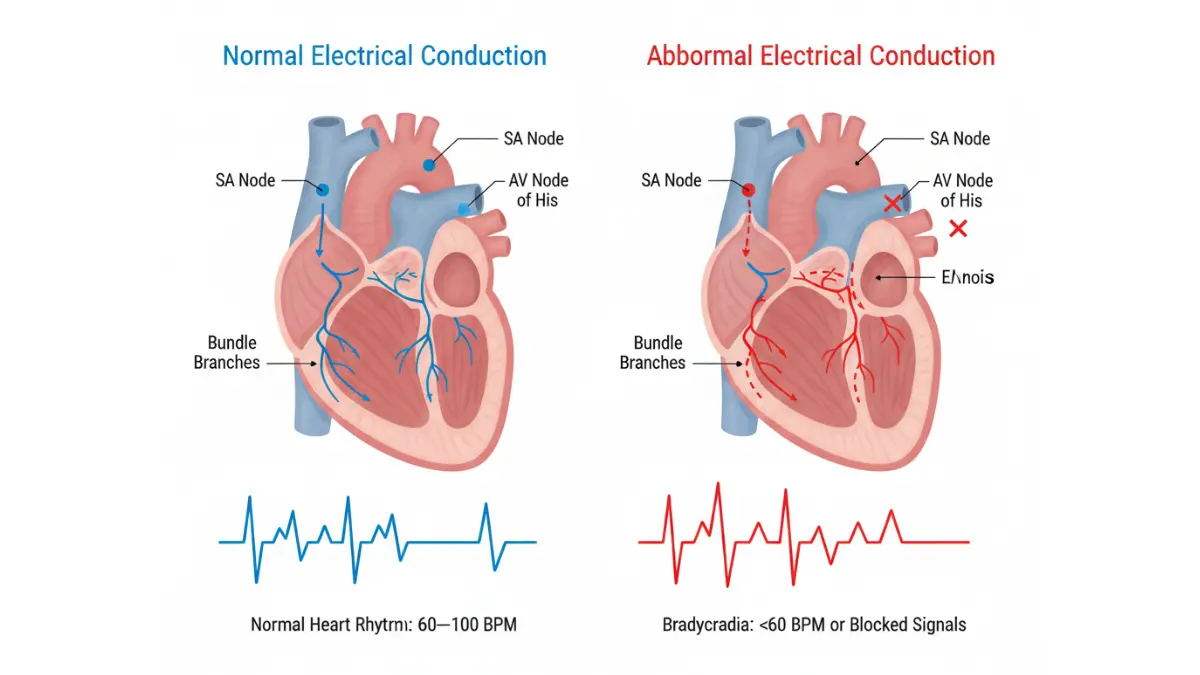
Normal Heart Function:
- Resting heart rate: 60-100 beats per minute (bpm)
- Electrical signal starts in SA node
- Signal travels through atria → ventricles
- Coordinated contraction pumps blood efficiently
When Things Go Wrong:
- Bradycardia: Heart rate <60 bpm at rest
- Heart block: Electrical signals delayed or blocked
- Sick sinus syndrome: SA node fails to generate proper signals
- Atrial fibrillation: Irregular, often rapid heartbeat
Who Needs a Pacemaker? Medical Conditions Treated
According to National Heart, Lung, and Blood Institute data, approximately 500,000 Americans receive pacemakers annually. Here’s when your doctor might recommend one:
Primary Indications:
1. Bradycardia (Slow Heart Rate)
- Persistent heart rate below 60 bpm with symptoms
- Causes: Aging, medications, heart disease, thyroid disorders
- Symptoms: Fatigue, dizziness, fainting, chest pain
2. Heart Block (Electrical Conduction Problems)
- First-degree: Mild delay (usually no treatment needed)
- Second-degree: Some signals don’t reach ventricles
- Third-degree (complete): No signals pass through—requires pacemaker
3. Atrial Fibrillation with Bradycardia
- Irregular heartbeat combined with slow ventricular rate
- Often requires medication + pacemaker combination
- Affects 6.1 million Americans (CDC 2026 data)
4. Heart Failure
- Weak heart muscle needs coordinated pumping
- Biventricular pacemaker improves ejection fraction by 15-20%
- Reduces hospitalizations by 37% (clinical trial data)
5. Post-Heart Attack Complications
- Scar tissue disrupts electrical pathways
- Temporary or permanent pacing may be needed
Warning Signs You Shouldn’t Ignore
Consult your doctor immediately if you experience:
- Unexplained fainting or near-fainting episodes
- Persistent dizziness or lightheadedness
- Chronic fatigue despite adequate sleep
- Shortness of breath during normal activities
- Chest pain or pressure
- Heart palpitations (feeling your heartbeat is irregular)
- Confusion or difficulty concentrating
Diagnosis Process:
Before recommending a pacemaker, your cardiologist will perform:
- Electrocardiogram (ECG/EKG): 12-lead test records electrical activity
- Holter Monitor: 24-48 hour continuous recording
- Event Recorder: Worn for weeks to capture intermittent symptoms
- Echocardiogram: Ultrasound evaluates heart structure and function
- Electrophysiology Study: Catheter-based test maps electrical system
- Stress Test: Evaluates heart performance during exercise
Your heart’s electrical health can be monitored using tools like our Heart Rate Zone Calculator to track if your resting heart rate falls below safe thresholds.
5 Types of Pacemakers in 2026
Modern pacemaker technology offers five distinct options tailored to specific cardiac conditions. Understanding each type helps you and your doctor choose the optimal device for your needs.
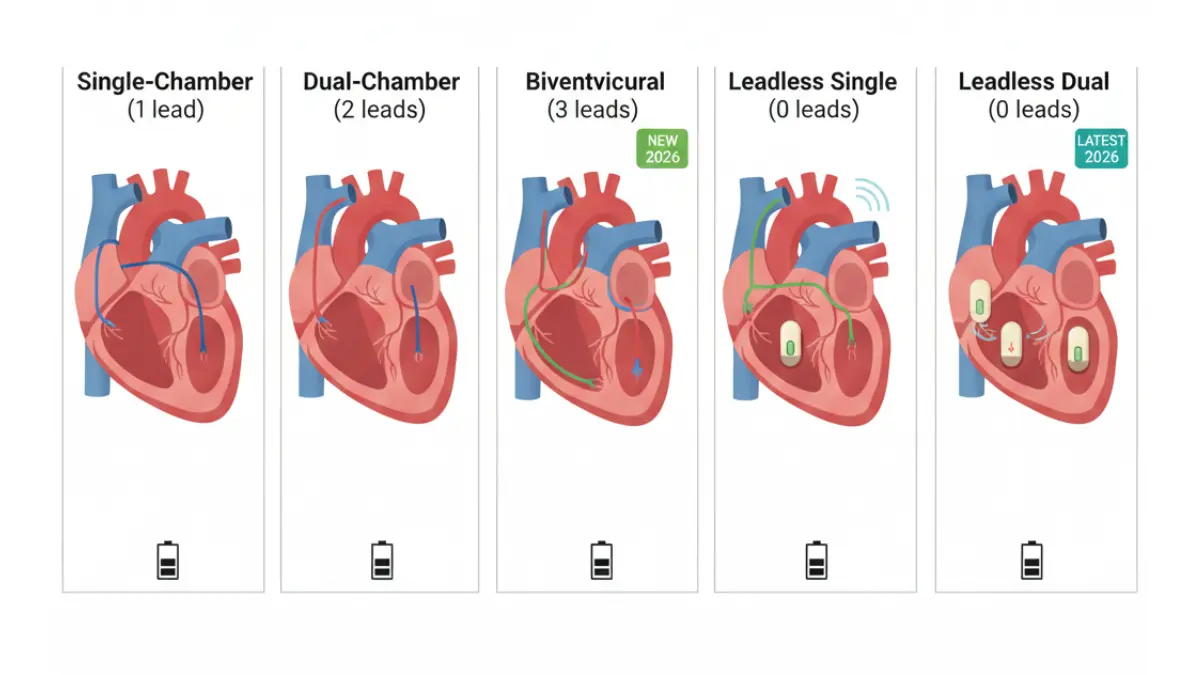
Traditional Transvenous Pacemakers (With Leads)
1. Single-Chamber Pacemaker
Design: One lead placed in either the right atrium or right ventricle
Best for: Isolated rhythm problems in one chamber
Battery life: 12-15 years
Usage: 25% of all implants
Ideal Candidates:
- Atrial fibrillation with slow ventricular response
- Simple bradycardia without coordination issues
- Older adults with limited activity levels
Advantages:
- Simplest design with lowest complication risk
- Longest battery life
- Lower cost ($19,000-$45,000 total)
2. Dual-Chamber Pacemaker
Design: Two leads—one in right atrium, one in right ventricle
Best for: Coordinating upper and lower heart chambers
Battery life: 10-12 years
Usage: 60% of all implants (most common type)
Ideal Candidates:
- Heart block (second or third degree)
- Sick sinus syndrome
- Patients needing atrial-ventricular synchrony
Advantages:
- Mimics natural heart rhythm more closely
- Better cardiac output than single-chamber
- Reduces “pacemaker syndrome” (blood flowing backward)
3. Biventricular Pacemaker (Cardiac Resynchronization Therapy/CRT)
Design: Three leads—right atrium + both ventricles
Best for: Heart failure patients with ejection fraction <35%
Battery life: 8-10 years
Usage: 15% of implants
Ideal Candidates:
- Congestive heart failure (CHF)
- Left bundle branch block
- Wide QRS complex on ECG (>120 milliseconds)
Clinical Outcomes:
- Ejection fraction improvement: 15-20% increase
- Hospitalization reduction: 37% fewer heart failure admissions
- Mortality benefit: 22% reduction in death risk (COMPANION trial 2024 data)
Cost: $65,000-$96,000 (higher due to three leads + advanced programming)
2026 Leadless Pacemaker Revolution (NEW Technology)
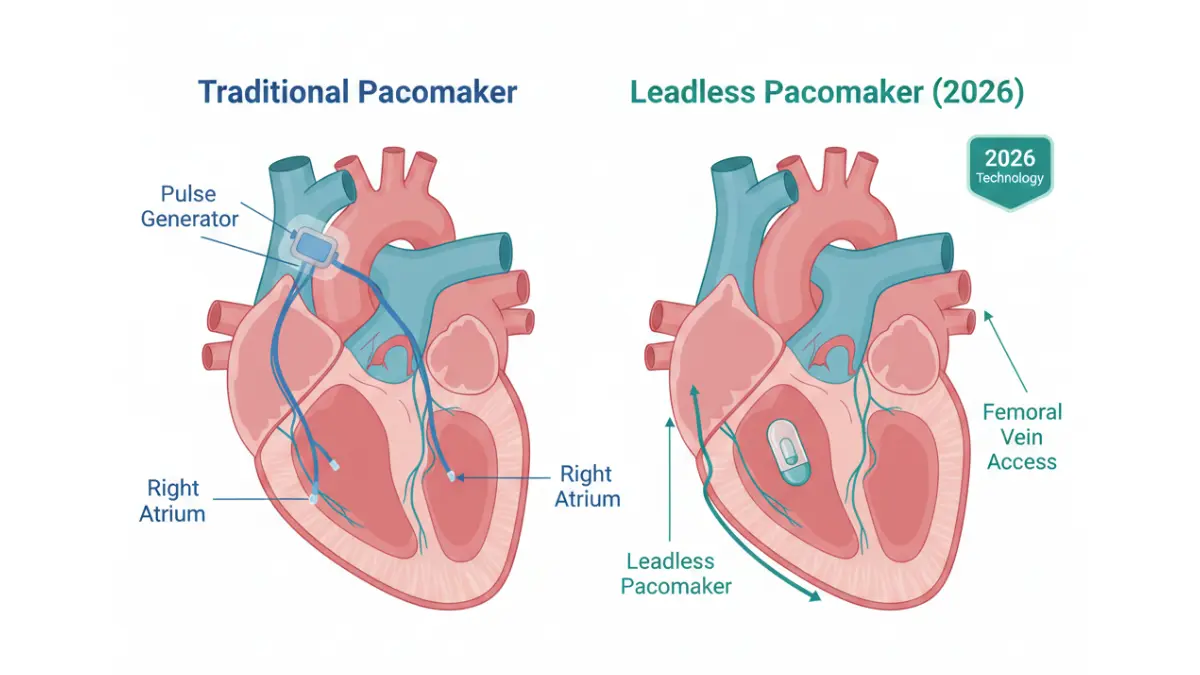
4. Leadless Single-Chamber Pacemaker
FDA-Approved Models:
- Micra AV2 (Medtronic): 0.8cc volume, MRI-compatible
- Aveir VR (Abbott): Retrievable design, wireless communication
Design: Self-contained device (size of large vitamin pill) implanted directly in right ventricle
Installation: Catheter through femoral vein (leg)—no chest incision
Battery life: 10-15 years
Usage: Rapidly growing—200,000+ implants in 2025
Revolutionary Advantages: ✓ No visible chest scar (incision in upper thigh)
✓ No lead complications (infection, dislodgement, fracture)
✓ Faster recovery (return to activities in 2-3 weeks vs. 6 weeks)
✓ MRI-safe from day one
✓ Lower infection risk (0.5% vs. 1-5% for traditional)
Ideal Candidates:
- Patients with difficult venous access
- High infection risk (diabetics, immunocompromised)
- Active lifestyles (athletes, younger patients)
- Concerns about visible scars
Limitations:
- Single-chamber only (right ventricle)
- Cannot be used with ICDs
- Requires adequate femoral vein access
The FDA approved leadless pacemakers in 2016, with continuous improvements through 2026. Clinical trials show 98% adequate pacing at 6 months with <7% complication rates.
5. Leadless Dual-Chamber System (2026’s Newest Innovation)
FDA-Approved Model:
Aveir DR (Abbott): First dual-chamber leadless system approved January 2024
Design: Two separate leadless devices that communicate wirelessly—one in right atrium, one in right ventricle
Battery life: 10-12 years projected
Usage: Emerging technology (10,000+ implants in 2025)
Breakthrough Benefits:
- Maintains atrial-ventricular synchrony WITHOUT wires
- Both devices communicate via i2i™ technology (implant-to-implant)
- Eliminates ALL lead-related complications
- Ideal for active patients needing dual-chamber pacing
Clinical Results (2025 AVEIR DR IDE Study):
- Success rate: 96.5% at 6 months
- Major complications: 2.1% (vs. 4-6% traditional dual-chamber)
- Device communication: 99.7% reliability
Cost: $35,000-$55,000 (device only—higher than single leadless)
MRI Safety: Critical 2026 Update
Major Advancement: 95% of pacemakers manufactured in 2024-2026 are now MRI-conditional, meaning patients can safely undergo MRI scans after a 6-week healing period.
MRI-Safe Pacemaker Brands:
- Medtronic: All models post-2020
- Abbott: Aveir series, Assurity series
- Boston Scientific: Accolade MRI models
- Biotronik: ProMRI technology
Important Requirements:
- Wait 6 weeks post-implant before first MRI
- MRI must be performed at 1.5T or 3.0T strength
- Pacemaker must be reprogrammed before and after scan
- Radiology team must follow specific protocols
This resolves a major historical limitation—before 2018, most pacemaker patients couldn’t get MRIs for diagnostic imaging, limiting cancer detection and neurological evaluations.
| Pacemaker Type | Leads | Chambers | Battery Life | Best For | Cost Range |
|---|---|---|---|---|---|
| Single-Chamber | 1 | 1 | 12-15 years | Simple bradycardia | $19K-$45K |
| Dual-Chamber | 2 | 2 | 10-12 years | Heart block, SSS | $25K-$60K |
| Biventricular (CRT) | 3 | 3 | 8-10 years | Heart failure | $65K-$96K |
| Leadless Single | 0 | 1 | 10-15 years | Active lifestyle | $25K-$50K |
| Leadless Dual (NEW) | 0 | 2 | 10-12 years | Active + coordination needs | $35K-$55K |
Pacemaker Surgery + Recovery Timeline
Before Surgery: Preparation Checklist (1-7 Days Prior)
Medical Testing:
- Complete blood count (CBC)
- Coagulation panel (PT/INR if on blood thinners)
- Chest X-ray (baseline)
- ECG confirmation
- Kidney function tests (if contrast dye needed)
Medication Adjustments:
Blood thinners management:
- Warfarin (Coumadin): Stop 3-5 days before (INR <1.5 required)
- Apixaban (Eliquis): Hold 24-48 hours
- Aspirin: Usually continued (low bleeding risk)
- Clopidogrel (Plavix): Case-by-case—discuss with cardiologist
Other medications:
- Continue all cardiac medications unless instructed otherwise
- Take with small sip of water on surgery morning
Fasting Requirements:
- Nothing to eat after midnight before surgery
- Clear liquids (water, black coffee) allowed until 6 hours before
- No gum, candy, or mints
What to Bring:
- Insurance cards and ID
- List of current medications
- Advance directive/healthcare proxy documents
- Comfortable clothing (button-front shirt recommended)
- Someone to drive you home
During Surgery: The 60-90 Minute Procedure
Anesthesia:
Local anesthesia + conscious sedation (you’re awake but drowsy). General anesthesia is rarely needed unless combined with other cardiac surgery.
Traditional Pacemaker Implantation (Transvenous):
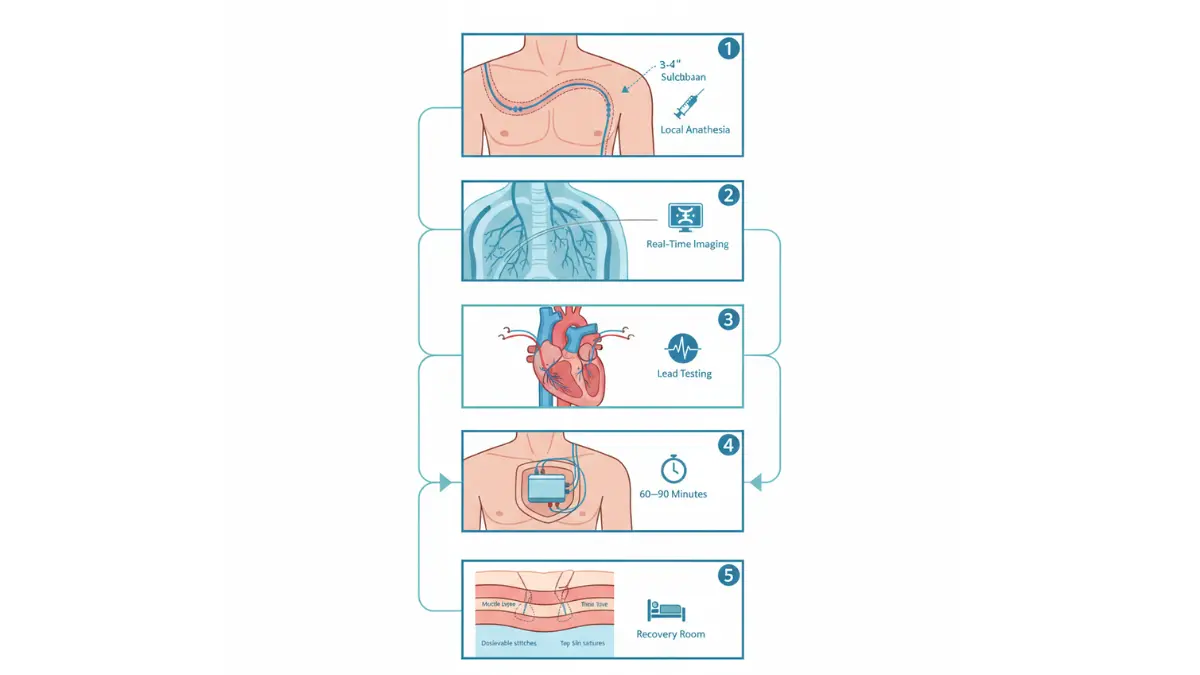
Step 1: Preparation (10 minutes)
- Positioned flat on procedure table
- Chest area cleaned with antiseptic
- Sterile drapes applied
- Local anesthetic injected below collarbone
- Intravenous line (IV) for sedation and antibiotics
Step 2: Venous Access (15-20 minutes)
- Small incision (3-4 inches) below collarbone
- Subclavian or cephalic vein identified
- Guidewire inserted under X-ray (fluoroscopy) guidance
- Incision typically on non-dominant side (left for right-handed patients)
Step 3: Lead Placement (20-30 minutes)
- Pacemaker leads threaded through vein to heart chambers
- Single-chamber: One lead in right atrium OR ventricle
- Dual-chamber: Leads in right atrium AND ventricle
- Biventricular: Third lead threaded to left ventricle via coronary sinus
- Real-time X-ray ensures proper positioning
- Leads secured with small screws or tines that grip heart tissue
Step 4: Testing (10 minutes)
- Electrical thresholds tested (pacing capture)
- Sensing verified (device detects natural heartbeats)
- Lead impedance measured
- Settings optimized for your specific heart condition
Step 5: Generator Placement + Closure (10-15 minutes)
- Pocket created under skin or chest muscle
- Generator connected to leads
- Pocket closed in layers (muscle, tissue, skin)
- Dissolvable stitches + surgical glue
- Sterile dressing applied
Pain Level: 2-3 out of 10 (mild discomfort, no significant pain)
Leadless Pacemaker Implantation (Minimally Invasive):
Catheter-Based Approach (45-60 minutes):
Step 1: Small incision (5mm) in upper thigh at femoral vein
Step 2: Introducer sheath (7.8mm) inserted into vein
Step 3: Delivery catheter threads leadless device to right ventricle
Step 4: Device deployed and secured to ventricular wall with small tines
Step 5: Testing via skin electrodes (external link module)
Step 6: Catheter removed, small pressure applied to leg
Step 7: Band-aid closure (no stitches needed)
Advantages:
- No chest incision
- No generator pocket
- Faster procedure (45 min vs. 90 min)
- Lower infection risk
Hospital Stay: Monitoring Period
Same-Day Discharge (40% of cases):
- Uncomplicated single or dual-chamber
- Stable vital signs for 4-6 hours
- Adequate pain control with oral medication
- Home support available
Overnight Observation (60% of cases):
- Complex cases (CRT, leadless)
- Anticoagulation concerns
- Elderly patients
- Living alone
Before Discharge:
- Chest X-ray (confirms lead position, rules out pneumothorax)
- Pacemaker interrogation (settings verified)
- Device ID card provided (temporary—permanent arrives in 6-8 weeks)
- Incision care instructions
- Activity restrictions reviewed
- Follow-up appointment scheduled (10-14 days)
Recovery Timeline: Day 1 to 90 Days
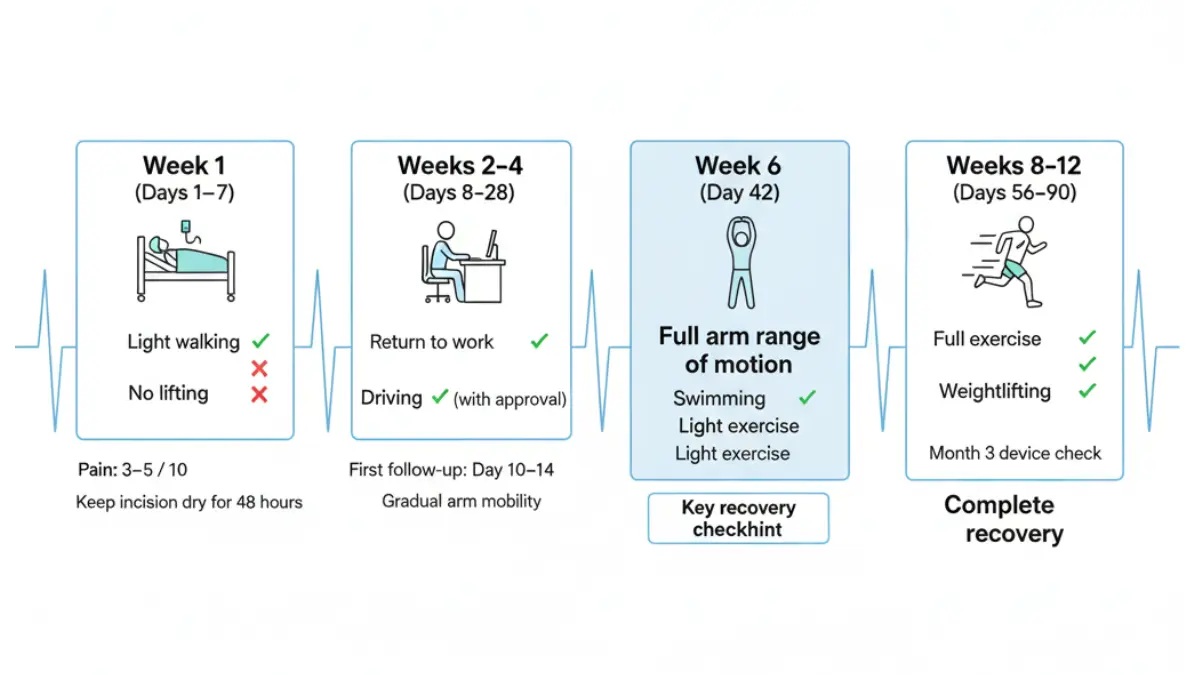
Week 1 (Days 1-7): Early Recovery
Activity Restrictions:
- ✓ Light walking encouraged (improves circulation)
- ✗ No raising affected arm above shoulder level
- ✗ No lifting >10 pounds
- ✗ No pushing, pulling, or twisting motions
- ✗ No driving (until doctor approval)
Pain Management:
- Soreness: Mild to moderate (3-5/10)
- Medications: Acetaminophen (Tylenol) 500-1000mg every 6 hours
- Avoid: Ibuprofen/NSAIDs (increase bleeding risk first 2 weeks)
- Ice packs: 15 minutes every 2 hours for swelling
Incision Care:
- Keep dry for 48 hours (sponge bath only)
- Shower allowed after 48 hours (pat dry gently)
- No soaking (baths, pools, hot tubs) for 2 weeks
- Watch for infection signs: increased redness, warmth, pus, fever >100.4°F
Sleep Position:
- Avoid lying on pacemaker side first 2-3 nights
- Use pillows for support
- Optimize your sleep schedule with our Sleep Calculator
Work Return:
- Desk jobs: 3-7 days
- Physical labor: 4-6 weeks (doctor’s clearance required)
Week 2-4 (Days 8-28): Gradual Mobility
First Follow-Up (Day 10-14):
- Incision check
- Pacemaker interrogation (battery status, settings)
- Lead stability assessment
- Activity progression discussed
Expanded Activities:
- ✓ Arm movements gradually increased
- ✓ Light housework (dishes, folding laundry)
- ✓ Driving (after doctor approval—typically Week 2-3)
- ✓ Return to sedentary work
- ✗ Still no overhead reaching
- ✗ No heavy lifting (>10 lbs)
Exercise Guidelines:
- Walking: 15-30 minutes daily
- Stationary bike: Gentle pedaling, no resistance
- Range-of-motion exercises for affected arm (hand, wrist, elbow)
Month 2-3 (Days 29-90): Full Recovery
Week 6 Milestone:
- Full arm range of motion restored
- No more lifting restrictions
- Return to all pre-surgery activities (except contact sports)
Exercise Progression:
- Week 4-6: Light cardio (walking, swimming)
- Week 8-12: Full exercise program resumed
- Weightlifting allowed (avoid direct chest trauma)
- Running, cycling, tennis, golf all permitted
- Contact sports still restricted (boxing, football)
Use our Pace Calculator to safely resume running programs post-recovery.
Month 3 Device Check:
- Comprehensive pacemaker interrogation
- Battery life assessment (should show >95% capacity)
- Lead impedance stable
- Heart rhythm logs reviewed
- Settings adjusted if needed
Red Flag Symptoms: When to Call Your Doctor Immediately
Signs of Infection:
- Fever >100.4°F (38°C)
- Increased redness spreading from incision
- Pus or foul-smelling drainage
- Swelling that worsens after Week 1
- Warmth radiating from device site
Device Malfunction:
- Return of pre-pacemaker symptoms (dizziness, fainting, fatigue)
- Hiccups that won’t stop (diaphragm stimulation)
- Muscle twitching in chest, neck, or abdomen
- Rapid or irregular heartbeat
- New shortness of breath
Surgical Complications:
- Severe chest pain
- Difficulty breathing
- Swelling in arm on pacemaker side (possible blood clot)
- Device pocket feels very tight or bulging (hematoma)
Emergency (Call 911):
- Loss of consciousness
- Severe chest pain
- Signs of stroke (facial droop, arm weakness, speech difficulty)
Patients who monitor recovery with appropriate rest and activity balance experience the best outcomes. For those managing recovery alongside other health goals, tools like our BMI Calculator can help track overall wellness during healing.
Living With a Pacemaker + Life Expectancy
Life Expectancy With a Pacemaker (2026 Data)
The most important question patients ask: “Will a pacemaker shorten my life?”
Answer: No. Modern pacemakers do not reduce life expectancy—they restore it. Research from the National Heart, Lung, and Blood Institute shows pacemakers significantly improve survival rates and quality of life.
Survival Statistics (2024 Multi-Center Study, N=6,505 patients):
| Time Period | Survival Rate |
|---|---|
| 1 year | 90.0% |
| 3 years | 74.1% |
| 5 years | 70.0% |
| 10 years | 60.0% |
| 20+ years | 21.4% |
Key Insight: Survival depends primarily on three factors:
- Age at implantation: Younger patients (40-60) have near-normal life expectancy
- Underlying heart condition: Heart failure has different outcomes than simple heart block
- Overall health: Diabetes, kidney disease, smoking significantly impact longevity
Life Expectancy by Age:
- Age 40-50 at implant: Expected lifespan matches general population (30-40+ years)
- Age 60-70 at implant: Average 15-25 additional years
- Age 80+ at implant: Average 8-12 additional years
Without vs. With Pacemaker:
Patients with severe bradycardia or heart block who don’t receive pacemakers face 1-year mortality rates of 40-50%. With a pacemaker, this drops to <10%—a life-saving intervention.
Pacemaker Battery Life: How Long Devices Last
Average Battery Longevity (2026 Devices):
- Single-chamber: 12-15 years
- Dual-chamber: 10-12 years
- Biventricular (CRT): 8-10 years
- Leadless: 10-15 years
Factors Affecting Battery Life:
- Pacing dependency: More pacing = faster battery drain
- 1-10% pacing: 15+ years possible
- 100% pacing: 8-10 years typical
- Device settings: Higher voltage/pulse width uses more energy
- Number of leads: Three leads drain faster than one
- Advanced features: Rate-responsive pacing, remote monitoring increase drain
World Records:
The longest-functioning pacemaker documented lasted 37 years (Guinness World Record, UK patient). Average modern devices last 10-14 years before replacement.
Battery Replacement Procedure:
- Outpatient surgery: 30-45 minutes
- Only generator replaced (leads stay in place if functioning)
- Local anesthesia with mild sedation
- Recovery: 1-2 weeks (faster than initial implant)
- Cost: $5,000-$15,000 (much less than initial procedure)
Warning Signs Battery is Low:
- Pacemaker alerts you via audible beep or vibration (6-12 month advance warning)
- Remote monitoring detects declining battery voltage
- Regular check-ups prevent unexpected failure
According to the NHLBI’s guidance on living with pacemakers, modern devices provide ample warning before battery depletion, eliminating sudden failure risks.
What You CAN Do: Activities Approved for Pacemaker Patients
Excellent News: 95% of pre-pacemaker activities are safe to resume after recovery. Most restrictions are minimal and temporary.
✅ Fully Approved Activities:
Cardiovascular Exercise:
- Walking, jogging, running
- Swimming (after 6-week healing)
- Cycling (road or stationary)
- Hiking, dancing
- Aerobics, Zumba classes
- Rowing (after 3 months)
Sports:
- Golf (full swing after 6 weeks)
- Tennis, pickleball, badminton
- Bowling
- Yoga, Pilates
- Tai chi
- Basketball, volleyball (non-contact recreational)
Strength Training:
- Weightlifting (avoid direct chest trauma)
- Resistance bands
- Bodyweight exercises
- CrossFit (modified—no overhead barbell drops)
Daily Activities:
- All household chores
- Yard work, gardening
- DIY projects (with precautions)
- Sexual activity (resume after 2-3 weeks)
- Air travel (no restrictions)
- Driving (after doctor clearance)
Special Considerations:
MRI Scans: 95% of 2024-2026 pacemakers are MRI-conditional
- Wait 6 weeks post-implant
- Inform radiology team
- Device reprogrammed before/after scan
- No restrictions with compatible device
What to Avoid or Limit: Restrictions and Precautions
⚠️ Permanently Restricted:
Contact Sports (High Impact):
- Boxing, martial arts (direct chest blows)
- Football, rugby, hockey (collision risk)
- Alternative: Flag football, touch rugby, street hockey
Electromagnetic Interference (EMI) Sources:
Keep 6 inches away from pacemaker:
- Cell phones: Hold to opposite ear or use speaker
- Headphones/earbuds: Magnetic components
- Wireless charging pads
- Magnetic clasps (purses, wallets)
Avoid or Limit Exposure:
- Arc welding equipment (strong electromagnetic fields)
- High-voltage power lines (stay 2+ feet away)
- Industrial magnets
- Automotive ignition systems (working on running engines)
- Diathermy (physical therapy heat treatment—absolutely prohibited)
Safe Household Items (No Restrictions): ✓ Microwave ovens (properly functioning)
✓ Electric blankets, heating pads
✓ Hair dryers, electric shavers
✓ Garage door openers
✓ Television, computers, tablets
✓ Bluetooth devices
✓ Wi-Fi routers
Airport Security & Travel
TSA Screening Protocol:
- Inform security officer about pacemaker before screening
- Show device ID card (carry in wallet at all times)
- Walk through metal detector (safe but may trigger alarm)
- Hand-held wand: Limit exposure over device to <2 seconds
- Alternative: Request pat-down screening
Body Scanners: Safe for pacemaker patients (millimeter wave technology doesn’t affect devices)
Air Travel:
- No restrictions on flying
- Cabin pressure doesn’t affect pacemakers
- Electromagnetic interference from aircraft systems negligible
International Travel:
- Carry pacemaker ID card and doctor’s note
- Know your device model and manufacturer
- Locate cardiac centers at destination (emergency preparedness)
Device Monitoring & Follow-Up Care
In-Person Check-Ups:
- First 6 months: Every 4-6 weeks
- After 6 months: Every 6-12 months
- Last 2 years of battery life: Every 3-6 months
Remote Monitoring (Home-Based):
- Monthly automatic transmissions via phone line or cellular
- Device sends: Battery status, lead function, heart rhythm logs, arrhythmia episodes
- Alerts sent to doctor if problems detected
- Reduces in-person visits by 50%
What’s Checked at Appointments: ✓ Battery voltage (remaining life)
✓ Lead impedance (wire integrity)
✓ Pacing threshold (energy needed to capture heart)
✓ Sensing function (detects natural heartbeats)
✓ Arrhythmia logs (abnormal rhythms)
✓ Activity level data (internal accelerometer)
Software Updates:
Like smartphones, pacemakers can receive firmware updates to improve performance, add features, or address safety issues. Ask your doctor about available updates at each visit.
Maintaining cardiovascular health alongside pacemaker care is crucial. Our Heart Rate Zone Calculator helps you exercise safely within your optimal heart rate ranges, especially important for pacemaker patients.
Risks, Complications & Costs
Pacemaker Surgery Complications: Evidence-Based Rates (2026 Data)
Overall Complication Rate: 1-6% of procedures
(Prospective multi-center study, 72 US centers, N=1,744 patients)
Modern pacemaker implantation is remarkably safe, but like all surgical procedures, carries risks. Here are evidence-based complication rates:
Common Complications (Occur in 1-5% of cases):
1. Pocket Hematoma (Bleeding at Device Site)
- Incidence: 2-4%
- Risk factors: Blood thinners, device replacement (vs. new implant)
- Symptoms: Swelling, bruising, tight pocket sensation
- Treatment: Usually resolves without intervention; rarely requires drainage
- Prevention: Holding blood thinners pre-procedure when safe
2. Infection
- Incidence: 1-5% (0.5-1% for leadless; 3-5% for replacements)
- Timing: 75% occur within first 12 months
- Types:
- Pocket infection (69% of cases): Redness, warmth, pus
- Endocarditis (23% of cases): Lead-related heart infection
- Treatment: Antibiotics + complete system removal + reimplantation after clearing infection
- Prevention: Prophylactic antibiotics before surgery, meticulous sterile technique
3. Lead Dislodgement
- Incidence: <1% with modern active-fixation leads
- Timing: Usually within first 6 weeks
- Symptoms: Return of pre-pacemaker symptoms, hiccups, arm movement restrictions
- Treatment: Repositioning via repeat procedure
- Prevention: Activity restrictions first 6 weeks
Rare Complications (<1% incidence):
4. Pneumothorax (Collapsed Lung)
- Incidence: 0.66-1.3%
- Cause: Accidental lung puncture during venous access
- Risk factors: Female gender, COPD, age >80, dual-chamber devices
- Symptoms: Sharp chest pain, difficulty breathing
- Treatment: Small leaks resolve spontaneously; larger require chest tube
- Prevention: Ultrasound-guided venous access (reduces risk 50%)
5. Lead Perforation
- Incidence: <0.8%
- Symptoms: Chest pain, pericardial effusion (fluid around heart)
- Treatment: Repositioning lead; rarely requires emergency surgery
- Risk factors: Thin heart walls, corticosteroid use, advanced age
6. Blood Clots
- Venous thrombosis: <1%
- Pulmonary embolism: 0.6-3.5% (rare but serious)
- Treatment: Anticoagulation therapy
- Prevention: Early mobilization, compression stockings
7. Cardiac Tamponade
- Incidence: <0.2% (extremely rare)
- Cause: Lead perforation through heart wall
- Symptoms: Severe chest pain, low blood pressure, shock
- Treatment: Emergency pericardiocentesis (fluid drainage)
8. Unexpected Heart Rhythm Problems
- Incidence: <1%
- Pacemaker-mediated tachycardia (device triggers rapid heartbeat)
- Treatment: Device reprogramming
Leadless Pacemaker Advantages:
By eliminating leads, leadless pacemakers reduce:
- Lead dislodgement risk: 0% (no leads to dislodge)
- Pneumothorax risk: 0% (no chest access needed)
- Infection risk: 75% reduction (0.5% vs. 2% traditional)
- Overall complications: 4-6% reduction
As detailed in FDA’s leadless pacemaker analysis, clinical trials show significant safety improvements with leadless technology.
Pacemaker Cost in 2026: Complete Financial Breakdown
Total Procedure Cost Range: $19,000-$96,000
Cost varies dramatically based on pacemaker type, hospital setting, geographic location, and insurance coverage. Here’s the itemized breakdown:
Cost Components:
1. Device Cost (Equipment Only)
- Single-chamber: $3,000-$5,000
- Dual-chamber: $5,000-$7,500
- Biventricular (CRT): $7,000-$10,000
- Leadless single: $8,000-$12,000
- Leadless dual (Aveir DR): $15,000-$20,000
2. Hospital & Facility Fees
- Outpatient surgery center: $8,000-$15,000
- Hospital inpatient: $20,000-$50,000
- Includes: Operating room, equipment, recovery area
3. Physician Fees
- Cardiologist/electrophysiologist: $2,500-$5,000
- Anesthesiologist: $500-$1,500
- Radiologist (fluoroscopy): $300-$800
4. Pre-Operative Testing
- ECG, blood work, chest X-ray: $500-$1,200
5. Post-Operative Care
- Follow-up visits (first year): $800-$1,500
- Pacemaker interrogations: $150-$300 per visit
- Remote monitoring (annual): $300-$600
Total Cost by Pacemaker Type:
| Pacemaker Type | Device Cost | Total Procedure Cost | Annual Follow-Up |
|---|---|---|---|
| Single-Chamber | $3,000-$5,000 | $19,000-$45,000 | $1,000-$1,500 |
| Dual-Chamber | $5,000-$7,500 | $25,000-$60,000 | $1,000-$1,500 |
| Biventricular (CRT) | $7,000-$10,000 | $65,000-$96,000 | $1,200-$2,000 |
| Leadless Single | $8,000-$12,000 | $25,000-$50,000 | $800-$1,200 |
| Leadless Dual | $15,000-$20,000 | $35,000-$55,000 | $800-$1,200 |
Geographic Cost Variations (USA):
- Most expensive: New York City, San Francisco, Boston ($80,000-$96,000)
- Average cost: Midwest, Southeast ($35,000-$55,000)
- Least expensive: Rural areas, outpatient centers ($19,000-$35,000)
Insurance Coverage: What to Expect
Medicare (Ages 65+):
- Coverage: 80% of Medicare-approved amount after Part B deductible
- Patient responsibility: 20% coinsurance
- Average out-of-pocket: $3,000-$8,000
- Medigap/supplemental: May cover remaining 20%
Private Insurance (Commercial Plans):
- Coverage: Typically 70-90% after deductible
- Pre-authorization: Usually required (denial rare for documented need)
- Average out-of-pocket: $2,000-$15,000 depending on deductible and coinsurance
- High-deductible plans: May pay full cost until deductible met
Medicaid:
- Coverage: 100% in most states for medically necessary procedures
- Patient responsibility: $0-$500 depending on state
No Insurance (Self-Pay):
- Cash price: $19,000-$96,000 (full cost)
- Payment plans: Most hospitals offer 12-36 month financing
- Financial assistance: Many hospitals have charity care programs for low-income patients
- Device assistance: Manufacturers offer patient assistance programs
Pre-Authorization Tips:
- Obtain detailed documentation from cardiologist (ECG, Holter monitor results, symptoms)
- Have doctor submit “letter of medical necessity”
- Appeal denials immediately (most overturned on appeal)
- Document quality-of-life impacts (fainting while driving, inability to work)
Cost Comparison: Traditional vs. Leadless
While leadless devices cost $3,000-$7,000 more upfront, they eliminate:
- Lead-related complications ($15,000-$50,000 if they occur)
- Longer hospital stays ($2,000-$5,000 savings)
- Extended recovery time (return to work 2-3 weeks faster)
Lifetime Cost Considerations:
- Battery replacement: Every 8-15 years ($5,000-$15,000 per replacement)
- Lead revisions: $10,000-$30,000 if leads malfunction (rare)
- Remote monitoring: $300-$600 annually (often covered by insurance)
- Follow-up care: $1,000-$2,000 annually
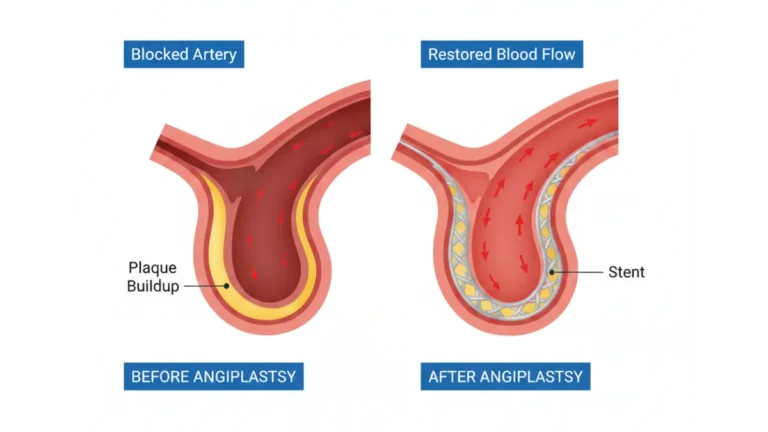
For patients managing pacemaker costs alongside other cardiovascular care like angioplasty or CABG surgery, understanding total cardiac care expenses is crucial for financial planning.
Frequently Asked Questions About Pacemakers
1. Can you feel a pacemaker shocking you?
No. The electrical pulses from a pacemaker are imperceptible—you won’t feel normal pacing activity at all. The energy delivered is much lower than an ICD (defibrillator), which does deliver noticeable shocks.
2. What is the life expectancy after getting a pacemaker?
Life expectancy is near-normal with a pacemaker. Survival depends on age at implantation and underlying health conditions. Studies show 70% survival at 5 years, 60% at 10 years. Younger patients (40-60) often have normal lifespans.
3. Can you fly with a pacemaker?
Yes. Air travel is completely safe with a pacemaker. TSA screening is safe—just inform security and show your device ID card. Cabin pressure and electromagnetic interference from aircraft don’t affect pacemakers.
4. How painful is pacemaker surgery?
Mild discomfort (2-3 out of 10 pain scale). Surgery uses local anesthesia with sedation, so you’re drowsy but not in pain. Post-operative soreness is manageable with Tylenol. Most patients report minimal pain.
5. Can you have an MRI with a pacemaker?
Yes, with 95% of pacemakers manufactured in 2024-2026. You must wait 6 weeks post-surgery, inform the MRI team, and have your device reprogrammed before/after the scan. Older pacemakers (pre-2018) may not be MRI-safe.
6. What activities are restricted with a pacemaker?
Very few restrictions. Avoid contact sports (boxing, football), arc welding, and prolonged exposure to strong magnets. Swimming, golf, tennis, weightlifting, travel, and sexual activity are all approved after recovery.
7. How much does a pacemaker cost without insurance?
$19,000-$96,000 total. Single-chamber devices are least expensive ($19K-$45K), biventricular most expensive ($65K-$96K). This includes device, surgery, hospital stay, and initial follow-ups. Many hospitals offer payment plans and financial assistance.
8. What are the signs your pacemaker is failing?
Return of pre-pacemaker symptoms: dizziness, fainting, extreme fatigue, shortness of breath, irregular heartbeat. Modern pacemakers alert you 6-12 months before battery depletion via audible beeps. Remote monitoring detects problems early.
9. Can a pacemaker be removed?
Yes, but it’s rarely necessary unless infected or you’re at end-of-life and request deactivation. Removal requires surgery due to lead attachment to heart tissue. Leadless pacemakers are designed to be retrievable if needed.
10. Do pacemakers set off metal detectors?
Sometimes. Walk through metal detectors safely (may trigger alarm). Show your pacemaker ID card to security. Avoid hand-held wand directly over device for more than 1-2 seconds. Body scanners (TSA) are completely safe.
11. How long does pacemaker battery replacement take?
30-45 minutes. It’s an outpatient procedure where only the generator is replaced—leads stay in place. Recovery is 1-2 weeks (faster than initial implant). Performed every 8-15 years depending on battery life.
Medical References:
- National Heart, Lung, and Blood Institute. (2026). Pacemakers Overview.
- FDA. (2022). Aveir Leadless Pacing System Approval.
- Brunner, M., et al. (2004). Long-term survival after pacemaker implantation. European Heart Journal, 25(1), 88-95.
- Udo, E.O., et al. (2012). Incidence and predictors of pacemaker complications. PACE, 35(4), 389-399.
- Kirkfeldt, R.E., et al. (2014). Complications after cardiac implantable electronic device implantations. Europace, 16(5), 734-740.
- Gould, P.A., et al. (2011). Complication rates associated with pacemaker or ICD generator replacements. Circulation, 124(10), 1123-1129.
Final Thoughts
A pacemaker is a life-extending medical device that restores normal heart function and quality of life for hundreds of thousands of patients annually. With 2026’s advanced leadless technology, MRI-compatible designs, and 10-15 year battery life, modern pacemakers offer minimal lifestyle disruption with maximum clinical benefit.
If you’re experiencing symptoms of bradycardia or heart block, consult a cardiologist for evaluation. Early intervention prevents serious complications and significantly improves outcomes.
Take Control of Your Heart Health:
- Schedule regular cardiac check-ups
- Monitor your heart rate with our Heart Rate Zone Calculator
- Maintain healthy lifestyle habits (diet, exercise, stress management)
- Report concerning symptoms immediately
For more cardiovascular health information, explore our comprehensive guides on preventing heart disease and understanding echocardiogram results.
About this content
How this article was put together: researched from recognised health sources, drafted with the help of AI tools, and edited by hand, with sources linked throughout.

Sameer Patel is the founder and editor of My Medicine Advisor. He is not a doctor or medical professional — before starting this site he worked in banking,…
Medical disclaimer
The content on MyMedicineAdvisor is provided for general informational and educational purposes only and is not a substitute for professional medical advice, diagnosis, or treatment. Health information on this website should not be used to diagnose, treat, cure, or prevent any condition without guidance from a qualified healthcare professional. Always seek the advice of your doctor, physician, or another licensed healthcare provider with any questions you may have regarding a medical condition, symptoms, medications, or treatment decisions.