
On This Page – Quick Medical Summary
Red light has specialist backing for a short list of uses: hereditary hair loss, several kinds of slow-healing wounds, nerve pain from peripheral neuropathy and skin damage from radiation treatment. Acne, weight loss and general wellness, the claims behind many masks and panels, are not among the uses a specialist panel found effective in 2025.
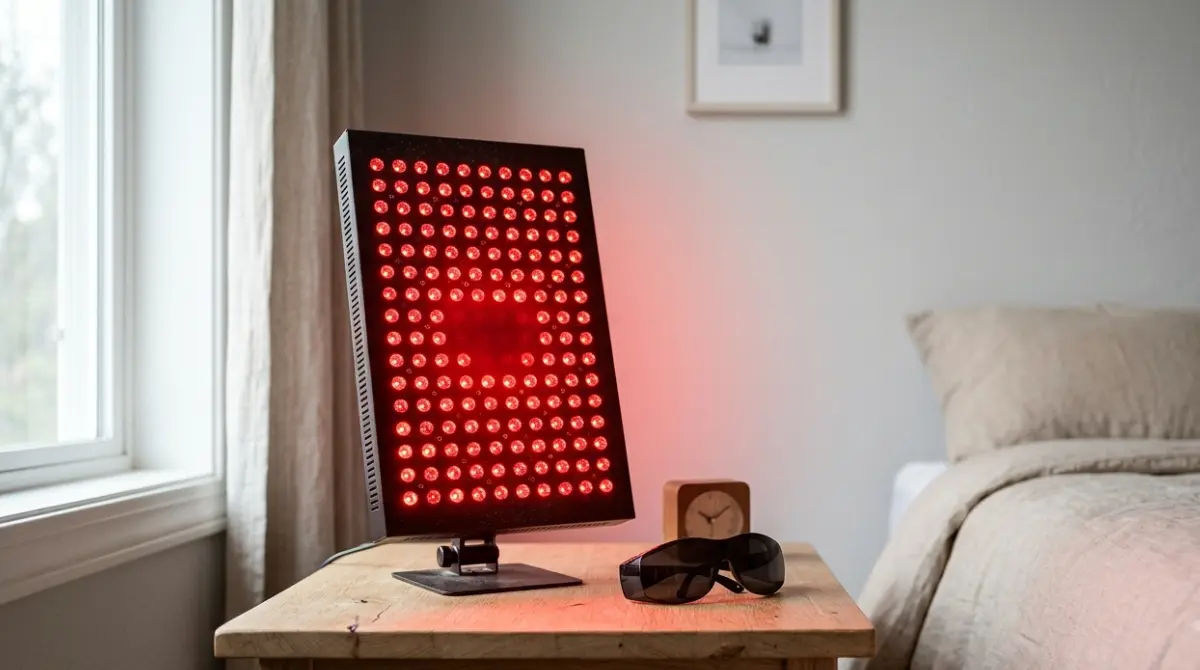
Red light therapy, also called photobiomodulation, shines low-power red or near-infrared light onto the skin, as the American Academy of Dermatology (AAD) describes it. Below you’ll find where the evidence stands for each common claim, the safety facts, and how to check what a device’s FDA clearance covers.
Red light therapy benefits with specialist backing
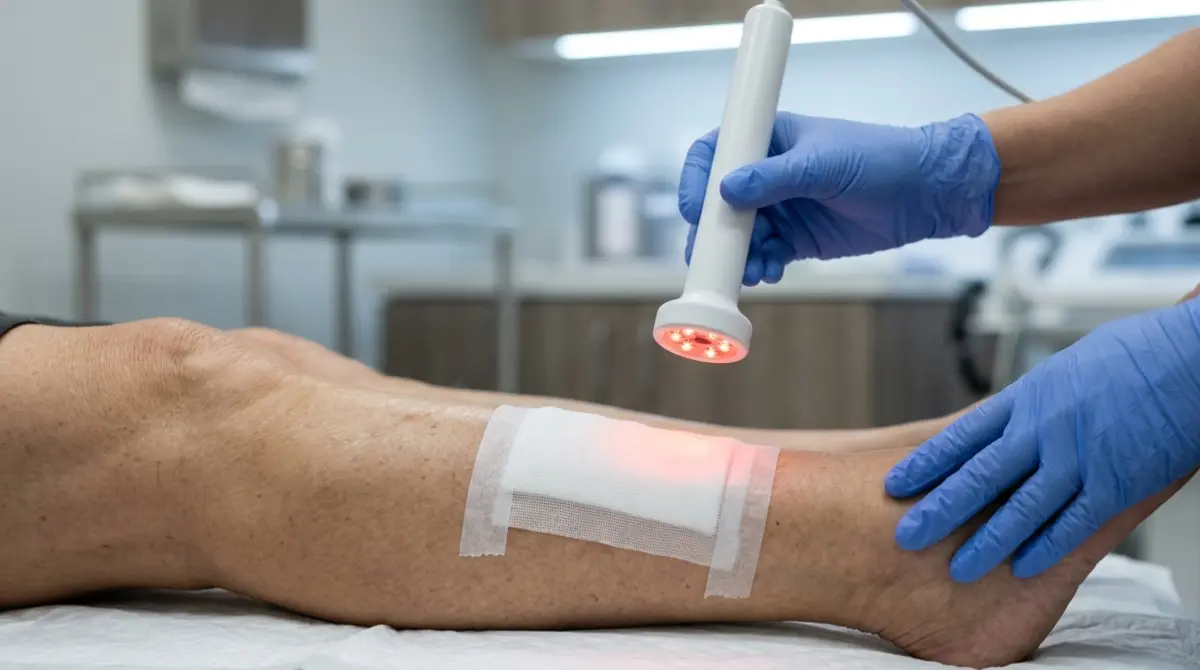
A 21-member international panel built its 2025 consensus on photobiomodulation from a systematic review and two rounds of structured voting, published in the AAD’s journal, JAAD (JAAD consensus). The panel found the treatment safe for adults and effective for six uses. A cancer-care guideline adds a seventh.
| Use | Strongest support | What it means for you |
|---|---|---|
| Hereditary (pattern) hair loss | Specialist consensus; FDA-cleared home caps, combs and helmets | Some regrowth with regular, ongoing use |
| Nerve pain from peripheral neuropathy | Specialist consensus | Ask whether it fits your treatment plan |
| Wound ulcers, pressure ulcers and diabetic foot ulcer pain | Specialist consensus | Part of clinician-led wound care |
| Skin reactions to radiation therapy | Specialist consensus | A question for the radiation team |
| Preventing mouth sores during some cancer treatments | Guideline recommendation | Set protocols, given by the care team |
| Fine lines and other signs of skin aging | Small studies; FDA-cleared home devices | Subtle to noticeable change that varies by person |
| Acne, weight loss, cellulite, “wellness” | Not among the uses the consensus found effective | Unproven for now |
Sources: JAAD consensus, 2025; MASCC/ISOO guidelines, 2019; American Academy of Dermatology.
The mouth-sore recommendation comes from the 2019 MASCC/ISOO guidelines on oral mucositis, the painful mouth ulcers that cancer treatment can cause (MASCC/ISOO). It covers adults having a stem cell transplant or radiation for head and neck cancer, with or without chemotherapy, and each protocol fixes its own light settings. For mouth sores from chemotherapy alone, or sores that have already formed, the evidence was too thin for a recommendation.
If you are starting one of those treatments, ask your oncology team whether light therapy to prevent mouth sores is offered at your center.
Hair regrowth has the most home-device data

Some regrowth, with thicker and longer hairs, is what large randomized trials of red light for hereditary hair loss have found (AAD). Those results led the FDA to clear several home combs, caps and helmets for this use.
In one study, low-level laser therapy regrew hair about as well as minoxidil, the standard over-the-counter treatment, and people who used both had the best results. If you are weighing those options against pills or surgery, this overview of balding treatments compares them.
The limits are firm. The trials studied androgenetic alopecia, the inherited pattern behind most hair loss in men and women, so they say nothing about thinning from other causes. A device will not restore a full head of hair, and because pattern hair loss keeps progressing, any gain depends on continued use.
Can it smooth wrinkles or calm acne?
Wrinkle results are smaller than the before-and-after photos in ads suggest. In one study, 90 people had 8 red LED treatments to the face over 4 weeks, and more than 90% noticed some improvement, such as softer, smoother skin, less redness and lighter dark spots (AAD guidance).
Studies like that one led the FDA to clear several home devices for signs of skin aging. Researchers tested different devices for different lengths of time, though, so their results can’t be compared, and the best number of sessions and the safest home dose are still unknown.
Dermatologists mostly use red light as an add-on. A typical plan pairs it with a medicated cream such as a prescription retinoid, microneedling or a chemical peel, and the red light used in a clinic is more powerful than the light from home devices.
Acne is the weaker case. Masks are widely sold for breakouts, yet acne is missing from the six uses in the table above.
Side effects are mild, but eyes need care
Temporary mild pain or irritated skin are the side effects people report most (AAD). Red light is considered safe for adults and does not damage DNA (JAAD consensus). Unlike ultraviolet light, it has not been linked to any type of cancer, but its long-term effects on skin and hair are still unknown.
Skin tone changes the picture. People with darker skin are more sensitive to visible light, including red light, and the dark spots it can trigger may be more intense and longer-lasting than spots from sunlight. If you already have melasma or other dark patches, see a dermatologist before trying a home device.
Red light can also worsen conditions that make skin sensitive to light, such as lupus. Ask your doctor or pharmacist one specific question before you start: does any medicine I take make my skin more sensitive to light?
Wear the eye protection the device’s instructions name, every session, and never swap in sunglasses.
Children face a separate risk from red-light laser devices used to slow nearsightedness, a treatment that has spread quickly in Asia. Retinal damage has been reported, including a 12-year-old whose vision only partly recovered after treatment stopped. A 2026 analysis in JAMA Ophthalmology found these lasers, which shine light directly into the eye, can reach eye-safety limits in less time than the recommended 180-second session (University of Houston).
Get emergency care now if: after using any light device, you or your child have
- sudden blind spots or areas of distorted vision
- loss of vision in one or both eyes, even if it passes
- a shade or curtain moving across your vision
- blurred vision with eye pain
Call 911 or go to an emergency department.
Most home skin and hair devices use LEDs, which are considered safe for home use, though some contain low-level lasers.
Is an FDA-cleared device FDA-approved?
A 510(k) clearance means the FDA found a device substantially equivalent to one already legally sold in the US, with the same intended use and at least the same safety and effectiveness (FDA). Approval is a separate, stricter process reserved for higher-risk devices.
That difference shows up on packaging. “FDA approved” and “FDA certified” have no meaning on a red light device, and the AAD points out that clearance tells you the device is considered low risk; it says nothing about how well it works.
To check a device yourself, find its 510(k) number on the box or the maker’s website and search it in the FDA’s public 510(k) database. The record lists the company, the decision date and the device’s classification, such as light-based over-the-counter wrinkle reduction.
Note: A clearance applies only to the use it was granted for. A mask cleared for wrinkles has not been reviewed for hair growth, pain or weight loss.
Questions to ask a dermatologist before using one
Book a skin check before spending anywhere from $100 to more than $1,000, the price range dermatologists report for home red light devices (AAD). A board-certified dermatologist can tell you whether red light fits your goal and whether it could worsen a skin condition or clash with a medicine or treatment.
- Is my hair loss the hereditary type these devices were tested on?
- Could my skin tone or my medicines make dark spots or light sensitivity more likely?
- Should red light be added to my current treatment, or wait until it ends?
- Which eye protection does this device need?
Bring the device’s 510(k) number to the visit, so the dermatologist can see exactly what it was cleared to treat.
Found this helpful? See more of our guides on Google.
Want to see our guides first on Google?
Found this helpful? See more of our guides on Google.
About this content
How this article was put together: researched from recognised health sources, drafted with the help of AI tools, and edited by hand, with sources linked throughout.

Dr. Pooja Sahu, MBBS, is a medical reviewer for MyMedicineAdvisor. She is a clinical physician whose experience includes serving as a Junior Resident in Nephrology at Dr. Ram…
Medical disclaimer
The content on My Medicine Advisor is provided for general informational and educational purposes only and is not a substitute for professional medical advice, diagnosis, or treatment. Health information on this website should not be used to diagnose, treat, cure, or prevent any condition without guidance from a qualified healthcare professional. Always seek the advice of your doctor, physician, or another licensed healthcare provider with any questions you may have regarding a medical condition, symptoms, medications, or treatment decisions.