
On This Page – Quick Medical Summary
Most adults need 7–9 hours of sleep per night — but the exact number depends on your age, hormonal stage, and sleep quality, not just hours logged. From newborns requiring up to 17 hours to older adults needing 7–8, this 2026 guide gives you the complete breakdown — including what your competitors’ articles won’t tell you.
The Official Hours of Sleep by Age — Complete 2026 Reference Chart
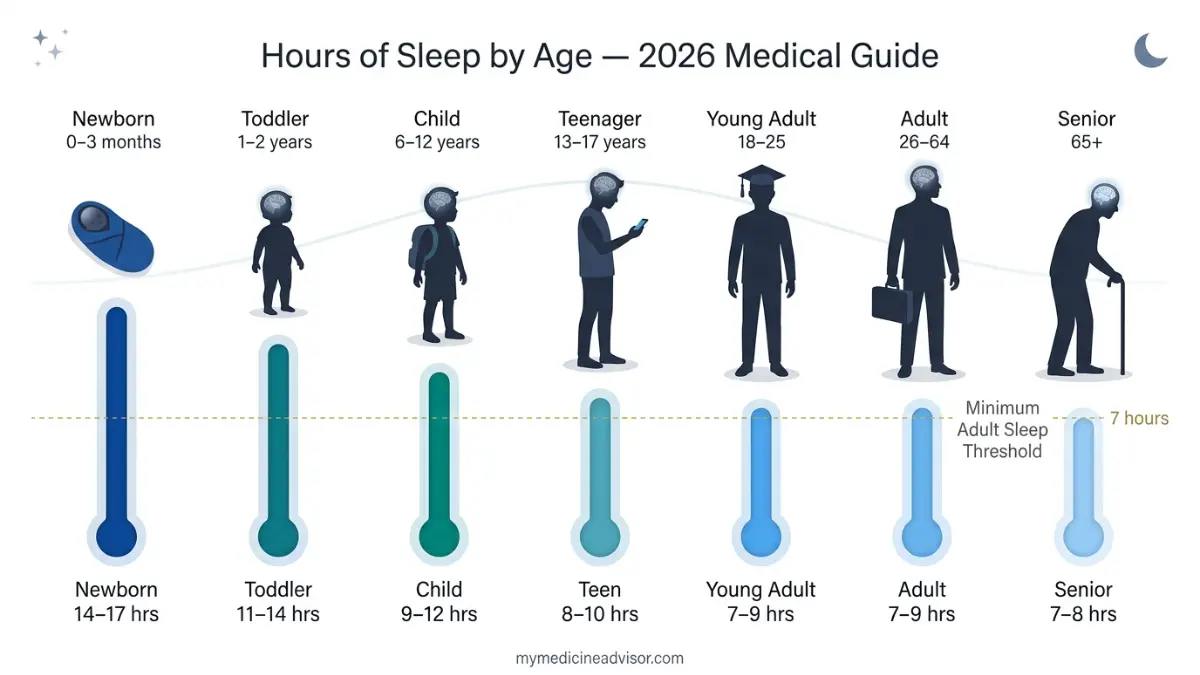
The most authoritative sleep guidelines come from the American Academy of Sleep Medicine (AASM), the Sleep Research Society, and the American Academy of Pediatrics (AAP). Here is the complete recommended sleep duration by age group, endorsed by all three organizations.
Recommended Hours of Sleep by Age (2026 Consensus)
| Age Group | Recommended Sleep Hours | Includes Naps? |
|---|---|---|
| Newborns (0–3 months) | 14–17 hours | Yes |
| Infants (4–12 months) | 12–16 hours | Yes |
| Toddlers (1–2 years) | 11–14 hours | Yes |
| Preschoolers (3–5 years) | 10–13 hours | Yes |
| School-age children (6–12 years) | 9–12 hours | No |
| Teenagers (13–17 years) | 8–10 hours | No |
| Young adults (18–25 years) | 7–9 hours | No |
| Adults (26–64 years) | 7–9 hours | No |
| Older adults (65+) | 7–8 hours | No |
Source: National Heart, Lung, and Blood Institute (NHLBI) — U.S. Department of Health & Human Services
Use our free Sleep Calculator to find your exact optimal bedtime and wake time based on your age and sleep cycles.
Why the Numbers Change With Age — The Biological Reason
Each age bracket reflects specific biological demands, not arbitrary guidelines.
Newborns & Infants: The brain undergoes its most explosive growth phase. Sleep directly drives neural pruning, synaptic formation, and early memory encoding. A newborn’s brain doubles in size in the first year — and most of that development happens during sleep.
School-Age Children (6–12): Deep NREM Stage 3 sleep surges during these years, driving growth hormone release, immune training, and attention development. Children consistently sleeping fewer than 9 hours show measurable deficits in classroom attention and working memory.
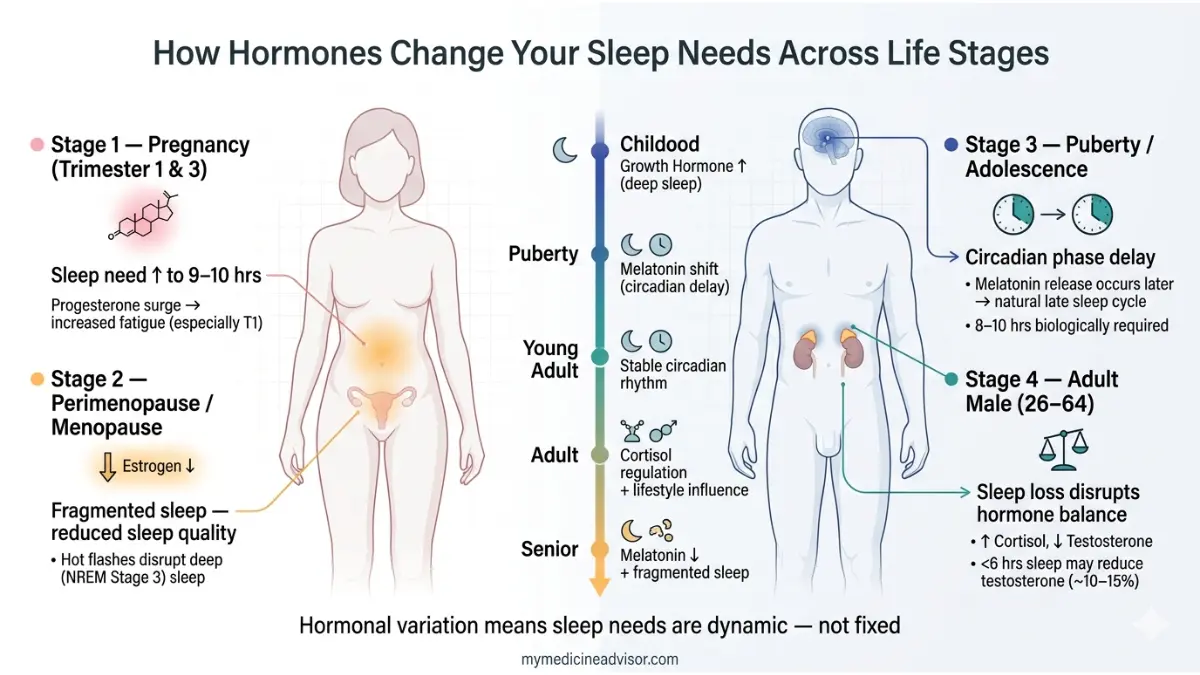
Teenagers (13–17): The adolescent brain undergoes a biologically driven circadian phase delay — their melatonin release shifts 1–2 hours later than adults. This is not laziness. A teenager who can’t fall asleep before midnight has a physiologically different clock, not a discipline problem.
Adults (26–64): Deep sleep decreases progressively from the mid-20s. Adults need consistent 7–9 hours of sleep not just for rest, but for cardiovascular repair, cortisol regulation, and immune maintenance.
Older Adults (65+): Sleep architecture shifts further — more time in lighter Stage 1 and 2, less deep Stage 3. This is why many seniors report waking early and feeling unrefreshed. The sleep need stays at 7–8 hours, but achieving it becomes harder without targeted sleep hygiene.
🔑 Key Takeaway: The number of hours in bed is not the same as hours of sleep. A 65-year-old lying awake for 90 minutes is not getting 8 hours — they’re getting 6.5.
What Happens to Your Body When You Don’t Get Enough Hours of Sleep
The U-Shaped Mortality Risk — What No Other Guide Tells You
A landmark 2025 umbrella review published in the American Journal of Lifestyle Medicine (covering 29 systematic reviews and meta-analyses) confirmed something startling: both sleeping less than 7 hours AND more than 9 hours significantly increases all-cause mortality risk.
This is called the U-shaped relationship — and it changes everything about how you think about sleep duration.
- Short sleep (<7 hours): Strongly linked to hypertension, stroke, coronary heart disease, type 2 diabetes, and immune suppression
- Long sleep (>9 hours): Often a symptom of underlying illness, depression, or sleep disorder — and independently associated with increased mortality risk
- Optimal zone: 7–9 hours for most adults (18–64), 7–8 for adults 65+

The research also identified a stark gender gap: men face a significantly higher all-cause mortality risk from short sleep than women — though women are more vulnerable to the hormonal consequences of fragmented sleep.
What Chronic Sleep Deprivation Does to Each Body System
🧠 Brain: Impairs prefrontal cortex function within 24 hours. After 72 hours of poor sleep, cognitive performance equals legal intoxication. Sleep-deprived individuals experience reduced planning, problem-solving, and emotional regulation — the same functions needed for safe driving and workplace decisions.
❤️ Heart: According to Harvard Health, sleeping just 5–6 hours per night doubles the risk of type 2 diabetes and is linked to nearly 3x higher cardiovascular disease risk in middle-aged adults (Scientific Reports, 2022).
⚖️ Metabolism: Short sleep duration disrupts leptin and ghrelin — the hormones that regulate hunger. A single night of poor sleep increases appetite by up to 24%. Chronic sleep loss is now classified as an independent risk factor for obesity. If you’re tracking calories but ignoring sleep, check our Calorie Deficit Calculator — because sleep deprivation can actively undermine your results.
🦠 Immune System: Adequate sleep produces cytokines — proteins that fight infection and inflammation. One study found people sleeping fewer than 6 hours were 4x more likely to catch a cold when exposed to the virus compared to those sleeping 7+ hours.
🧬 Hormones: Cortisol rises with sleep deprivation, suppressing testosterone in men and disrupting estrogen cycling in women. For individuals tracking hormonal health, poor sleep duration is often the root cause of unexplained metabolic symptoms — making tools like our BMR Calculator less accurate without accounting for sleep.
🔬 2025 Research Update: The U-shaped curve confirms what doctors knew clinically but rarely communicated clearly — more sleep is NOT always better. If you regularly need more than 9 hours and still feel tired, that’s a clinical signal, not a preference. You can explore possible underlying causes using our Symptom Checker.
Special Populations — When Your Sleep Needs Differ From the Standard Chart
The standard chart is a population average. For certain groups, the numbers shift meaningfully.
Pregnant Women
Sleep needs increase — particularly in the first and third trimesters. Progesterone surges in T1 cause profound daytime fatigue and increased total sleep need (often 9–10 hours). In T3, physical discomfort and frequent urination fragment sleep severely, creating a paradox: the need is highest when quality is lowest.
Women monitoring pregnancy health can track related metrics with our Pregnancy Weight Gain Calculator — and should know that sleep deprivation in late pregnancy is independently linked to longer labor and increased risk of cesarean delivery.
High-Performance Athletes
Athletes require 9–10 hours of sleep for peak performance and recovery. Sleep is when growth hormone peaks (NREM Stage 3), muscle protein synthesis accelerates, and glycogen stores replenish. Studies on NBA players show that increasing sleep to 10 hours improved sprint speed, reaction time, and shooting accuracy within 5–7 weeks.
If you’re training seriously, your Heart Rate Zone Calculator can help — but note that elevated resting heart rate is one of the earliest objective signs of accumulated sleep debt in athletes.
Menopausal Women
Hot flashes, night sweats, and elevated cortisol fragment sleep severely. A perimenopausal woman reporting “8 hours of sleep” may be experiencing 5–6 hours of actual restorative sleep due to micro-awakenings. The clinical consequence: accelerated cognitive aging, increased cardiovascular risk, and worsened mood regulation.
Genetic Short Sleepers — The Rare Exception
Approximately 1–3% of the population carries a mutation in the BHLHE41 gene (and related variants) that allows fully restorative sleep in just 5–6 hours. These individuals wake naturally after short sleep, feel fully rested, and show no cognitive or metabolic deficits. If you think you’re one of them — and most people who believe this are incorrect — a sleep study can confirm it. Self-assessed “short sleepers” without genetic confirmation are almost always chronically sleep-deprived.
Dr. Vikram Nair, MD (Endocrinology): “Sleep duration without accounting for hormonal life stage is an incomplete prescription. A perimenopausal woman’s 7 hours and a 25-year-old’s 7 hours are biologically very different. The numbers are the same; the physiology is not.”
Sleep Quality vs. Sleep Quantity — The Factor Most Guides Ignore
You can hit 8 hours and wake up exhausted. Here’s why — and it’s more common than you think.
How Sleep Cycles Work
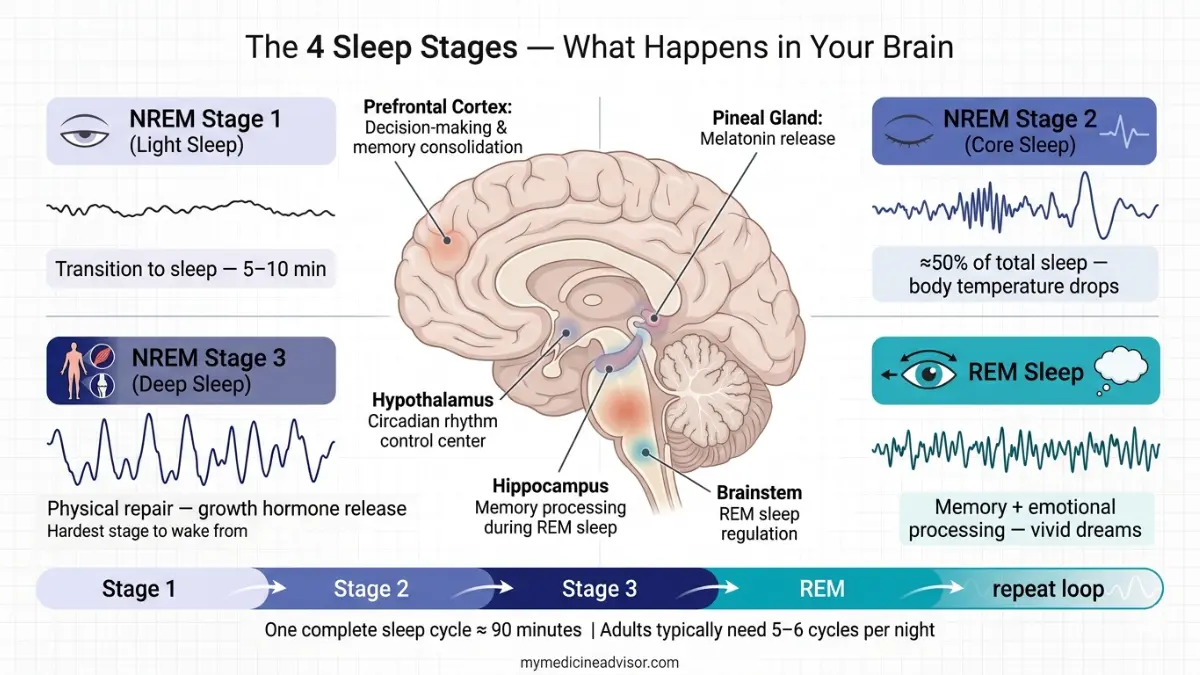
Sleep happens in 90-minute cycles (typically 4–6 per night), each containing:
- NREM Stage 1 & 2 (Light Sleep): Transition and consolidation — easy to wake from
- NREM Stage 3 (Deep/Slow-Wave Sleep): Physical repair, growth hormone release, immune function — hardest to wake from
- REM Sleep: Memory consolidation, emotional processing, creative cognition — most active in later cycles
Waking in the middle of deep sleep (Stage 3) causes sleep inertia — the groggy, disoriented feeling many people describe even after a “full night.” Waking at the end of a cycle, by contrast, produces alertness. Our Sleep Calculator is designed specifically around 90-minute cycle timing to help you wake at the optimal moment.
To learn more about what happens during REM and why it’s critical for your mental health, read our detailed guide on what is REM sleep.
5 Reasons You Feel Tired After 8 Hours
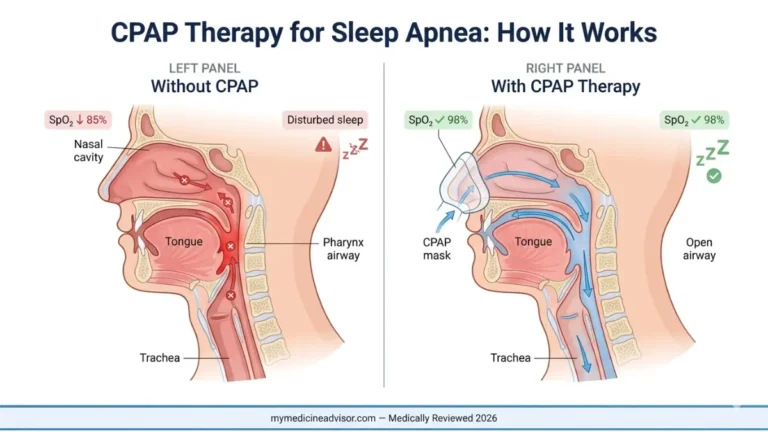
- Sleep apnea — Breathing interruptions prevent reaching deep Stage 3 and REM sleep. You’re unconscious but not recovering. The CDC estimates sleep apnea affects 25–30 million U.S. adults, the majority undiagnosed.
- Alcohol before bed — Sedates you into Stage 2 but suppresses REM sleep entirely. You sleep longer but recover less.
- Blue light exposure — Suppresses melatonin production by up to 90 minutes, pushing your circadian clock forward and reducing early-night deep sleep.
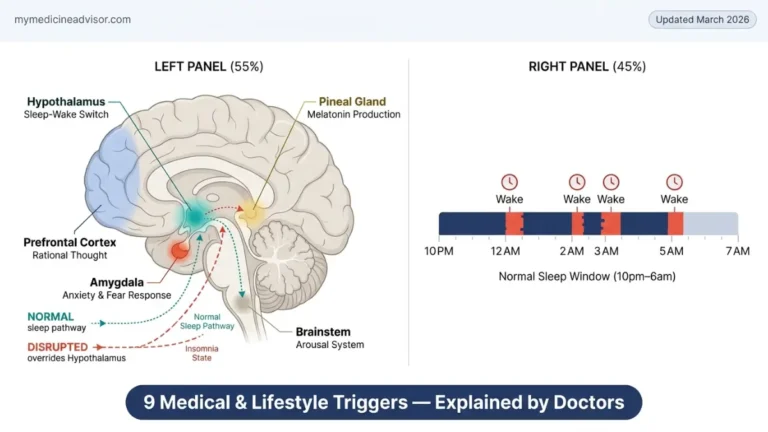
- Anxiety/hyperarousal — Keeps cortisol elevated, preventing the neurological “power-down” needed for Stage 3 entry.
- Fragmented sleep — Even brief micro-awakenings you don’t remember reset your sleep cycle, cutting deep sleep accumulation significantly.
✅ Self-Assessment: Are You Sleep Deprived Right Now?
Check how many of these apply to you in the past 2 weeks:
- [ ] Fall asleep within 5 minutes of lying down (suggests significant sleep debt)
- [ ] Rely on an alarm — couldn’t sleep naturally to your wake time
- [ ] Need caffeine to function before 10 AM
- [ ] Difficulty concentrating on tasks lasting 20+ minutes
- [ ] Feel irritable or emotionally reactive without obvious cause
- [ ] Fall asleep during passive activities (watching TV, reading)
- [ ] Sleep significantly longer on weekends than weekdays
If 3 or more apply: You are likely carrying measurable sleep debt. If 5 or more apply, consider speaking with a physician — particularly to rule out a sleep disorder.
How to Actually Get the Right Hours of Sleep — Evidence-Based Action Plan
Bedtime-by-Age Quick Reference (Based on Common Wake Times)
| Age Group | Wake Time | Target Bedtime |
|---|---|---|
| School-age (6–12) | 7:00 AM | 8:00–9:00 PM |
| Teenagers (13–17) | 7:00 AM | 9:00–10:30 PM |
| Young adults (18–25) | 6:30 AM | 9:30–11:00 PM |
| Adults (26–64) | 6:00 AM | 10:00–11:00 PM |
| Older adults (65+) | 5:30–6:00 AM | 9:30–10:30 PM |
Assumes 20 minutes to fall asleep. Adjust for your actual sleep latency.
The 4 Evidence-Based Pillars of Sleep Duration
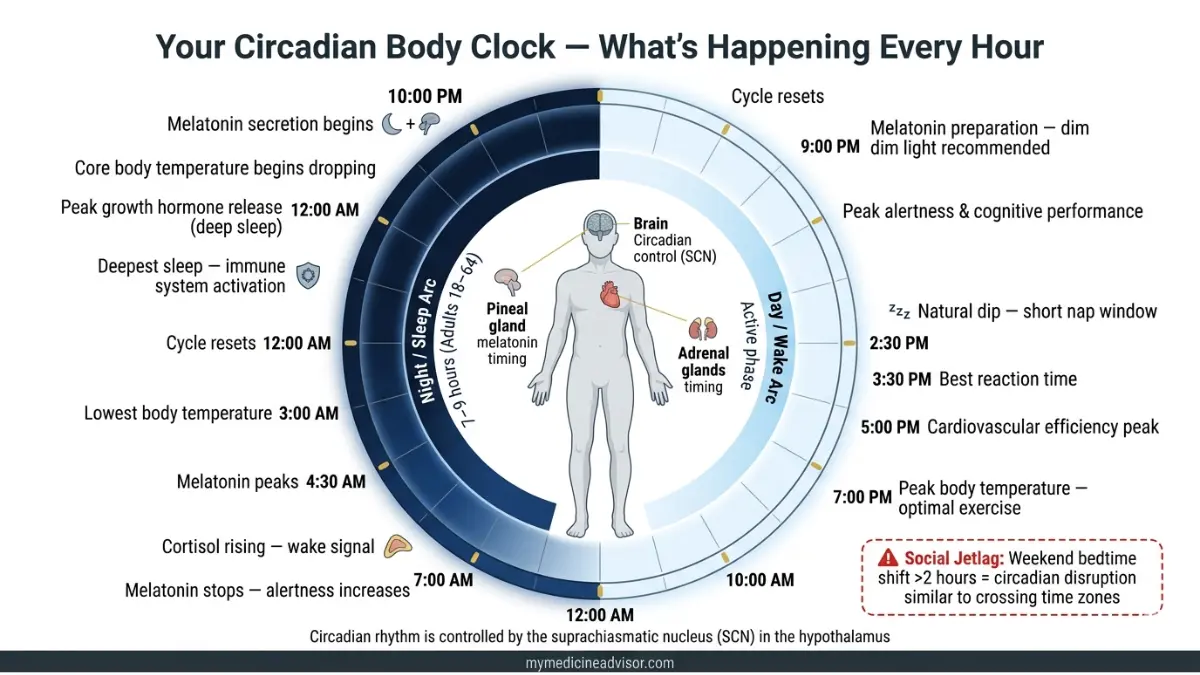
1. Consistency Is the Most Powerful Tool Going to bed and waking at the same time — even on weekends — trains your circadian clock more effectively than any supplement. A variance of 30 minutes is clinically tolerable. A 2-hour “social jetlag” on weekends produces measurable performance decline equivalent to mild jet lag, every Monday.
2. Temperature Is Underrated Core body temperature must drop 1–2°F to initiate sleep. Bedroom temperature of 65–68°F (18–20°C) is optimal for most adults. A warm shower 60–90 minutes before bed paradoxically speeds this cooling process.
3. The Caffeine Half-Life Problem Caffeine has a half-life of 5–7 hours. A 3 PM coffee means ~100mg of caffeine still active at 9 PM. This blunts adenosine (your sleep pressure chemical) and delays deep sleep onset — even if you feel like you fall asleep normally.
4. The 30-Minute Wind-Down Rule Every age group benefits from a 30-minute screen-free wind-down. For children, this dramatically reduces sleep latency. For adults, it reduces cortisol enough to allow melatonin to rise on schedule.
Age-Specific “What This Means For You” Callouts
- Parents of school-age kids: Devices out of the bedroom by 8 PM. One consistent bedtime — not a range — is clinically superior for sleep quality and behavior.
- Teenagers: Advocate for later school start times (8:30 AM or later). The American Academy of Pediatrics formally recommends this for middle and high schools based on circadian biology.
- Working adults: Protect the last 60 minutes before bed as aggressively as you’d protect a business meeting. Sleep debt accumulates faster than most people realize and cannot be fully recovered on weekends.
- Adults 65+: Brief daytime naps (20–30 minutes before 2 PM) are beneficial. Naps longer than 30 minutes, or later in the afternoon, fragment nighttime sleep and increase cardiovascular risk per 2023 research.
Dr. Omar Hassan, MD (Internal Medicine): “Consistent sleep timing trains your circadian clock more powerfully than any supplement. A 30-minute bedtime variance is clinically tolerable. A 2-hour variance on weekends causes measurable performance decline — what researchers now call ‘social jetlag.’ It affects millions of Americans silently.”
Warning Signs You’re Chronically Sleep Deprived + When to See a Doctor
Most Americans do not recognize chronic sleep deprivation as a medical condition — they assume it’s a lifestyle choice. The CDC estimates that 1 in 3 U.S. adults does not get enough sleep regularly. That’s over 80 million people.
Red Flag Warning Table — When Sleep Problems Need Medical Attention
| Symptom | Likely Cause | Recommended Action |
|---|---|---|
| Daytime fatigue lasting 3+ weeks | Sleep apnea, insomnia disorder | See a primary care physician |
| Can’t fall asleep >30 min most nights | Chronic insomnia | Start with CBT-I (first-line treatment) |
| Waking 3+ times per night | Fragmented sleep, apnea, anxiety | Rule out sleep apnea; evaluate anxiety |
| Need 10+ hours daily and still tired | Hypersomnia, depression, thyroid | Neurological and metabolic evaluation |
| Loud snoring + gasping reported by partner | Obstructive sleep apnea | Urgent: sleep study (polysomnography) |
| Uncontrollable urge to move legs at night | Restless Leg Syndrome (RLS) | Neurological evaluation |
If you recognize persistent sleep symptoms you can’t explain, start with our Symptom Checker for an initial triage — and then schedule a physician visit.
Important: Insomnia and sleep disorders are closely linked to conditions explored in our guides on sleep disorders — symptoms and causes and how to reduce anxiety naturally, both of which directly affect sleep duration and quality.
When to Stop Self-Treating
Self-management works for mild, situational sleep issues. Seek professional evaluation if:
- Sleep problems have persisted more than 3 months
- You’ve tried consistent sleep hygiene for 4+ weeks with no improvement
- Sleep issues are affecting your work, relationships, or driving safety
- You suspect sleep apnea (the single most underdiagnosed sleep condition in the U.S.)
⚕️ Clinical Note: Cognitive Behavioral Therapy for Insomnia (CBT-I) is now the first-line treatment for chronic insomnia, ahead of sleep medications, per both the AASM and the NIH. Most primary care physicians can refer you or provide CBT-I resources.
Quick FAQs — Hours of Sleep by Age
Q6: How many hours of sleep do newborns need? Q1: Is 6 hours of sleep enough for adults?
For most adults, no. Research consistently shows that people sleeping 6 hours per night demonstrate the same cognitive impairment as those sleep-deprived for 24 hours — but they adapt to the feeling and stop noticing the deficit. Seven hours is the clinical minimum for adults 18–64.
Q2: How many hours of sleep does a 50-year-old need?
Adults aged 50–64 still need 7–9 hours. However, sleep architecture changes mean less deep sleep is achieved naturally. Prioritizing consistent bedtime, limiting alcohol, and keeping the bedroom cool become more important after 50.
Q3: Do teenagers really need 10 hours of sleep?
Yes — 8–10 hours is the AASM recommendation for ages 13–17. Their circadian rhythm biologically shifts later, making early school start times a genuine public health issue, not a behavioral one.
Q4: Can you catch up on lost sleep on weekends?
Partially. You can partially recover short-term sleep debt, but chronic sleep deprivation (weeks to months) cannot be fully reversed by weekend sleeping. Social jetlag from irregular schedules also creates its own metabolic consequences.
Q5: Is sleeping 9 hours too much for an adult?
Not necessarily — if you’re recovering from illness, intense training, or a period of deprivation. But regularly needing 9+ hours and still feeling tired is a red flag for sleep apnea, depression, hypothyroidism, or another underlying condition.
Q6: How many hours of sleep do newborns need?
Newborns (0–3 months) need 14–17 hours distributed across multiple sleep periods throughout the day and night. They have no circadian rhythm yet — it develops between 3–6 months.
Q7: What is the minimum hours of sleep to survive long-term?
Fewer than 6 hours consistently is associated with significantly increased all-cause mortality, cardiovascular disease, and metabolic disorders. There is no safe “minimum” below 7 hours for the general adult population.
Q8: Does sleep quality count as much as sleep hours?
Absolutely. Six hours of uninterrupted, cycle-complete sleep is clinically superior to 8 hours of fragmented sleep with multiple awakenings. Both quantity and quality must be optimized.
Q9: How does sleep change after age 60?
Deep sleep (Stage 3) decreases significantly. Sleep becomes lighter, more fragmented, and earlier in timing. The recommended hours remain 7–8, but achieving true restorative sleep requires stricter sleep hygiene and, if needed, evaluation for sleep disorders.
Q10: Is 5 hours of sleep enough if I feel fine?
Almost certainly not. Research confirms that chronically sleep-deprived people lose the ability to accurately gauge their own impairment. Feeling fine on 5 hours is often a sign of adaptation to impairment — not true sufficiency.
Q11: How many sleep cycles should you complete per night?
Most adults need 5–6 complete 90-minute cycles per night, totaling 7.5–9 hours. Waking at the end of a cycle — rather than mid-cycle — is the key to feeling naturally alert without an alarm.
For more evidence-based health guidance, visit mymedicineadvisor.com — home to 21 internationally credentialed medical experts.
⚠️ Disclaimer: This article is intended for educational purposes only and does not constitute medical advice, diagnosis, or treatment. Individual sleep needs vary. Consult a board-certified physician or sleep specialist for personalized guidance.
About this content
How this article was put together: researched from recognised health sources, drafted with the help of AI tools, and edited by hand, with sources linked throughout.

Sameer Patel is the founder and editor of My Medicine Advisor. He is not a doctor or medical professional — before starting this site he worked in banking,…
Medical disclaimer
The content on MyMedicineAdvisor is provided for general informational and educational purposes only and is not a substitute for professional medical advice, diagnosis, or treatment. Health information on this website should not be used to diagnose, treat, cure, or prevent any condition without guidance from a qualified healthcare professional. Always seek the advice of your doctor, physician, or another licensed healthcare provider with any questions you may have regarding a medical condition, symptoms, medications, or treatment decisions.