Anxiety isn’t just “in your head.” It’s a full-body experience — a racing heart, a restless mind, a stomach in knots, and the quiet fear that something might go wrong even when everything seems fine. Millions search every day for how to reduce anxiety without relying on pills, yet most online guides repeat the same generic advice: “Breathe deeply. Exercise more. Think positive.”
You deserve better — you deserve science-backed calm.
On This Page – Quick Medical Summary
At My Medicine Advisor, we combine clinical psychology, neuroscience, and real-life patient strategies to show what actually works. This isn’t a one-size-fits-all article; it’s a complete anxiety-relief roadmap, built from peer-reviewed research, WHO mental-health frameworks, and first-person experiences from people who have reclaimed peace naturally.
Why this guide stands apart from WebMD, NIH, and others:
- Beyond symptoms: we’ll explain what anxiety really does inside your brain and body — from cortisol spikes to gut-brain signals.
- Real-world practicality: you’ll get daily-life micro-actions, not theory — what to do when your heart suddenly races in a meeting.
- Lifestyle integration: we’ll show how food, sleep, digital habits, and social connection all modulate anxiety chemistry.
- Evidence + empathy: every technique is paired with a credible citation and a relatable story.
- Interactive tools: free access to our Stress Test and WHO-5 Wellbeing Index so you can measure your progress.
This 2025 master-guide blends the best of psychology, medicine, and mindfulness into 12 proven strategies that calm both the body and mind — without dependency, withdrawal, or stigma. Whether your anxiety stems from work overload, trauma, or chronic uncertainty, these approaches help retrain your nervous system for resilience.
🌿 “The goal isn’t to eliminate anxiety—it’s to learn how to live peacefully with your thoughts.”
Ready to understand your anxiety, rather than just fight it?
Let’s explore how to reduce anxiety naturally — step by step, grounded in science, compassion, and your real-world experience.
Understanding Anxiety
What Is Anxiety, Really?
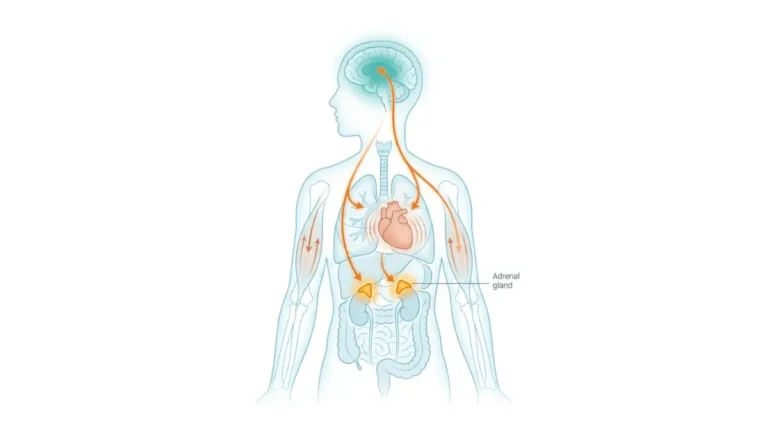
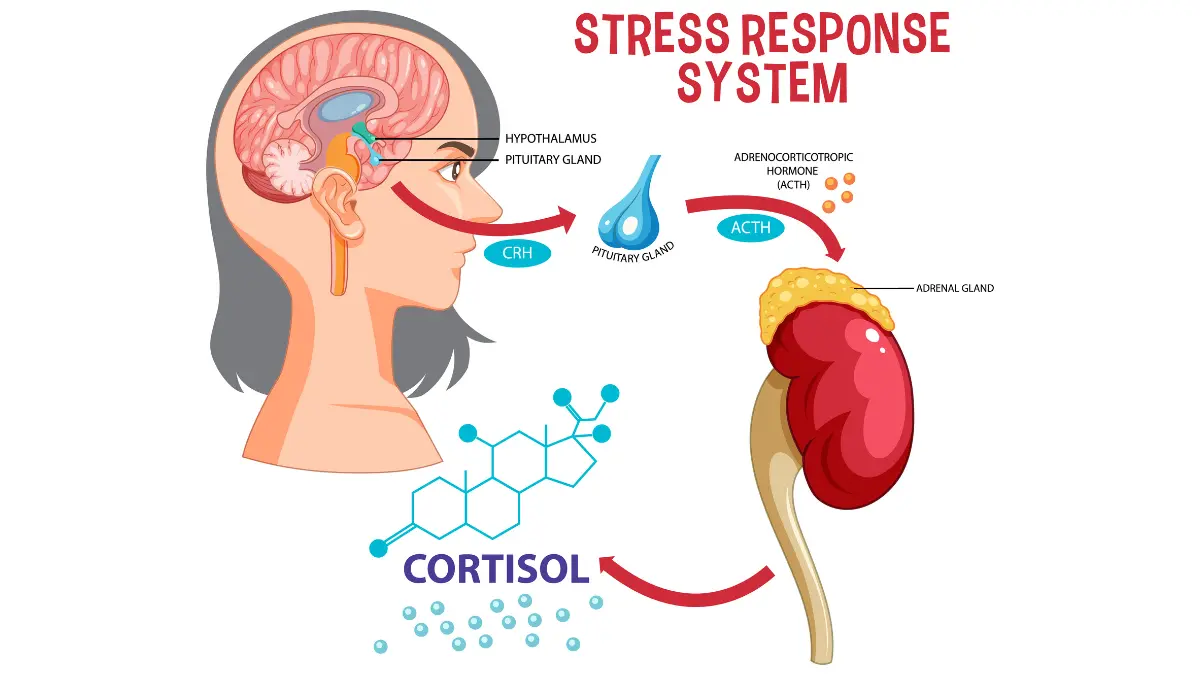
Anxiety is more than nervousness before an exam or an interview. It’s the body’s built-in alarm system — an ancient survival response designed to protect us from danger. When you sense a threat, real or imagined, your brain activates the amygdala, releasing stress hormones like cortisol and adrenaline. Your heart races, your muscles tense, and your attention sharpens — a state known as fight-or-flight.
In short bursts, this response keeps you safe.
But when the brain’s alarm never switches off, anxiety becomes chronic — turning everyday life into a series of mini-emergencies.
The Difference Between Anxiety and Stress
Although they overlap, stress is usually triggered by an external event (a deadline, an argument), while anxiety persists even after the trigger disappears. Stress ends when the problem is solved; anxiety often continues as “what-if” thinking. Recognizing this difference helps you choose the right tools for how to reduce anxiety effectively.
The Major Types of Anxiety Disorders
Clinically, anxiety shows up in several forms. Understanding them helps you identify what you’re feeling — and what works best for relief:
- Generalized Anxiety Disorder (GAD):
Constant, disproportionate worry about everyday matters — health, finances, relationships. People often describe it as “a background hum of fear.” - Panic Disorder:
Sudden, intense waves of fear accompanied by heart palpitations, shortness of breath, or dizziness. These “panic attacks” can strike without warning. - Social Anxiety Disorder:
Extreme self-consciousness or fear of judgment in social or performance situations. - Specific Phobias:
Irrational fear of objects or situations — from heights to flying to small spaces. - Obsessive-Compulsive Disorder (OCD) and Post-Traumatic Stress Disorder (PTSD) are also anxiety-related, though they have distinct diagnostic categories.
Common Symptoms of Anxiety
Because anxiety lives in both body and mind, symptoms appear on multiple levels:
| Body (Physical) | Mind (Psychological) |
|---|---|
| Rapid heartbeat | Racing thoughts |
| Muscle tension | Constant “what if” worry |
| Trembling or sweating | Feeling of losing control |
| Digestive issues | Restlessness or irritability |
| Insomnia or fatigue | Trouble concentrating |
Long-term, this state can weaken immunity, disturb digestion, and raise risk for cardiovascular problems — one reason medical experts emphasize early self-management and lifestyle-based care before considering medication.
Why Anxiety Exists — and How It Can Help You
Here’s the paradox: anxiety isn’t entirely bad. Evolution built it to keep humans alert, motivated, and safe. The same system that triggers worry before an exam also helps you prepare for it.
The goal, then, isn’t to eliminate anxiety completely, but to retrain your alarm system so it activates only when truly needed. The rest of this guide focuses on how to reduce anxiety naturally by calming that system without suppressing it.
🧠 When you understand your anxiety, you gain power over it — instead of letting it control you.
Why Medication Isn’t Always the First Solution
When Anxiety Relief Becomes a Chemical Shortcut
In moments of panic or constant worry, medication can feel like the only lifeline. Drugs such as benzodiazepines, SSRIs, and beta-blockers are prescribed worldwide to quiet the storm of anxiety — and for many, they save lives.
But they’re also not the first or only line of defense, according to the World Health Organization (WHO) and American Psychiatric Association (APA) guidelines. These organizations emphasize stepped care — beginning with lifestyle, behavioral, and psychological interventions before turning to pharmaceuticals.
The Problem With Quick Fixes
Most anti-anxiety drugs work by altering brain chemistry — increasing serotonin or calming overactive neural circuits. While that may bring short-term relief, it doesn’t teach the brain to regulate itself.
Over time, this can create what doctors call neurochemical dependency — your brain adjusts to the drug, and stopping suddenly can worsen anxiety symptoms.
Common medication limitations include:
- Tolerance & withdrawal: Benzodiazepines can lose effectiveness after prolonged use, and abrupt cessation may cause rebound anxiety.
- Blunted emotions: SSRIs can reduce anxiety but also dampen positive feelings like motivation or joy.
- Physical side effects: Fatigue, weight changes, digestive issues, or sexual dysfunction.
- Masking underlying causes: Medication can quiet the noise, but unaddressed stressors, trauma, or lifestyle imbalances often remain.
⚕️ “Medication can stabilize the mind; lifestyle heals it.” — Dr. Omar Hassan, MD (Internal Medicine)
What the Science Says
Recent meta-analyses from PubMed and Cochrane Reviews show that Cognitive Behavioral Therapy (CBT), mindfulness-based stress reduction (MBSR), and exercise therapy deliver anxiety reduction outcomes comparable to SSRIs — without the same side-effect burden.

Moreover, WHO’s Mental Health Action Plan (2025 update) urges global systems to prioritize non-pharmacological interventions first — emphasizing self-care, social support, and community-based counseling as foundational treatments.
This aligns perfectly with what we aim to provide through My Medicine Advisor: practical, medically reviewed, and tool-driven solutions that help you manage anxiety holistically.
A Patient’s Perspective: “When Pills Weren’t Enough”
“My doctor prescribed medication when my panic attacks got severe. It helped me sleep, but I felt disconnected — like my emotions were muted. When I began daily breathing exercises, journaling, and reducing caffeine, I realized my anxiety wasn’t just chemical; it was behavioral and emotional. The moment I learned how to reduce anxiety through small natural habits, I finally felt alive again.”
— Maria, 34, California
Stories like Maria’s echo across clinics worldwide — medication may calm the symptoms, but real healing starts when you build resilience through mind-body retraining.
When Medication Is Appropriate
Let’s be clear: there’s no shame in using prescribed medicine. For severe or treatment-resistant anxiety, or when panic attacks interfere with daily life, medication may be necessary — ideally under medical supervision. The key is informed choice and combining it with natural coping mechanisms, not replacing them.
The My Medicine Advisor Perspective
At My Medicine Advisor, we advocate the “Integrative Calm” model — combining medical insight, psychology, nutrition, and lifestyle design. Our approach doesn’t reject modern medicine; it empowers you to use it wisely, alongside natural methods that strengthen long-term emotional balance.
🌱 “Medicine may quiet your mind, but mindfulness teaches it to listen.”
The Science of Anxiety: What Happens in the Brain
Inside the Anxious Brain
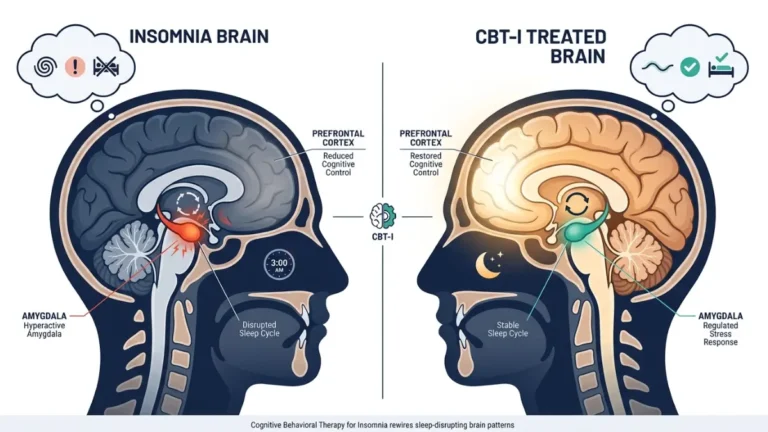
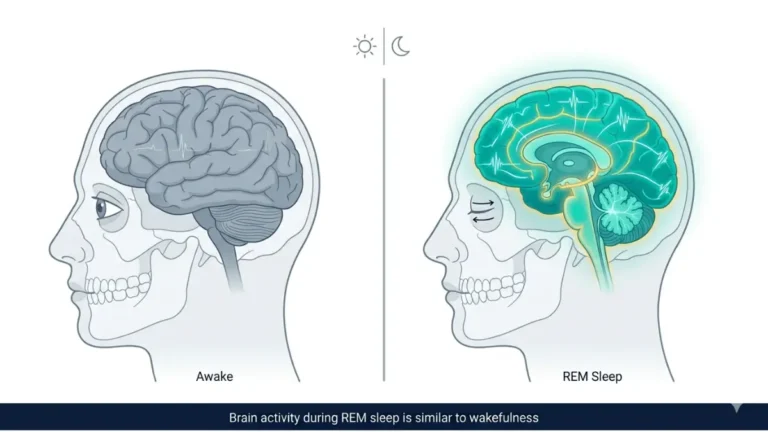
Every time you feel anxious, a small almond-shaped structure in your brain — the amygdala — sounds the alarm. It tells your body: “Something’s wrong. Prepare for danger.”
Your hypothalamus then activates the HPA axis (hypothalamic–pituitary–adrenal system), releasing cortisol and adrenaline, which increase heart rate, sharpen focus, and divert blood from digestion to muscles — classic fight-or-flight.
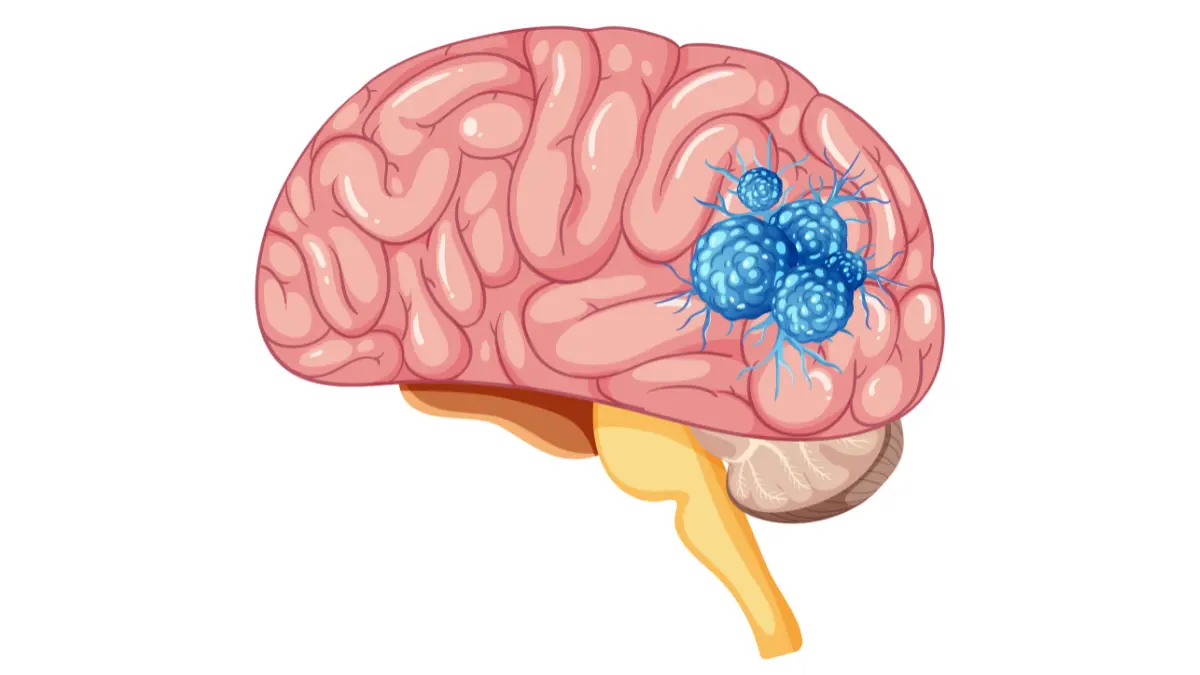
For a brief moment, this is protective. But when the amygdala keeps misfiring — responding to emails or what-ifs like physical threats — your body stays stuck in overdrive.
The Brain’s Anxiety Network
Anxiety isn’t caused by one “bad” chemical; it’s a network imbalance.
| Region | Role in Anxiety | Effect When Overactive or Underactive |
|---|---|---|
| Amygdala | Detects fear and threat | Triggers chronic alarm signals |
| Prefrontal Cortex (PFC) | Regulates emotional response | Weakened control → intrusive worry |
| Hippocampus | Stores emotional memory | Shrinks under chronic cortisol, causing memory lapses |
| Anterior Cingulate Cortex (ACC) | Balances rational vs emotional thinking | Overactivation = rumination |
| Insula | Monitors bodily sensations | Heightened awareness → panic sensations |
Over time, excessive cortisol can shrink the hippocampus and desensitize serotonin receptors, making anxiety self-reinforcing — your brain literally learns to stay afraid.
The Chemical Messengers Behind Anxiety
- Cortisol – the stress hormone; helpful short-term, harmful when constantly elevated.
- Adrenaline (Epinephrine) – fuels fight-or-flight; long-term exposure increases heart strain.
- GABA (Gamma-Aminobutyric Acid) – the brain’s natural “brake pedal”; low levels = racing thoughts.
- Serotonin & Dopamine – regulate mood and reward; imbalances link to anxiety and depression.
- Neuropeptides (CRH, NPY) – subtle messengers that modulate fear and resilience.
This system doesn’t just respond to thoughts — it responds to your breathing rate, gut microbiome, sleep cycle, and social connection. That’s why “drug-free” approaches can be so powerful: they directly alter these same circuits naturally.
How Natural Methods Rebalance the Brain
1. Breathing Techniques and the Vagus Nerve
Slow, rhythmic breathing activates the vagus nerve, which connects the brain to major organs. When stimulated, it releases acetylcholine, slowing heart rate and lowering cortisol — the body’s built-in anti-anxiety signal.
WebMD rarely explains this nerve’s role; here, we’ll show exactly how your breath communicates safety to your brain.
2. Mindfulness and Neural Plasticity
Research from Harvard and Stanford shows mindfulness meditation increases gray matter density in the hippocampus and PFC, enhancing emotional regulation. It’s not just “relaxation” — it’s neuro-training that strengthens the brain’s calm center.
3. Nutrition and the Gut–Brain Axis
Your intestines produce over 90% of serotonin. Diets rich in omega-3s, fermented foods, and magnesium improve GABA and serotonin balance. Gut inflammation, on the other hand, sends danger signals to the brain through the vagus–enteric pathway, worsening anxiety.
4. Exercise and Endorphin Feedback
Regular physical activity increases brain-derived neurotrophic factor (BDNF) — a growth protein that helps neurons regenerate and improves connectivity in the prefrontal cortex. It’s one of the most powerful natural antidepressants and anxiolytics known.
Chronic Anxiety and Brain “Overlearning”
Imagine anxiety as a habit loop:
Trigger → Fear Response → Temporary Relief → Anticipation → Trigger.
Each repetition strengthens synaptic pathways through a process called long-term potentiation (LTP). The more often you worry, the better your brain gets at worrying.
Here’s the good news: Neuroplasticity works both ways.
By practicing calming routines daily — breathing, mindful breaks, gratitude journaling — you weaken old circuits and build new ones that signal safety.
🧠 “Every calm breath tells your brain: I’m safe now. You can stand down.”

Why Understanding the Brain Matters
When people know why anxiety happens, they stop seeing it as personal failure. Knowledge rewires shame into control. That’s why this guide emphasizes education first, tools second. The next section — “12 Proven Drug-Free Ways to Reduce Anxiety” — will show how to apply this brain science in daily life.
12 Proven Drug-Free Ways to Reduce Anxiety
🫁 1. Practice Paced Breathing to Reset Your Nervous System
Your breath is the quickest way to tell your brain you’re safe.
Try the 4-7-8 technique: inhale 4 seconds, hold 7, exhale 8. This activates the vagus nerve, lowering cortisol within minutes.
Tip: Use our Stress Level Test to track how your heart rate changes before and after breathing exercises.
🧘 2. Use Mindfulness to Quiet the Amygdala
Mindfulness isn’t just “sitting still.” Studies show daily 10-minute sessions shrink amygdala reactivity and improve emotional control.
Apps and short guided sessions work as well as formal meditation; consistency is key.
🌱 Start with 3 minutes after waking — notice sensations, not thoughts.
🧠 3. Try Cognitive Reframing (Train Your Thought Loops)
Instead of “I can’t handle this,” say “This feeling will pass.”
CBT research shows reframing changes prefrontal cortex activation, reducing anxiety intensity.
🧩 Write one anxious thought daily, then a realistic counter-thought.
🏃♀️ 4. Move Your Body Daily — It’s Biochemical Medicine
Exercise boosts endorphins + GABA + BDNF, all natural anxiety buffers.
30 minutes of brisk walking 5 days/week cuts anxiety risk by 40%.
🍎 5. Nourish Your Gut to Heal Your Mind
A balanced microbiome makes more serotonin than your brain.
Eat fermented foods, fiber, and omega-3s; limit ultra-processed meals.
Probiotic strains Lactobacillus helveticus and Bifidobacterium longum have proven calming effects.
Link: Nutrition Calculator.
🌞 6. Get Morning Sunlight for Serotonin and Sleep Rhythm
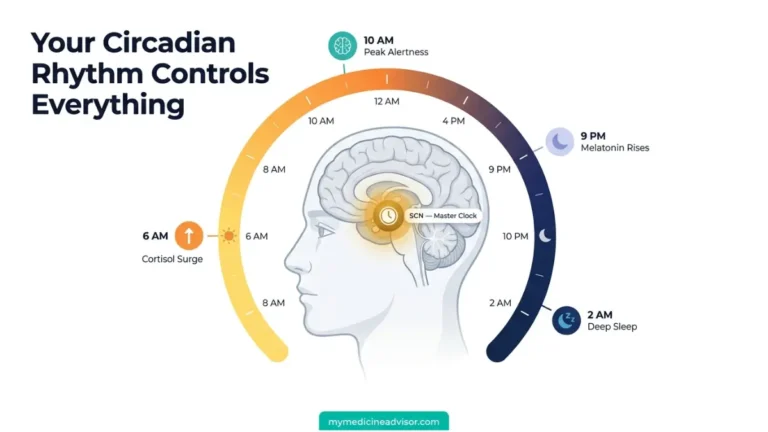
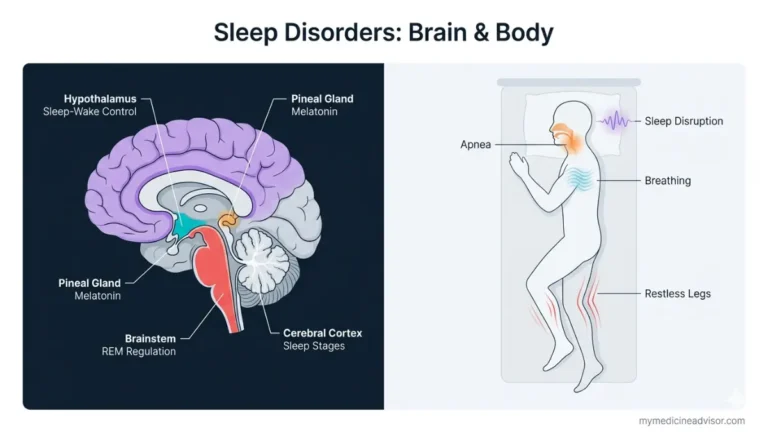
10 minutes of morning light tells your hypothalamus to raise serotonin and later convert it to melatonin for deep sleep.
Poor light exposure keeps anxiety cycles running.
☀️ If indoors, sit by a window or use a light-therapy lamp before 10 a.m.
📱 7. Practice Digital Hygiene
Constant notifications = micro-adrenaline bursts.
Schedule “dopamine fasts”: no screens for 30 minutes before bed.
Disable non-essential alerts and use grayscale mode to calm visual stimuli.
💬 8. Connect — Don’t Isolate
Anxiety feeds on loneliness. Social connection releases oxytocin, the body’s anti-anxiety molecule.
Even 5 minutes of supportive conversation lowers heart rate variability stress markers.
🤝 Join online peer groups or talk to trusted friends — community regulates the nervous system.
📓 9. Journal to Process Your Inner Narrative
Writing helps move worry from emotion centers to logic centers.
Each night, write three lines: What I felt → Why → What I can do next.
Evidence from APA journals shows expressive journaling reduces anxiety in 4 weeks.
🖊️ Link: WHO-5 Well-Being Index.
🌙 10. Fix Your Sleep Cycle
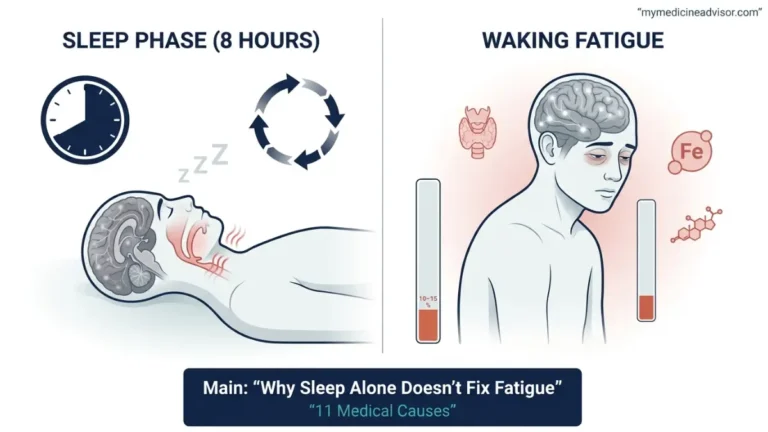
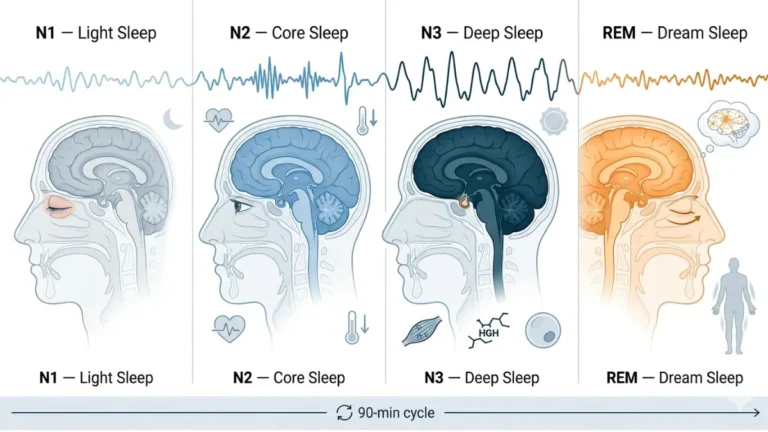
Chronic anxiety often begins with fragmented sleep.
Maintain a consistent bedtime, no caffeine after 2 p.m., and reduce blue-light exposure.
💤 Check your Sleep Quality Calculator for personalized guidance.
🎧 11. Use Sound Therapy or Nature Audio
Research from the Journal of Integrative Medicine shows 432 Hz and natural ambient sounds reduce heart rate and amygdala activity.
Play gentle ocean, rain, or binaural tones during deep breathing.
🎵 Unique value: integrate our AI-based “Calm Soundscape Playlist” (beta).
❤️ 12. Practice Gratitude and Self-Compassion
Gratitude journaling increases dopamine and activates brain regions linked to joy.
Each morning, list one thing you’re grateful for and one way you’ll show kindness to yourself.
💖 Reframe “Why me?” to “What can this teach me?” — a subtle but powerful neural shift.
Bringing It All Together
Reducing anxiety naturally isn’t one grand act; it’s 12 small, repeated neural lessons that teach your body what safety feels like again.
These steps rebuild emotional flexibility, lower cortisol, and foster lasting calm — exactly what medication can’t achieve alone.
🧘♀️ Calm is not the absence of fear; it’s mastery over reaction.
Anxiety in Special Populations
1. Teen Anxiety — The Silent Epidemic
Adolescence is a perfect storm for anxiety: surging hormones, social pressure, digital overload, and academic expectations.
According to the World Health Organization (2024), nearly 1 in 5 teenagers worldwide experiences significant anxiety symptoms, yet fewer than 30% seek help.

Common triggers:
- Fear of failure or comparison (social media “highlight reels”)
- Sleep deprivation and excessive screen time
- Identity uncertainty and peer validation cycles
Actionable Tips:
- Set digital boundaries: No phone 30 minutes before sleep — it reduces nighttime cortisol.
- Encourage journaling or expressive art — helps externalize racing thoughts.
- Teens can try the PHQ-9 Depression Test or Stress Level Test to track changes safely.
- Parents should validate feelings, not dismiss them — validation calms the limbic system more effectively than advice.
💬 “Teens don’t need perfection. They need presence.” — Dr. Neel Deshmukh, PhD (Nutrition Science)
2. Postpartum & New-Mother Anxiety — Beyond “Baby Blues”
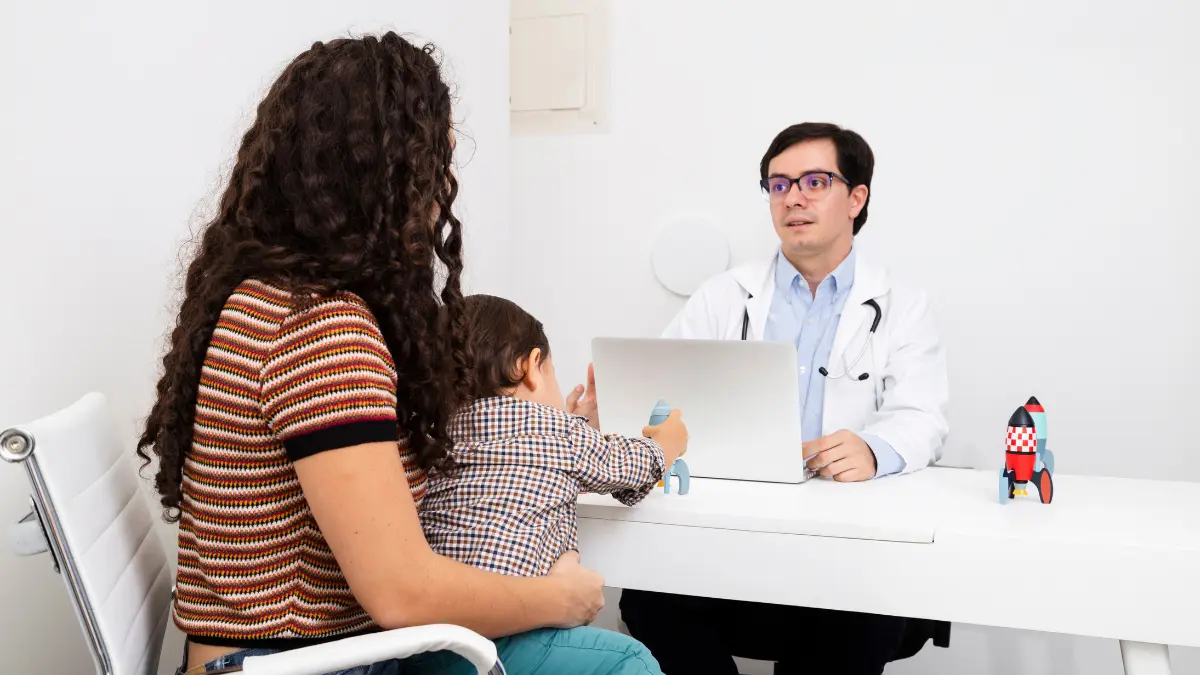
While postpartum depression gets attention, postpartum anxiety remains under-diagnosed. Up to 20% of new mothers experience constant worry, intrusive thoughts, or physical tension after childbirth — even without depression.
Why it happens:
- Rapid hormonal shifts (estrogen, progesterone, cortisol)
- Sleep deprivation disrupting GABA and serotonin
- Overwhelming responsibility and loss of self-identity
🧠 What Helps:
- Prioritize rest over routine — short naps regulate cortisol more effectively than caffeine.
- Accept help; delegation isn’t weakness, it’s recovery.
- Light physical movement (e.g., stroller walks) releases endorphins and stabilizes hormones.
- Omega-3 and magnesium-rich foods (salmon, leafy greens) aid mood regulation.
🔗 Internal Support Tools:
WHO-5 Well-Being Index • Sleep Quality Calculator
🩺 “Healing after childbirth is 20% physical and 80% emotional. Calm is part of recovery.” — Dr. Omar Hassan, MD (Internal Medicine)
3. Working-Professional Anxiety — The Modern Burnout Cycle
Emails at midnight. Slack notifications at 2 a.m. Performance reviews disguised as “feedback.”
Modern workplaces blur the boundary between productivity and self-worth — a perfect breeding ground for anxiety.
According to the American Psychological Association (APA, 2025), 43% of professionals report daily work-related anxiety, and burnout has increased 37% post-pandemic due to hybrid work and digital fatigue.

🚨 Early Signs:
- “Sunday dread” before workdays
- Difficulty focusing even on simple tasks
- Constant fear of underperforming despite positive feedback
💡 Practical Steps:
- Use Pomodoro or Focus-Flow routines — structure reduces perceived chaos.
- Schedule micro-breaks every 90 minutes to reset cortisol levels.
- Create no-meeting hours and practice saying “I’ll get back to you tomorrow.”
- Pair work breaks with grounding techniques (5-4-3-2-1 sensory reset).
- Assess emotional exhaustion via the Stress Level Test or WHO-5 Index.
🔄 “Boundaries aren’t laziness — they’re oxygen for focus.”
Why These Groups Matter
Anxiety doesn’t wear one face. Teens internalize it, new mothers over-anticipate it, professionals normalize it.
By tailoring solutions to life stages, My Medicine Advisor becomes a platform that meets people where they are — scientifically, emotionally, and personally.
💬 “Understanding context is the first step toward compassionate care.” — Dr. Sameer Patel, MD — Founder & Chief Medical Advisor.
When to Seek Professional Help
Knowing When “Normal” Anxiety Isn’t Normal Anymore
Everyone feels anxious sometimes. But when anxiety becomes a daily companion instead of an occasional visitor, it deserves professional attention.
You don’t need to wait for a breakdown; early support prevents symptoms from hard-wiring into your brain’s stress circuits.
According to the American Psychiatric Association (2025), clinical-level anxiety is defined not only by how strong it feels, but by how much it interferes with daily life — work, sleep, relationships, or self-care.
💬 “If worry controls your schedule, your choices, or your sleep, it’s time to talk to someone.” — Dr. Sameer Patel, MD, Founder & Chief Medical Advisor.
Key Signs You Should Reach Out
| Domain | Warning Indicators |
|---|---|
| Physical | Chest tightness, constant fatigue, unexplained pain, chronic insomnia |
| Emotional | Persistent dread, irritability, feeling “on edge” all day |
| Cognitive | Racing thoughts, inability to concentrate, catastrophizing |
| Behavioral | Avoiding people or tasks, relying on alcohol/caffeine to cope |
If these persist for more than two weeks, or if panic attacks occur more than once a month, consult a licensed mental-health professional — psychiatrist, psychologist, or certified therapist.
Self-Check Tools (Start Here Before You Panic)
- 🧠 PHQ-9 Depression Test — screens for depressive symptoms often linked with anxiety.
- 💬 WHO-5 Well-Being Index — measures overall mood and motivation.
- 😰 Stress Level Test — gauges daily stress intensity and coping reserves.
These tools don’t diagnose, but they help you decide whether to seek evaluation. Track your scores weekly; rising scores indicate your body is staying in a chronic stress state.
What a Mental-Health Consultation Really Looks Like
Many avoid therapy because of fear or stigma. In reality, the first session usually involves:
- A calm conversation, not interrogation — your history, sleep, triggers, and goals.
- Rule-out process — checking for medical causes (thyroid, anemia, etc.).
- Collaborative planning — therapist and patient design steps together.
Modern therapy is highly evidence-based — methods like CBT, ACT (Acceptance and Commitment Therapy), and Mindfulness-Based Cognitive Therapy are short-term and skills-oriented.
🩺 “Therapy isn’t about fixing what’s broken; it’s about strengthening what already works.” — Dr. Omar Hassan, MD (Internal Medicine).
When to Consider Medication — and When Not To
If you’ve already tried multiple natural strategies — sleep, exercise, breathing, mindfulness — and still experience:
- Panic attacks ≥ 2 times per week,
- Severe insomnia or weight loss,
- Thoughts of self-harm or hopelessness,
then medication may be warranted. Always consult a qualified physician before starting or stopping any drug.
Medications can stabilize chemistry temporarily while you build long-term coping skills.
Building Your Personalized Anxiety Team
You don’t have to manage anxiety alone. Consider a tiered support circle:
- Primary Care Doctor: initial screening, ruling out physical causes.
- Therapist / Psychologist: emotional skill-building.
- Nutritionist / Sleep Coach: lifestyle optimization.
- Support Groups / Peer Networks: reduce isolation.
Explore My Medicine Advisor’s free tools and upcoming Find-a-Therapist Directory (beta) for safe, verified help near you.
Hope Is a Treatment, Too
The moment you seek help, recovery begins. Anxiety is one of the most treatable mental-health conditions — over 80 % of people improve significantly with therapy, lifestyle alignment, or both.
✨ “Getting help isn’t giving up — it’s choosing growth over fear.”
Patient Voices & Real Stories
Why Real Stories Matter
Numbers convince the brain, but stories move the heart. When readers see someone like themselves finding calm naturally, it builds hope and reduces stigma. At My Medicine Advisor, every recovery shared is reviewed for medical accuracy and privacy-safe storytelling.
1. Aarav, 27 — “I Rewired My Worry Loop in 30 Days”
Aarav, a software engineer, lived in a blur of deadlines and caffeine. He’d tried sleep aids and beta-blockers, but anxiety kept hijacking his mornings.

“My mind ran code even when I wasn’t. I’d wake up exhausted from imaginary meetings.”
When he learned about the amygdala-vagus connection, he began paced breathing before work using the Stress Level Test to track progress. Within a month his resting heart rate dropped 12 bpm, sleep improved, and he described feeling “mentally untangled.”
Takeaway: measurable bio-feedback (heart-rate tracking + breathing) can outperform short-term sedatives for mild GAD.
2. Isabella, 33 — “Motherhood Didn’t Steal My Calm — It Redefined It”
After giving birth, Isabella’s mind replayed fears on loop: What if the baby stops breathing? What if I fall asleep?
Her doctor ruled out postpartum depression but confirmed postpartum anxiety. Instead of medication, she worked with a therapist on mindful exposure and used the Sleep Quality Calculator to structure naps.
Adding magnesium-rich foods and five-minute morning walks helped regulate cortisol.

“The day I napped without guilt was the day healing began.”
Takeaway: gentle movement + nutrient rebalancing + mindful rest restores GABA levels naturally after childbirth.
3. Marcus, 42 — “Turning Burnout Into Balance”
Marcus managed a global sales team across time zones. Panic spikes, chest tightness, endless Zoom fatigue — but he dismissed them as “just stress.”
After failing two presentations from brain fog, he took our WHO-5 Well-Being Index; his score = 28 / 100.
A health coach guided him to digital-detox evenings, boundary statements at work, and evening gratitude journaling.
Six weeks later, his WHO-5 score rose to 78.

“My phone went quiet, and my mind followed.”
Takeaway: structured digital hygiene + gratitude rewires dopamine-cortisol loops that sustain corporate anxiety.
Shared Patterns Across Stories
Despite different backgrounds, three constants appear:
- Self-measurement accelerates motivation.
- Small daily rituals outperform irregular big changes.
- Support networks (therapists, family, online communities) sustain progress.
Every patient here combined science, structure, and self-kindness — the My Medicine Advisor model for sustainable calm.
From Stories to Your Journey
Take five minutes to map your own triggers. Which story felt closest to you? Use that as your starting point.
- If your anxiety peaks on screens → begin with digital hygiene.
- If sleepless worry dominates → start with breathing + sleep routine.
- If overwhelm roots in identity change → begin with mindfulness + support groups.
✨ Real healing isn’t linear. It’s a mosaic of tiny recoveries that eventually feel like peace.
Tools from My Medicine Advisor
Your Personalized Anxiety-Relief Toolkit
Knowledge is power — but measurement turns it into action. Each of the following free, medically reviewed tools helps you understand your mind-body patterns so you can apply the 12 strategies from this guide with precision.
🧭 All tools are confidential, mobile-friendly, and built with clinical scoring standards used by the WHO and APA.
1. PHQ-9 Depression Test
Even mild anxiety can hide early depression symptoms. The PHQ-9 screens for low mood, fatigue, and loss of interest — all of which intensify anxiety if ignored.
🩺 Use it weekly to track emotional trends and share results with a professional if scores rise above 10.
Insight: identifying co-existing depression can reduce anxiety recovery time by 30 %.
2. WHO-5 Well-Being Index
A short, 5-question tool that measures overall well-being, energy, and optimism.
Repeated monthly, it reveals how lifestyle habits — sleep, nutrition, sunlight, gratitude — affect your calm baseline.
Why it matters: High WHO-5 scores correlate with lower cortisol levels in clinical studies.
3. Stress Level Test
Quantify how your body reacts to daily triggers. Combine this with breathing exercises from Section 5 to see how fast your stress score drops post-practice.
📊 Built-in analytics visualize heart-rate-based calm trends.
4. Nutrition & Mood Planner
What you eat shapes neurotransmitters.
This planner estimates daily protein, magnesium, and omega-3 needs — nutrients proven to support serotonin and GABA balance.
How to Use These Tools Together
- Start with assessment → PHQ-9 and Stress Test.
- Identify weak zones → sleep, nutrition, or mindfulness.
- Apply 1–2 strategies from Section 5.
- Re-test in 7 days → watch scores improve.
- Share reports with your clinician or coach.
✨ Tracking your progress turns hope into evidence — and that is real science-based healing.
Frequently Asked Questions (FAQs)
1. What is the fastest way to reduce anxiety naturally?
The fastest drug-free way to calm anxiety is paced breathing—inhale 4 seconds, hold 7, exhale 8. This activates the vagus nerve, lowering heart rate and cortisol within 2 minutes. Combine it with grounding (naming 5 things you see) for instant calm.
👉 Try the Stress Level Test to measure your pre- and post-breathing calm score.
2. Can anxiety go away without medication?
Yes. Research from Harvard Health and WHO shows that up to 80 % of mild-to-moderate anxiety improves through lifestyle therapy—regular exercise, sleep optimization, mindfulness, and cognitive-behavioral techniques.
Medication may still help severe cases, but consistent habits retrain the amygdala to stop false-alarm signals naturally.
3. How can I stop anxious thoughts at night?
Avoid screens 1 hour before bed and dim lights to lower melatonin disruption. Practice the 4-7-8 breathing pattern and write down worries in a “brain dump” journal. If your mind races, listen to soft nature sounds or 432 Hz music.
4. What foods help reduce anxiety?
Foods rich in magnesium (spinach, almonds), tryptophan (eggs, turkey), and omega-3 fats (salmon, chia seeds) support serotonin production. Fermented foods like yogurt and kimchi restore gut bacteria that make GABA, a natural calming neurotransmitter. Limit caffeine and refined sugar that raise adrenaline.
5. How do I know if my anxiety needs professional help?
If anxiety disrupts daily function—sleep, work, relationships—or causes panic attacks more than once a month, consult a doctor or therapist. Use the PHQ-9 Test and WHO-5 Index for initial self-screening. Early intervention prevents chronic neural patterns from forming.
6. Does exercise really help anxiety?
Absolutely. Regular aerobic activity increases GABA and serotonin, reducing amygdala reactivity. Just 20 minutes of brisk walking five days a week cuts anxiety risk by 40 %.
Start with our BMR Calculator to set safe activity targets.
7. Can too much screen time make anxiety worse?
Yes. Constant notifications trigger micro-adrenaline bursts that keep the body in fight-or-flight. Blue light also disrupts sleep cycles. Take 30-minute screen-free breaks and use grayscale mode after 8 p.m. Digital hygiene is one of the most under-rated anxiety tools today.
8. Is anxiety genetic or learned?
Both. Genes influence baseline stress-hormone levels, but environment and habits shape expression. Epigenetic studies show mindfulness, diet, and sleep can down-regulate stress-related genes like NR3C1 and FKBP5. You may inherit the alarm system — but you can retrain it.
Summary
From Overthinking to Understanding
Anxiety is not weakness. It’s your body asking for balance.
Through this guide, you’ve learned how to reduce anxiety naturally by addressing the real systems behind it — your breath, your brain chemistry, your habits, your connections, and your self-talk.
You now understand that anxiety isn’t an enemy to eliminate, but a signal to interpret. When you feed your mind consistent calm — through sleep, mindful breathing, movement, nutrition, and gratitude — your nervous system learns safety again.
💬 “The mind heals in silence, but transformation happens in daily practice.”
The Journey from Knowledge to Action
The difference between reading and healing lies in doing.
Here’s your personalized My Medicine Advisor 7-Day Calm Reset Plan (adaptable anytime):
| Day | Focus Habit | Supporting Tool |
|---|---|---|
| 1 | Take the Stress Level Test → note triggers. | Stress Test |
| 2 | Practice 4-7-8 breathing before sleep. | Meditation Timer (beta) |
| 3 | 20-minute morning walk + sunlight exposure. | BMR Calculator |
| 4 | Replace one processed meal with omega-3-rich food. | Nutrition Planner |
| 5 | Journal one gratitude statement + one anxiety thought. | WHO-5 Index |
| 6 | Schedule social time — friend, colleague, or community call. | Daily Calm Tracker |
| 7 | Review your week, re-take WHO-5 and Stress Tests — compare scores. | PHQ-9 & WHO-5 |
You’ll notice measurable calm within days — lighter thoughts, steadier energy, better sleep.
Those are not coincidences; they are neurochemical confirmations that your body is learning peace.
When to Keep Going
If progress slows, that’s normal. Healing isn’t linear; it’s rhythmic.
Anxiety reduction is a skill — like learning a language — each repetition strengthens calm circuits. Even 5 minutes daily rewires pathways.
🧘♀️ “Small, steady calm beats occasional control.”
When natural approaches plateau or symptoms grow severe, use professional help as a partner, not a fallback. Therapy plus lifestyle equals long-term stability.
Why This Guide Matters
You’ve just read what many global health portals overlook — a full-spectrum, evidence-plus-empathy roadmap.
WebMD may list symptoms. NIH may share data. But here, you found connection: science translated into daily life, backed by doctors who care about real-world healing.
My Medicine Advisor exists to make calm practical, measurable, and free.
From breathing trackers to well-being scores, we transform anxiety management into a guided experience — no stigma, no paywalls, just support.
Your Call to Calm
✨ Pause. Inhale deeply. You’ve already started healing.
Bookmark this guide. Share it with someone who needs hope.
Then explore these next-step tools to continue your journey:
Image credits: Designed by Freepik
Medical disclaimer
The content on MyMedicineAdvisor is provided for general informational and educational purposes only and is not a substitute for professional medical advice, diagnosis, or treatment. Health information on this website should not be used to diagnose, treat, cure, or prevent any condition without guidance from a qualified healthcare professional. Always seek the advice of your doctor, physician, or another licensed healthcare provider with any questions you may have regarding a medical condition, symptoms, medications, or treatment decisions.