On This Page – Quick Medical Summary
“I hadn’t slept properly in 11 years. My wife filmed me one night — I stopped breathing 38 times in one hour. Three days after starting CPAP therapy, I woke up and actually felt rested for the first time in over a decade.” — James R., 57, diagnosed with severe obstructive sleep apnea, Ohio.
If you’ve just been diagnosed with sleep apnea — or you’re still wondering why you’re exhausted no matter how many hours you sleep — CPAP therapy is almost certainly the answer your doctor will recommend. This guide explains exactly how it works, what to expect night by night, and what the latest 2026 research shows about its life-changing benefits.
⚠️ Disclaimer: This article is for educational purposes only and does not constitute medical advice. Always consult a qualified healthcare professional for diagnosis and treatment decisions.
What Is CPAP Therapy and How Does It Actually Work?
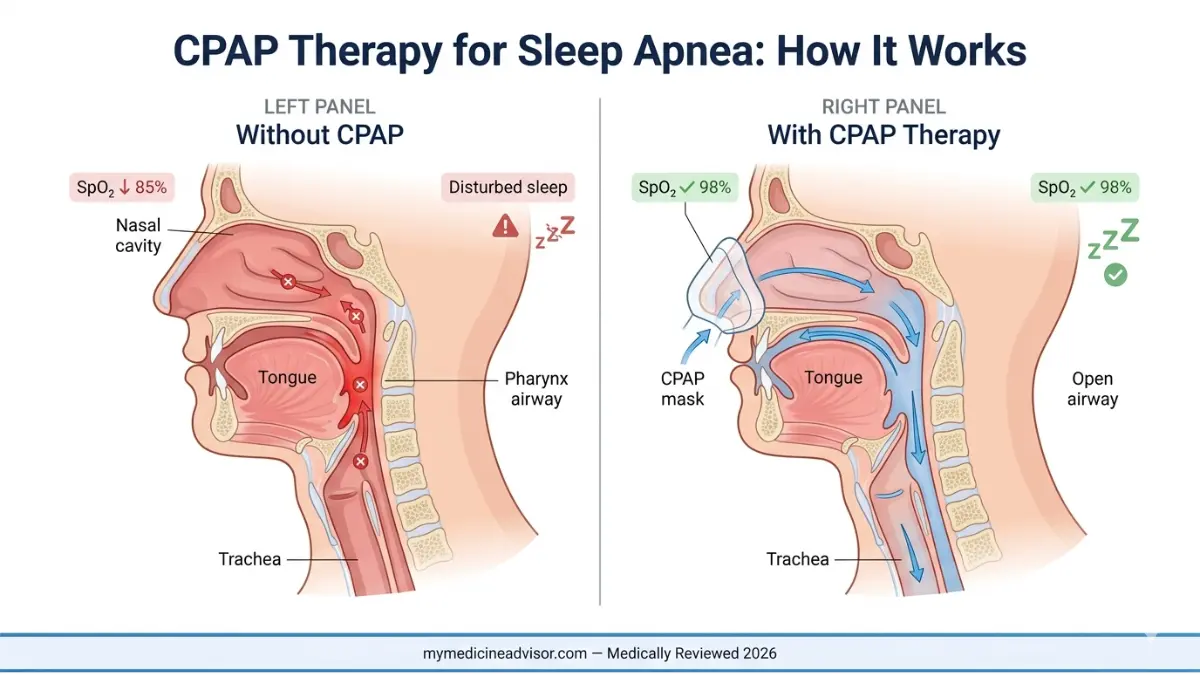
CPAP stands for Continuous Positive Airway Pressure. In plain English: it is a machine that delivers a steady, pressurized stream of air through a mask to keep your airway open while you sleep.
Think of it as an air splint — not oxygen, not medication, just controlled air pressure holding your throat open so it cannot collapse.
What Happens in Your Airway Without CPAP
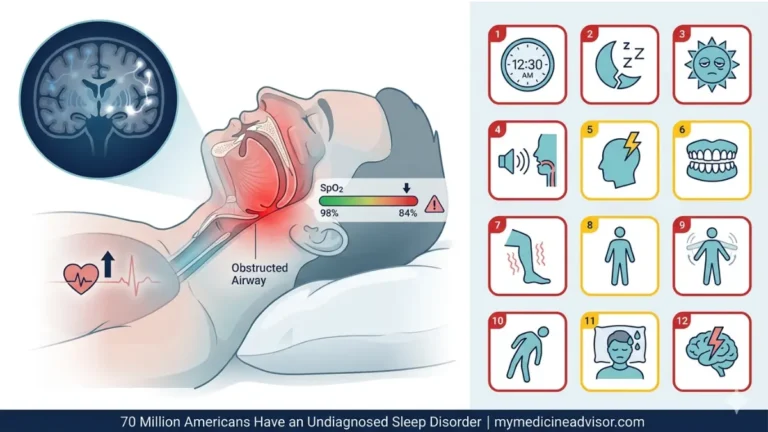
During obstructive sleep apnea (OSA), the muscles at the back of your throat relax too much. Your tongue and soft palate fall backward, completely blocking the airway. This triggers:
- A drop in blood oxygen levels
- A micro-arousal (you briefly wake without knowing it)
- Fragmented, non-restorative sleep — repeated dozens or even hundreds of times per night
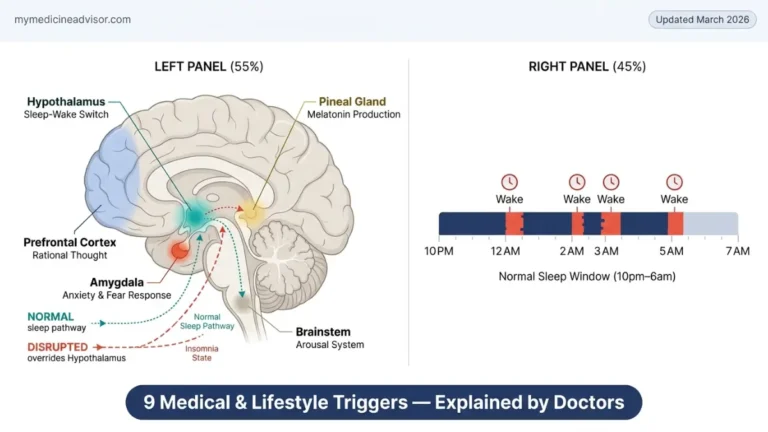
Your body never reaches the deep, restorative sleep stages it needs. If you’ve ever wondered why you’re always tired no matter how much sleep you get, untreated sleep apnea is one of the most common culprits.
How CPAP Therapy Works — Step by Step
The machine operates through a simple but precise mechanism:
- Motor/compressor draws in room air and pressurizes it
- Filter removes dust and particulates
- Flexible tube carries pressurized air to your mask
- Mask delivers air continuously into your nose and/or mouth
- Pressurized airflow acts as a pneumatic splint, holding your airway walls open all night
According to NHLBI (National Heart, Lung, and Blood Institute), CPAP is the most commonly prescribed and most effective treatment for moderate-to-severe obstructive sleep apnea. The clinical literature at NCBI StatPearls confirms it improves sleep quality, eliminates snoring, and reduces daytime sleepiness across all age groups.
CPAP vs. APAP vs. BiPAP — Which Machine Are You Getting?
Not all positive airway pressure devices are the same. Here is a clear breakdown:
| Device | How It Works | Prescribed For |
|---|---|---|
| CPAP | Fixed, constant pressure all night | Standard obstructive sleep apnea |
| APAP (Auto-PAP) | Automatically adjusts pressure breath-by-breath | OSA with variable severity; first-time users |
| BiPAP | Two pressures: higher for inhale, lower for exhale | Severe OSA; central sleep apnea; COPD patients |
The average CPAP pressure setting for OSA patients is around 10 cmH₂O, within a standard range of 4–20 cmH₂O. Your sleep specialist will titrate this during your sleep study.

📌 Key Takeaway: CPAP does not give you oxygen — it gives your airway structure. That distinction matters. Understanding how sleep apnea is diagnosed is the first step to getting the right device prescribed.
Types of CPAP Masks — Which One Is Right for You?
The mask you wear determines whether CPAP therapy succeeds or fails. This is where many patients give up — not because of the machine, but because of a poor mask fit that was never corrected.
The Three Main CPAP Mask Types
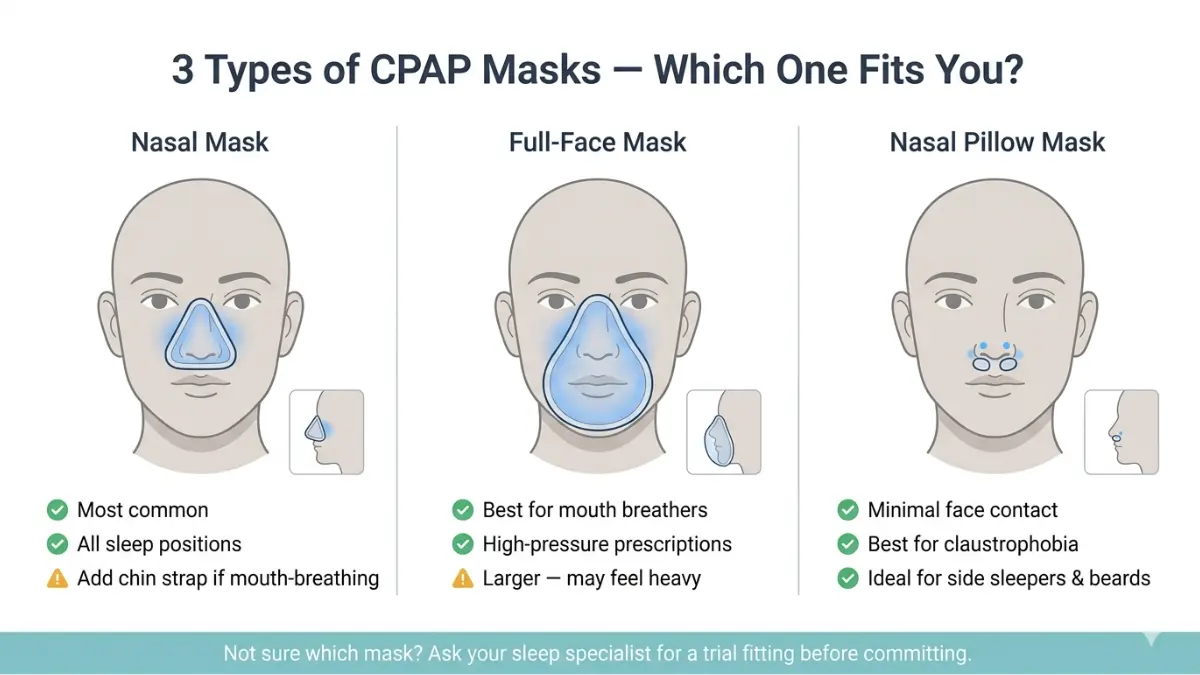
1. Nasal Mask
- Covers only the nose
- Most commonly prescribed
- Works well for most OSA patients
- Requires mouth-breathing to be controlled (chin strap may be added)
2. Full-Face Mask
- Covers both nose and mouth
- Best for: mouth breathers, higher-pressure prescriptions, severe OSA
- Larger seal area; slightly more disruptive for bed partners
3. Nasal Pillow Mask
- Two small inserts that sit at the nostrils only
- Minimal face contact — ideal for claustrophobic users, side sleepers, people with facial hair
- 2026 innovation: Dynamic silicone tips now mold to individual nostril shape for near-zero leak
How to Choose Your Mask — Decision Table
| Your Situation | Recommended Mask |
|---|---|
| You breathe through your nose at night | Nasal mask |
| You breathe through your mouth | Full-face mask |
| You feel claustrophobic or have a beard | Nasal pillow |
| You sleep on your side | Nasal pillow or low-profile nasal mask |
| You have a high-pressure prescription (>15 cmH₂O) | Full-face mask |
Signs Your Mask Doesn’t Fit Correctly
- Air leaking toward your eyes (common complaint causing dry eyes)
- Skin marks or redness on your nose bridge after removal
- Persistent nasal congestion that worsens overnight
- Noise from the mask during exhalation
- You wake up with the mask removed — your unconscious self pulled it off
If you recognize any of these signs, contact your sleep supplier within the first two weeks. Most insurance plans allow a mask exchange during the trial period.
Not sure if your symptoms suggest sleep apnea at all? Use our Symptom Checker to evaluate your signs before your first appointment.
What to Expect — Your Week-by-Week CPAP Adaptation Timeline
This is the section no competitor is giving you. Mayo Clinic gives general reassurance. Cleveland Clinic lists problems. Neither gives you a night-by-night, week-by-week timeline. Here it is.
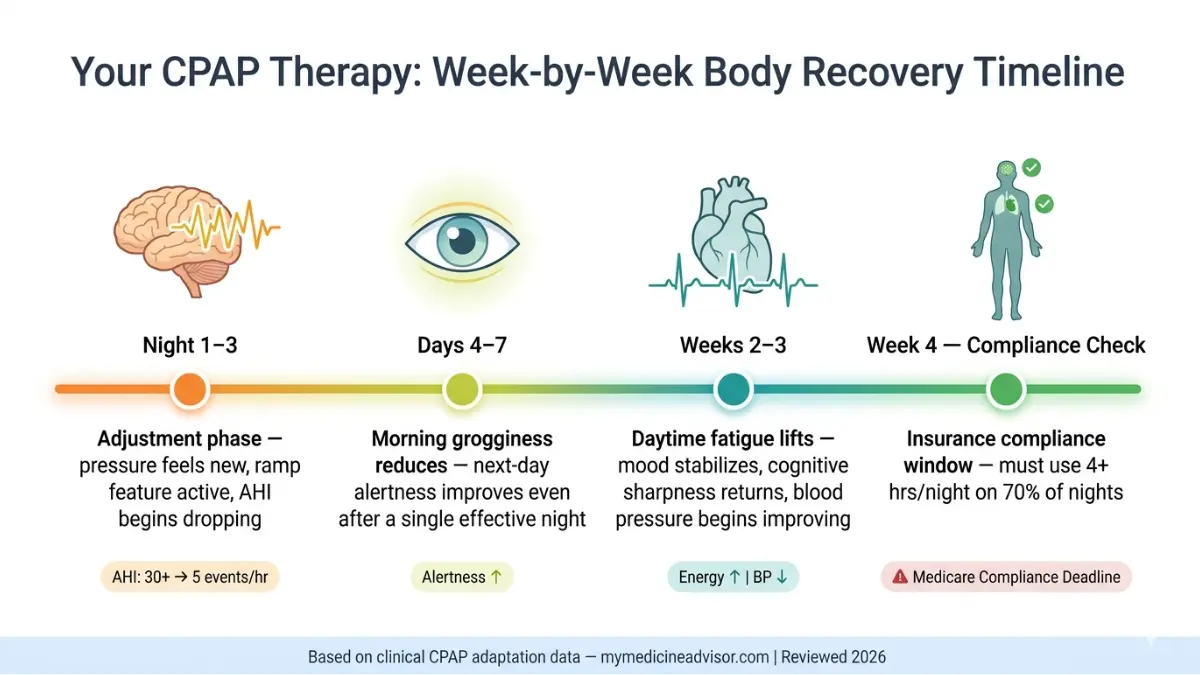
Night 1–3: The Adjustment Phase
- What to expect: Pressure feels foreign. Breathing with the machine rather than against it takes conscious effort.
- The ramp feature (available on most CPAP machines) starts at low pressure and gradually increases over 15–45 minutes as you fall asleep. Use it.
- Claustrophobia is common. Do not sleep with the mask on for the first night if needed — practice wearing it awake for 20 minutes while watching television.
- Sleep quality may actually dip before it improves. This is normal and expected.
Days 4–7: The First Real Change
- Most patients notice reduced morning grogginess even if sleep still feels disrupted
- Your AHI (Apnea-Hypopnea Index — the number of breathing pauses per hour) drops dramatically with CPAP, often from 30+ events/hour to under 5
- Research shows that even a single night of effective CPAP therapy can improve next-day attention and alertness
- Common complaint this week: dry mouth. Solution → heated humidifier (comes built into most modern machines)
Weeks 2–3: The Improvement Window
- Daytime fatigue begins to lift for most patients
- Mood stabilization becomes noticeable — partners often report the patient seems less irritable
- Cognitive sharpness returns: memory, focus, and decision-making improve
- If you have been experiencing excessive daytime sleepiness symptoms, this is the window where those begin resolving
Week 4 — The Critical Compliance Checkpoint
This is the most important milestone most patients never know about:
Medicare and most private US insurers require:
- At least 4 hours of CPAP use per night
- On 70% of nights within the first 30-day period
Failing this compliance window can result in your insurer reclassifying the device as non-medically necessary — and you losing coverage. Your CPAP machine transmits data wirelessly to your provider and insurer automatically. Use it every night, including naps.
7 Proven Strategies to Stay Consistent:
- Set a pre-sleep ritual — mask goes on before lights go out, every night
- Use the ramp feature to ease into pressure
- Add a heated humidifier if you have dry mouth or nasal congestion
- Try a different mask style before quitting entirely
- Join a CPAP user community (myAir app, CPAP Talk forums)
- Ask your doctor about APAP if fixed pressure feels uncomfortable
- Track your AHI data nightly — watching it drop to normal is motivating
Our Sleep Calculator can help you identify your optimal sleep window and track how CPAP is shifting your restorative sleep hours over time.
Proven Benefits of CPAP Therapy — What 2026 Research Shows
CPAP therapy is not just about stopping snoring. The evidence base for its systemic health benefits is extensive and growing. Here is what peer-reviewed data from 2025–2026 confirms.
Sleep and Daytime Function
- Daytime sleepiness: Significantly reduced in the majority of patients within the first week
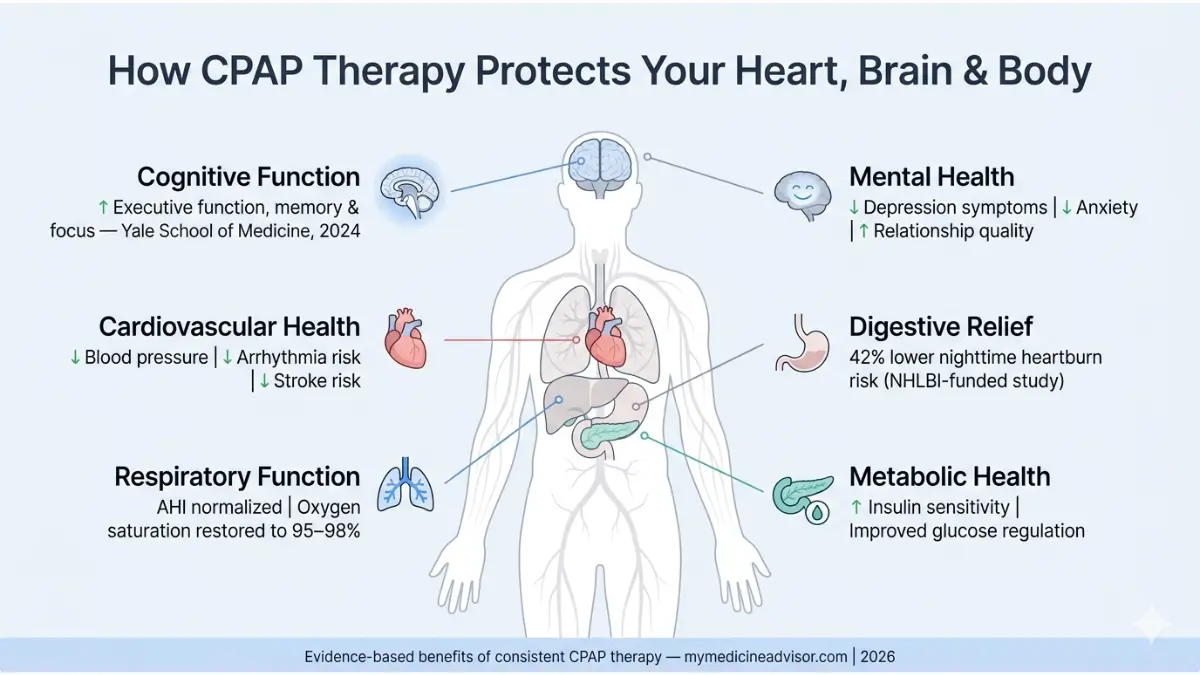
- Cognitive performance: A landmark study from Yale School of Medicine found that CPAP therapy improves executive function in patients with high arousal threshold — describing the effect as comparable to the alertness boost of a cup of coffee
- Memory and focus: Multiple trials show improved working memory after sustained CPAP use
Cardiovascular Benefits
This is where CPAP therapy delivers some of its most significant long-term value:
| Benefit | Evidence Level | Timeframe |
|---|---|---|
| Blood pressure reduction | Strong (RCT-supported) | 4–8 weeks |
| Reduced nighttime arrhythmias | Moderate | 3–6 months |
| Lower stroke risk | Strong (observational) | Long-term |
| Reduced risk of heart disease mortality | Strong | Long-term |
| Heartburn and GERD reduction | Moderate (NHLBI-funded study) | 2–4 weeks |
NHLBI-funded research found that regular CPAP users were 42% less likely to experience nighttime heartburn compared to infrequent users — a benefit almost no patient knows about before starting therapy.
Mental Health and Mood
- Depression symptoms reduce in patients with moderate-to-severe OSA after consistent CPAP therapy
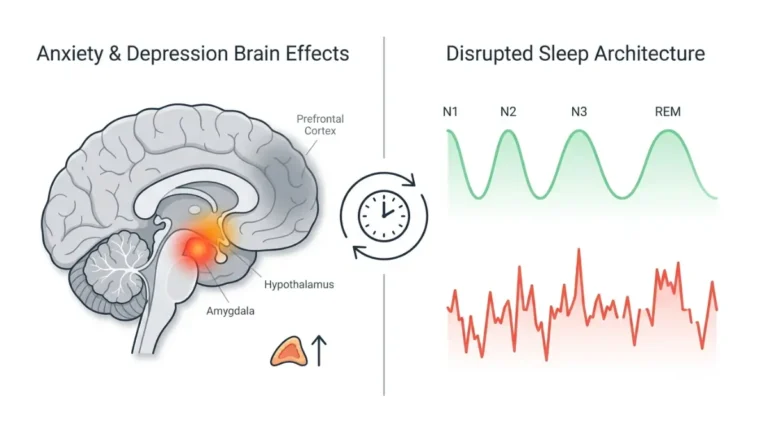
- Anxiety levels trend downward as sleep architecture normalizes
- Partner relationship quality often improves (separate bedroom situations frequently resolve)
Metabolic Health
- Improved insulin sensitivity reported in several trials, relevant for patients with Type 2 diabetes
- Useful context: use our Blood Sugar Converter to track glucose readings as your CPAP therapy progresses — shifts in fasting glucose are one of the earliest metabolic signals of improvement
Important nuance competitors miss: Some studies suggest CPAP therapy may be associated with slight weight gain in certain patients, likely due to reduced metabolic stress from improved sleep. This does not negate its benefits but underscores why lifestyle changes should accompany CPAP therapy. Check your current BMI Calculator baseline when you start therapy and monitor it monthly.
Common CPAP Problems — and How to Fix Every One of Them
More than 50% of CPAP users quit within the first year. The reasons are almost always fixable — but patients are not told that clearly enough. Here is every major problem and its evidence-based solution.
Problem-Solution Rapid Reference Table
| Problem | Why It Happens | Fix |
|---|---|---|
| Dry mouth | Mouth breathing; no humidifier | Heated humidifier + chin strap |
| Mask leaks | Wrong size or style | Refit; switch to nasal pillow |
| Claustrophobia | Psychological adjustment period | Gradual desensitization; ramp feature |
| Nasal congestion | Dry airflow irritating mucosa | Humidifier + saline rinse pre-use |
| Aerophagia (air swallowing, bloating) | Pressure too high | Lower pressure; specialist review |
| Difficulty exhaling | Fixed pressure too strong | Switch to APAP or BiPAP; enable EPR/C-Flex setting |
| Skin irritation or pressure sores | Mask fit or material | Mask liner; different mask style or size |
| Air leaking toward eyes | Mask too loose or wrong shape | Refit; check headgear tension |
When to Call Your Doctor — Red Flags
Do not troubleshoot these on your own. Contact your sleep specialist if you experience:
- Chest pain or shortness of breath while using CPAP
- Worsening headaches that began after starting therapy
- Persistent nausea or vomiting
- Stomach distension or severe bloating — stop therapy immediately and call your provider
2026 Solution: AI-Powered CPAP Personalization
ResMed’s FDA-cleared SmartComfort algorithm (launched early 2026) personalizes ramp speed and exhale relief pressure using insights from over 100 million nights of real-world CPAP data — factoring in your age, gender, and AHI. For new users who struggle with the initial pressure, this is a significant breakthrough.
For troubleshooting guidance from a clinical perspective, Mayo Clinic’s CPAP problem resource is a validated, detailed reference worth bookmarking.
If you suspect your persistent sleep difficulties are related to something beyond equipment fit — such as depression causing sleep problems or medications causing insomnia — discuss this with your physician, as these can reduce CPAP effectiveness.
CPAP Therapy in 2026 — Innovations, Insurance, and Who Should Start Today
2026 Smart CPAP Technology
CPAP therapy has advanced significantly beyond basic pressure delivery:
- AI auto-titrating APAP algorithms adjust pressure in real time based on breathing pattern analysis — no fixed prescription needed for many patients
- Cloud-connected compliance monitoring sends your nightly data (AHI, mask leak rate, hours used) directly to your physician and insurer — automatically
- Home sleep apnea testing (HSAT) is now growing at 45% annually, with broad insurance coverage — making diagnosis faster and more accessible than ever. Learn more in our guide on home sleep apnea test vs. lab sleep study
Emerging Alternatives to CPAP — What’s Real in 2026
CPAP remains the gold standard, but real alternatives now exist:
- Hypoglossal nerve stimulation (Inspire therapy): An implantable device for CPAP-intolerant patients; reduces AHI from ~29 to ~9 events/hour at 12 months in clinical trials
- Oral appliance therapy: Effective for mild-to-moderate OSA; lower adherence barriers; custom-fitted by a sleep dentist
- Apnimed AD109 (investigational oral pill): Phase 3 trial showed up to 50% AHI reduction in some patients — regulatory filing in progress; not yet approved
- Positional therapy: For patients whose OSA only occurs when sleeping supine
For patients with OSA who also have obesity — which increases OSA risk sixfold per 10% weight gain — addressing body weight alongside CPAP therapy is clinically important. Our Weight Loss Calculator can help you set meaningful weight reduction targets.
Who Needs CPAP Therapy?
CPAP therapy is indicated for:
- Moderate OSA: AHI of 15–29 events per hour
- Severe OSA: AHI of 30+ events per hour
- Mild OSA (AHI 5–14) with significant daytime symptoms, cardiovascular risk, or impaired quality of life
CPAP is not appropriate for patients who are not spontaneously breathing or who have certain facial/esophageal surgeries that contraindicate mask use.
Insurance and Medicare Coverage in 2026
| Coverage Type | What It Covers | Conditions |
|---|---|---|
| Medicare Part B | 80% of CPAP machine cost | Valid OSA diagnosis; CPAP use ≥4hrs/night on 70% of nights in first 30 days |
| Most private insurers | 70–100% after deductible | Sleep study required; DME supplier must be in-network |
| Medicaid | Varies by state | Typically covers with documentation |
Key action step: If you have not yet had a sleep study, ask your physician about a home sleep apnea test (HSAT) — it is less expensive, covered by most insurers, and can be done in your own bed. You can also review our deep-dive guide on what a sleep study polysomnography involves to know exactly what to expect.
OSA is projected to affect nearly 77 million US adults by 2050 according to ResMed research — and the majority remain undiagnosed. The first step costs nothing: talk to your doctor about your symptoms today.
Frequently Asked Questions About CPAP Therapy
1. How does CPAP therapy work?
CPAP delivers a continuous stream of pressurized air through a mask to keep your airway from collapsing during sleep. It acts as a pneumatic splint — not an oxygen supply — preventing the breathing pauses that cause OSA symptoms.
2. How long before CPAP therapy starts working?
Many patients notice improved next-day alertness after even a single night of effective CPAP use. Full adaptation — including mask comfort and peak sleep quality — typically takes 2–4 weeks.
3. Is CPAP therapy permanent?
For most people, yes. Sleep apnea symptoms return within days of stopping therapy. However, significant weight loss, surgery, or positional therapy may reduce — or in some cases eliminate — the need for CPAP.
4. What pressure should my CPAP be set at?
The average is around 10 cmH₂O, within a 4–20 cmH₂O range. Your sleep specialist titrates this during your sleep study. APAP machines handle this automatically.
5. Can I travel with a CPAP machine?
Yes. CPAP machines are TSA-approved carry-on items. Travel CPAP models like the ResMed AirMini weigh under one pound. Most machines support universal voltage (100–240V) for international travel.
6. What are the main side effects of CPAP therapy?
The most common are dry mouth, nasal congestion, mask discomfort, and aerophagia (air swallowing). All are manageable with proper equipment adjustments — do not quit before trying alternative masks or settings.
7. Does insurance cover CPAP therapy in the US?
Medicare Part B covers 80% of costs after compliance criteria are met. Most private US insurers cover CPAP with a valid sleep study and in-network DME supplier.
8. What is the difference between CPAP and APAP?
CPAP delivers fixed pressure all night. APAP auto-adjusts pressure breath-by-breath based on your real-time breathing patterns — making it more comfortable for many patients, especially new users.
9. Does CPAP cure sleep apnea?
No. CPAP is a treatment, not a cure. It eliminates symptoms while in use, but apnea returns if therapy is stopped (unless the underlying cause, such as obesity, is resolved)
10. How do I clean my CPAP machine properly?
Rinse the mask and tubing daily with mild soap and warm water. Deep-clean the humidifier chamber weekly. Automated CPAP sanitizers (such as SoClean 3+, updated for 2026) simplify this significantly.
11. Can I use CPAP if I have claustrophobia?
Yes. Nasal pillow masks — which only insert at the nostrils — have minimal face contact and are specifically designed for claustrophobic users. Gradual desensitization (wearing the mask while awake before sleeping in it) is also a clinically validated strategy.
Sources: NHLBI – CPAP Treatment Guide | NCBI StatPearls – Continuous Positive Airway Pressure | Yale School of Medicine – CPAP and Neurocognition | Mayo Clinic – CPAP Troubleshooting | NHLBI – Sleep Apnea Treatment Overview
Medical disclaimer
The content on MyMedicineAdvisor is provided for general informational and educational purposes only and is not a substitute for professional medical advice, diagnosis, or treatment. Health information on this website should not be used to diagnose, treat, cure, or prevent any condition without guidance from a qualified healthcare professional. Always seek the advice of your doctor, physician, or another licensed healthcare provider with any questions you may have regarding a medical condition, symptoms, medications, or treatment decisions.