

On This Page – Quick Medical Summary
What Is Rifaximin and What Does It Do?
Marcus had been dealing with bloating, unpredictable diarrhea, and cramping for three years. Every specialist visit ended the same way — until his gastroenterologist prescribed rifaximin. Within 10 days, his symptoms were dramatically better. His question afterward: “Why didn’t anyone mention this drug sooner?”
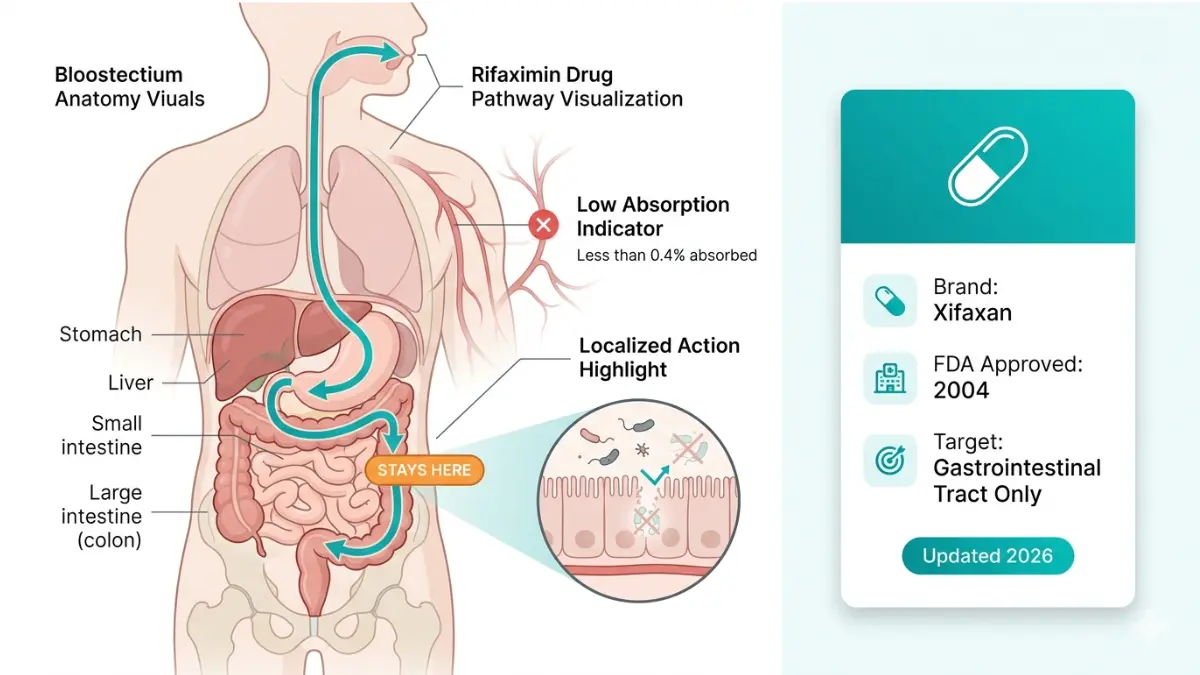
Rifaximin is a prescription gut-selective antibiotic that treats IBS with diarrhea, hepatic encephalopathy, and traveler’s diarrhea by targeting harmful gut bacteria directly — without being absorbed into the bloodstream.
That single fact separates rifaximin from almost every other antibiotic on the market. Less than 0.4% of the drug enters your bloodstream. The rest stays in your gastrointestinal tract, doing exactly what it needs to do — where it needs to do it.
If you’re experiencing unexplained GI symptoms or have recently been prescribed this medication, our free Symptom Checker can help you track and understand your symptoms before your next appointment.
Quick Reference: Rifaximin At a Glance
| Feature | Detail |
|---|---|
| Brand Name | Xifaxan |
| Drug Class | Rifamycin antibiotic (non-systemic) |
| FDA First Approved | 2004 (USA) |
| Systemic Absorption | Less than 0.4% |
| Available Strengths | 200 mg, 550 mg tablets |
| Conditions Treated | IBS-D, Hepatic Encephalopathy, Traveler’s Diarrhea |
| Prescription Required | Yes |
| Generic Available (USA) | No (expected 2029) |
How Rifaximin Works in Your Gut (Most Antibiotics Don’t Do This)
Understanding how rifaximin works explains why doctors are prescribing it more than ever — and why it causes far fewer systemic side effects than conventional antibiotics.
The “Stay in the Gut” Advantage
Rifaximin binds to the beta-subunit of bacterial DNA-dependent RNA polymerase, a protein bacteria need to replicate. By blocking this enzyme, it halts bacterial growth directly in the intestinal tract. Because it is poorly soluble, it remains concentrated in the gut lumen — with stool concentrations reaching 4,000–8,000 µg/g, well above what’s needed to kill most gut pathogens.
This is confirmed in the FDA’s full prescribing information for Xifaxan, which notes that over 97% of the orally administered dose is recovered unchanged in feces. This means your liver, kidneys, and other organs are essentially untouched.
The Gut-Brain Axis Connection — What No Competitor Explains
This is where rifaximin gets genuinely fascinating — and where other medical websites fall silent.
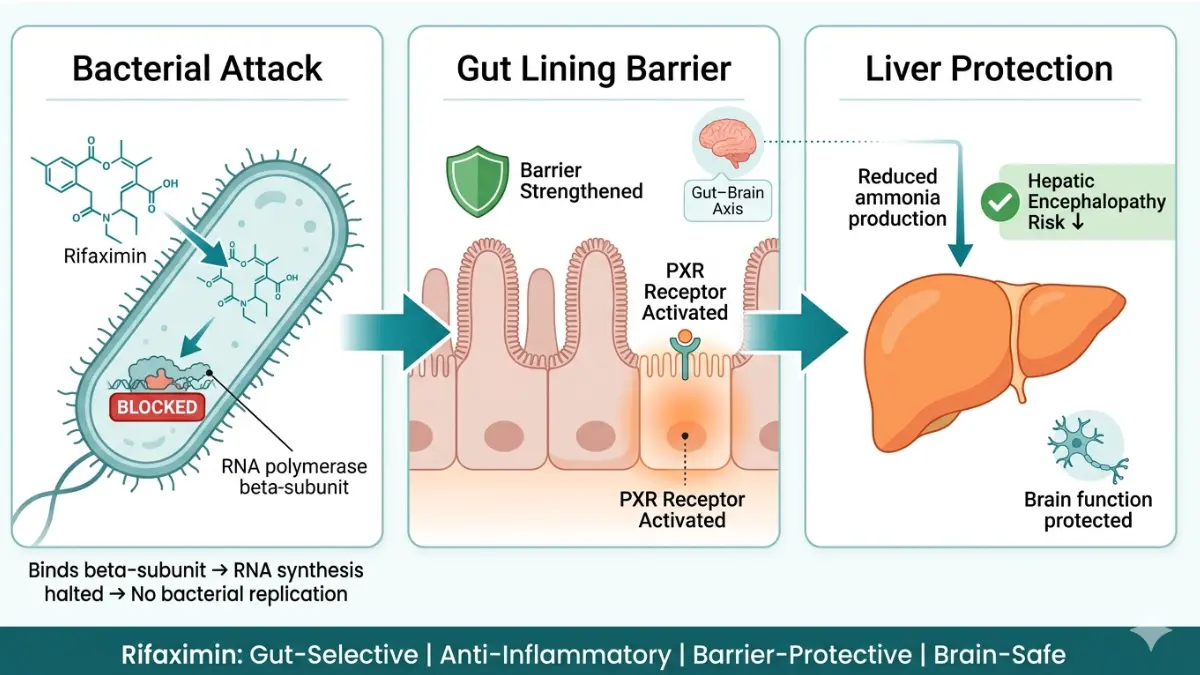
Rifaximin activates a nuclear receptor in the intestinal lining called the pregnane X receptor (PXR). When PXR is activated, it produces anti-inflammatory effects along the gut-liver and gut-brain axes. This is a significant reason why rifaximin helps patients with hepatic encephalopathy — a condition where toxic ammonia from the gut impairs brain function.
A 2026 review published in Pharmacological Reports confirmed that rifaximin’s PXR-mediated effects go beyond killing bacteria — it strengthens the gut’s epithelial barrier and reduces systemic inflammation. This is why many gastroenterologists now consider it a precision medicine tool, not just an antibiotic. You can read about related gut-brain health patterns in our guide to 7 gut bacteria that affect weight, mood, and immunity.
Rifaximin vs Regular Antibiotics — Side-by-Side
| Feature | Rifaximin | Standard Systemic Antibiotic |
|---|---|---|
| Systemic absorption | <0.4% | 60–90% |
| Gut bacteria targeting | Highly specific | Broad disruption |
| Risk of antibiotic resistance | Very low | Moderate–High |
| Affects other organs | Minimal | Yes (liver, kidneys) |
| Safe for long-term use | Yes (evidence up to 24 months) | Generally No |
What This Means For You: Rifaximin doesn’t wipe out your entire microbiome the way typical antibiotics do. It rebalances your gut flora while leaving beneficial bacteria largely intact — a major clinical advantage for IBS and liver disease patients.
What Is Rifaximin Used For? FDA-Approved + Off-Label Uses (2026)
This is the section that separates this guide from every competitor. Healthline covers only the brand name (Xifaxan). Mayo Clinic omits off-label uses entirely. WebMD skips 2026 research. We cover everything.
FDA-Approved Conditions (3 Official Uses)
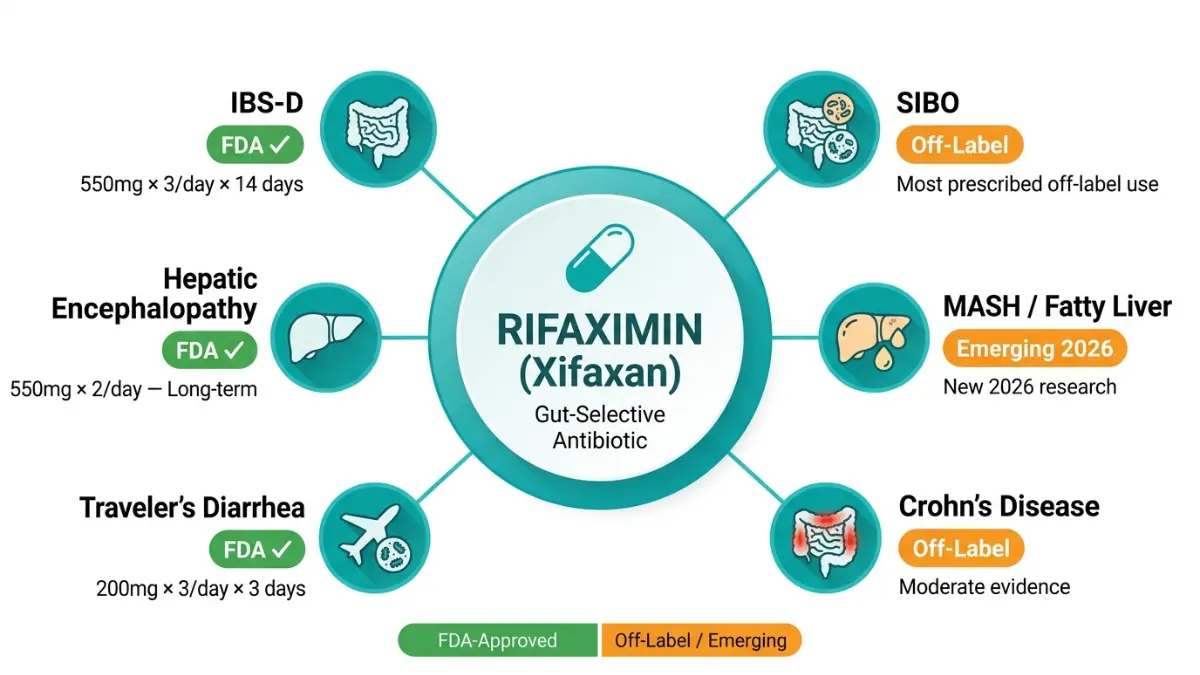
1. Irritable Bowel Syndrome with Diarrhea (IBS-D) Rifaximin is FDA-approved to treat IBS-D in adults. Clinical trials (TARGET 1 and TARGET 2) showed that a 14-day course provided significant relief of bloating, abdominal pain, and loose stools — with benefits lasting up to 10 weeks after the course ended. According to MedlinePlus (NIH), rifaximin treats IBS by stopping the bacteria that contribute to diarrhea and gut inflammation.
2. Hepatic Encephalopathy (HE) — Prevention of Recurrence For adults with liver disease, rifaximin 550 mg twice daily significantly reduces the recurrence of overt HE episodes. A landmark study published in the New England Journal of Medicine showed rifaximin reduced HE-related hospitalizations by 50% over 6 months compared to placebo. Long-term safety data (up to 24 months) showed no increase in C. diff infections or bacterial resistance.
3. Traveler’s Diarrhea (E. coli) Rifaximin 200 mg three times daily for 3 days treats traveler’s diarrhea caused by non-invasive strains of Escherichia coli in patients aged 12 and older. It should not be used if diarrhea is accompanied by fever or blood in the stool, as this may indicate an invasive bacterial infection that requires a different antibiotic.
Off-Label Uses Doctors Actually Prescribe in 2026
These are the uses your doctor may prescribe that WebMD, Healthline, and Mayo Clinic barely mention:
Small Intestinal Bacterial Overgrowth (SIBO) SIBO is one of the most common off-label applications of rifaximin in the USA. It involves an abnormal increase of bacteria in the small intestine, causing bloating, gas, and malabsorption. A 2026 systematic review and meta-analysis in Frontiers in Microbiology confirmed rifaximin is effective for reducing SIBO in IBS patients, with significant improvement in hydrogen breath test results and global symptoms. Typical off-label dosing: 550 mg three times daily for 14 days. If you’re managing gut health alongside diet changes, our free Intermittent Fasting Calculator may also support your broader gut health plan.
Metabolic Dysfunction-Associated Steatohepatitis (MASH / Fatty Liver) This is the newest frontier for rifaximin. A 2026 study in Pathogens journal found that rifaximin protects against liver inflammation and fibrosis in MASH by targeting ethanol-producing gut bacteria (such as Klebsiella pneumoniae and E. coli) that accelerate liver disease. While not yet FDA-approved for this indication, clinical interest is rapidly growing.
Crohn’s Disease A large review of studies covering over 3,000 patients found significant improvement in Crohn’s disease activity with rifaximin treatment. Its gut-selective, non-systemic profile makes it better tolerated than other antibiotics for inflammatory bowel conditions.
Evidence Strength Summary
| Indication | Approval Status | Evidence Level |
|---|---|---|
| IBS-D | ✅ FDA-Approved | Strong (multiple RCTs) |
| Hepatic Encephalopathy | ✅ FDA-Approved | Strong (landmark NEJM trial) |
| Traveler’s Diarrhea | ✅ FDA-Approved | Strong |
| SIBO | ❌ Off-Label | Strong (2026 meta-analysis) |
| MASH / Fatty Liver | ❌ Off-Label | Emerging (2026 research) |
| Crohn’s Disease | ❌ Off-Label | Moderate |
Rifaximin Dosage by Condition: Exact Amounts and How Long to Take It
This is the most-searched dosage question on the internet — and no competitor presents it as a complete, scannable table. Here it is.
Complete Rifaximin Dosage Table (2026)
| Condition | Tablet Strength | Frequency | Duration | Notes |
|---|---|---|---|---|
| Traveler’s Diarrhea | 200 mg | 3x daily | 3 days | Do not use with fever or bloody stool |
| IBS-D | 550 mg | 3x daily | 14 days | Can repeat up to 2 additional courses |
| Hepatic Encephalopathy | 550 mg | 2x daily | Ongoing (long-term) | Usually combined with lactulose |
| SIBO (off-label) | 550 mg | 3x daily | 14 days | Prescribed by gastroenterologist |
Rifaximin 200 mg vs 550 mg — What’s the Actual Difference?
This is a question thousands of patients Google every month — and no major competitor answers it clearly.
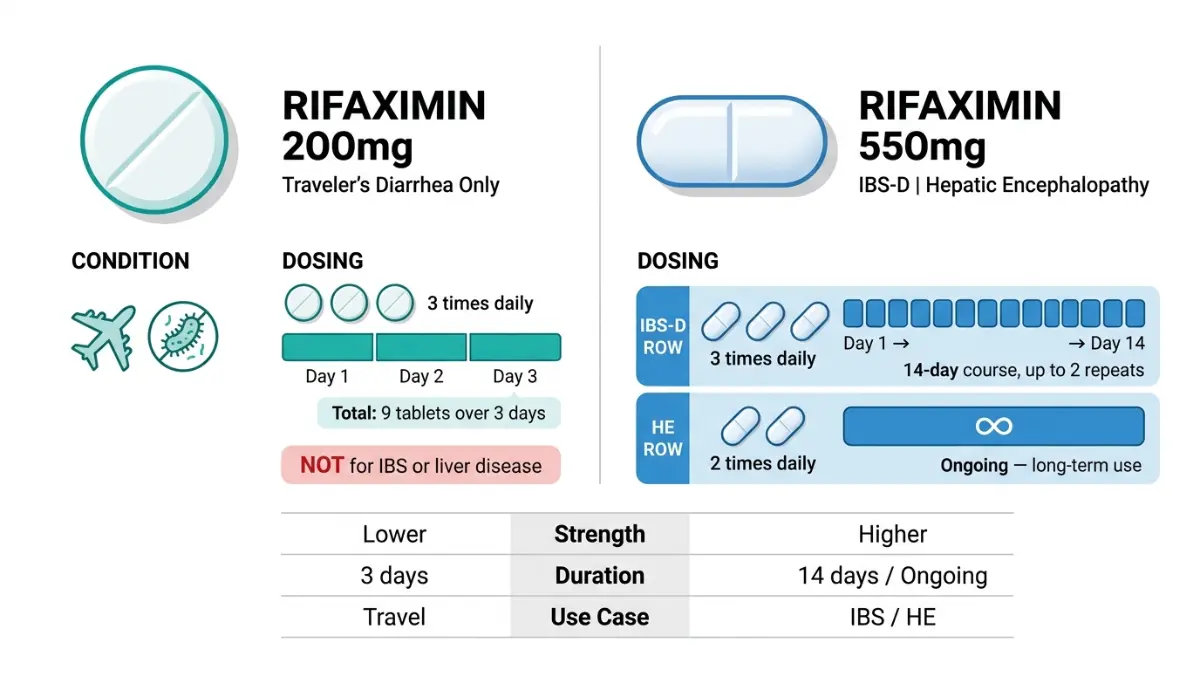
- 200 mg is used exclusively for traveler’s diarrhea. Shorter course, lower dose, limited to the colon.
- 550 mg is used for IBS-D and hepatic encephalopathy. Higher concentration, longer treatment, stronger intestinal effect.
The dose is not interchangeable. Using 200 mg for hepatic encephalopathy would be underdosing. Always follow your prescriber’s specific instructions. If you’re unsure which tablet you’ve been prescribed, our Pill Identifier tool can help you verify your medication by appearance.
Can You Take Rifaximin With Food?
Yes. Rifaximin can be taken with or without food. However, a high-fat meal taken 30 minutes before the 550 mg dose has been shown to double the systemic exposure (AUC) — though this remains very low in absolute terms and is not considered clinically significant for most patients.
What If You Miss a Dose?
Take the missed dose as soon as you remember — unless it’s almost time for the next dose. Do not double up. Skipping doses, especially for IBS-D, increases the risk of treatment failure and reduces the chance of full bacterial clearance.
Rifaximin Side Effects: Common, Serious & What to Watch For
Because rifaximin stays in the gut, its overall side effect profile is significantly more favorable than most prescription antibiotics. But that doesn’t mean it’s without risks — especially for patients with liver disease.
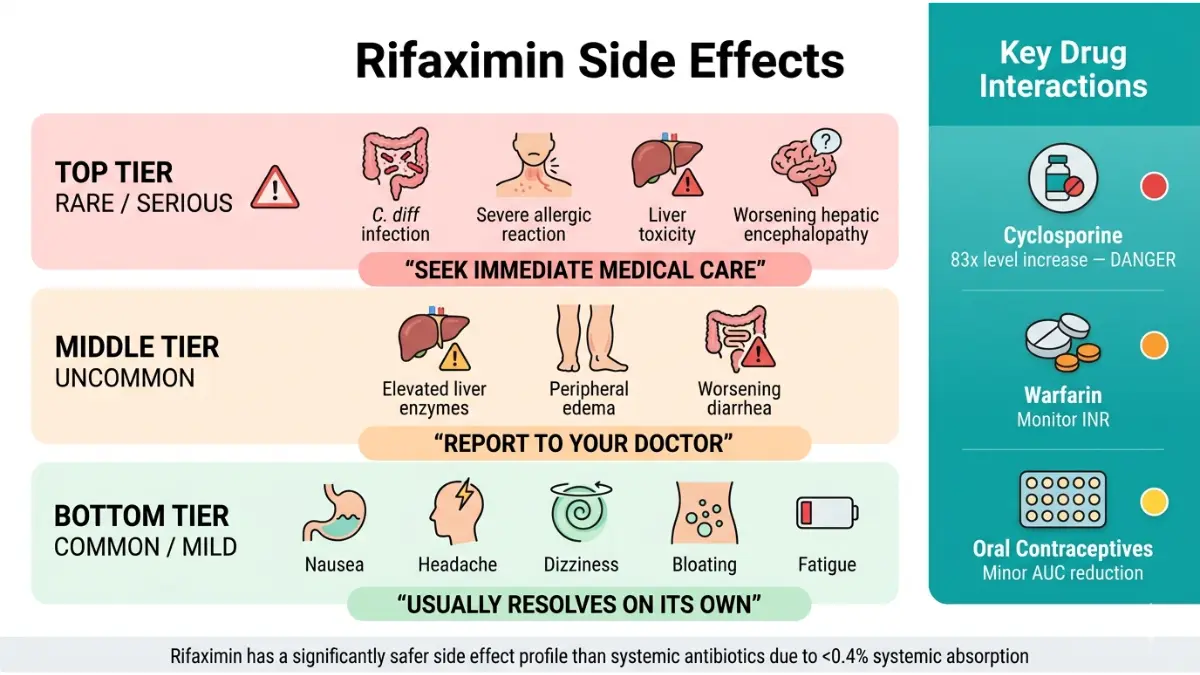
Common Side Effects (Generally Mild)
Most patients tolerate rifaximin well. Common side effects include:
- Nausea — particularly during the first few days
- Headache — reported more often in traveler’s diarrhea studies
- Dizziness and fatigue — especially in hepatic encephalopathy patients
- Abdominal pain or bloating — often temporary as gut flora adjusts
- Elevated liver enzymes — reported in IBS-D studies; usually resolves
- Peripheral edema (swelling in legs/feet) — occurs in some HE patients
Serious Side Effects — Red Flag Symptoms
Seek immediate medical attention if you experience any of the following:
- 🚨 Watery or bloody diarrhea — may indicate Clostridioides difficile (C. diff) infection, which can occur during or up to 2 months after antibiotic treatment
- 🚨 Severe allergic reaction — hives, rash, difficulty breathing, swelling of the face or throat
- 🚨 Worsening confusion or personality changes — may signal hepatic encephalopathy progression rather than improvement
- 🚨 Signs of severe liver toxicity — rapid weight gain, severe abdominal swelling, difficulty breathing while lying down
Important: Report any concerning side effects directly to the FDA at FDA MedWatch, the official U.S. pharmacovigilance reporting system.
Drug Interactions You Must Know
Most rifaximin interactions occur through the P-glycoprotein (P-gp) transport system. The key interactions no competitor explains clearly:
| Drug | Interaction | Action Required |
|---|---|---|
| Cyclosporine | Increases rifaximin blood levels 83–124x | Use with extreme caution; consult specialist |
| Warfarin | May reduce anticoagulant effectiveness | Monitor INR closely |
| Oral Contraceptives | Minor reduction in estrogen/progestin levels | Use backup contraception |
| Statins | Rare hepatotoxicity risk in combination | Monitor liver function |
| Live vaccines (typhoid, cholera) | Rifaximin may reduce vaccine effectiveness | Avoid live vaccines during treatment |
The cyclosporine interaction is critically under-reported. If you are taking cyclosporine for organ transplant or autoimmune conditions, you must notify your prescriber before starting rifaximin. You can also check our comprehensive drug interactions list for a broader reference guide.
Rifaximin and Alcohol — The Real Answer
There is no direct pharmacokinetic interaction between rifaximin and alcohol. However, for patients taking rifaximin for hepatic encephalopathy, alcohol is extremely dangerous and can directly trigger an HE episode — completely counteracting the drug’s benefit. For IBS-D and traveler’s diarrhea patients, moderate alcohol use is generally considered low-risk from a drug interaction standpoint, but alcohol itself causes diarrhea and will worsen GI symptoms. The sensible approach: avoid alcohol for the duration of your course.
Is Rifaximin Safe During Pregnancy?
Rifaximin is classified as FDA Pregnancy Category C. Animal studies showed fetal malformations at high doses. There are no adequate controlled studies in pregnant women. The drug should only be used during pregnancy if the potential benefit clearly outweighs the risk. It is also not recommended while breastfeeding. Always discuss this with your OB/GYN before starting rifaximin. For pregnancy-related health tracking, our Pregnancy Weight Gain Calculator provides useful monitoring support during this period.
Rifaximin vs Lactulose for Hepatic Encephalopathy
This comparison is asked by thousands of patients and caregivers in the USA every month — and no major medical site provides a clear answer.
| Feature | Rifaximin (550 mg) | Lactulose |
|---|---|---|
| How it works | Kills ammonia-producing gut bacteria | Draws ammonia into colon for excretion |
| HE recurrence reduction | ~58% (vs placebo) | Moderate |
| Tolerability | Well tolerated | Causes diarrhea, bloating, gas |
| Long-term use | Safe up to 24+ months | Long-term use is common |
| Guideline position | Add-on to lactulose | First-line |
| Cost | High (no generic until 2029) | Very low |
The current clinical consensus: rifaximin is used as an adjunct to lactulose, not as a standalone replacement. Patients who continue having HE episodes on lactulose alone are typically started on rifaximin in addition. If you’re managing a liver condition, our Blood Sugar Converter and metabolic health tools may also provide useful reference data for your care team.
Rifaximin in 2026: New Research, Cost, Shortage & What Patients Need to Know
The 2026 Rifaximin Shortage — Why It’s Happening
Thousands of Americans are currently calling multiple pharmacies just to fill their rifaximin prescription. Here’s what’s behind it:
- Single-source manufacturing: Rifaximin is manufactured solely by Salix Pharmaceuticals (a Bausch Health company) in the United States — with no generic alternative on the market
- Surging demand: Prescriptions have risen sharply due to increased IBS-D diagnoses and growing off-label SIBO use
- Supply chain disruption: Intermittent production capacity issues since late 2024 have created periodic stock gaps at retail pharmacies
- Insurance delays: Many plans require prior authorization or “step therapy” (trying lactulose first for HE), which delays fills and allows stock to run down at individual locations
When Will Generic Rifaximin Be Available in the USA?
This is the single most-searched cost question about rifaximin — and almost no competitor answers it.
Generic rifaximin is not expected to be available in the United States until at least 2029, due to ongoing patent protection held by Bausch Health. Some authorized generics have appeared in limited markets, but availability in the USA remains highly restricted. International patients (UK, Canada, Australia, India) may have access to generic versions under different regulatory frameworks.
How Much Does Rifaximin Cost in 2026?
Rifaximin is among the most expensive GI antibiotics available:
- Without insurance: $1,500–$2,500+ for a 14-day IBS-D course (550 mg × 3/day × 14 days)
- With commercial insurance: Highly variable — many plans place it on Tier 3 or Specialty tier
- Medicare patients: Coverage under Part D, but prior authorization often required
- Cost-reduction tip: GoodRx and manufacturer patient assistance programs (Bausch Health) can reduce out-of-pocket costs significantly. Always ask your pharmacist before paying full price
New 2026 Research Highlights
| Study | Finding | Source |
|---|---|---|
| SIBO + IBS Meta-Analysis (2026) | Rifaximin significantly reduces SIBO in IBS patients and improves global symptoms | Frontiers in Microbiology, March 2026 |
| MASH Protection Study (2026) | Rifaximin reduces liver inflammation and fibrosis by targeting ethanol-producing bacteria | Pathogens, February 2026 |
| Therapeutic Spectrum Review (2026) | Confirmed PXR-mediated anti-inflammatory action along gut-liver-brain axes | Pharmacological Reports, 2026 |
For more context on how gut health connects to broader disease patterns, our articles on hepatitis B symptoms and liver cancer warning signs may provide relevant background reading for patients with liver conditions.
Expert Panel — Clinical Validation
“Rifaximin remains one of the most clinically useful gut-targeted antibiotics available in 2026. Its non-absorbable profile makes it exceptional for conditions where systemic antibiotics are not only unnecessary but potentially harmful. The emerging data on MASH and the gut-brain axis suggests we are only beginning to understand its full therapeutic potential.”
— Dr. Omar Hassan, MD, Internal Medicine Specialist, mymedicineadvisor.com Expert Panel
Frequently Asked Questions About Rifaximin
Q1: What is rifaximin prescribed for?
Rifaximin is FDA-approved to treat IBS with diarrhea (IBS-D), prevent recurrence of hepatic encephalopathy in adults with liver disease, and treat traveler’s diarrhea caused by E. coli. Doctors also frequently prescribe it off-label for SIBO.
Q2: How long does rifaximin take to work?
For traveler’s diarrhea, most patients notice improvement within 24–48 hours. For IBS-D, significant symptom relief typically becomes noticeable in the final days of the 14-day course, with maximum benefit often seen 2–4 weeks after completing treatment.
Q3: Can I drink alcohol while taking rifaximin?
There is no direct drug-alcohol interaction, but alcohol worsens diarrhea and GI symptoms — defeating the purpose of treatment. For patients taking rifaximin for hepatic encephalopathy, alcohol is strictly contraindicated and can trigger a dangerous HE episode.
Q4: What is the difference between rifaximin 200 mg and 550 mg?
The 200 mg tablet is used only for traveler’s diarrhea (3 days). The 550 mg tablet is used for IBS-D (14 days, 3x daily) and hepatic encephalopathy prevention (ongoing, 2x daily). They are not interchangeable.
Q5: Is rifaximin the same as Xifaxan?
Yes. Xifaxan is the brand name for rifaximin, manufactured by Salix Pharmaceuticals. There is currently no FDA-approved generic in the United States.
Q6: Is rifaximin safe for long-term use?
Yes, for hepatic encephalopathy patients specifically. A clinical study tracking 392 patients on rifaximin 550 mg twice daily for up to 24 months showed no increase in adverse events, no C. diff infections, and no increase in bacterial resistance.
Q7: Can rifaximin be used for SIBO?
Yes, off-label. Rifaximin is the most commonly prescribed antibiotic for small intestinal bacterial overgrowth (SIBO) in the USA. The typical off-label dose is 550 mg three times daily for 14 days, confirmed effective in multiple studies including a 2026 meta-analysis.
Q8: What should I avoid while taking rifaximin?
Avoid live bacterial vaccines (typhoid, cholera) during treatment. Avoid alcohol if treating HE or any liver condition. Alert your doctor if you take cyclosporine — this combination requires specialist oversight due to a serious interaction.
Q9: Why is rifaximin so expensive in 2026?
It remains under patent protection with no U.S. generic available, is manufactured by a single company, and has seen significantly increased demand due to rising IBS and SIBO diagnoses. Patient assistance programs and GoodRx coupons can help reduce costs.
Q10: Is there a generic version of rifaximin available in the USA?
No. Generic rifaximin is not expected to become available in the United States until at least 2029, when current patent protections are projected to expire.
Q11: Can rifaximin cause C. diff?
It is rare but possible. Unlike most antibiotics, rifaximin’s gut-selective, non-systemic profile means C. diff risk is very low. However, any antibiotic can disrupt gut flora, and watery or bloody diarrhea during or after treatment should be reported to your doctor immediately.
⚠️ Medical Disclaimer: This article is for educational and informational purposes only and does not constitute medical advice, diagnosis, or treatment. Always consult a licensed healthcare provider before starting, stopping, or modifying any prescription medication. Individual responses to rifaximin may vary based on health status, other medications, and specific diagnosis.
Reviewed by the mymedicineadvisor.com Expert Panel | Last Updated: March 2026 For related antibiotic guides, see our articles on metronidazole, ciprofloxacin, and amoxicillin.
About this content
How this article was put together: researched from recognised health sources, drafted with the help of AI tools, and edited by hand, with sources linked throughout.

Sameer Patel is the founder and editor of My Medicine Advisor. He is not a doctor or medical professional — before starting this site he worked in banking,…
Medical disclaimer
The content on MyMedicineAdvisor is provided for general informational and educational purposes only and is not a substitute for professional medical advice, diagnosis, or treatment. Health information on this website should not be used to diagnose, treat, cure, or prevent any condition without guidance from a qualified healthcare professional. Always seek the advice of your doctor, physician, or another licensed healthcare provider with any questions you may have regarding a medical condition, symptoms, medications, or treatment decisions.