On This Page – Quick Medical Summary
Quick Answer: Nitrofurantoin is a prescription antibiotic used to treat uncomplicated urinary tract infections (UTIs). It works by concentrating directly in the bladder, destroying UTI-causing bacteria through five simultaneous attack mechanisms. It is currently the #1 first-line UTI antibiotic recommended by the Infectious Diseases Society of America (IDSA) — and for good reason.
If your doctor just prescribed you nitrofurantoin for a UTI, here is everything they didn’t have time to explain — including the 2023 safety warning most patients never hear about, the real difference between Macrobid and Macrodantin, and why this 70-year-old drug is beating every newer antibiotic on the market.
Not sure if your symptoms are a UTI? Use our Symptom Checker to assess your signs before reading further.
⚠️ Disclaimer
This article is for educational purposes only and does not constitute medical advice. Always consult a licensed healthcare provider before starting, stopping, or changing any medication. For urgent or severe symptoms, seek immediate medical attention.
What Is Nitrofurantoin? The UTI Antibiotic That Has Beaten Bacteria for 70+ Years
Nitrofurantoin has been FDA-approved since 1953 — making it one of the oldest antibiotics still in active frontline use. Yet in 2026, it ranks as the #1 recommended first-line antibiotic for uncomplicated UTIs according to major international guidelines.
The reason? While newer antibiotics are losing the war against bacterial resistance, nitrofurantoin keeps winning.
How Nitrofurantoin Destroys Bacteria
Nitrofurantoin works as a pro-drug. Once it enters the bacterial cell, enzymes called nitroreductases convert it into reactive intermediates that simultaneously attack five critical bacterial systems:
- DNA synthesis — stops the bacteria from replicating
- RNA synthesis — blocks genetic transcription
- Protein synthesis — prevents bacterial cell building
- Cell wall construction — destroys structural integrity
- Aerobic energy metabolism — cuts the bacteria’s power supply
This five-pronged attack is why bacterial resistance to nitrofurantoin has remained remarkably low. As documented in NIH StatPearls, a bacterium would need to develop multiple simultaneous mutations across all five target systems to become resistant — which is statistically near-impossible.
Why Resistance Stays So Low in 2026
Most antibiotics target a single bacterial pathway. Bacteria adapt to single targets quickly. Nitrofurantoin targets five at once.
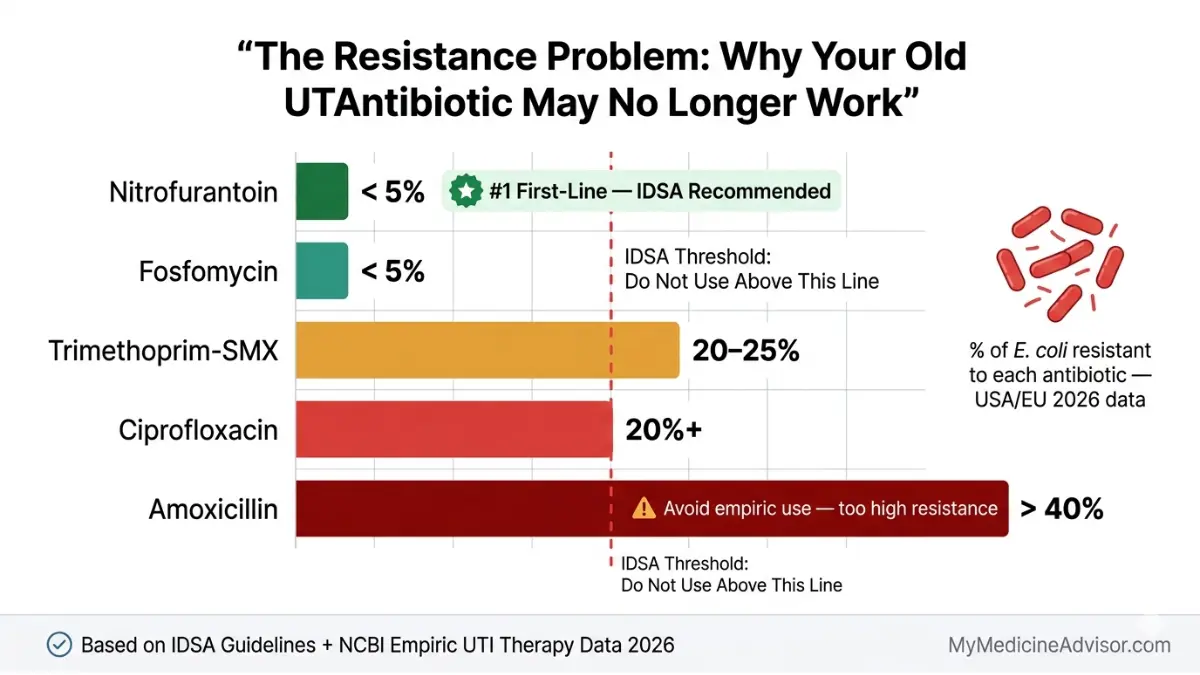
According to peer-reviewed research published in PMC, resistance rates for nitrofurantoin in E. coli — the bacterium that causes over 80% of all UTIs — remain below 4–5% in the US and most of Europe. By comparison, ciprofloxacin resistance in E. coli now exceeds 20% in many regions.
What This Means For You: Nitrofurantoin is not just an old drug — it’s a strategically superior drug. Its multi-target design is the reason it still works when newer antibiotics are failing millions of patients.
Brand Names: Macrobid vs Macrodantin vs Furadantin — Explained
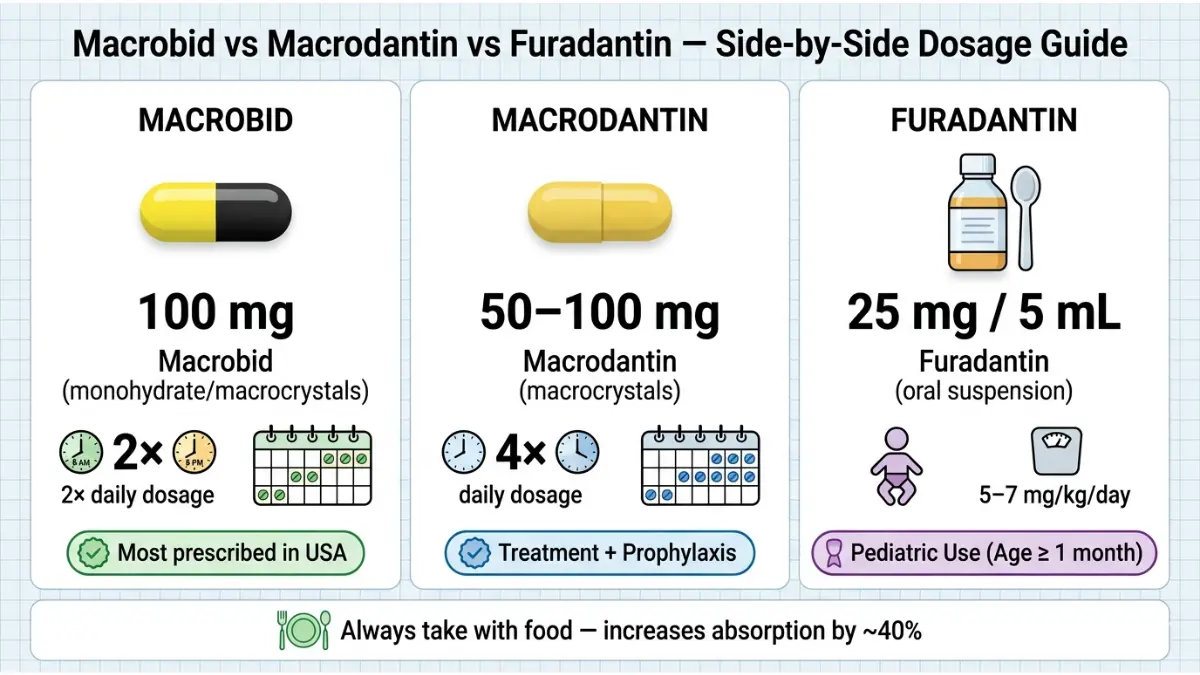
This is one of the most confusing aspects of nitrofurantoin. All three are the same active ingredient — just different formulations with different dosing schedules.
| Brand Name | Formulation | Standard Adult Dose | Best For |
|---|---|---|---|
| Macrobid | Monohydrate/macrocrystals (75/25 mix) | 100 mg twice daily (every 12 hrs) | Acute UTI treatment — most common in USA |
| Macrodantin | Macrocrystals only | 50–100 mg four times daily | Treatment or long-term prophylaxis |
| Furadantin | Oral suspension | 5–7 mg/kg/day in 4 doses | Pediatric patients |
The practical difference: Macrobid is twice-daily dosing — easier to remember, better compliance. Macrodantin is four-times-daily. Both are equally effective. If you’re unsure which pill you’ve been given, use our Pill Identifier to confirm your medication.
Nitrofurantoin Dosage Guide 2026 — The Schedule That Actually Works
Getting the dosage right is critical. Taking too little means the UTI doesn’t clear. Stopping too soon means it comes back — often resistant.
Standard Adult Dosage
| Formulation | Dose | Frequency | Duration |
|---|---|---|---|
| Macrobid (monohydrate/macrocrystals) | 100 mg | Every 12 hours | 5–7 days |
| Macrodantin (macrocrystals) | 50–100 mg | Every 6 hours | 5–7 days |
| Furadantin oral suspension | 50–100 mg | Every 6 hours | 5–7 days |
How Long Should You Take Nitrofurantoin?
According to a therapeutics letter published by the NCBI, the evidence is clear:
- 5–7 day courses achieve clinical cure rates of 79–92%
- 3-day courses achieve only 61–70% — significantly less effective
- 7-day vs 5-day courses show no meaningful difference in outcomes
Bottom line: 5 days is the sweet spot for most uncomplicated UTIs in otherwise healthy adults.
Pediatric Dosing
For children aged 1 month and older, the recommended dose is:
- 5–7 mg/kg of body weight per 24 hours, divided into 4 equal doses
- Always given with food to improve absorption and reduce nausea
- Not approved for infants under 1 month — risk of hemolytic anemia
What If You Miss a Dose?
- Remembered quickly? Take it as soon as you remember.
- Almost time for the next dose? Skip the missed dose. Do not double up.
- Missed multiple doses? Contact your doctor — partial courses increase resistance risk.
The Food Rule — Non-Negotiable
Always take nitrofurantoin with food or milk. This is not optional.
Taking it with food increases bioavailability by approximately 40% and significantly reduces nausea — the most common reason patients stop early. A glass of milk, a small snack, or a full meal all work equally well.
What This Means For You: Always complete the full 5–7 day course even if you feel completely better after day 2. Stopping early is the #1 reason UTIs return — often as harder-to-treat resistant infections.
Nitrofurantoin Side Effects — Common, Serious & the 2023 Lung Safety Warning You Need to Know
Most people tolerate nitrofurantoin well for short-course treatment. But being informed about side effects — especially the serious ones — is critical.
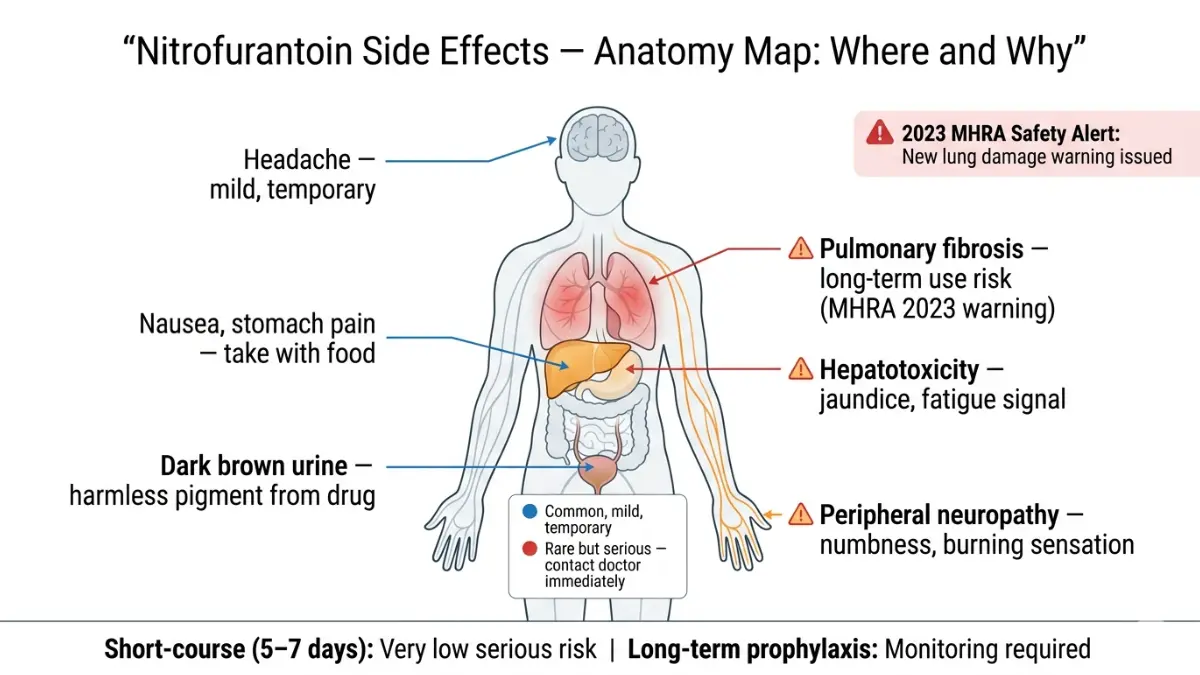
Common Side Effects (Short-Course, 5–7 Days)
These are generally mild and temporary:
- Nausea — most common; take with food to reduce significantly
- Headache — usually mild, resolves with treatment completion
- Loss of appetite — temporary; not a reason to stop
- Diarrhea or stomach pain — typically mild
- Dark yellow or brown urine — very common (see below)
Why Does Nitrofurantoin Turn Urine Dark Brown?
This is one of the most searched questions about this medication — and one of the least well-answered by competitors.
Nitrofurantoin is highly water-soluble and excreted almost entirely through the kidneys into the urine. The drug itself has a yellow-brown pigment that naturally colors the urine. It is completely harmless and does not indicate liver damage, kidney damage, or internal bleeding.
- It begins within the first dose
- Color intensity varies by hydration — drink more water and urine lightens
- It resolves completely within 24–48 hours of finishing the course
Do not stop taking nitrofurantoin because of dark urine. It is expected, normal, and temporary. If you notice dark brown urine after stopping treatment for more than 48 hours, that is different — consult your doctor.
Serious Side Effects — Warning Signs Table
These are rare but require immediate action:
| Side Effect | Key Symptoms | What To Do | Urgency |
|---|---|---|---|
| Lung damage (pulmonary reaction) | Persistent cough, shortness of breath, fever, chest pain | Stop nitrofurantoin immediately, call doctor | 🔴 URGENT |
| Liver damage (hepatotoxicity) | Jaundice (yellow skin/eyes), dark urine, upper-right abdominal pain, fatigue | Stop immediately, seek medical care | 🔴 URGENT |
| Peripheral neuropathy | Numbness, tingling, burning or weakness in hands/feet | Contact doctor promptly — may be irreversible | 🟠 HIGH |
| Severe allergic reaction | Facial swelling, difficulty breathing, severe rash | Call 911 immediately | 🔴 EMERGENCY |
| C. diff diarrhea | Watery or bloody diarrhea, cramping, fever — up to 2 months post-treatment | Contact doctor; do not self-treat with anti-diarrheal drugs | 🟠 HIGH |
🚨 The 2023 MHRA Lung Safety Warning — What Most Patients Never Hear
This is the most important safety update in recent years — and not one competitor in the top 10 covers it adequately.
In April 2023, the UK’s Medicines and Healthcare products Regulatory Agency (MHRA) published an urgent Drug Safety Update after a patient died from acute pulmonary damage following just a 10-day course of nitrofurantoin. The MHRA issued a formal warning reminding healthcare providers to be vigilant for new or worsening pulmonary and liver symptoms.
Who is most at risk for lung complications?
- Patients on long-term prophylactic nitrofurantoin (months or years)
- Patients with pre-existing lung conditions
- Adults over 65 years
According to research published in the British Journal of General Practice, severe adverse reactions from long-term use occur in approximately 1.3 per 1,000 users — rare, but serious when they occur. Chronic interstitial lung disease from nitrofurantoin can be irreversible.
Symptoms of nitrofurantoin-induced lung damage to watch for:
- Dry, persistent cough (not from a cold)
- Shortness of breath during activities you normally handle easily
- Chest tightness, especially at rest
- Low-grade fever alongside respiratory symptoms
What This Means For You: For a short 5–7 day UTI course, lung risk is extremely low. It is long-term prophylactic use — daily for months — where monitoring becomes essential. If you’re on long-term nitrofurantoin, ask your doctor about 6-monthly lung function and liver blood tests.
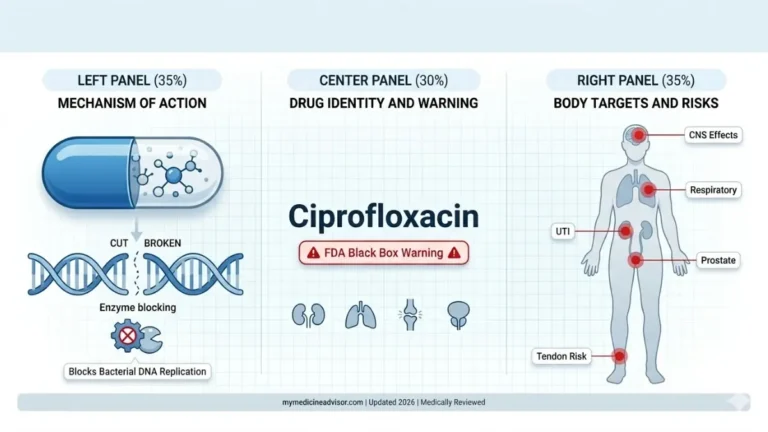
For managing other antibiotic-related treatment decisions, our comprehensive guide on ciprofloxacin side effects and warnings provides useful comparison data.
Who Should NOT Take Nitrofurantoin — 6 Contraindication Groups
Nitrofurantoin is safe and effective for most adults — but for specific groups, it ranges from less effective to actively dangerous.
1. Kidney Impairment (eGFR < 30 mL/min)
Nitrofurantoin works by being filtered by the kidneys and concentrated in the urine. If kidney function is significantly reduced, the drug cannot reach therapeutic levels in the bladder — making it ineffective for the UTI while simultaneously accumulating in the bloodstream where it can cause toxicity.
- FDA-labeled contraindication: CrCl < 60 mL/min
- Newer evidence: Short-course use (3–7 days) is generally acceptable at eGFR ≥ 30, but monitoring is required
- Below eGFR 30: Avoid entirely — both ineffective and toxic
2. Late Pregnancy (38–42 Weeks, Labor, or Imminent Delivery)
Nitrofurantoin is contraindicated at term due to the risk of hemolytic anemia in the newborn. Near delivery, the baby’s immature red blood cell enzyme systems cannot process the drug safely.
See Section 5 for the full trimester-by-trimester breakdown.
3. Elderly Patients — The Underappreciated Risk
This is a major competitor gap — most articles barely mention it.
Older adults are disproportionately affected by nitrofurantoin complications for multiple reasons:
- Reduced kidney function is common in adults over 65, reducing the drug’s urinary concentration while increasing blood levels
- Higher risk of peripheral neuropathy and pulmonary reactions with prolonged use
- Population studies in older women show higher rates of treatment failure and hospital encounters compared to younger patients
If you are over 65 or caring for an elderly patient with a UTI, always discuss alternative antibiotics with the prescribing physician before defaulting to nitrofurantoin.
4. Glucose-6-Phosphate Dehydrogenase (G6PD) Deficiency
G6PD deficiency affects approximately 10% of Black Americans and significant percentages of people with Mediterranean, Middle Eastern, and South Asian ancestry. Nitrofurantoin in G6PD-deficient patients can trigger hemolytic anemia — a dangerous destruction of red blood cells. Always disclose this condition to your doctor.
5. Infants Under 1 Month of Age
The immature enzyme systems in newborns cannot safely metabolize nitrofurantoin. It is absolutely contraindicated in this age group.
6. Previous Nitrofurantoin Liver or Lung Toxicity
If you have ever developed liver damage or lung problems while taking nitrofurantoin in the past, you must never take it again. The reaction is likely to recur and may be more severe.
Quick Self-Assessment Checklist — Before Taking Nitrofurantoin:
- ✅ Are your kidneys functioning normally?
- ✅ Are you less than 38 weeks pregnant?
- ✅ Do you know your G6PD status (especially if of relevant ancestry)?
- ✅ Have you ever had liver or lung problems on nitrofurantoin before?
- ✅ Are you under 65 without significant comorbidities?
If any answer is uncertain, discuss with your doctor before starting.
What This Means For You: If you are over 65, have kidney disease, or are in late pregnancy, there are excellent, equally effective alternatives available — including fosfomycin and trimethoprim. Do not simply accept nitrofurantoin without this conversation.
Nitrofurantoin in Pregnancy, Drug Interactions & Alcohol — The Answers You’re Actually Searching For
Nitrofurantoin During Pregnancy — Trimester-by-Trimester Guide
According to the American College of Obstetricians and Gynecologists (ACOG) 2023 clinical consensus, nitrofurantoin is one of the few antibiotics with a clear, nuanced guidance framework by trimester:
| Trimester | Status | Clinical Notes |
|---|---|---|
| First Trimester (0–12 wks) | ⚠️ Use with caution | Acceptable if no alternatives available. Mixed data on minor malformation risk — benefit usually outweighs risk for active UTI |
| Second Trimester (13–26 wks) | ✅ First-line treatment | Recommended as first-line UTI therapy. Reaches therapeutic levels in bladder without systemic fetal exposure |
| Third Trimester (27–37 wks) | ✅ Acceptable | First-line status maintained for uncomplicated lower UTI |
| Late pregnancy (38–42 wks / labor) | 🔴 CONTRAINDICATED | Risk of neonatal hemolytic anemia — avoid entirely |
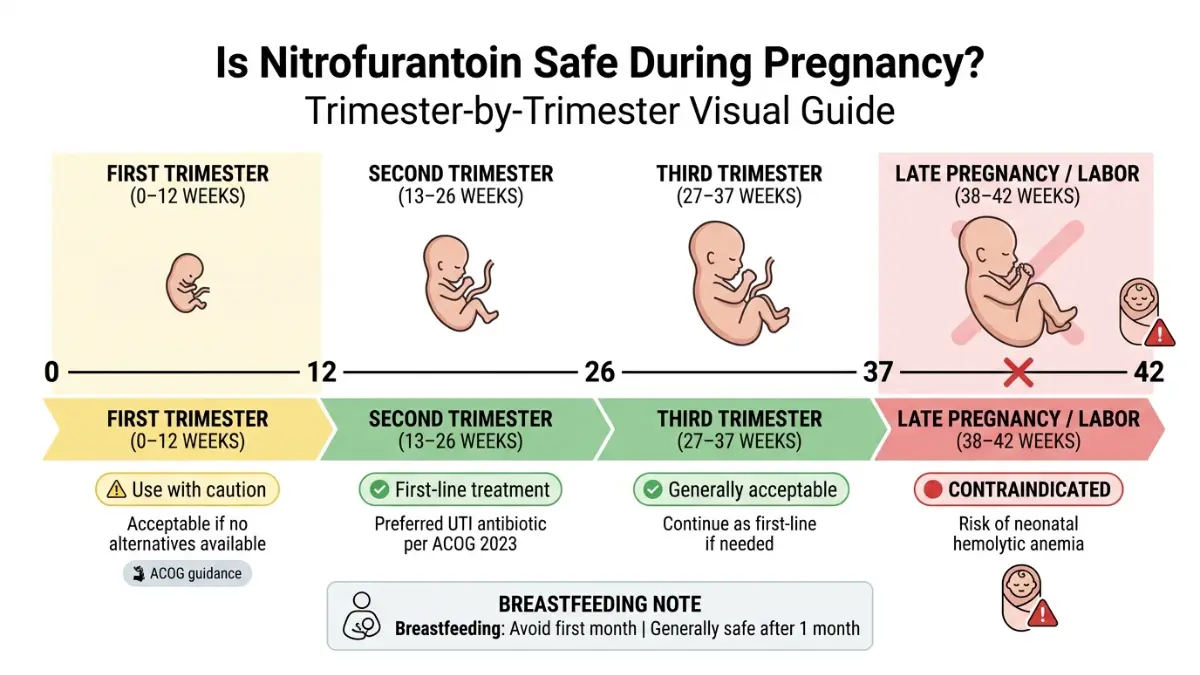
Nitrofurantoin and Breastfeeding: Nitrofurantoin passes into breast milk. It is generally considered safe for breastfeeding mothers after the first month postpartum. In the first month, the infant’s immature red blood cell enzymes create similar risk to that seen in newborns near delivery. After one month, the risk is negligible for healthy, full-term infants.
Pregnant patients can also use our Pregnancy Weight Gain Calculator and Pregnancy Due Date Calculator for additional pregnancy monitoring support during treatment.
Can I Drink Alcohol While Taking Nitrofurantoin?
This is one of the most-searched questions about this medication — and the answer is more nuanced than a simple yes or no.
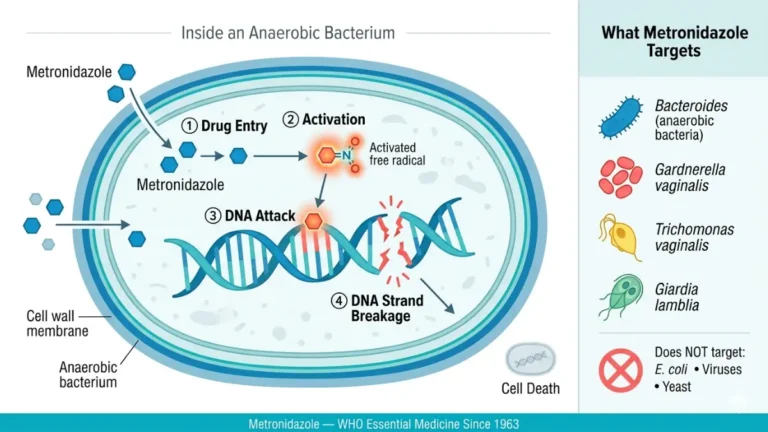
Technically: Nitrofurantoin has no direct pharmacological interaction with alcohol. There is no “disulfiram-like” reaction as seen with metronidazole.
Practically: Alcohol is a bladder irritant and diuretic. It increases urinary frequency, worsens UTI symptoms including burning and urgency, and can dehydrate you — reducing the urinary drug concentration needed for nitrofurantoin to work. Both alcohol and nitrofurantoin can cause nausea independently; combining them increases this risk.
Clinical recommendation: Avoid or minimize alcohol for the full treatment course. It won’t cause a dangerous reaction, but it will work against your recovery.
For more on how medications interact with daily habits, see our in-depth drug interactions list guide.
Nitrofurantoin Drug Interactions
| Interacting Drug | Type of Interaction | What To Do |
|---|---|---|
| Magnesium trisilicate antacids (e.g., Genaton) | Reduces nitrofurantoin absorption significantly | Avoid this antacid class during treatment |
| Probenecid / Sulfinpyrazone (gout medications) | Block renal excretion — raises blood levels, reduces urinary concentration | Tell your doctor if you take these |
| Quinolone antibiotics (ciprofloxacin, levofloxacin) | Pharmacological antagonism — they work against each other | Never take together; mutually counterproductive |
| Other nephrotoxic drugs | Increased risk of kidney-related adverse effects | Disclose all medications to prescribing doctor |
Nitrofurantoin vs Other UTI Antibiotics — 2026 Expert Comparison & Recurrent UTI Prevention
2026 Head-to-Head Antibiotic Comparison
This is the table no competitor builds — and the one every UTI patient actually needs.
| Antibiotic | UTI Cure Rate | E. coli Resistance (USA/EU) | Pregnancy Safe? | Main Risk |
|---|---|---|---|---|
| Nitrofurantoin | 79–92% (5–7 days) | < 5% ✅ | T1 caution, T2–T3 first-line | Lung/liver (long-term only) |
| Trimethoprim-sulfamethoxazole (TMP-SMX) | 85–90% | 20–25% ❌ | Avoid in T3 | High resistance, folic acid risk |
| Ciprofloxacin | 85–90% | 20%+ ❌ | Avoid throughout | Tendon damage, high resistance |
| Fosfomycin | ~77–80% (single dose) | < 5% ✅ | Generally safe | Cost, limited availability |
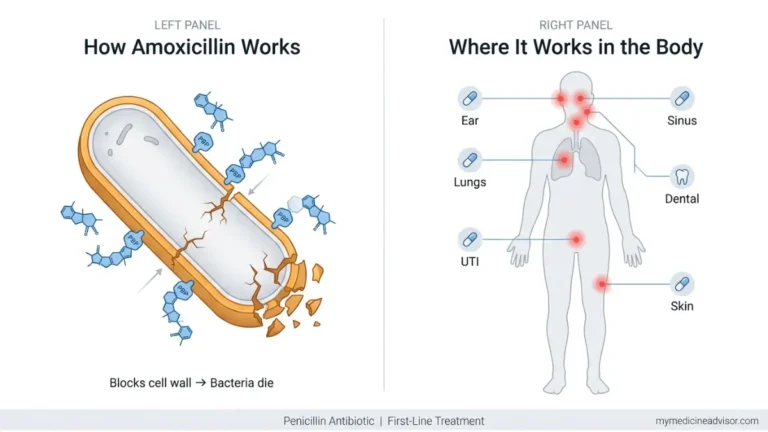
| Amoxicillin/Ampicillin | 40–60% | >40% ❌ | Generally safe | Very high resistance rates |
The resistance story is stark. According to data from the NCBI Therapeutics Letter, only 3.5% of E. coli are nitrofurantoin-resistant — compared to over 20% for ciprofloxacin and over 40% for amoxicillin. The IDSA now explicitly recommends against using antibiotics with >20% local resistance rates for empiric UTI treatment.
Why nitrofurantoin is winning the 2026 antibiotic war: Every other common UTI antibiotic is losing efficacy due to overuse. Nitrofurantoin’s multi-target mechanism has kept resistance rates stable for over 70 years of continuous use.
For more on how antibiotic resistance affects treatment decisions, our ciprofloxacin guide and amoxicillin guide provide deeper comparisons.
When Nitrofurantoin Will NOT Work — Red Flags
Nitrofurantoin concentrates only in the lower urinary tract (bladder). It has poor tissue penetration. Do not use it for:
- 🔴 Kidney infections (pyelonephritis) — insufficient tissue levels; use IV antibiotics
- 🔴 Hospital-acquired or catheter-associated UTIs — resistance patterns differ; culture first
- 🔴 Prostatitis — minimal penetration of prostate gland
- 🔴 Systemic infections or sepsis — blood levels too low to be therapeutic
If you have fever above 38°C, flank pain, shaking chills, or nausea/vomiting alongside UTI symptoms, seek emergency care immediately. These are signs of kidney infection — nitrofurantoin alone is not sufficient treatment.
Hematuria (blood in urine) alongside UTI symptoms needs urgent evaluation — see our guide on blood in urine: cancer vs UTI for when this requires urgent investigation.
Recurrent UTI Prevention — The 2026 Evidence for Prophylaxis
For women experiencing 3 or more UTIs per year, nitrofurantoin prophylaxis is an evidence-based strategy. Two approaches exist:
Option 1 — Postcoital prophylaxis: A single dose taken before or after sexual intercourse. Effective for women whose UTIs are consistently triggered by sex.
Option 2 — Continuous daily prophylaxis: One low-dose tablet daily, typically for 6–12 months.
Critical 2026 dosing insight most doctors don’t discuss: A 2021 Dutch cohort study of 1,893 patients found that 50 mg/day nitrofurantoin performed equally to 100 mg/day for UTI prevention — with significantly fewer respiratory side effects (cough, shortness of breath) at the lower dose. Current guidelines do not distinguish between the two doses, but the evidence strongly favors 50 mg for daily prophylaxis.
If you are managing diabetes — a major UTI risk factor — track your blood sugar consistently using our Blood Sugar Converter.
What This Means For You: If your UTIs keep coming back, do not just accept repeated treatment courses. Ask your doctor specifically about prophylaxis options, and ask whether 50 mg/day is appropriate for your situation. You deserve a prevention strategy, not just repeated treatment.
Frequently Asked Questions About Nitrofurantoin
1. What is nitrofurantoin used for?
Nitrofurantoin is a prescription antibiotic used to treat uncomplicated lower urinary tract infections (UTIs), primarily bladder infections caused by susceptible bacteria such as E. coli and Enterococcus. It is the #1 first-line UTI antibiotic per IDSA guidelines. It does not treat kidney infections, prostate infections, or viral infections.
2. How long does nitrofurantoin take to work?
Most patients notice significant symptom improvement within 24–48 hours. However, complete bacterial eradication requires the full 5–7 day course. Do not stop early even if symptoms resolve completely.
3. What are the most common side effects?
The most common side effects are nausea, headache, and dark-colored urine. All are generally mild and temporary. Taking nitrofurantoin with food reduces nausea significantly.
4. Why does nitrofurantoin turn urine dark brown?
This is completely normal and harmless. Nitrofurantoin is yellow-brown in color and concentrates heavily in urine. The discoloration begins with the first dose and resolves within 24–48 hours of completing the course. It is not a sign of liver damage or internal bleeding.
5. Can I drink alcohol while taking nitrofurantoin?
There is no dangerous pharmacological interaction, but alcohol is strongly inadvisable during treatment. Alcohol irritates the bladder, increases urinary frequency, can worsen UTI symptoms, and increases nausea risk when combined with nitrofurantoin.
6. Is nitrofurantoin safe during pregnancy?
It depends on the trimester. It is a first-line UTI treatment in the second and early third trimester. It should be used with caution in the first trimester and is strictly contraindicated in weeks 38–42 and during labor due to newborn hemolytic anemia risk. Always consult your OB-GYN.
7. What is the difference between Macrobid and Macrodantin?
Both contain nitrofurantoin but differ in formulation. Macrobid (monohydrate/macrocrystals) is dosed twice daily and is the most common US prescription. Macrodantin (macrocrystals only) requires four doses per day. Both are equally effective; Macrobid offers better compliance due to simpler dosing.
8. Can nitrofurantoin cause lung damage?
Yes — primarily with long-term use. Short-course treatment (5–7 days) carries very low lung risk. However, patients on long-term daily prophylaxis (months to years) face a small but serious risk of pulmonary fibrosis and interstitial lung disease. The 2023 MHRA safety warning confirmed a fatality from a 10-day course, highlighting the need for vigilance.
9. Why can’t I take nitrofurantoin if I have kidney disease?
Nitrofurantoin requires functioning kidneys to concentrate in the urine. With severely reduced kidney function (eGFR < 30), the drug cannot reach therapeutic levels in the bladder — making it ineffective for the UTI — while simultaneously accumulating in the blood where it becomes toxic.
10. Is nitrofurantoin a strong antibiotic?
Yes — within its specific domain. Nitrofurantoin is highly effective against lower UTI-causing bacteria with some of the lowest resistance rates of any antibiotic in use. However, it is intentionally “weak” systemically — it does not penetrate tissues, kidneys, or the bloodstream in therapeutic amounts. That targeted design is both its strength and its limitation.
11. Can nitrofurantoin treat a kidney infection?
No — absolutely not. Kidney infections (pyelonephritis) require antibiotics that reach the kidney tissue. Nitrofurantoin concentrates only in the bladder and has no therapeutic tissue penetration. Using nitrofurantoin for a kidney infection risks treatment failure and life-threatening progression to sepsis. If you have fever, flank pain, or chills alongside UTI symptoms, seek emergency care immediately.
About this content
How this article was put together: researched from recognised health sources, drafted with the help of AI tools, and edited by hand, with sources linked throughout.

Sameer Patel is the founder and editor of My Medicine Advisor. He is not a doctor or medical professional — before starting this site he worked in banking,…
Medical disclaimer
The content on MyMedicineAdvisor is provided for general informational and educational purposes only and is not a substitute for professional medical advice, diagnosis, or treatment. Health information on this website should not be used to diagnose, treat, cure, or prevent any condition without guidance from a qualified healthcare professional. Always seek the advice of your doctor, physician, or another licensed healthcare provider with any questions you may have regarding a medical condition, symptoms, medications, or treatment decisions.