
On This Page – Quick Medical Summary
Quick Answer: Azithromycin — sold as Zithromax or the Z-Pak — is a macrolide antibiotic prescribed to treat bacterial infections including pneumonia, chlamydia, strep throat, and sinusitis. Adults typically take it once daily for 3–5 days. Common side effects include nausea, diarrhea, and stomach pain. It does not treat viral infections such as colds or flu.
What Is Azithromycin? How It Works Inside Your Body
Marcus, 34, was prescribed a 5-day Z-Pak for a chest infection. By Day 3, he felt significantly better and stopped taking the remaining pills. Three weeks later, his infection came back — worse than before. His doctor explained why: azithromycin doesn’t stop working when you do.
This is one of the most misunderstood facts about azithromycin, and it costs patients dearly.
What Class of Antibiotic Is Azithromycin?
Azithromycin belongs to the macrolide antibiotic class — specifically the azalide subclass. It was first synthesized in 1980, approved by the FDA in 1991, and remains one of the most prescribed antibiotics in the United States, with an estimated 34.9 million outpatient prescriptions written annually, according to NIH research data.
It is sold under brand names Zithromax (tablets and oral suspension) and Zmax (extended-release suspension).
How Does Azithromycin Stop Bacteria?
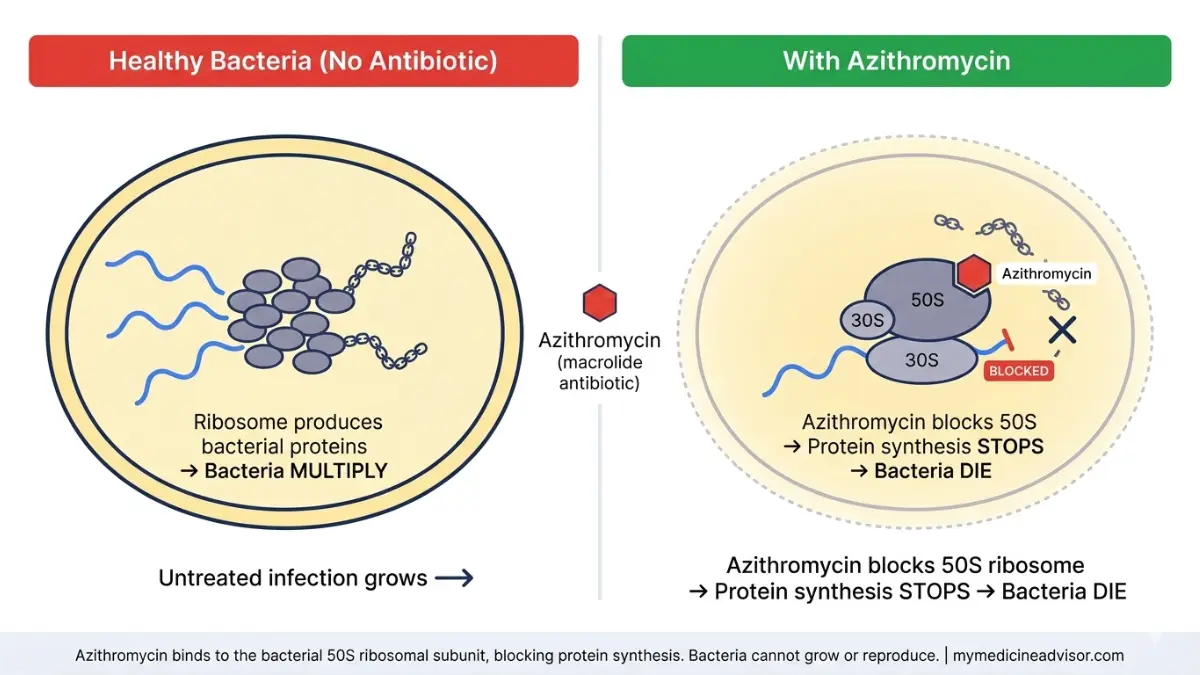
Azithromycin works by binding to the 50S ribosomal subunit inside bacterial cells — essentially blocking the machinery bacteria use to build proteins. Without protein synthesis, bacteria cannot grow, reproduce, or survive.
In plain terms: it starves bacteria of what they need to multiply.
What makes azithromycin uniquely powerful is its ability to penetrate deeply into body tissues. Unlike many antibiotics that stay primarily in the bloodstream, azithromycin concentrates directly in the lungs, tonsils, sinuses, and prostate — exactly where most infections occur.
Why Do 5 Pills Work for 5 Days?
Here is the fact most competitors fail to explain: azithromycin has a tissue half-life of approximately 68 hours. This means the drug continues working for 5–7 days after your final dose.
That is why the Z-Pak is only 5 days — not 10. The drug is still biologically active long after you finish the course. Stopping early does not mean the medication has worn off immediately; it means you have given bacteria a window to survive and potentially develop resistance.
💡 What This Means For You: Always complete the full course of azithromycin — even if you feel better by Day 2 or 3. Stopping early is the primary cause of treatment failure and antibiotic resistance. If you are unsure whether your symptoms are improving appropriately, use our Symptom Checker to track your daily recovery progress.
What Is Azithromycin Used For? Full Infection Guide (2026)
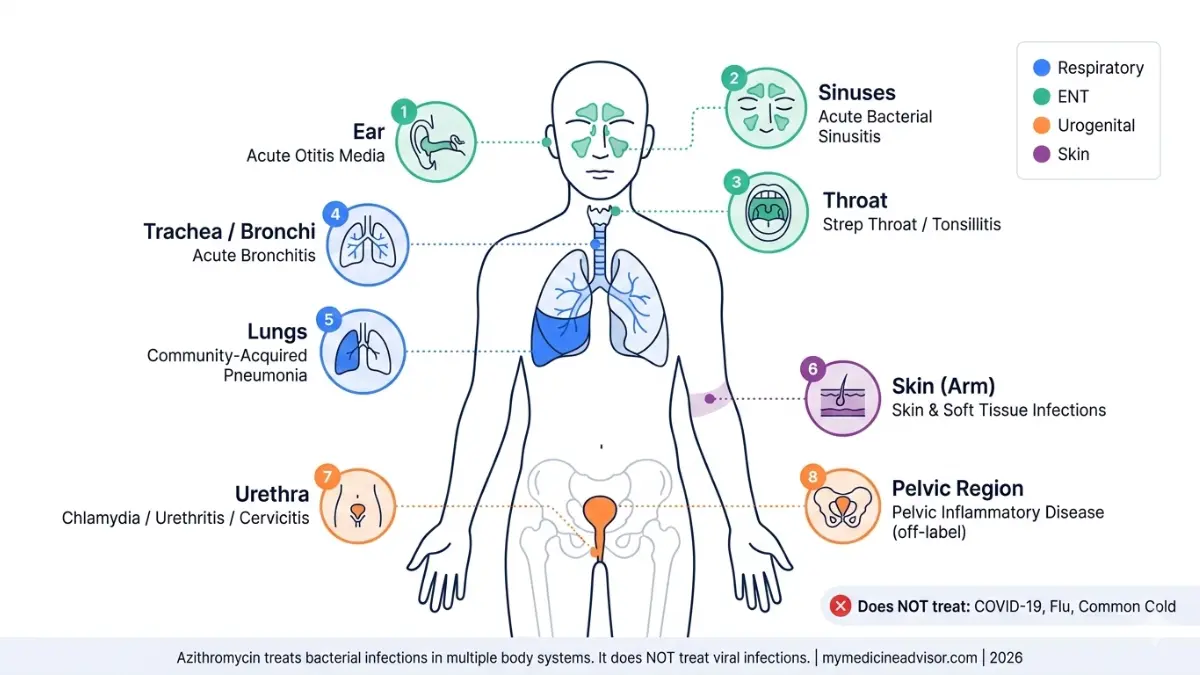
Azithromycin treats a surprisingly wide range of bacterial infections — but it is completely ineffective against viruses. Understanding exactly what it can and cannot treat may prevent you from taking an antibiotic that will do nothing for your illness.
FDA-Approved Conditions — What Azithromycin Officially Treats
According to the FDA’s official Zithromax prescribing information, azithromycin is approved for the following bacterial infections:
| Infection Type | Condition | Patient Population |
|---|---|---|
| Respiratory | Community-acquired pneumonia (mild–moderate) | Adults + children ≥6 months |
| Respiratory | Acute bacterial sinusitis | Adults + children ≥6 months |
| Respiratory | Acute exacerbations of chronic bronchitis | Adults |
| ENT | Pharyngitis / tonsillitis (strep throat) | Children ≥2 years |
| Ear | Acute otitis media (ear infection) | Children ≥6 months |
| Sexually Transmitted | Chlamydia (urethritis/cervicitis) | Adults |
| Sexually Transmitted | Chancroid (genital ulcer disease) | Adult men |
| Skin | Uncomplicated skin and soft tissue infections | Adults |
What Azithromycin CANNOT Treat
This is the critical gap that WebMD, Mayo Clinic, and Wikipedia all miss. Millions of Americans request Z-Paks for conditions azithromycin is biologically incapable of treating.
Azithromycin does not work against:
- Viral infections — including COVID-19, influenza, RSV, and the common cold
- MRSA (methicillin-resistant Staphylococcus aureus)
- Most urinary tract infections — it lacks adequate spectrum against E. coli in the urinary tract
- Syphilis — azithromycin may actually mask syphilis symptoms, delaying proper treatment
- Hospital-acquired pneumonia — bacteria here are typically resistant
A critical 2026 reminder: During COVID-19, azithromycin was widely prescribed for a virus it could not treat. UCSF researchers found in March 2026 that even one day of unnecessary azithromycin use altered the respiratory microbiome and triggered antibiotic resistance. That misuse is still echoing through resistance rates today.
Off-Label Uses Your Doctor May Prescribe
Beyond FDA-approved indications, physicians legitimately use azithromycin for:
- COPD exacerbation prevention — long-term low-dose azithromycin reduces flare frequency
- Cystic fibrosis management — reduces inflammation in chronic lung disease
- Non-eosinophilic asthma — a 2024–2025 clinical study found it increased remission rates over 12 months
- MAC disease prophylaxis — in HIV-positive patients with low CD4 counts
- Post-transplant bronchiolitis obliterans — lung transplant complication management
For a deeper comparison of antibiotics used for respiratory infections, see our guide on amoxicillin — what doctors want you to know and doxycycline — what doctors won’t tell you.
Azithromycin Dosage — The Z-Pak 5-Day Schedule & Complete Adult/Child Guide
James, 52, called his pharmacist confused. He had been given a box of 6 pills but his prescription said “5 days.” The pharmacist explained the Day 1 double-dose — a detail his discharge papers never mentioned.
This confusion is almost universal. Here is the complete dosage guide no competitor provides in one place.
The Z-Pak 5-Day Schedule (Standard Adult Regimen)
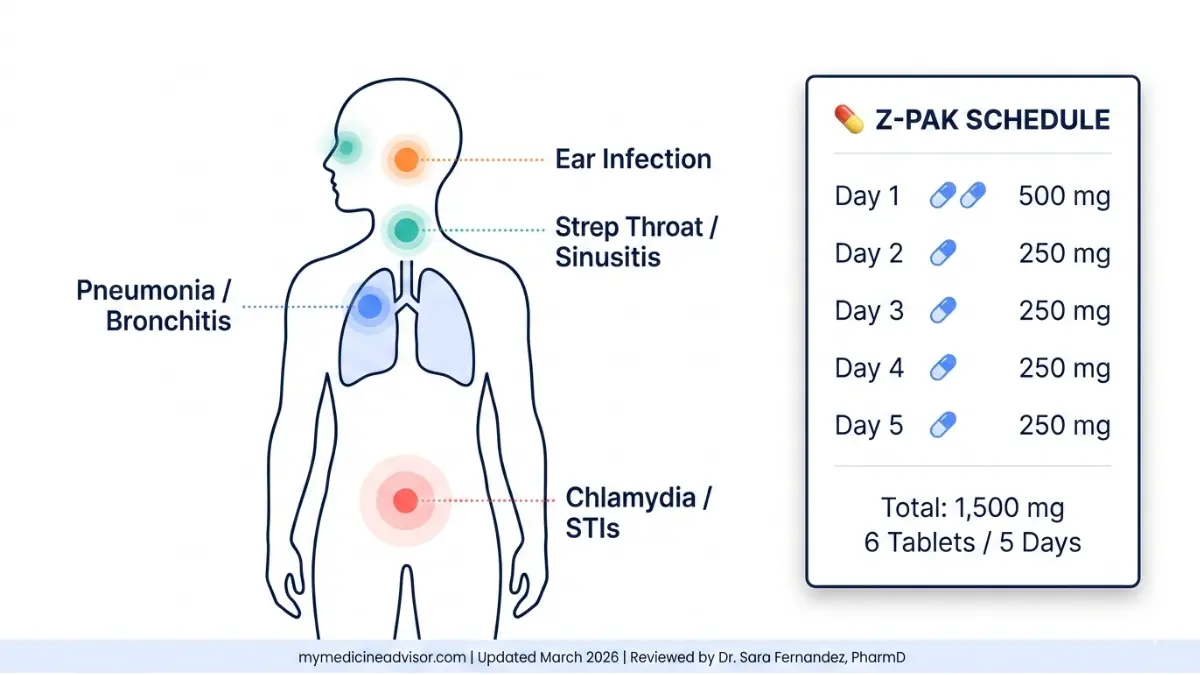
The classic Z-Pak dosage follows a front-loaded schedule — a higher first dose primes the tissues, followed by maintenance doses for 4 days:
| Day | Dose | Tablets | Timing |
|---|---|---|---|
| Day 1 | 500 mg | 2 × 250 mg tablets | With or without food |
| Day 2 | 250 mg | 1 tablet | With or without food |
| Day 3 | 250 mg | 1 tablet | With or without food |
| Day 4 | 250 mg | 1 tablet | With or without food |
| Day 5 | 250 mg | 1 tablet | With or without food |
| Total | 1,500 mg | 6 tablets | 5 days |
Condition-Specific Dosing (Adults)
| Condition | Dose | Duration |
|---|---|---|
| Community-acquired pneumonia | 500mg Day 1, 250mg Days 2–5 | 5 days |
| Chlamydia / urethritis / cervicitis | 1g single dose | 1 day |
| Acute sinusitis | 500mg once daily | 3 days |
| Acute exacerbation of COPD | 500mg once daily | 3 days |
| Strep throat / pharyngitis | 500mg Day 1, 250mg Days 2–5 | 5 days |
| Skin infections | 500mg Day 1, 250mg Days 2–5 | 5 days |
Azithromycin Dosage for Children
Pediatric dosing is weight-based, not age-based:
- Community-acquired pneumonia: 10 mg/kg on Day 1, then 5 mg/kg on Days 2–5 (children ≥6 months)
- Ear infection (otitis media): 30 mg/kg as a single dose OR 10 mg/kg once daily for 3 days
- Strep throat / tonsillitis: 12 mg/kg/day for 5 days (children ≥2 years)
- Acute sinusitis: 10 mg/kg once daily for 3 days (children ≥6 months)
⚠️ Important: Azithromycin safety and effectiveness for pneumonia and sinusitis have not been established in children under 6 months of age, per FDA prescribing guidelines.
Can You Take Azithromycin With Food?
- Standard tablets and oral suspension: Yes — with or without food. No significant impact on absorption.
- Extended-release suspension (Zmax): Take on an empty stomach, at least 1 hour before or 2 hours after eating. Food significantly reduces absorption.
💡 Tip: If you are unsure which form of azithromycin you have been given, use our Pill Identifier to confirm your medication before taking it.
For context on how azithromycin compares with other commonly prescribed antibiotics at the pharmacy level, our article on drug interactions covers combination therapy risks in detail.
Azithromycin Side Effects — Common, Rare & Cardiac Risks (2026 FDA Data)
Most people tolerate azithromycin well. The vast majority of side effects are mild, temporary, and gastrointestinal. However, two rare but serious risks — cardiac and hepatic — are frequently underemphasized by competitors. Every patient deserves to know them before the first dose.
Common Azithromycin Side Effects (FDA Clinical Trial Frequency Data)
The following figures come directly from FDA clinical trial data — actual percentages that WebMD and Mayo Clinic do not display:
| Side Effect | Frequency (Standard 5-day Course) | Frequency (Single 1g Dose) |
|---|---|---|
| Diarrhea / loose stools | 4% | 7% |
| Nausea | 3–5% | 5% |
| Abdominal pain | 3–5% | 5% |
| Vomiting | 1–2% | 2% |
| Headache | Uncommon | Uncommon |
| Dizziness | Uncommon | 1% |
| Vaginitis | Uncommon | 1% |
Higher doses = higher GI side effect rates. The 2g single-dose regimen carries nausea rates of up to 18% and diarrhea up to 14%.
When to Stop Azithromycin and Call Your Doctor Immediately
Stop taking azithromycin and contact your healthcare provider right away if you experience:
- Bloody or persistent diarrhea — this may indicate Clostridioides difficile (C. diff) infection, which can occur up to 2 months after finishing the antibiotic
- Yellowing of the skin or eyes (jaundice) — sign of liver injury (hepatotoxicity)
- Dark urine, pale stools, upper-right abdominal pain — liver warning signs
- Irregular heartbeat, palpitations, or fainting — potential cardiac warning
- Swelling of the face, lips, tongue, or throat — angioedema (rare but medical emergency)
- In infants under 6 weeks: vomiting or irritability after feeding — possible infantile pyloric stenosis
The Cardiac Risk: What the 2026 Evidence Actually Shows
This is the warning most patients never receive in the doctor’s office, and no competitor article addresses it clearly.
Azithromycin can cause QT prolongation — an abnormality in the heart’s electrical rhythm that, in rare cases, leads to a dangerous arrhythmia called torsades de pointes.
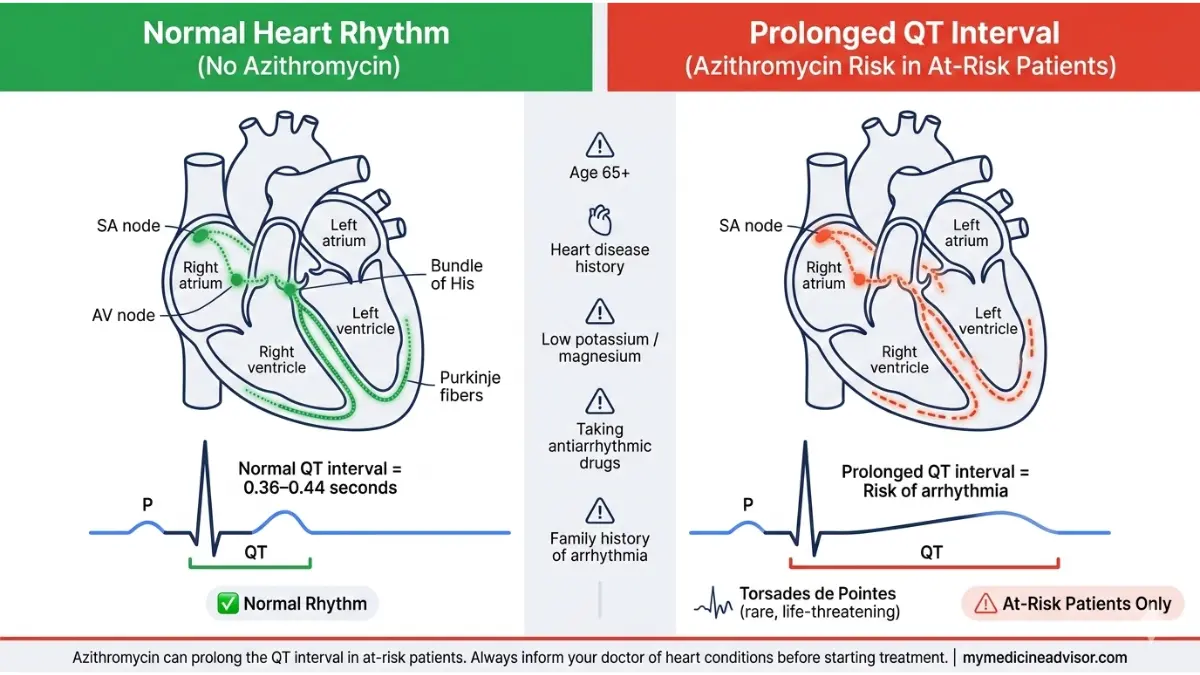
Who is at highest risk:
- Adults over 65
- People with pre-existing heart disease or arrhythmia
- Low potassium (hypokalemia) or low magnesium (hypomagnesemia)
- People taking antiarrhythmic medications such as amiodarone or sotalol
- Family history of QT prolongation
A large retrospective cohort study found a small but statistically significant increase in cardiovascular deaths with azithromycin compared to amoxicillin — concentrated almost entirely in patients with high baseline cardiovascular risk. A separate large cohort study found no elevated risk in healthy young and middle-aged adults.
💡 What This Means For You: If you have a heart condition, arrhythmia history, or take cardiac medications, tell your doctor before filling this prescription. Your doctor may choose an alternative antibiotic. Monitoring your resting heart rate during a course of antibiotics is wise — use our Heart Rate Zone Calculator as a baseline tracking tool.
Azithromycin vs. Amoxicillin — Side-by-Side Comparison
This comparison table is missing from every top competitor — yet it is one of the most searched questions on Google.
| Factor | Azithromycin (Z-Pak) | Amoxicillin |
|---|---|---|
| Drug class | Macrolide (azalide) | Penicillin (beta-lactam) |
| Course length | 3–5 days | 7–10 days |
| Dosing frequency | Once daily | 2–3 times daily |
| Nausea rate | 3–18% (dose-dependent) | Lower |
| Diarrhea rate | 4–14% | Can be higher |
| Heart risk (QT) | ⚠️ Rare but real | None |
| Safe with food | ✅ Yes (flexible) | ✅ Yes |
| Effective against strep | ✅ Yes (alternative) | ✅ Yes (first-line) |
| Penicillin allergy patients | ✅ Safe alternative | ❌ Avoid |
| Resistance concern (2026) | 🔴 Growing globally | 🔴 Growing globally |
For a comprehensive look at how metronidazole compares as an antibiotic option for different infections, visit our in-depth guide on metronidazole — what doctors don’t tell you.
Drug Interactions, Contraindications & Special Populations
Azithromycin interacts with a small but clinically important group of medications. Missing these interactions can amplify side effects or cause serious harm — particularly in patients managing heart disease, HIV, or blood clotting disorders.
Key Drug Interactions to Know
| Drug / Drug Class | Interaction | Risk Level |
|---|---|---|
| Antiarrhythmics (amiodarone, sotalol, quinidine) | Compounded QT prolongation | 🔴 High — avoid or monitor closely |
| Warfarin (blood thinner) | Azithromycin increases anticoagulant effect | 🔴 Increased bleeding risk |
| Nelfinavir (HIV medication) | Raises azithromycin blood levels ~2x | 🟠 Monitor for azithromycin toxicity |
| Ergotamine derivatives | Risk of ergot toxicity | 🟠 Avoid combination |
| Statins (some) | Modest pharmacokinetic interaction | 🟡 Low — monitor if symptomatic |
| Antacids with aluminum/magnesium | Reduces azithromycin peak absorption | 🟡 Take azithromycin 1 hour before antacid |
Who Should NOT Take Azithromycin
The following groups should avoid azithromycin or use it only with extreme physician oversight:
- ❌ History of severe allergic reaction to any macrolide or ketolide antibiotic (erythromycin, clarithromycin, telithromycin)
- ❌ History of cholestatic jaundice or liver dysfunction caused by prior azithromycin use — this is an absolute contraindication
- ❌ Active severe liver disease — azithromycin is primarily eliminated via the liver; impaired hepatic function dramatically increases drug accumulation and toxicity risk
- ⚠️ Known or suspected QT prolongation or cardiac arrhythmia — use with extreme caution; alternative antibiotic preferred
- ⚠️ Myasthenia gravis — azithromycin may worsen neuromuscular blockade and trigger acute exacerbations of this condition
Azithromycin During Pregnancy
Azithromycin is classified as Pregnancy Category B — meaning animal studies showed no fetal harm, but no adequate controlled studies in humans exist. It should be used only when clearly needed and prescribed by an OB-GYN.
According to NIH LiverTox data, the American College of Obstetricians and Gynecologists (ACOG) includes azithromycin in select combination regimens for premature rupture of membranes and as prophylaxis before emergency cesarean delivery.
💡 For pregnant patients: Tracking your overall health metrics during antibiotic treatment matters. Use our Pregnancy Weight Gain Calculator and Pregnancy Due Date Calculator to stay on top of your pregnancy milestones while managing an infection.
Azithromycin While Breastfeeding
Azithromycin transfers into breast milk in minimal amounts. Adverse effects in breastfed infants are considered unlikely, though monitoring for gastrointestinal symptoms — vomiting, diarrhea, and oral thrush (candidiasis) — is recommended. Discuss with your physician before taking any antibiotic while nursing.
Azithromycin in Elderly Patients
Pharmacokinetic studies confirm that dosage adjustment is not required for older adults with normal liver and kidney function. However, elderly patients carry a significantly higher baseline risk of QT prolongation and cardiac arrhythmia, making the cardiac warning above especially relevant for this age group.
The 2026 Resistance Crisis — Is Azithromycin Losing Its Power?
This is the section that no competitor has written. While WebMD tells you what azithromycin treats and Mayo Clinic lists its side effects, neither tells you that this antibiotic — one of the most prescribed in the world — is facing a growing global resistance crisis that directly affects whether your next Z-Pak will actually work.
What the Latest 2026 Research Reveals
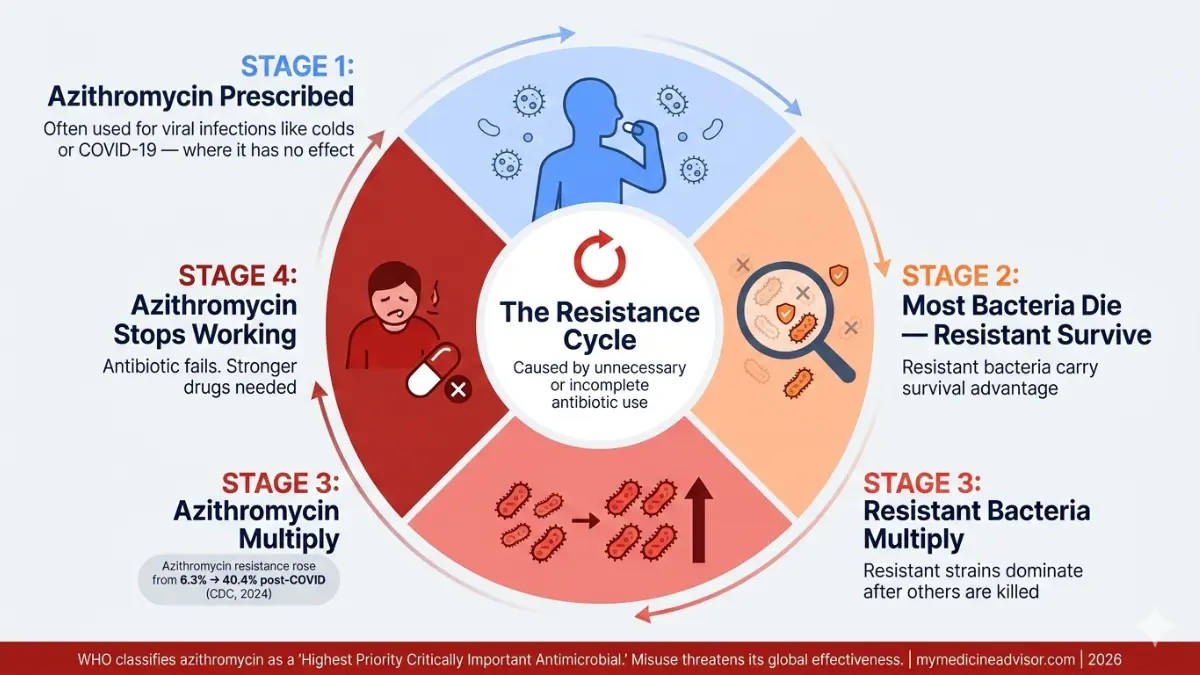
In a landmark study published in March 2026, researchers at the University of California San Francisco made a striking discovery: taking azithromycin for as little as one single day triggers measurable antibiotic resistance changes in the respiratory tract microbiome of patients. Even when the antibiotic is inappropriate — as in viral infections — the damage to the microbial ecosystem is real and persists for more than a week. This finding, covered by UCSF, underscores why antibiotic stewardship is now a frontline patient issue, not just a hospital policy.
The resistance data from the COVID-19 pandemic era is alarming. According to a CDC Emerging Infectious Diseases study, azithromycin resistance in E. coli and Shigella bacteria rose from 6.3% to 40.4% in the years following the pandemic — a direct consequence of its widespread inappropriate use in COVID-19 patients despite clear evidence it did not work against the virus.
The World Health Organization classifies azithromycin as one of its “highest priority critically important antimicrobials” — which means it is on a short list of antibiotics humanity cannot afford to lose to resistance.
Why This Matters to You Right Now
When a bacterial strain becomes resistant to azithromycin, it means:
- The antibiotic no longer kills or stops that bacterium
- Your infection can persist or worsen despite completing the full course
- Doctors must switch to stronger, often more expensive antibiotics with greater side effects
- In severe cases — particularly for pneumonia or STIs — a resistant infection can become life-threatening
3 Actions Every Patient Should Take
1. Only take azithromycin when prescribed for a confirmed or strongly suspected bacterial infection. Requesting a Z-Pak for a cold, flu, or COVID-19 is not just ineffective — it actively damages the drug’s future effectiveness for you and everyone around you.
2. Always complete the full dosage course. The most common resistance-promoting behavior is stopping antibiotics once you feel better. Surviving bacteria are often the hardier, more resistant strains — stopping early gives them the advantage.
3. Never use leftover azithromycin from a previous prescription. Self-medicating with stored antibiotics means taking a drug without a confirmed diagnosis, often at the wrong dose, creating ideal conditions for resistance to develop.
Understanding how your body’s baseline inflammation markers are trending can help you and your doctor make smarter decisions about antibiotic use. Our articles on CRP test results and ESR test results explain how these inflammatory markers guide antibiotic decisions.
Frequently Asked Questions — Azithromycin (Z-Pak)
1. What is azithromycin used for?
Azithromycin treats bacterial infections including pneumonia, chlamydia, strep throat, sinusitis, bronchitis, ear infections, and certain skin infections. It does not treat viral illnesses.
2. How long does azithromycin take to work?
Most patients notice symptom improvement within 48–72 hours of starting treatment. The drug continues working for 5–7 days after the final dose due to its long tissue half-life.
3. What is the Z-Pak dosage schedule?
Day 1: 500mg (two 250mg tablets). Days 2–5: 250mg (one tablet daily). Total course: 1,500mg over 5 days, 6 tablets.
4. Can you drink alcohol with azithromycin?
Alcohol does not directly reduce azithromycin’s effectiveness, but it can worsen GI side effects (nausea, diarrhea) and impair immune recovery. Avoiding alcohol during treatment is advisable.
5. Is azithromycin a strong antibiotic?
Azithromycin is considered a broad-spectrum antibiotic — effective against a wide range of bacteria. However, growing resistance means it is increasingly less effective for certain infections, particularly gonorrhea.
6. How long does azithromycin stay in your system?
Due to its 68-hour tissue half-life, azithromycin remains biologically active in tissues for 5–7 days after the last dose. It is generally cleared from the body within 11–14 days.
7. What are the most common side effects of azithromycin?
The most common side effects are gastrointestinal: diarrhea (4–14%), nausea (3–18%), abdominal pain (3–7%), and vomiting (1–7%). Most are mild and resolve after completing the course.
8. Can azithromycin cause heart problems?
Rarely. Azithromycin can cause QT prolongation, a cardiac electrical abnormality. Risk is highest in elderly patients, those with pre-existing heart conditions, and people taking antiarrhythmic medications.
9. Is azithromycin safe during pregnancy?
It is Pregnancy Category B. Animal studies show no fetal harm, but no controlled human trials exist. It is used in specific pregnancy scenarios under physician guidance per ACOG recommendations.
10. What is the difference between azithromycin 250mg and 500mg?
Both contain the same drug. 250mg tablets are used for the Day 2–5 maintenance dose. 500mg is used for the Day 1 loading dose or as a standalone daily dose for certain infections.
11. Can azithromycin treat COVID-19 or the flu?
No. Azithromycin is an antibiotic that only works against bacteria. COVID-19 and influenza are viral infections. Multiple large randomized clinical trials confirmed azithromycin is ineffective against COVID-19.
📚 Related Reading: Amoxicillin — What Doctors Want You to Know | Drug Interactions: Complete Guide | CRP Test Results Explained
About this content
How this article was put together: researched from recognised health sources, drafted with the help of AI tools, and edited by hand, with sources linked throughout.

Sameer Patel is the founder and editor of My Medicine Advisor. He is not a doctor or medical professional — before starting this site he worked in banking,…
Medical disclaimer
The content on MyMedicineAdvisor is provided for general informational and educational purposes only and is not a substitute for professional medical advice, diagnosis, or treatment. Health information on this website should not be used to diagnose, treat, cure, or prevent any condition without guidance from a qualified healthcare professional. Always seek the advice of your doctor, physician, or another licensed healthcare provider with any questions you may have regarding a medical condition, symptoms, medications, or treatment decisions.