

On This Page – Quick Medical Summary
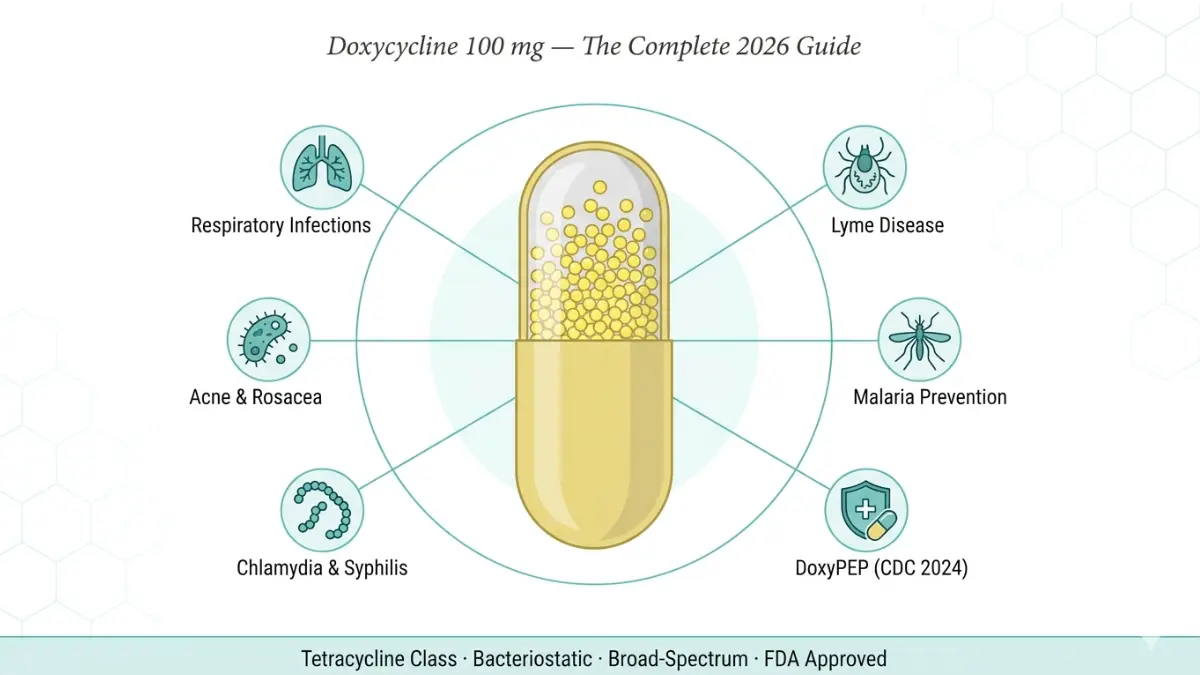
The short answer: Doxycycline is a broad-spectrum tetracycline antibiotic prescribed to over 8 million Americans annually. It treats bacterial infections, acne, Lyme disease, and malaria — and since 2024, the CDC has approved it for a fourth use most patients never hear about. This guide covers everything your prescription label leaves out.
What Is Doxycycline? The Antibiotic That Does Far More Than You Think
Marcus, 28, was prescribed doxycycline for a chest infection. Two weeks later, his dermatologist prescribed the same drug for persistent acne. He called his pharmacist confused: “Is this the same medication?” The answer was yes — and that’s exactly what makes doxycycline unusual.
Doxycycline is a second-generation tetracycline antibiotic first approved by the FDA in 1967. It works by binding to the 30S ribosomal subunit inside bacterial cells, blocking protein synthesis and stopping bacterial growth. Unlike penicillin, it does not kill bacteria directly — it is bacteriostatic, meaning it halts replication and lets your immune system do the rest.
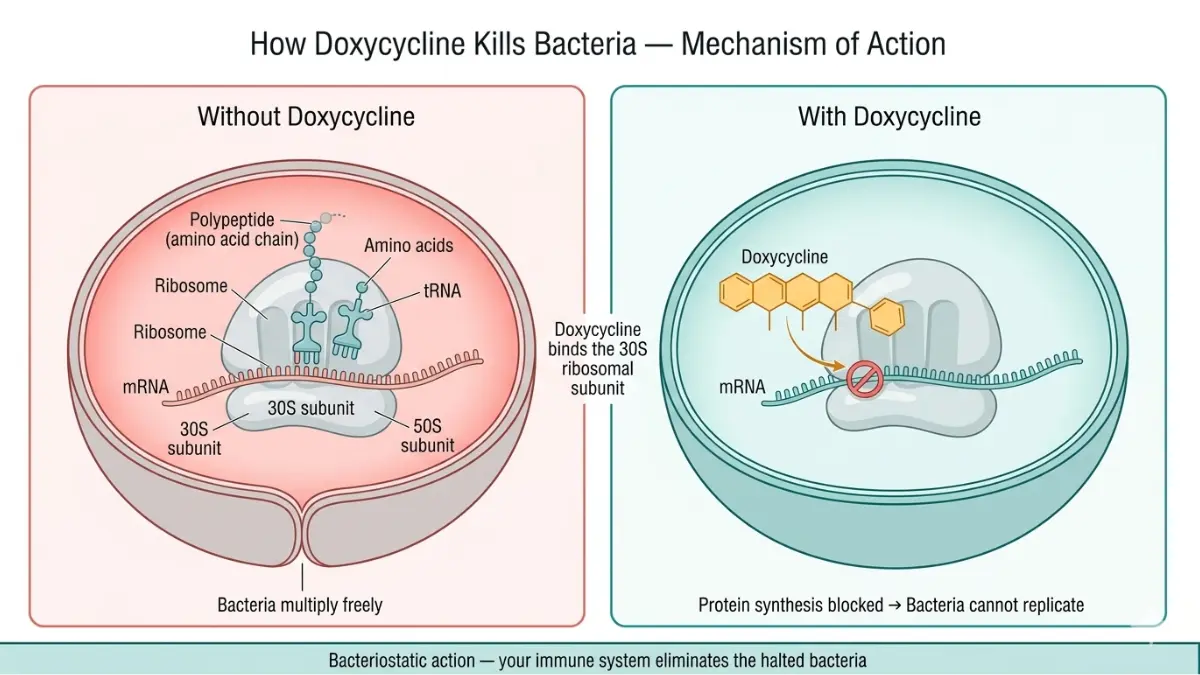
Beyond its antibiotic action, doxycycline also has anti-inflammatory properties. It inhibits matrix metalloproteinases (MMPs), enzymes that drive tissue inflammation. This is precisely why it works for acne and rosacea — conditions driven by inflammation, not just bacteria.
How Doxycycline Works Inside Your Body
After a single oral dose, doxycycline reaches peak blood concentration within 2–3 hours. Its half-life is 18–22 hours, which is why once-daily dosing is effective for most conditions. It distributes widely into tissues — lungs, skin, reproductive tract, and even cerebrospinal fluid — making it one of the most versatile antibiotics in clinical use.
Key pharmacokinetic facts:
- Oral bioavailability: ~93% (one of the highest among antibiotics)
- Protein binding: 80–90%
- Half-life: 18–22 hours
- Primarily eliminated via feces (not kidneys — meaning dosage is not adjusted for kidney disease)
Doxycycline Hyclate vs. Monohydrate — The Difference That Matters
Most patients and even some pharmacists treat these interchangeably. They are not identical.
| Feature | Doxycycline Hyclate | Doxycycline Monohydrate |
|---|---|---|
| Solubility | Water-soluble | Slightly soluble |
| Stomach tolerance | More likely to cause nausea | Gentler on the stomach |
| Common brands | Doryx, Acticlate, Vibramycin Hyclate | Monodox, Adoxa |
| Best for | Short-term infections | Long-term use (acne, rosacea) |
| Cost | Generally lower | Slightly higher |
What this means for you: If doxycycline causes significant nausea, ask your doctor whether the monohydrate form is appropriate. Many patients on long-term acne treatment tolerate it significantly better. If you’re unsure which form you’ve been dispensed, use our Pill Identifier tool to confirm by imprint code before taking.
Available Forms of Doxycycline
Doxycycline is available in multiple formulations in the United States:
- Immediate-release tablets/capsules (50mg, 75mg, 100mg, 150mg) — standard infections
- Delayed-release tablets (50mg, 75mg, 100mg, 150mg, 200mg) — better GI tolerance, used for malaria prevention
- Oral suspension — for patients who cannot swallow tablets
- IV injection — hospital-administered for severe infections
📌 Important 2026 Update: Vibramycin® capsules and oral liquid were officially discontinued in the U.S. market in August 2025. Actilate®, Doryx®, and Oracea® remain available per Mayo Clinic’s February 2026 update.
What Doxycycline Treats in 2026 — Including the Use Most Patients Never Hear
This is where every competitor article falls short. Drugs.com, WebMD, and Healthline list the standard infections — but none of them give patients the full, current picture. Here is what doxycycline actually treats in 2026.
Bacterial Infections Doxycycline Treats (Complete Clinical List)
Respiratory Infections:
- Community-acquired pneumonia (Mycoplasma pneumoniae, Chlamydophila)
- Acute sinusitis and bronchitis
- Whooping cough (Bordetella pertussis) — alternative therapy
Skin and Soft Tissue:
- Moderate-to-severe acne vulgaris (see Section 2B)
- Cellulitis caused by MRSA — an increasingly important use
- Rosacea (papulopustular type)
Sexually Transmitted Infections (STIs):
- Chlamydia (first-line treatment per CDC)
- Syphilis (primary, secondary, and early latent)
- Gonorrhea (as combination therapy)
- Pelvic inflammatory disease (in combination)
- Lymphogranuloma venereum
Vector-Borne and Tropical Infections:
- Lyme disease — first-line for early-stage
- Rocky Mountain spotted fever — first-line
- Malaria prophylaxis (travelers to endemic regions)
- Brucellosis, Q fever, typhus
Other Conditions:
- Periodontal disease (subantimicrobial-dose doxycycline)
- Anthrax post-exposure prophylaxis
- Pelvic inflammatory disease
Doxycycline for Acne — How Long Until You See Results?
Doxycycline for acne is prescribed at 50–100mg once or twice daily. Clinical improvement typically begins within 6–8 weeks, with significant clearing in 3–4 months. It is rarely prescribed beyond 6 months due to resistance concerns.
What competitors miss: Doxycycline treats acne through two mechanisms simultaneously — it kills Cutibacterium acnes bacteria and reduces inflammatory cytokines in the dermis. Patients who don’t respond to antibiotics alone may have primarily inflammatory acne rather than bacterial. If you’re struggling with persistent skin conditions alongside other health changes, our Symptom Checker can help you map your symptoms before your next appointment.
For related dermatological context, our guide on ringworm treatment and eczema treatment covers other common skin conditions where antibiotics intersect with dermatological care.
⚡ The 2024 CDC Guideline Change: DoxyPEP — The STI Prevention Use Most Patients Don’t Know About
This is the biggest doxycycline development in decades — and it is almost entirely absent from consumer-facing competitor articles.
DoxyPEP stands for doxycycline post-exposure prophylaxis. It involves taking 200mg of doxycycline within 72 hours after unprotected sex to prevent bacterial STIs — not treat them, but prevent them.
According to the CDC’s official DoxyPEP guidelines, clinical trials demonstrated a 73% reduction in chlamydia and syphilis risk among high-risk individuals who used DoxyPEP consistently.
Who is DoxyPEP recommended for (per CDC 2024 guidelines):
- Gay, bisexual, and other men who have sex with men (MSM)
- Transgender women
- Individuals who have had at least one bacterial STI (chlamydia, syphilis, or gonorrhea) in the past 12 months
DoxyPEP Quick Protocol:
| Step | Detail |
|---|---|
| Dose | 200mg doxycycline (single dose) |
| Timing | Within 72 hours of sex — sooner is better |
| Frequency | No more than 200mg per 24-hour period |
| Follow-up | STI and HIV screening every 3–6 months |
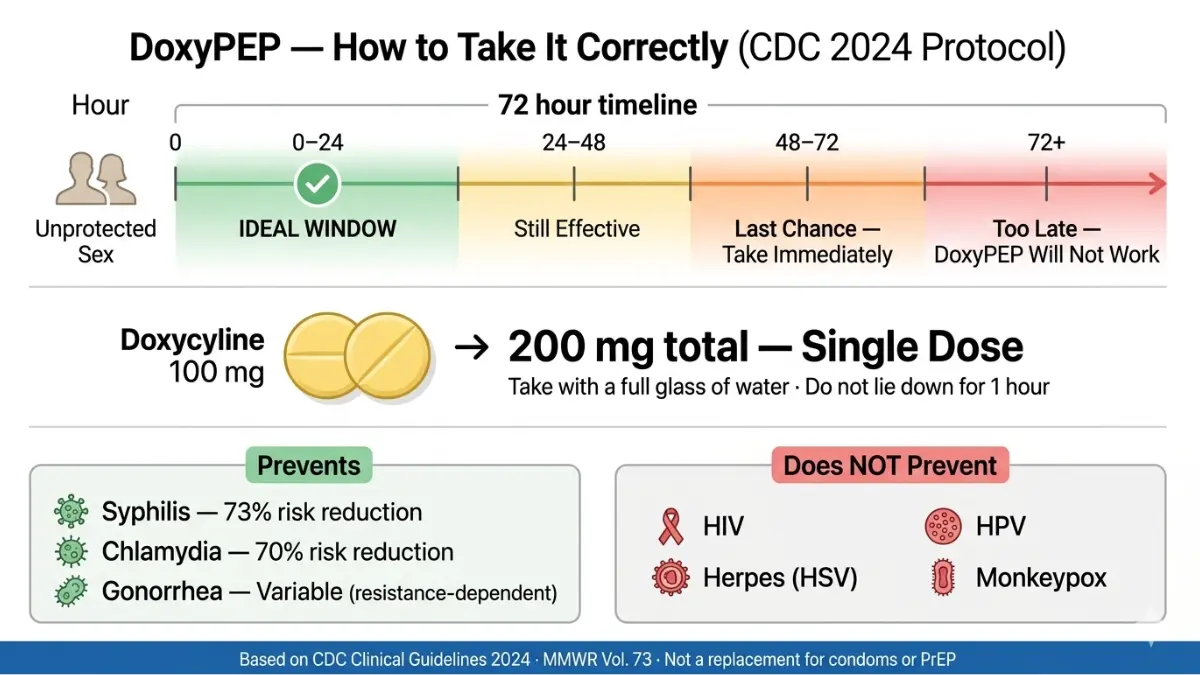
⚠️ DoxyPEP does not protect against HIV, herpes, or HPV. It is not a replacement for condoms or PrEP.
For a related perspective on STI testing, our article on STI test results decoded covers what your numbers mean after screening.
Doxycycline Dosage — The Chart Your Doctor Should Have Handed You
The most common complaint from doxycycline patients: “My prescription just says ‘twice daily’ — I didn’t know about the food rules, the timing, or what to do if I missed a dose.” This section fixes that.
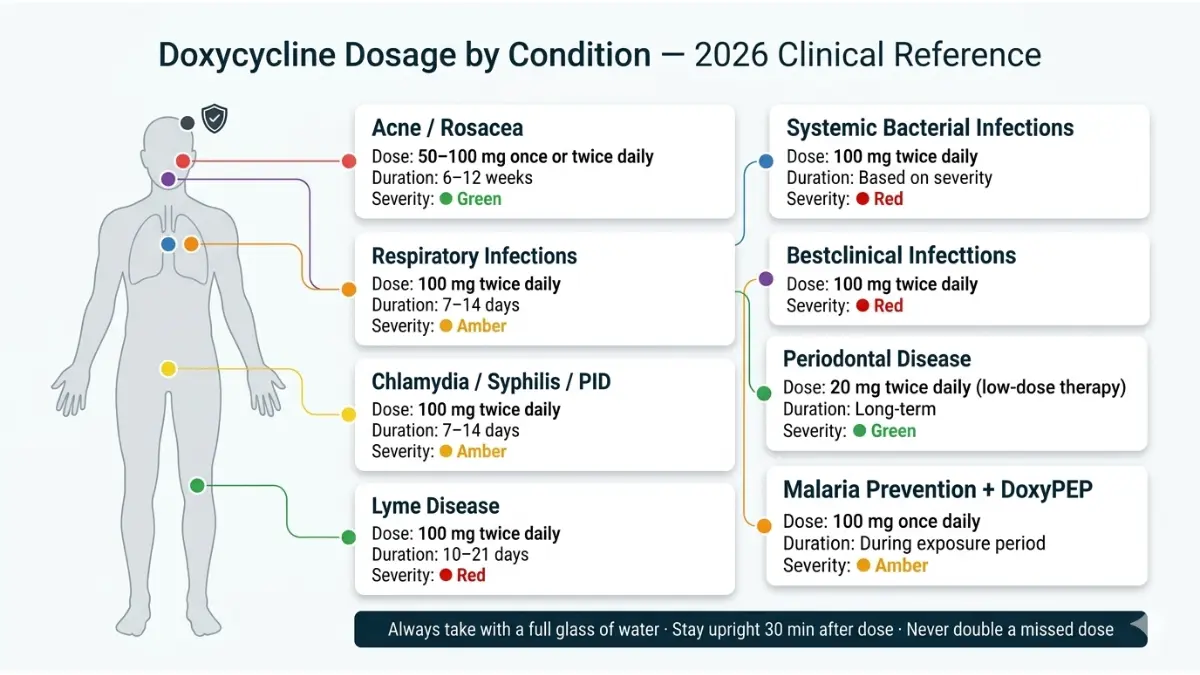
Standard Adult Dosage by Condition
| Condition | Dose | Frequency | Duration |
|---|---|---|---|
| Bacterial infections (general) | 100mg loading, then 100mg | Once or twice daily | 7–14 days |
| Acne (moderate-severe) | 50–100mg | Once or twice daily | Up to 6 months |
| Chlamydia | 100mg | Twice daily | 7 days |
| Syphilis (penicillin-allergic) | 100mg | Twice daily | 14–28 days |
| Lyme disease (early) | 100mg | Twice daily | 10–21 days |
| Malaria prevention | 100mg (delayed-release) | Once daily | Start 1–2 days pre-travel; continue 4 weeks after |
| DoxyPEP (STI prevention) | 200mg | Single dose within 72 hrs | Per sexual event |
| Rosacea (subantimicrobial) | 40mg (Oracea®) | Once daily | Long-term, per physician |
Pediatric dosing (children ≥8 years): 2.2mg/kg twice daily. Not for children under 8 — see Section 4.
How and When to Take Doxycycline — The Rules Most Patients Get Wrong
Rule 1 — Water is non-negotiable. Take doxycycline with a full 8-ounce glass of water. This is not optional. Doxycycline can cause esophageal ulceration if it lodges in the esophagus. Multiple ER cases each year involve patients who took doxycycline with minimal fluid and lying down.
Rule 2 — Stay upright for 30 minutes. Do not lie down immediately after taking your dose. Gravity helps move the tablet fully into your stomach.
Rule 3 — Food timing depends on the formulation.
- Hyclate (immediate-release): Can be taken with food if you experience nausea
- Delayed-release (Doryx MPC): Must be taken on an empty stomach
- Monohydrate: Food causes only a 20% reduction in absorption — generally fine with food
Rule 4 — Avoid these within 2 hours of your dose:
- Antacids (Tums, Maalox, Rolaids) — calcium blocks absorption
- Iron supplements
- Calcium supplements
- Magnesium-containing laxatives
- Dairy products in large quantities
What to do if you miss a dose: Take it as soon as you remember — unless it’s almost time for your next dose. Never double up. Missing a dose of doxycycline for acne is less critical than for a time-sensitive infection like chlamydia.
Doxycycline Side Effects — The 3 Serious Risks Competitors Consistently Downplay
Most articles list nausea, sun sensitivity, and diarrhea then move on. Those are real — but three serious side effects are dramatically underreported in consumer-facing content.
Common Side Effects (and How to Manage Them)
| Side Effect | Frequency | Management |
|---|---|---|
| Nausea / upset stomach | Very common | Take with food (monohydrate form); switch formulations |
| Photosensitivity (sun sensitivity) | Common | SPF 50+ sunscreen daily; avoid tanning beds |
| Mild diarrhea | Common | Stay hydrated; notify doctor if severe |
| Vaginal yeast infection | Common in women | Probiotics may help; antifungal if needed |
| Darkening of adult teeth | Temporary | Resolves after stopping; dental cleaning helps |
| Esophageal irritation | Uncommon | Always take with full glass of water; stay upright |
The 3 Serious Side Effects Most Articles Minimize
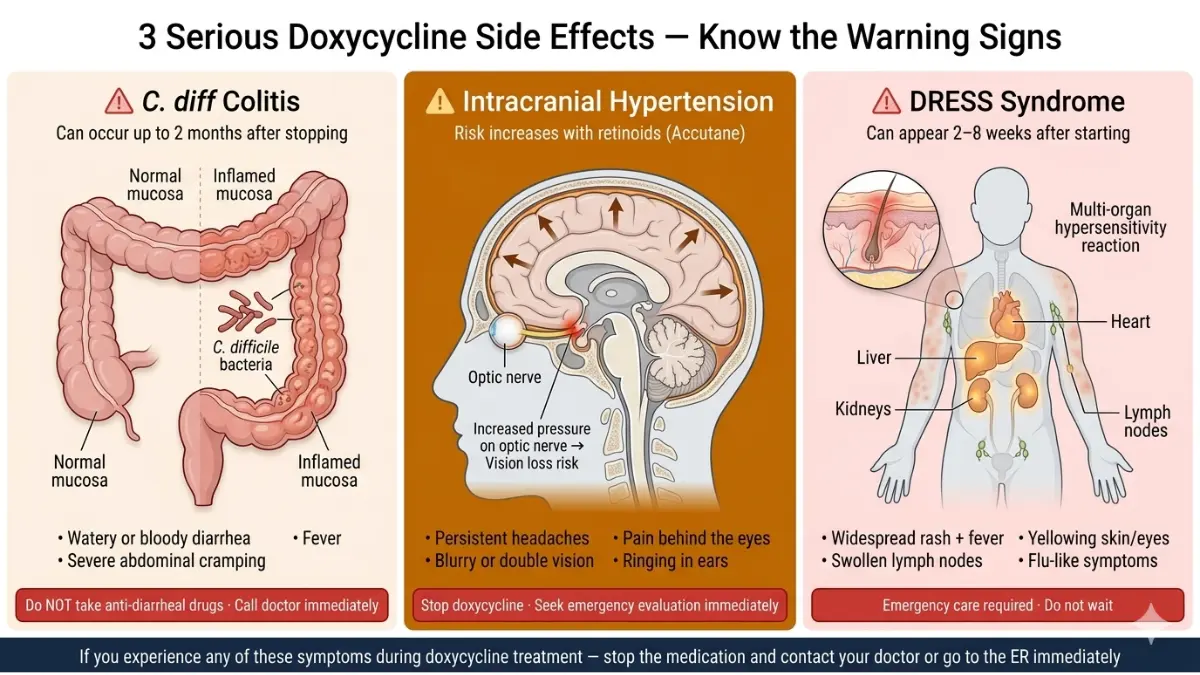
⚠️ Serious Risk #1: C. difficile-Associated Diarrhea
All antibiotics — including doxycycline — can trigger Clostridioides difficile (C. diff) overgrowth in the colon. This can occur up to 2 months after finishing the course. Watery, bloody, or persistent diarrhea after stopping doxycycline is a medical emergency, not a typical side effect.
What to do: Do NOT take over-the-counter anti-diarrheal medications. Call your doctor immediately. C. diff requires specific antibiotic treatment (vancomycin or fidaxomicin).
⚠️ Serious Risk #2: DRESS Syndrome
DRESS (Drug Reaction with Eosinophilia and Systemic Symptoms) is a rare but potentially fatal multi-organ hypersensitivity reaction. It can affect the liver, kidneys, and heart. Crucially, it may not appear until 2–8 weeks after starting doxycycline — long after most patients expect a reaction window.
Warning signs: Widespread rash + fever + swollen lymph nodes + flu-like symptoms + yellowing skin or eyes. Seek emergency care immediately.
⚠️ Serious Risk #3: Intracranial Hypertension (Pseudotumor Cerebri)
This is the side effect almost no patient is warned about. Doxycycline can cause increased pressure inside the skull, mimicking a brain tumor. Risk is significantly elevated when doxycycline is combined with isotretinoin (Accutane) or other retinoids — a combination that is actually prescribed together for severe acne despite guidelines advising against it.
Warning signs: Persistent headaches, blurry or double vision, vision loss, or ringing in the ears while on doxycycline. Discontinue and seek immediate medical evaluation.
📌 For patients tracking inflammatory markers while on doxycycline, our guide on CRP test results explains what elevated inflammation markers may mean during antibiotic treatment.
Doxycycline and Pregnancy — Category D: What It Actually Means
Doxycycline is classified as FDA Pregnancy Category D. This means there is positive evidence of fetal harm — particularly during the second and third trimesters.
Documented risks:
- Permanent tooth discoloration in the developing fetus (yellow-gray-brown)
- Impaired bone development
- Risk increases significantly after week 14 of pregnancy
If you are pregnant or planning to become pregnant and are currently on doxycycline, speak to your provider immediately about alternatives. Use our Pregnancy Due Date Calculator to track your gestational week if relevant.
Doxycycline in Children Under 8 — The Tooth Risk Explained
Standard guidance holds that doxycycline should not be given to children under 8 years old due to permanent yellowing or graying of developing teeth. However, updated guidance from the American Academy of Pediatrics (AAP) notes that short-course doxycycline (under 21 days) for serious conditions like Rocky Mountain spotted fever carries minimal tooth-staining risk — and untreated Rocky Mountain spotted fever carries a fatality risk of up to 20%.
Key takeaway: For life-threatening infections in children under 8, the risk-benefit ratio favors doxycycline in short courses. For acne or non-urgent use, alternatives should be sought.
What Not to Take With Doxycycline — The Interaction List That Could Undermine Your Treatment
This section answers the questions that generate millions of searches monthly — and that competitor articles bury in separate URLs or clinical PDFs.
Drug Interactions That Reduce Doxycycline’s Effectiveness
| Substance | Interaction | Action Required |
|---|---|---|
| Antacids (calcium, magnesium, aluminum) | Chelates doxycycline, reduces absorption by up to 90% | Take doxy 2 hrs before or after antacids |
| Iron supplements | Blocks absorption | Separate by 3 hours |
| Calcium supplements | Blocks absorption | Separate by 2 hours |
| Dairy (large amounts) | Minor absorption reduction (~20%) | Acceptable with most forms |
| Bismuth subsalicylate (Pepto-Bismol) | Reduces absorption | Avoid during treatment |
Drug Interactions That Increase Risk of Harm
| Drug | Risk | Clinical Significance |
|---|---|---|
| Isotretinoin / Retinoids | Intracranial hypertension | HIGH — combination generally contraindicated |
| Warfarin (blood thinners) | Enhanced anticoagulant effect, bleeding risk | Monitor INR closely — see our PT/INR test guide |
| Oral contraceptives | May reduce pill effectiveness | Use backup contraception during full course |
| Methotrexate | Increased methotrexate toxicity | Significant — notify your rheumatologist |
| Barbiturates / Phenytoin | Reduces doxycycline half-life | May need higher dose or alternative |
For a comprehensive overview of antibiotic interactions across drug classes, the NIH MedlinePlus doxycycline page provides a full interaction reference updated by the National Library of Medicine.
Can You Drink Alcohol With Doxycycline? (The Honest Answer)
The short answer: Moderate alcohol does not directly interact with doxycycline in the same dangerous way it does with metronidazole or tinidazole.
However, there are two important nuances:
- Alcohol worsens GI side effects. Nausea and stomach upset — already doxycycline’s most common complaint — are amplified by alcohol.
- Alcohol can impair immune response. Since doxycycline is bacteriostatic (it stops bacteria, not kills them), your immune system does the final work. Heavy drinking while fighting an infection undermines that.
Verdict: One or two drinks will not neutralize your antibiotic or cause a dangerous reaction. Regular heavy drinking during a course of doxycycline is inadvisable — not because of a direct interaction, but because it undermines the treatment’s effectiveness and worsens side effects.
Our related article on drug interactions provides a broader reference for common medication combinations to avoid.
2026 Expert Update — What We Know Now That We Didn’t Before
The DoxyPEP Revolution: What the Data Actually Shows
The most significant development in doxycycline’s clinical history in 50 years is not a new formulation — it is a new indication.
According to the CDC’s MMWR Clinical Guidelines (June 2024), the landmark DoxyPEP randomized controlled trial demonstrated:
- 73% reduction in syphilis risk
- 70% reduction in chlamydia risk
- Gonorrhea reduction was variable, depending on regional tetracycline resistance rates
“Doxy PEP represents a paradigm shift in bacterial STI prevention,” notes Dr. Omar Hassan, Internal Medicine Specialist, mymedicineadvisor.com expert panel. “It is the first time we have a post-exposure prevention strategy for syphilis and chlamydia with this level of efficacy evidence.”
Is Antibiotic Resistance a Growing Concern?
Yes — and it is the one honest limitation every patient deserves to understand.
Tetracycline resistance rates vary significantly by geography — for example, resistance in Streptococcus pyogenes ranges from approximately 1% in Sweden to over 80% in China. In the United States, resistance among common skin and respiratory pathogens is a growing but still manageable concern.
The DoxyPEP rollout has raised legitimate scientific debate about whether widespread doxycycline use for STI prophylaxis could accelerate gonococcal resistance. Surveillance data from San Francisco and King County confirm that high-frequency doxy PEP use can drive rapid increases in gonococcal tetracycline resistance.
What this means for patients: Doxycycline remains highly effective for its approved indications in the U.S. in 2026. However, this is precisely why it must be taken only as prescribed, completed in full, and not shared between individuals.
Expert Consensus: When Doxycycline Is — and Isn’t — the Right Choice
Doxycycline IS the right choice when:
- You have chlamydia, early syphilis, or Lyme disease
- You are traveling to a malaria-endemic region
- You have moderate-to-severe inflammatory acne unresponsive to topicals
- You are an eligible candidate for DoxyPEP
Doxycycline is NOT appropriate when:
- You are pregnant (especially after week 14)
- You are under 8 years old (with rare exceptions)
- You have a viral infection (flu, COVID, common cold — it will not work)
- You are on isotretinoin (Accutane) — serious interaction risk
- You are allergic to tetracycline antibiotics
For patients managing long-term health conditions that may interact with antibiotic courses, our Genetic Risk Assessment Tool helps identify individual metabolic risk factors worth discussing with your provider.
Explore further expert-reviewed medication guides at mymedicineadvisor.com/health/, including our companion article on metronidazole — what doctors don’t tell you for a similar deep-dive on another widely-prescribed antibiotic.
⚠️ Medical Disclaimer: This article is written for educational purposes only. It does not constitute medical advice, diagnosis, or treatment recommendations. Doxycycline is a prescription medication. Always consult a qualified, licensed healthcare provider before starting, adjusting, or stopping any antibiotic therapy.
Frequently Asked Questions About Doxycycline
Q1: What is doxycycline used for?
Doxycycline treats bacterial infections including acne, chlamydia, syphilis, Lyme disease, pneumonia, and rosacea. It is also used for malaria prevention and, since the 2024 CDC guidelines, as DoxyPEP for post-exposure STI prevention.
Q2: What are the most common side effects of doxycycline?
The most common side effects are nausea, upset stomach, photosensitivity (increased sunburn risk), mild diarrhea, and vaginal yeast infections in women. Most resolve after completing the course.
Q3: Can I drink alcohol while taking doxycycline?
Moderate alcohol does not cause a dangerous interaction with doxycycline. However, it worsens nausea and may impair the immune response needed to fight infection. Heavy alcohol use during treatment is inadvisable.
Q4: How long does doxycycline take to work?
For acute infections, doxycycline begins inhibiting bacteria within 24–48 hours. Symptom relief typically occurs within 2–3 days. For acne, meaningful improvement takes 6–8 weeks of consistent use.
Q5: Can I take doxycycline on an empty stomach?
It depends on the formulation. Hyclate immediate-release can be taken with food to reduce nausea. Delayed-release tablets should be taken on an empty stomach. Monohydrate is generally well-tolerated with or without food.
Q6: What is the difference between doxycycline hyclate and monohydrate?
Hyclate is water-soluble and may cause more stomach irritation, making it better suited for short-term infections. Monohydrate is gentler on the stomach and preferred for long-term use such as acne management.
Q7: Is doxycycline safe during pregnancy?
No. Doxycycline is FDA Category D — there is positive evidence of fetal risk, including permanent tooth discoloration and bone development effects. It is contraindicated in pregnancy, especially after the first trimester.
Q8: What is DoxyPEP and how does it work?
DoxyPEP is doxycycline taken within 72 hours after unprotected sex to prevent bacterial STIs. Per CDC 2024 guidelines, it reduces chlamydia and syphilis risk by approximately 70–73% in eligible high-risk individuals.
Q9: Can doxycycline treat a UTI?
Doxycycline can treat some urinary tract infections caused by susceptible bacteria, but it is not the first-line treatment for most UTIs in the U.S. Nitrofurantoin or trimethoprim-sulfamethoxazole are typically preferred.
Q10: Why can’t I lie down after taking doxycycline?
Doxycycline can cause chemical esophageal burns if the tablet lodges in the esophagus. Remaining upright for at least 30 minutes and taking it with a full glass of water prevents this risk entirely.
Q11: Does doxycycline make you more sensitive to sunlight?
Yes. Doxycycline causes photosensitivity — the skin’s reaction to UV light is amplified. Wear SPF 50+ sunscreen daily, avoid prolonged sun exposure, and skip tanning beds for the entire duration of treatment.
Sources: CDC DoxyPEP Guidelines | CDC MMWR Clinical Report Vol. 73 | MedlinePlus — Doxycycline Drug Monograph | Mayo Clinic — Doxycycline February 2026 | StatPearls / NCBI — Doxycycline Hyclate (Updated September 2025)
About this content
How this article was put together: researched from recognised health sources, drafted with the help of AI tools, and edited by hand, with sources linked throughout.

Sameer Patel is the founder and editor of My Medicine Advisor. He is not a doctor or medical professional — before starting this site he worked in banking,…
Medical disclaimer
The content on MyMedicineAdvisor is provided for general informational and educational purposes only and is not a substitute for professional medical advice, diagnosis, or treatment. Health information on this website should not be used to diagnose, treat, cure, or prevent any condition without guidance from a qualified healthcare professional. Always seek the advice of your doctor, physician, or another licensed healthcare provider with any questions you may have regarding a medical condition, symptoms, medications, or treatment decisions.