
A Clear Way to Read the Non-HDL Cholesterol on Your Report
Non-HDL cholesterol is the one lipid panel value with no assumption behind it: a subtraction of two measured numbers, not an estimate like LDL.


Sameer Patel is the founder and editor of My Medicine Advisor. He is not a doctor or medical professional — before starting this site he worked in banking, and he now researches and edits health information full-time.
He started My Medicine Advisor to make clear, well-sourced health information freely available to anyone. Every article is researched from recognised authorities such as the WHO, CDC, NIH, and NICE, drafted with the help of AI tools, and edited by hand, with sources linked so readers can check them. The calculators on the site use established, published formulas, each one named so you can look it up yourself.
My Medicine Advisor is currently a one-person operation with no clinical review panel, and the site is open about that. If you're a qualified clinician or researcher interested in reviewing content, Sameer would genuinely like to hear from you via the contact page.
Non-HDL cholesterol is the one lipid panel value with no assumption behind it: a subtraction of two measured numbers, not an estimate like LDL.

How many tests in a lipid panel depends on who counts: the lab measures three, your report prints four or five, your bill lists three.
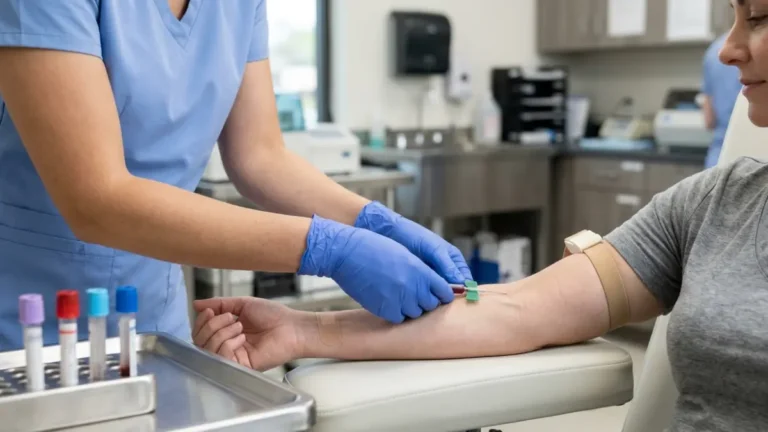
What a lipid panel measures is not what it reports: three values come from your blood, two come from arithmetic. Here is which is which.

Your lipid panel tested three things. The LDL number that drives most treatment decisions was worked out by software, not measured in your blood.

Blood pressure medication can move your potassium in opposite directions. The name on your bottle, not the words water pill, tells you which way.

How long BMP results take is set by the lab that ran them — and federal rules require an immediate alert to whoever ordered a critical value.

Ordering a BMP online without a doctor is one route. The other: ask the lab for a report you already paid for, usually sent within 30 days.

Why doctors order a BMP decides what the result means. CDC says a kidney check needs blood and urine, and a BMP carries only the blood half.

What affects BMP results isn't always illness — a 24-hour meat rule before a creatinine test and a clenched fist at the draw change what the lab measures.

Anion gap explained: two NIH-hosted references publish different normal ranges for the same calculation — and both are right. Here's why.