
On This Page – Quick Medical Summary
How long do BMP results take?
There is no single answer, and that is not a dodge — it is how the system is built. Federal laboratory rules assume each laboratory works to its own established time frames rather than to any national standard (42 CFR 493.1291). So the real answer for your BMP results sits with the specific lab that ran your sample, not with any website.
That answer is usually closer than it feels. For most people the result appears in a patient portal as soon as the laboratory finalises it, often before anyone phones — and the lab that performed the test is named on the report itself.
Where your blood was drawn changes the picture, so start there. Drawn during an emergency visit? That setting runs on its own priorities, and a BMP drawn in the emergency room is worth reading alongside this. Drawn at a clinic or a draw station? Your sample almost certainly travelled somewhere else to be tested. Ordered the panel yourself? Your result comes back through the service that placed the order.
A basic metabolic panel measures eight substances in your blood. This guide covers what happens between the needle and the number — for the results themselves, see what a basic metabolic panel measures.
ℹ️ Medical Disclaimer: This article explains laboratory process and federal reporting rules for general education. It does not diagnose any condition, interpret your individual results, recommend or adjust any medication, direct any procedure, or advise on insurance or billing. Turnaround times, result meanings, and any change to your care are decisions for the clinician who ordered your panel — contact that clinician, or emergency services if your symptoms are worsening, before acting on anything here.
What happens to your blood after the needle comes out
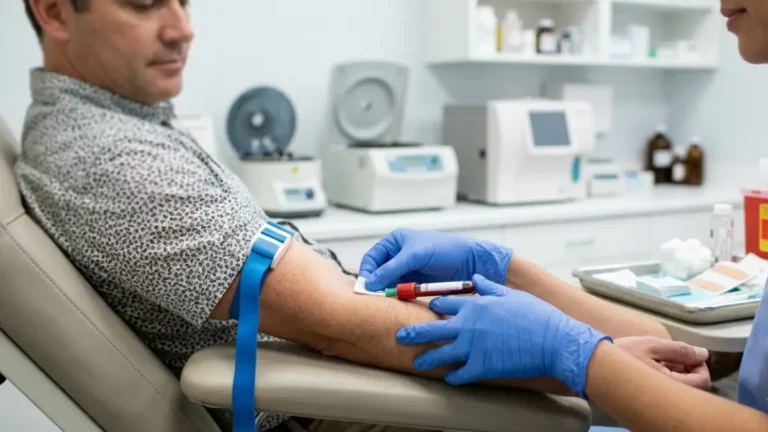
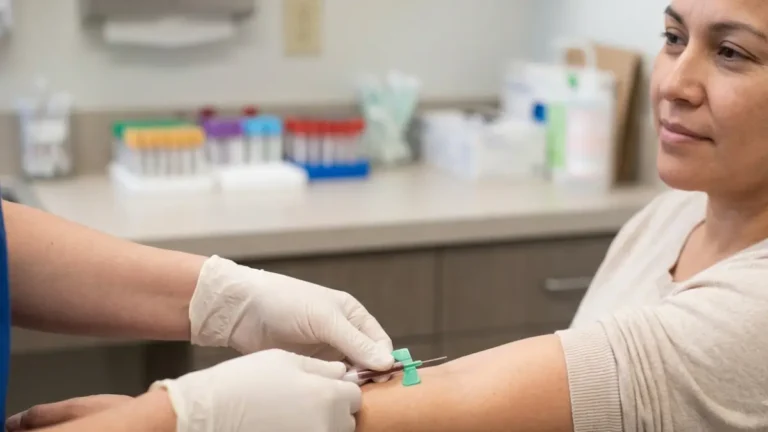
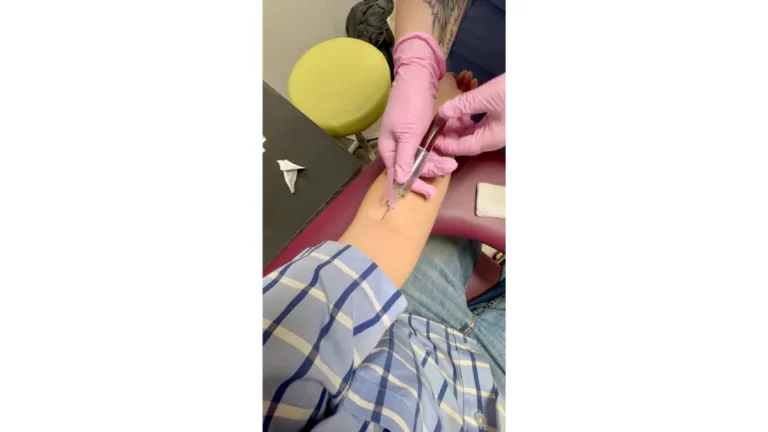
The part you actually experienced is the shortest part of the whole process. According to the National Library of Medicine’s description of the panel, a BMP is drawn from a vein in your arm and the blood draw usually takes less than five minutes.
Everything that determines when you see a number happens after you have left the chair.
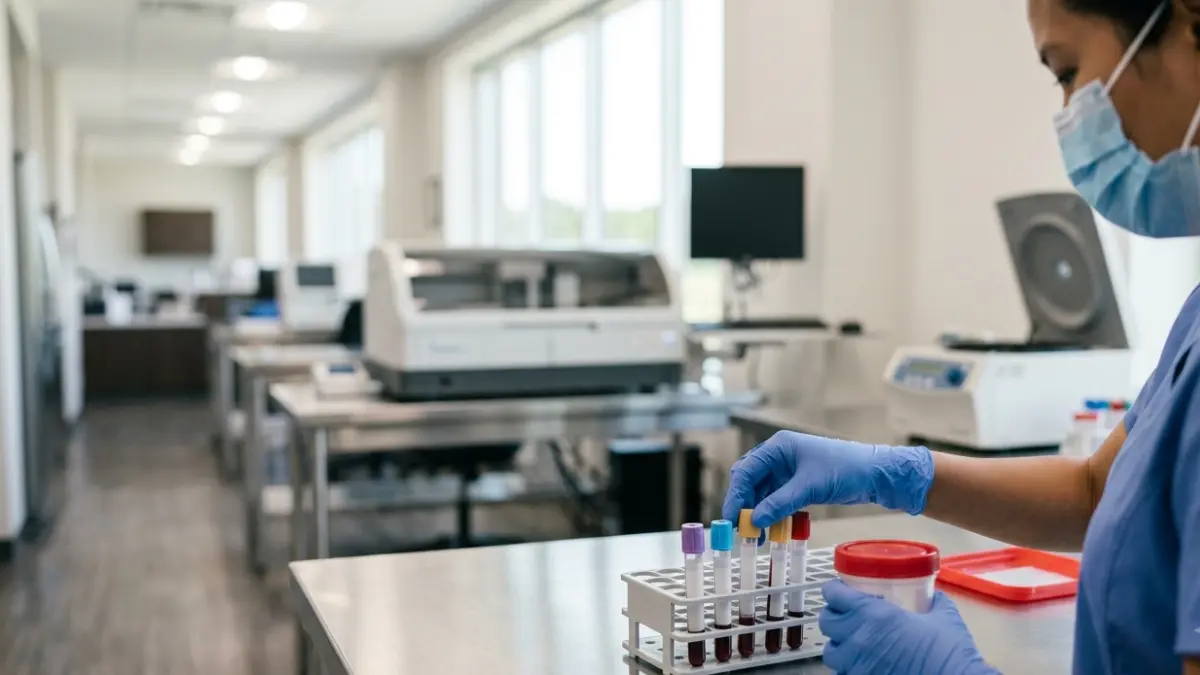
The draw is the shortest part of the process
Blood testing is one of the most common types of laboratory test, and the mechanics of how a blood sample is collected and handled are the same whether you were in an emergency department or a strip-mall draw station. A small amount of blood goes into a labelled tube. From that moment your sample is an object moving through a system.
If you were told to skip breakfast, fasting instructions belong to the accuracy of the result, not its speed.
The three stages your sample moves through
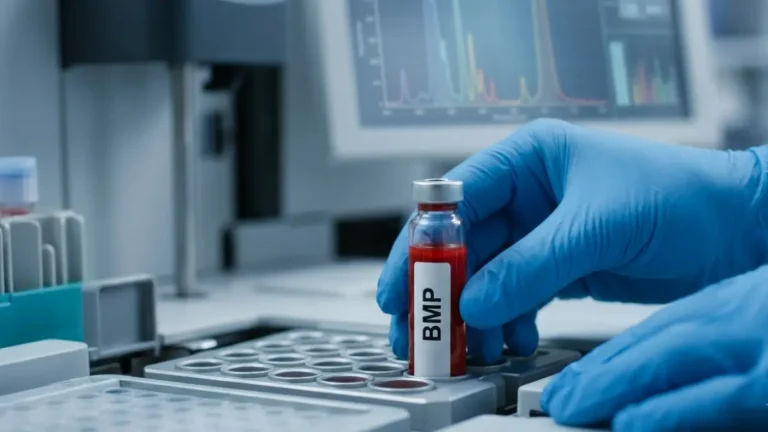
Clinical laboratories work in three named stages. The preanalytical stage is everything before the machine — identification, labelling, transport, and preparing the sample. The analytical stage is the measurement itself. The postanalytical stage covers verification, documentation and communication of the result.
That last stage matters more than most people realise. A number can exist inside a laboratory system before it exists anywhere you can see it.
Why the clock you are counting is not the clock the lab is running
You are counting from the needle. A laboratory counts from the moment it received your specimen and accepted it as usable. For an outpatient draw, transport sits between those two clocks, and it is invisible to you.
🔬 How It Works: Think of your tube as a parcel with three legs to its journey. Leg one is getting to the laboratory in a condition that can be tested — labelled correctly, kept within an acceptable temperature range. Leg two is the analyser measuring all eight substances. Leg three is a person or system checking that the numbers are plausible, then releasing them. Only leg two is “the test.”
Why no honest source gives one number — and where yours lives
Search this question and you will find confident ranges. Almost none of them cite anything, and there is a structural reason why: the federal rule governing laboratory test reports does not set a turnaround time. It instead requires that when a laboratory cannot report results within its established time frames, it must decide — based on how urgent the test was — whether to notify the appropriate people of the delay (42 CFR 493.1291(h)).
Federal law presumes each laboratory has its own time frames. A single national number for a basic metabolic panel cannot be correct, because no such number exists to be correct about.
What federal rules actually say about laboratory time frames
The same regulation is more useful than any range, because it says what your own paperwork must contain. A test report must state the name and address of the laboratory where the test was performed, and where one laboratory sends a specimen to another, the person who ordered the test must be told each laboratory that performed it (§ 493.1291(c), (i)).
Your report is a map of where your sample went.
Where your own answer is written down
Four places, in the order worth trying:
- Your patient portal. Many portals show a status for a pending order, not just finished results.
- The report itself, if any part has been released — it names the performing laboratory, whose time frames are the ones that apply to you.
- The office that ordered the panel. Ask which laboratory ran it, and whether it has been released.
- The collection site, if the draw happened somewhere other than the ordering office.
If you ordered the panel yourself, step three becomes the service that placed the order on your behalf. If your BMP was drawn alongside other tests as part of a wider round of blood work, each test on that slip can finish at a different time.
Why an emergency draw is not on the same clock as a clinic draw
Urgent testing is prioritised. The National Library of Medicine lists being treated in the emergency room among the standard reasons a BMP is ordered, and a panel drawn there is being used to make decisions in the room.
A routine outpatient panel is not competing for that priority, and usually is not run in the building you stood in. That is a difference in priority and distance, not a figure either of us can look up.
Why your results appeared before anyone called you
If numbers turned up in an app overnight with no message attached, nothing has gone wrong. This is the intended behaviour of a federal rule that changed patient portal access in 2021.
Under the information-blocking provisions of the 21st Century Cures Act, guidance from the Office of the National Coordinator for Health IT states that an organisational policy imposing delays on the release of lab results — for any period, so the ordering clinician can review them first — is likely to be considered interference, and that such a practice does not qualify for the rule’s Preventing Harm exception.

The rule that changed when patients see results
Before that guidance, many systems held results for a set period so a clinician could make contact first. Blanket holds of that kind are what the rule targets, and the practical effect is the one you experienced: release to you and to your clinician now tend to happen together.
What the rule does not do
This is where most coverage gets it wrong. The rule governs interference with access to information that already exists; it is not a speed rule. It does not require any laboratory to run your panel faster, and it does not promise every result appears the instant it is finalised — the guidance describes case-by-case assessment and defined exceptions.
Seeing your result sooner is a side effect of an access rule, not a new deadline for the laboratory.
Seeing a number is not the same as knowing what it means
The National Library of Medicine puts this plainly: even when you can see results in your electronic health record, it is still important to talk with your provider about what they mean for you. Its guidance on why seeing a result is not the same as understanding it adds that healthy people commonly fall outside a reference range, and that results cannot be compared between laboratories.
If you are already staring at values, the reference range printed beside each one and how to read the report itself will do more for you than refreshing the page.
What actually makes a BMP take longer
When a result runs late, the causes are usually logistical rather than ominous. A clinical reference published through the National Library of Medicine’s Bookshelf names the contributors to delayed or inaccurate laboratory results directly:
- Specimen collection problems, including hemolysis — red cells breaking and releasing their contents into the sample
- Transport delays, and samples not protected from extreme temperatures on the way
- Instrument malfunction or reagent instability at the analyser
- Transcription mistakes when results move between systems
- Contamination of the sample
None of those is a statement about your health. Each is a statement about a tube.
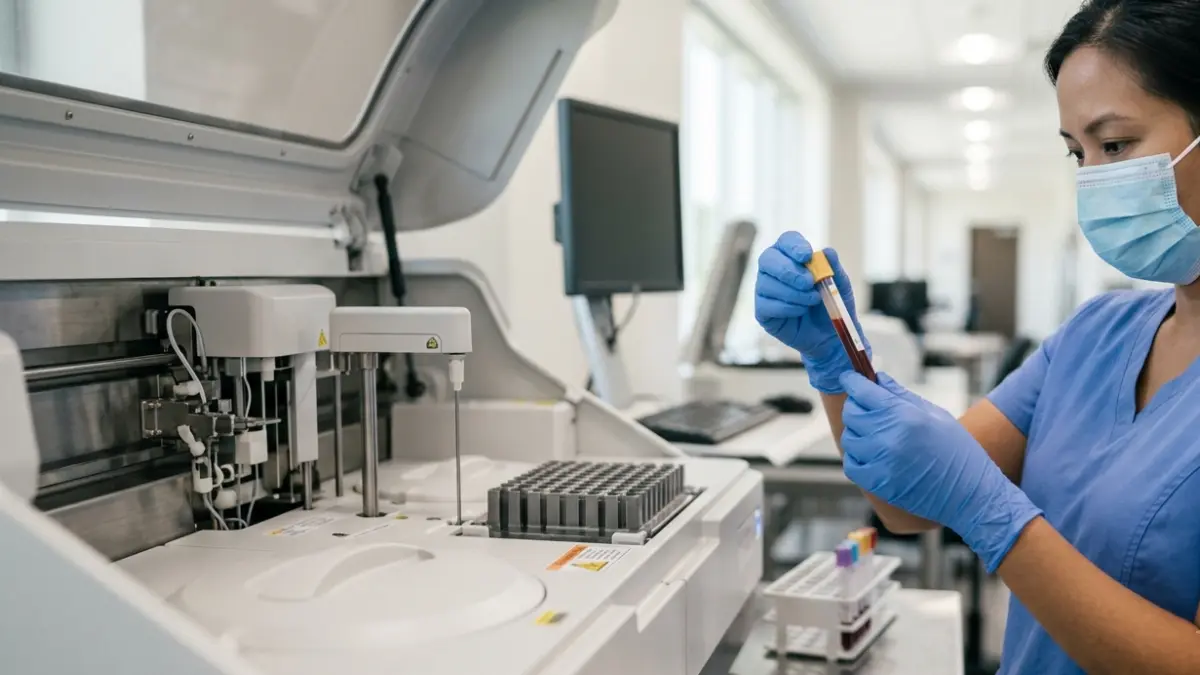
Problems with the sample itself
Federal reporting rules require a test report to note any information about specimens that did not meet the laboratory’s criteria for acceptability (§ 493.1291(c)). So a rejected sample is not a silent event — it should be visible on the paperwork.
Whether a value moved for a reason unrelated to timing is a separate question, covered in the things that move a BMP result.
When the lab needs to draw again
A repeat draw is the delay that frightens people most, and it is often about the sample rather than the patient. The National Library of Medicine notes on its potassium blood test page that repeatedly clenching and relaxing your fist just before or during a blood test may temporarily raise the potassium in your blood, leading to an incorrect result.
Clinical guidance describes the same mechanism from the other side: an apparently high potassium reading is frequently an artefact of collection — hemolysis, a tourniquet left on too long, repeated fist-pumping — and an unexplained elevation in someone without symptoms is confirmed before aggressive treatment is started.
That is genuinely reassuring, and it has a limit worth naming: sometimes a repeat confirms a real abnormality. When a laboratory repeats a test it is checking, not accusing.
Extra tests, send-outs, and corrected reports
Two more legitimate sources of delay. A clinician may add a test to a sample already at the laboratory, or the specimen may be referred elsewhere — and where that happens, the ordering person must be told each laboratory that performed testing (§ 493.1291(i)).
Finally, results can change after you have seen them. When errors in reported results are detected, the laboratory must promptly notify the person who ordered the test and issue a corrected report (§ 493.1291(k)).
✅ Patient Action: If your result is later than you expected, phone the office that ordered the panel and ask the person who answers two specific questions: was the sample repeated or rejected, and which laboratory is it with now.
Does a long wait mean bad news?
No — and the reason is better than reassurance. It is a rule about what a laboratory must do when it finds something dangerous.
What happens when a result is dangerous
Under 42 CFR 493.1291(g), a laboratory must immediately alert the individual or entity that requested the test when a result indicates an imminently life-threatening condition, or panic or alert values. Results in that category are not left sitting in a queue waiting for someone to notice them.
The same regulation adds two protections patients are rarely told about. A laboratory that cannot report within its own established time frames must judge, by urgency, whether to notify the appropriate people of the delay (§ 493.1291(h)); detected errors trigger prompt notification and a corrected report (§ 493.1291(k)).
What “no news” does and does not tell you
Here is the boundary, and it matters more than the comfort. That immediate-alert duty runs to the person or entity that requested the test — usually your clinician’s office, not you directly. It applies to imminently life-threatening, panic or alert values, not to every result that lands outside a reference range.
So silence makes it unlikely that a critical result is sitting unread somewhere. It is not the same claim as “your results are fine.” An out-of-range value that is not an emergency can wait for your next appointment — see what an out-of-range value can mean and the results that trigger an immediate phone call.
When to stop waiting and call
When the time frame the ordering office gave you has passed, call them. You do not need a reason beyond that, and you are not being a nuisance.
✅ Patient Action: Ask the clinician who ordered the panel one specific question: “Have my results been released, and is there anything on them you want to discuss before my next visit?”
When you should not wait for the result at all
Stop reading this page if you are getting sicker. A pending laboratory result is not a reason to delay care, and a basic metabolic panel is not a gatekeeper standing between you and being seen.

Symptoms do not wait for a laboratory
The National Library of Medicine lists general symptoms — including fatigue, confusion, breathing problems, and prolonged vomiting — among the reasons a BMP is ordered in the first place. If those are what is happening to you now, they are the reason to seek care, whether or not a number has come back.
Laboratory results are also only one input. Providers combine them with examination and history, and a clinician can act on how you look and what you describe before any result exists.
What to say when you call
Lead with the symptoms, not the pending test.
⚠️ Clinical Warning: New or worsening symptoms while a result is pending — confusion, difficulty breathing, chest pain, an irregular heartbeat, severe weakness, or vomiting you cannot stop — need assessment now, not after the laboratory reports. Contact emergency services or go to an emergency department. Do not wait for a portal notification, and do not assume that an unreleased result means nothing is wrong.
✅ Patient Action: If you call the ordering office while symptomatic, say this in your first sentence: “I had a basic metabolic panel drawn on [date], the result is not back, and these are the symptoms I have now.”
Common questions about waiting for BMP results
1. How long do BMP results take?
There is no single figure, because federal laboratory rules presume each laboratory sets its own established time frames rather than following a national standard. What determines your wait is the laboratory that ran the sample, the setting you were drawn in, and whether anything about the specimen needed repeating. The laboratory named on your report is the one whose time frames apply to you.
2. Why haven’t I heard anything about my blood test?
Silence usually reflects process rather than findings. Results are commonly released to a patient portal when the laboratory finalises them, and many offices contact patients only when something needs discussion or action. If the time frame you were given has passed, calling the office that ordered the panel is a reasonable next step rather than an imposition.
3. Do labs call you if your results are bad?
Federal rules require a laboratory to immediately alert the individual or entity that requested the test when a result indicates an imminently life-threatening condition, or panic or alert values. That alert goes to whoever ordered the test — usually your clinician’s office — not directly to you. Ask the clinician who ordered your panel how their office handles urgent results.
4. Why did my results appear in the app before my doctor said anything?
Guidance on the 21st Century Cures Act’s information-blocking provisions states that a blanket policy delaying release of lab results so the ordering clinician can review them first is likely to be considered interference. The practical effect is that release to you and to your clinician now tend to happen together. Seeing the numbers first is expected, not a mistake.
5. Does no news mean good news with blood tests?
Not exactly, and the distinction matters. The immediate-alert requirement covers imminently life-threatening, panic or alert values, and it runs to the person or entity that requested the test. Silence therefore makes it unlikely a critical result is sitting unread, but it is not confirmation that everything was normal. Ask the ordering clinician to confirm your results were reviewed.
6. Why would a lab need to draw my blood again?
Often because of the sample rather than the person. Repeatedly clenching and relaxing your fist during a draw can temporarily raise potassium and produce an incorrect result, and collection problems such as hemolysis are a frequent cause of an apparently abnormal reading. A repeat can also confirm a genuine abnormality, so ask the clinician who ordered the panel which result is being used.
7. Can a blood test result change after I have already seen it?
Yes. When errors in reported results are detected, the laboratory must promptly notify the person who ordered the test and issue a corrected report. This is uncommon, and it is a safety mechanism working rather than failing. If you see a corrected value and do not know which version applies, ask the ordering clinician to confirm the current result before acting on it.
8. Are results from the emergency room faster than results from a clinic?
Urgent testing is prioritised, and a panel drawn during an emergency visit is being used to make decisions while you are there. A routine outpatient sample is usually tested elsewhere and is not competing for that priority. The difference is real, but neither setting publishes a figure you can rely on — the laboratory named on your report holds the answer.
What to do while you wait
Two things are worth doing today, and neither involves refreshing a page.
Check your portal for a status on the pending order, not just for finished results. Then, if the time frame you were given has passed, call the office that ordered the panel and ask which laboratory has your sample and whether the result has been released.
When the numbers do arrive, the wait stops being the question and the report starts being the question. Your full guide to all 8 BMP results picks up from there.
About this content
How this article was put together: researched from recognised health sources, drafted with the help of AI tools, and edited by hand, with sources linked throughout.

Sameer Patel is the founder and editor of My Medicine Advisor. He is not a doctor or medical professional — before starting this site he worked in banking,…
Medical disclaimer
The content on MyMedicineAdvisor is provided for general informational and educational purposes only and is not a substitute for professional medical advice, diagnosis, or treatment. Health information on this website should not be used to diagnose, treat, cure, or prevent any condition without guidance from a qualified healthcare professional. Always seek the advice of your doctor, physician, or another licensed healthcare provider with any questions you may have regarding a medical condition, symptoms, medications, or treatment decisions.