
On This Page – Quick Medical Summary
Your BMP result can move for reasons that aren’t illness
A flagged number on a basic metabolic panel is not a diagnosis. Five things move these values: what you ate and drank, the medicines and supplements you take, how the sample was drawn, which laboratory measured it, and your own baseline.
A BMP measures eight substances, and your provider reads them alongside your symptoms, medical history and other tests, according to the National Library of Medicine’s page on what a basic metabolic panel measures. It is also common for healthy people to land outside a reference range. Nothing here interprets your report; the panel itself is covered in the eight values on a basic metabolic panel.
ℹ️ Medical Disclaimer: This is general education about laboratory variation. It does not diagnose any condition, interpret your results, adjust any medication, or replace your laboratory’s own reference ranges. Diagnosis, medication changes, repeat testing and treatment are decisions for a licensed clinician who has your history — a board-certified primary care physician, or the specialist managing the condition you are monitored for.
What you ate and drank before the draw
The most common reason a value shifts is the simplest: something was in your bloodstream that wouldn’t have been there after an overnight fast.

Fasting: what it actually protects
Nutrients from food are absorbed into your blood and may still be circulating at the draw, which is why fasting improves accuracy for certain tests. Your provider may ask you not to eat or drink for eight hours beforehand. Fasting means plain water only — not gum, not a cigarette, not a workout on the way to the lab.
Foods with a rule attached
Two specific instructions sit on the National Library of Medicine’s individual test pages, and almost no panel-level article collects them.
| Before the test | What it protects | Key clinical detail |
|---|---|---|
| No cooked meat for 24 hours | Creatinine | Meat can temporarily raise creatinine |
| No natural black licorice for 2 weeks | Potassium | May lower potassium; check the label |
| Water only during a fast | Glucose | Food nutrients in blood change results |
| Name every medicine and supplement | All eight | Medicines and supplements affect results |
| Say if you didn’t follow instructions | All eight | A minor change can have a big effect |
Sources: MedlinePlus Creatinine Test, Potassium Blood Test, and the National Library of Medicine’s guidance on preparing for a lab test.
Water: too little, and too much
Dehydration — from poor intake, diarrhea, or water pills — is a recognized reason sodium reads high, and less water in the body leaves blood sugar more concentrated. Drinking extra beforehand doesn’t improve a result; your fluid state that morning is part of what was measured.
Whether your draw needed fasting depends on why it was ordered, which we cover for BMP draws specifically and in the preparation guide for the larger metabolic panel. For general hydration, our water intake calculator sets a daily target.
Medicines and supplements that shift these numbers
Routine medications are a recognized reason BMP values move, and this is where the fix is a conversation rather than a decision you make alone.

Medicines and supplements that move these values
Diuretics — water pills — and some antibiotics appear among the reasons potassium reads high, while prescription diuretics also appear among the reasons it reads low. Low sodium is associated with certain medicines, including many over-the-counter pain relievers and some antidepressants. Certain medicines are likewise among the non-kidney reasons BUN comes back elevated.
Supplements belong on the same list. Certain prescription and over-the-counter medicines and supplements can raise potassium, and some medicines raise or lower blood glucose — taking one too close to a glucose test can change that result.
The one thing not to do before a test
Do not stop, skip or delay a medicine to make a number look better. The instruction is consistent across the National Library of Medicine’s test pages: tell your provider everything you take, and don’t stop anything unless your provider tells you to.
✅ Patient Action: Ask the clinician who prescribed your medicines — or your pharmacist — this: “Do any of my medicines or supplements affect these values, and should any of them be taken after the blood draw rather than before it?”
Which drug classes get watched with which markers is mapped in our guide to medication monitoring through metabolic panels.
How the blood draw itself can change a result
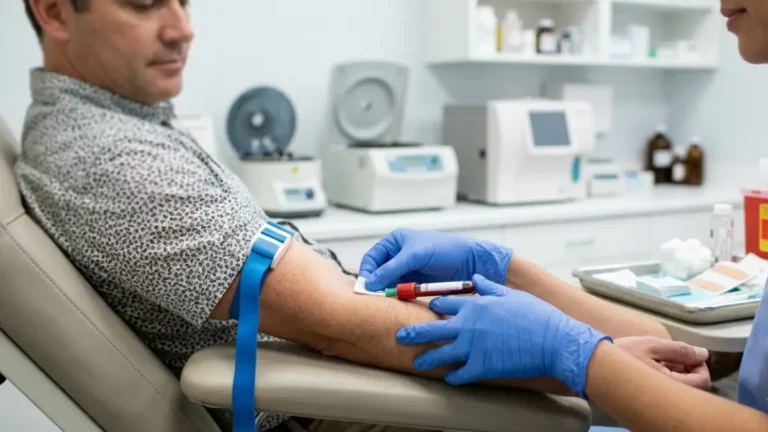
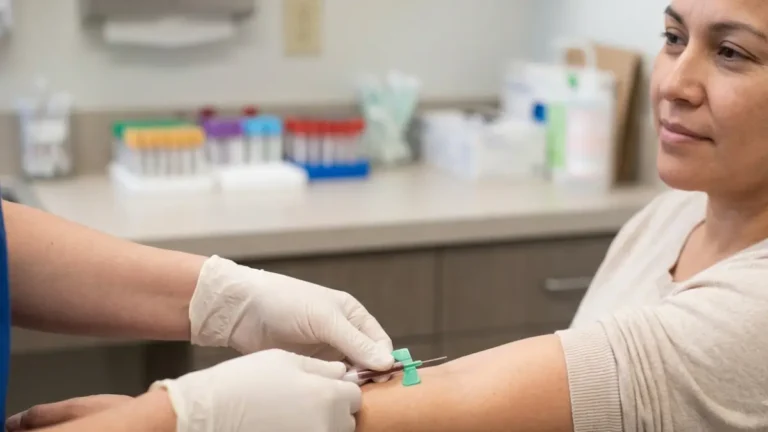
Yes — repeated clenching and relaxing of your fist just before or during a blood draw can temporarily raise the potassium measured in that sample and lead to an incorrect result.
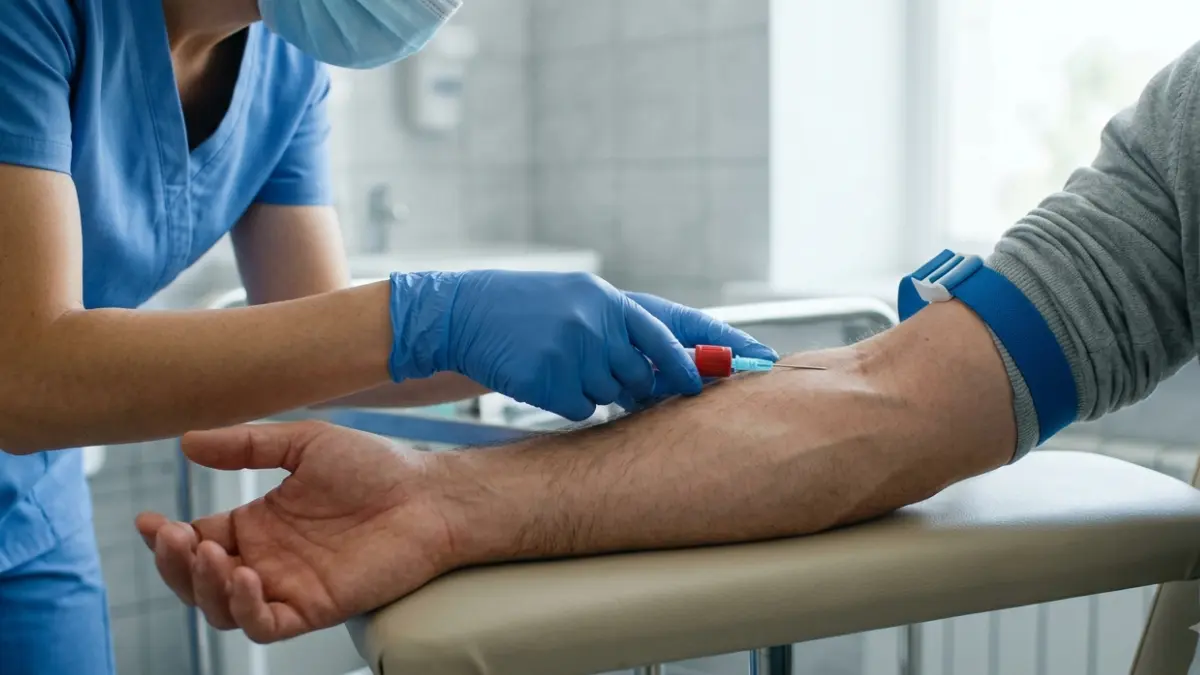
Fist pumping and the tourniquet
That statement comes directly from the National Library of Medicine’s potassium blood test page. Clinical reference material goes further: spuriously high potassium is the most common apparent cause of a high potassium reading, and prolonged tourniquet application and excessive fist-pumping are among its risk factors.
🔬 How It Works: Almost all of your body’s potassium sits inside cells, and only a small amount circulates in blood. Working the muscles of your forearm against a tightened tourniquet pushes potassium out of those cells and into the sample. The number is real — but it describes the tube, not your bloodstream.
When the sample is damaged on the way to the lab
Red blood cells damaged during collection release potassium into the sample, producing the same falsely raised reading. A difficult draw is worth mentioning to whoever ordered the test.
What happens when a result looks impossible
Because spuriously high potassium is common, an unexplained elevation in someone without symptoms is confirmed before aggressive treatment begins. That describes how clinicians handle a surprising number — it is not a reason to dismiss one. What a genuinely high result can mean is covered in what a high potassium result can mean.
Why the same blood can give two different numbers
Because laboratories often use different testing methods, they often use different reference ranges — which is why results can look different at a different lab even when nothing about you has changed.

Different labs, different reference ranges
The consequences are set out in the National Library of Medicine’s guidance on how reference ranges are set and why they differ: check the range printed on your own report rather than one found elsewhere, and use the same laboratory when you want to follow a trend. Results are also reported in different units, which makes two reports look further apart than they are.
Why you can’t compare two labs’ reports
You cannot compare test results from different labs. That is why this article prints no range chart — any number here would be the wrong number for someone reading it.
Two points belong together: it is common for healthy people to sometimes have a result outside the range, and a result inside the range isn’t a guarantee of good health. How the ranges are built is covered in how BMP reference ranges are set, and the meaning of a flagged value in what an abnormal BMP value can mean.
What’s normal for your body, not the average body
A reference range describes a population. Creatinine is the BMP value where that gap shows up most clearly.
Muscle, age and activity change creatinine
People produce different amounts of creatinine depending on how much muscle they have, the foods they eat, their age and how active they are, according to the National Library of Medicine’s creatinine test page. High creatinine doesn’t always signal a kidney problem — dehydration, muscle injuries, intense exercise and a diet high in meat are all on the list. Low creatinine can reflect muscle loss from aging or a long illness.
🔬 How It Works: Creatinine is a waste product formed as muscle tissue breaks down during normal use. More muscle means more creatinine produced each day, so a heavily built person and a frail person can both be healthy at very different numbers.
Why exercise before a test matters
Exercising hard beforehand is one of the common factors that can affect accuracy. BUN behaves similarly: levels vary by sex and usually increase with age. If you’re healthy, creatinine is usually fairly stable over time — which makes your own trend more informative than the population band. The non-kidney reasons it runs high are covered in what pushes creatinine up.
When “something I ate” is the wrong explanation
Everything above explains how a number can move. None of it clears a result.
What a factor can and can’t explain
A single abnormal creatinine can’t diagnose a specific condition, and retesting or other tests are the likely next step. The reverse also holds: a normal creatinine doesn’t always mean healthy kidneys, because levels can stay in the normal range in early kidney disease.
⚠️ Clinical Warning: A plausible innocent explanation is not a reason to skip the appointment. If a flagged result comes with symptoms — confusion, weakness, breathing difficulty, or vomiting that won’t stop — that combination belongs to a clinician now, not to a checklist. Do not stop any medication to change a future result.
Signs that need a call, not an explanation
Some results prompt an immediate call from the laboratory rather than routine follow-up; which ones and why is covered in the results that trigger an urgent call.
What a repeat test settles
A repeat draw, prepared for properly, separates a one-off from a pattern — the same logic applies when a blood count result looks wrong and gets rechecked.
✅ Patient Action: Ask the clinician who ordered the test: “Should this be repeated, and is there anything in my preparation, my medicines, or how the sample was taken that could explain it?”
What affects BMP results: common questions
1. Do you have to fast for a BMP?
Sometimes. Your provider may ask you not to eat or drink for eight hours beforehand, because nutrients from food are absorbed into your blood and can still be circulating at the draw. Fasting means plain water only — no gum, smoking or exercise. Whether your draw needs it depends on why it was ordered.
2. Can eating meat raise creatinine?
Yes. Meat can temporarily increase creatinine, which is why some people are told not to eat meat for 24 hours before a creatinine test. If you ate steak the night before a draw and creatinine came back flagged, mention it to your provider rather than assuming either explanation is right.
3. Can clenching your fist raise potassium?
Yes. Repeated clenching and relaxing of your fist just before or during a blood draw may temporarily increase the potassium measured in that sample and lead to an incorrect result. Prolonged tourniquet time carries the same risk, which is one reason a surprising potassium result gets confirmed rather than acted on.
4. Can my medicines change BMP results?
Yes — this is one of the recognized causes. Diuretics and some antibiotics appear among the reasons potassium reads high; certain over-the-counter pain relievers and some antidepressants are associated with low sodium. Never stop or delay a medicine to change a number; ask your prescribing clinician or pharmacist what affects your values.
5. Why don’t my results match my last test?
Laboratories often use different testing methods, so they often use different reference ranges, and results can be reported in different units. You can’t compare results from two labs directly. To follow a trend over time, use the same laboratory, and read the range printed on your own report.
What to check before your next blood draw
Two things carry over. First, the question worth asking: whether the result should be repeated, and whether anything in your preparation, your medicines, or the draw itself could explain it.
Second, the habit worth changing: give the lab an honest account of what you ate, drank and took, and say so if you didn’t follow the instructions exactly. Even a minor change can have a big effect, and the person reading your report can only account for what they know about.
For the full picture of the panel these eight values sit in, start with the complete BMP guide.
About this content
How this article was put together: researched from recognised health sources, drafted with the help of AI tools, and edited by hand, with sources linked throughout.

Sameer Patel is the founder and editor of My Medicine Advisor. He is not a doctor or medical professional — before starting this site he worked in banking,…
Medical disclaimer
The content on MyMedicineAdvisor is provided for general informational and educational purposes only and is not a substitute for professional medical advice, diagnosis, or treatment. Health information on this website should not be used to diagnose, treat, cure, or prevent any condition without guidance from a qualified healthcare professional. Always seek the advice of your doctor, physician, or another licensed healthcare provider with any questions you may have regarding a medical condition, symptoms, medications, or treatment decisions.