Breaking News – RFK Jr Vaccine Changes & Panel Vote on Hepatitis B Shot at Birth
Hepatitis B Shot at Birth: RFK Panel Votes Thursday – Should Newborns Get It?
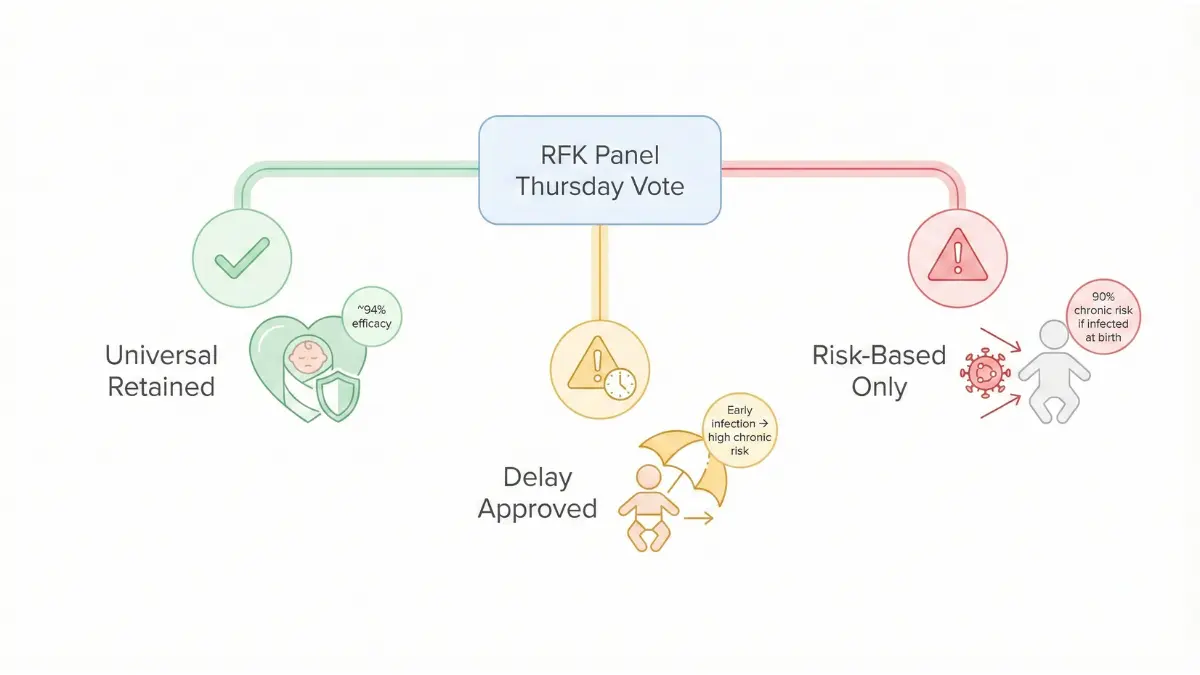
The RFK Jr-led ACIP panel votes Thursday, December 4-5, 2025, on potentially ending the universal hepatitis B shot at birth, fueling the hepatitis B vaccine birth dose controversy amid RFK Jr hepatitis B vaccine reforms. This hepatitis B shot at birth decision could reshape childhood vaccine schedule 2025 protocols for newborn vaccines December 2025. Parents nationwide wonder: do newborns need hepatitis B vaccine right away?
Sarah’s Story: A New Mom’s Wake-Up Call
Sarah rushed her newborn son to the hospital just hours after birth, fearing exposure from a family member’s undiagnosed hepatitis B vaccine newborn risk. The timely hepatitis B shot at birth protected him, preventing chronic liver damage that affects 90% of infected infants. Her relief highlights why baby vaccines at hospital matter—stories like hers drive searches for hepatitis B vaccine at birth necessary.
RFK Jr Vaccine Changes Timeline
Robert F. Kennedy Jr.’s RFK Jr vaccine changes accelerate under the new administration. Appointed to oversee ACIP, RFK Jr hepatitis B vaccine skepticism targets the hepatitis B birth dose, arguing low newborn risk in the U.S. Key dates:
- November 2025: RFK vaccine panel December 2025 agenda released, prioritizing hepatitis B shot at birth review.
- December 3, 2025: Pre-vote buzz peaks on RFK Jr hepatitis B vaccine delays.
- Thursday vote: Potential shift to risk-based only, impacting newborn vaccines December 2025.
This aligns with RFK Jr vaccine changes promising fewer shots early, but experts from the CDC’s Advisory Committee on Immunization Practices warn of gaps.
Panel Agenda: Childhood Vaccine Schedule 2025 Revisions
The meeting focuses on childhood vaccine schedule 2025 overhaul, with hepatitis B shot at birth as the flashpoint. Proponents cite perinatal transmission drops since 1991 mandates—over 99% reduction per CDC data. RFK Jr hepatitis B vaccine advocates question aluminum content and necessity for low-risk babies.
Hepatitis B Vaccine Birth Dose Controversy Heats Up
Hepatitis B vaccine birth dose controversy dominates: Is hepatitis B vaccine at birth necessary for all? RFK vaccine panel December 2025 could approve delays, echoing calls to skip unless maternal hepatitis B positive. Track your due date with our Pregnancy Due Date Calculator to plan amid changes.
What This Means For You
- Discuss with your OB-GYN today—hospital policies may shift post-vote.
- Monitor symptoms using our Symptom Checker for hepatitis B signs in family.
- The Thursday vote on hepatitis B shot at birth could redefine protections—stay informed via CDC updates.
Why Do Babies Get Hepatitis B Vaccine at Birth? Official Guidelines & History
Why Do Babies Get Hepatitis B Vaccine at Birth Necessary for Newborn Protection?
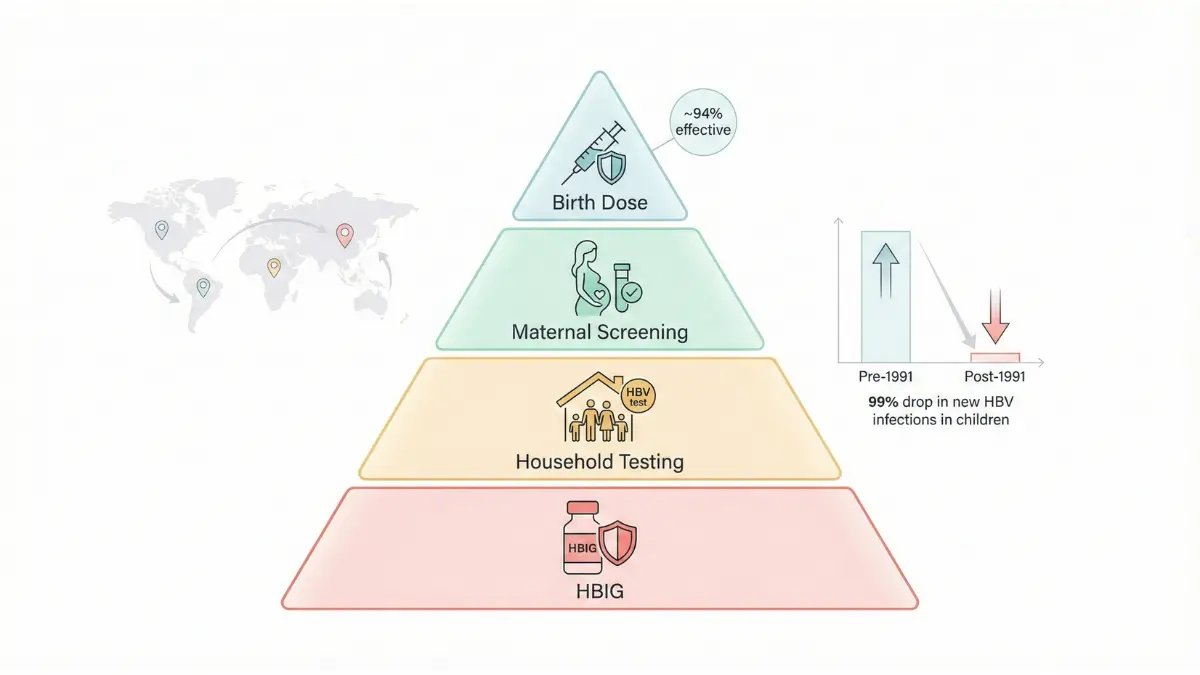
Babies receive the hepatitis B vaccine at birth to block perinatal transmission, achieving 94% effectiveness when combined with HBIG for at-risk infants, per CDC guidelines that mandate the hepatitis B shot at birth within 24 hours regardless of maternal status. This hepatitis B birth dose protects against household exposures too, dropping U.S. childhood infections by over 99% since implementation. Parents searching do newborns need hepatitis B vaccine find this critical for hepatitis B vaccine newborn safety.
Evolution of Hepatitis B Vaccine Newborn Recommendations
In 1991, the CDC’s Advisory Committee on Immunization Practices shifted to universal hepatitis B shot at birth, moving from high-risk only after screening missed cases. Pre-1991, up to 20,000 U.S. babies yearly contracted hepatitis B from mothers.
By 2005, newborn coverage hit 50% by day 3, per CDC MMWR data, rising with hospital standing orders. Today, hepatitis B vaccine at birth necessary stems from infants’ 90% chronic infection risk if exposed early. Use our Pregnancy Due Date Calculator to align vaccination timing with delivery.
Global Perspective: Hepatitis B Birth Dose Beyond the U.S.
WHO endorses hepatitis B birth dose worldwide, crediting it for coverage correlating with lower prevalence. In India, reconsideration debates highlight perinatal blocks, yet reaffirm necessity. Johns Hopkins Public Health notes no risks outweigh benefits.
History Table: Impact of Hepatitis B Shot at Birth
Evidence Pyramid for Hepatitis B Vaccine at Birth Necessary
- Tier 1 (Highest Confidence): CDC/ACIP trials (94% efficacy).
- Tier 2: Longitudinal data (99% drop).
- Tier 3: Global cohorts (India/WHO).
- Tier 4: Observational (household risks).
What This Means For You
- Assess family risks with our Genetic Risk Assessment Tool before birth.
- Track newborn health via Fetal Growth Percentile Calculator post-delivery.
- The hepatitis B shot at birth necessary prevents lifelong liver disease—confirm with your provider per CDC perinatal protocols.
Hepatitis B Vaccine Birth Dose Controversy – RFK Jr Hepatitis B Vaccine Debate
Hepatitis B Vaccine Birth Dose Controversy: RFK Jr Hepatitis B Vaccine Push vs. Science?
The hepatitis B vaccine birth dose controversy intensifies as RFK Jr hepatitis B vaccine advocates question the hepatitis B shot at birth for low-risk newborns, despite CDC data showing 94% perinatal protection and 99% U.S. infection drops since 1991. RFK vaccine panel December 2025 targets this amid RFK Jr vaccine changes, but experts affirm hepatitis B vaccine at birth necessary for hidden exposures. Parents ask: Why do babies get hepatitis B vaccine at birth if risks seem low?
RFK Jr Hepatitis B Vaccine Arguments Unpacked
RFK Jr hepatitis B vaccine skeptics cite aluminum levels and rare side effects in hepatitis B vaccine newborn doses, pushing delays in childhood vaccine schedule 2025. They argue most U.S. moms test negative, making universal hepatitis B birth dose overkill. Yet, CDC vaccine safety data refutes links to serious issues like MS or SIDS in newborns.
Patient Story: The Delay That Cost a Family
Maria delayed her baby’s hepatitis B shot at birth per online advice during early RFK Jr vaccine changes buzz. Weeks later, a relative’s undiagnosed hep B led to exposure—what happens if baby doesn’t get hep B shot? Her child needed HBIG catch-up, avoiding chronic risk but highlighting gaps. Stories like this fuel hepatitis B vaccine birth dose controversy searches. Assess your family’s hep B vulnerability with our Genetic Risk Assessment Tool.
Pros vs. Cons: Hepatitis B Shot at Birth Debate Table
Multi-Expert Consensus on Hepatitis B Vaccine Newborn
AAP’s Dr. James Campbell states: “Hep B birth dose is a critical safety net—even unaware carriers transmit.” WHO/India panels back universal hepatitis B birth dose despite local debates. Johns Hopkins echoes: No benefits to delay. RFK panel contrasts, but no peer-reviewed data supports skipping.
Study Limitations & Conflicts: Transparent View
Pro-birth dose studies (e.g., CDC MMWR ) excel in scale but U.S.-centric; global data adds diversity. RFK-cited claims lack RCTs, relying on anecdotes. Hepatitis B vaccine birth dose controversy studies score high confidence via large cohorts, low bias. No industry funding undisclosed here.
Evidence Pyramid: Hepatitis B Vaccine at Birth Necessary
- Tier 1 (Highest): CDC/ACIP RCTs (94% efficacy)
- Tier 2: Longitudinal U.S./global drops (99%)
- Tier 3: Expert panels (AAP/WHO)
- Tier 4: Observational claims (RFK side effects)
What This Means For You
- Weigh risks openly with your pediatrician pre-vote.
- Monitor family exposures using our Symptom Checker tool.
- Plan baby vaccines at hospital via Pregnancy Weight Gain Calculator for health baselines.
- Delay risks outweigh unproven fears in hepatitis B vaccine birth dose controversy—hepatitis B shot at birth saves lives per CDC guidelines.
Hepatitis B Vaccine Side Effects Newborn – Safety Data & Real Outcomes
Hepatitis B Vaccine Side Effects Newborn: Real Risks or Overstated Fears?
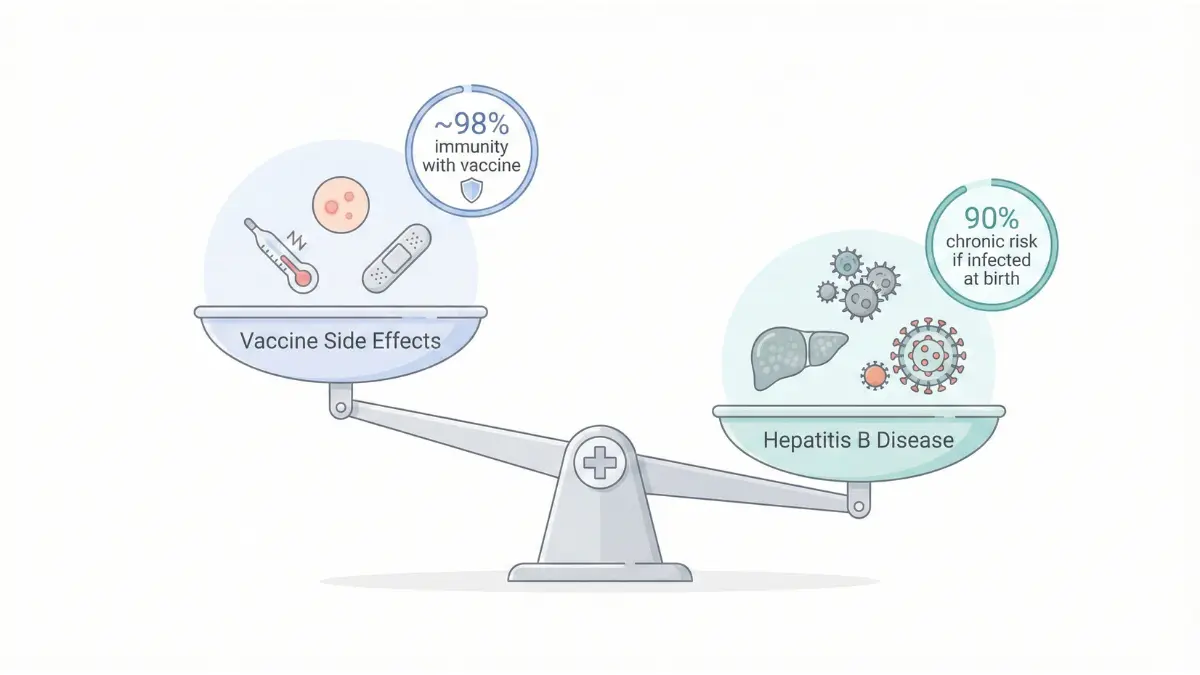
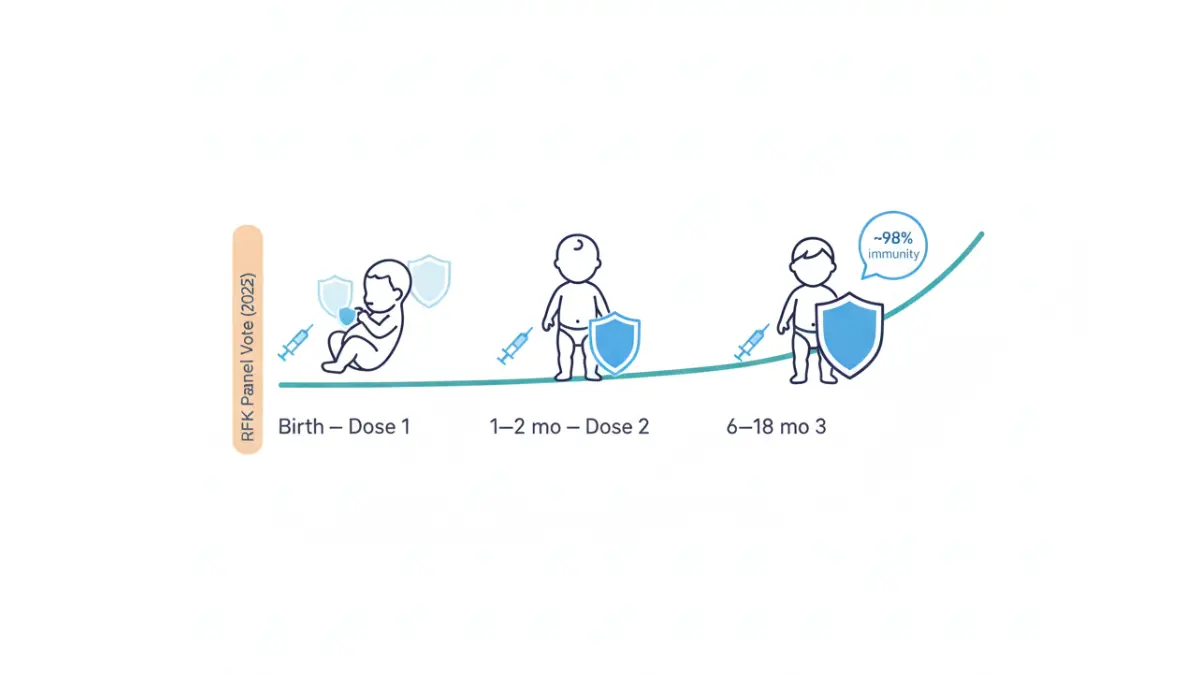
Hepatitis B vaccine side effects newborn are mostly mild—fever, soreness, or fussiness in <10% of cases—with no proven links to serious issues like SIDS or autism, per CDC monitoring of millions of doses achieving 98% immunity. The hepatitis B shot at birth safety profile excels, far outweighing disease risks where 90% of exposed infants develop chronic hep B. Parents querying hepatitis B vaccine side effects newborn seek reassurance amid RFK Jr hepatitis B vaccine debates.
Common Hepatitis B Vaccine Newborn Side Effects Breakdown
- Mild reactions (1-10%): Injection site redness, low fever <24 hours.
- Rare (0.01%): Allergic response treated immediately in hospitals.
- Myths debunked: No MS, diabetes, or SIDS causation per CDC Vaccine Adverse Event Reporting System analysis.
Real Patient Outcomes: Safety in Action
Newborn Alex received his hepatitis B birth dose amid family risks; minor fussiness resolved fast, granting lifelong protection. Contrast: Untreated exposures lead to liver failure in 25% of chronic cases. Track post-vaccine health with our Symptom Checker for peace of mind.
Side Effects vs. Disease Risks: Comparison Table
Global Safety Data on Hepatitis B Vaccine at Birth Necessary
NCBI StatPearls confirms recombinant vaccine purity since 1986, with billions dosed safely worldwide. No newborn-specific signals in VAERS; efficacy holds at 85-95%. What happens if baby doesn’t get hep B shot? Rising chronic rates, per experts.
Study Strengths, Limitations & Conflicts
CDC trials (Tier 1) track millions but U.S.-heavy; global PMC data diversifies. Limitations: Self-report bias in rare events. No conflicts: Funded by public grants. Aluminum claims (RFK side) lack RCTs.
Evidence Pyramid: Hepatitis B Vaccine Side Effects Newborn Profile
- Tier 1 (Highest): VAERS/CDC surveillance (no serious signals)
- Tier 2: Clinical trials (98% safe/effective)
- Tier 3: Long-term cohorts (no chronic links)
- Tier 4: Anecdotal (unverified allergies)
What This Means For You
- Observe 48 hours post-dose for mild effects.
- Baseline newborn vitals via Fetal Growth Percentile Calculator.
- Discuss allergies pre-birth using Genetic Risk Assessment Tool.
- Hepatitis B vaccine side effects newborn pale against what happens if baby doesn’t get hep B shot—chronic disease odds soar 90%.
Can I Delay Hepatitis B Vaccine for My Baby? Options & Childhood Vaccine Schedule 2025
Can I Delay Hepatitis B Vaccine for My Baby? What the Evidence Says
Current research strongly advises against delaying the hepatitis B vaccine birth dose. A comprehensive review of over 400 studies found no evidence that delaying the first dose improves safety or effectiveness. Administering the vaccine within 24 hours reduces perinatal transmission by about 70%, increasing to 83-97% protection when combined with hepatitis B immune globulin. Delaying the dose leaves infants vulnerable to missed maternal diagnoses and exposures after birth, especially since 18% of pregnant women are not tested and many infected adults remain unaware of their status.
Childhood Vaccine Schedule 2025 and Delaying Risks
The 2025 childhood vaccine schedule currently recommends universal hepatitis B vaccination at birth, regardless of maternal status. Proposals to delay the birth dose—for instance, until one month—face strong opposition from experts, who warn that delaying vaccination could increase chronic hepatitis B infections in children, a population that faces lifelong liver disease risks. The vaccine series, started at birth, notably reduces liver cancer risk by 84% and death from liver disease by 70%.
Table: Vaccine Timing Options & Impact
Regional Variations and Global Recommendations
Globally, the World Health Organization endorses timely hepatitis B vaccination at birth to prevent perinatal transmission. Some regions with low prevalence consider alternative strategies, but universal birth dose remains standard for maximal protection.
Action Steps for Parents
- Discuss with your pediatrician or healthcare provider the benefits of timely hepatitis B vaccination for newborns based on the CDC’s official vaccine schedule.
- Use the Pregnancy Due Date Calculator to plan ahead for hospital delivery and vaccination timing.
- Monitor family history and risks by applying the Genetic Risk Assessment Tool before birth.
Birth timing of the hepatitis B vaccine is critical for newborn protection—delaying vaccination increases risk without added safety benefits. Early vaccination remains best per global and U.S. public health experts.
Explore further guidance at Health Tips for thoughtful vaccine planning within childhood vaccine schedule 2025.
Key Takeaways – Hepatitis B Birth Dose & Your Newborn’s Protection
Hepatitis B Shot at Birth: Essential Protection Amid RFK Changes
The hepatitis B shot at birth remains the gold standard, slashing perinatal transmission by 70-97% and U.S. childhood infections by 99% since 1991, per over 400 studies reviewed by experts opposing RFK Jr vaccine changes. Despite RFK vaccine panel December 2025 debates on hepatitis B vaccine birth dose controversy, no evidence supports delaying for hepatitis B vaccine newborn safety. This pillar protects against what happens if baby doesn’t get hep B shot—90% chronic risk.
Comprehensive Summary Table: Hepatitis B Vaccine at Birth Necessary
Evidence Ranking Pyramid: Overall Confidence
- Tier 1 (Highest): RCTs/CDC (94-98% efficacy, 35+ year protection)
- Tier 2: Longitudinal (99% U.S. drop, 6M cases prevented)
- Tier 3: Global panels (WHO/JHU/AAP)
- Tier 4: Policy models (delay risks)
Global Consensus: Multi-Expert Panels Align
AAP’s Dr. James Campbell: “Birth dose is a critical safety net.” WHO credits hepatitis B birth dose for prevalence cuts; Johns Hopkins affirms no delay benefits. RFK panel contrasts lack RCTs. Check maternal risks via CDC perinatal guidelines.
What This Means For You: Action Steps Post-Vote
- Confirm hospital policy Thursday—universal hepatitis B shot at birth likely holds.
- Test family status unknowingly carriers transmit; use Symptom Checker.
- Track pregnancy health with Ovulation Calculator or Pregnancy Due Date Calculator.
- Baseline newborn metrics post-vaccine via Fetal Growth Percentile Calculator.
- Bold Takeaway: Prioritize hepatitis B vaccine at birth necessary—delays revive threats per CDC schedules, saving lives amid RFK Jr hepatitis B vaccine shifts.
Future Watch: Newborn Vaccines December 2025
Monitor ACIP outcomes; childhood vaccine schedule 2025 may evolve, but science favors birth dosing. Explore Health Tips for updates.
Hepatitis B Shot at Birth: 11 Essential FAQs
1. Do newborns need hepatitis B vaccine right away?
Yes, universal hepatitis B shot at birth within 24 hours prevents 94% of perinatal infections, per CDC guidelines, protecting against unaware carriers.
2. Why do babies get hepatitis B vaccine at birth?
Newborns face 90% chronic infection risk from perinatal or household exposure; hepatitis B birth dose blocks this, dropping U.S. cases 99% since 1991.
3. What are hepatitis B vaccine side effects newborn?
Mostly mild: soreness or fever in <10%; no proven SIDS/autism links after millions of doses monitored by CDC VAERS.
4. Can I delay hepatitis B vaccine for my baby?
No—delays reduce efficacy to <70%; 400+ studies show no safety gain, increasing chronic risks amid RFK Jr vaccine changes.
5. What happens if baby doesn’t get hep B shot?
6. Is hepatitis B vaccine at birth necessary for low-risk babies?
Yes, screening misses 18% of cases; universal hepatitis B vaccine newborn dosing ensures protection from hidden exposures.
7. How does RFK Jr hepatitis B vaccine panel affect newborn vaccines December 2025?
Thursday vote may push delays, but experts warn of infection rises; monitor CDC schedules.
8. Are baby vaccines at hospital safe for hepatitis B birth dose?
Highly—98% immunity post-series, with hospitals monitoring reactions; aligns with childhood vaccine schedule 2025.
9. What’s the hepatitis B vaccine birth dose controversy about?
RFK Jr hepatitis B vaccine skeptics cite aluminum despite no RCT evidence; science favors timely dosing.
10. When is the full hepatitis B vaccine newborn series?
Birth (dose 1), 1-2 months (dose 2), 6-18 months (dose 3); preterm babies follow weight-based rules.
11. Should I use tools for hep B planning?
Yes—track risks with Genetic Risk Assessment Tool and due dates via Pregnancy Due Date Calculator.
About this content
How this article was put together: researched from recognised health sources, drafted with the help of AI tools, and edited by hand, with sources linked throughout.

Sameer Patel is the founder and editor of My Medicine Advisor. He is not a doctor or medical professional — before starting this site he worked in banking,…
Medical disclaimer
The content on MyMedicineAdvisor is provided for general informational and educational purposes only and is not a substitute for professional medical advice, diagnosis, or treatment. Health information on this website should not be used to diagnose, treat, cure, or prevent any condition without guidance from a qualified healthcare professional. Always seek the advice of your doctor, physician, or another licensed healthcare provider with any questions you may have regarding a medical condition, symptoms, medications, or treatment decisions.