

On This Page – Quick Medical Summary
Acupuncture is a traditional Chinese medicine therapy that inserts ultra-thin, sterile needles into precise points on the body to stimulate the nervous system, trigger the release of natural painkillers, and restore physical balance — and a landmark analysis of over 21,000 patients now proves it works for chronic pain beyond placebo.
What You’ll Learn in This Article
- What acupuncture actually does to your nervous system
- The 10 conditions with the strongest scientific evidence
- Exactly how many sessions you need — by condition
- Whether acupuncture is safe, who should avoid it, and how it compares to dry needling
- Real 2026 costs, insurance coverage, and how to find a qualified practitioner
- The AI-powered future of acupuncture treatment
One Patient’s Story — and Why 21,000 Others Changed the Debate
Marcus, a 44-year-old warehouse supervisor from Ohio, had lived with chronic lower back pain for six years. He had tried physical therapy, two rounds of prescription NSAIDs, and a cortisone injection — none delivered lasting relief. His pain score hovered at 7 out of 10 on most workdays.
After eight acupuncture sessions over ten weeks, his pain score dropped to 2 out of 10. He resumed hiking. His sleep improved.
Marcus isn’t an outlier.
A landmark meta-analysis published in The Journal of Pain — pooling data from 39 high-quality randomized controlled trials involving 21,000 patients — found that true acupuncture significantly outperformed both sham acupuncture and no treatment for chronic pain, with benefits lasting over 12 months. This wasn’t a small pilot study. This was the largest acupuncture efficacy analysis ever conducted.
💡 Key Finding: Acupuncture outperformed sham procedures across back pain, neck pain, osteoarthritis, and chronic headache — proving its effects are real, not just placebo.
If you’re dealing with chronic pain, persistent headaches, anxiety, or fertility concerns, this guide breaks down exactly what acupuncture can — and cannot — do for you. Not sure whether your symptoms align with acupuncture’s evidence base? You can map your condition using our Symptom Checker before your first consultation.
What Is Acupuncture? The Science Behind the Needles
The Traditional Chinese Medicine Explanation
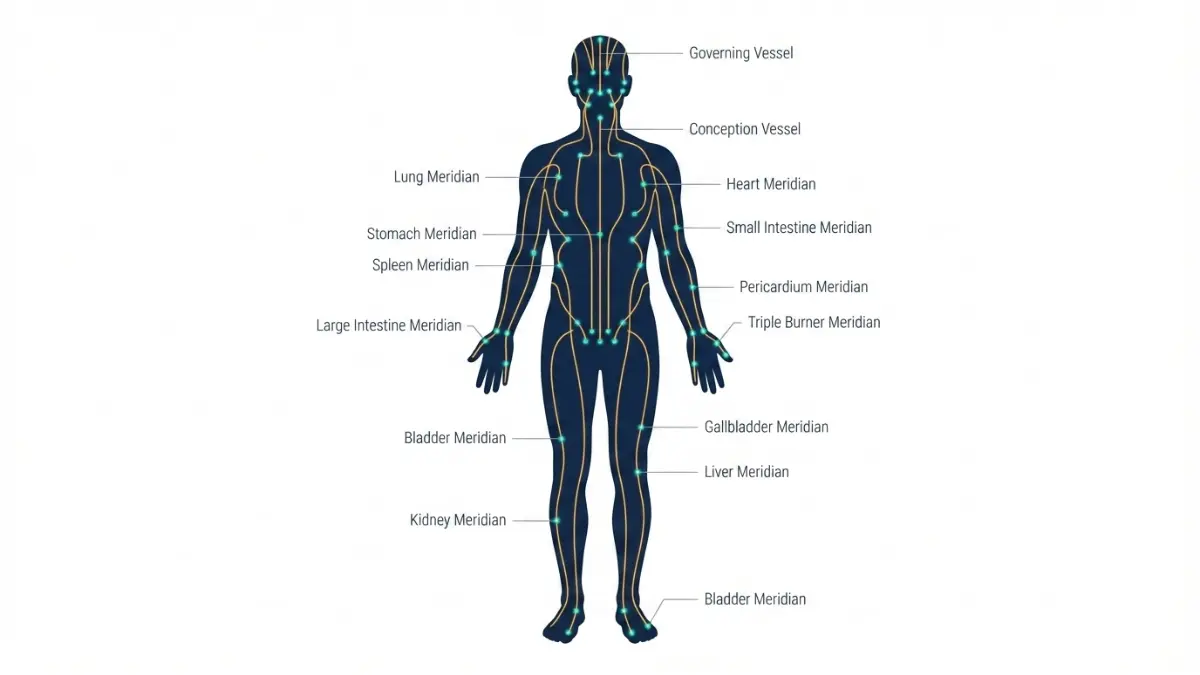
Acupuncture originates from Traditional Chinese Medicine (TCM), a healthcare system developed over 3,000 years. At its core, TCM teaches that vital energy — called Qi (pronounced “chee”) — flows through the body along 14 major pathways called meridians.
When Qi is blocked or imbalanced, illness and pain follow. Acupuncture restores that flow by stimulating precise locations called acupoints — over 2,000 of them mapped across the human body.
What Western Neuroscience Has Confirmed (2026)
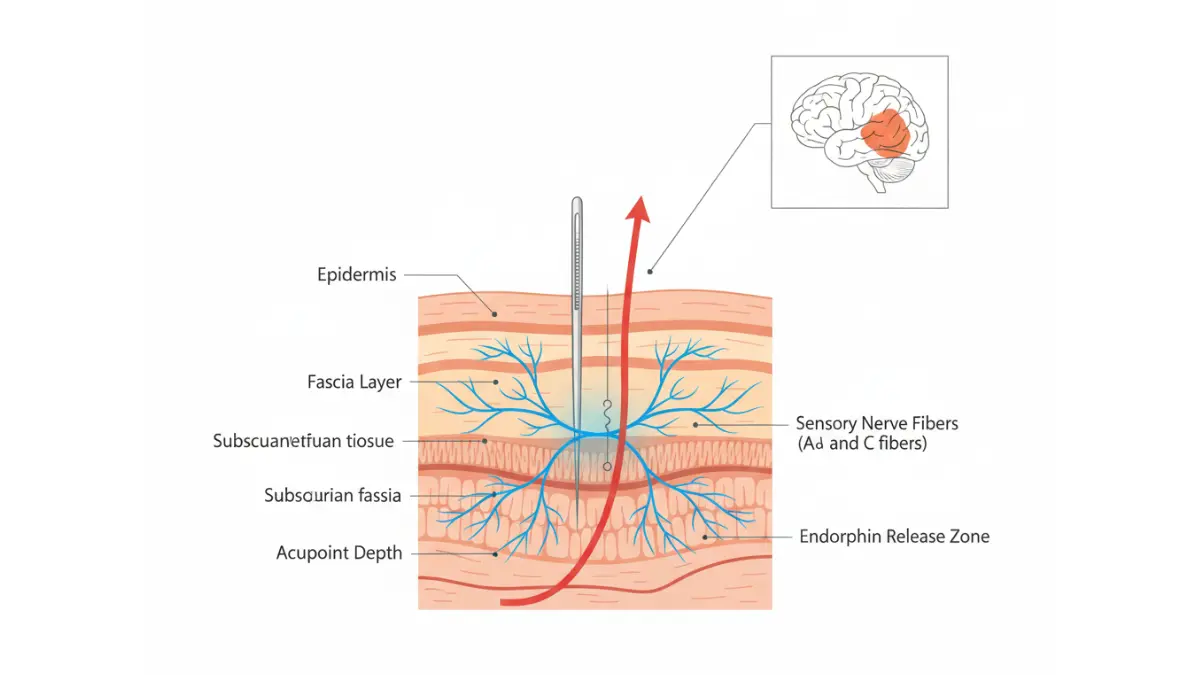
Modern medicine now offers a complementary explanation. According to the National Center for Complementary and Integrative Health (NCCIH) at the NIH, needle insertion at acupoints stimulates the central nervous system, triggering a cascade of measurable physiological responses:
- Endorphin release — the body’s natural opioid painkillers
- Neurotransmitter regulation — serotonin, norepinephrine, and dopamine levels shift
- Anti-inflammatory signaling — immune system response activates local healing
- Increased blood circulation — to targeted tissue and organs
- Nervous system modulation — pain processing in the brain measurably changes
What This Means For You: Acupuncture isn’t mysticism. It’s your body’s own chemistry being activated through precise, evidence-mapped needle placement.
TCM vs. Western Medicine vs. 2026 Research
| Perspective | Mechanism | Therapeutic Goal |
|---|---|---|
| Traditional Chinese Medicine | Restores Qi flow through meridians | Balance energy pathways |
| Western Medicine | Stimulates CNS, endorphins, neurotransmitters | Pain modulation and tissue healing |
| 2026 Neuroscience | AI-mapped acupoint precision + fMRI-confirmed brain changes | Measurable, personalized neurochemical outcomes |
The 2026 difference is significant. Researchers are now using functional MRI to watch acupuncture change brain activity in real time — and machine learning algorithms are beginning to predict which acupoints will produce the best outcomes for individual patients.
What Does Acupuncture Treat? The Evidence Table
The 21,000-Patient Proof — Conditions With Strongest Evidence
The 2018 individual patient data meta-analysis, supported by ongoing research through 2025, gives us the clearest picture yet of where acupuncture genuinely works. The NIH’s StatPearls clinical reference confirms acupuncture as a legitimate non-pharmacological option across multiple conditions.
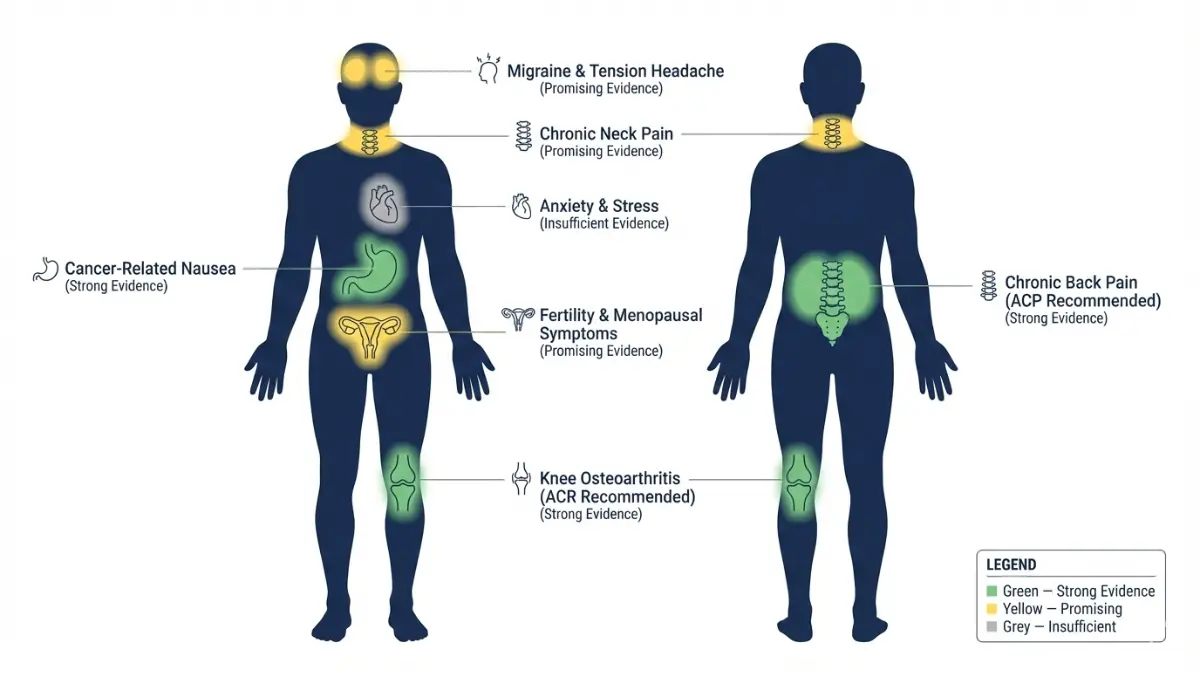
Here is the full evidence breakdown — including exactly how many sessions you’re likely to need:
| Condition | Evidence Level | Key 2025–2026 Finding | Sessions Needed |
|---|---|---|---|
| Chronic back pain | ✅ Strong | American College of Physicians recommends as first-line non-drug treatment | 6–12 over 3 months |
| Migraine prevention | ✅ Strong | Slightly more effective than preventive drugs; far fewer side effects | 8–12 |
| Knee osteoarthritis | ✅ Strong | American College of Rheumatology conditionally recommends | 6–10 |
| Tension headache | ✅ Moderate | Reduces frequency in study of 2,350 patients | 6–8 |
| Cancer-related nausea | ✅ Strong | Endorsed by most major US cancer centers alongside chemotherapy | 4–6 |
| Menopausal symptoms | ✅ Moderate | Reduces hot flash frequency, improves sleep quality | 8–10 |
| Anxiety & depression | 🔶 Promising | 2022 meta-analysis shows significant symptom reduction | 8–12 |
| Fertility (IVF support) | 🔶 Promising | Some trials show improved IVF implantation rates | 10–15 |
| Allergic rhinitis | 🔶 Promising | Comparable to antihistamines in some controlled trials | 6–10 |
| Chronic neck pain | ✅ Moderate | Significant pain reduction vs. no treatment across multiple RCTs | 6–10 |
Evidence levels based on NCCIH classifications and the 2025 systematic review of 862 peer-reviewed acupuncture meta-analyses.
Conditions Where Evidence Is Still Developing
Honest medicine matters. Acupuncture does NOT yet have strong evidence for:
- IBS — not more effective than sham acupuncture in most controlled trials
- Obesity / weight loss — limited and mixed results
- Smoking cessation — insufficient high-quality evidence
- Insomnia — promising early data, but inconclusive
What This Means For You: If you’re managing chronic pain, migraines, osteoarthritis, or preparing for chemotherapy, acupuncture has its strongest evidence base. If you’re seeking it for weight loss or insomnia, discuss realistic expectations with your provider first.
For patients also managing sleep disruption alongside pain, our Sleep Calculator can help you identify your optimal sleep schedule while you explore integrative options.
Is Acupuncture Safe? Side Effects, Risks & Acupuncture vs. Dry Needling
Is Acupuncture Safe?
When performed by a licensed practitioner using single-use, sterile needles, acupuncture has an excellent safety profile. According to Johns Hopkins Medicine, serious complications are rare — and the FDA regulates acupuncture needles as medical devices, requiring full sterility standards.
Common Side Effects (Usually Mild and Temporary)
- Minor bruising or soreness at needle insertion sites
- Brief dizziness or lightheadedness after the session
- Temporary fatigue (often described as a “deep relaxation crash”)
- Mild bleeding at the needle site
- Occasional short-term worsening of symptoms before improvement
Most side effects resolve within 24–48 hours. Infection risk is extremely low when sterile, disposable needles are used.
Who Should NOT Get Acupuncture (or Must Consult a Doctor First)
Avoid or get medical clearance if you have:
- A bleeding disorder (hemophilia, etc.) or take blood-thinning medications
- A pacemaker — especially if electroacupuncture (electrical current) is being used
- Active skin infections or open wounds near treatment sites
- A metal allergy — relevant for needle composition
- Pregnancy — certain acupoints are contraindicated as they may stimulate uterine contractions
💡 Bold Takeaway: Always disclose your full medical history and current medications to your acupuncturist before your first session. What feels routine to you could be clinically significant.
Acupuncture vs. Dry Needling — The Critical Difference
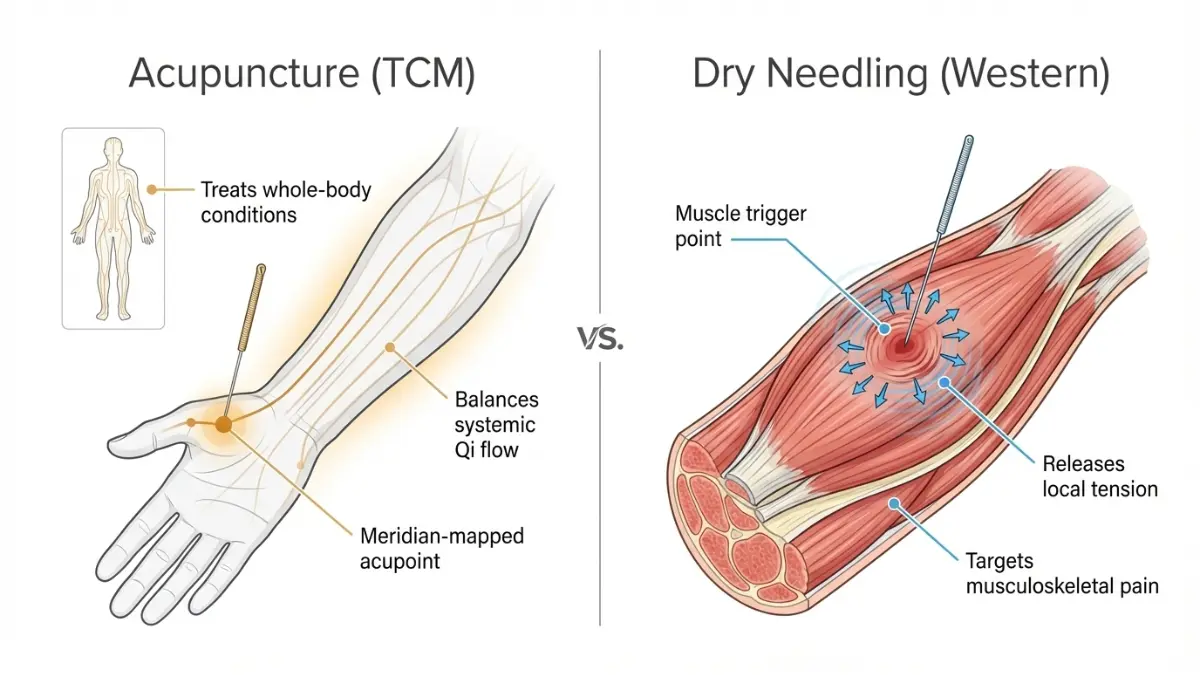
This is one of the most-Googled questions in 2026, and no major competitor answers it with precision. Here is the definitive comparison:
| Feature | Acupuncture | Dry Needling |
|---|---|---|
| Origin | Traditional Chinese Medicine (3,000+ years) | Western sports medicine / physical therapy |
| Practitioner | Licensed acupuncturist (LAc, NCCAOM-certified) | Physical therapist, chiropractor, or physician |
| Needle target | Meridian-mapped acupoints across the body | Specific muscle trigger points |
| Therapeutic goal | Systemic energy balance, pain, organ function | Localized muscle knot release |
| Evidence base | Extensive — 6,000+ published studies | Growing, but more limited |
| Scope | Whole-body conditions including anxiety, fertility, migraine | Primarily musculoskeletal pain |
What This Means For You: Choose acupuncture for holistic, systemic, or multi-system concerns. Choose dry needling for localized muscle pain and sports recovery. Both are safe when performed by qualified professionals.
For patients recovering from joint or musculoskeletal injuries, our article on physical therapy covers complementary rehabilitation approaches that pair well with acupuncture.
Your Complete 2026 Patient Guide — Cost, Insurance & What to Expect
How Much Does Acupuncture Cost in the USA? (2026)
Cost is the #1 question every patient has — and the one every major competitor refuses to answer directly.
| Location / Insurance Status | Average Cost Per Session | Notes |
|---|---|---|
| USA — No Insurance | $75–$150 | Varies by city, practitioner credentials, and session length |
| USA — With Insurance | $15–$50 copay | Medicare covers chronic low back pain (since 2020); many private plans cover |
| USA — Community clinics | $15–$40 | Sliding-scale community acupuncture clinics available in most major cities |
| UK (private) | £50–£90 | NHS rarely covers; private clinics widespread |
| Canada | CAD $80–$130 | Some provincial plans provide partial coverage |
💡 Pro Tip: Always call your insurer before your first session. Ask specifically: “Does my plan cover acupuncture? Is a doctor referral required? How many sessions per year are covered?”
Does Medicare Cover Acupuncture?
Yes — with conditions. Since 2020, Medicare Part B covers up to 12 acupuncture sessions per year for chronic low back pain, with an additional 8 sessions if treatment is showing measurable progress. Coverage does not currently extend to other conditions under Medicare.
For patients managing weight alongside chronic pain — conditions where acupuncture shows growing evidence — our Weight Loss Calculator can help you track your overall wellness goals alongside treatment.
What to Expect at Your First Acupuncture Session
Before your session:
- Wear loose, comfortable clothing — many acupoints are on arms, legs, and back
- Eat a light meal 2 hours before; avoid caffeine on treatment day
- Prepare a brief health history including current medications
During your session:
- Intake interview — your acupuncturist reviews your health history and symptoms
- Physical assessment — pulse at the wrist, tongue examination (TCM diagnostic tools)
- Needle placement — 4–20 ultra-thin needles inserted at selected acupoints
- Rest period — needles remain in place for 15–30 minutes; most patients feel deeply relaxed or fall asleep
- Needle removal — quick, painless; sites may be lightly pressed afterward
- Post-session guidance — hydration advice, activity restrictions for 24 hours
After your session:
- Drink extra water — acupuncture can trigger detoxification responses
- Avoid intense exercise for 24 hours
- Note any changes in symptoms in a journal — your practitioner uses this data to adjust future sessions
Staying well-hydrated post-session is important. Our Water Intake Calculator gives you a personalized daily hydration target based on your body weight and activity level.
How to Find a Qualified Acupuncturist in the USA
Look for these credentials:
- NCCAOM Certification (National Certification Commission for Acupuncture and Oriental Medicine) — the US gold standard
- State license — most US states require licensure; check your state board
- L.Ac. (Licensed Acupuncturist) or Dipl. Ac. (Diplomate of Acupuncture) designations
- ACAOM-accredited school graduation
Red flags to avoid:
- No visible license or certification displayed
- Reuse or non-sterile needles
- Diagnosis of serious medical conditions without referring you to a physician
- Pressure to commit to large, expensive packages upfront
The NCCIH practitioner locator is a reliable starting point for finding credentialed acupuncturists in the US.
What This Means For You: The single most important factor in your acupuncture outcome is the quality of your practitioner — not the cost of the session.
Acupuncture in 2026 — The AI Era, Electroacupuncture & What’s Coming
Electroacupuncture — The Next Generation of Treatment
Electroacupuncture (EA) is a modified form of traditional acupuncture where a low-frequency electrical current is passed between two inserted needles. It amplifies the stimulation beyond what manual needle manipulation alone can achieve.
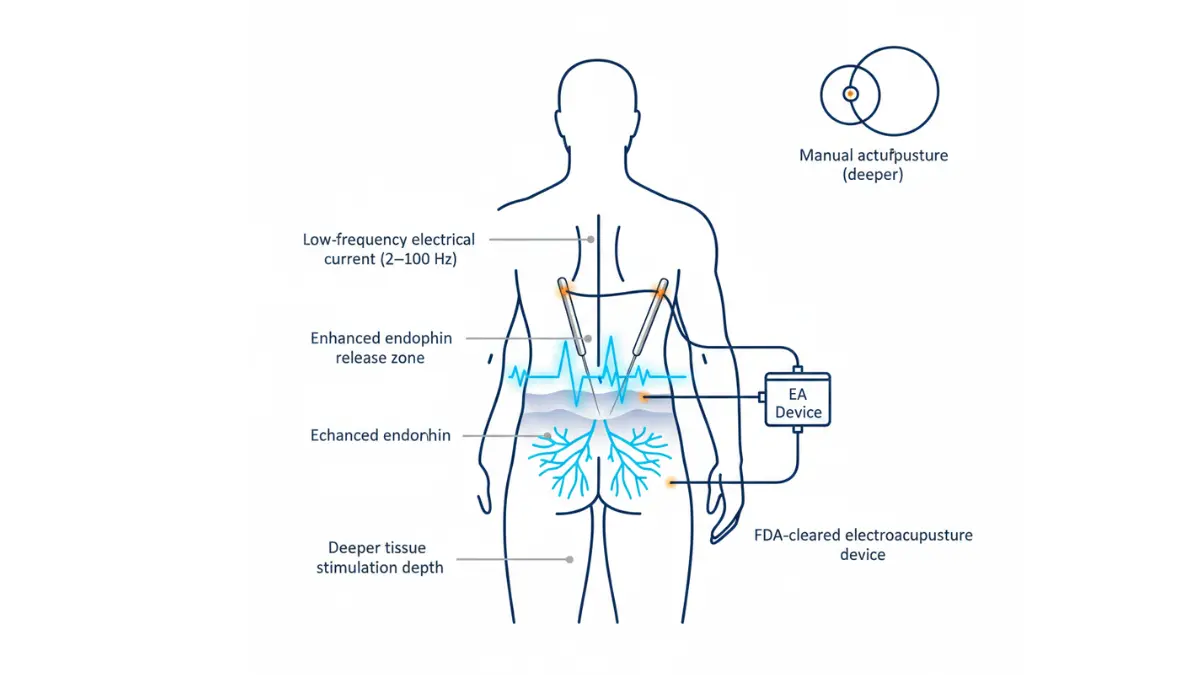
In 2026, electroacupuncture is being used in:
- Post-surgical ICU pain management — reducing opioid dependency in critically ill patients
- Knee osteoarthritis treatment — multiple RCTs confirm superior outcomes vs. manual acupuncture
- Alzheimer’s disease research — early neuroimaging studies show measurable improvements in cognitive function
- Stroke rehabilitation — evidence from Chinese clinical centers suggests improved motor recovery
⚠️ Important: Electroacupuncture should NOT be used in patients with pacemakers or implanted electrical devices.
AI Is Personalizing Acupuncture in Real Time
The most significant development in acupuncture in 2026 is the intersection with artificial intelligence. According to research published in Frontiers in Neurology, machine learning models are now:
- Predicting optimal acupoint selection based on individual patient data and outcomes
- Mapping treatment response patterns using wearable device data
- Achieving 70%+ accuracy in predicting which patients will respond to acupuncture before treatment begins
This matters because one of acupuncture’s historical criticisms — inconsistency of results — is being addressed directly by data-driven point selection and outcome tracking.
As personalized medicine advances, tools like our Genetic Risk Assessment Tool are helping patients understand their individual health landscape, which increasingly informs integrative treatment decisions like acupuncture.
The $103 Billion Market Signal
The global acupuncture market was valued at $48.2 billion in 2025 and is projected to reach $103.8 billion by 2035, growing at a CAGR of 7.22%. This isn’t speculative wellness culture momentum — it reflects growing mainstream medical integration.
Major US cancer centers now routinely include acupuncture in standard oncology care. The American College of Physicians officially recommends acupuncture as a first-line non-drug option for chronic back pain. Insurance coverage is expanding year by year.
💡 Bold Takeaway: Acupuncture is no longer alternative medicine. In 2026, it is integrative medicine — systematically validated, globally adopted, and backed by the largest chronic pain database ever assembled.
For patients also exploring anxiety management through integrative approaches, our article on how to reduce anxiety naturally covers evidence-based complementary strategies that pair effectively with acupuncture therapy.
Frequently Asked Questions About Acupuncture
1. Does acupuncture hurt?
Most patients feel minimal discomfort. Acupuncture needles are hair-thin — far finer than injection needles. Sensations are typically described as mild pressure, tingling, warmth, or a dull ache. Sharp pain is not normal; if it occurs, inform your practitioner immediately for needle adjustment.
2. How many acupuncture sessions do I need?
Most conditions require 6–12 sessions over 8–12 weeks. Chronic pain and fertility support may need ongoing maintenance. Your practitioner will reassess progress after the first 3 sessions and adjust accordingly.
3. How long does it take for acupuncture to work?
Some patients notice improvement after 1–2 sessions. Most experience significant changes by session 4–6. For chronic, long-standing conditions, meaningful results typically emerge over 8–12 sessions.
4. Can acupuncture help with anxiety and depression?
Emerging evidence from 2022–2026 research shows promising results for both anxiety and depression. A 2022 systematic meta-analysis found significant symptom reduction compared to sham acupuncture and some medications. It works best as a complementary therapy alongside conventional treatment — not a standalone replacement.
5. Is acupuncture safe during pregnancy?
Acupuncture can be safe during pregnancy, but certain acupoints are strictly contraindicated as they may stimulate uterine contractions. Always disclose your pregnancy and consult your OB/GYN before proceeding. A properly trained acupuncturist will adjust the treatment protocol accordingly.
6. Is acupuncture covered by insurance in the USA?
Medicare Part B covers up to 12 sessions per year for chronic low back pain. Many private insurers cover acupuncture for pain conditions, though pre-authorization and referrals may be required. Always verify your specific plan before booking.
7. What is the difference between acupuncture and acupressure?
Acupuncture uses sterile needles inserted into acupoints. Acupressure applies manual finger pressure to the same points without needle penetration. Both aim to influence Qi flow and the nervous system, but acupuncture typically provides deeper, more sustained physiological effects.
8. What is the difference between acupuncture and dry needling?
Acupuncture is rooted in TCM and treats systemic conditions by targeting meridian-mapped acupoints across the body. Dry needling targets specific muscle trigger points and is performed by physical therapists or physicians within a Western medicine framework. They use similar tools but different maps and goals.
9. Is acupuncture just a placebo?
No. The 21,000-patient meta-analysis specifically compared acupuncture to sham acupuncture (fake procedures that controlled for placebo effect) and found true acupuncture still produced significantly greater pain relief. Real physiological effects — endorphin release, CNS changes, and anti-inflammatory responses — are documented and measurable.
10. Can I get acupuncture if I take blood thinners?
Only with medical clearance. Blood thinners increase bleeding risk at needle sites. A qualified practitioner can often modify technique to reduce this risk, but your prescribing physician must be informed and consulted before you proceed.
11. How do I find a qualified acupuncturist in the USA?
Search for NCCAOM-certified practitioners — the national gold standard. Look for the L.Ac. or Dipl. Ac. designation. Most US states require state licensure. Your primary care physician may also be able to provide a referral, which may be required for insurance coverage.
📚 Related Reading: Physical Therapy Guide | How to Reduce Anxiety Naturally | Stop Migraine Fast | Depression Guide
About this content
How this article was put together: researched from recognised health sources, drafted with the help of AI tools, and edited by hand, with sources linked throughout.

Sameer Patel is the founder and editor of My Medicine Advisor. He is not a doctor or medical professional — before starting this site he worked in banking,…
Medical disclaimer
The content on MyMedicineAdvisor is provided for general informational and educational purposes only and is not a substitute for professional medical advice, diagnosis, or treatment. Health information on this website should not be used to diagnose, treat, cure, or prevent any condition without guidance from a qualified healthcare professional. Always seek the advice of your doctor, physician, or another licensed healthcare provider with any questions you may have regarding a medical condition, symptoms, medications, or treatment decisions.