

On This Page – Quick Medical Summary
Stem cell therapy uses the body’s own repair cells to treat disease, regenerate damaged tissue, and modulate immune responses. Mesenchymal stem cells (MSCs) — found in bone marrow, fat tissue, and umbilical cord — are now at the center of modern regenerative medicine. In December 2024, the FDA approved the world’s first MSC-based drug. Everything changed.
What Is Stem Cell Therapy and Why It Just Changed Forever
When 9-year-old Marcus from Ohio underwent a bone marrow transplant for leukemia in 2024, his doctors faced a devastating complication — his immune system began attacking his own organs. Standard steroids failed. His family was told options were running out.
Then Ryoncil arrived.
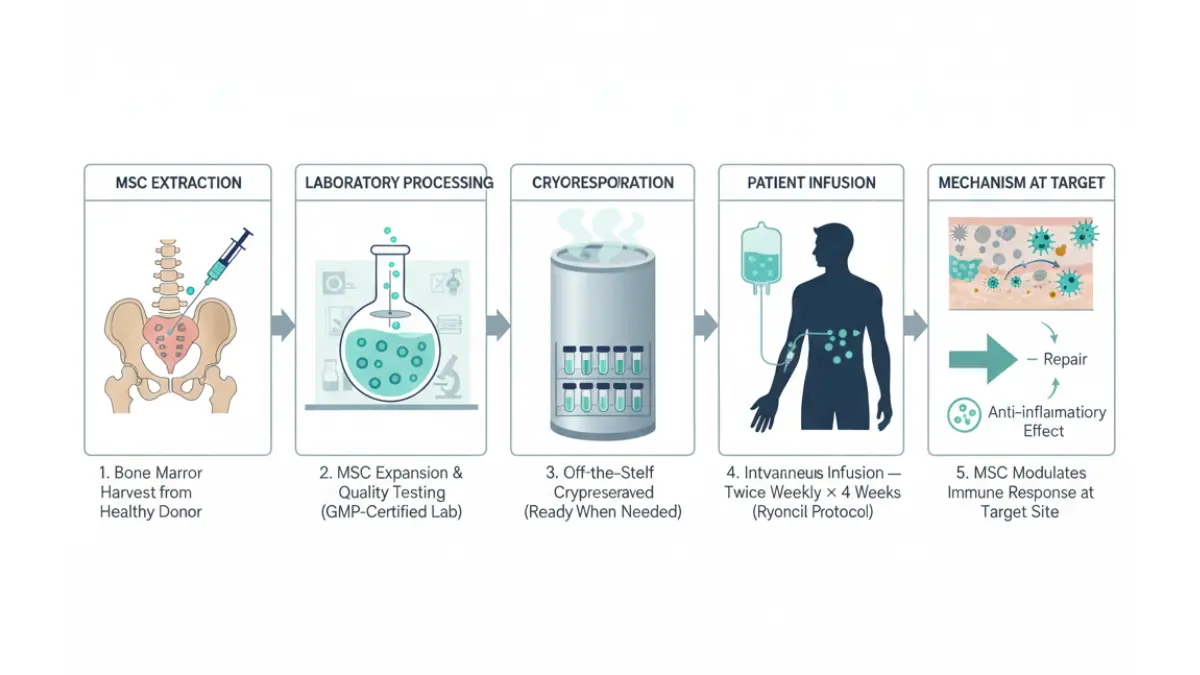
On December 18, 2024, the U.S. Food and Drug Administration approved Ryoncil (remestemcel-L-rknd) — an allogeneic bone marrow-derived mesenchymal stromal cell therapy — making it the first FDA-approved MSC therapy in US history. It is indicated for steroid-refractory acute graft-versus-host disease (SR-aGVHD) in pediatric patients as young as 2 months old.
This wasn’t just a regulatory milestone. It was proof — after decades of promising research — that stem cell therapy grounded in MSC biology can cross the finish line.
Why This Matters Right Now
- 89 new MSC clinical trials launched in 2025 — a 37% increase over all of 2024
- The global MSC therapy market is in full expansion mode following the Ryoncil approval
- Over 1,760 active clinical trials on ClinicalTrials.gov are currently testing MSCs across more than 920 medical conditions
- MSC-based deal value surged 94% in equity offerings across the first three quarters of 2025
💡 Why Read This Today? If you or someone you care about is living with an autoimmune disease, joint degeneration, heart failure, or a post-transplant complication — this is the most important development in regenerative medicine in a generation.
What Are Mesenchymal Stem Cells (MSCs)? Types and Sources Explained
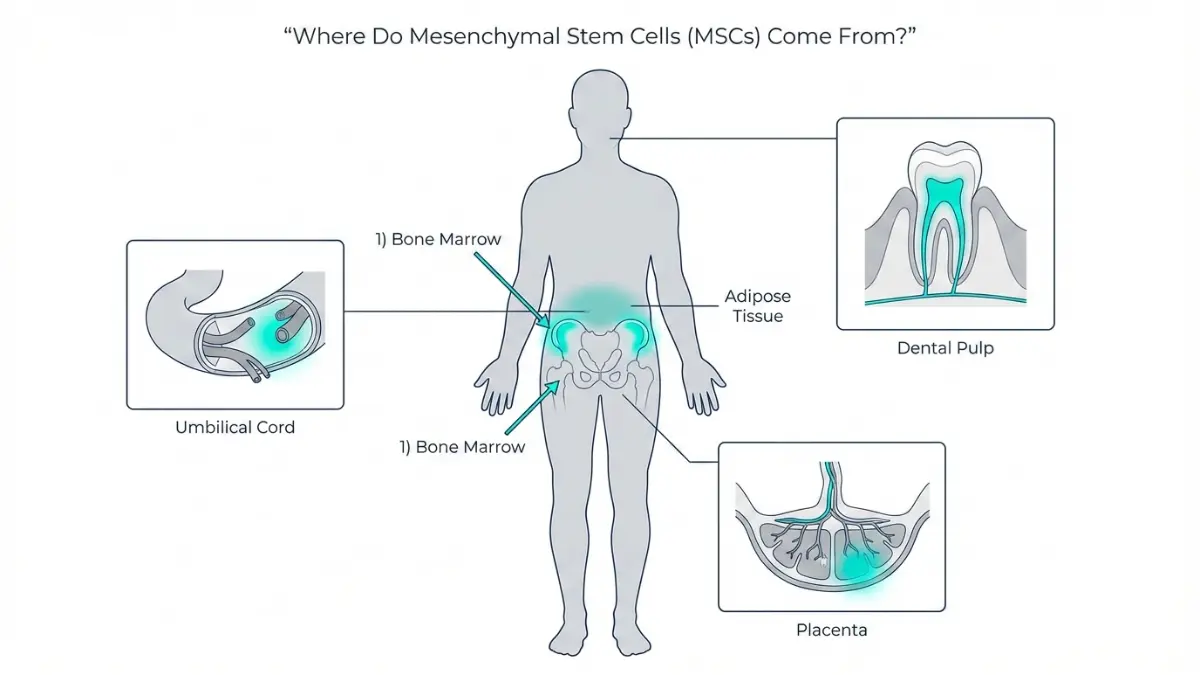
Mesenchymal stem cells (MSCs) are multipotent adult stem cells capable of self-renewal and differentiation into multiple tissue types. They are found throughout the body and are central to modern stem cell treatment strategies.
For clinicians: MSCs are non-hematopoietic, plastic-adherent stromal cells expressing CD73, CD90, and CD105 surface markers while lacking CD34, CD45, and HLA-DR, per International Society for Cellular Therapy (ISCT) criteria.
For patients: Think of MSCs as your body’s internal repair crew — they migrate to sites of injury, suppress dangerous inflammation, and signal damaged cells to regenerate.
Where MSCs Come From: Source Comparison
| MSC Source | Clinical Availability | Primary Clinical Use | Approval Status (USA) |
|---|---|---|---|
| Bone Marrow | Most common | GVHD, cardiac, arthritis | ✅ FDA-Approved (Ryoncil) |
| Adipose (Fat) Tissue | Abundant | Orthopedic, wound healing | Clinical trials |
| Umbilical Cord (Wharton’s Jelly) | Neonatal only | Autoimmune, neurological | Approved in Asia |
| Dental Pulp | Limited | Neurological (experimental) | Preclinical/Phase I |
| Placenta | Neonatal only | Inflammatory conditions | Regional approvals |
According to NIH-published research on MSC clinical applications, MSCs are now the most widely used adult stem cells in clinical trials globally — because of three core advantages:
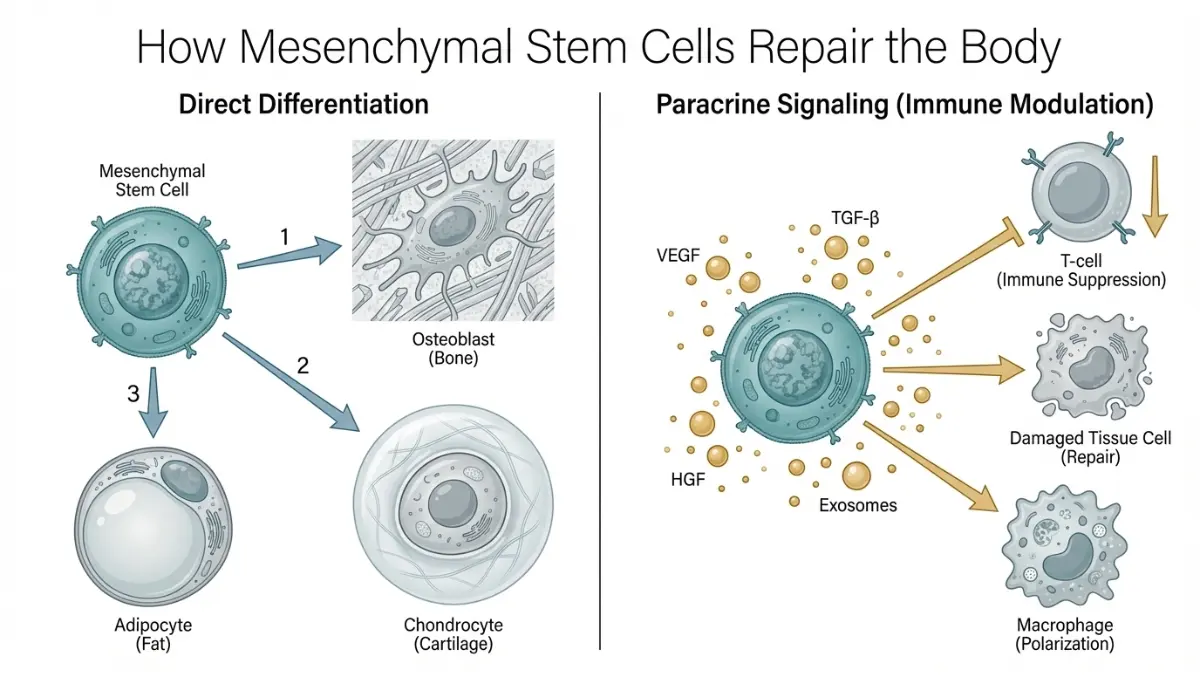
- Multipotency — differentiate into bone, cartilage, muscle, and connective tissue
- Immunomodulation — interact with T cells, B cells, and macrophages to reduce damaging inflammation
- Paracrine signaling — secrete VEGF, TGF-β, HGF, and exosomes that trigger local healing without full engraftment
MSCs vs. Other Stem Cells: Why They Win Clinically
| Property | MSCs | Embryonic Stem Cells | iPSCs |
|---|---|---|---|
| Ethical controversy | ❌ None | ✅ High | Low |
| Tumor risk | Very low | Moderate–High | Moderate |
| Off-the-shelf availability | ✅ Yes (Ryoncil) | ❌ No | ❌ No |
| Immune rejection risk | Very low | High | Low |
| FDA approval (US) | ✅ Yes | ❌ No | ❌ No |
💡 What This Means For You: MSC therapy doesn’t require embryo destruction, carries lower tumor risk than other stem cell types, and is now available as an approved off-the-shelf treatment in the US. This makes it the most clinically viable stem cell platform in 2026.
If your family history raises concerns about inherited disease risk, our Genetic Risk Assessment Tool can help you identify which conditions to discuss with your doctor before exploring any advanced therapy.
What Conditions Can Stem Cell Therapy Treat in 2026?
This is where MSC stem cell therapy separates itself from every other emerging medicine.
FDA-Approved Condition (2024–2026)
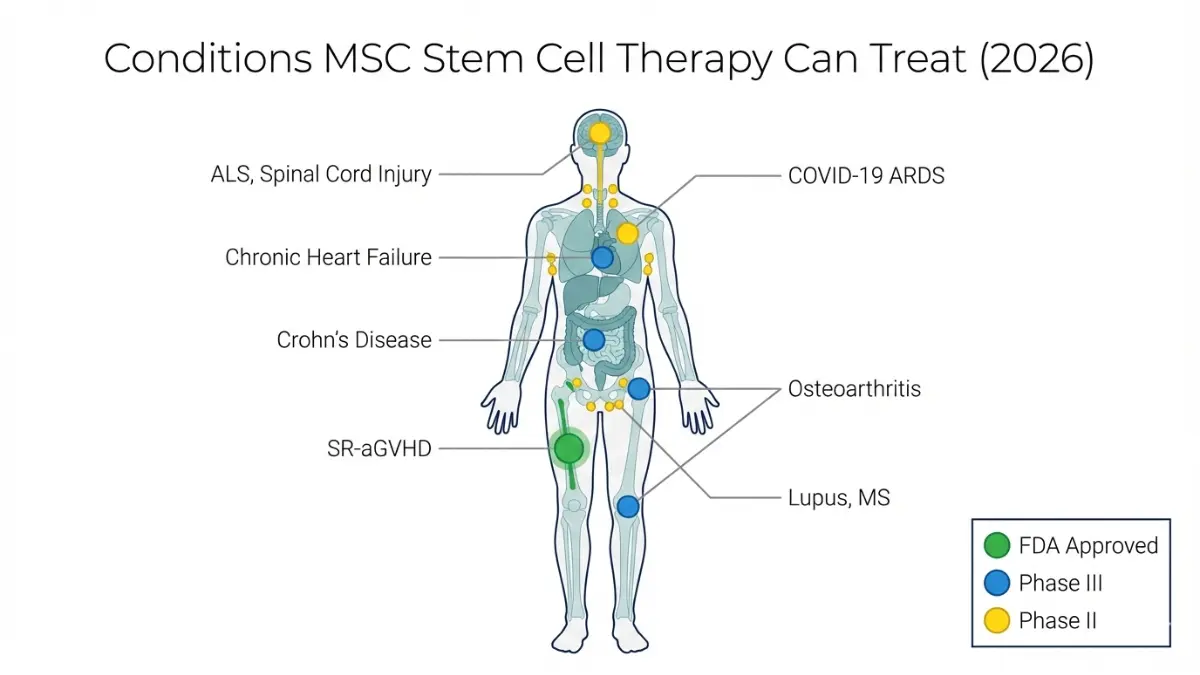
Steroid-Refractory Acute Graft-Versus-Host Disease (SR-aGVHD) in children aged 2 months and older is the only FDA-approved MSC indication in the US as of 2026.
Clinical trial results from the pivotal MSB-GVHD001 study of 54 pediatric patients showed:
- 70% overall response rate at Day 28
- 30% complete response rate
- 41% partial response rate
- Median response duration: 54 days
- Long-term survival at 1 year: 63% — significantly higher than best available therapy comparators (40–49%)
Conditions in Advanced Clinical Trials — Evidence Table
| Condition | Trial Phase | Key Outcome Data | Trial Registry |
|---|---|---|---|
| SR-aGVHD (pediatric) | ✅ FDA Approved | 70% response at Day 28 | FDA.gov |
| Osteoarthritis / Knee Joint | Phase II–III | Pain reduction + cartilage preservation | ClinicalTrials.gov |
| Chronic Heart Failure | Phase III | Reduced hospitalization (Mesoblast Phase III) | ClinicalTrials.gov |
| Crohn’s Disease / Complex Fistulas | Phase III | EU-approved as Alofisel | EMA |
| Multiple Sclerosis | Phase II | Immune modulation, symptom stabilization | PMC/NIH |
| Systemic Lupus Erythematosus | Phase II | Reduced flares and organ protection | PMC/NIH |
| ALS / Motor Neuron Disease | Phase III | Neuronata-R approved in South Korea | South Korea MFDS |
| COVID-19 Lung Damage (ARDS) | Phase I/II | Reduced cytokine storm, improved oxygenation | PMC/NIH |
| Spinal Cord Injury | Phase II | Motor function improvement | ClinicalTrials.gov |
Global Approval Comparison: Where Is MSC Therapy Approved?
| Country/Region | Approved MSC Products | Key Indication |
|---|---|---|
| 🇺🇸 USA | Ryoncil (remestemcel-L) | Pediatric SR-aGVHD |
| 🇰🇷 South Korea | 9 approved products | Arthritis, ALS, cardiac |
| 🇮🇳 India | 1 regional approval | Orthopedic |
| 🇪🇺 Europe (EMA) | Alofisel (darvadstrocel) | Crohn’s complex fistulas |
| 🇯🇵 Japan | Regional approvals | Cardiac, orthopedic |
According to NIH research on global MSC clinical trends, bone marrow-derived MSCs were historically the most common source, but umbilical cord-derived MSCs are now rapidly gaining ground in Asian markets due to superior availability.
Patients exploring cancer-related immune therapies may also want to read our guides on how immunotherapy works and lung cancer FDA-approved drug treatments in 2026.
💡 What This Means For You: If your condition isn’t yet FDA-approved for MSC therapy, over 1,760 active clinical trials at ClinicalTrials.gov may offer access to this treatment — often at no cost to participants.
Is Stem Cell Therapy Safe? What Clinical Trials Reveal in 2026
This is the question every patient asks first — and the one most competitor websites answer least well. Here is the honest clinical picture.
Overall Safety Profile
NIH-published research confirms that across thousands of patients enrolled in clinical trials, MSCs have consistently demonstrated a favorable safety profile. No class-wide serious safety concerns have been observed across all MSC therapy trials to date.
MSCs carry key safety advantages over other stem cell types:
- No embryo destruction — no ethical controversy
- Low immunogenicity — allogeneic (donor) MSCs are well-tolerated
- No tumor formation observed in approved MSC therapies
- Off-the-shelf — no patient cell harvesting required (for allogeneic products like Ryoncil)
Known Side Effects: Ryoncil FDA Trial Data
From the 54-patient pivotal study submitted to the FDA:
| Side Effect | Frequency |
|---|---|
| Viral infectious disorders | 15% (Grade 3+) |
| Bacterial infectious disorders | 19% (Grade 3+) |
| Infections (pathogen unspecified) | 15% (Grade 3+) |
| Fever (pyrexia) | 9% serious adverse events |
| Hemorrhage | Reported in >20% |
| Edema | Reported in >20% |
| Abdominal pain | Reported in >20% |
| Hypertension | Reported in >20% |
| Respiratory failure (serious) | 9% |
Contraindicated in: Patients with known hypersensitivity to dimethyl sulfoxide (DMSO) or porcine/bovine proteins.
Pre-treatment required: Corticosteroids and antihistamines before each infusion.
Monitor during infusion for: Dyspnea, hypotension, fever, tachypnea, cyanosis, hypoxia.
🚨 Red Flags: How to Spot Unregulated MSC Clinics
This is a section no competitor covers — and it could protect you from serious harm.
The FDA has active enforcement actions against unproven stem cell clinics offering treatments that have no regulatory approval. Warning signs include:
- Claims of treating 50–100+ conditions with no peer-reviewed trial evidence
- No FDA Investigational New Drug (IND) approval or Institutional Review Board oversight
- Costs of $10,000–$50,000+ with no transparency about cell source or processing
- “Stem cell tourism” promotions — traveling abroad to avoid US regulatory oversight
- Guaranteed results language — no legitimate medical treatment uses this
💡 What This Means For You: Always verify treatment at a registered clinical trial via ClinicalTrials.gov or at an academic medical center. Legitimate MSC therapy is supervised, documented, and IRB-approved.
For patients managing inflammatory or autoimmune conditions, tracking your symptoms carefully is critical. Our Symptom Checker can help you document and communicate changes to your care team.
If you’re also following a joint health or arthritis protocol, our article on physical therapy and recovery may provide helpful complementary guidance.
How Much Does Stem Cell Therapy Cost and How Do You Access It?
No other medical website covers this topic for MSC therapy. Here is the transparent breakdown US patients need.
Stem Cell Therapy Cost Breakdown (2026)
| Treatment Route | Estimated Cost (USA) | Insurance Coverage | How to Access |
|---|---|---|---|
| Ryoncil (FDA-approved, SR-aGVHD) | Covered under inpatient hospital care | ✅ Insurance eligible (pediatric) | Academic/children’s medical centers |
| Clinical Trial MSC Therapy | 💰 Usually FREE to participants | N/A — sponsor-funded | ClinicalTrials.gov enrollment |
| Private/Unregulated MSC Clinics | $5,000–$50,000+ per session | ❌ NOT covered | ⚠️ Proceed with extreme caution |
| Bone Marrow Transplant (HSCT) | $100,000–$300,000 | Medicare/Medicaid eligible | Major cancer centers, NCI-designated |
| International MSC Therapy (South Korea/India) | $3,000–$15,000 | ❌ Not typically covered by US plans | Select government-approved hospitals |
How to Access Legitimate Stem Cell Therapy: 6-Step Guide
- Confirm your diagnosis — get a clear diagnosis from a board-certified specialist (hematologist, rheumatologist, or neurologist)
- Search ClinicalTrials.gov — use your condition name + “mesenchymal stem cells” as search terms at clinicaltrials.gov
- Filter for recruiting Phase II or Phase III trials — these have the strongest evidence base and best oversight
- Contact the Principal Investigator (PI) listed on the trial — they or a coordinator will assess your eligibility at no cost
- Verify institutional affiliation — trials run through NCI-designated cancer centers, academic hospitals, or university medical centers are the safest
- Ask your primary care doctor for a referral to a regenerative medicine specialist or hematologist who can navigate this process with you
Insurance and Coverage: What US Patients Must Know
- FDA-approved indications (Ryoncil for SR-aGVHD) are covered under most major US insurance plans when administered at licensed facilities
- Experimental/investigational therapies outside clinical trials are not covered by Medicare, Medicaid, or private insurance
- Clinical trial participation is typically free — including treatment, monitoring, and follow-up visits (paid by trial sponsor)
- Document everything — if your insurer denies coverage for an approved treatment, you have appeal rights under the ACA
💡 What This Means For You: The safest, most affordable route to accessing MSC stem cell treatment is enrollment in an FDA-registered clinical trial. You receive investigational therapy under full medical supervision, at no personal cost.
For patients managing metabolic health alongside a long-term treatment plan, our Blood Sugar Converter helps you track glucose levels — an important marker during any immune-modulating therapy.
Patients recovering from related orthopedic conditions may also find our guides on knee replacement recovery 2026 and hip replacement surgery 2026 valuable context for understanding the full spectrum of treatment options.
The Future of Stem Cell Therapy — 2026 Breakthroughs You Need to Know
The FDA’s Ryoncil approval was the starting pistol. Here is what’s racing toward patients next.
MSC-Derived Exosomes: The Next Generation of Stem Cell Therapy
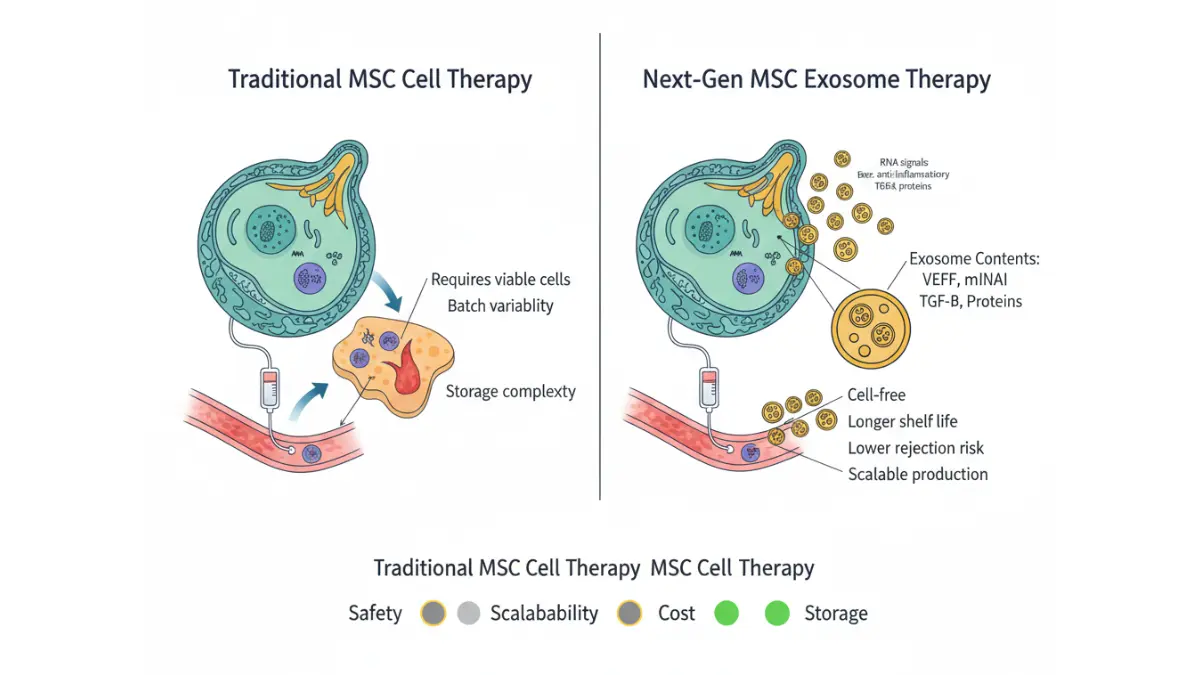
Exosomes are tiny vesicles — nanoscale “packages” — secreted by MSCs. They carry growth factors, RNA signals, and anti-inflammatory proteins that trigger healing without using live cells at all.
Why exosome therapy could surpass traditional MSC infusions:
- No live cell risks — no engraftment failure, no tumor risk
- Longer shelf life and easier manufacturing at scale
- Lower immune reaction risk — no cell surface proteins to trigger rejection
- Currently in Phase I/II trials for: perianal fistulas (IBD), COVID-19 lung damage, acne scarring, and corneal regeneration
2026 MSC Pipeline: What’s Coming Next
| Therapy / Sponsor | Condition | Trial Stage | Expected Milestone |
|---|---|---|---|
| Mesoblast (rexlemestrocel-L) | Chronic Heart Failure | Phase III complete | US approval application 2026 |
| Hope Biosciences (HB-adMSCs) | Spinal Cord Injury | Phase III | FDA review 2026–2027 |
| Corestemchemon (Neuronata-R) | ALS | Phase III complete | US filing expected |
| Multiple Groups | Parkinson’s Disease | Phase I (iPSC-derived) | 3–5 year horizon |
| CRISPR-Enhanced MSCs | Cancer / Autoimmune | Phase I | 5-year horizon |
| AI-Optimized MSC Selection | Multiple conditions | Pre-clinical/pilot | Emerging platform |
The Piezo1 Discovery: Exercise in a Pill?
Researchers at the University of Hong Kong made a landmark discovery published in January 2026: a protein called Piezo1 acts as a mechanical sensor on the surface of bone marrow MSCs. When activated by physical movement, it directs MSCs to build bone rather than form fat — explaining why exercise prevents osteoporosis.
The breakthrough opens a direct path toward drugs that activate Piezo1 pharmacologically — delivering the bone-protective benefits of exercise to bedridden patients, elderly individuals, and those with mobility limitations who cannot exercise.
This is just one example of how MSC biology is unlocking entirely new treatment categories beyond traditional stem cell therapy — into metabolic disease, aging, and rehabilitation medicine.
The Numbers That Define the New Era
- 1,760+ active MSC clinical trials globally as of 2026
- 89 new trials launched in 2025 alone — 37% year-on-year increase
- 9 approved MSC products in South Korea alone (the global leader)
- 12 MSC therapies approved by regulatory agencies worldwide
- $159.97 million raised by Mesoblast in 2024–2025 to fund Ryoncil’s US launch
💡 What This Means For You: Within 3–5 years, FDA-approved MSC stem cell therapy may be available for heart failure, spinal cord injury, ALS, and Crohn’s disease. The pipeline has never been stronger — and the regulatory doors are now open.
Patients managing cardiovascular conditions alongside interest in regenerative therapies can use our Heart Rate Zone Calculator to maintain safe exercise targets during and after treatment. For broader context on innovative treatment approaches, our guide on how immunotherapy works explains the immune-modulation principles that MSC therapy shares with approved cancer immunotherapies.
Frequently Asked Questions — Stem Cell Therapy (2026)
1. What is mesenchymal stem cell therapy?
Mesenchymal stem cell (MSC) therapy uses adult multipotent cells — derived from bone marrow, fat tissue, or umbilical cord — to repair damaged tissue and regulate immune responses. It is the most clinically advanced form of stem cell therapy currently in use worldwide.
2. Is stem cell therapy FDA approved?
Yes. The FDA approved Ryoncil (remestemcel-L-rknd) on December 18, 2024 — making it the first FDA-approved MSC therapy in US history. It is indicated for steroid-refractory acute graft-versus-host disease in children aged 2 months and older.
3. What conditions does stem cell therapy treat?
Currently FDA-approved for SR-aGVHD in children. Advanced clinical trials are actively investigating stem cell treatment for osteoarthritis, heart failure, Crohn’s disease, multiple sclerosis, lupus, ALS, and spinal cord injury.
4. How much does stem cell therapy cost?
FDA-approved Ryoncil is insurance-eligible when administered at licensed facilities. Clinical trial participation is typically free to patients. Private unregulated MSC clinics charge $5,000–$50,000+ but are not covered by insurance and lack FDA oversight.
5. Is stem cell therapy safe?
Yes — MSCs have demonstrated consistent safety in clinical trials across thousands of patients. The most common adverse effects are infections and fever. There is no class-wide serious safety concern. Avoid unregulated clinics offering unsupported claims.
6. How long does stem cell therapy last?
Results vary by condition. In the Ryoncil GVHD trial, median response duration was 54 days post-Day 28 assessment. Long-term data for other conditions are still being gathered in ongoing Phase II–III trials.
7. What is the difference between MSC therapy and a bone marrow transplant?
A bone marrow transplant (HSCT) replaces blood-forming stem cells entirely. MSC therapy modulates the immune system and repairs tissue without replacing the entire hematopoietic system — making it less intensive and applicable to far more conditions.
8. What are MSC exosomes?
MSC exosomes are nanoscale vesicles secreted by mesenchymal stem cells. They carry healing signals without using live cells — making them potentially safer, more scalable, and more stable than traditional MSC stem cell therapy. Currently in Phase I/II trials.
9. Can stem cell therapy help arthritis?
Not yet FDA-approved for arthritis, but multiple Phase II–III trials show significant pain reduction and cartilage preservation in osteoarthritis patients. South Korea has already approved MSC products for joint disease. US approval is on the 2–4 year horizon.
10. How do I find a legitimate stem cell clinical trial?
Visit ClinicalTrials.gov, search your condition + “mesenchymal stem cells,” and filter for recruiting Phase II or III trials at academic medical centers. All legitimate trials have IRB approval and offer treatment at no cost to participants.
11. What is the biggest stem cell therapy breakthrough in 2026?
Three define the new era: (1) The FDA’s first-ever MSC approval (Ryoncil, December 2024); (2) The University of Hong Kong’s Piezo1 discovery linking MSCs to exercise-mimicking bone regeneration; and (3) 89 new MSC trials launched in 2025 — the largest single-year expansion in MSC research history.
Key Takeaways
- Stem cell therapy using MSCs is now FDA-approved in the USA for the first time (Ryoncil, December 2024)
- MSCs are safer than embryonic or iPSC alternatives — no tumor risk, no ethical controversy, off-the-shelf available
- Over 1,760 active clinical trials are studying MSC therapy across 920+ medical conditions
- The safest and often free route to access is through ClinicalTrials.gov enrollment
- MSC exosomes represent the next generation — cell-free, safer, and currently in Phase I/II trials
- Avoid unregulated stem cell clinics charging $10,000–$50,000+ without FDA oversight
For broader health guidance on related treatments and therapies, visit our Health & Medicine Hub at mymedicineadvisor.com.
About this content
How this article was put together: researched from recognised health sources, drafted with the help of AI tools, and edited by hand, with sources linked throughout.

Sameer Patel is the founder and editor of My Medicine Advisor. He is not a doctor or medical professional — before starting this site he worked in banking,…
Medical disclaimer
The content on MyMedicineAdvisor is provided for general informational and educational purposes only and is not a substitute for professional medical advice, diagnosis, or treatment. Health information on this website should not be used to diagnose, treat, cure, or prevent any condition without guidance from a qualified healthcare professional. Always seek the advice of your doctor, physician, or another licensed healthcare provider with any questions you may have regarding a medical condition, symptoms, medications, or treatment decisions.