
On This Page – Quick Medical Summary
Quick Answer: PRP therapy results typically appear within 4–6 weeks for joint injuries and 2–3 months for hair loss. Clinical success rates range from 54–80% depending on condition, platelet concentration, and patient selection. Results are not permanent — most patients need maintenance sessions every 12–18 months.
⚠️ Disclaimer: This article is for educational purposes only and does not constitute medical advice. Always consult a licensed healthcare provider before starting any treatment.
What Are PRP Therapy Results — And How Do They Actually Work?
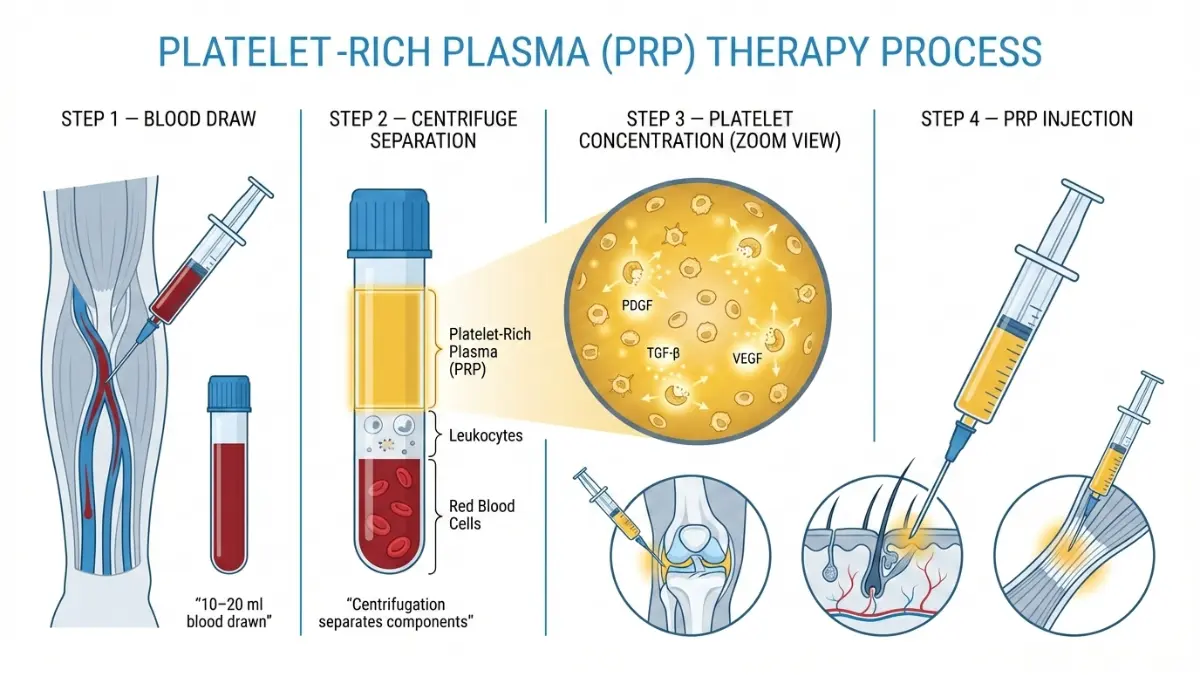
PRP (platelet-rich plasma) therapy uses your own blood to stimulate healing. A small sample is drawn, spun in a centrifuge to concentrate the platelets, and injected into the target area — whether a painful knee, thinning scalp, or damaged tendon.
The key healing agents are growth factors — specifically PDGF (platelet-derived growth factor), TGF-β (transforming growth factor), and VEGF (vascular endothelial growth factor). These proteins trigger cell repair, collagen production, and tissue regeneration.
Here’s what most articles miss: the single biggest predictor of your PRP results isn’t which condition you’re treating — it’s platelet concentration.
- High-platelet PRP (>1,000,000 platelets/µL): Achieved clinically meaningful improvement at every follow-up timepoint in a landmark 2025 meta-analysis of 1,995 patients.
- Low-platelet PRP (<1,000,000/µL): Failed to deliver meaningful pain relief at any timepoint in the same study.
This means the quality of your PRP preparation matters just as much as the procedure itself.
If you’re unsure which health conditions are driving your pain or hair loss, our Symptom Checker can help you identify what you’re dealing with before your first consultation.
📊 PRP Results at a Glance
| Condition | First Results | Peak Effect | Typical Duration |
|---|---|---|---|
| Knee Osteoarthritis | 4–6 weeks | 3–6 months | 12–18 months |
| Hair Loss | 2–3 months | 6 months | 12–18 months |
| Tendon Injuries | 4–8 weeks | 3 months | 6–12 months |
| Skin/Face Rejuvenation | 3–4 weeks | 3–6 months | 12–18 months |
| Plantar Fasciitis | 3–6 weeks | 2–3 months | 9–12 months |
PRP Therapy Results by Condition — Real Timelines (2026 Data)
This is where every competitor article fails you. Johns Hopkins says “several weeks.” Healthline says “weeks to months.” Neither gives you what you actually need: condition-specific numbers.
Here’s exactly what the most current research shows.
PRP Results for Knee & Joint Pain
A 2025 meta-analysis published in the American Journal of Sports Medicine (18 RCTs, 1,995 patients) found PRP injections exceeded the Minimal Clinically Important Difference (MCID) for pain and function at every timepoint — 1, 3, 6, and 12 months.
Key findings:
- WOMAC score improvement: −15.90 points at 1 month; −14.69 points at 12 months
- 96.5% patient follow-up completion rate (near-pharmaceutical-grade retention)
- NNT (Number Needed to Treat) = 2–3 — meaning every 2–3 patients treated, one achieves clinically meaningful improvement
Patient selection matters critically. Kellgren-Lawrence grades 1–3 (mild-to-moderate OA) are ideal candidates. Grade 4 (bone-on-bone) patients are poor candidates — PRP cannot regenerate fully destroyed cartilage.
Patients managing weight alongside PRP treatment tend to see better outcomes. Since excess body weight accelerates cartilage breakdown, you can track your progress using our BMI Calculator to understand where you stand before starting treatment.
For more context on surgical alternatives if PRP doesn’t suffice, see our detailed guide on knee replacement surgery recovery in 2026.
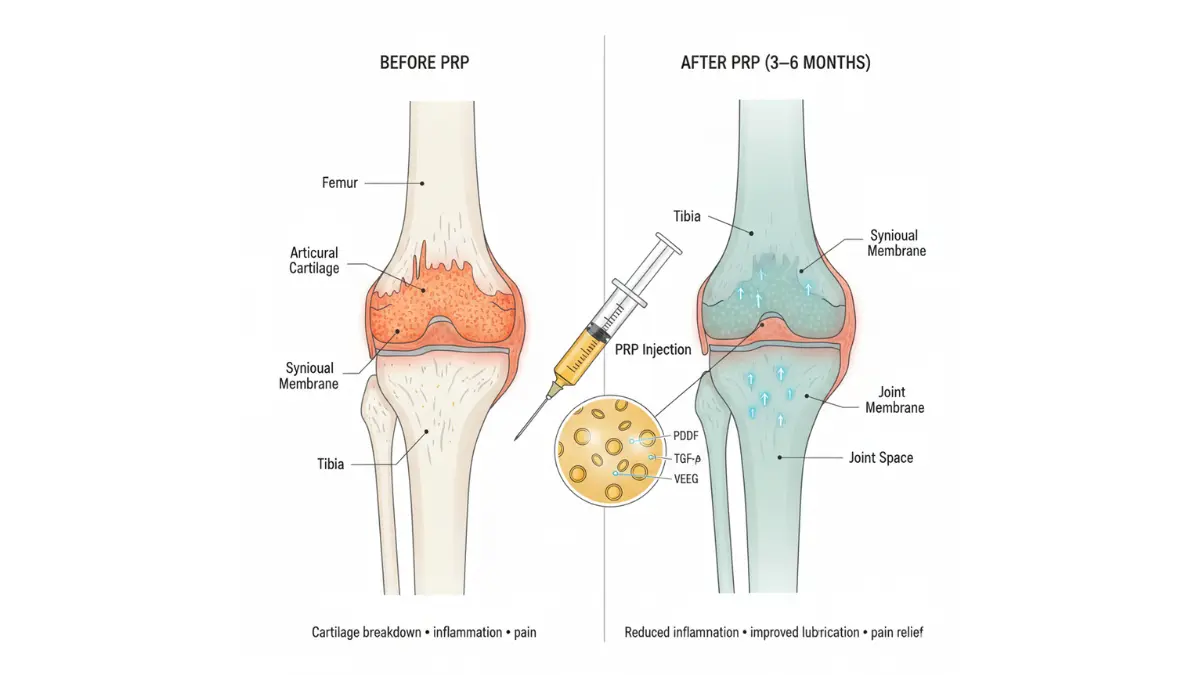
What This Means For You: If your knee OA is mild-to-moderate, PRP backed by high-platelet concentration protocols offers genuine 12-month pain relief superior to cortisone and hyaluronic acid.
PRP Results for Hair Loss
A comprehensive 2025 systematic review and meta-analysis published in Dermatology and Therapy (43 RCTs, 1,877 participants) confirmed that activated PRP significantly increases hair density and reduces recurrence compared to placebo.
Key data points:
- 93% of male pattern baldness patients in one cohort reported complete cessation of hair loss within 2 months
- 70–80% success rate in early-to-moderate androgenetic alopecia (pattern baldness)
- Hair density peaks at 6 months; results begin fading if maintenance sessions are skipped after 12–18 months
- Activated PRP outperformed non-activated PRP — and non-activated formulations showed higher adverse effects
PRP is most effective for: early-stage thinning, androgenetic alopecia, patients who’ve failed minoxidil alone.
PRP is less effective for: severe baldness (Norwood Grade 6–7), scarring alopecia, and stress-triggered (telogen effluvium) hair loss.
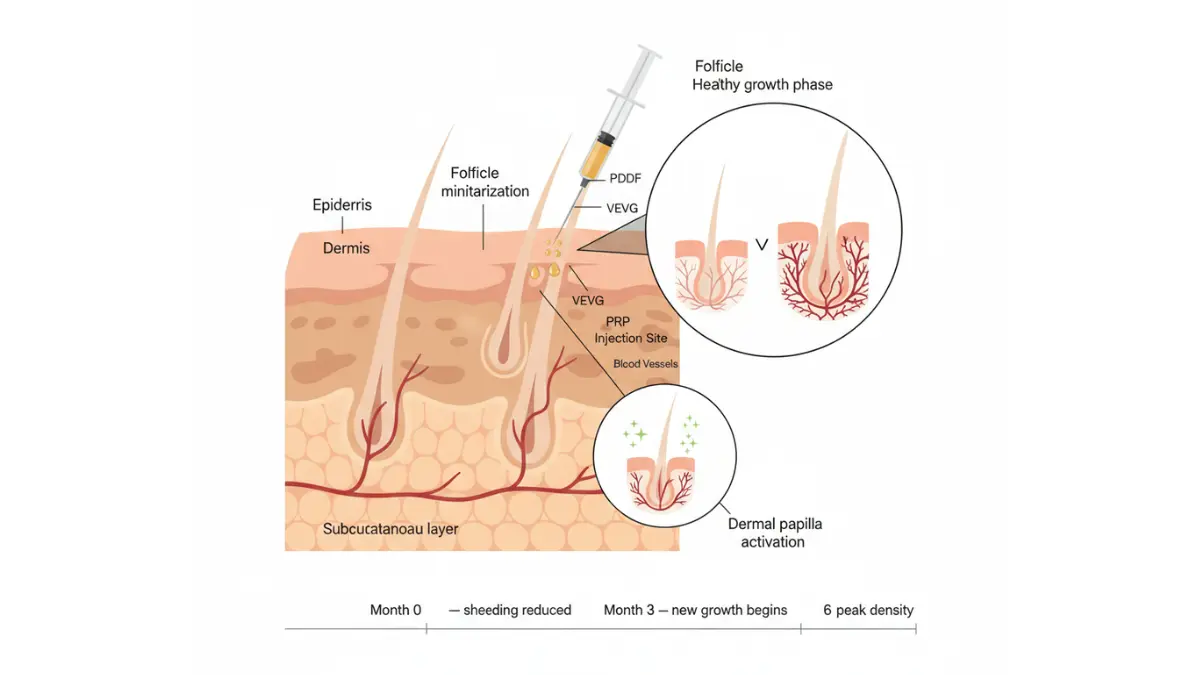
What This Means For You: If you’re in the early-to-moderate stages of hair thinning, PRP is backed by 43 randomized trials showing meaningful improvement. The earlier you start, the better your outcome.
PRP Results for Tendon Injuries & Sports Recovery
A November 2025 meta-analysis in PubMed reviewed 36 RCTs (~2,000 patients) on PRP for rotator cuff tears. The findings showed:
- Significant pain reduction (VAS scores) at 6 weeks, 3 months, 6 months, and 12 months
- Retear rates after surgical repair: 16.5% with PRP vs. 23.6% without (P=0.002)
- Superior functional outcomes at 12–24 weeks vs. corticosteroids
For tennis elbow specifically, leukocyte-rich PRP achieved 70–100% success rates at long-term follow-up across multiple studies.
If you’re an athlete tracking recovery alongside PRP therapy, our Heart Rate Zone Calculator can help you safely calibrate your return-to-exercise intensity. For those managing ACL-related conditions alongside tendon PRP, our article on ACL tear recovery time provides complementary guidance.
What This Means For You: PRP offers short-to-medium-term pain relief and meaningfully lower retear rates for tendon repairs. It works best when combined with structured physical therapy.
PRP Results for Skin & Face Rejuvenation
PRP facial results are driven by collagen remodeling — a slower process than pain relief. Peak results occur at 3–6 months post-treatment, with studies documenting a 1.5-fold increase in skin density.
Documented improvements:
- Fine lines, crow’s feet, and perioral wrinkles
- Skin texture, enlarged pores, and acne scarring
- Overall facial radiance and “refreshed” appearance
Honest note: Evidence for PRP reducing deep wrinkles or replicating surgical facelifts is limited. The FDA has cleared PRP equipment but has not approved PRP injections for cosmetic use as of 2026. As the team at Johns Hopkins Medicine notes, PRP for anti-aging remains an area of active research.
What This Means For You: PRP facials deliver real, gradual skin improvement — but set realistic expectations. It is not a substitute for surgical intervention in cases of significant skin laxity.
PRP Success Rates — What 2026 Clinical Evidence Actually Shows
This is the section no competitor publishes clearly. Here is the honest breakdown.
Overall Success Rate Data
| Condition | Success Rate | Evidence Base |
|---|---|---|
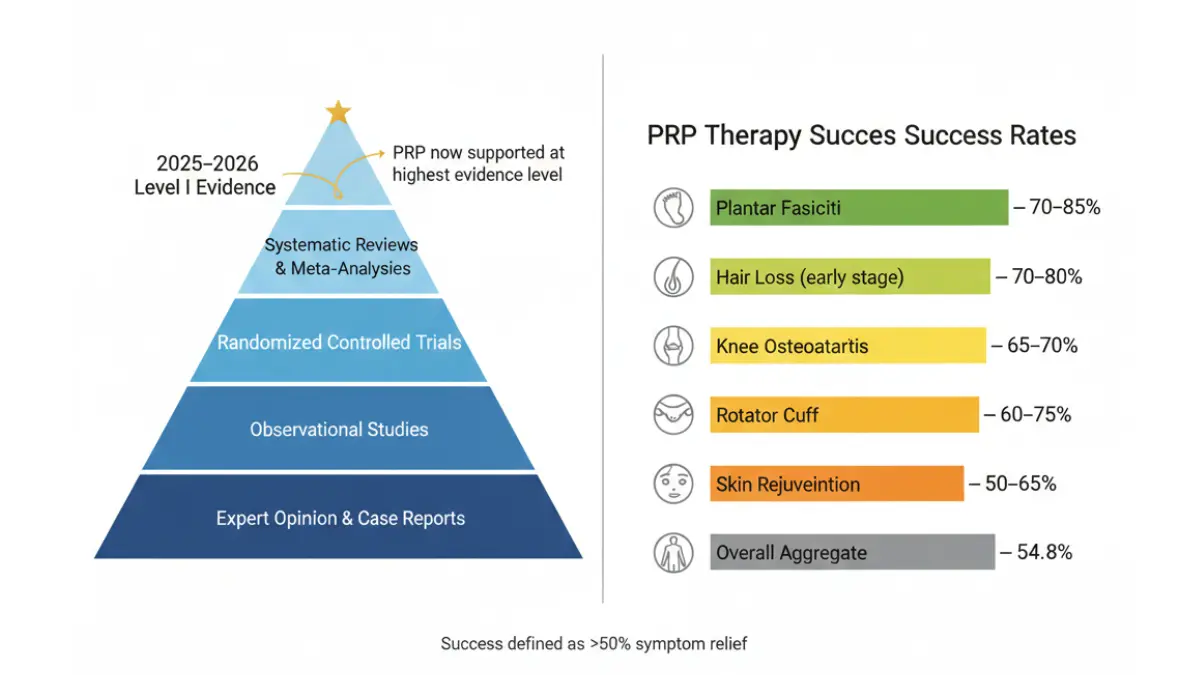
| Knee OA (KL Grade 1–3) | 65–70% | 18 RCTs, 1,995 patients (Bensa 2025) |
| Hair Loss (Early-Moderate) | 70–80% | 43 RCTs, 1,877 patients (PubMed 2025) |
| Plantar Fasciitis | 70–85% | Multiple Level I studies |
| Rotator Cuff Injuries | 60–75% | 36 RCTs, ~2,000 patients |
| Skin Rejuvenation | 50–65% | Level II–III evidence |
| Overall Aggregate | 54.8% | NIH PMC review (12 studies) |
According to the National Institutes of Health, the aggregate PRP success rate across musculoskeletal conditions is 54.8% — defined as >50% symptom relief post-therapy.
Why Some Patients Don’t See Results
The evidence identifies five clear failure predictors:
- Low platelet concentration — PRP below 1,000,000 platelets/µL consistently underperforms
- Severe disease stage — bone-on-bone joints and Grade 4 OA don’t respond well
- Non-standardized preparation — clinic variation in PRP processing is significant
- High BMI — added mechanical stress on joints reduces PRP efficacy
- Unrealistic expectations — patients expecting “cure” report dissatisfaction despite measurable improvement
Understanding your baseline metabolic health before starting PRP is valuable. Our Genetic Risk Assessment Tool can help you identify biological factors that may influence your healing response.
Who Gets the Best PRP Therapy Results? 2026 Patient Selection Guide
Ideal PRP Candidates
You are likely a strong candidate if you:
- Have mild-to-moderate disease (not end-stage)
- Have experienced symptoms for >3–6 months (chronic, not acute)
- Have failed conservative treatments like physical therapy or medication
- Have a BMI under 30 (especially for joint PRP)
- Have realistic expectations — improvement, not cure
- Are not taking NSAIDs or blood thinners regularly
Poor Candidates for PRP
PRP is unlikely to help if you:
- Have Grade 4 OA (bone-on-bone) or severe joint destruction
- Have an active infection at the injection site
- Have blood clotting disorders or are on anticoagulants
- Have severe alopecia with scarring or follicle destruction
- Have thrombocytopenia (low platelet count) — your PRP won’t be concentrated enough
📊 Quick Candidate Comparison
| Factor | Good Candidate | Poor Candidate |
|---|---|---|
| Disease Stage | Mild–Moderate | Severe/End-Stage |
| Duration | Chronic (3–6+ months) | Acute (<4 weeks) |
| Prior Treatment | Failed conservative care | No prior treatment tried |
| BMI | Under 30 | Over 35 |
| Platelet Count | Normal | Thrombocytopenia |
5 Questions to Ask Your Doctor Before PRP
- What is my platelet concentration in your PRP preparation protocol?
- Do you use leukocyte-poor (LP-PRP) or leukocyte-rich (LR-PRP) — and why?
- How many sessions do you recommend for my specific condition?
- Will I need physical therapy alongside injections?
- What is your clinic’s objective success rate for my condition?
For patients exploring PRP as part of a broader regenerative medicine strategy, our in-depth comparison of stem cell therapy results shows how these treatments differ and when each is appropriate.
How Many PRP Sessions Do You Need — and Is the Cost Worth It?
Sessions by Condition
| Condition | Recommended Sessions | Interval | Maintenance |
|---|---|---|---|
| Knee OA | 1–3 | 2–4 weeks apart | Every 12–18 months |
| Hair Loss | 3–4 initial | Monthly | Every 6 months |
| Tendon Injuries | 1–3 | 4–6 weeks apart | As needed |
| Skin/Face | 3 initial | 4–6 weeks apart | Every 12–18 months |
US Cost Breakdown (2026)
- Per session: $500–$2,500 depending on body area and clinic
- Knee injection: $750–$850 at Johns Hopkins; $500–$2,000 nationally
- Hair PRP (scalp): $400–$1,500 per session
- Insurance: Rarely covered; HSA/FSA eligible in many US plans
- Total first-year cost: $1,500–$7,500 depending on condition and sessions needed
PRP vs. Alternatives: Is It Worth It?
| Treatment | Cost | Duration | Risk |
|---|---|---|---|
| PRP Injection | $500–$2,500/session | 12–18 months | Very low (<0.1% complications) |
| Cortisone Injection | $100–$300/session | 1–3 months | Joint damage risk with repeated use |
| Hyaluronic Acid | $300–$800/session | 6 months | Low |
| Total Knee Replacement | $30,000–$50,000 | Long-term | Significant surgical risk |
PRP’s cost advantage becomes clear when viewed against surgery. For patients exploring the full spectrum of knee treatment options, our guide on knee surgery costs in 2026 provides a comprehensive state-by-state breakdown.
For those considering PRP for shoulder recovery specifically, our shoulder surgery success rates guide provides a useful benchmark comparison.
How to Maximize Your PRP Therapy Results — 2026 Expert Protocol
Getting PRP is only half the battle. What you do before and after determines whether you’re in the 65% success group or the 35% who see limited benefit.
Before Your PRP Session
- Hydrate well — arrive fully hydrated; dehydration thickens blood and reduces PRP quality
- Eat a full meal — blood draws on an empty stomach cause lightheadedness
- Stop NSAIDs 7 days prior — ibuprofen and naproxen suppress platelet activity and reduce PRP effectiveness
- Discuss blood thinners with your doctor — warfarin and similar medications affect platelet function
- Avoid alcohol 24–48 hours before — impacts platelet aggregation
After Your PRP Session
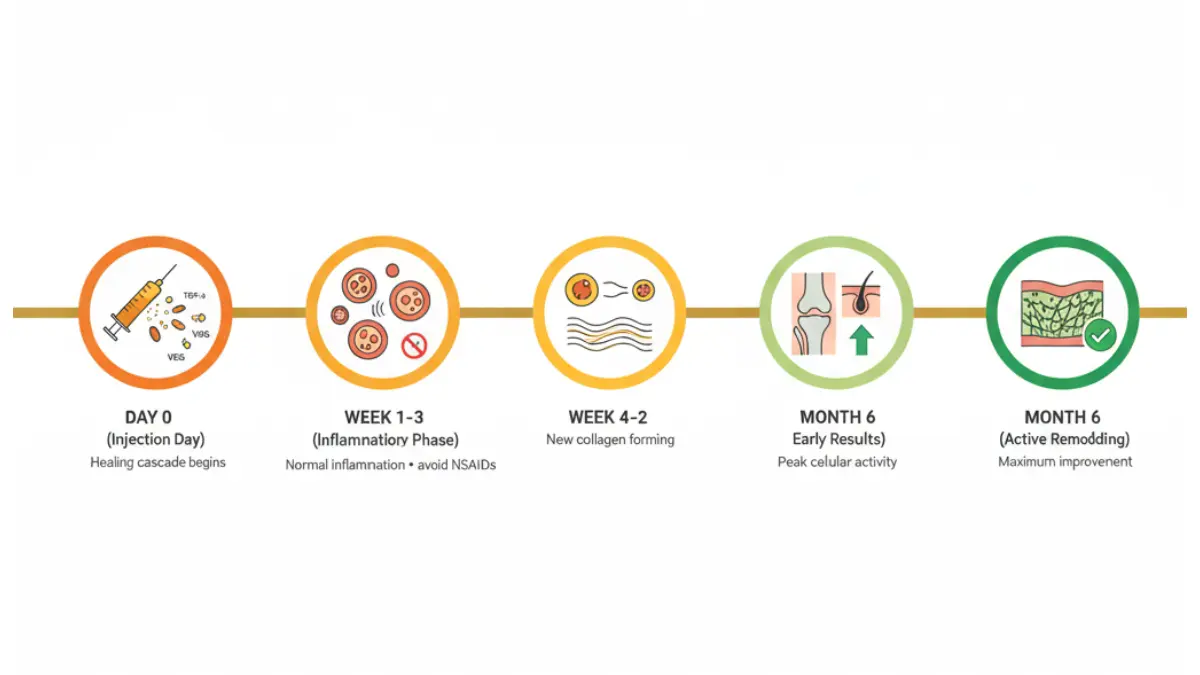
- Avoid NSAIDs for 2–4 weeks — the inflammatory response PRP triggers is part of healing; suppressing it reduces results
- Commit to physical therapy — for joint PRP, 6–12 weeks of structured PT is critical for optimal outcomes
- Keep a symptom journal — track weekly pain scores, function, and energy to accurately assess your progress
- Prioritize sleep — growth factor activity peaks during deep sleep stages; our Sleep Calculator can help you optimize your rest schedule during recovery
- Stay hydrated consistently — adequate hydration supports optimal tissue healing; use our Water Intake Calculator to hit your daily target
Red Flags — Contact Your Doctor Immediately If:
- Increasing pain, redness, or swelling beyond 72 hours post-injection
- Fever above 100.4°F
- Signs of infection: warmth, discharge, or worsening bruising
✅ Your 4-Step PRP Action Plan:
- Confirm your platelet concentration with your provider before agreeing to treatment
- Stop NSAIDs 7 days before; commit to not resuming for 2–4 weeks after
- Schedule physical therapy in parallel with joint injections
- Set a 6-month review point to objectively assess results with your doctor
PRP is also increasingly being compared to other physical and regenerative therapies. Our article on physical therapy as a treatment modality and the acupuncture treatment guide are useful companion reads for patients evaluating non-surgical options.
For a deeper dive into the broader regenerative medicine landscape, the NIH National Institute of Arthritis and Musculoskeletal and Skin Diseases provides continuously updated evidence summaries on emerging biologics including PRP.
Frequently Asked Questions
1. How long does PRP therapy take to show results?
Joint injections show improvement in 4–6 weeks; peak results at 3–6 months. Hair loss results begin at 2–3 months; peak at 6 months.
2. What is the success rate of PRP therapy?
50–70% for appropriately selected patients. Aggregate across all conditions: 54.8% (NIH review). Hair loss success rates reach 70–80% in early-stage patients.
3. How many PRP sessions do I need?
1–3 sessions for joint and tendon conditions; 3–4 initial sessions for hair loss, followed by maintenance every 6–12 months.
4. Does PRP therapy work for hair loss?
Yes — 43 RCTs (1,877 patients) confirm activated PRP increases hair density and reduces hair loss, with 70–80% success in early-to-moderate androgenetic alopecia.
5. How painful are PRP injections?
Generally mild. A numbing agent is applied before injection. Post-injection soreness lasts 24–72 hours. Most patients resume normal activity immediately.
6. Can PRP therapy fail? Why?
Yes. Key failure factors: low platelet concentration (<1,000,000/µL), severe disease stage, high BMI, non-standardized preparation, and poor patient selection.
7. Is PRP therapy covered by insurance in the US?
Rarely. Most US insurers classify PRP as investigational. It is typically HSA/FSA eligible. Expect out-of-pocket costs of $500–$2,500 per session.
8. What are the side effects of PRP therapy?
Very low risk — <0.1% serious complications. Common: temporary soreness, bruising at injection site, mild swelling (24–72 hours).
9. How long do PRP therapy results last?
12–18 months for most joint and hair applications. Maintenance sessions are recommended to sustain results.
10. Is PRP better than cortisone injections?
PRP provides superior long-term outcomes (6–12 months). Cortisone works faster but has shorter duration and carries risk of joint damage with repeated use. PRP is generally the better long-term strategy.
11. Who is not a good candidate for PRP?
Poor candidates include those with end-stage joint disease (bone-on-bone), active infection, blood clotting disorders, thrombocytopenia, or scarring alopecia. Always consult a qualified physician.
About this content
How this article was put together: researched from recognised health sources, drafted with the help of AI tools, and edited by hand, with sources linked throughout.

Sameer Patel is the founder and CEO of KCS Global Group, an India-based digital publishing company that owns and operates My Medicine Advisor. He leads the editorial team:…
Medical disclaimer
The content on My Medicine Advisor is provided for general informational and educational purposes only and is not a substitute for professional medical advice, diagnosis, or treatment. Health information on this website should not be used to diagnose, treat, cure, or prevent any condition without guidance from a qualified healthcare professional. Always seek the advice of your doctor, physician, or another licensed healthcare provider with any questions you may have regarding a medical condition, symptoms, medications, or treatment decisions.