
On This Page – Quick Medical Summary
Quick Answer: Stem cell therapy results range from 60% to 92% success depending on condition type. Blood disorders and bone marrow transplants show the strongest outcomes. Neurological applications are producing early breakthroughs. Here is what verified 2026 clinical data actually confirms — condition by condition.
The Patient Story That Changed How Doctors Think About Stem Cells
Justin Graves had suffered from severe, treatment-resistant epilepsy for years. Medications failed. Surgery was not an option. Then, in a Phase 1 clinical trial run by Neurona Therapeutics, lab-grown neurons were transplanted into his brain — engineered specifically to suppress the electrical misfires that triggered his seizures.
The results shocked his medical team.
His seizure frequency dropped dramatically. He was one of just 15 patients treated in this early trial, but his case became one of the most cited stem cell therapy results of 2025. MIT Technology Review named stem cell therapies a Top 10 Breakthrough Technology of 2025 — validating decades of research that had long been dismissed as too experimental.
What This Means For You
If you or someone you care for has exhausted conventional treatment options, stem cell therapy results are no longer a distant promise. For specific conditions, they are documented, reproducible, and increasingly accessible through approved clinical pathways in the United States.
Before exploring any treatment, use our Symptom Checker to document your current health status — this baseline record becomes critically important when evaluating any advanced therapy with your physician.
Understanding how stem cell therapy works is the essential first step before evaluating whether the results match your condition.
Stem Cell Therapy Success Rates by Condition — The 2026 Data Table
No competitor in this space presents this data in one place. Most give vague ranges. Here is the definitive, evidence-based breakdown of stem cell treatment outcomes by condition, drawn from peer-reviewed clinical data through early 2026.
What the Numbers Actually Show
Success rates in regenerative medicine are not universal — they depend entirely on the condition being treated, the type of stem cell used, and whether the therapy is FDA-approved or experimental. The table below reflects the most current clinical trial results available.
| Condition | Stem Cell Type | Success Rate | Results Timeline | FDA Status (USA) |
|---|---|---|---|---|
| Blood Cancers (Leukemia/Lymphoma) | HSC Transplant | 60–70% | 3–5 years | ✅ Approved |
| Bone Marrow Disorders (survival) | HSC | 92% at 3 years | 3 years | ✅ Approved |
| Multiple Sclerosis | Autologous HSCT | 60% (disease progression halted) | 5 years | Experimental |
| Orthopedic / Joint Repair | MSC | ~80% improvement | 6–12 months | Experimental |
| Corneal Blindness (CALEC) | Autologous Limbal | 79% complete restoration at 12 months | 12–18 months | Phase 1/2 |
| Type 1 Diabetes | iPSC-derived Beta Cells | Some patients off insulin | 12–24 months | Phase 2/3 |
| Heart Failure (HFrEF) | MSC | Quality of life improved; LVEF unchanged | 6–12 months | Experimental |
| Epilepsy | Lab-grown Neurons | Seizure reduction (early Phase 1) | Ongoing | Phase 1 only |
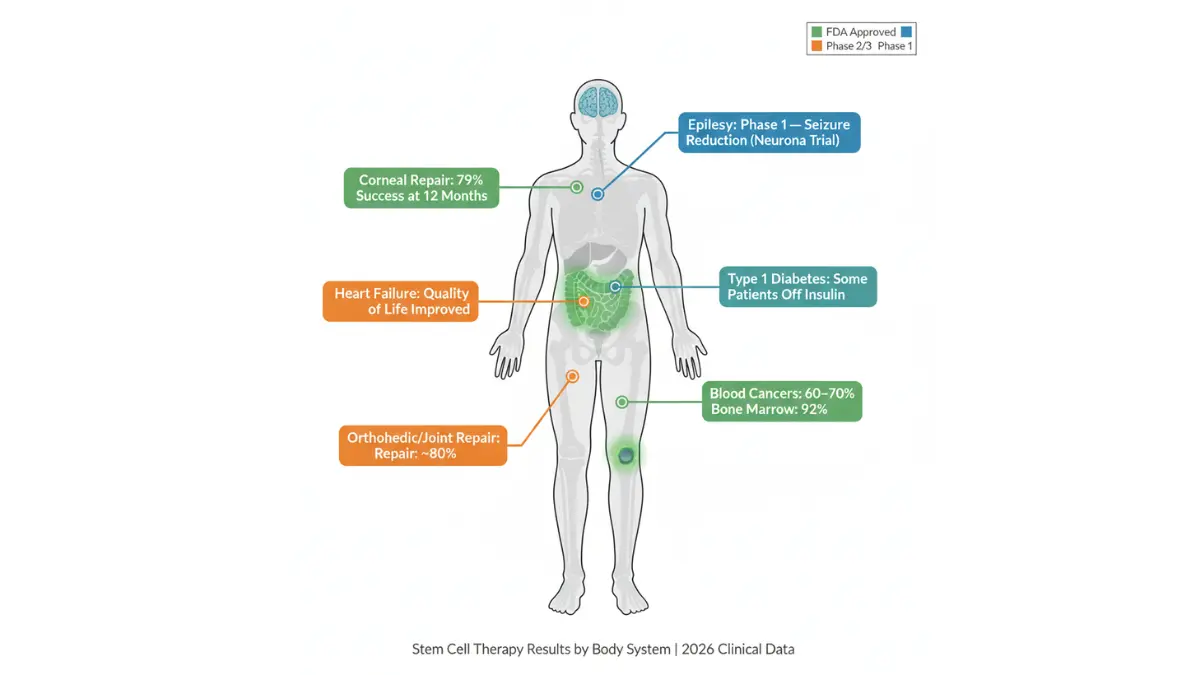
Key Takeaway: Blood disorders and bone marrow conditions deliver the strongest, most consistent stem cell therapy results to date. These are the only conditions with full FDA approval in the United States.
According to a clinical study published by the National Eye Institute (NIH), the CALEC procedure completely restored corneas in 50% of patients at 3 months — rising to 79% complete success by 12 months. That is a landmark stem cell therapy success rate for a condition previously considered irreversible.
For patients managing blood sugar as part of a diabetes-related stem cell evaluation, our Blood Sugar Converter can help you track and convert readings as you monitor your treatment response.
You can also read our detailed guide on haematopoietic stem cells to understand why blood-based applications consistently lead all other categories in clinical outcomes.
How Long Does Stem Cell Therapy Take to Work?
This is the most searched question patients ask after reviewing stem cell therapy results — and the one most competitors answer vaguely.
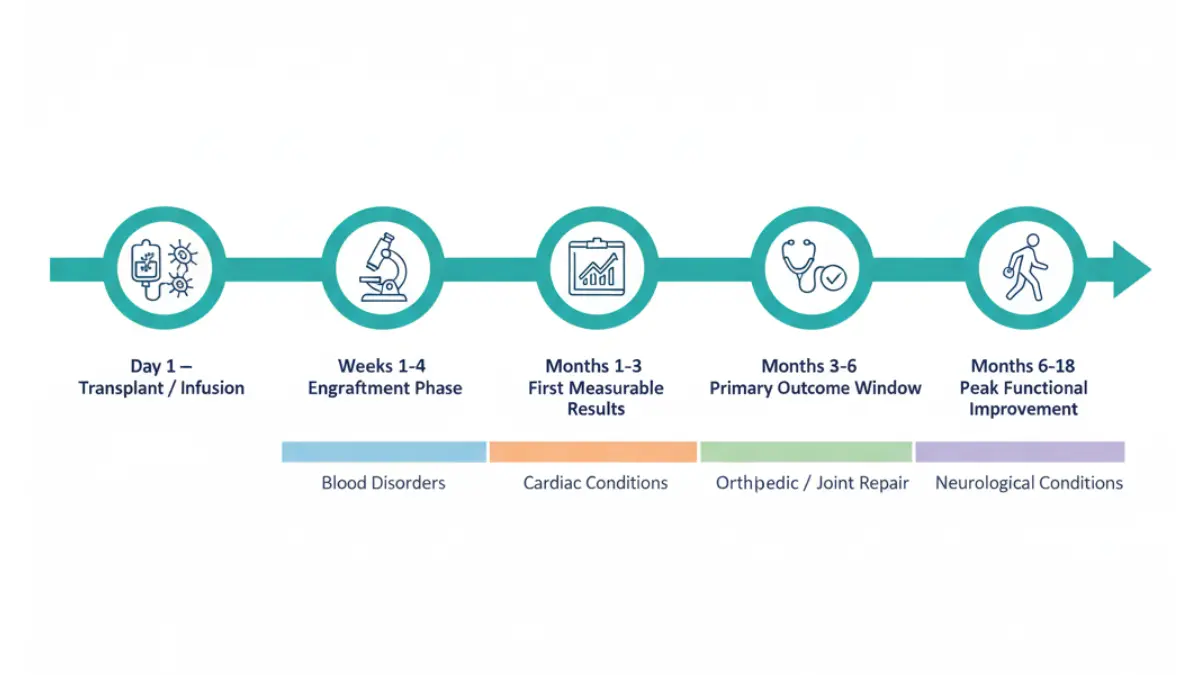
Direct answer: Most patients see measurable stem cell treatment outcomes within 3 to 6 months post-procedure. Blood disorder patients often see faster cellular engraftment. Joint and neurological patients typically wait 6 to 18 months for full functional improvement.
Phase-by-Phase Results Timeline
- Weeks 1–4: Initial engraftment phase. The body accepts (or rejects) transplanted cells. Immune monitoring is critical.
- Months 1–3: Early inflammation reduction. First measurable biomarkers appear. Most trials record their initial checkpoint here.
- Months 3–6: Primary outcome window. The majority of peer-reviewed studies define “success” at this milestone.
- Months 6–12: Peak functional improvement in orthopedic and autoimmune cases. MS patients show the most meaningful disability reversal in this window.
- Year 2+: Long-term durability phase. Remission, recurrence screening, and follow-up imaging confirm lasting stem cell therapy effectiveness.
Real-World Example: In Vertex Pharmaceuticals’ Type 1 Diabetes trial, patients who received iPSC-derived beta cell infusions began producing insulin naturally within 3 to 6 months. Some participants completely discontinued daily insulin injections by the 12-month mark — a result that drew international attention as one of the most significant regenerative medicine results in endocrinology history.
All active US trial timelines are publicly searchable at ClinicalTrials.gov, the official federal registry for all ongoing clinical research.
Patients tracking body-weight changes or metabolic health during recovery may find our BMI Calculator and Weight Loss Calculator useful tools for monitoring overall physical trajectory alongside treatment.
When Stem Cell Therapy Doesn’t Work — The Honest Data No One Shows You
This is the section your competitors refuse to write. And it is exactly why patients trust sites that include it.
Stem cell therapy results are not guaranteed. Understanding why treatments fail is as clinically important as knowing when they succeed. Transparency here is not a weakness — it is the foundation of real medical authority.
Top 5 Reasons Stem Cell Therapy Results Disappoint
1. Wrong cell type for the condition A 2025 meta-analysis published in PMC found that MSC therapy for heart failure produced no significant improvement in left ventricular ejection fraction (LVEF) across 12 trials. Quality of life improved — but the structural heart damage did not reverse. Cell type matters enormously.
2. Unregulated clinic vs. approved clinical trial The FDA has issued repeated warnings about unapproved stem cell clinics operating outside trial protocols. Florida’s Senate Bill 1768 (signed July 2025) now permits licensed physicians to offer certain non-FDA-approved therapies for orthopedics and pain — creating a regulatory gray zone patients must navigate carefully.
3. Patient selection mismatch Age, immune status, disease stage, and genetic profile all directly affect stem cell treatment effectiveness. A therapy proven in a 40-year-old may produce different outcomes in a 70-year-old with comorbidities.
4. Dosing uncertainty Studies reviewed by the NIH’s National Center for Biotechnology Information confirmed that higher stem cell doses do not consistently produce better outcomes. In some HSC trials, higher doses correlated with increased relapse rates — the opposite of what patients expect.
5. No standardized protocols Results vary significantly between institutions globally because no universal manufacturing, dosing, or delivery standard exists yet for most MSC-based therapies.
5 Red Flags in Stem Cell Clinics
- Guarantees of cure without peer-reviewed data
- No registration on ClinicalTrials.gov
- Charging $20,000+ without an IRB-approved trial protocol
- Treating multiple unrelated conditions with the same cell product
- No long-term follow-up monitoring plan
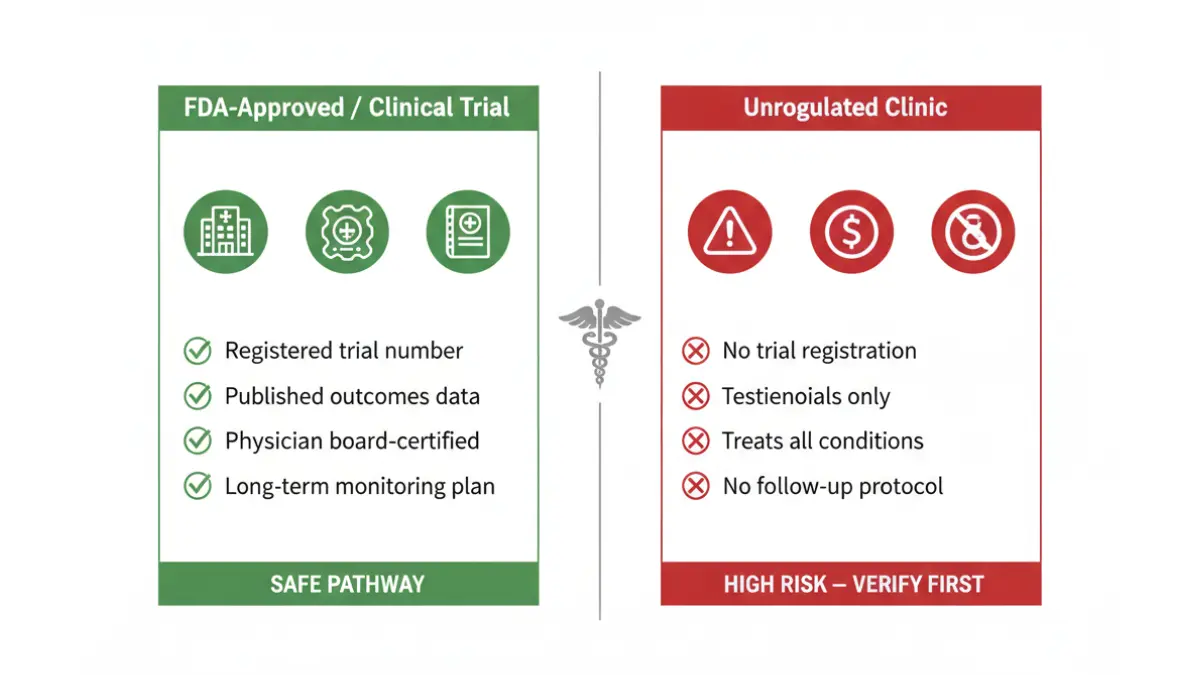
What This Means For You: Before committing to any stem cell treatment, use our Genetic Risk Assessment Tool to understand your baseline health profile — and always verify that your clinic is registered in an active, approved trial.
The FDA’s official patient safety guide on regenerative medicine therapies outlines which treatments are approved versus experimental and is essential reading before proceeding.
2026 Breakthroughs — The Stem Cell Results That Rewrote the Science
2025 and early 2026 produced the most significant cluster of stem cell therapy clinical trial results in the field’s history. These are not hypothetical findings. They are published, peer-reviewed, and in several cases, already changing clinical practice.
The 5 Breakthroughs Changing Everything Right Now
1. Epilepsy — Neurona Therapeutics (USA) Lab-grown inhibitory neurons transplanted into patients with treatment-resistant epilepsy. Early Phase 1 results showed dramatic seizure reduction in multiple participants. The trial is ongoing but is being closely watched by neurologists worldwide.
2. Type 1 Diabetes — Vertex Pharmaceuticals (USA) Some patients in this landmark trial have completely stopped taking insulin after receiving iPSC-derived beta cell transplants. This is the closest stem cell science has come to a functional cure for an autoimmune disease affecting over 2 million Americans.
3. Parkinson’s Disease — Stanford University + Cambridge University A Phase 1 trial transplanting embryonic stem cell-derived dopamine neurons showed confirmed graft survival at 18 months via PET imaging, with no serious adverse events. Three simultaneous international trials — including the STEM-PD trial at Lund University — are now in active dosing phases.
4. Corneal Blindness — Mass Eye and Ear / NIH The CALEC autologous limbal stem cell procedure achieved 79% complete corneal restoration at 12 months in 14 patients with previously irreversible blinding injuries. Results were published in Nature Communications and validated by the National Eye Institute.
5. Fanconi Anemia — Stanford University Three children with this severe genetic blood disorder received stem cell transplants using a new antibody-based preconditioning protocol — eliminating the need for toxic chemotherapy. All three remained healthy at the 2-year follow-up mark.
FDA Approvals and Clearances: 2024–2026
| Year | Therapy | Indication | Status |
|---|---|---|---|
| Nov 2024 | REGENECYTE (StemCyte) | Hematopoietic reconstitution | ✅ FDA Approved |
| Jun 2025 | XellSmart iPSC therapies (×3) | Parkinson’s, ALS, Stroke | IND Clearance (Phase 1) |
| Jul 2025 | Florida SB 1768 | Orthopedics, wound care, pain | State law (non-FDA gray zone) |
| Feb 2025 | Fertilo (REPROCELL) | Fertility / oocyte maturation | Phase 3 Trial Launched |
2026 marks a turning point. For blood disorders, stem cell therapy results are established and FDA-validated. For diabetes, epilepsy, and vision loss, the data is compelling enough that major academic medical centers are actively expanding trials.
Patients interested in understanding how these breakthroughs relate to induced pluripotent stem cells — the technology behind many of these trials — can explore that guide for a deeper scientific foundation.
Full approval tracking is maintained by the NIH Stem Cell Information Portal, which updates as new IND clearances and approvals are issued.
Should You Consider Stem Cell Therapy? Expert Verdict + Your Action Plan
Whether stem cell therapy results are right for you depends on your specific condition, the current clinical evidence for that condition, and your access to approved trials in the United States.
Global Expert Consensus (2026)
Medical authorities worldwide have converging positions on stem cell treatment outcomes:
- ISSCR (International Society for Stem Cell Research): Recommends treatment only within approved clinical trials or for fully FDA-validated indications. Strongly discourages unregulated clinic treatments.
- UK MHRA: Approves stem cell therapies only for blood disorders and graft-versus-host disease at this time.
- Japan PMDA: Has approved 5 MSC-based products — the most progressive regulatory environment globally, offering a preview of where US approvals are heading.
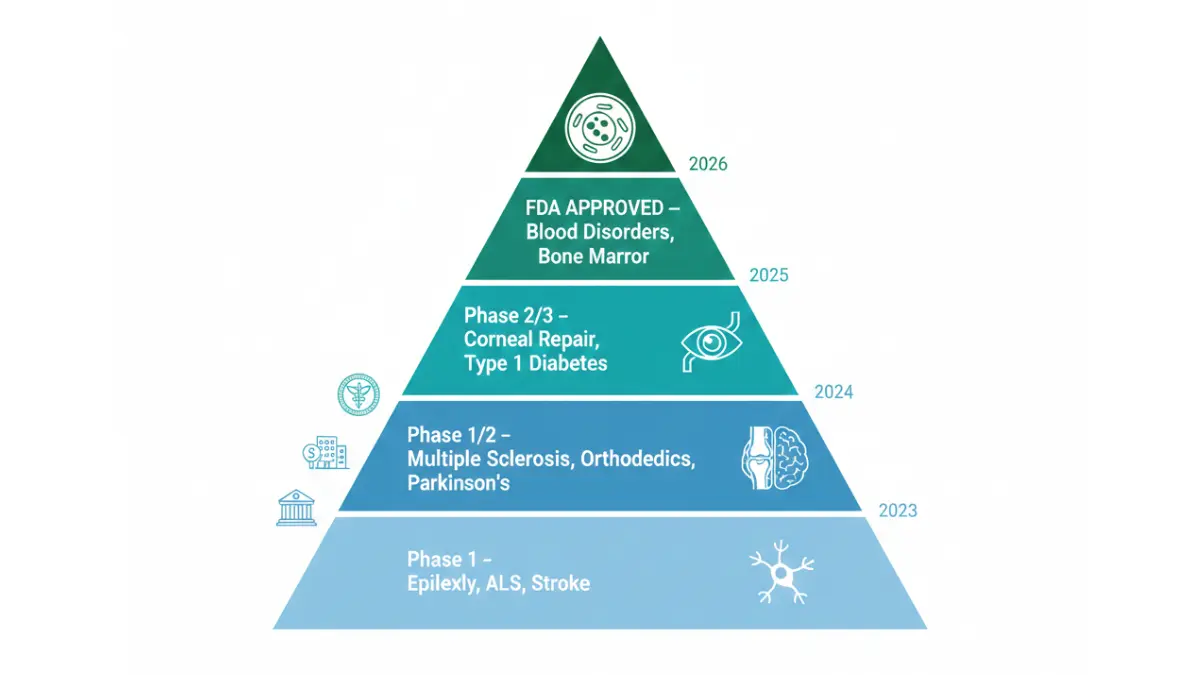
Evidence Strength Pyramid (2026)
▲ LEVEL 1 — PROVEN: Blood disorders, bone marrow → FDA approved, 60–92% success
▲ LEVEL 2 — STRONG: Corneal damage, Type 1 Diabetes → Phase 2/3 evidence
▲ LEVEL 3 — PROMISING: Multiple sclerosis, orthopedics → Phase 1/2 trials
▲ LEVEL 4 — EMERGING: Parkinson's, epilepsy, ALS → Phase 1 only
Your 5-Step Patient Action Plan
Step 1: Confirm your condition has active peer-reviewed clinical trial data. Search ClinicalTrials.gov by condition name.
Step 2: Verify the therapy is either FDA-approved or enrolled in an active Phase 2 or Phase 3 trial.
Step 3: Request the clinic’s published outcomes data — not brochures, not testimonials. Ask for the specific trial registration number.
Step 4: Build your health baseline. Our Symptom Checker and Genetic Risk Assessment Tool help you create a documented record that supports informed conversations with specialists.
Step 5: Consult a hematologist, immunologist, or board-certified regenerative medicine specialist — not a wellness clinic sales representative.
For patients comparing stem cell therapy against other advanced treatment options, our guides on immunotherapy and radiation therapy provide parallel evidence-based comparisons.
Additional evidence-based context on evaluating your treatment options is available through NIH MedlinePlus Stem Cell information, a trusted government health resource updated regularly.
FAQs: Stem Cell Therapy Results
Q1. What is the average success rate of stem cell therapy?
Success rates range from 60% to 92% depending on condition. Blood disorders and bone marrow transplants show the highest rates. Neurological applications remain Phase 1–2 level evidence.
Q2. How long does it take to see stem cell therapy results?
Most patients see initial measurable changes within 3–6 months. Full outcomes are typically assessed at 12–18 months in most clinical trial protocols.
Q3. Is stem cell therapy FDA approved in the USA?
Yes — for blood cancers, bone marrow disorders, and immune reconstitution. MSC-based therapies are not yet FDA-approved but are approved in Japan, South Korea, and Canada.
Q4. Which condition has the best stem cell therapy success rate?
Bone marrow transplants for blood disorders lead all categories with a 92% three-year survival rate. Corneal repair follows with 79% complete restoration at 12 months.
Q5. Can stem cell therapy results be permanent?
For blood cancers and bone marrow disorders, complete remission after HSCT can be permanent. Long-term durability for other conditions is still being studied.
Q6. What are the main risks of stem cell therapy?
Documented risks include immune rejection, graft-versus-host disease, infection during engraftment, and in rare cases, tumor formation from undifferentiated cells.
Q7. Does stem cell therapy work for joint pain and arthritis?
MSC therapy for orthopedic conditions shows approximately 80% functional improvement in clinical studies. However, it remains experimental and is not FDA-approved for arthritis in the US.
Q8. What is the difference between autologous and allogeneic stem cell therapy?
Autologous therapy uses your own cells — lower rejection risk, but limited by the patient’s existing cell health. Allogeneic uses donor cells — broader availability, but higher immune complication risk.
Q9. How much does stem cell therapy cost in the USA?
Costs range from $5,000 for approved blood disorder treatments covered by insurance to $50,000+ for experimental MSC therapies at private clinics. Most experimental treatments are not covered by standard insurance.
Q10. Why do some stem cell treatments fail?
The most common causes are wrong cell type selection, unoptimized dosing, poor patient selection criteria, and lack of standardized manufacturing protocols across clinics.
Q11. What should I ask a stem cell clinic before paying?
Ask for their ClinicalTrials.gov registration number, peer-reviewed published outcomes data, the treating physician’s board certification in regenerative medicine, and their protocol for managing adverse events.
⚕️ Medical Disclaimer: This article is for educational purposes only and does not constitute medical advice. Stem cell therapy is a complex medical intervention. Always consult a licensed, board-certified medical professional before making any treatment decisions. Approved therapies and trial availability vary by location and medical condition.
For more evidence-based health guidance, visit our Health Tips hub or explore our full library of medical tools at mymedicineadvisor.com.
About this content
How this article was put together: researched from recognised health sources, drafted with the help of AI tools, and edited by hand, with sources linked throughout.

Sameer Patel is the founder and editor of My Medicine Advisor. He is not a doctor or medical professional — before starting this site he worked in banking,…
Medical disclaimer
The content on MyMedicineAdvisor is provided for general informational and educational purposes only and is not a substitute for professional medical advice, diagnosis, or treatment. Health information on this website should not be used to diagnose, treat, cure, or prevent any condition without guidance from a qualified healthcare professional. Always seek the advice of your doctor, physician, or another licensed healthcare provider with any questions you may have regarding a medical condition, symptoms, medications, or treatment decisions.