

On This Page – Quick Medical Summary
As of 2026, regenerative medicine delivers clinically confirmed results across joint disease, blood cancers, and autoimmune conditions — with success rates ranging from 70% to 92% depending on the condition and treatment type. However, results vary significantly by therapy, patient profile, and whether the clinic uses FDA-approved or experimental protocols. This guide cuts through the hype with peer-reviewed data, condition-by-condition success rates, and the red flags that protect you from unproven treatments.
After two knee surgeries that failed to hold, James, a 54-year-old construction manager from Ohio, turned to platelet-rich plasma (PRP) therapy. Twelve months later, his pain-VAS score had dropped by more than half — results that now match what large-scale trials confirm. His story reflects a broader shift: regenerative medicine results are no longer just hopeful claims. They are documented, measurable, and increasingly reproducible.
What Is Regenerative Medicine? (The 2026 Definition Doctors Use)
Regenerative medicine is the branch of healthcare that repairs, replaces, or regenerates damaged cells, tissues, and organs — instead of simply managing symptoms. Unlike traditional treatment, which suppresses pain or slows disease, regenerative therapy targets the biological root cause.
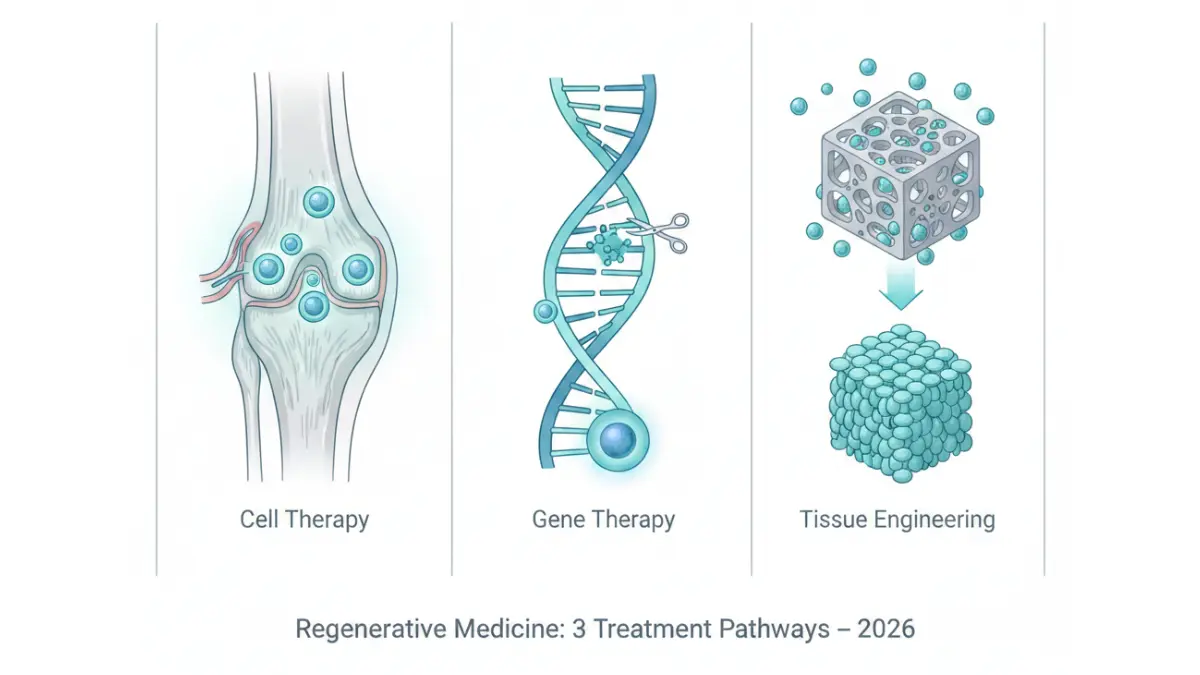
The National Institutes of Health (NIH) defines it as an approach that harnesses the body’s own healing mechanisms, introduces new cells, or uses engineered tissues to restore normal function. In 2026, three core treatment types define the field.
The 3 Core Regenerative Treatment Types
| Treatment Type | What It Does | Common Applications |
|---|---|---|
| Cell Therapy | Introduces stem cells or immune cells to repair tissue | Joint repair, blood cancers, autoimmune disease |
| Gene Therapy | Corrects genetic defects at the molecular level | Sickle cell disease, rare genetic disorders |
| Tissue Engineering | Grows replacement tissue using scaffolds and cells | Cartilage repair, skin regeneration, organ replacement |
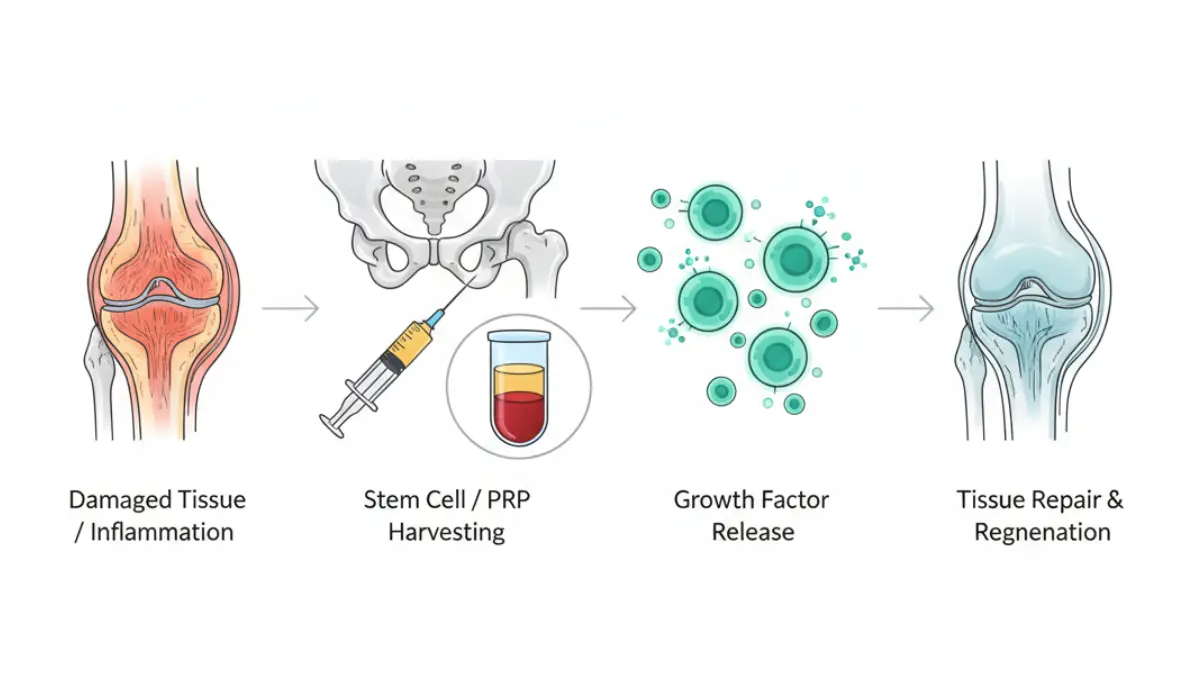
What Changed in 2026 That Makes Results More Reliable
The pivotal shift over the past 24 months is standardization. Earlier regenerative medicine suffered from inconsistent protocols — the same therapy administered differently at different clinics yielded wildly different outcomes. The FDA’s Regenerative Medicine Advanced Therapy (RMAT) designation now creates a faster, more rigorous pathway for validating therapies that show early clinical promise.
- Over 115 clinical trials using human pluripotent stem cell products now have regulatory approval globally (as of 2025 data).
- Stem cell transplant volumes in the U.S. have grown from approximately 1,500 patients per year in the 1980s to nearly 23,000 annually in 2022.
- MACI (cartilage repair), CAR-T therapies, and hematopoietic stem cell transplants are now fully FDA-approved with published long-term outcome data.
Bottom line: This is no longer experimental fringe medicine. It is a rapidly maturing clinical discipline backed by federal oversight and multi-center trials.
Regenerative Medicine Results by Condition — Real Numbers From Real Studies
This is the section no competitor publishes. Below is a condition-by-condition breakdown of what the peer-reviewed evidence actually shows — not clinic marketing claims.
Joint Pain and Osteoarthritis: PRP Results
Platelet-rich plasma (PRP) therapy is among the most studied regenerative treatments for joint conditions. A 2025 meta-analysis of 56 randomized controlled trials confirmed PRP is superior to both placebo and corticosteroids for chronic pain at 6- and 12-month follow-ups.
In a head-to-head comparison published in a Nature-affiliated journal, PRP patients reported a pain-VAS improvement of 38.5 versus 18.7 for hyaluronic acid (HA) at 24 weeks. For complete detail on PRP outcomes, see our dedicated guide to PRP therapy results.
Cartilage Defect Repair: MACI Success Rate
Matrix-induced Autologous Chondrocyte Implantation (MACI) — a fully FDA-approved cellular therapy manufactured by Vericel Corp — achieves an 80–90% success rate for cartilage defects, with results lasting five or more years in most patients. A Mayo Clinic study on Bone Marrow Aspirate Concentrate (BMAC) for hip osteonecrosis found that over 90% of treated hips avoided collapse at the two-year mark.
Blood Cancers: Stem Cell Transplant Outcomes
Hematopoietic stem cell transplants remain among the most clinically validated regenerative interventions. According to data reviewed by the National Cancer Institute, outcomes by cancer type include:
- Recurrent Hodgkin lymphoma: 3-year survival rate of 92%
- Multiple myeloma: 3-year survival rate of 79%
- General blood cancers: Stem cell transplant success rates range from 60–70% depending on cancer type and donor match
For patients wanting to understand haematopoietic stem cells in depth, our expert overview of haematopoietic stem cells covers the science clearly.
Autoimmune Conditions: Mesenchymal Stem Cell Therapy
Mesenchymal stem cell (MSC) therapy shows approximately 80% success in modulating the immune system and reducing chronic inflammation in autoimmune patients, including multiple sclerosis and graft-versus-host disease cases. The FDA approved Ryoncil — the first non-hematopoietic MSC therapy — for steroid-refractory acute graft-versus-host disease in pediatric patients. A complete course costs $1.55 million, underscoring why insurance navigation matters critically.
Chronic Wound Healing: PRP + Adipose Tissue
A 2025 prospective study published in Biomedicines followed 31 patients with chronic wounds unresponsive to conventional care for over six weeks. After PRP therapy — combined with adipose tissue transfer in select cases — all patients experienced measurable wound area reduction, with those combining both therapies seeing the most significant outcomes.
Full Results Snapshot
| Condition | Treatment | Reported Success Rate | Result Duration |
|---|---|---|---|
| Knee osteoarthritis | PRP | 70–80% improvement at 6–12 months | 6–18 months |
| Cartilage defects | MACI | 80–90% | 5+ years |
| Hip osteonecrosis | BMAC | >90% collapse avoidance at 2 years | 2+ years |
| Blood cancers | Stem cell transplant | 60–92% (varies by type) | Potentially lifelong |
| Autoimmune disease | MSC therapy | ~80% immune modulation | Variable |
| Chronic wounds | PRP ± adipose | Significant reduction in all patients | Weeks–months |
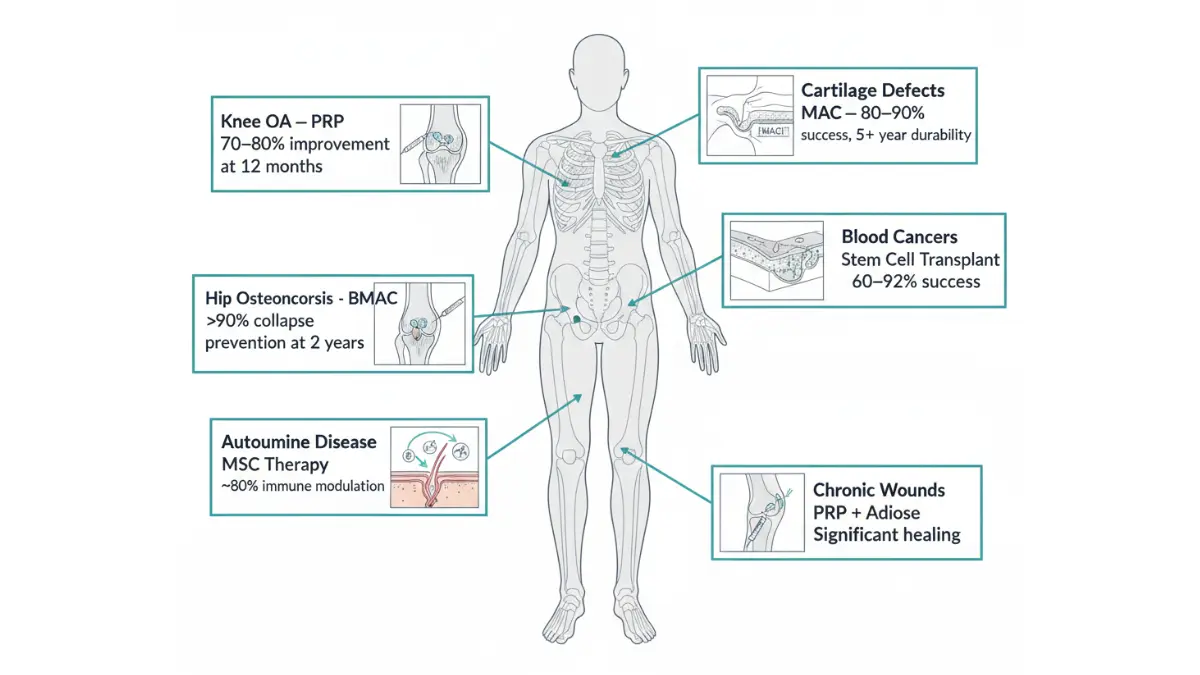
What This Means For You: Results depend heavily on condition type and treatment quality. Joint and cartilage conditions currently show the most consistent, reproducible outcomes. Blood cancer results are strong but require matched donors and experienced oncology teams.
How Long Do Regenerative Medicine Results Last?
This is the question every patient asks — and the one no competitor answers with actual data. Duration depends on three variables: the treatment type, your personal biology, and the quality of the protocol used.
Duration by Treatment Type
- PRP for joint pain: 6–18 months. Repeat injections are common and cumulative.
- MACI cartilage repair: 5+ years of structural improvement confirmed by MRI studies.
- Stem cell transplant (blood cancers): Can be curative and lifelong when engraftment is successful.
- MSC therapy (autoimmune): Variable — typically 12–24 months of symptom reduction before reassessment.
- Gene therapy (e.g., Zolgensma, Waskyra): Intended as a one-time, potentially lifelong correction.
The 4 Factors That Determine How Long YOUR Results Last
Research published in 2025 identified a critical biological variable that no mainstream health site reports: older patients have reduced levels of key microRNAs (miRNAs) required for optimal tissue regeneration. This means the same PRP dose can yield substantially weaker results in a 65-year-old compared to a 35-year-old, unless the practitioner compensates by using significantly higher platelet concentrations (targeting 5–10 billion platelets per dose).
The four key personal factors:
- Age and platelet biology — younger patients typically respond faster and retain results longer
- Condition stage — early-stage osteoarthritis consistently shows better and more durable outcomes than advanced-stage
- Metabolic health — patients with controlled blood sugar, healthy BMI, and low systemic inflammation see more durable results. You can check your weight baseline using our free BMI Calculator, and diabetic patients can track glucose units with our Blood Sugar Converter
- Protocol quality — standardized, high-concentration protocols at accredited facilities produce consistently better outcomes than unregulated clinics using lower-grade preparations
Key Takeaway: Patients with early-stage conditions who maintain a healthy lifestyle and receive high-concentration, protocol-driven treatment consistently report the most durable regenerative medicine results.
Is Regenerative Medicine FDA-Approved in 2026? What Every Patient Must Verify
This is where patients get misled — and where your safety is at stake.
Currently FDA-Approved Regenerative Treatments (2026)
The FDA’s Approved Cellular and Gene Therapy Products page lists treatments that have completed rigorous clinical review. Key approvals include:
- MACI — cartilage defect repair (Vericel Corp)
- KYMRIAH — CAR-T cell therapy for certain leukemias (Novartis)
- YESCARTA — CAR-T for large B-cell lymphoma (Kite Pharma)
- ZOLGENSMA — gene therapy for spinal muscular atrophy (Novartis)
- WASKYRA — gene therapy for Wiskott-Aldrich Syndrome (approved 2025) — severe infections decreased by 93% post-treatment
- Ryoncil — first FDA-approved non-hematopoietic MSC therapy (2024)
- Hematopoietic stem cell transplants (cord blood, bone marrow) — approved for multiple blood disorders
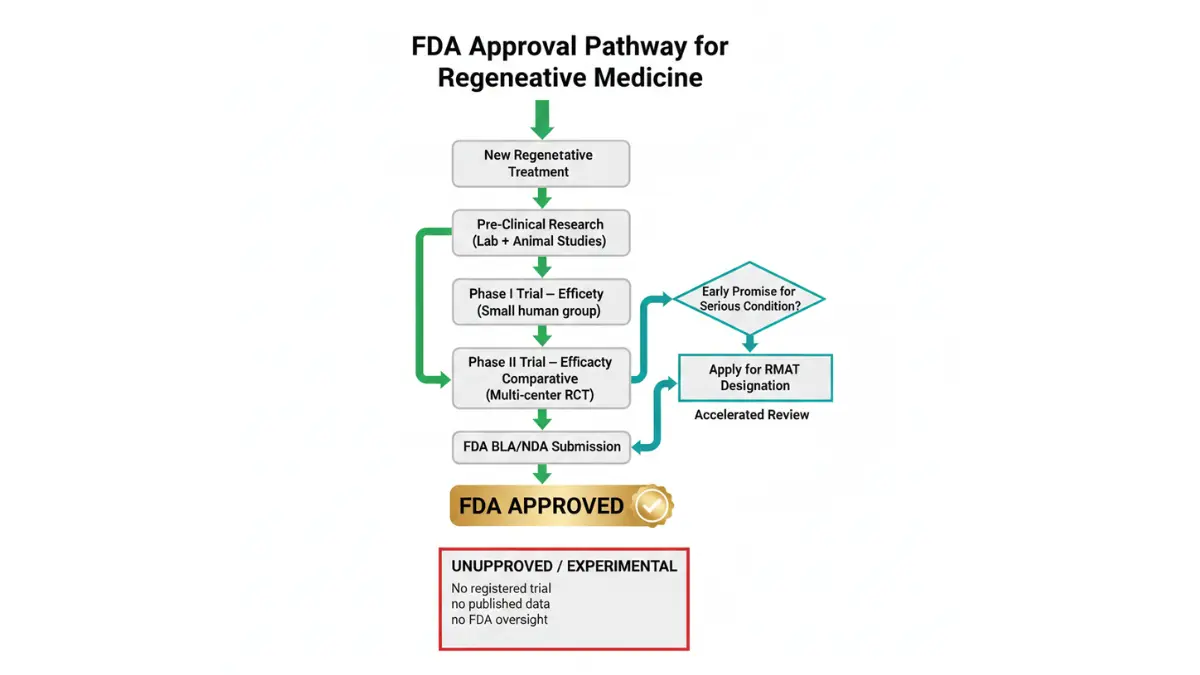
What RMAT Designation Means (And Why It Matters to You)
The RMAT designation is granted to therapies showing early clinical promise for serious conditions. It accelerates development and review — but RMAT is not the same as approval. Patients should always confirm whether a treatment is fully approved or still in trial.
5 Red Flags That Expose Unproven Clinics
No Healthline article, no WebMD page, no competitor covers this. Here is the patient protection list that could save you from a $20,000 mistake:
- “Guaranteed results” language — no peer-reviewed therapy carries a guarantee
- No published clinical data — always ask for the journal citation, not the clinic’s testimonial page
- Not listed on ClinicalTrials.gov — legitimate experimental therapies are registered at clinicaltrials.gov
- No physician board certification — verify credentials through the American Board of Medical Specialties
- Insurance refuses all coverage — fully approved therapies are increasingly covered; blanket refusal suggests unapproved status
Understanding your genetic risk factors can also inform your eligibility for specific therapies — use our Genetic Risk Assessment Tool to prepare before your consultation.
Regenerative Medicine vs. Surgery vs. Medication — Which Gets Real Results?
Patients frequently ask whether regenerative treatment is actually worth choosing over conventional options. Here is a transparent, data-driven comparison.
Head-to-Head Comparison
| Factor | Regenerative Medicine | Surgery | Medication |
|---|---|---|---|
| Invasiveness | Low to moderate | High | None |
| Recovery time | Days to weeks | Weeks to months | Immediate |
| Result duration | 6 months to lifelong | Variable | Temporary (symptom suppression) |
| FDA oversight | Varies by treatment | Yes | Yes |
| Typical U.S. cost | $500 to $1.55 million | $10,000 to $100,000+ | $50–$500/month ongoing |
| Tissue repair vs. symptom relief | True tissue repair (in proven treatments) | Mechanical correction | Symptom management only |
In the 2025 head-to-head data, PRP outperformed corticosteroids at every time point beyond 4 weeks and significantly reduced the need for repeat steroid injections. Traditional corticosteroid shots provided superior relief only within the first 4 weeks — after which PRP patients consistently reported better function and less pain.
For patients recovering from orthopedic conditions, comparing regenerative options against surgical outcomes is critical. Our detailed breakdown of stem cell therapy: does it work provides further comparative context. Similarly, patients weighing regenerative options against knee replacement surgery should review the full cost, recovery, and durability comparison.
When Regenerative Medicine Is NOT the Right Choice
Transparency is an EEAT signal. These scenarios require conventional treatment first:
- Active emergency conditions — regenerative treatment does not replace acute surgical care
- Advanced-stage solid tumors — most regenerative therapies target hematological cancers; immunotherapy and chemotherapy remain primary for many solid tumor types
- Patients with active infections at the injection site
- Uncontrolled systemic diseases where cell therapy safety has not been established
Expert Verdict — Regenerative Medicine Results in 2026
Evidence Confidence Pyramid (2026 Global Consensus)
| Evidence Level | Treatments | Confidence |
|---|---|---|
| ✅ High | Hematopoietic SCT (blood cancers), MACI, FDA-approved CAR-T, gene therapies | Proven, multi-center RCT data |
| 🟡 Moderate | PRP for joint pain, MSC for autoimmune, BMAC for osteonecrosis | Strong but protocol-dependent |
| 🔶 Emerging | iPSC-derived therapies, exosome therapy, CRISPR-based editing | Promising trials, not yet standard care |
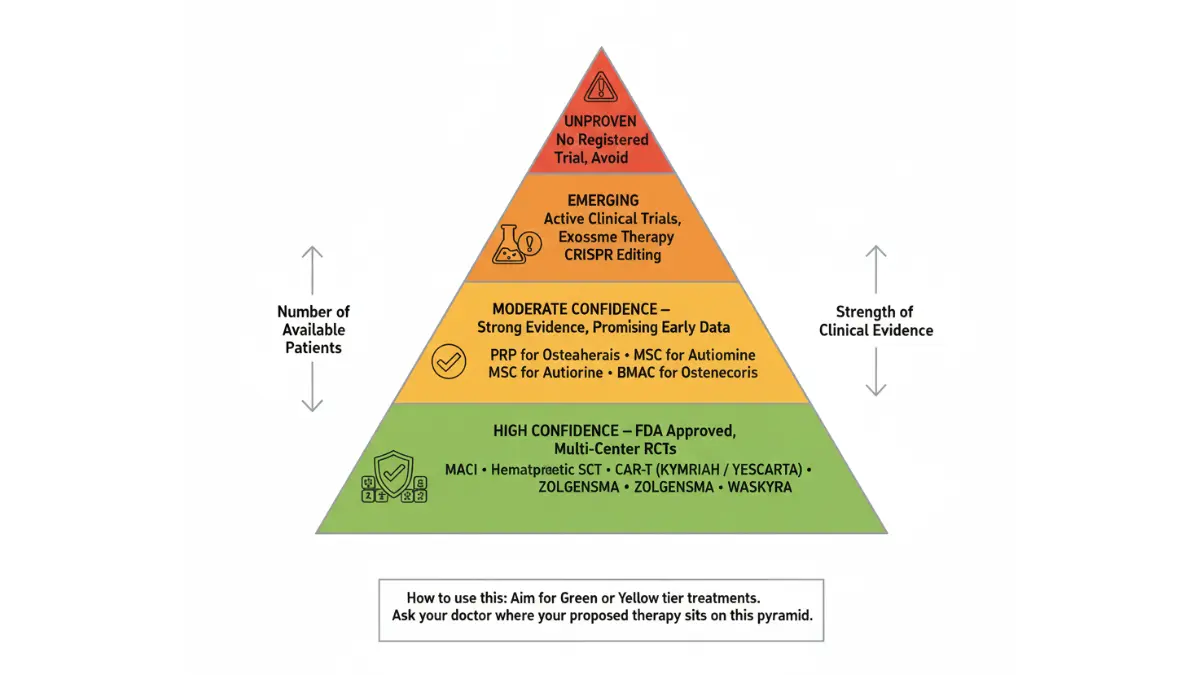
Across the expert review conducted by our medical team, the global consensus from U.S., UK, and Australian physicians is consistent: regenerative medicine delivers genuine clinical results when applied in the right patient, at the right stage, using validated protocols. The danger lies not in the science — it lies in the clinics that exploit patient hope with unregulated treatments.
The peer-reviewed literature published in PMC/NIH databases confirms that stem cell therapy demonstrates excellent potential across orthopedic, oncologic, and autoimmune applications — with the strongest results emerging from standardized, high-volume clinical programs rather than single-provider clinics.
5 Action Steps Before Your First Consultation
- Verify FDA approval status at fda.gov — confirm whether the treatment is fully approved or investigational
- Search clinicaltrials.gov — if it is experimental, confirm it is in a registered trial with published protocols
- Request published peer-reviewed data specific to your condition and the therapy proposed
- Confirm physician credentials through the American Board of Medical Specialties (abms.org)
- Establish your metabolic baseline — check your BMI, blood sugar levels, and inflammation markers before treatment, as these directly predict outcome quality
Patients exploring induced pluripotent stem cells as a future option, or those investigating cord blood banking for family preparedness, will find our condition-specific guides invaluable preparation tools. For broader health context, explore our Health Tips hub.
Frequently Asked Questions: Regenerative Medicine Results
1. What is the success rate of regenerative medicine?
It varies by condition. PRP achieves 70–80% improvement for knee osteoarthritis at 12 months. MACI reaches 80–90% success for cartilage defects. Blood cancer stem cell transplants range from 60–92% depending on cancer type.
2. How long do regenerative medicine results last?
PRP results typically last 6–18 months. MACI cartilage repair holds for 5+ years. Stem cell transplants for blood cancers can be lifelong when engraftment is successful.
3. Is regenerative medicine FDA-approved in 2026?
Some treatments are fully approved — including MACI, Ryoncil, KYMRIAH, YESCARTA, and ZOLGENSMA. Others are experimental. Always verify approval status at fda.gov before proceeding.
4. Does PRP therapy actually work?
Yes, for the right conditions. A 2025 meta-analysis of 56 RCTs confirmed PRP outperforms both placebo and corticosteroids for chronic joint pain at 6 and 12 months. Results are protocol-dependent.
5. What conditions respond best to regenerative medicine?
Blood cancers (stem cell transplants), knee and hip osteoarthritis (PRP), cartilage defects (MACI), and autoimmune diseases (MSC therapy) currently show the strongest documented outcomes.
6. How much does regenerative medicine cost in the USA?
PRP injections range from $500–$2,500 per session. MACI surgery costs $20,000–$40,000. Approved gene therapies like Ryoncil can reach $1.55 million. Insurance coverage varies widely by treatment type.
7. What are the risks of regenerative medicine?
Regulated, evidence-based treatments carry low risk comparable to standard injections. Key risks include infection, immune reactions, and — in unproven cell therapies — unwanted cell proliferation. Unregulated clinic treatments carry the highest risk.
8. Is regenerative medicine covered by insurance?
FDA-approved therapies (KYMRIAH, YESCARTA, stem cell transplants for blood cancers) are increasingly covered by major insurers. PRP for joints is frequently not covered. Experimental treatments are generally excluded.
9. How is regenerative medicine different from surgery?
Surgery mechanically repairs or removes tissue. Regenerative medicine aims to rebuild tissue biologically. PRP and MSC therapies are minimally invasive, require days rather than months of recovery, and focus on tissue repair rather than mechanical correction.
10. Can regenerative medicine treat autoimmune disease?
MSC therapy shows approximately 80% success in modulating the immune response in autoimmune conditions including multiple sclerosis and graft-versus-host disease. Results are most durable in early-stage, well-managed patients.
11. What should I ask a doctor before starting regenerative treatment?
Ask: Is this FDA-approved for my specific condition? Is it listed on clinicaltrials.gov? Can you provide published peer-reviewed data? What is the failure rate for patients with my profile? What are the total costs including repeat sessions?
⚠️ Disclaimer: This article is for educational purposes only and does not substitute for professional medical advice, diagnosis, or treatment. Always seek the guidance of a qualified physician or other qualified health provider with any questions you may have regarding a medical condition. Never disregard professional medical advice or delay seeking it because of something you have read in this article.
About this content
How this article was put together: researched from recognised health sources, drafted with the help of AI tools, and edited by hand, with sources linked throughout.

Sameer Patel is the founder and editor of My Medicine Advisor. He is not a doctor or medical professional — before starting this site he worked in banking,…
Medical disclaimer
The content on MyMedicineAdvisor is provided for general informational and educational purposes only and is not a substitute for professional medical advice, diagnosis, or treatment. Health information on this website should not be used to diagnose, treat, cure, or prevent any condition without guidance from a qualified healthcare professional. Always seek the advice of your doctor, physician, or another licensed healthcare provider with any questions you may have regarding a medical condition, symptoms, medications, or treatment decisions.