
On This Page – Quick Medical Summary
Chemotherapy is a cancer treatment that uses powerful drugs to kill fast-growing cancer cells throughout the body. It can cure certain cancers, control tumor growth, or shrink tumors causing pain. Common side effects include fatigue, nausea, and hair loss. In 2026, AI-assisted dosing systems and at-home chemotherapy programs are transforming how American patients receive treatment — with outcomes improving year over year.
What Is Chemotherapy? How It Works in Your Body
If you’ve just been told you need chemotherapy, the first question that hits you isn’t clinical. It’s human: “What is this actually going to do to me?”
You deserve a clear, honest answer — not a textbook definition.
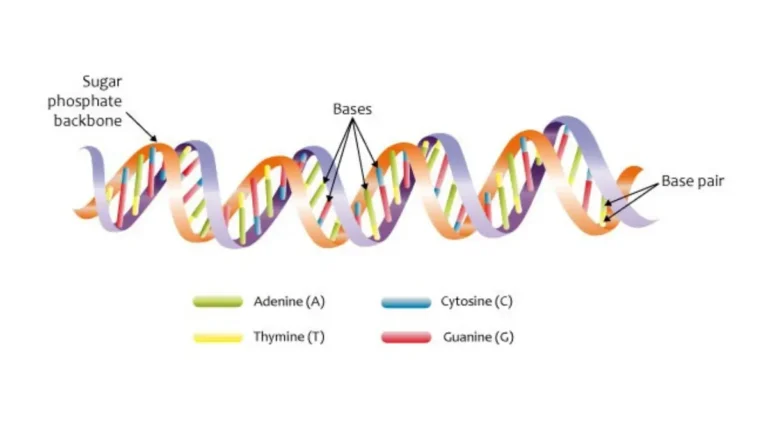
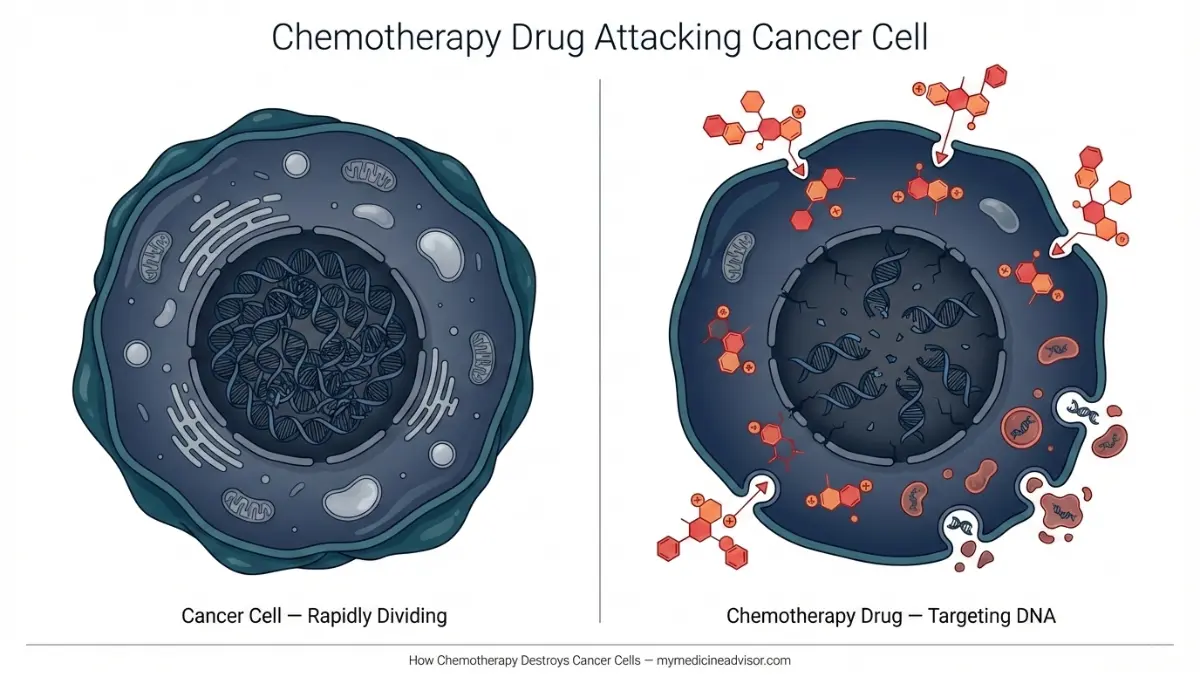
Chemotherapy is a drug-based cancer treatment that targets and kills rapidly dividing cells. Because cancer cells divide faster than most normal cells, chemotherapy drugs interrupt their growth cycle — damaging their DNA, blocking their ability to copy, or stopping them from splitting into new cells.
According to the National Cancer Institute, chemotherapy works through two primary goals:
- Treat cancer — cure it, reduce recurrence risk, or slow its growth
- Ease cancer symptoms — shrink tumors causing pain or organ pressure
Why Does Chemo Affect Healthy Cells Too?
Here is what most articles fail to explain clearly: chemotherapy cannot tell the difference between a cancer cell and a fast-growing healthy cell. Your bone marrow, hair follicles, and gut lining all divide quickly — which is exactly why nausea, hair loss, and low blood counts are the most common chemotherapy side effects.
The good news: most healthy cells recover after treatment ends. Damage to them is temporary in the majority of patients.
What This Means For You
If you’re experiencing unexplained symptoms before your oncology appointment, document them precisely using our Symptom Checker — it helps you communicate your health picture to your care team clearly and efficiently.
The 7 Main Types of Chemotherapy Drugs (2026 Updated)
There are over 100 chemotherapy drugs approved for use in the United States. They fall into seven main classes — each attacking cancer cells in a different way. Understanding this helps you have a more informed conversation with your oncologist about your treatment plan.
As the American Cancer Society explains, different chemo drugs target cells at different phases of the cell cycle — which is why specific combinations often work better together than any single drug alone.
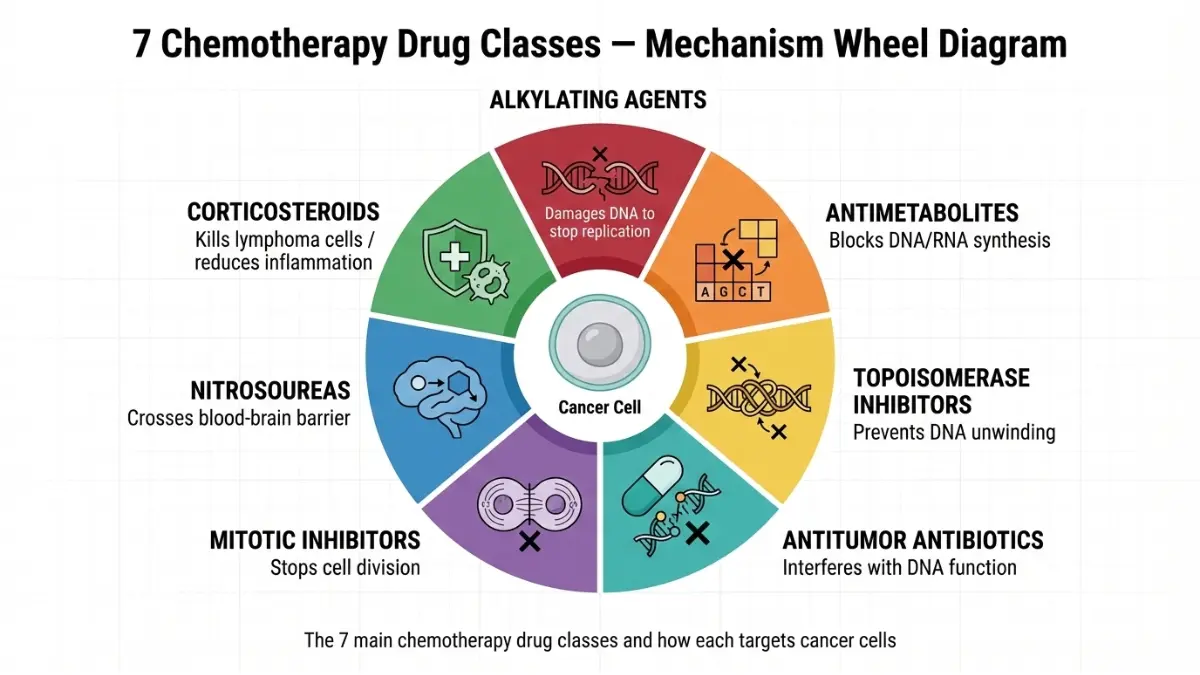
The 7 Drug Classes — Quick Reference Table
| Drug Class | How It Works | Common Cancers | Examples |
|---|---|---|---|
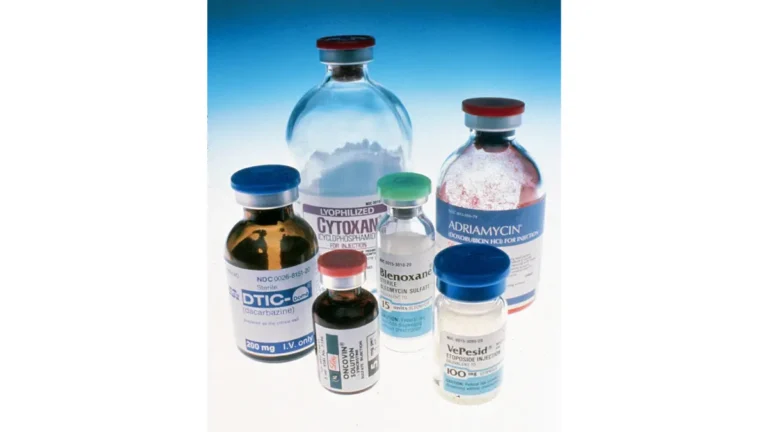
| Alkylating Agents | Damages DNA; stops cell division | Leukemia, lymphoma, breast, ovarian | Cyclophosphamide, Cisplatin |
| Antimetabolites | Blocks DNA building blocks | Colorectal, leukemia, breast | Methotrexate, 5-Fluorouracil |
| Topoisomerase Inhibitors | Disrupts DNA unwinding | Ovarian, lung, colorectal | Irinotecan, Etoposide |
| Antitumor Antibiotics | Stops cells from copying DNA | Breast, bladder, bone | Doxorubicin (Adriamycin) |
| Mitotic Inhibitors | Prevents cell from splitting | Breast, lung, lymphoma | Paclitaxel, Vincristine |
| Nitrosoureas | Crosses blood-brain barrier | Brain tumors, Hodgkin lymphoma | Carmustine, Lomustine |
| Corticosteroids | Reduce inflammation; enhance other drugs | Used alongside most regimens | Dexamethasone, Prednisone |
IV vs. Oral Chemotherapy: What’s the Difference?
Intravenous (IV) chemotherapy is given directly into a vein through a needle, catheter, or port — typically at a hospital or outpatient infusion center. Sessions last anywhere from 30 minutes to several hours.
Oral chemotherapy comes as pills or capsules you take at home. As of 2025, more than 51% of new chemotherapy prescriptions in major US markets are oral — driven by patient preference for home-based care and expanded drug approvals.
Neoadjuvant vs. Adjuvant Chemotherapy: A Critical Distinction
- Neoadjuvant chemotherapy is given before surgery — to shrink a tumor so it becomes operable. Common in breast cancer cases where lumpectomy is the goal.
- Adjuvant chemotherapy is given after surgery — to kill any remaining cancer cells the surgeon couldn’t see. Think of it as a cleanup mission.
If you’ve received a pathology report and are trying to understand what your results mean, our article on how to decode your pathology results breaks it down in patient-friendly language.
Chemotherapy Side Effects — The Complete Day-by-Day Reality
James, a 54-year-old Colorado teacher diagnosed with non-Hodgkin lymphoma, described Day 2 after his first infusion like this: “I thought I’d be tired. I wasn’t ready for the floor.”
No competitor article gives you what you actually need: a real timeline of what happens to your body after chemotherapy — hour by hour, day by day.
Here it is.
Hours 1–24: Immediate Side Effects
- Nausea often begins 1–6 hours post-infusion; your oncologist will prescribe anti-emetics (ondansetron, dexamethasone) — take them as prescribed, not on an empty stomach
- Fatigue sets in within hours for most patients
- Infusion reactions — burning sensation at IV site, flushing, mild fever — resolve quickly in most cases
- Appetite loss begins almost immediately
Action step: Have anti-nausea medication ready before Day 1 ends. Ginger tea and small, bland meals (crackers, toast, rice) are clinically supported.
Days 2–4: The Peak Window
According to clinical data from MD Anderson Cancer Center, Day 2 is typically the worst day after infusion — the peak of fatigue, nausea, and weakness for most regimens.
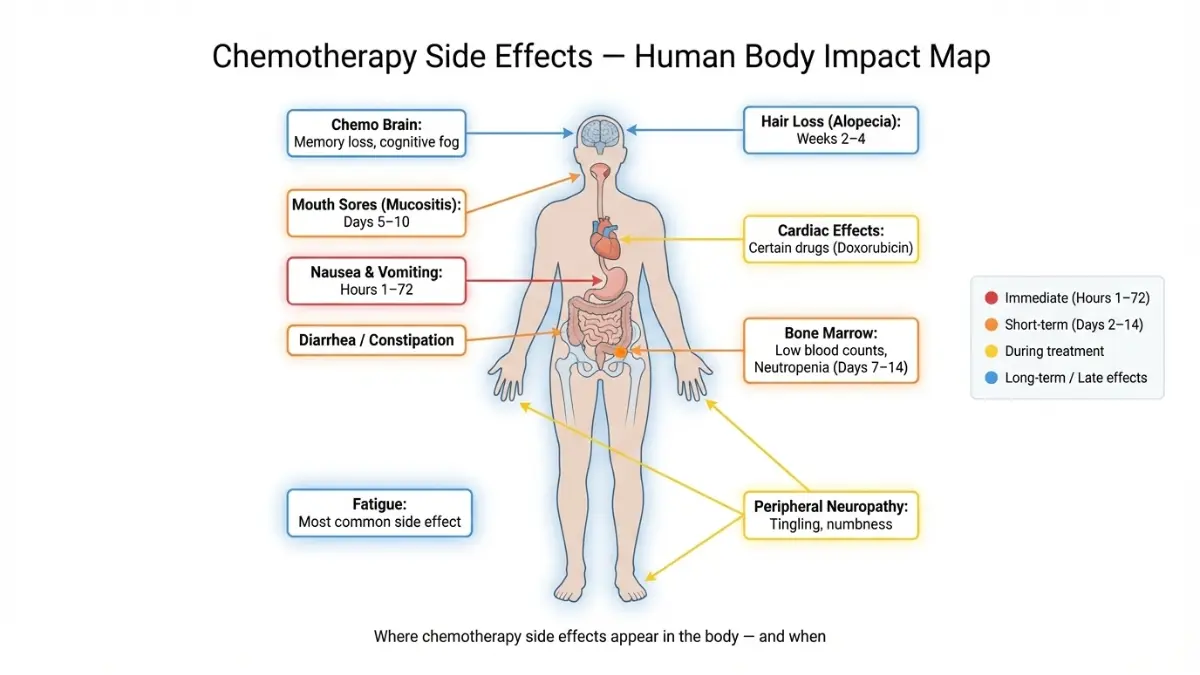
- Fatigue is at its most severe — plan to rest; avoid major commitments
- Chemo brain may begin: difficulty concentrating, short-term memory lapses, mental fog
- Mouth sores (mucositis) can begin forming — rinse with warm salt water; avoid commercial mouthwashes
- Appetite drops significantly — focus on high-protein small meals to prevent muscle loss
Critical: You cannot judge whether chemotherapy is working based on how severe your side effects are. Severe side effects do not equal better results — this is confirmed by the NCI’s patient treatment guidance.
Days 5–14: The Recovery Phase + Hidden Danger Window
Side effects begin to ease — but this is also when your blood counts hit their lowest point (nadir).
- Neutropenia risk peaks — your white blood cell count is at its lowest, making infections dangerous
- Fever above 100.4°F (38°C) = medical emergency; call your oncologist immediately, do not wait
- Platelet count drop means easier bruising and bleeding — use an electric razor, soft toothbrush
- Energy begins returning toward the end of this window
Long-Term & Late Effects: What Competitors Don’t Tell You
Some chemotherapy side effects outlast treatment — sometimes by years.
| Late Effect | When It Can Appear | Duration | What to Do |
|---|---|---|---|
| Peripheral neuropathy | During or after treatment | Months to permanent | Report early; dose may be adjusted |
| Chemo brain | Weeks 1–4 | Weeks to months (rarely permanent) | Cognitive exercises, written reminders |
| Cardiac effects | Months to years | Varies by drug | Annual cardiac screening post-treatment |
| Fertility impact | Immediately + long-term | Varies | Discuss sperm/egg banking before starting |
| Secondary cancers | Years later | Rare but real | Survivorship care plan + regular screening |
Complete Side Effects Timeline Table
| Side Effect | When It Appears | Duration | Management |
|---|---|---|---|
| Nausea/Vomiting | Hours 1–72 | Days 1–4 | Anti-emetics, small meals, ginger |
| Fatigue | Day 1+ | Throughout treatment | Structured rest + light walking |
| Hair Loss | 2–4 weeks in | During treatment | Cold cap therapy; regrowth after treatment |
| Mouth Sores | Days 5–10 | 1–2 weeks per cycle | Salt water rinse; soft foods |
| Neutropenia | Days 7–14 | Per cycle | Avoid crowds; fever = emergency |
| Peripheral Neuropathy | Weeks to months | Can be permanent | Early reporting is critical |
| Chemo Brain | Weeks 1–4 | Weeks to months | Notes, reminders, cognitive exercises |
Hydration is non-negotiable during chemotherapy. Most oncologists recommend 1–2 liters of water daily minimum. Use our Water Intake Calculator to find your personal daily hydration target based on your body weight and activity level.
Chemotherapy vs. Immunotherapy vs. Targeted Therapy — The 2026 Decision Guide
This is the section zero competitors have written — and it’s the question every newly diagnosed American patient is now asking their oncologist.
“Do I actually need chemotherapy? Or is immunotherapy better for my cancer?”
The answer depends entirely on your cancer’s biology.
The 2026 oncology landscape: Chemotherapy is increasingly used in combination with immunotherapy rather than as a standalone treatment. For some cancers — particularly those with identified genetic mutations — targeted therapy may replace chemotherapy entirely.
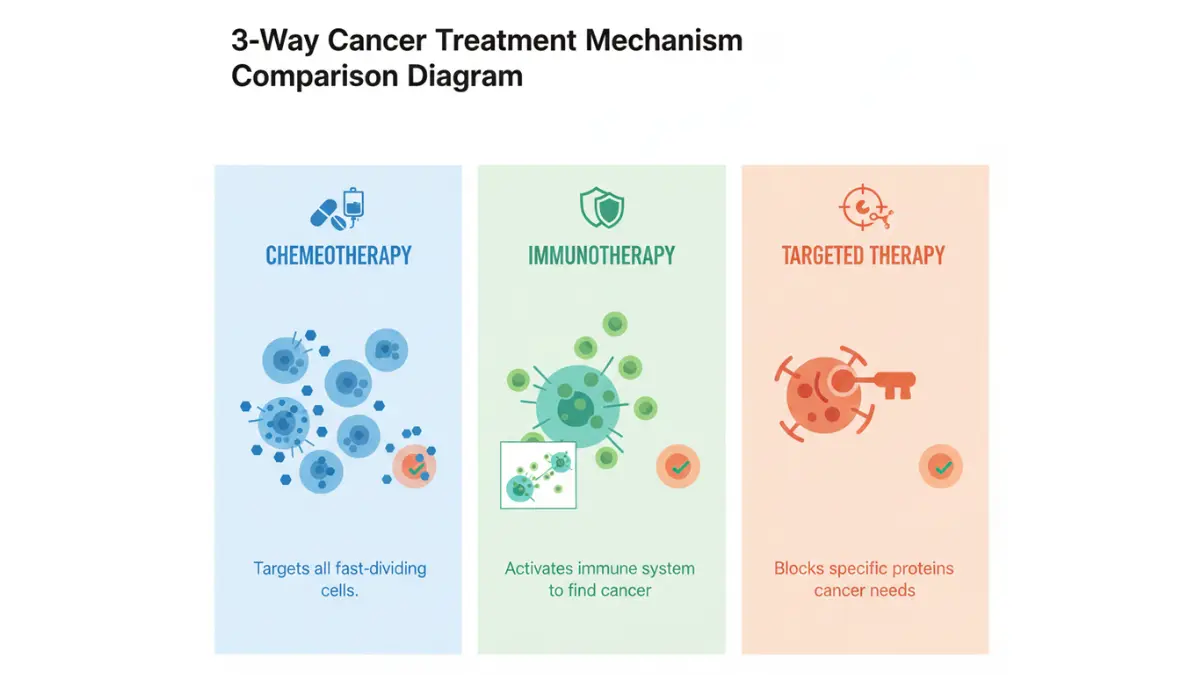
3-Way Treatment Comparison: 2026
| Feature | Chemotherapy | Immunotherapy | Targeted Therapy |
|---|---|---|---|
| Mechanism | Kills fast-dividing cells | Activates immune system to attack cancer | Blocks specific proteins cancer needs to grow |
| Works Best For | Wide range of cancers | Melanoma, NSCLC, blood cancers, bladder | Cancers with specific biomarkers (BRCA, EGFR, HER2) |
| Common Side Effects | Hair loss, nausea, fatigue, low counts | Immune reactions, colitis, rash, fatigue | Rash, liver toxicity, drug-specific effects |
| Administration | IV infusion or oral | IV infusion or oral | Mostly oral (home-based) |
| 2026 Trend | Combined with immunotherapy | Rapidly expanding indications | Fastest-growing category in oncology |
| Best Candidate | Most solid tumors; aggressive cancers | Cancers with PD-L1 expression or MSI-H | Cancers with actionable mutations on biomarker testing |
When Chemotherapy Is Still the First Choice in 2026
- Before surgery (neoadjuvant) — to shrink tumors in breast, stomach, and esophageal cancers
- After surgery (adjuvant) — to eliminate microscopic disease
- Combination protocols — chemo + immunotherapy is now standard of care for many lung, bladder, and triple-negative breast cancers
- When targeted options don’t exist — many cancers lack actionable mutations, making chemo the backbone of treatment
CAR-T Cell Therapy: The 2026 Frontier
For certain blood cancers, CAR-T cell therapy — where your own T-cells are genetically engineered to recognize cancer — is replacing traditional chemotherapy entirely. It’s currently approved for specific leukemias, lymphomas, and multiple myeloma. It is not yet widely available for solid tumors, but clinical trials are expanding rapidly.
Your cancer’s genetic makeup is the key variable in all treatment decisions. Our Genetic Risk Assessment Tool can help you understand your inherited risk profile before your oncology consultation.
For a deeper dive into specific cancer-related FDA drug approvals in 2026, our article on lung cancer FDA drugs and treatment updates covers the latest developments.
What to Expect Before, During & After Chemotherapy — Your 2026 Step-by-Step Guide
Most patients walk into their first infusion without knowing what to expect. This section changes that.
Before Your First Chemo Session: Preparation Checklist
Your oncologist will order several tests before starting chemotherapy. These are not optional — they determine safe dosing for your body.
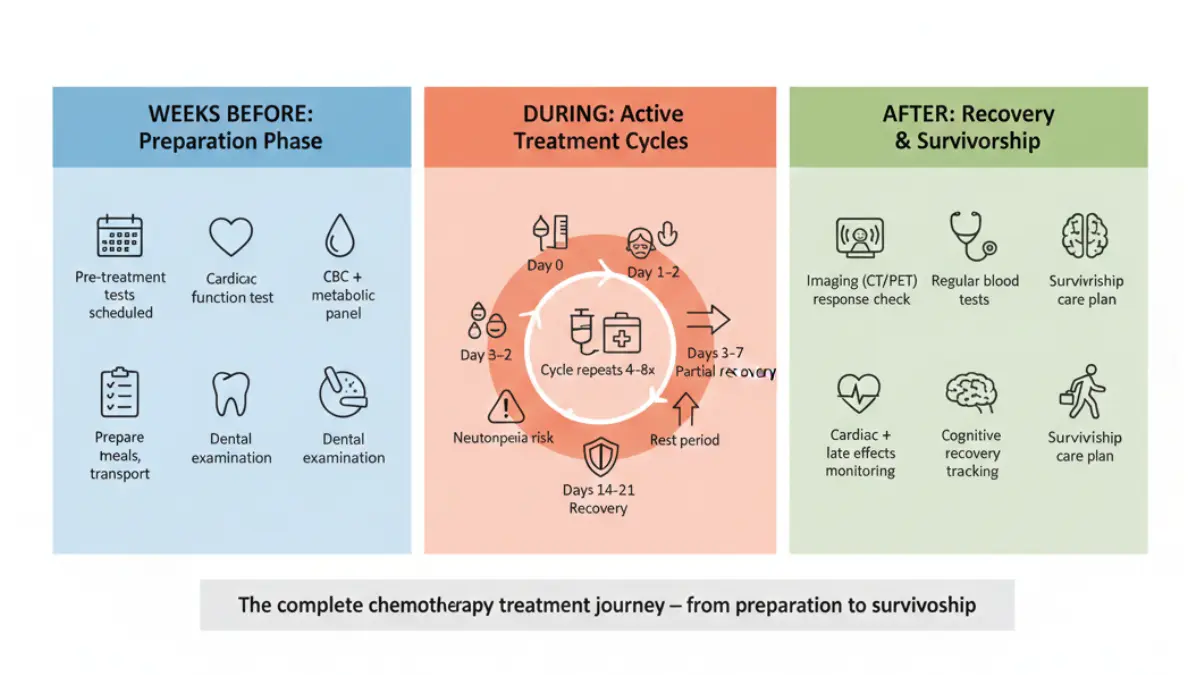
Pre-treatment tests typically include:
- Complete blood count (CBC) — checks bone marrow function
- Comprehensive metabolic panel — evaluates kidney and liver health
- Cardiac function test (echocardiogram or MUGA scan) — required before certain cardiotoxic drugs
- Dental examination — infections in your mouth can spread throughout your body during treatment when your immune system is suppressed
Practical preparation steps:
- Arrange transportation to and from each infusion (you will not be safe to drive)
- Pre-cook and freeze easy, nutritious meals for Days 1–4 post-infusion
- Set up a comfortable recovery space at home
- Fill anti-nausea prescriptions before Day 1 — not after
5 Questions to Ask Your Oncologist Before Starting:
- What is the goal of my chemotherapy — curative, adjuvant, or palliative?
- Which drugs will I receive, and what are their most common side effects?
- How many cycles are planned, and what is the schedule?
- What fever or symptom should send me to the ER immediately?
- Are there clinical trials I should consider instead of or alongside standard chemotherapy?
During Chemotherapy: What Happens in the Infusion Room
A typical IV chemotherapy session at a US cancer center looks like this:
- Arrival: Blood draw to confirm your counts are safe enough for treatment that day
- Port or IV access: A nurse accesses your port (a small disc under your skin) or places an IV line
- Pre-medications: Anti-nausea drugs and steroids are given first
- Infusion: The chemotherapy drug(s) run over 30 minutes to several hours depending on your regimen
- Monitoring: Nurses check vitals regularly; report any unusual burning, chest tightness, or breathing changes immediately
Can you work during chemotherapy? Many patients can continue working, particularly on non-infusion days. Federal law (Americans with Disabilities Act + FMLA) requires employers to accommodate schedule adjustments during cancer treatment. Discuss options with your HR department and oncologist together.
After Chemotherapy: Recovery, Follow-Up & Survivorship
Your oncologist will create a survivorship care plan — a roadmap for monitoring your health after treatment ends. This includes:
- Scheduled imaging (CT, PET, MRI) to confirm treatment response
- Blood tests every 3–6 months for the first 2 years
- Screening for late effects: cardiac function, bone density, cognitive changes
- Mental health support — post-treatment anxiety (“scanxiety”) is extremely common and clinically recognized
Chemotherapy can cause significant muscle loss and appetite disruption during treatment. To protect your lean body mass and support recovery, use our Protein Intake Calculator to calculate your daily protein target — particularly important in the weeks immediately following each cycle.
For patients who underwent surgery before or after chemotherapy, our guide on what to expect after mastectomy contains critical recovery information that surgeons often skip during rushed consultations.
The NCI’s Chemotherapy and You patient booklet is one of the most comprehensive free resources available for US patients — we strongly recommend downloading it before your first appointment.
Managing Chemotherapy at Home — Oncologist-Approved 2026 Guide
Once you leave the infusion center, you’re managing most of your recovery alone. Here is exactly what oncology experts recommend — and what competitors consistently leave out.
Nutrition During Chemotherapy
What to eat:
- Small, frequent meals every 2–3 hours rather than 3 large meals
- High-protein foods: eggs, Greek yogurt, chicken, legumes — muscle preservation is critical
- Soft, bland foods on bad days: crackers, toast, banana, rice, broth
- Ginger (tea, chews, capsules) — clinically shown to reduce chemotherapy-induced nausea
What to avoid:
- Grapefruit and grapefruit juice — inhibits CYP3A4 enzymes that metabolize many chemo drugs, which can cause dangerous drug level buildup
- Raw or undercooked foods during neutropenia window (days 7–14)
- Alcohol — interferes with drug metabolism and worsens fatigue
- Very hot or spicy foods during mucositis (mouth sore) periods
Appetite loss during chemotherapy can create dangerous caloric deficits that impair healing. Use our Calorie Deficit Calculator to ensure you’re eating enough calories each day, even when appetite is low.
Movement and Exercise
Light physical activity during chemotherapy is evidence-based — not reckless. Research from multiple institutions shows that gentle walking reduces fatigue by up to 40% and improves mood significantly.
What is appropriate:
- 15–30 minute walks on days you feel able
- Gentle yoga or stretching
- Avoid crowded gyms during the neutropenia window (infection risk)
- Listen to your body — rest wins over pushing through on bad days
Infection Prevention at Home
During the neutropenia window, your immune system is severely suppressed. These steps are not optional:
- Wash hands thoroughly before every meal and after any contact with others
- Avoid crowds, sick contacts, and young children with colds or recent vaccines
- Fever above 100.4°F (38°C) = call your oncologist immediately — do not wait to see if it resolves
- Keep your port site or IV site clean and watch for redness, swelling, or drainage
At-Home Chemotherapy in 2026: A Growing Option
One of the most significant advances in US cancer care is the expansion of home-based chemotherapy delivery. Mayo Clinic’s Cancer Care Beyond Walls program — launched in 2023 and expanded through 2025 — has treated over 55 patients in Jacksonville, Florida at home with the same drugs and monitoring protocols used in their infusion centers.
For eligible patients, this model eliminates 4-hour clinic days and replaces them with brief home visits. Ask your oncologist whether your specific regimen qualifies for home administration.
Caregiver & Family Safety During Chemotherapy
This is what nearly every competitor article ignores completely:
Chemotherapy drugs are present in your body fluids for 48–72 hours after each infusion. Caregivers should:
- Wear gloves when handling bedding, clothing, or towels used during the first 48–72 hours
- Flush the toilet twice with the lid down after the patient uses it during this period
- Wash laundry separately during active treatment cycles
- Children and pregnant women should avoid direct contact with patient body fluids
Fatigue is the most persistent chemotherapy side effect and can disrupt your sleep architecture for weeks. Plan your sleep schedule strategically around your treatment cycles using our Sleep Calculator to optimize recovery windows.
Patients managing head and neck cancers alongside chemotherapy should also read our comprehensive guide on HPV-related head and neck cancer treatment and survival rates in 2026 — an increasingly common diagnosis in the US.
For further clinical reference on chemotherapy mechanisms and drug management, the peer-reviewed StatPearls Cancer Chemotherapy reference on NCBI provides detailed pharmacological data reviewed by oncology specialists.
Frequently Asked Questions About Chemotherapy
1. What is chemotherapy and how does it work?
Chemotherapy is a drug treatment that kills or slows the growth of cancer cells by targeting rapidly dividing cells. Drugs are delivered orally or intravenously, and different drug classes attack cancer at different stages of the cell cycle.
2. How many rounds of chemotherapy are typical?
Most patients receive 4–8 cycles, though the number depends entirely on cancer type, stage, and treatment goal. Each cycle typically lasts 2–4 weeks, with rest periods between infusions to allow healthy cell recovery.
3. Does chemotherapy always cause hair loss?
No — not all chemotherapy drugs cause hair loss. Drugs most associated with alopecia include doxorubicin and cyclophosphamide. Cold cap therapy (scalp cooling) has shown meaningful results in reducing hair loss for eligible patients.
4. Can you work during chemotherapy?
Many patients continue working, particularly between cycles when side effects are lowest. Your ability to work depends on your job’s physical demands, your specific regimen, and how your body responds. US federal law (FMLA) protects your right to schedule adjustments.
5. What is “chemo brain” and how long does it last?
Chemo brain is cognitive impairment — memory lapses, difficulty concentrating, and mental fog — affecting up to 75% of chemo patients. For most, it resolves within 6–12 months after treatment ends. In rare cases, effects persist longer.
6. What should you eat during chemotherapy?
Focus on small, frequent high-protein meals. Avoid grapefruit (CYP enzyme interference), raw foods during neutropenia, and alcohol. Ginger has clinical evidence for reducing nausea. Talk to an oncology dietitian for a personalized plan.
7. How is chemotherapy different from immunotherapy?
Chemotherapy kills fast-dividing cells; immunotherapy activates your immune system to recognize and destroy cancer cells. Immunotherapy is more targeted with different side effects, but it only works for cancers that respond to immune system activation. Many 2026 protocols combine both.
8. Is chemotherapy painful?
Chemotherapy itself is generally not painful. IV administration may cause mild burning at the infusion site. Some drugs cause peripheral neuropathy (tingling, numbness in hands/feet) over time — report this to your oncologist immediately, as early intervention can prevent permanent damage.
9. Can chemotherapy cure cancer?
Yes — for certain cancers, chemotherapy can achieve complete remission (no detectable cancer). These include some leukemias, lymphomas, testicular cancer, and choriocarcinoma. For most solid tumors, chemotherapy is used in combination with surgery, radiation, or immunotherapy rather than as a sole cure.
10. How do you know if chemotherapy is working?
Side effects do not indicate how well chemotherapy is working — this is a widely held misconception. Your oncologist uses CT scans, PET scans, MRI, and blood tumor markers at scheduled intervals to assess treatment response objectively.
11. What happens to your body after chemotherapy ends?
Most short-term side effects resolve within weeks to months of your final cycle. Hair grows back, blood counts normalize, and fatigue improves. Long-term follow-up monitoring for cardiac function, neuropathy, and secondary cancers is part of your survivorship care plan.
Key Takeaways
- Chemotherapy kills fast-dividing cancer cells — but also affects fast-growing healthy cells, causing temporary side effects
- There are 7 main drug classes — your oncologist selects combinations based on your specific cancer biology
- Day 2 after infusion is typically the hardest — plan rest, hydration, and anti-nausea medication in advance
- The neutropenia window (Days 7–14) is your highest infection risk period — fever above 100.4°F is a medical emergency
- In 2026, chemotherapy is increasingly combined with immunotherapy — ask your oncologist about combination protocols for your cancer type
- Chemo brain is real, common, and usually temporary — document symptoms and discuss early intervention options
- At-home chemotherapy is now available for certain regimens — ask if you qualify
For more health guides reviewed by our 21-member international medical expert panel, visit mymedicineadvisor.com/health/.
Sources & Citations:
- National Cancer Institute. Chemotherapy to Treat Cancer. cancer.gov — Reviewed May 2025
- National Cancer Institute. Chemotherapy and You: Support for People with Cancer. cancer.gov
- American Cancer Society. Chemotherapy. cancer.org
- NCI. Side Effects of Cancer Treatment. cancer.gov
- Amjad MT, Chidharla A, Kasi A. Cancer Chemotherapy. StatPearls/NCBI. ncbi.nlm.nih.gov
About this content
How this article was put together: researched from recognised health sources, drafted with the help of AI tools, and edited by hand, with sources linked throughout.

Sameer Patel is the founder and editor of My Medicine Advisor. He is not a doctor or medical professional — before starting this site he worked in banking,…
Medical disclaimer
The content on MyMedicineAdvisor is provided for general informational and educational purposes only and is not a substitute for professional medical advice, diagnosis, or treatment. Health information on this website should not be used to diagnose, treat, cure, or prevent any condition without guidance from a qualified healthcare professional. Always seek the advice of your doctor, physician, or another licensed healthcare provider with any questions you may have regarding a medical condition, symptoms, medications, or treatment decisions.