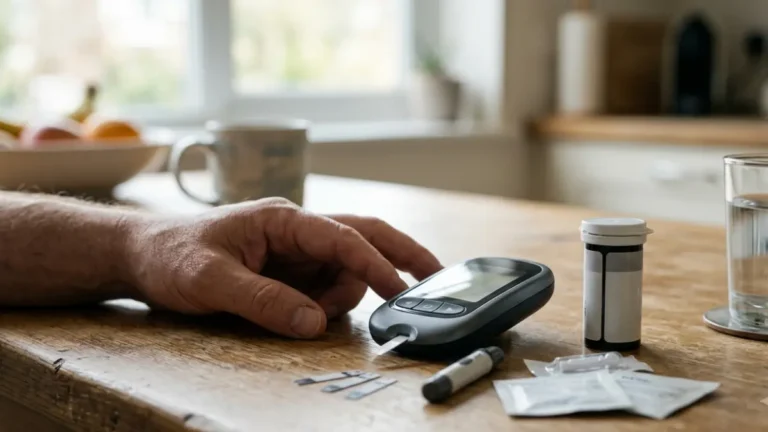

On This Page – Quick Medical Summary
High blood sugar symptoms: start here
You are probably here for one of three reasons, and they need different answers.
If you have diabetes and a reading well above your usual range right now, go straight to the emergency section below. If you have had days of thirst and constant urination but no diagnosis, start with the symptom list. If you are watching a parent, partner, or child, the warning signs are in the emergency section too.
High blood sugar — hyperglycemia — is common, and most cases are not emergencies.
📊 Clinical Data Point: 40.1 million people in the United States have diabetes, and 27.6% of adults with diabetes (about 11.0 million people) do not know they have it — Source: CDC National Diabetes Statistics Report, updated January 2026.
ℹ️ Medical Disclaimer: This article explains high blood sugar for general education only. It does not diagnose your condition, direct your insulin or medication dosing, replace an emergency assessment, or advise on insurance coverage. Decisions about diagnosis, medication changes, and urgent care belong with a board-certified primary care physician or endocrinologist — and, for the emergency signs described below, with emergency clinicians.
The early signs of high blood sugar people miss
High blood sugar symptoms include:
- Increased thirst and a dry mouth
- Urinating more often, including waking at night to do it
- Blurred vision
- Fatigue that rest does not fix
- Increased hunger
- Unexplained weight loss
- Cuts and sores that heal slowly
- Repeated yeast or urinary infections
Why thirst and urination arrive together
🔬 How It Works: Your kidneys reabsorb nearly all the glucose that passes through them — until blood glucose reaches roughly 180 mg/dL. Above that, glucose spills into urine and drags water out with it, which raises urine volume and dehydrates you. The thirst is the body chasing the water it just lost.
What it feels like day to day
Symptoms build over days or weeks, rarely minutes.

Intensity does not track the number reliably. Some people feel almost nothing at levels their clinician would act on, which is why symptoms alone are a poor gauge.
The symptoms people write off as something else
Fatigue gets blamed on work. Blurred vision gets blamed on screens. Recurrent thrush gets blamed on antibiotics — and any of the three can be the first sign worth testing. If you are unsure whether your pattern fits, run your symptoms through our symptom checker.
What blood sugar number actually counts as high?
Three numbers do most of the work.
| Tier | Reading | What it means | Key Clinical Detail |
|---|---|---|---|
| Routine | Fasting 100–125 mg/dL | Prediabetes range | Book a test; not urgent |
| Same-day call | 240 mg/dL or above | Ketone-testing threshold | Test ketones every 4–6 hours |
| Emergency | Stays at 300 mg/dL or above | Possible ketoacidosis | With any warning sign, go now |
Verified sources: prediabetes and diagnostic ranges — ADA Standards of Care in Diabetes—2026; 240 mg/dL and 300 mg/dL thresholds — CDC.
The diagnostic thresholds
Diabetes is diagnosed at a fasting plasma glucose of 126 mg/dL or above, a two-hour oral glucose tolerance test of 200 mg/dL or above, an A1C of 6.5% or above, or a random glucose of 200 mg/dL or above alongside classic symptoms.
Prediabetes sits at a fasting glucose of 100–125 mg/dL or an A1C of 5.7–6.4%. A fasting glucose of 126 usually needs a second test to confirm.
Why your target range may differ
These are diagnostic and triage thresholds, not personal targets. Your own range depends on your diabetes type, age, and other conditions, and it comes from your clinician — the full glucose levels chart covers each test separately, and blood sugar after eating explains why post-meal numbers read higher.
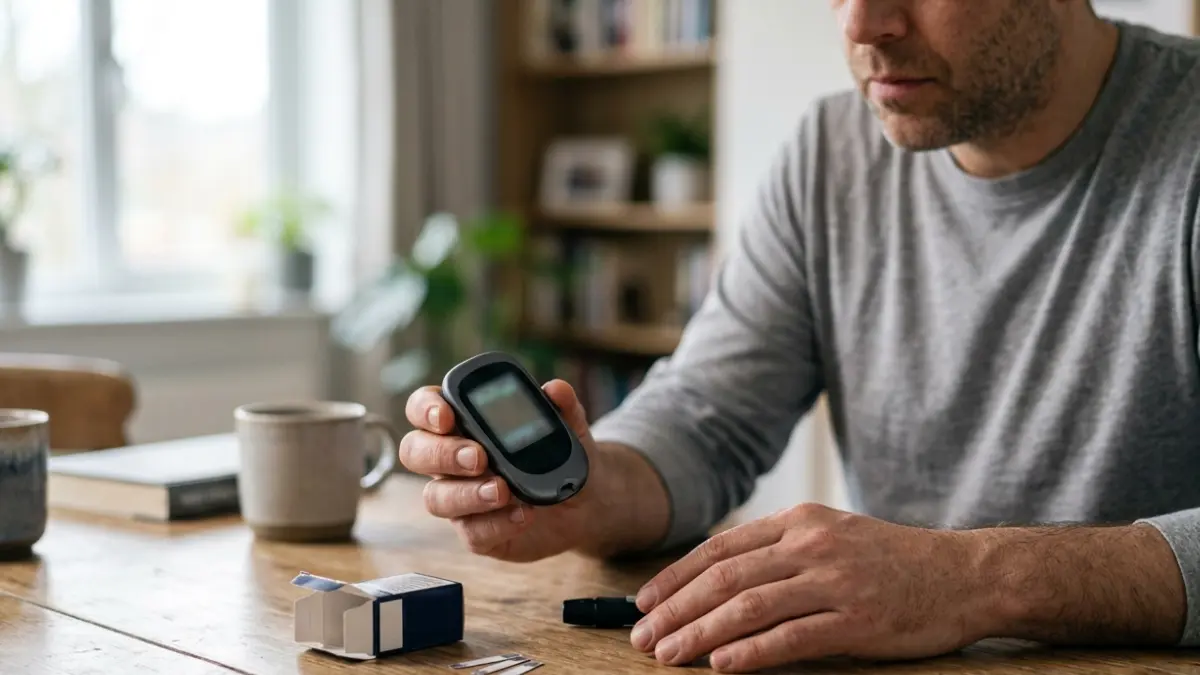
✅ Patient Action: Ask your primary care physician or endocrinologist two things: what is my personal target range, and at what reading do you want me to call you?
When high blood sugar is an emergency
The CDC lists specific signs that mean stop managing this at home.
Go to the ER or call 911 if
- Your blood sugar stays at 300 mg/dL or above
- Your breath smells fruity
- You are vomiting and cannot keep food or drink down
- You are having trouble breathing
- You have several signs of ketoacidosis at once
Source: the CDC’s diabetic ketoacidosis warning signs.
The DKA warning signs that come first
Diabetic ketoacidosis usually announces itself before it becomes critical: heavy thirst and urination first, then nausea, vomiting, stomach pain, fruity breath, fast or laboured breathing, and confusion.
⚠️ Clinical Warning: Vomiting that stops you keeping fluids down is not a stomach bug to sleep off when your glucose is high. It is one of the CDC’s stated reasons to seek emergency care, because it removes your ability to rehydrate while you are already losing fluid.
If your reading is 400 or higher
The number by itself does not settle it — ketones and symptoms do. A reading that high with any sign above means emergency care now, not a wait-and-see hour.
What to do when your reading is 240 mg/dL or higher
- Test for ketones. The CDC advises testing urine or blood ketones any time you are sick or your blood sugar is 240 mg/dL or above, and repeating every 4 to 6 hours.
- Call if ketones are moderate or high. MedlinePlus guidance on checking ketones says to contact your provider right away, or get emergency help, at that point.
- Keep the emergency list in view. If any sign from the previous section appears while you are working through these steps, stop and call.
🩺 Editor’s Note: Published patient guidance deliberately stops short of telling you how much correction insulin to take, or how much fluid to drink. Those depend on your regimen, your kidney function, and your other medicines. That is what a sick-day plan from your own care team is for.
✅ Patient Action: Ask your diabetes care team for a written sick-day plan, and ask specifically at what ketone level they want you to phone. Get ketone strips or a meter before you need them.
Why the same number is not equally dangerous for everyone
Three variables change what a reading means.
Type 1, type 2, and how fast symptoms arrive
Ketoacidosis is most common in type 1 diabetes, where insulin is absent and symptoms can escalate within a day. People with type 2 diabetes can develop it too, particularly during illness.
DKA versus HHS
The hyperosmolar hyperglycemic state runs a different course: extreme glucose, severe dehydration, and little ketone production. The 2024 ADA and EASD consensus report sets its glucose criterion at 600 mg/dL or above, against 200 mg/dL or above for ketoacidosis.
When the number looks fine and it is not
That same consensus added a prior history of diabetes as an alternative to any glucose value — which is what allows ketoacidosis to be diagnosed at a near-normal reading.
⚠️ Clinical Warning: In the FDA’s review of SGLT2 inhibitor cases, ketoacidosis often went unrecognized because glucose sat below the levels clinicians expect, delaying treatment. If you take an SGLT2 inhibitor and feel nauseated, breathless, or confused, those symptoms matter regardless of your meter. The FDA’s own instruction to patients is not to stop or change a diabetes medicine without first speaking to the prescriber.
Symptoms that need an appointment, not an ambulance
Most people reading this are in this section, not the emergency one.
Persistent symptoms without a diagnosis
Weeks of thirst, urination, fatigue, or blurred vision with no diagnosis is a testing question, not a 911 question. The tests are an A1C and a fasting plasma glucose — and what an A1C result means is worth reading before your appointment.
High blood sugar when you do not have diabetes
Acute illness, infection, physical stress from injury or surgery, and certain medicines including corticosteroids can all raise glucose temporarily.
✅ Patient Action: Ask your primary care physician: given these symptoms, should I have an A1C and a fasting glucose now, and do I meet the screening criteria for my age and risk factors?
High blood sugar symptoms: common questions
1. What are the symptoms of high blood sugar?
High blood sugar symptoms include increased thirst, frequent urination, blurred vision, fatigue, increased hunger, unexplained weight loss, slow-healing sores, and repeated infections.
2. What blood sugar level is considered high?
Fasting readings of 126 mg/dL or above meet the diabetes threshold, and 240 mg/dL or above triggers ketone testing. Confirm any result with your physician.
3. When is high blood sugar an emergency?
Seek emergency care if your blood sugar stays at 300 mg/dL or above, you cannot keep fluids down, or breathing becomes difficult.
4. What does high blood sugar feel like?
Most people describe constant thirst, waking at night to urinate, and fatigue that rest does not fix, building gradually over days.
5. Can you have high blood sugar without diabetes?
Yes. Illness, infection, surgery, injury, and medicines such as corticosteroids can raise glucose temporarily. Ask your primary care physician about testing.
6. What are the warning signs of diabetic ketoacidosis?
Early signs are heavy thirst and urination, followed by nausea, vomiting, stomach pain, fruity breath, laboured breathing, and confusion.
7. Why does high blood sugar cause thirst and urination?
Above roughly 180 mg/dL your kidneys spill glucose into urine, and that glucose pulls water with it, causing dehydration and thirst.
8. Should I go to the hospital if my blood sugar is 400?
The number alone does not decide it. Test ketones, check the emergency signs, and contact your diabetes care team immediately.
9. Can high blood sugar cause blurry vision?
Yes. Blurred vision is a recognised symptom of high blood sugar and often appears before people connect it to glucose.
10. Can you have ketoacidosis if your blood sugar is not very high?
Yes. FDA reports describe ketoacidosis in SGLT2 inhibitor users at near-normal readings. Ask your prescriber about ketone monitoring.
11. How do I know if I need a diabetes test?
Persistent thirst, urination, fatigue, or blurred vision warrant testing. Ask your primary care physician for an A1C and fasting plasma glucose.
Your next step
If any emergency sign is present, stop reading and get emergency care now.
If your reading is 240 mg/dL or above without those signs, test for ketones and call your diabetes care team today.
If your symptoms are mild and persistent, book an A1C and a fasting glucose this week — that is the whole action, and it is enough.
About this content
How this article was put together: researched from recognised health sources, drafted with the help of AI tools, and edited by hand, with sources linked throughout.

Sameer Patel is the founder and editor of My Medicine Advisor. He is not a doctor or medical professional — before starting this site he worked in banking,…
Medical disclaimer
The content on MyMedicineAdvisor is provided for general informational and educational purposes only and is not a substitute for professional medical advice, diagnosis, or treatment. Health information on this website should not be used to diagnose, treat, cure, or prevent any condition without guidance from a qualified healthcare professional. Always seek the advice of your doctor, physician, or another licensed healthcare provider with any questions you may have regarding a medical condition, symptoms, medications, or treatment decisions.