
On This Page – Quick Medical Summary
If you think you have DKA right now, start here
Diabetic ketoacidosis moves fast, so the most useful thing this page can do is route you before you read the rest of it.
If you or someone near you is vomiting, breathing hard and fast, or becoming confused, go to the emergency section below and act on it.
If your glucose is high and you feel unwell but can still keep fluids down, start with the early symptoms. If you take an SGLT2 inhibitor and your meter reads normal, read the normal-blood-sugar section first, because a normal number does not clear you.
Every figure below names the institution it came from.
ℹ️ Medical Disclaimer: This article explains published guidance on symptom recognition, diagnosis, medication risk and emergency care. It does not diagnose you, adjust any medication, or replace clinical assessment. Discuss your own thresholds and sick-day plan with a board-certified endocrinologist or your diabetes care team, and call 911 for the signs listed below.
The early DKA symptoms most people miss
CDC splits DKA symptoms into two stages, and the split matters more than the list does.

What comes first: thirst and urination
CDC describes DKA as usually developing slowly, with the earliest signs being intense thirst and urinating far more than usual. They look like ordinary high blood sugar symptoms, which is exactly why they get dismissed.
What comes next: nausea, stomach pain and breathing changes
If DKA goes untreated, CDC’s list of more severe symptoms can appear quickly: fast and deep breathing, dry skin and mouth, a flushed face, fruity-smelling breath, headache, muscle stiffness or aches, severe tiredness, nausea and vomiting, and stomach pain.
The symptom other people notice before you do
Fruity breath, fast deep breathing and confusion are usually spotted by someone else first, which makes them a caregiver’s signals rather than the patient’s.
🔬 How It Works: Without enough insulin, the liver burns fat and produces ketones. When they build faster than the body clears them, the blood turns acidic.
How fast DKA comes on, and why sources disagree
The major sources do not agree on this, and none of them tells you so.
Why CDC says slowly and Mayo says 24 hours
| Source | What it says about onset | Key clinical detail |
|---|---|---|
| CDC | Usually develops slowly | Severe symptoms appear quickly once untreated |
| Mayo Clinic | Often within 24 hours | May be the first sign of diabetes |
| Cleveland Clinic | Severe and sudden | Can develop within 24 hours |
Verified against each institution’s current DKA page, August 2026.
What they actually agree on
All three describe the same two-phase pattern: a quiet build, then a fast escalation once acid accumulates.
What this means for your next few hours
Our reading of these sources is that the early phase can run over a day, while the dangerous phase moves in hours. Plan on the faster timeline.
What your blood sugar and ketone numbers mean
Two numbers matter at home, and the sources set them differently.
The glucose number that triggers ketone testing
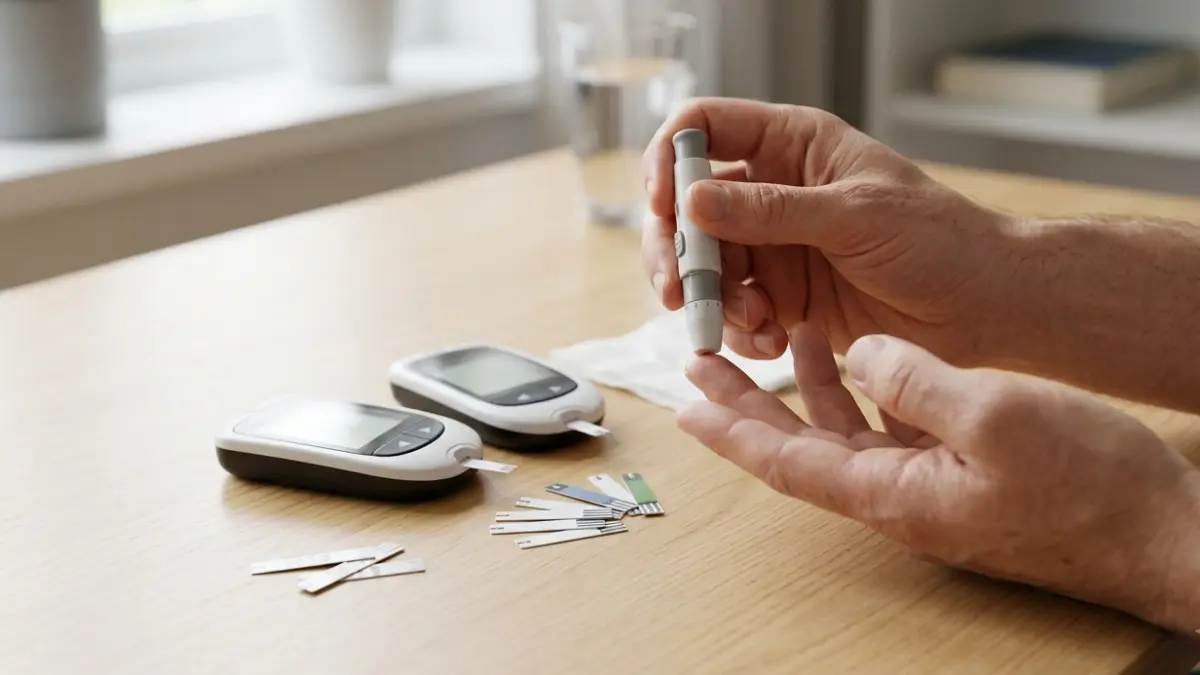
CDC advises that if you have diabetes and are sick, or your blood sugar is 250 mg/dL or above, you check glucose every four to six hours and test your urine for ketones. Mayo Clinic sets that testing threshold at 240 mg/dL. If your meter reports glucose in mmol/L, convert the units before comparing.
What changed in the 2024 diagnostic criteria
📊 Clinical Data Point: The 2024 consensus criteria set the DKA glucose threshold at 200 mg/dL or above, with beta-hydroxybutyrate at 3.0 mmol/L or higher and pH below 7.3 or bicarbonate below 18 mmol/L — Source: Umpierrez et al., Diabetes Care, 2024.
That report also removed the anion gap from the criteria. These are laboratory values a clinician measures, not numbers you can produce at home.
Blood ketone meter versus urine strips
ADA advises seeking emergency care at a blood ketone reading of 1.6 mmol/L or higher. Urine strips report ketones as trace through large, not as a number.
✅ Patient Action: Ask your endocrinologist: at what glucose and ketone readings should I call you, and at what readings should I go straight to the ER?
When DKA symptoms mean go to the ER now
CDC names five signs that mean go to the emergency room or call 911.
The signs CDC says mean call 911
- Your blood sugar stays at 300 mg/dL or above
- Your breath smells fruity
- You are vomiting and cannot keep food or fluids down
- You are having trouble breathing
- You have several DKA signs at once
MedlinePlus adds decreased consciousness to the signs that warrant emergency care. If a high reading brought you here, what a reading of 300 or above means covers it further.
⚠️ Clinical Warning: A glucose reading that comes down does not mean DKA has resolved. The 2024 consensus ties resolution to clearing ketones, not to the glucose number.
What to say when you call
Say you have diabetes, that you may be in DKA, and give your last glucose and ketone readings.
What to tell the ER
Bring your meter and your diabetes medicines, and say whether you have kept fluids down.
DKA with normal blood sugar: the SGLT2 problem
A normal-looking meter reading does not rule out ketoacidosis.
Why your meter can read normal during DKA
📊 Clinical Data Point: In FDA’s review of reported ketoacidosis cases in patients taking SGLT2 inhibitors, glucose was recorded in 40 cases and ranged from 90 to 1,366 mg/dL, median 211 mg/dL — Source: FDA Drug Safety Communication, 2015.
Those were voluntary adverse-event reports, so they show that it happens, not how often.
🔬 How It Works: SGLT2 inhibitors push glucose out through the urine, so blood glucose stays lower while insulin falls and ketones still accumulate.
Which medicines carry this risk
FDA revised SGLT2 inhibitor labels in December 2015 to warn about ketoacidosis. CDC also lists corticosteroids and some diuretics among medicines that can contribute to DKA.
Can type 2 diabetes cause DKA
CDC states DKA is most common in type 1 diabetes and that people with type 2 diabetes can also develop it.
✅ Patient Action: Ask your prescriber: I take an SGLT2 inhibitor — what ketone reading should send me for care even if my glucose looks normal?
What untreated DKA does to the body
DKA does not clear on its own.
Why waiting does not work
MedlinePlus states that untreated DKA can progress to coma and death. CDC describes hospital treatment as replacing fluids and electrolytes, giving insulin, and treating whatever illness triggered it.
📊 Clinical Data Point: CDC surveillance found DKA hospitalisations rose from 2009 to 2014 at an average 6.3% a year, while in-hospital case fatality fell from 1.1% to 0.4% across 2000 to 2014 — Source: CDC MMWR, 2018.
More people are being hospitalised and more of them are surviving, which is the argument for going in early.
How DKA differs from HHS
The 2024 consensus defines the hyperosmolar hyperglycemic state by glucose of 600 mg/dL or above without significant ketones or acidosis.
DKA symptoms: quick answers
1. What are the first signs of DKA?
CDC lists intense thirst and urinating far more than usual as the earliest DKA symptoms, before nausea appears.
2. How fast does DKA come on?
Sources differ: CDC describes slow onset, while Mayo and Cleveland Clinic report DKA symptoms within 24 hours.
3. What blood sugar level causes DKA?
The 2024 consensus criteria use 200 mg/dL or above with ketones and acidosis. Confirm your thresholds with your care team.
4. Can you have DKA with normal blood sugar?
Yes. In FDA-reviewed SGLT2 inhibitor cases, median glucose was 211 mg/dL. Discuss ketone monitoring with your prescriber.
5. Can type 2 diabetics get DKA?
Yes. CDC states DKA is most common in type 1 diabetes, but type 2 patients can develop it. Ask your clinician.
6. What ketone level is dangerous?
ADA advises emergency care at blood ketones of 1.6 mmol/L or higher. Confirm your action threshold with your diabetes team.
7. What does DKA breath smell like?
CDC describes fruity-smelling breath as a DKA symptom. Others often notice it before the person does.
8. Can DKA go away on its own?
No. MedlinePlus states untreated DKA can progress to coma and death; hospital treatment replaces fluids, electrolytes and insulin.
9. What does DKA stomach pain feel like?
CDC lists stomach pain alongside nausea and vomiting as a DKA symptom, without describing a distinctive pain pattern.
10. When should I go to the ER for DKA?
CDC says go if glucose stays at 300 mg/dL or above, breath smells fruity, vomiting persists, or breathing is difficult.
11. Can you have DKA and not know you have diabetes?
Yes. CDC states DKA is sometimes the first noticeable sign of diabetes in people not yet diagnosed.
Your next step
If any sign from the emergency list is present, go now. That decision does not need a phone call first.
If none is, test your ketones and contact your diabetes care team with the reading.
If you came to understand a number rather than act on one, where your glucose reading sits on the full range puts it in context.
About this content
How this article was put together: researched from recognised health sources, drafted with the help of AI tools, and edited by hand, with sources linked throughout.

Sameer Patel is the founder and editor of My Medicine Advisor. He is not a doctor or medical professional — before starting this site he worked in banking,…
Medical disclaimer
The content on MyMedicineAdvisor is provided for general informational and educational purposes only and is not a substitute for professional medical advice, diagnosis, or treatment. Health information on this website should not be used to diagnose, treat, cure, or prevent any condition without guidance from a qualified healthcare professional. Always seek the advice of your doctor, physician, or another licensed healthcare provider with any questions you may have regarding a medical condition, symptoms, medications, or treatment decisions.