
On This Page – Quick Medical Summary
Start here — what your reading means before you do anything
A high blood sugar reading needs a different answer depending on your situation.
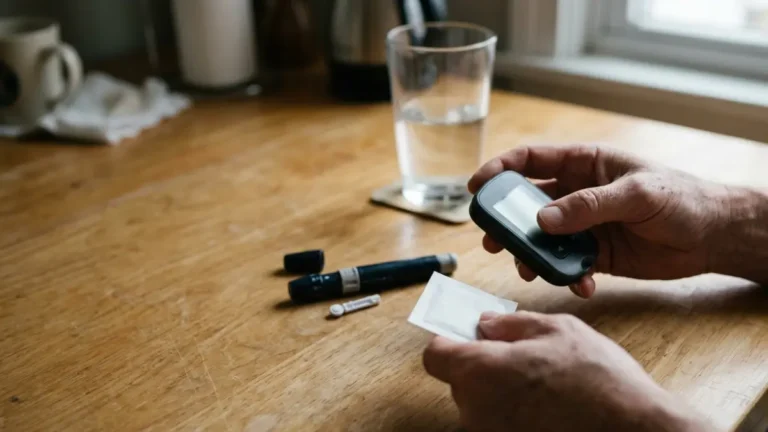
Holding a high reading now? Section three covers the next hour. If you also feel unwell — vomiting, confusion, laboured breathing — get emergency help instead.
Just been told your sugar is high? Start at section two for your target numbers.
If you have type 1 diabetes, nothing here replaces insulin. Contact your diabetes care team.
A reading below 70 mg/dL is low, not high — see section seven.
ℹ️ Medical Disclaimer: This is health education, not diagnosis, treatment, or a medication plan. It never tells you to start, stop, or adjust insulin, a diabetes medicine, or a device. Consult a board-certified endocrinologist or a certified diabetes care and education specialist first.
What counts as high blood sugar for you
Your target range decides whether a reading is a problem at all.
| Check | Typical target | Key clinical detail |
|---|---|---|
| Before a meal | 80–130 mg/dL | Before eating or drinking |
| Two hours after a meal | Under 180 mg/dL | Timed from the first bite |
| A1C | Under 7% for many nonpregnant adults | Averages 2–3 months |
Sources: CDC’s blood sugar targets; the 2026 Standards of Care.
Your two everyday numbers
The first two rows are what a meter shows you. Fasting and random values sit in our glucose levels chart.
What A1C adds that a meter can’t
A single reading is a photograph; A1C is the average. That is what A1C measures that a meter can’t, and why one careful week barely shifts it.
🩺 Editor’s Note: These are general targets, not yours. The 2026 Standards of Care call for individualised goals — age, pregnancy and past lows all shift them. Ask your endocrinologist what yours should be.
How to lower blood sugar right now, safely
Hyperglycemia in the next hour responds to a short list. Everything else here works over weeks.
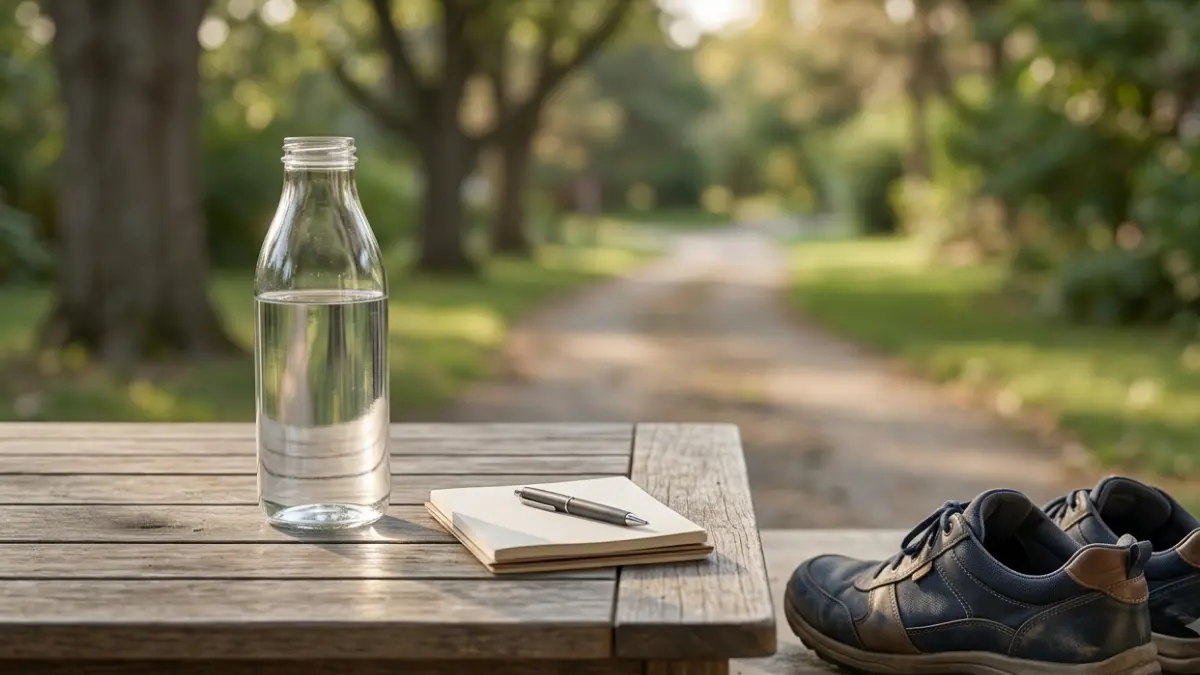
- Move, if you feel well. CDC suggests checking before and after a walk; most people see a lower number.
- Drink water instead of a sweet drink. That removes incoming glucose rather than clearing what is there.
- Check for ketones if you are ill. CDC advises an over-the-counter test at 240 mg/dL or above.
- Log the reading with the time, food, and activity.
What not to do
Do not exercise hard if you feel unwell. Do not skip your next meal. Do not take extra medicine.
⚠️ Clinical Warning: Never adjust an insulin dose from an article or a guess — corrections come only from your prescriber’s written plan. CDC calls high ketones an early sign of diabetic ketoacidosis, a medical emergency.
✅ Patient Action: Ask your diabetes care team: “What should my sick-day plan say, and at what reading should I call?”
Move after meals, not just at the gym
Walking after eating lowers blood sugar because working muscle pulls glucose from your bloodstream. CDC’s target is at least 150 minutes a week, and it names a ten-minute walk after dinner as a starting point.

The after-dinner walk
Check before you leave and again when you return. That comparison teaches you more than any general advice can.
Breaking up long stretches of sitting
Controlled trials show brief walking breaks lower post-meal glucose compared with sitting straight through.
🔬 How It Works: Muscle takes up glucose two ways — one needing insulin, one triggered by contraction itself. The second still works when insulin resistance has blunted the first.
What on your plate actually moves the number
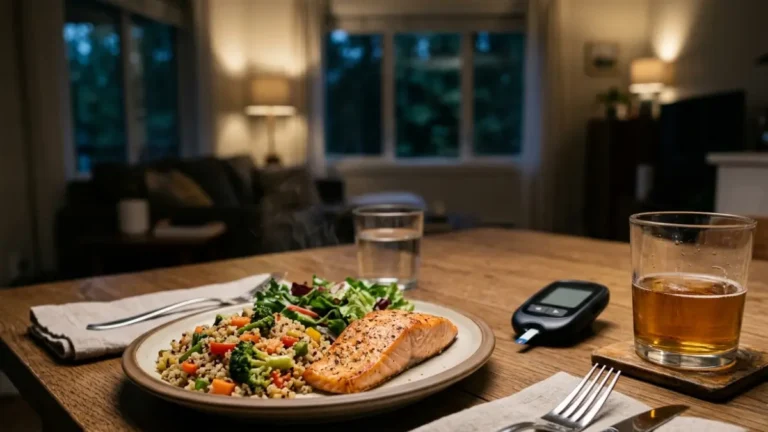
Carbohydrate is the lever. CDC puts it plainly: carbs raise blood sugar more after eating than protein or fat does.
Carbohydrate is the lever
Sugar-sweetened drinks act fastest, because the sugar arrives with nothing slowing it. Swapping them for water has the most predictable effect.
Slowing the spike
Carbohydrate eaten with protein, fat, and fibre arrives more slowly, flattening the rise — see why your reading spikes after meals.
No food lowers blood sugar. Anything sold as a blood sugar–lowering food overstates what eating can do. Ask a dietitian about medical nutrition therapy.
How much can lifestyle change actually do?
The honest answer comes from the Diabetes Prevention Program, which is specific about who it applies to.
What the trial found
📊 Clinical Data Point: Among adults with prediabetes, a programme targeting 7% weight loss and 150 weekly minutes of activity cut new diabetes cases 58% over about three years; metformin cut them 31%. — Source: the Diabetes Prevention Program results, NIDDK.
That is prevention of diabetes, not a drop in your reading. Work out what a 7% loss means for you, then see how fast A1C follows.
Why “without medication” isn’t always the goal
Many people need medication alongside these changes. Needing it is not a personal failure.
When high or low blood sugar needs urgent help
Hypoglycemia and severe hyperglycemia both stop being self-management problems at a defined point.
Too high — the warning signs
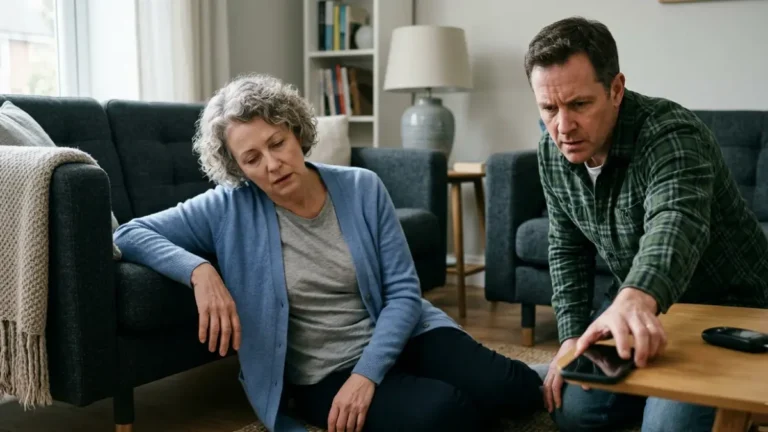
Vomiting, confusion, deep or rapid breathing, or abdominal pain with a high reading warrant emergency assessment, not another walk.
Too low — below 70 mg/dL
CDC treats anything below 70 mg/dL as low and describes the 15-15 rule: 15 grams of carbohydrate, wait 15 minutes, recheck, repeat if still low. Below 55 mg/dL is severely low and may not respond.
✅ Patient Action: Ask your care team: “Should I have an injectable glucagon kit, and does my household know how to use it?”
Common questions about lowering blood sugar
1. What is a dangerously high blood sugar level?
No single number fits everyone. CDC advises a ketone check at 240 mg/dL or above during illness.
2. How can I lower my blood sugar quickly?
Walking helps fastest. Choose water over sweet drinks, and ask your prescriber for a written plan.
3. What is a normal blood sugar range for adults?
CDC gives 80 to 130 mg/dL before meals, under 180 mg/dL two hours after eating.
4. Does drinking water lower blood sugar?
Not directly. Swapping sugary drinks for water removes incoming glucose rather than clearing what is circulating.
5. How long does it take to lower blood sugar?
A reading can shift within an hour of walking. A1C averages two to three months.
6. Can I lower my blood sugar without medication?
Sometimes, especially with prediabetes. Many still need medication. Ask your prescriber what is realistic.
7. Does walking after meals lower blood sugar?
Yes. Working muscle pulls glucose from your blood. CDC suggests a ten-minute walk after dinner.
8. What foods lower blood sugar immediately?
None do. Food adds glucose or slows its arrival. No food removes glucose already circulating.
9. What should I do if my blood sugar is over 300?
Contact your diabetes care team the same day. If also ill, CDC advises checking ketones.
10. How much does losing weight lower blood sugar?
In the Diabetes Prevention Program, 7% weight loss plus activity cut new diabetes cases 58%.
11. Can I lower my A1C before a blood test?
Not meaningfully. A1C averages two to three months, and masking it costs you a needed treatment change.
One thing to do today
Walk ten minutes after dinner and check your reading before and after. Then book the appointment where you ask what your personal target should be.
About this content
How this article was put together: researched from recognised health sources, drafted with the help of AI tools, and edited by hand, with sources linked throughout.

Sameer Patel is the founder and editor of My Medicine Advisor. He is not a doctor or medical professional — before starting this site he worked in banking,…
Medical disclaimer
The content on MyMedicineAdvisor is provided for general informational and educational purposes only and is not a substitute for professional medical advice, diagnosis, or treatment. Health information on this website should not be used to diagnose, treat, cure, or prevent any condition without guidance from a qualified healthcare professional. Always seek the advice of your doctor, physician, or another licensed healthcare provider with any questions you may have regarding a medical condition, symptoms, medications, or treatment decisions.