
On This Page – Quick Medical Summary
Two tests, two different questions about your blood sugar
Two numbers on your lab report look like they should agree, and they don’t. Both can be accurate.
A blood glucose test measures the sugar in your blood at that moment. An A1C test reflects your average blood glucose over the past 3 months.
Where to go next. If your results conflict, section four shows how far apart they can sit. Newly told you have prediabetes: start with the ranges table. Anemia, kidney disease, or a hemoglobin trait: skip to unreliable A1C results. Every reference range sits in our glucose levels chart.
ℹ️ Medical Disclaimer: This article explains how two laboratory tests differ. It does not diagnose diabetes or prediabetes, interpret your individual results, or recommend treatment, medication, or a testing schedule. Diagnosis requires confirmed laboratory testing ordered and read by a licensed clinician. Any product links on this page are affiliate placements, disclosed where they appear, and are not medical recommendations. Discuss your results with a board-certified primary care physician or endocrinologist before acting on them.
How a glucose test and an A1C test actually work
A fasting blood sugar result and an A1C measure the same substance on different timescales.
What a glucose reading captures
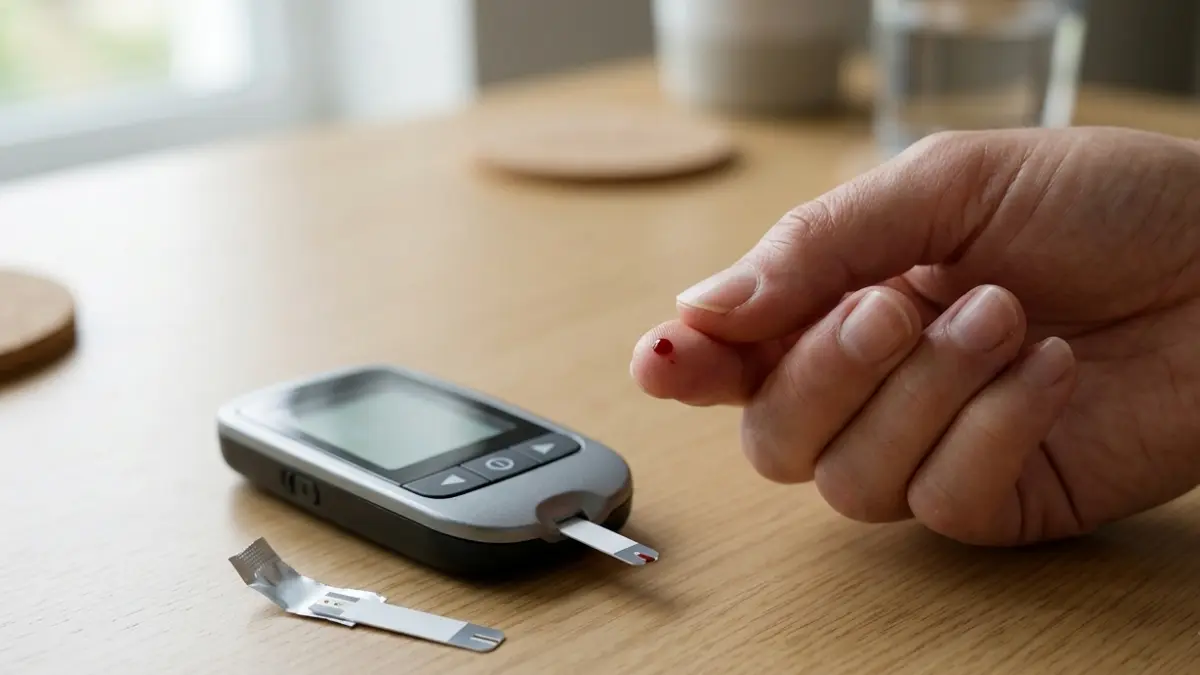
A glucose test reports one moment, moving with meals, activity, illness, and stress.
How glucose attaches to hemoglobin
🔬 How It Works: Glucose binds to hemoglobin, the oxygen-carrying protein in red blood cells. The more glucose, and the longer it stays up, the more hemoglobin carries it — A1C measures that percentage.

Why the last 30 days count most
A1C is not a flat three-month average: NIDDK’s explainer on how the A1C test works notes the past 30 days affect it more than earlier months.
Glucose vs A1C: the numbers side by side
These are the diagnostic thresholds a clinician reads each test against.
| Test | Prediabetes | Diabetes | Key clinical detail |
|---|---|---|---|
| A1C | 5.7–6.4% | 6.5% or higher | 3-month average; NGSP-certified lab for diagnosis |
| Fasting plasma glucose | 100–125 mg/dL | 126 mg/dL or higher | 8-hour fast; moved by stress or illness |
| 2-hour OGTT | 140–199 mg/dL | 200 mg/dL or higher | 75 g challenge; most sensitive, least reproducible |
Source: NIDDK, cross-checked against ADA Standards of Care 2026.
Unless symptoms are unmistakable, diagnosis needs two abnormal results; our A1C chart covers each percentage.
📊 Clinical Data Point: 27.6% of US adults with diabetes are undiagnosed — 11.0 million people. Source: CDC National Diabetes Statistics Report, 2026.
Why the two numbers often disagree
Four things explain most mismatches:
An average hides spikes and lows
- Different windows. Your meter shows today; your A1C covers three months.
- Averages cancel the edges. Highs and lows offset inside one average.
- Imprecision. Every reported number is a range.
- Different sensitivities. A1C identifies fewer cases than glucose tests.

Every result is a range, not a point
📊 Clinical Data Point: An A1C of 6.8% can re-report between 6.4% and 7.2% on a repeat of the same sample; a fasting glucose of 126 mg/dL can represent a true 110–142 mg/dL. Source: NIDDK’s comparison of diabetes blood tests.
Which number is more reliable for what
Glucose catches more cases at screening; A1C is steadier. Our guide to an A1C that doesn’t match your meter digs deeper.
What eAG is, and why it won’t match your meter
Many labs print an estimated average glucose figure beside the A1C.
How eAG is calculated
eAG converts A1C into mg/dL with the formula 28.7 × A1C − 46.7, from the ADA’s ADAG study. An A1C of 7% is about 154 mg/dL — calculated, not measured.
Why meter averages usually read lower
Your eAG covers every hour, including ones you never test. The fasting check is the day’s lowest reading, so an average of pre-meal tests sits below the true 24-hour figure. Home and point-of-care A1C results aren’t used for diagnosis. Our blood sugar converter switches mg/dL and mmol/L.
When a mismatch means the A1C is unreliable
A1C assumes red cells live a normal lifespan, so it misreads when they don’t:
- recent blood loss, transfusion, or erythropoietin treatment
- sickle cell disease, hemodialysis, kidney failure, liver disease
- iron-deficiency anemia, which pushes an A1C falsely high
- hemoglobin variants: HbS, HbC, HbE, HbD, or raised fetal hemoglobin

Each changes how much glucose collects on hemoglobin, so the percentage moves by itself. Variants are most common in people of African, Mediterranean, or Southeast Asian descent, and carriers usually have no symptoms. Another method can still give a valid result — see our causes of a falsely high A1C.
🩺 Editor’s Note: NIDDK tells clinicians to suspect interference below 4%, above 15%, or when A1C conflicts with glucose results.
✅ Patient Action: Ask your clinician or an endocrinologist whether a hemoglobin variant or anemia is affecting your A1C, and whether another method fits.
What to do when your results don’t line up
Repeat testing is standard here, not a sign something went wrong.
What repeat testing normally involves
When two tests conflict, the one above the threshold is repeated. A diagnostic A1C must run on an NGSP-certified lab method.
Questions worth asking at your appointment
People living with diabetes are advised to have an A1C at least twice a year, more often when goals aren’t met.
✅ Patient Action: Ask which result should be repeated, and whether your A1C runs on an NGSP-certified method.
Common questions about glucose and A1C results
1. Is A1C the same as blood sugar?
No. A blood sugar test measures glucose now; A1C reflects your average across 3 months.
2. Which is more accurate, A1C or glucose?
Neither. Glucose tests catch more at screening; A1C stays steadier. Ask your clinician which fits.
3. Can you have a normal A1C and still have diabetes?
Yes. A glucose test can indicate diabetes when an A1C does not; discuss repeat testing with your clinician.
4. How far back does an A1C go?
About 3 months, though glucose from the past 30 days counts more than earlier months.
5. What is eAG on my lab report?
Estimated average glucose converts A1C into mg/dL. It is calculated from A1C, not measured directly.
6. Why doesn’t my meter average match my A1C?
Meter averages skip untested hours, and pre-meal checks are the day’s lowest, so they trail eAG.
7. Does anemia affect A1C?
Yes. Iron-deficiency anemia can push an A1C falsely high. Ask your clinician whether glucose testing should confirm.
8. Can a hemoglobin variant make my A1C wrong?
Yes. HbS, HbC, HbE and HbD traits interfere with some methods; your clinician can order another.
9. Do I need to fast for an A1C?
No. Blood for an A1C can be drawn at any time of day, without fasting.
10. How often should A1C be tested?
At least twice a year with diabetes, more often when goals aren’t met. Confirm with your clinician.
11. Should I repeat the test if my numbers disagree?
Yes. Diagnosis needs two abnormal results, so ask your clinician which of the two to repeat.
The short version
Your glucose and your A1C answer different questions, so a gap is expected, not an error. Check whether anything on the interference list applies to you, then ask which test to repeat. MedlinePlus’s A1C summary is a useful second read.
About this content
How this article was put together: researched from recognised health sources, drafted with the help of AI tools, and edited by hand, with sources linked throughout.

Sameer Patel is the founder and editor of My Medicine Advisor. He is not a doctor or medical professional — before starting this site he worked in banking,…
Medical disclaimer
The content on MyMedicineAdvisor is provided for general informational and educational purposes only and is not a substitute for professional medical advice, diagnosis, or treatment. Health information on this website should not be used to diagnose, treat, cure, or prevent any condition without guidance from a qualified healthcare professional. Always seek the advice of your doctor, physician, or another licensed healthcare provider with any questions you may have regarding a medical condition, symptoms, medications, or treatment decisions.