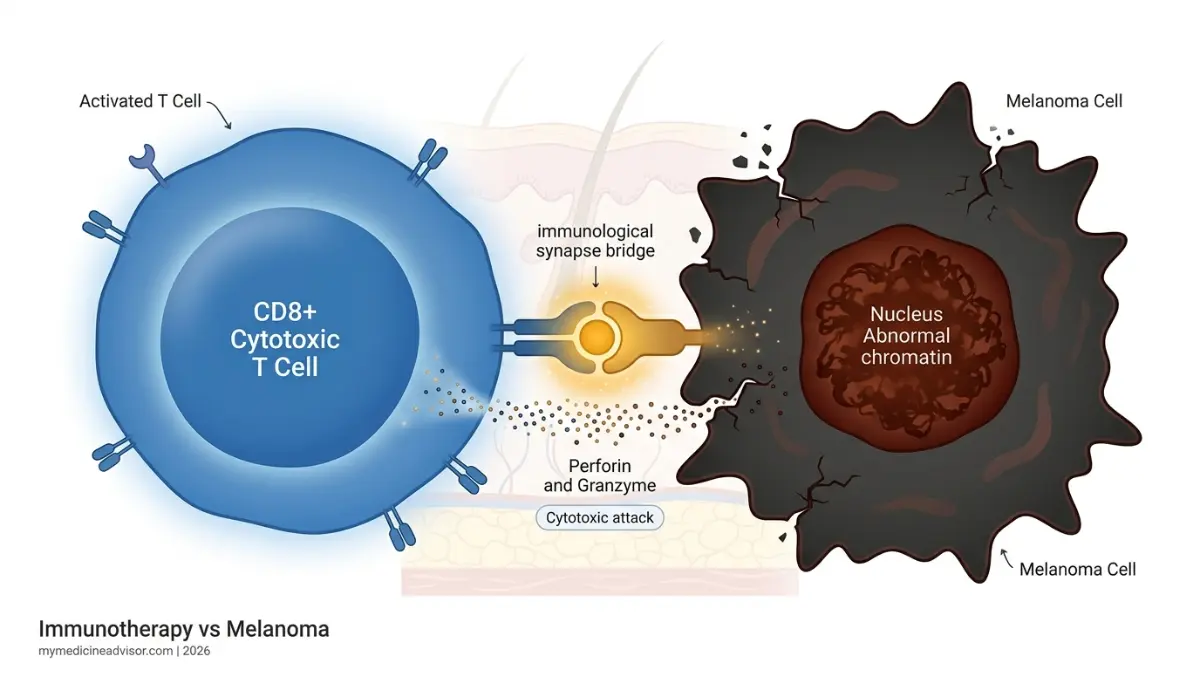
Immunotherapy for Melanoma: How It Works, Who Qualifies & What to Expect in 2026
Learn how immunotherapy works against melanoma, which 5 FDA-approved drugs exist, who qualifies by stage, and what 2026 survival rates actually mean for you.

Clear information on cancer symptoms, screening, staging and treatment, written to help you understand your situation and talk to your care team.
Learn how immunotherapy works against melanoma, which 5 FDA-approved drugs exist, who qualifies by stage, and what 2026 survival rates actually mean for you.
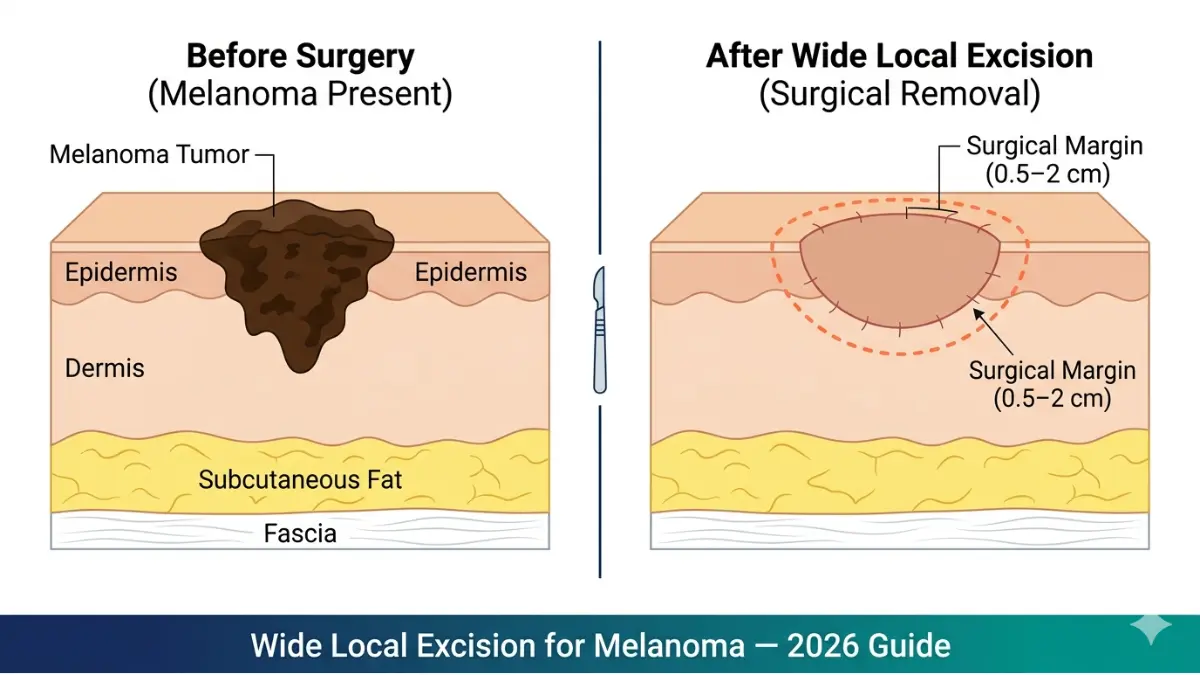
Wide local excision for melanoma removes the tumor plus a 0.5–2 cm margin. 2026 surgeon-reviewed guide covers procedure steps, recovery timeline, and scar care.
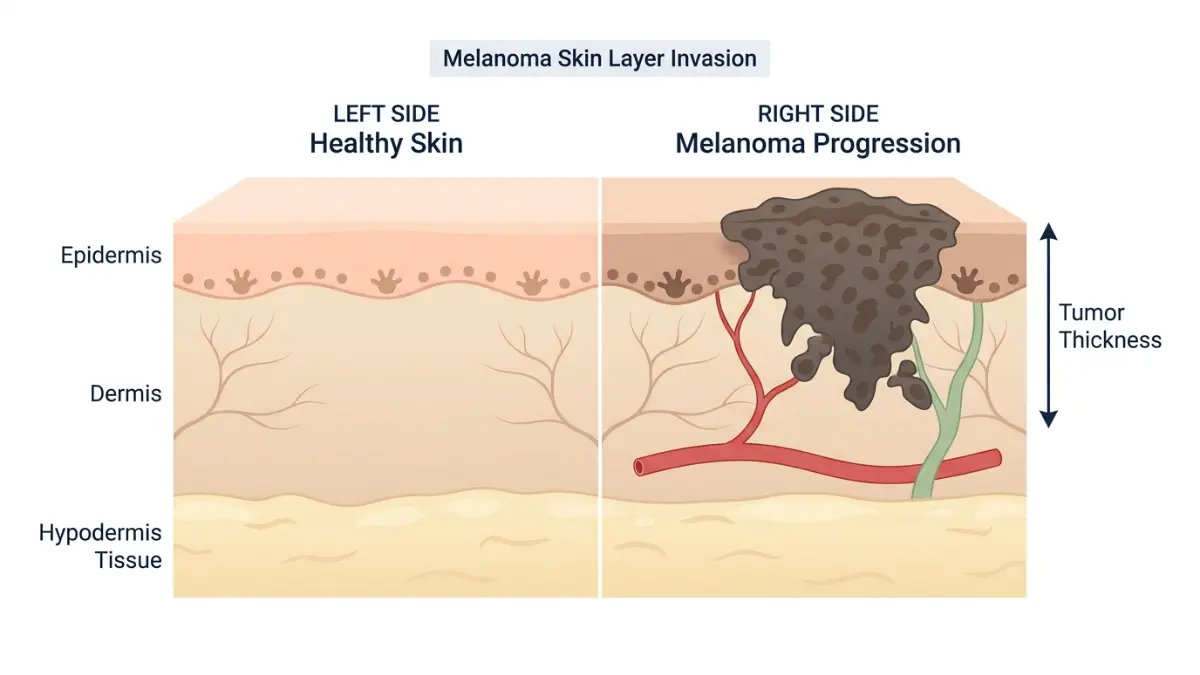
Diagnosed with melanoma in 2026? This complete guide covers every FDA-approved treatment option—surgery, immunotherapy, BRAF therapy, TIL therapy, and the breakthrough mRNA vaccine trial.
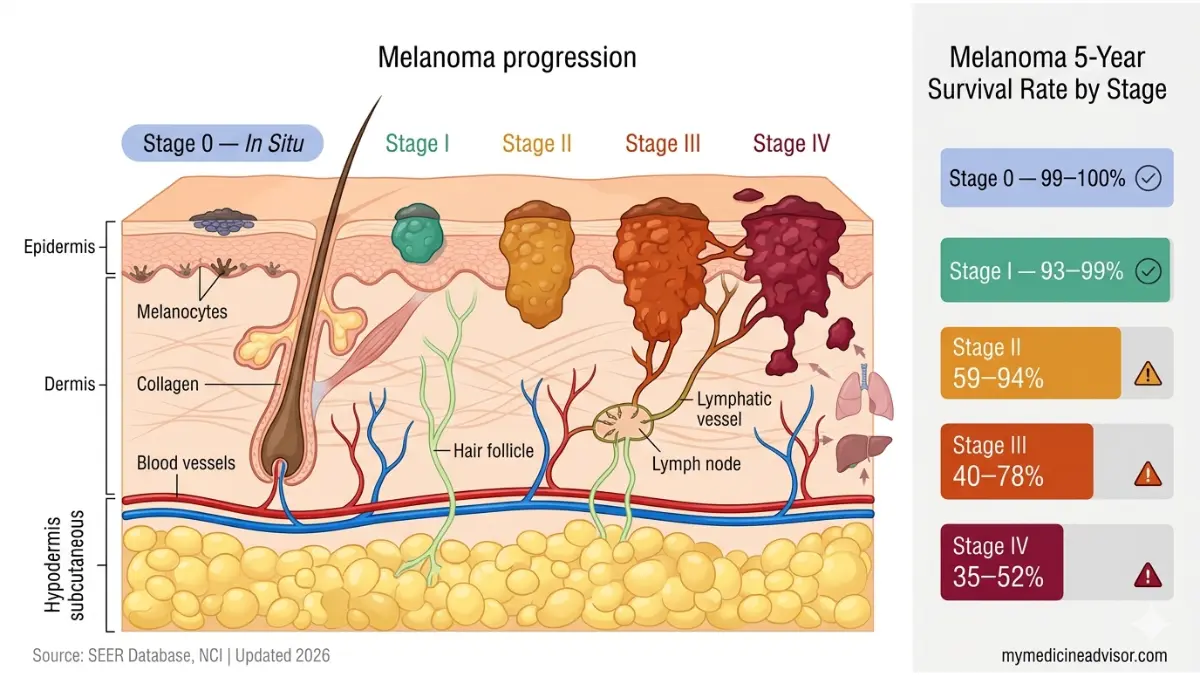
Melanoma survival rate ranges from 99% at Stage 0 to 35–52% at Stage 4 with immunotherapy. See the complete 2026 data table, stage-by-stage breakdown, and what it means for you.

In melanoma, a high LDH changes the AJCC stage only after distant spread. What a BRAF result and a ctDNA report add, and the questions to ask next.

Everything you need to know about sentinel lymph node biopsy for melanoma — procedure steps, what results mean, recovery timeline, and 2026 treatment options.
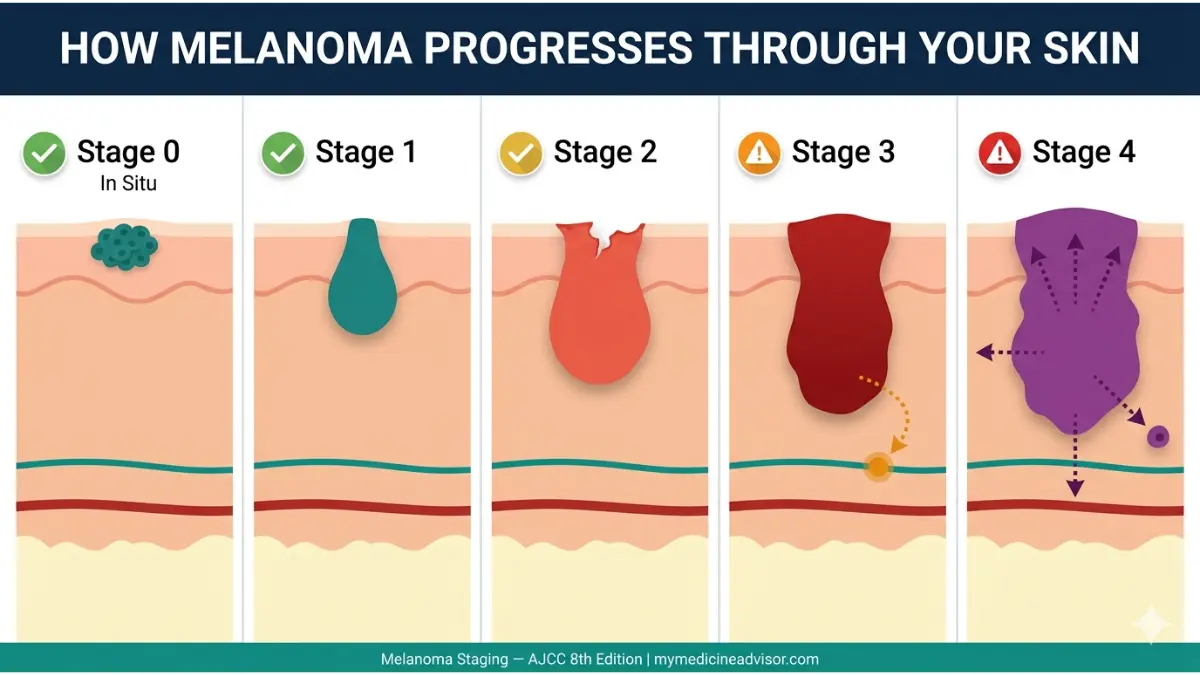
From Stage 0 (nearly 100% curable) to Stage 4 (new hope with immunotherapy) — a plain-English, expert-reviewed melanoma staging guide updated for 2026.

Melanoma is diagnosed through dermoscopy and biopsy. Learn each step — from your first skin exam to reading your pathology report — in plain English.
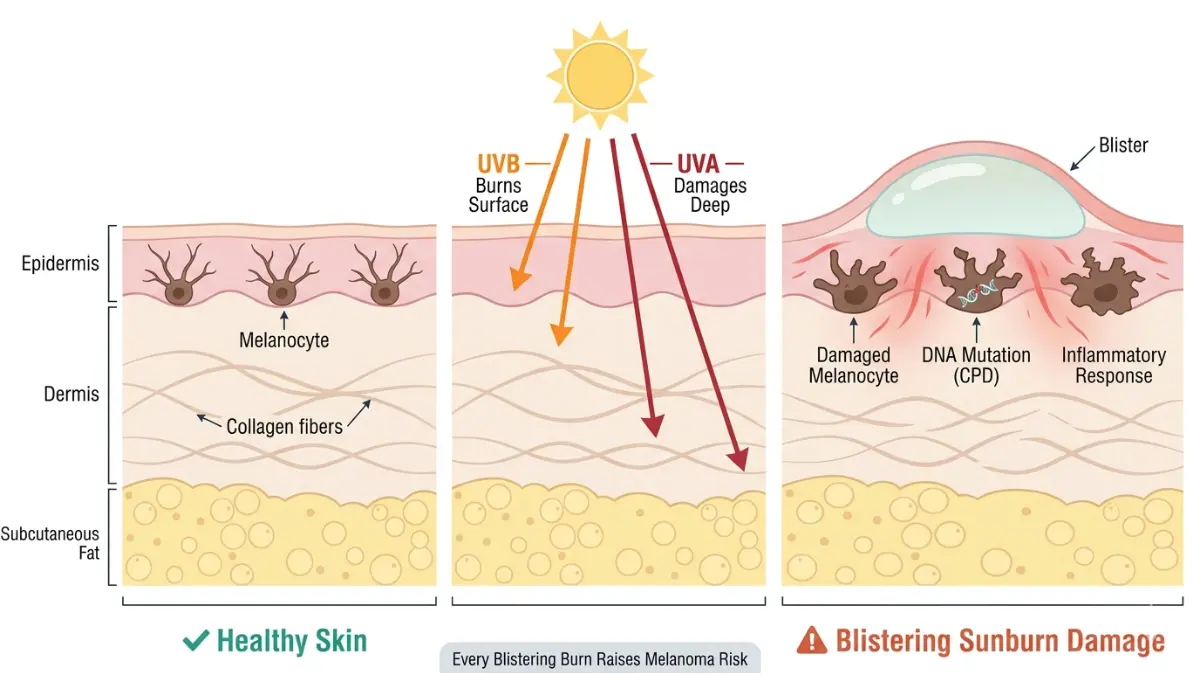
One blistering sunburn before 18 doubles melanoma risk. Discover the science, warning signs, and proven prevention strategies dermatologists recommend in 2026.
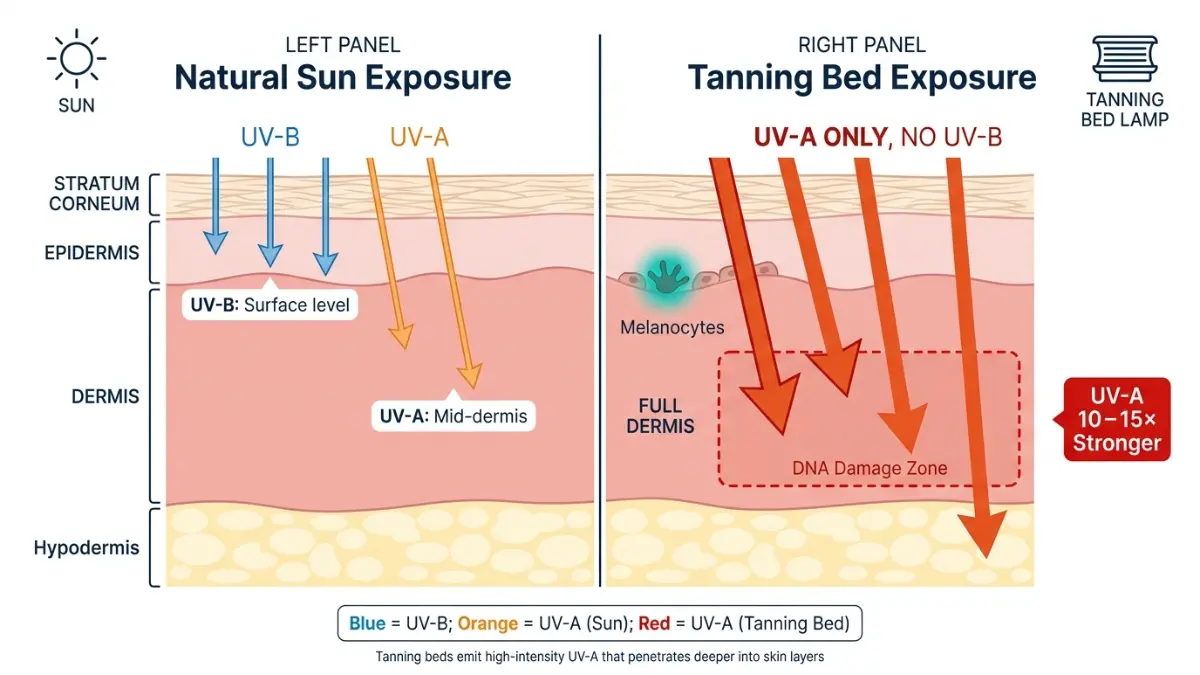
Tanning beds raise melanoma risk by 75%. Dermatologists break down who's most at risk, the exact cellular damage per session, and your 2026 action plan.
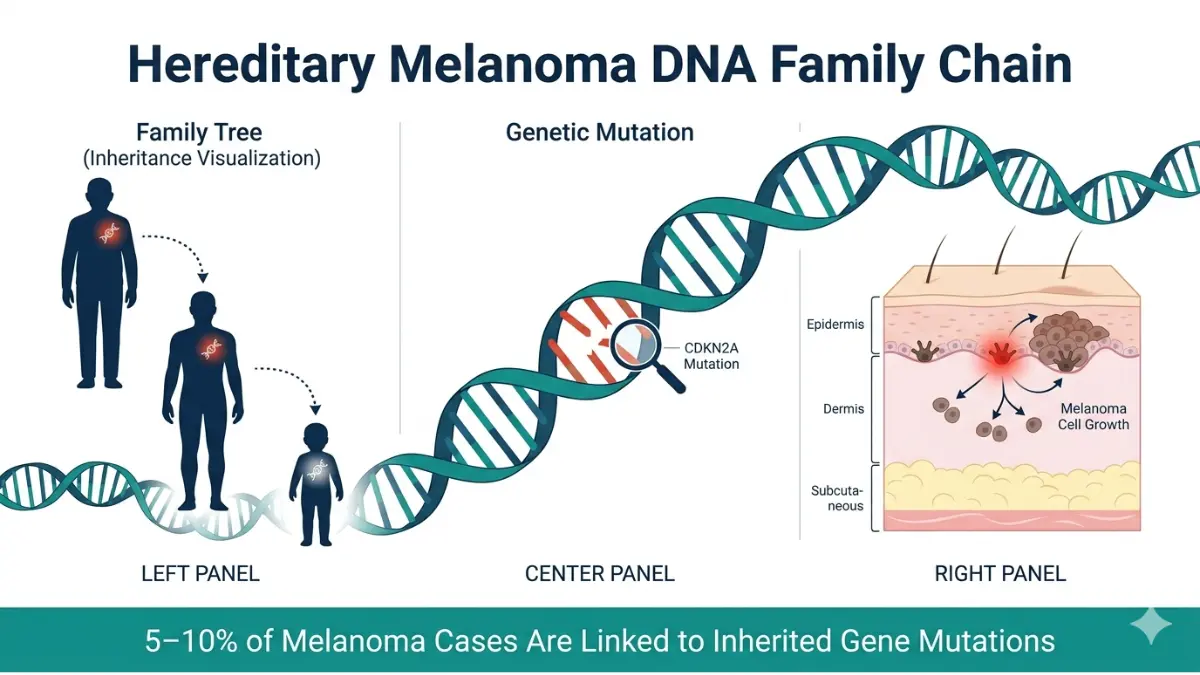
Melanoma can be hereditary — 5–10% of cases involve inherited gene mutations. Learn your exact family risk level, which genes to test for, and your 5-step protection plan.

