
On This Page – Quick Medical Summary
Can a Blood Test Detect Melanoma? Here’s What Doctors Actually Test For
When Marcus, a 47-year-old teacher from Houston, received his Stage 3 melanoma diagnosis, his oncologist ordered not just a biopsy — but a full panel of melanoma blood tests. His circulating tumor DNA (ctDNA) results came back detectable, which changed his entire treatment plan. That decision, made within weeks of diagnosis, is now backed by landmark 2025 research.
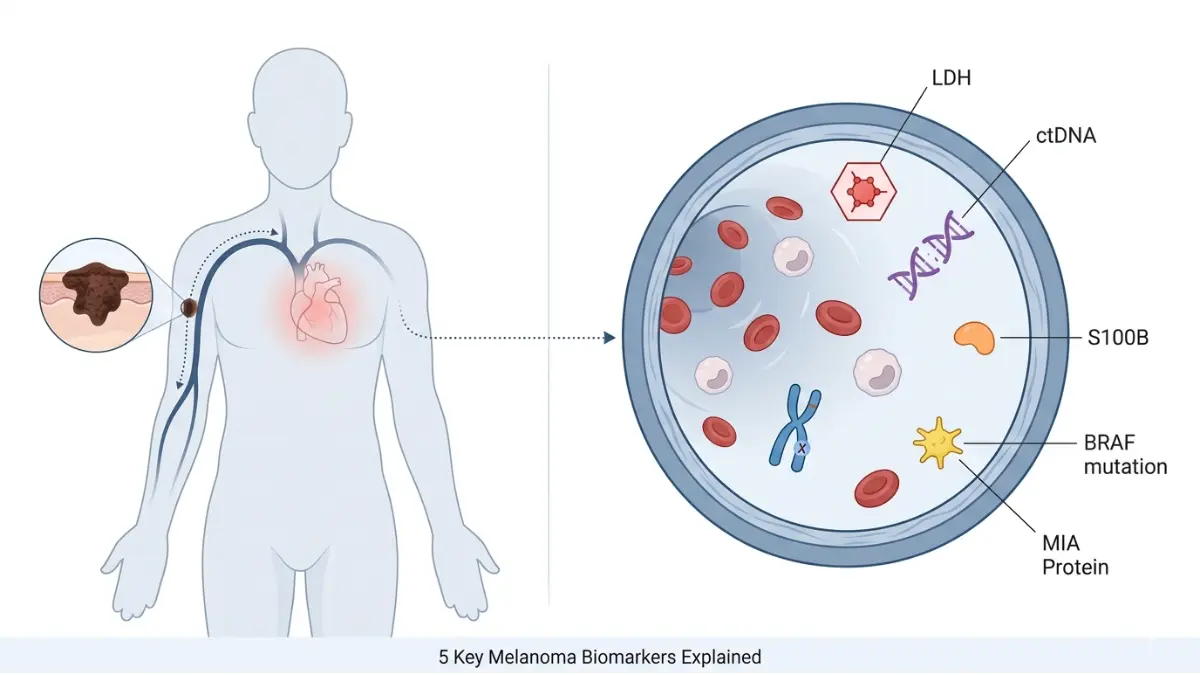
Here’s the direct answer: Blood tests cannot diagnose melanoma on their own. However, melanoma blood tests measure critical biomarkers — including LDH, S100B, ctDNA, BRAF mutations, and MIA — that reveal how advanced your cancer is, how well treatment is working, and whether it may return.
What Blood Tests Are Done for Melanoma?
- LDH (Lactate Dehydrogenase) — measures tumor cell activity and necrosis
- S100B Protein — tracks tumor burden and recurrence risk
- MIA (Melanoma Inhibitory Activity) — monitors treatment response
- ctDNA (Circulating Tumor DNA) — the next-generation liquid biopsy
- BRAF V600E Mutation Test — determines targeted therapy eligibility
- CBC & Chemistry Panel — assesses overall organ health during treatment
If you’re experiencing unexplained skin changes or systemic symptoms alongside a melanoma diagnosis, use our Symptom Checker to help organize what to report to your oncologist at your next visit.
The 6 Key Melanoma Biomarkers — And What Each One Tells Your Doctor
LDH (Lactate Dehydrogenase) — The Stage IV Benchmark
LDH is the only blood-based biomarker incorporated into the official AJCC 8th Edition melanoma staging system. When tumor cells die or grow rapidly, they release LDH into the bloodstream. Elevated LDH in Stage IV melanoma patients is so significant that it triggers a separate substage classification (M1d).
According to the American Cancer Society, doctors test LDH levels specifically to monitor treatment progress and assess prognosis in advanced melanoma. Normal LDH range: 105–333 U/L. Levels above this threshold in a melanoma patient require prompt oncology review.
S100B Protein — The Recurrence Sentinel
S100B is a calcium-binding protein released by melanoma cells into the bloodstream. It is more widely used in European oncology centers than in the US — a critical gap in most American patient-facing resources.
Research published in PMC (NIH) confirms that S100B shows greater sensitivity than LDH in detecting early recurrence in Stage II–IV patients. If your oncologist hasn’t mentioned S100B monitoring, it’s worth asking about, particularly after surgical resection.
MIA (Melanoma Inhibitory Activity) — The Treatment Monitor
MIA is a protein secreted directly by melanoma cells. Its primary role is monitoring whether immunotherapy is working. A 2017 study — and more recent 2023 follow-up data — suggests MIA is particularly valuable for tracking efficacy in patients receiving checkpoint inhibitor therapy such as pembrolizumab or nivolumab.
If you’re exploring hereditary risk alongside your diagnosis, our Genetic Risk Assessment Tool can help you document your family history before meeting with a genetic counselor.
ctDNA (Circulating Tumor DNA) — The Liquid Biopsy Revolution
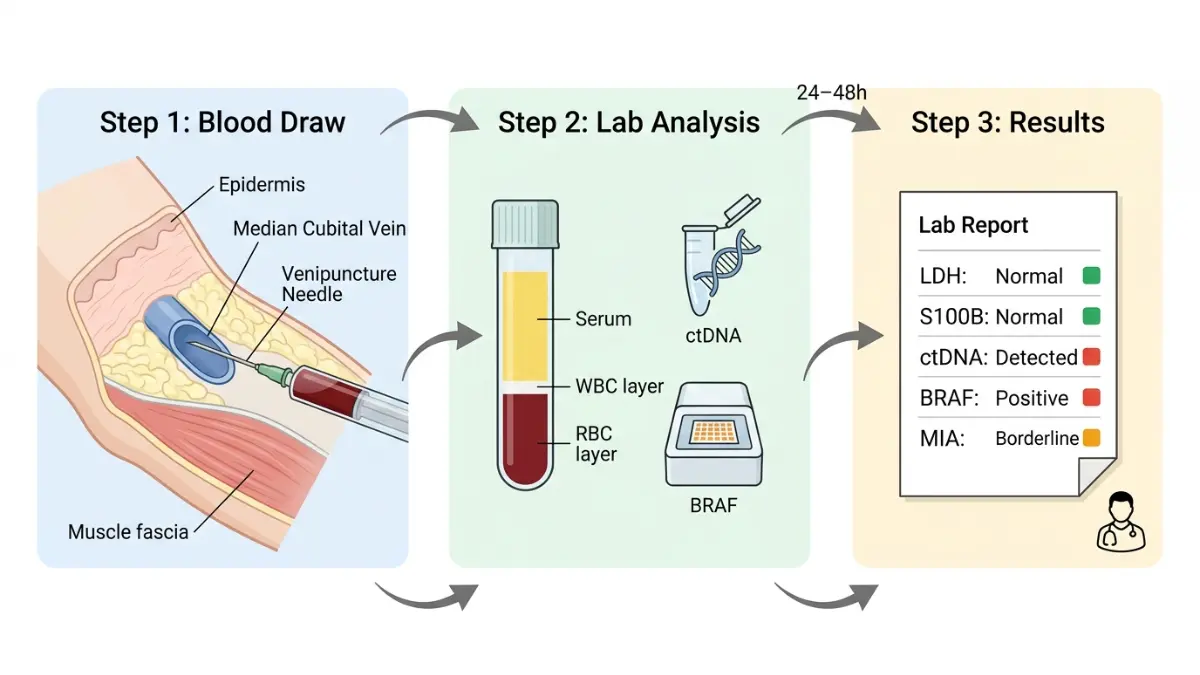
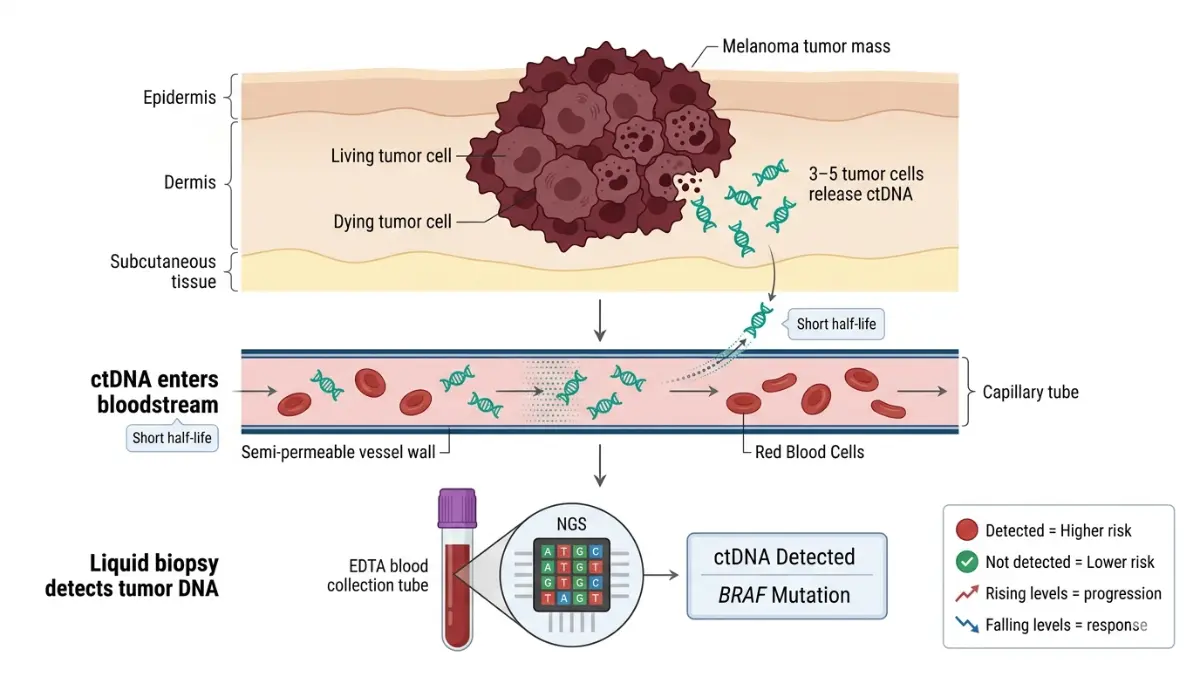
Think of ctDNA as cancer’s fingerprint in your blood. As tumor cells break down, they shed fragments of their DNA into circulation. A blood draw can capture that DNA — without a second biopsy.
In April 2025, researchers at NYU Langone Health published the largest ctDNA study to date in The Lancet Oncology. The findings are landmark:
- ~80% of Stage 3 melanoma patients with detectable ctDNA before treatment went on to experience recurrence
- Disease returned more than 4x faster in ctDNA-positive patients
- ctDNA predicted recurrence more accurately than any tissue-based test alone
“Unlike standard tissue-based analyses, ctDNA tests provide a clear, direct measure of the disease itself.” — Dr. David Polsky, MD, PhD, NYU Langone, 2025
Commercially, tests like Natera’s Signatera™ are currently the most widely used ctDNA panels for melanoma monitoring.
BRAF V600E Mutation — The Treatment Selector
Approximately 50% of all melanomas carry the BRAF V600E mutation. This single biomarker is one of the most actionable findings in all of oncology. If your melanoma is BRAF-positive, you may be eligible for FDA-approved targeted therapies including dabrafenib + trametinib (combination therapy) or vemurafenib.
The Melanoma Research Alliance recommends comprehensive biomarker testing for all Stage III–IV patients, including BRAF, NRAS, and cKIT mutation panels. Mutations that aren’t actionable today may become targets of future therapies — a powerful reason to test broadly now.
miRNA & Emerging Markers — The 2025–2026 Frontier
MicroRNA (miRNA) fragments are non-coding RNA molecules found in blood that regulate gene expression. Multiple studies now confirm their potential as both diagnostic and prognostic markers for melanoma. Research from PMC/NIH highlights their role in distinguishing early-stage melanoma from benign nevi. Autoantibody panels (including a 139-marker panel identified by Edith Cowan University, Australia) are entering clinical validation stages. Expect these to reach US clinics by 2027.
Master Biomarker Comparison Table
| Biomarker | What It Measures | Primary Use | Stage Relevance | US Availability |
|---|---|---|---|---|
| LDH | Tumor cell necrosis | Staging, prognosis | Stage III–IV | Standard |
| S100B | Tumor burden | Recurrence detection | Stage II–IV | Growing |
| MIA | Tumor activity | Treatment response | Stage III–IV | Specialized centers |
| ctDNA | Tumor DNA in blood | Recurrence prediction | Stage II–IV | Expanding rapidly |
| BRAF V600E | Gene mutation status | Treatment selection | All stages | Standard (Stage III–IV) |
| miRNA | Gene regulation | Emerging diagnostic | Research phase | Clinical trials |
Which Melanoma Blood Tests Are Done at Each Stage?
No competitor resource gives patients a clear, stage-by-stage roadmap. Here it is.
Understanding your melanoma stages is directly tied to which blood biomarker tests your doctor will order. The tests escalate in number and complexity as the disease advances.
| Melanoma Stage | Standard Blood Tests | Advanced Biomarker Tests |
|---|---|---|
| Stage I | CBC, basic metabolic panel | Not typically ordered |
| Stage II | CBC, LDH | Consider ctDNA (DecisionDx), S100B |
| Stage III | CBC, LDH, organ function | ctDNA (Signatera™), BRAF, S100B, MIA |
| Stage IV | CBC, LDH (mandatory for substaging), organ panels | ctDNA serial monitoring, full mutation panel |
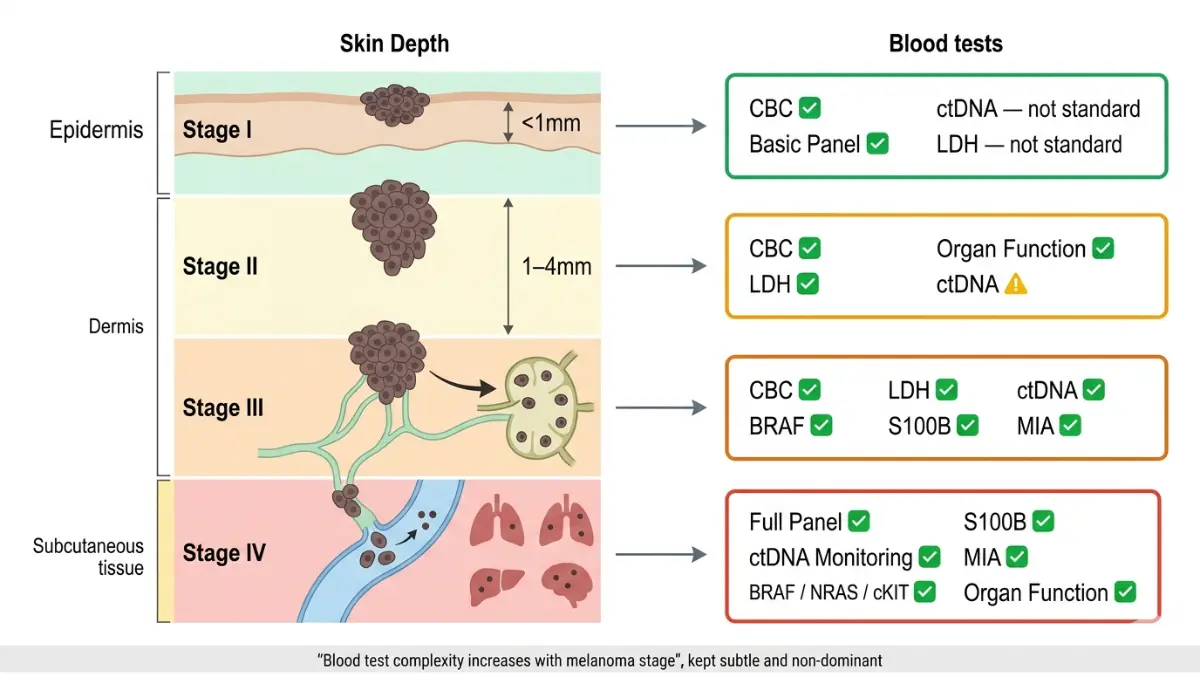
For Stage I–II patients: Most oncologists follow a “watch and wait” approach for blood biomarkers. However, given the 2025 ctDNA data, asking about early liquid biopsy enrollment is increasingly appropriate.
For Stage III–IV patients: LDH, ctDNA, and BRAF testing are considered standard of care by leading US cancer centers.
💡 What This Means For You: If you’re Stage III and your doctor hasn’t yet discussed ctDNA testing, it’s entirely reasonable to ask: “Am I a candidate for Signatera™ or a similar liquid biopsy panel?”
For a complete look at how diagnosis works beyond blood tests — including sentinel lymph node evaluation — see our detailed guide on how melanoma is diagnosed and our sentinel lymph node biopsy article.
Blood draws are also often accompanied by a full metabolic panel. If you want to understand how blood-based metabolic numbers work alongside oncology panels, our Blood Sugar Converter can help you cross-reference glucose and metabolic results reported alongside your cancer bloodwork.
Melanoma Blood Test Results Explained — Normal Ranges, High Levels & What Happens Next
LDH Reference Ranges in Melanoma Context
| LDH Level | Value (U/L) | Clinical Meaning |
|---|---|---|
| Normal | 105–333 | No immediate concern from LDH alone |
| Mildly Elevated | 334–500 | Warrants monitoring; may indicate local disease activity |
| Significantly Elevated | 500+ | Associated with advanced/metastatic disease; requires imaging |
Critical point no competitor explains: LDH can be elevated for non-cancer reasons — including intense exercise, liver disease, anemia, and muscle injury. A single elevated LDH never confirms advanced melanoma in isolation. Always discuss the number in full clinical context with your oncologist.
Abnormal Results — What Happens Next (Step-by-Step)
- Abnormal biomarker result reported (e.g., elevated LDH or detectable ctDNA)
- Oncologist review — results placed in full clinical context
- Imaging ordered — PET/CT or CT scan to visualize tumor activity
- Multidisciplinary tumor board review — for Stage III–IV cases
- Treatment plan adjusted — may include adding/changing systemic therapy
Tracking Biomarker Trends Over Time
A single test result matters far less than the trend over serial monitoring. Think of it this way:
- Falling ctDNA + falling LDH = treatment is working ✅
- Rising ctDNA despite treatment = possible resistance developing 🔴
- Stable ctDNA post-surgery = recurrence unlikely in near term ✅
As Dr. Polsky of NYU Langone confirmed in the 2025 Lancet study, serial ctDNA monitoring gives oncologists a “real-time window” into disease activity that imaging simply cannot match in frequency or cost-efficiency.
💡 5 Questions to Ask Your Oncologist About Your Biomarker Results:
- “What trend are you seeing in my LDH over time?”
- “Am I a candidate for ctDNA (liquid biopsy) monitoring?”
- “Has my BRAF/NRAS mutation status been confirmed?”
- “What would a rising S100B level mean for my treatment plan?”
- “When should we retest, and what would trigger a treatment change?”
If BRAF mutation status is confirmed in your results, use our Genetic Risk Assessment Tool to document your family cancer history — inherited CDKN2A mutations can elevate risk in first-degree relatives who may benefit from genetic counseling.
How Melanoma Biomarkers Directly Change Your Treatment — 2025 Evidence
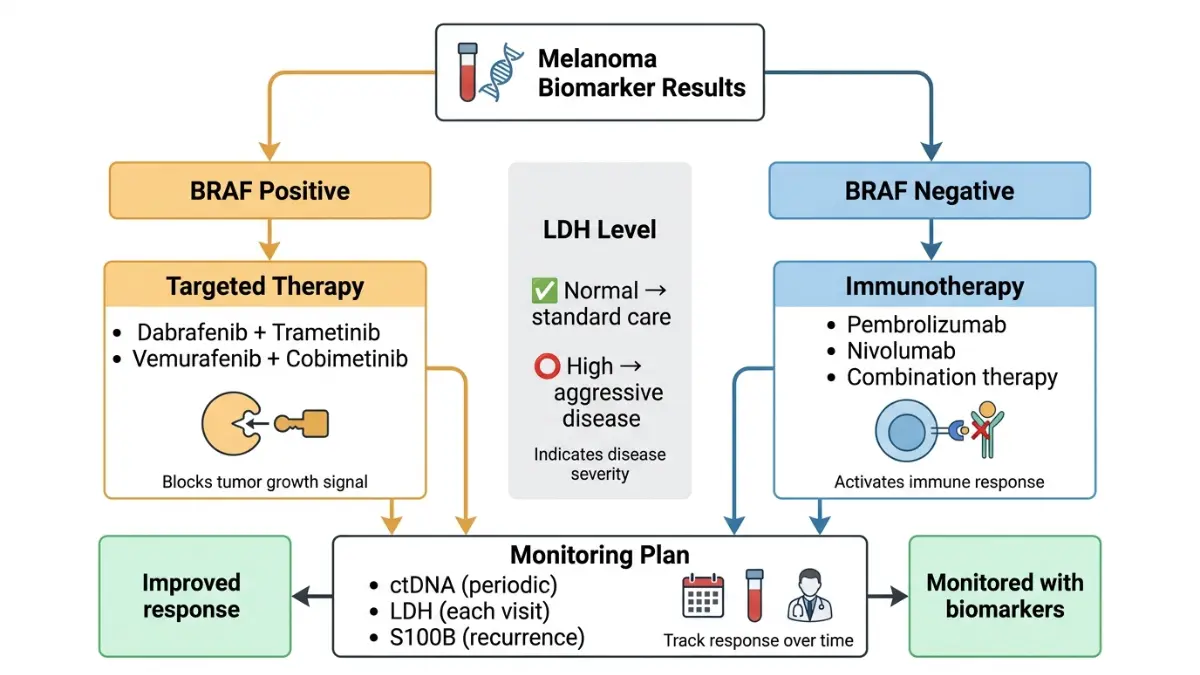
BRAF+ → Targeted Therapy Eligibility
If your biomarker panel confirms BRAF V600E positivity, you may be eligible for FDA-approved combination targeted therapies that have transformed Stage IV melanoma survival rates. Dabrafenib + trametinib (Tafinlar + Mekinist) and vemurafenib + cobimetinib are the two primary approved regimens.
According to NCI’s melanoma treatment guidelines at cancer.gov, BRAF-targeted therapy is now recommended as a first-line option for BRAF V600E-positive metastatic melanoma. Without biomarker testing, patients cannot access this treatment pathway.
To understand the full spectrum of treatment options tied to biomarker status, our melanoma symptoms, stages & treatment pillar guide covers the complete clinical roadmap.
LDH as a Mandatory Staging Tool
Elevated LDH in Stage IV melanoma moves patients into the M1d substage under the AJCC 8th Edition, indicating the most advanced disease category. This substage directly determines treatment intensity, clinical trial eligibility, and prognosis discussions.
ctDNA to Guide Adjuvant Therapy Decisions (2025 Data)
The April 2025 NYU Langone study fundamentally changes adjuvant therapy decision-making:
- Detectable ctDNA post-surgery = high recurrence risk → oncologists now consider intensifying adjuvant immunotherapy
- Undetectable ctDNA post-surgery = lower short-term recurrence signal → may allow more conservative follow-up
This is one of the most significant shifts in melanoma management in the past decade, and it’s driven entirely by a blood test. For context on how AI is now being combined with biomarker data in 2026, read our coverage of AI melanoma screening and survival advances.
Immunotherapy & Biomarker Monitoring
If you’re receiving pembrolizumab (Keytruda) or nivolumab (Opdivo), serial monitoring with MIA and ctDNA can confirm whether your immune system is achieving tumor control.
💡 What This Means For You: If you’re on checkpoint inhibitor immunotherapy, ask your oncologist: “Should we be tracking MIA or ctDNA alongside my scans to get earlier signals on response?”
Insurance Coverage for Melanoma Biomarker Testing (2025)
This is a gap no competitor addresses — and it matters enormously for US patients.
- Medicare covers BRAF mutation testing for Stage III–IV patients under specific LCD guidelines
- Commercial insurance generally covers LDH; ctDNA panels (Signatera™) often require prior authorization
- Medicaid coverage varies by state for liquid biopsy panels
- Out-of-pocket cost for Signatera™ without coverage: $1,800–$3,500 per test
Organizations like CancerCare offer financial navigation assistance specifically for biomarker testing costs. Patients should request a coverage determination letter from their insurer before ordering liquid biopsy panels.
For patients facing Stage 4 disease, our Stage 4 melanoma survival and therapy guide outlines treatment options tied directly to biomarker outcomes.
The Future of Melanoma Blood Tests in 2025–2026 — And What You Should Do Today
Blood-based melanoma detection is not yet a standalone diagnostic tool — but it is closing in faster than most patients realize. Here’s what’s coming:
| Technology | Status in 2026 | Estimated Clinical Availability |
|---|---|---|
| Signatera™ ctDNA expansion | FDA Breakthrough Device (melanoma) | Available now at major centers |
| 139-Autoantibody Panel (ECU) | Phase II validation | 2027–2028 |
| miRNA liquid panels | Phase I–II clinical trials | 2027–2028 |
| Multi-cancer early detection (MCED) tests | Commercial (Galleri by Grail) | Available now (limited melanoma sensitivity) |
The DermNet NZ review on blood-based melanoma detection confirms that these emerging tools will function as complements to skin checks and imaging — not replacements. That balanced, evidence-based framing is exactly what patients deserve.
✅ Your 5-Point Melanoma Biomarker Action Plan
- Ask your oncologist which melanoma blood tests are relevant to your current stage
- Request serial monitoring — don’t settle for a one-time LDH draw; trend data is everything
- Confirm BRAF/NRAS/cKIT mutation status if you’re Stage III or IV
- Check insurance coverage before ordering a liquid biopsy panel — request prior authorization early
- Document your family cancer history using our Genetic Risk Assessment Tool before your genetics consultation
If you’ve recently received melanoma warning signs or want to understand the full diagnostic workup, our complete guide on melanoma warning signs and symptoms is the natural next step in building your knowledge.
For hereditary context, our article on whether melanoma is hereditary explains how CDKN2A and BAP1 mutations detected through biomarker testing can affect your entire family’s screening plan.
Frequently Asked Questions — Melanoma Blood Tests & Biomarkers
1. Can a blood test diagnose melanoma?
No. Blood tests cannot diagnose melanoma on their own. A skin biopsy is required for diagnosis. However, melanoma blood tests measure biomarkers like LDH, ctDNA, and S100B that reveal disease progression, recurrence risk, and treatment response.
2. What does a high LDH level mean in melanoma?
Elevated LDH (above 333 U/L) in a melanoma patient typically signals advanced disease activity or metastasis. In Stage IV melanoma, high LDH triggers the M1d substage classification under AJCC staging, indicating the most severe prognosis category.
3. What is a liquid biopsy for melanoma?
A liquid biopsy is a blood test — most commonly ctDNA testing — that detects fragments of tumor DNA circulating in the bloodstream. It is minimally invasive and can provide real-time information about tumor activity without a repeat surgical biopsy.
4. What is ctDNA and why is it tested in melanoma?
ctDNA (circulating tumor DNA) is shed into the blood by dying tumor cells. A 2025 NYU Langone study found that detectable ctDNA predicted recurrence in ~80% of Stage 3 melanoma patients. It’s increasingly used to guide adjuvant therapy decisions and monitor treatment response.
5. What is S100B protein in melanoma?
S100B is a calcium-binding protein released by melanoma cells. Elevated blood levels indicate tumor burden and are commonly used in European oncology centers to monitor recurrence. It shows greater sensitivity than LDH for detecting early recurrence in Stage II–IV patients.
6. What is the BRAF blood test for melanoma?
The BRAF V600E test identifies whether your melanoma carries a specific gene mutation present in ~50% of melanomas. A positive result means you may be eligible for FDA-approved targeted therapies including dabrafenib + trametinib, which can significantly improve outcomes.
7. How often are blood tests done during melanoma treatment?
Frequency depends on your stage and treatment. Stage IV patients on systemic therapy may have LDH and metabolic panels drawn every 3–6 weeks. ctDNA monitoring intervals vary but are typically every 3 months in active follow-up protocols.
8. What blood tests are done for Stage 4 melanoma?
Standard tests include LDH (mandatory for M-substaging), CBC, comprehensive metabolic panel, and organ function markers. Advanced panels include ctDNA (Signatera™), BRAF/NRAS/cKIT mutation testing, S100B, and MIA — depending on treatment type.
9. Can melanoma biomarkers predict recurrence?
Yes — especially ctDNA. The April 2025 Lancet Oncology study found that Stage 3 patients with detectable ctDNA before treatment experienced recurrence more than 4x faster than those with undetectable levels. Serial monitoring is now considered best practice at leading US cancer centers.
10. Does insurance cover melanoma biomarker testing?
Medicare covers BRAF mutation testing for Stage III–IV melanoma under specific LCD guidelines. ctDNA panels like Signatera™ often require prior authorization. Out-of-pocket costs without coverage range from $1,800–$3,500. Contact your insurer early and explore financial assistance through CancerCare.
11. What is the difference between biomarker testing and genetic testing in melanoma?
Biomarker testing (LDH, ctDNA, BRAF blood panels) analyzes your cancer’s behavior and mutations to guide treatment. Genetic testing (BRCA, CDKN2A, BAP1 panels) analyzes your inherited DNA to assess hereditary cancer risk for you and your family. Both serve distinct, complementary purposes.
📚 Related Reading on mymedicineadvisor.com:
- Melanoma Stages: Complete Guide
- How Is Melanoma Diagnosed?
- Melanoma Statistics 2026
- Sentinel Lymph Node Biopsy Explained
About this content
How this article was put together: researched from recognised health sources, drafted with the help of AI tools, and edited by hand, with sources linked throughout.

Sameer Patel is the founder and editor of My Medicine Advisor. He is not a doctor or medical professional — before starting this site he worked in banking,…
Medical disclaimer
The content on MyMedicineAdvisor is provided for general informational and educational purposes only and is not a substitute for professional medical advice, diagnosis, or treatment. Health information on this website should not be used to diagnose, treat, cure, or prevent any condition without guidance from a qualified healthcare professional. Always seek the advice of your doctor, physician, or another licensed healthcare provider with any questions you may have regarding a medical condition, symptoms, medications, or treatment decisions.