
On This Page – Quick Medical Summary
Low blood sugar symptoms usually arrive fast — shaking, sweat, a racing heart, a fog that wasn’t there ten minutes ago. The CDC puts the line at 70 mg/dL. Below that, hypoglycemia needs action rather than observation.
Where you go next depends on your situation:
- You have diabetes and you feel it right now — skip to the 15-15 rule.
- You’re not sure this is a low — start with the symptoms, then the numbers.
- You don’t have diabetes — the section on lows without diabetes is written for you.
- Someone near you is confused or unresponsive — go straight to the emergency section.
ℹ️ Medical Disclaimer: This article explains what published clinical guidance says about recognising and responding to low blood sugar. It is not a diagnosis, a treatment plan, or a prescription, and it does not tell you what dose, medication, device, or insurance option is right for you. Decisions about insulin, glucagon, glucose targets, and testing belong with a board-certified endocrinologist or your prescribing clinician, who can see your history and your numbers.
The symptoms most people notice first
The CDC’s list of low blood sugar symptoms starts with seven:
- Fast heartbeat
- Shaking
- Sweating
- Nervousness or anxiety
- Irritability or confusion
- Dizziness
- Hunger
Your own set may not match all seven. The CDC is explicit that people react differently, so learning your personal pattern matters more than matching a list.
📊 Clinical Data Point: People with diabetes can have a low as often as once or twice a week, even when managing blood sugar closely — Source: CDC, Low Blood Sugar (Hypoglycemia), last reviewed May 2024.
Symptoms that mean it’s getting worse
Deeper lows change character. Weakness, trouble walking or seeing clearly, acting strangely, and seizures sit at the far end of that range.
Symptoms during sleep
Overnight lows tend to follow an unusually active day, exercise close to bedtime, too much insulin, or alcohol in the evening. You may not wake up for them.
What the numbers mean: 70, 54, and below
Below 70 mg/dL is low. The American Diabetes Association sorts what happens below that line into three levels.
| Level | Blood glucose | What it usually feels like | Key clinical detail |
|---|---|---|---|
| Level 1 | 54–69 mg/dL (3.0–3.8 mmol/L) | Shaking, sweating, hunger, fast heartbeat | Treat it now, symptoms or not |
| Level 2 | Below 54 mg/dL (below 3.0 mmol/L) | Confusion, weakness, blurred vision | Where neuroglycopenic symptoms typically begin |
| Level 3 | No set number | Cannot self-treat; may be unresponsive | Defined by needing another person’s help, not by a reading |
Verified against the ADA’s 2026 hypoglycemia classification, Section 6.
🔬 How It Works: Two systems fire in sequence. Adrenaline responds first to falling glucose, which produces the shaking and sweating. Then the brain itself runs short of fuel — that is why confusion and vision changes arrive later, and why they are the more serious signal.
Working in mmol/L? Our blood sugar converter handles both units. The full glucose levels chart sets these numbers beside every other glucose test.
How to treat a low fast: the 15-15 rule
The CDC’s 15-15 rule is four steps:
- Have 15 grams of carbs.
- Wait 15 minutes.
- Recheck. Still under 70 mg/dL? Repeat.
- Once you’re back in range, eat a snack or meal with protein and carbs.
What counts as 15 grams
Four ounces of juice or regular soda. One tablespoon of sugar, honey, or syrup. Three to four glucose tablets, or one dose of glucose gel.
What not to reach for
Chocolate and baked goods are the common mistake. Fat and fibre slow how quickly you absorb sugar, which is the opposite of what a low needs.
After your number comes back up
Step 4 exists to stop a second drop. Skipping it is why some lows return within the hour.
✅ Patient Action: Ask your prescribing clinician or diabetes care team: “How many grams should I treat with, and what recheck target is right for me?” The amount is different for young children, and the CDC routes that number to a doctor rather than a general rule.
When a low becomes an emergency
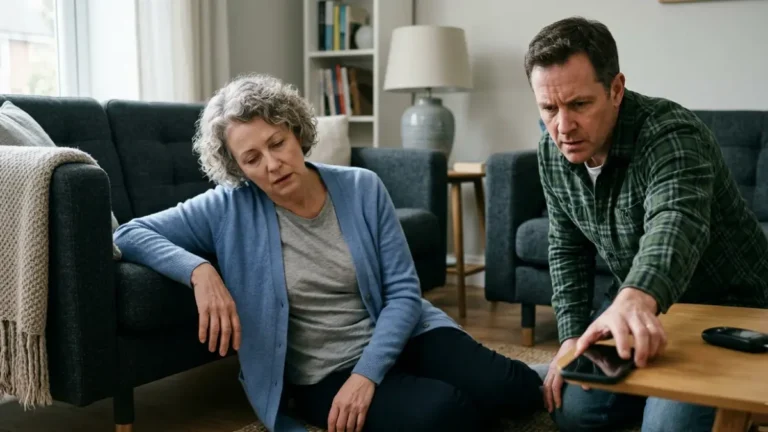
Severe hypoglycemia is defined by what a person can no longer do, not only by a number. Below 54 mg/dL, someone may faint, and usually cannot treat themselves.
Signs you need someone else’s help
Confusion, inability to swallow safely, unresponsiveness, or a seizure. At that point the 15-15 rule no longer applies, because the person cannot reliably check or treat their own blood sugar.
Glucagon: what it is and who has it
Glucagon is a hormone given as an emergency treatment for severely low blood sugar. It requires a prescription, which means it has to be obtained before it is needed — not during. NIDDK’s guidance on severe low blood glucose covers who should carry one.
What a bystander should do
Call 911 if the person is unresponsive, seizing, or cannot swallow. Do not put food or drink into the mouth of someone who is not fully awake.
⚠️ Clinical Warning: Contact a doctor for emergency medical treatment immediately after any glucagon injection — the injection is not the end of the episode. A person who fainted usually wakes within 15 minutes; if they do not, CDC guidance is that a second dose should be given.
Low blood sugar symptoms without diabetes
Here is the honest starting point: true hypoglycemia without diabetes is uncommon. In people without diabetes, the clinical definition sits at a venous glucose below 55 mg/dL, measured where possible while symptoms are happening.
Reactive versus fasting lows
Non-diabetic lows are grouped by timing — fasting, after eating, or exercise-related. The after-eating pattern is the one most readers are describing; our guide to blood sugar after eating covers that curve.
Why a normal meter reading doesn’t settle it
A reading taken after symptoms passed proves very little. The clinical criteria for hypoglycemia without diabetes require three things together: symptoms, a documented low glucose at that moment, and relief when glucose is corrected. Shaking and palpitations can also occur at perfectly normal glucose from other causes.
When to push for testing
If your symptoms keep recurring, the useful next step is a timed diagnostic — not another random reading. Our symptom checker can help you organise what to bring.
✅ Patient Action: Ask your primary care physician or an endocrinologist: “Can we measure my glucose while I’m actually symptomatic, rather than afterwards?” That single question changes what the test can prove.
When you stop feeling the warning signs
Some people stop getting symptoms at all. Hypoglycemia unawareness removes the alarm this entire article depends on, which makes severe lows more likely.
Who loses the warning signs
The CDC associates it with having diabetes more than 5–10 years, frequent lows, and certain medicines including beta blockers.
What to do about it
Check more often — and specifically before driving or physical activity.
🩺 Editor’s Note: Current ADA guidance treats a reading below 54 mg/dL with no symptoms as a signal in itself: it suggests impaired awareness and warrants a review of the treatment plan. Tracking how much time you spend below range, rather than counting episodes you noticed, is what surfaces the pattern — our guide to A1c versus time in range explains the difference.
Common questions about low blood sugar symptoms
1. What are the first signs of low blood sugar?
Fast heartbeat, shaking, sweating, anxiety, irritability or confusion, dizziness, and hunger. Symptom patterns differ between people.
2. What blood sugar level is too low?
Below 70 mg/dL is low. Below 54 mg/dL is where confusion and other neuroglycopenic symptoms typically begin.
3. How do you treat low blood sugar fast?
Take 15 grams of fast-acting carbs, wait 15 minutes, then recheck. Repeat if still below 70 mg/dL. Confirm your target with your clinician.
4. Can you have low blood sugar symptoms without diabetes?
Yes, though true hypoglycemia is uncommon without diabetes. The clinical threshold is a venous glucose below 55 mg/dL during symptoms.
5. What is the 15-15 rule?
Fifteen grams of carbs, fifteen minutes, then recheck — repeating until you’re back in range. Ask your care team what applies to you.
6. What foods raise blood sugar quickly?
Four ounces of juice or regular soda, a tablespoon of sugar or honey, glucose tablets, or glucose gel. Check quantities with your clinician.
7. When should you call 911 for low blood sugar?
When someone is unresponsive, seizing, or cannot swallow safely. Seek emergency medical care immediately after any glucagon injection.
8. Why do I feel low when my meter reads normal?
A reading taken after symptoms pass proves little. Diagnosis requires symptoms and a low glucose measured at the same moment.
9. What causes low blood sugar at night?
An unusually active day, exercise close to bedtime, too much insulin, or alcohol in the evening. You may sleep through it.
10. Can you have low blood sugar without symptoms?
Yes — hypoglycemia unawareness. It’s linked to longer-duration diabetes, frequent lows, and medicines such as beta blockers.
11. Do you need a prescription for glucagon?
Yes. Glucagon requires a prescription, so it must be obtained before an emergency. Ask your prescribing clinician whether you should carry it.
Two next steps, depending on which reader you are. If you have diabetes, the conversation worth having is about a glucagon prescription and your own treatment threshold — not a general rule. If you don’t, ask to have your glucose measured while symptoms are actually happening. That single piece of timing is what turns a frightening pattern into something a clinician can work with.
About this content
How this article was put together: researched from recognised health sources, drafted with the help of AI tools, and edited by hand, with sources linked throughout.

Sameer Patel is the founder and editor of My Medicine Advisor. He is not a doctor or medical professional — before starting this site he worked in banking,…
Medical disclaimer
The content on MyMedicineAdvisor is provided for general informational and educational purposes only and is not a substitute for professional medical advice, diagnosis, or treatment. Health information on this website should not be used to diagnose, treat, cure, or prevent any condition without guidance from a qualified healthcare professional. Always seek the advice of your doctor, physician, or another licensed healthcare provider with any questions you may have regarding a medical condition, symptoms, medications, or treatment decisions.