
On This Page – Quick Medical Summary
You don’t have diabetes, so why is your blood sugar high?
A number came back high and the one explanation you knew doesn’t apply.
The six causes, at a glance
High blood sugar in non-diabetics has six common causes:
- Prediabetes or early insulin resistance
- How and when the test was taken
- Illness, infection, injury, or recent surgery
- Medications you already take
- Hormone conditions
- Damage to the pancreas
Which one sounds like you?
- Nothing unusual happened — causes 1 and 2.
- Ill, injured, or recently operated on — cause 3.
- On a steroid, diuretic, statin, or antipsychotic — cause 4.
- Other unexplained symptoms — causes 5 and 6.
- Feel unwell right now — go to the urgent-care section.
Most people land on the first three. Locate your exact value on the full glucose levels chart for every test.
ℹ️ Medical Disclaimer: This article covers interpretation of blood glucose and A1C results, prediabetes and diabetes diagnostic criteria, effects of prescription medications on glucose, endocrine and pancreatic conditions, and recognition of hyperglycaemic emergencies. Every threshold reflects current published guidelines and is educational only. It cannot diagnose you, and it cannot tell you whether a medication should change. Consult a board-certified physician — primary care or endocrinology as relevant — before acting on anything here, and never stop or adjust a prescribed medication because of a health article.
Cause 1: prediabetes and early insulin resistance
There is no separate “non-diabetic high.” The same cut points apply to everyone.
What counts as high when you’re not diabetic
| Test | Prediabetes | Diabetes | Key clinical detail |
|---|---|---|---|
| Fasting glucose | 100–125 mg/dL | 126+ mg/dL | Normal below 100; needs an 8-hour fast |
| 2-hour OGTT | 140–199 mg/dL | 200+ mg/dL | Normal below 140 |
| A1C | 5.7–6.4% | 6.5%+ | Normal below 5.7%; NGSP-certified assay |
| Random glucose | — | 200+ mg/dL with symptoms | The only single value that stands alone |
Source: ADA Standards of Care in Diabetes—2026, Section 2.
A fasting result of 108 is prediabetes, not diabetes — what a fasting result between 100 and 125 actually means covers that band.
Why so many people are in this band without knowing
📊 Clinical Data Point: 115.2 million American adults — more than 2 in 5 — have prediabetes, and 8 in 10 do not know it. — Source: the CDC’s national diabetes and prediabetes data, January 2026.
Older figures of 97.6 million and 38.0% still circulate widely. Those come from 2021 data and have been superseded.
✅ Patient Action: Ask your primary care physician: “Which test produced this number, and does it need a confirmatory test?”
Cause 2: how and when the test was taken
Before treating the number as real, check the conditions that produced it.

Fasting, timing, and the 8-hour rule
Fasting means no calories for at least eight hours — water only. A fasting glucose drawn after coffee with milk is not a fasting glucose.
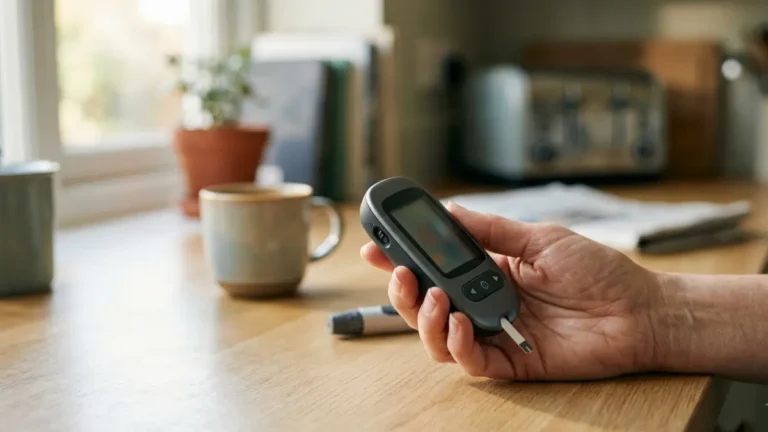
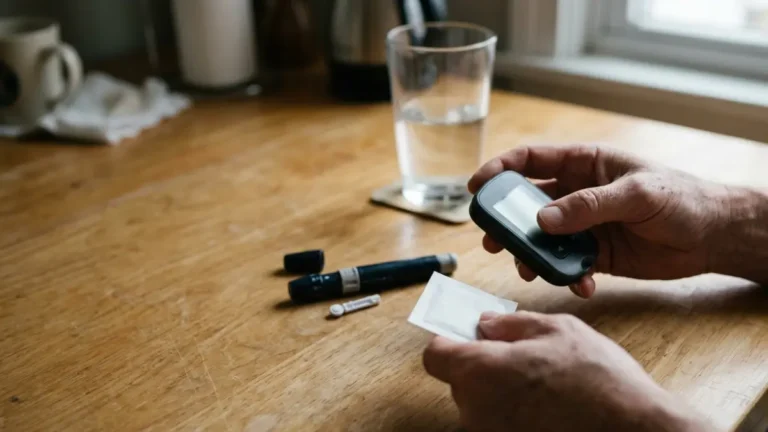
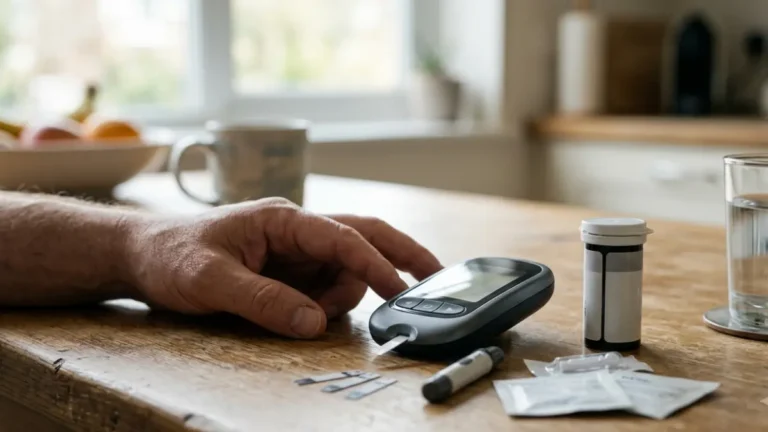
Home meters add their own failure modes. The FDA’s guidance on blood glucose monitoring devices advises washing and drying hands before testing and using only authorised strips, and notes that severe dehydration or anaemia can affect results. In one study, readings taken after peeling fruit without hand washing came back abnormally high, and alcohol swabs did not correct it (Hirose et al., Diabetes Care 2011).
The dawn phenomenon
🔬 How It Works: Before waking, the body releases cortisol and other counter-regulatory hormones that prompt the liver to put glucose into the blood. That is normal physiology, not disease — but an early-morning draw can read higher than one taken later.
Why one reading is never a diagnosis
Absent unequivocal hyperglycaemia, the ADA requires two abnormal results before diabetes is diagnosed. If your number came from routine bloodwork, what a high glucose flag on a routine panel means covers that context.
Cause 3: illness, infection, injury, or recent surgery
Yes — acute physical stress raises blood glucose in people who have never had diabetes.

Why illness pushes glucose up
🔬 How It Works: Infection, injury, and surgery release cortisol, catecholamines, glucagon, and growth hormone. These tell the liver to produce more glucose and make muscle and fat less responsive to insulin, so blood sugar climbs without any change in diet.
How long it usually lasts
Stress hyperglycaemia typically resolves as the acute illness resolves, often before hospital discharge.
When it signals underlying risk
It is not automatically harmless. Stress hyperglycaemia in people without diabetes at hospital admission is associated with worse outcomes, which is why the result is worth repeating after recovery.
✅ Patient Action: Ask your primary care physician: “Should this be repeated now that the illness has resolved?”
Cause 4: medications that raise blood sugar
The drug classes most often linked to raised glucose:
- Glucocorticoids (prednisone, dexamethasone)
- Statins
- Thiazide diuretics
- Beta-blockers
- Antipsychotics
- Fluoroquinolones
- Antiretrovirals
- Immunosuppressants and some chemotherapy agents
Drug classes most often involved
They act through different routes: altered insulin secretion and sensitivity, direct effects on pancreatic cells, and increased glucose production (source: drug classes most often linked to raised glucose, 2023).
Steroids and why the effect shows up after meals
🩺 Editor’s Note: Glucocorticoids raise post-meal glucose more than fasting glucose. Continuous monitoring in patients taking prednisolone found hyperglycaemia concentrated in the afternoon and evening — so a morning fasting test can miss it (Glucocorticoid-Induced Diabetes Mellitus, NIH/PMC).
What to do — and what not to do
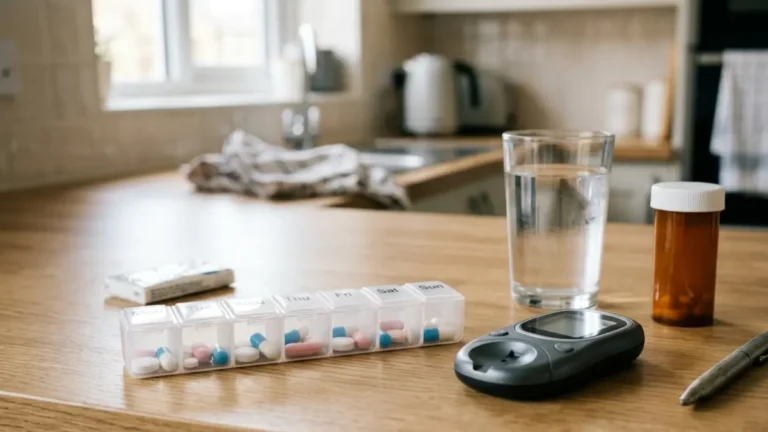
⚠️ Clinical Warning: Do not stop, reduce, or switch a prescribed medication because of a glucose reading. Several of these drugs are hazardous to discontinue abruptly, and the decision belongs to the clinician who prescribed it.
✅ Patient Action: Ask your prescribing physician: “Could any of my medications be raising my glucose, and is an alternative appropriate for me?”
Causes 5 and 6: hormone conditions and pancreas damage
These are less common, and they are what a clinician screens for when the first four don’t fit.
Hormone conditions that raise glucose
Excess cortisol promotes insulin resistance in muscle, liver, and fat while impairing insulin secretion — occasionally, dysglycaemia is the first sign of Cushing’s syndrome or acromegaly. Hyperthyroidism raises glucose partly by increasing hepatic output. Insulin resistance is also a prominent feature of polycystic ovary syndrome.
When the pancreas is the problem
Damage to the pancreas itself causes type 3c diabetes — most often from chronic pancreatitis, pancreatic surgery, haemochromatosis, cystic fibrosis, or pancreatic cancer (Hart et al., Lancet Gastroenterol Hepatol 2016). If glucose rose suddenly alongside weight loss or abdominal pain, when new high blood sugar warrants a pancreatic workup covers that pathway.
The six causes and what confirms each
| Cause | What it looks like | What confirms or rules it out | Who to ask |
|---|---|---|---|
| Prediabetes | No symptoms | Repeat fasting glucose or A1C | Primary care |
| Test conditions | Isolated odd reading | Properly fasted repeat draw | Primary care |
| Acute illness | Started with the illness | Repeat after recovery | Primary care |
| Medications | Began after a new drug | Prescriber medication review | Prescriber |
| Hormone conditions | Other endocrine symptoms | Hormone testing | Endocrinologist |
| Pancreas damage | Abdominal pain, weight loss | Pancreatic imaging | Gastroenterology |
When a high reading needs urgent care
Most high readings are an appointment. A few are not.
Call 911 now if
- Vomiting and unable to keep fluids down
- Confusion or reduced responsiveness
- Deep, rapid breathing
- Fruity-smelling breath
- Severe weakness with a very high reading
Call your clinician today if
- Sustained readings above 250 mg/dL
- A high reading with new, worsening symptoms
Everything else is an appointment
⚠️ Clinical Warning: Diabetic ketoacidosis requires glucose at or above 200 mg/dL plus ketosis plus metabolic acidosis; hyperosmolar hyperglycaemic state is defined at 600 mg/dL or above. Both present with the symptoms above, and how hyperglycaemic emergencies present describes them in full. A number alone does not decide this — the symptoms do.
For borderline situations, which high blood sugar symptoms need urgent care breaks the thresholds down further.
Questions people ask about high blood sugar without diabetes
1. Can you have high blood sugar without being diabetic?
Yes. Six common causes explain most high readings in people without a diabetes diagnosis, and several are temporary.
2. What causes high blood sugar in non-diabetics?
Prediabetes, testing conditions, acute illness, medications, hormone conditions, and pancreas damage account for most cases.
3. What is a high blood sugar level for a non-diabetic?
Fasting at or above 126 mg/dL meets the diabetes threshold; 100–125 mg/dL is prediabetes. Ask your physician whether yours needs confirming.
4. Can stress raise blood sugar in non-diabetics?
Yes. Acute physical stress releases cortisol and catecholamines, which push the liver to release more glucose.
5. Can an infection or illness raise blood sugar?
Yes. Stress hyperglycaemia from infection or injury usually resolves as the illness resolves, often before hospital discharge.
6. Which medications raise blood sugar?
Glucocorticoids, statins, thiazide diuretics, beta-blockers, antipsychotics, fluoroquinolones, and antiretrovirals, among others. Never stop a prescribed medication without asking your prescriber.
7. Can one high reading mean diabetes?
No. Absent unequivocal hyperglycaemia, two abnormal results are required. Ask your physician which confirmatory test applies.
8. Does not fasting affect a blood sugar test?
Yes. Fasting means no calories for at least eight hours; anything less makes a fasting result uninterpretable.
9. What is the dawn phenomenon?
A normal pre-waking hormone release that prompts the liver to put glucose into the blood, raising early-morning readings.
10. Can high blood sugar without diabetes be dangerous?
It can be. Vomiting, confusion, deep rapid breathing, or fruity-smelling breath with a high reading needs emergency care.
11. When should I see a doctor about high blood sugar?
Promptly for any confirmed abnormal result. Ask your primary care physician which test to repeat and when.
Your next step is a second number, not a conclusion
One reading opens a question; it does not answer it. The next step is almost always confirmation.
✅ Patient Action: Ask your primary care physician: “Is this result being confirmed, with which test, and when?” Download our free Questions for Your Doctor + Blood Sugar Log to bring written numbers to that appointment.
About this content
How this article was put together: researched from recognised health sources, drafted with the help of AI tools, and edited by hand, with sources linked throughout.

Sameer Patel is the founder and editor of My Medicine Advisor. He is not a doctor or medical professional — before starting this site he worked in banking,…
Medical disclaimer
The content on MyMedicineAdvisor is provided for general informational and educational purposes only and is not a substitute for professional medical advice, diagnosis, or treatment. Health information on this website should not be used to diagnose, treat, cure, or prevent any condition without guidance from a qualified healthcare professional. Always seek the advice of your doctor, physician, or another licensed healthcare provider with any questions you may have regarding a medical condition, symptoms, medications, or treatment decisions.