
On This Page – Quick Medical Summary
For a fasting plasma glucose test or an oral glucose tolerance test, fast at least 8 hours. Fasting means no food and nothing to drink except water.
ℹ️ Medical Disclaimer: This article explains how glucose testing works. It does not diagnose diabetes, does not tell you whether to take or hold any medication before a fast, and does not replace your laboratory’s instructions. Medication timing, pregnancy protocols, and what your result means belong with your prescribing clinician or obstetric provider.
How long you need to fast before a glucose test
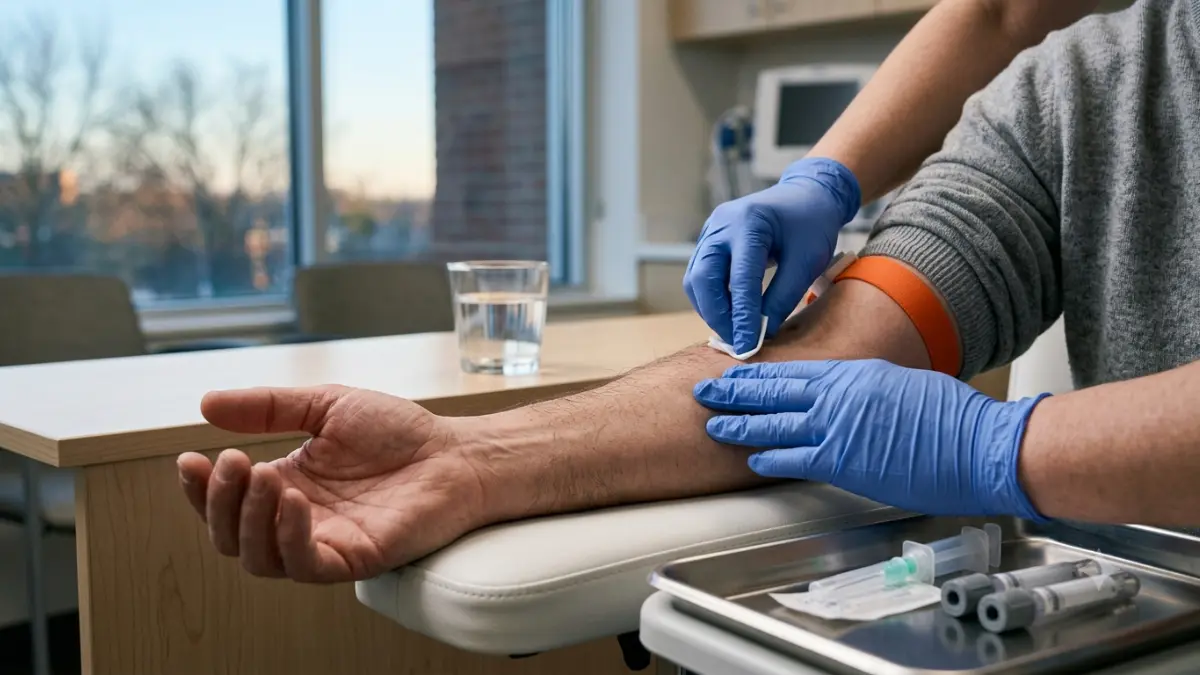
Fast at least 8 hours before a fasting plasma glucose test or an oral glucose tolerance test. The American Diabetes Association‘s 2026 Standards of Care define fasting as no caloric intake for at least 8 hours, and the NIDDK’s guidance on diabetes testing adds that the test is most reliable in the morning after an overnight fast.
Eight hours is a floor, not a target.
When to stop eating if your test is at 8 a.m.
Stop eating by midnight. For a 10 a.m. draw, finish dinner and sleep through the window. If your appointment runs late, the fast keeps counting — a delay doesn’t undo it.

Can you fast too long before a glucose test?
No national guidance sets a ceiling for a routine fasting glucose test. The one stated window — 8 to 14 hours — belongs to the pregnancy test in Section 6. Follow the sheet your lab gave you.
What counts as breaking your fast
The rule is narrower than most people assume, which is why appointments get rescheduled over a cup of coffee.
Water is allowed — and worth drinking
The NIDDK and MedlinePlus both define the fast as nothing to eat or drink except sips of water. Hydration also makes the draw easier.

Coffee, tea, and gum
Laboratory instructions say water only — including black coffee, unsweetened tea, and gum. The same rule applies when fasting before a lipid panel.
What to do if you accidentally ate
Tell the phlebotomist before your blood is drawn. The lab decides whether to proceed or rebook, and that call is theirs. Staying quiet is the only bad option.
Which glucose tests require fasting — and which don’t
Two of the five common blood glucose tests require fasting. Fasting unnecessarily is a frequent preparation mistake.
| Test | Fasting | Key clinical detail |
|---|---|---|
| Fasting plasma glucose | Yes, 8+ hours | Water only; morning draw preferred |
| Oral glucose tolerance test | Yes, 8+ hours | Eat normally beforehand |
| Hemoglobin A1C | No | Reflects ~3 months of average glucose |
| Random plasma glucose | No | Any time, regardless of last meal |
| Glucose challenge (1-hour) | No | Pregnancy screening; see Section 6 |
Sources: NIDDK Diabetes Tests & Diagnosis; MedlinePlus’s overview of blood glucose tests; CDC Diabetes Testing.
When glucose is part of a bigger panel
If glucose is bundled into a metabolic panel, MedlinePlus notes you may still need to fast — usually because of another test on the panel. Check your requisition. If an A1C is being drawn too, it adds no fasting requirement.
What your fasting glucose number means
The American Diabetes Association’s 2026 criteria set three fasting glucose bands.
Normal, prediabetes, and diabetes ranges
- Below 100 mg/dL — normal
- 100 to 125 mg/dL — prediabetes, or impaired fasting glucose
- 126 mg/dL or higher — meets the diabetes threshold, pending confirmation
Results in mmol/L convert with the blood sugar converter.
Why one result isn’t a diagnosis
📊 Clinical Data Point: With a within-person coefficient of variation of 5.7%, a fasting result of 126 mg/dL could reflect a true value of roughly 110 to 142 mg/dL — Source: NIDDK, Diabetes & Prediabetes Tests.
Glucose varies between draws even when your health hasn’t changed. That is why a fasting glucose of 126 usually prompts repeat testing, and why the ADA’s 2026 criteria require confirmation absent clear symptoms.
Fasting before a glucose test in pregnancy
Pregnancy uses two tests with opposite fasting rules. Confusing them is the most common gestational diabetes preparation error.
The 1-hour screening test: no fasting needed
Per the NIDDK’s gestational diabetes testing page, blood is drawn one hour after a sweet drink, with no preparation. MedlinePlus puts a normal 1-hour result at 140 mg/dL or lower.
The 3-hour test: 8 to 14 hours
If the screen is high, the 3-hour test follows. MedlinePlus specifies sips of water only for 8 to 14 hours beforehand, nothing during the test, and at least three hours at the lab.
✅ Patient Action: Ask your obstetric provider: “Which of the two tests am I scheduled for, and how many hours should I fast?”
When fasting needs a conversation with your clinician first
For most people, skipping breakfast before a draw carries no risk. For some, it isn’t that simple.
If you take medication that lowers blood sugar
⚠️ Clinical Warning: Withholding food while taking a glucose-lowering medication can be unsafe, and correct handling depends on your specific prescription and schedule. This article does not tell you whether to take, delay, or skip anything — that decision belongs to the clinician who prescribed it.
What to ask before your appointment
✅ Patient Action: Call your prescriber — primary care or endocrinology — before the fast begins: Should I take my usual morning medication before a fasting blood test? Is there a better appointment time for me?
Common questions about fasting before a glucose test
1. How long do you have to fast before a glucose test?
At least 8 hours before a fasting plasma glucose test or an oral glucose tolerance test. Water only.
2. When should I stop eating if my test is at 8 a.m.?
Stop eating by midnight to clear the 8 hours. Starting earlier is safe and easier to manage.
3. Can I drink water before a glucose test?
Yes. Water is the one thing allowed during the fast, and hydration makes the blood draw easier.
4. Can I drink black coffee before a glucose test?
No. Laboratories instruct water only before a fasting glucose test, so skip coffee until after your draw.
5. Does chewing gum break the fast before a glucose test?
Lab instructions specify nothing but water during the window. If your sheet doesn’t address gum, call and ask.
6. Should I take my medications before a fasting glucose test?
Ask the clinician who prescribed them. Fasting changes how some medications affect you, so that decision is your prescriber’s.
7. Do I need to fast for an A1C test?
No. The A1C test requires no fasting — eat and drink normally. Confirm with your ordering clinician.
8. Do I need to fast for the pregnancy glucose test?
Not for the 1-hour screening test. The 3-hour test requires 8 to 14 hours with sips of water only.
9. What if I accidentally ate before my glucose test?
Tell the lab staff before your draw. They decide whether to proceed or rebook — that call isn’t yours.
10. Can I fast too long before a glucose test?
The one stated window, 8 to 14 hours, applies to the pregnancy 3-hour test. Otherwise follow your instruction sheet.
11. What is a normal fasting glucose result?
Below 100 mg/dL is normal, 100 to 125 mg/dL is prediabetes, and 126 mg/dL or higher needs repeat testing.
Before your appointment
Set your stop-eating time now, counting back at least 8 hours from your draw. If you take any medication affecting blood sugar, call the prescriber today rather than deciding alone at 6 a.m.
About this content
How this article was put together: researched from recognised health sources, drafted with the help of AI tools, and edited by hand, with sources linked throughout.

Sameer Patel is the founder and editor of My Medicine Advisor. He is not a doctor or medical professional — before starting this site he worked in banking,…
Medical disclaimer
The content on MyMedicineAdvisor is provided for general informational and educational purposes only and is not a substitute for professional medical advice, diagnosis, or treatment. Health information on this website should not be used to diagnose, treat, cure, or prevent any condition without guidance from a qualified healthcare professional. Always seek the advice of your doctor, physician, or another licensed healthcare provider with any questions you may have regarding a medical condition, symptoms, medications, or treatment decisions.