
On This Page – Quick Medical Summary
An oral glucose tolerance test takes about two hours from your first blood draw to your last, and you stay at the lab throughout. It measures how fast your body clears a measured dose of sugar.
CDC’s national diabetes statistics put 115.2 million US adults in the prediabetes range, and 8 in 10 do not know it. This test is one of several on the glucose levels chart that finds them.
ℹ️ Medical Disclaimer: This explains how the test works and how results are classified; it cannot tell you what your own number means. Diagnosis, repeat testing, medication and pregnancy care belong to a board-certified physician — a primary care clinician or endocrinologist outside pregnancy, an obstetric provider during it.
How to prepare for a glucose tolerance test
Preparation errors are the most common reason a result gets discarded.
How long you need to fast
Fasting means no food and nothing but water, for at least 8 hours. Most labs also cap the fast, so follow the instructions on how long to fast before a glucose test your own lab gives you.
Why what you ate three days ago matters
Protocol calls for three days of normal eating first, including at least 150 grams of carbohydrate daily. Cutting carbs to “do well” can push a normal result into an abnormal band.
Medications to ask about
Some medications change how your body handles glucose. Never stop one on your own — ask the ordering clinician whether to take or hold your usual doses that morning.

What happens hour by hour on test day
The sequence is fixed, and the first step is not the drink.
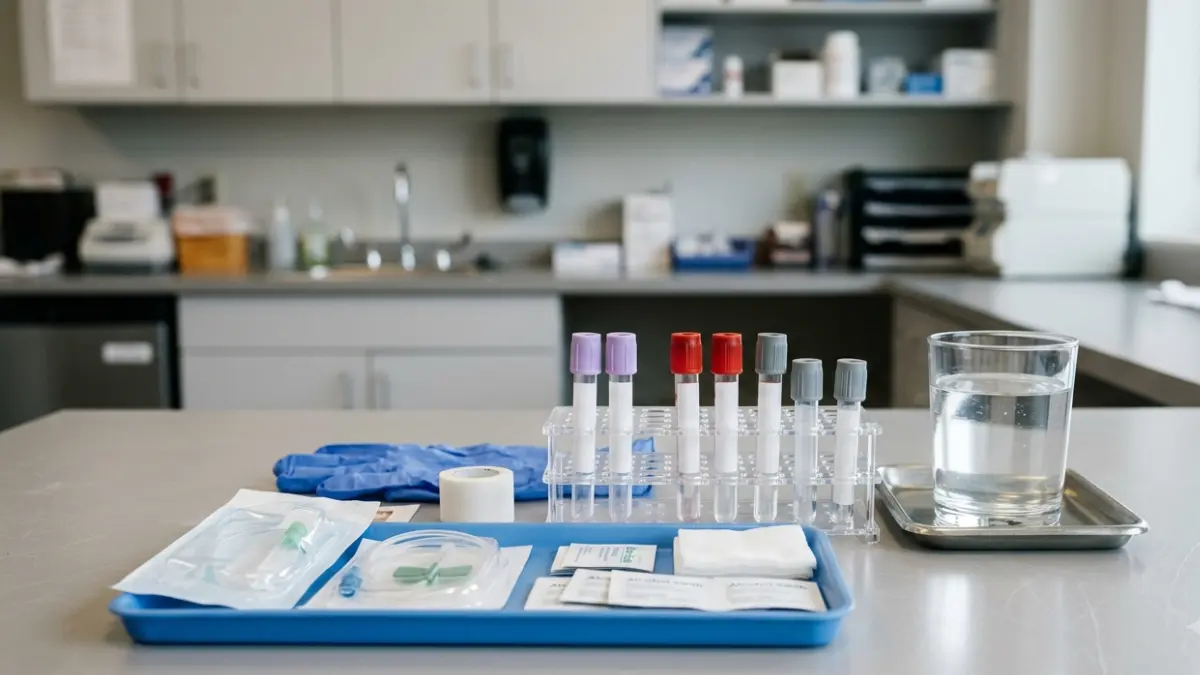
- Fasting draw. A blood sample is taken before you have anything, setting your baseline.
- The glucose drink. You drink a liquid containing 75 grams of glucose dissolved in water.
- The wait. You stay at the facility, seated, eating nothing.
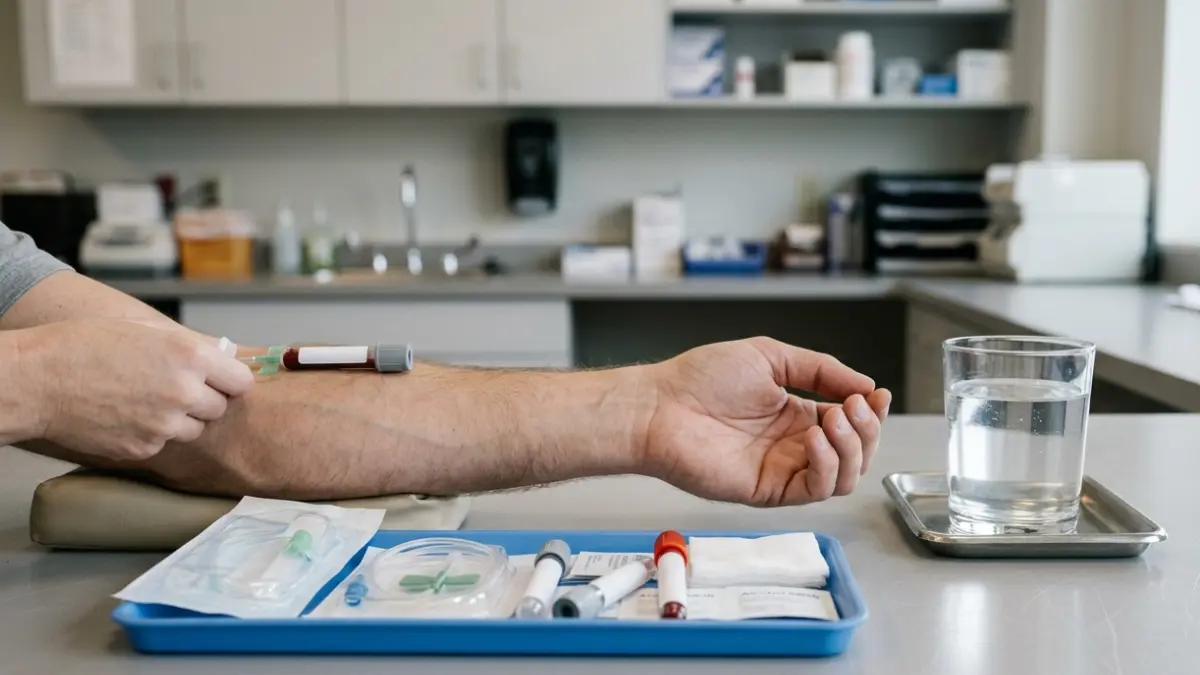
- The two-hour draw. A second sample is taken two hours later, as the NIDDK describes. In pregnancy, blood is drawn hourly for two to three hours.
When the clock actually starts
Most labs time the test from your first sip, not from arrival, so turning up early does not shorten the wait.
What each draw is measuring
🔬 How It Works: The fasting sample sets your starting point; the second shows how much of a known sugar load your body cleared in a fixed time. That is why exact timing matters.
What your two-hour number means
Results fall into three bands.
| Two-hour plasma glucose | Classification | Key clinical detail |
|---|---|---|
| Below 140 mg/dL | Normal glucose tolerance | No further testing usually needed |
| 140–199 mg/dL | Impaired glucose tolerance | A risk state, not diabetes |
| 200 mg/dL or above | Diabetes range | Confirmation required first |
Source: ADA Standards of Care in Diabetes—2026, Section 2. For mmol/L, use our blood sugar converter.
What the fasting number says separately
That first draw is its own test: 100–125 mg/dL is impaired fasting glucose, and 126 mg/dL or above sits in the diabetes range.
When the OGTT and A1C disagree
They measure different things over different timeframes, which is why an A1C and an OGTT compare less neatly than expected.
✅ Patient Action: Ask your primary care clinician: “Do my fasting and two-hour values point the same way, and does this need a repeat?”
Why the one-hour reading is getting more attention
Some labs report a value drawn at one hour, and most patients are never told what it means.
What the position statement proposes
In 2024 the International Diabetes Federation published a position statement on the one-hour value, proposing that a one-hour plasma glucose of 155 mg/dL or above marks intermediate hyperglycaemia, and 209 mg/dL or above marks type 2 diabetes.
Why it is not US criteria
🩺 Editor’s Note: These are proposed thresholds from an international body, not US criteria, which still rest on fasting glucose, the two-hour value and A1C. Ask the ordering clinician whether a one-hour number changes their follow-up plan.
The pregnancy version of this test is different
Screening happens at 24 to 28 weeks, and practices use one of two approaches.
The one-step approach
One 75-gram test after an overnight fast, drawn at fasting, one hour and two hours. Gestational diabetes is diagnosed if any single value reaches 92, 180 or 153 mg/dL respectively.
The two-step approach
A non-fasting 50-gram screen comes first; if the one-hour value reaches 130, 135 or 140 mg/dL, a fasting 100-gram three-hour test follows. Diagnosis then needs two of four values reaching 95, 180, 155 and 140 mg/dL. MedlinePlus sets out both protocols.
✅ Patient Action: Ask your obstetric provider: “Which approach does this practice use, and how many abnormal values would change my care?”
When one result isn’t the whole answer
A single number rarely settles it, and a repeat is normal practice rather than a sign something went wrong.
Why your doctor may repeat the test
📊 Clinical Data Point: Roughly 20% of oral glucose tolerance tests fall into a non-diagnostic category, and the test has poor reproducibility — Source: StatPearls, Glucose Tolerance Test, NCBI Bookshelf.
Unless a result is clearly abnormal, diagnosis rests on two abnormal results, which is why confirmatory testing is routine.
How the drink can make you feel
⚠️ Clinical Warning: Some people feel nauseated, sweaty or lightheaded afterwards. Serious effects are uncommon, but tell the phlebotomist immediately if you feel faint rather than waiting it out alone.
Common questions about the oral glucose tolerance test
1. How long does an oral glucose tolerance test take?
About two hours from the fasting draw to the last, and you stay at the lab throughout.
2. How long do you fast beforehand?
At least 8 hours, and most labs also cap the fast inside a window they will specify.
3. Can you drink water during the test?
Water is generally allowed; food is not until the final draw. Confirm with your lab.
4. How much sugar is in the drink?
Seventy-five grams of glucose dissolved in water, for the standard non-pregnant oral glucose tolerance test.
5. What is a normal two-hour result?
Below 140 mg/dL counts as normal glucose tolerance under the 2026 ADA Standards of Care.
6. What result means prediabetes?
A two-hour value of 140–199 mg/dL is impaired glucose tolerance. Discuss next steps with your clinician.
7. What result means diabetes?
A two-hour value of 200 mg/dL or above is the diabetes range and needs confirmation. Consult your clinician.
8. Does one abnormal result mean you have diabetes?
Usually not — two abnormal results are generally required. Your clinician decides what confirmation looks like.
9. Why did the lab draw blood at one hour?
Some labs report it. The IDF proposes 155 mg/dL as intermediate hyperglycaemia, but that is not US criteria.
10. Is the pregnancy test different?
Yes — a 75-gram one-step test, or a 50-gram screen then a 100-gram test. Ask your obstetric provider.
11. Does the drink make you feel sick?
Some people feel nauseated, sweaty or dizzy after drinking it, though serious side effects are uncommon.
Two hours is a long time to sit somewhere without knowing what is being measured. Now you do: a baseline, a known sugar load, a fixed clock.
Write your fasting and two-hour numbers down together before your follow-up, and ask whether they point the same way.
About this content
How this article was put together: researched from recognised health sources, drafted with the help of AI tools, and edited by hand, with sources linked throughout.

Sameer Patel is the founder and editor of My Medicine Advisor. He is not a doctor or medical professional — before starting this site he worked in banking,…
Medical disclaimer
The content on MyMedicineAdvisor is provided for general informational and educational purposes only and is not a substitute for professional medical advice, diagnosis, or treatment. Health information on this website should not be used to diagnose, treat, cure, or prevent any condition without guidance from a qualified healthcare professional. Always seek the advice of your doctor, physician, or another licensed healthcare provider with any questions you may have regarding a medical condition, symptoms, medications, or treatment decisions.