
On This Page – Quick Medical Summary
What a positive glucose in urine result means
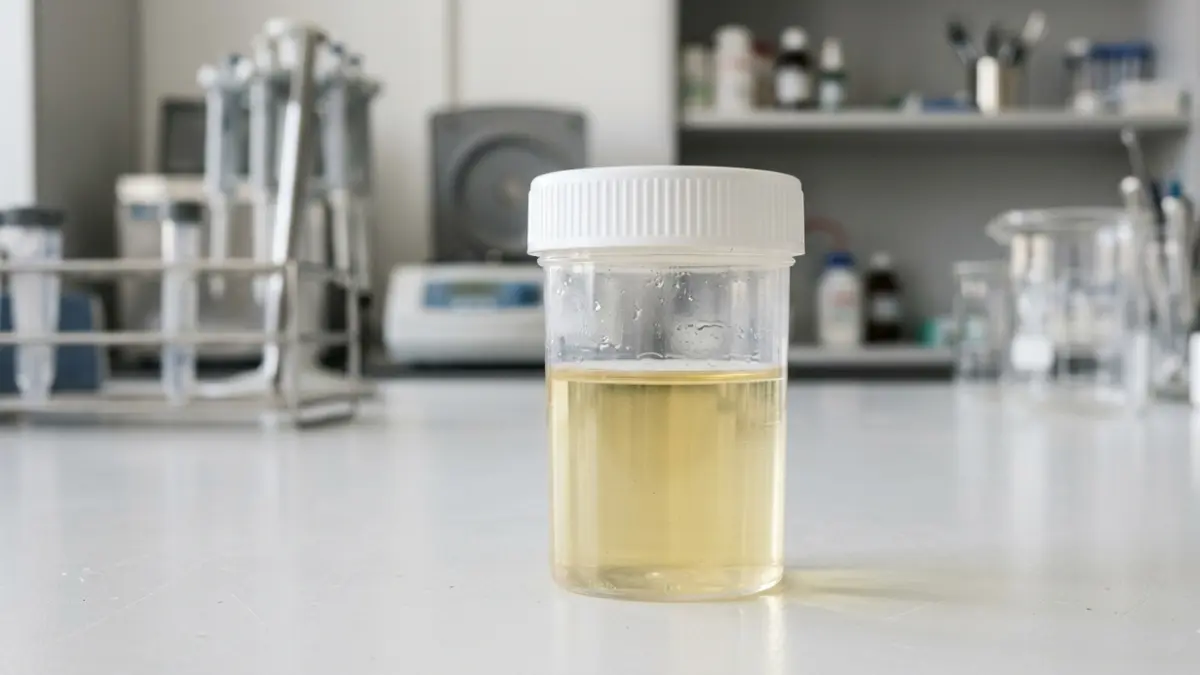
A positive glucose in urine result means sugar showed up in a sample that normally holds almost none, because healthy kidneys hold on to glucose and send it back to the bloodstream rather than flushing it out. It signals something worth investigating — it is not a diagnosis.
Clinicians call the finding glycosuria. For the other lines on the same page, see our guide to reading urine test results.
ℹ️ Medical Disclaimer: This article explains what a urine glucose result shows and what usually follows it. It does not diagnose diabetes or kidney disease, direct medication changes, interpret your pregnancy screening, or substitute for emergency care. Bring the result to a board-certified primary care physician or endocrinologist — or to your obstetrician if you are pregnant.
Why glucose ends up in your urine
Your kidneys filter glucose all day and reclaim nearly all of it before urine leaves the body. Sugar appears when the filtered amount exceeds what the tubules can pull back.
🔬 How It Works: In the proximal tubule, the transporter SGLT2 reabsorbs roughly 80–90% of filtered glucose, and SGLT1 recovers most of the remainder. Past their combined capacity, the excess spills into urine.
The kidney’s reabsorption limit
That spillover point is the renal threshold, usually quoted as a blood sugar near 180 mg/dL. Quoting one number hides what actually matters to you.
Why the limit differs between people
📊 Clinical Data Point: The commonly accepted threshold is 180 mg/dL, but individual values deviate above and below it — reported from 54 to 300 mg/dL in people with diabetes. Source: Clinical Methods, NCBI Bookshelf, National Library of Medicine.
Pregnancy, fever, hyperthyroidism, and exercise lower that threshold, while aging, kidney disease, heart failure, and chronic high blood sugar raise it — see NLM’s review of how the kidney handles glucose. Two people with identical blood sugar can get opposite urine results.
What trace, 1+ and 2+ mean on your report
A urine dipstick reports glucose as a colour band rather than a measured concentration, so the band tells your clinician roughly how much is present, not what your blood sugar was.
| What your report shows | What it indicates | Key clinical detail |
|---|---|---|
| Negative / none detected | The expected result | Does not rule out diabetes — blood glucose can be high while urine glucose reads normal |
| Trace or 1+ | A small amount detected | Bands are semi-quantitative and vary by strip; treat as a prompt for blood testing |
| 2+ and above | A larger amount detected | Still not a blood sugar value — the cause is established by blood tests |
| A measured result in mg/dL | Quantitative laboratory value | Normal range 0 to 0.8 mmol/L (0 to 15 mg/dL); above 25 mg/dL in a random fresh sample counts as increased |
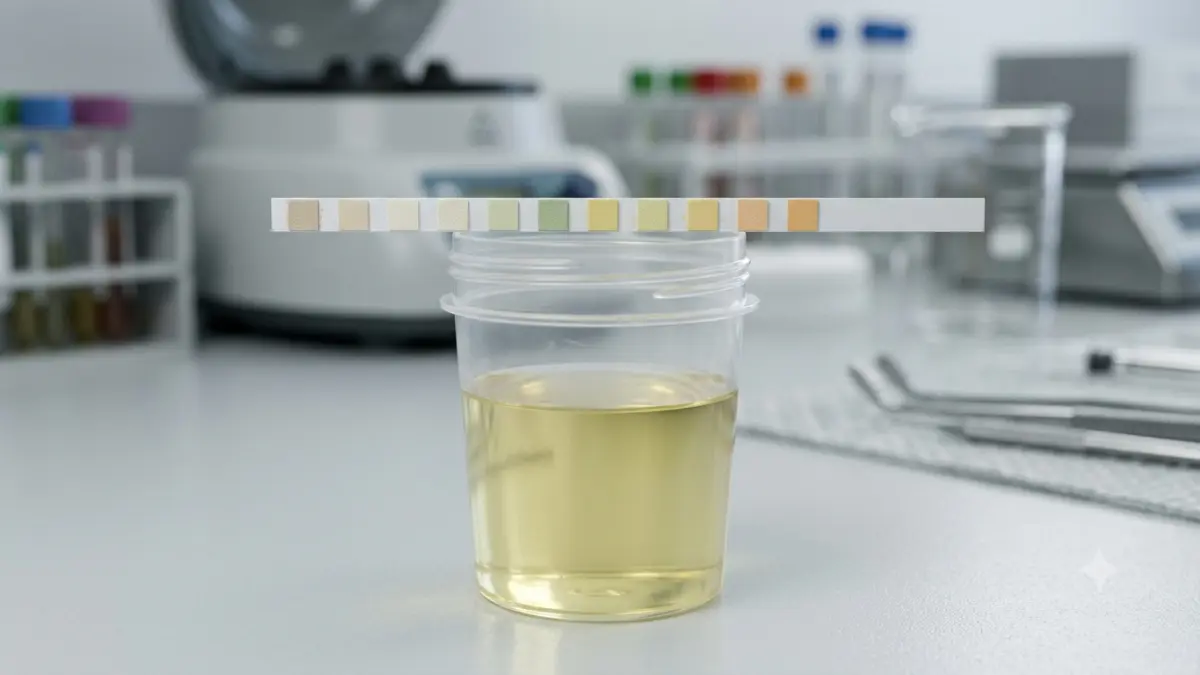
Sources: MedlinePlus glucose urine test (National Library of Medicine); StatPearls and Clinical Methods, NCBI Bookshelf.
Certain medicines, vitamin C, and eating a large meal can all affect the result. Blood values are laid out separately in our full glucose levels chart.
Causes of glucose in urine besides diabetes
Diabetes is the most common cause of high urine glucose, but it is not the only one, and the alternatives matter to anyone whose blood work came back clean.
When blood sugar is normal but urine glucose is not
Two uncommon kidney conditions remove glucose from the blood even when blood glucose levels are normal: renal glycosuria, which is inherited, and Fanconi syndrome, which can be inherited or develop later. A personally low renal threshold produces the same picture. Our guide to high blood sugar in people without diabetes covers the reverse scenario.
Diabetes medicines that cause it deliberately
SGLT2 inhibitors lower blood sugar by blocking reabsorption so that glucose leaves in the urine. A positive result is the drug working, not failing.
✅ Patient Action: Ask your prescribing physician or endocrinologist: “Given my normal blood sugar, is this glycosuria expected from my medication, or should we look for a kidney cause?” Do not stop a prescribed medicine over a urine result.
What tests your doctor orders next
Urine glucose testing is less accurate than blood glucose testing, which is why blood tests are now used to diagnose and monitor diabetes. A urine glucose test alone cannot diagnose any condition.
The blood tests that settle it
CDC lists the thresholds as: A1C — normal below 5.7%, prediabetes 5.7–6.4%, diabetes 6.5% or above; fasting blood sugar — normal 99 mg/dL or below, prediabetes 100–125, diabetes 126 or above; glucose tolerance at two hours — diabetes at 200 mg/dL or above; random blood sugar — diabetes at 200 mg/dL or above. See the CDC’s overview of diabetes tests, and how A1C and fasting glucose compare.
Symptoms worth reporting
Increased thirst and urination, increased hunger, fatigue, blurred vision, numbness or tingling in the hands or feet, sores that don’t heal, and losing weight without trying all belong in that conversation — our symptom checker helps you assemble the list.
Sugar in urine during pregnancy
Some glucose in urine is common during pregnancy, though high levels over time could signal gestational diabetes — which is why a prenatal dipstick finding rarely means what it would outside pregnancy.
Why pregnancy lowers the threshold
Pregnancy is one of the states that lowers the kidney’s glucose threshold, so sugar can spill into urine at blood levels that would leave it clear otherwise.
What actually confirms it
Gestational diabetes usually develops around the 24th week, and testing typically happens between 24 and 28 weeks; the one-hour glucose screening test is normal at 140 mg/dL or lower, and a higher result leads to a glucose tolerance test.
✅ Patient Action: Ask your obstetrician or midwife: “Does this urine result change the timing of my glucose screening?”
When glucose in urine needs urgent attention
Most positive results are handled at an ordinary appointment. Two situations are not.
⚠️ Clinical Warning: FDA advises patients taking an SGLT2 inhibitor to stop the medicine and seek medical attention immediately for symptoms of ketoacidosis — nausea, vomiting, abdominal pain, tiredness, and trouble breathing — and to contact a clinician for urinary tract infection signs such as burning on urination, urgency, pelvic pain, fever, or blood in the urine. See the FDA’s safety communication on SGLT2 inhibitors.
Why a clean urine result is not a clean bill of health
A normal urine glucose result does not mean you don’t have diabetes — blood glucose can be high while urine glucose reads normal. Aging and long-standing diabetes raise the renal threshold, which is exactly when urine glucose testing loses its value.
Common questions about glucose in urine
1. What does glucose in urine mean?
Glucose in urine means sugar passed through the kidneys instead of returning to your blood. It calls for blood testing.
2. Is glucose in urine always a sign of diabetes?
No. Diabetes is the most common cause, but pregnancy, SGLT2 medicines, and uncommon kidney conditions also put glucose in urine.
3. What is a normal glucose level in urine?
Normal urine glucose runs 0 to 15 mg/dL (0 to 0.8 mmol/L); above 25 mg/dL in a fresh sample is increased.
4. What does trace or 1+ glucose in urine mean?
Trace and 1+ mean a small amount was detected. Dipstick bands are semi-quantitative, so they prompt blood testing rather than answer it.
5. Can you have glucose in urine with normal blood sugar?
Yes. A lower personal renal threshold, pregnancy, or an inherited kidney condition can produce glucose in urine while blood sugar stays normal.
6. Can a urine glucose test diagnose diabetes?
No. A urine glucose test alone cannot diagnose any condition. Ask your primary care physician which blood test is being ordered.
7. Is sugar in urine normal during pregnancy?
Some glucose in urine is common in pregnancy. Persistently high levels prompt gestational diabetes screening, which your obstetrician arranges.
8. Do diabetes medicines cause glucose in urine?
SGLT2 inhibitors work by sending glucose into the urine, so a positive result is expected. Never stop the medicine without your prescriber.
9. Can a large meal or vitamin C affect the result?
Yes. Certain medicines, vitamin C, and eating a large meal before the sample can all affect urine glucose results.
10. What is renal glycosuria?
Renal glycosuria is an inherited condition in which the kidneys release glucose into urine even when blood glucose is normal.
11. When should I see a doctor about glucose in urine?
Book a visit within days for any positive result, and seek immediate care for vomiting, abdominal pain, or trouble breathing.
What to do with your result
Take the printed result to your appointment and ask which blood test is being run to explain it. One line on a urinalysis is the beginning of the question, not the answer to it.
About this content
How this article was put together: researched from recognised health sources, drafted with the help of AI tools, and edited by hand, with sources linked throughout.

Sameer Patel is the founder and editor of My Medicine Advisor. He is not a doctor or medical professional — before starting this site he worked in banking,…
Medical disclaimer
The content on MyMedicineAdvisor is provided for general informational and educational purposes only and is not a substitute for professional medical advice, diagnosis, or treatment. Health information on this website should not be used to diagnose, treat, cure, or prevent any condition without guidance from a qualified healthcare professional. Always seek the advice of your doctor, physician, or another licensed healthcare provider with any questions you may have regarding a medical condition, symptoms, medications, or treatment decisions.