
On This Page – Quick Medical Summary
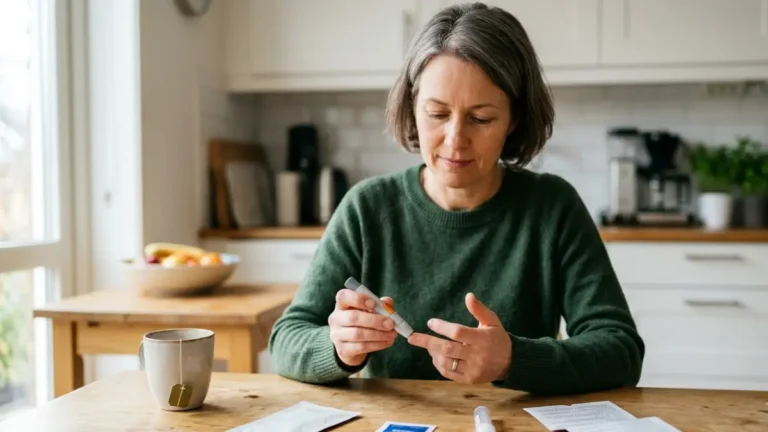
If your clinic told you to fast before a lipid panel, the answer is no — plain water only. The federal patient-instruction page from the National Library of Medicine answers this directly, naming coffee among the drinks to skip.
One caveat first: many people are no longer asked to fast for a cholesterol test at all, so check that the instruction applies to you before giving up your cup — our guide to whether you need to fast at all covers who still gets asked.
Where you are now decides which part of this page you need:
- Cup still in your hand — the list below tells you what counts.
- You already drank it — skip ahead to what happens now.
- You drink coffee daily — a separate question, answered near the end.
- Taking a parent to a draw? The same rule applies to their cup.
A broken fast threatens something narrower than “your cholesterol” — the pillar guide to which lipid numbers were measured and which were worked out explains it.
ℹ️ Medical Disclaimer: This is general education about test preparation, not guidance on diagnosis, medication, treatment, or insurance coverage, and it does not replace your clinic’s own fasting instructions. Fasting requirements, medication timing, and whether your sample is usable are decisions for the clinician who ordered your test. Consult a board-certified physician or the laboratory performing your draw before acting on this.
Two different coffee questions get mixed together here
Almost everyone asking this means one of two things, and they have different answers.
Does today’s cup change today’s reading
This is a measurement question, answered by fasting instructions rather than biology. It asks whether what you drank in the last few hours distorts the sample the lab is about to take. The cholesterol test itself has not changed — only the conditions it was collected under.
Does your coffee habit change the number itself
This is a biology question, working over weeks rather than hours. It asks whether the coffee you drink every morning affects the cholesterol your body carries — a real effect, but not one this morning’s cup creates or erases.
Most advice online collapses the two, which is how the argument ends up stuck on calories — see our breakdown of the five values on a lipid panel for what each number represents.
What actually breaks a fast, item by item
Fasting means no food or drink but plain water for the period your provider specifies.

Water is the only thing on the list
The National Library of Medicine’s guidance is unusually direct. Asked whether anything besides water is allowed during a fast, it answers no — naming juice, coffee, and soda specifically. Read the full federal patient instructions on fasting for a blood test.
What each addition puts into your bloodstream
The reason is mechanical rather than moral: when you eat or drink, your bloodstream absorbs sugar, fat, and protein, and those change the levels being measured.
🔬 How It Works: A lipid panel measures fats circulating at the moment of the draw. Anything you swallow carrying energy enters that circulation within hours, so the sample stops describing your baseline and starts describing your breakfast. Triglycerides respond first and most.
| What’s in your cup | Counts as fasting? | What it adds | Key clinical detail |
|---|---|---|---|
| Plain water | Yes — the only one | Nothing | Also makes the draw easier |
| Black coffee | No | Caffeine and other compounds | Named on the federal page |
| Coffee with milk or cream | No | Fat and energy | Reaches triglycerides first |
| Coffee with sugar or syrup | No | Sugar and energy | Reaches blood sugar first |
| Coffee with oat or nut milk | No | Sugar and energy | Reaches blood sugar first |
| Coffee with butter or MCT oil | No | Concentrated fat | Reaches triglycerides first |
| Black decaf | No | Coffee’s other compounds | Still carries cafestol |
| Plain tea | No | Caffeine, plant compounds | Falls under “other beverages” |
| Flavoured or sweetened water | No | Sugars or sweeteners | Excluded by name |
| Gum or mints | No | Sweeteners and chewing | Excluded by name |
Source: National Library of Medicine, MedlinePlus, “Fasting for a Blood Test,” updated August 2025.
The things people forget are not drinks
The same page asks you to avoid smoking and exercise during the window — neither is a drink, which is why both get missed.
Why “it has no calories” is the wrong test
The usual argument for black coffee is that it carries almost no energy, so it cannot interfere. That tests the wrong property.
What caffeine does in the short term
The American Heart Association’s scientific statement on caffeine, published July 2026, describes short-term effects including temporary increases in blood pressure, heart rate, blood sugar, and alertness. Caffeine peaks for most people within about an hour. A substance doing all that is not inert because it is not fattening.
A cup of coffee is not just caffeine
The same statement makes a point that rarely survives into consumer advice: its authors note it is often difficult to separate effects attributable to caffeine itself from those from coffee’s other constituents. The American Heart Association’s summary of what caffeine does sets this out for clinicians.
Why the same cup does not do the same thing to everyone
How quickly a person processes caffeine depends on genetics, metabolism, age, and past caffeine use.
🔬 How It Works: Caffeine is metabolised mainly by one liver enzyme, and people carry different versions of it. Two people drinking identical cups can reach different peaks and clear them at different speeds. That variation is why a blanket “black coffee is fine” cannot be given honestly.
You already drank it — what happens now
If you already had coffee, the useful move is not to panic and not to stay quiet.

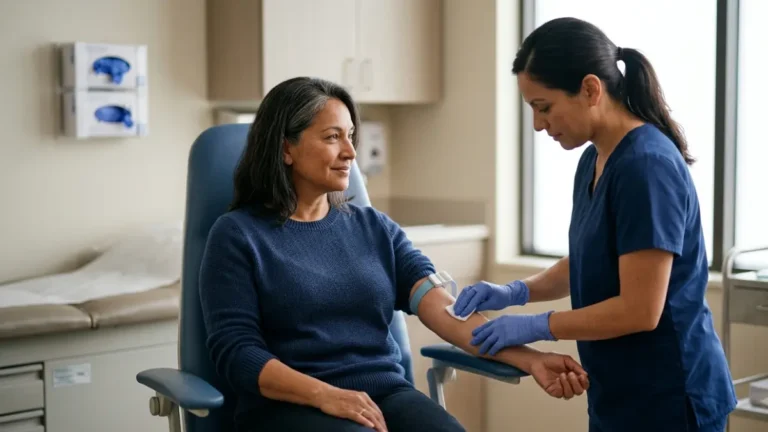
Tell the person drawing your blood
The National Library of Medicine’s instruction is explicit: tell your provider if you ate or drank before the test, because you may need to reschedule for accurate results. That decision belongs to the lab; concealing it is the only choice that reliably produces a misleading result.
✅ Patient Action: Say this to the phlebotomist at check-in: “I had coffee at [time] — run this now or reschedule?” Give the actual time, not a vague “this morning,” because the interval is what they judge.
What a non-fasting sample can still tell your clinician
A slip rarely wastes the trip. The National Library of Medicine’s lipid profile test page notes that without fasting, values for total cholesterol and HDL may still be useful.
What you lose sits elsewhere. Triglycerides are most affected by recent intake, and the LDL figure on most reports is not measured at all — it is worked out from your triglyceride level. A broken fast threatens the measured input other numbers are built on, which is why non-HDL cholesterol often survives a non-fasting draw.
Does coffee change your cholesterol, not just your test
Here is the second question, and its answer is useful in a way the first is not.

What the AHA reviewed in July 2026
On 20 July 2026, the American Heart Association published a scientific statement reviewing the evidence on caffeine, coffee, and cardiovascular health. Among its findings: data from randomized clinical trials indicate cafestol was associated with higher LDL cholesterol.
The brewing method, not the coffee
Cafestol is present in unfiltered coffee — espresso, French press, Turkish, and boiled — and not in paper-filtered or instant coffee. The American Heart Association’s July 2026 review of coffee and heart health states plainly that more research is needed on which products carry higher levels, and by what mechanism.
Decaf is not an exemption
Cafestol is a component of both caffeinated and decaffeinated coffee, so switching to decaf does not remove it. The question is how your coffee is filtered, not how strong it is.
✅ Patient Action: Ask the clinician who ordered your panel: “I drink [brewing method] daily — is that worth factoring into my numbers?” This belongs alongside your results, not a change you make alone. If your result is high, our guide to what follows a high lipid result covers the next steps.
What coffee does to the blood sugar test beside it
A lipid panel is rarely alone on the requisition, and the test most affected by your coffee may not be the cholesterol one.
What caffeine does to blood sugar in the short term
The same 2026 statement reports that caffeinated coffee may reduce insulin sensitivity in the short term, and lists temporary rises in blood sugar among caffeine’s short-term effects. If a fasting glucose test travels with your lipid panel, that is the value your coffee is most likely to touch.
⚠️ Clinical Warning: The fasting instruction on your slip may exist for a test other than your lipid panel. Glucose tests and metabolic panels carry their own rules, so confirming which test it was written for matters more than guessing which your coffee affects.
The one question to ask when you book
Fasting windows usually run 8 to 12 hours, and your provider sets the length — our guide to how long the fast needs to be goes deeper.
Ask the scheduling desk: which tests on this slip need fasting, and for how long? Routine panels differ, as our guide to fasting rules for a CBC shows, and a raised reading has its own path after a borderline blood sugar result.
Common questions about coffee before a lipid panel
1. Does coffee with milk break a fasting blood test?
Yes. Milk, cream, and non-dairy alternatives add fat and energy, and the fasting instruction exists precisely because your bloodstream absorbs sugar, fat, and protein from what you drink. Of the values on a lipid panel, triglycerides respond to that kind of intake first, which matters because other numbers on your report are worked out from your triglyceride level.
2. Is decaf coffee OK before a cholesterol test?
Decaffeinated coffee is still a beverage other than water, so it does not satisfy a fasting instruction before a lipid panel. It also carries cafestol, the compound the American Heart Association links to higher LDL cholesterol, because cafestol is present in both caffeinated and decaffeinated coffee. Switching to decaf changes the caffeine question without changing the brewing-method one.
3. Does coffee raise your cholesterol?
The American Heart Association’s July 2026 scientific statement reports that cafestol, found in unfiltered coffee, was associated with higher LDL cholesterol in randomized clinical trials. Cafestol appears in espresso, French press, Turkish and boiled coffee, and is absent from paper-filtered and instant coffee. Ask the clinician who ordered your panel whether your daily brewing method is worth factoring into your numbers.
4. Can I drink tea instead of coffee before a lipid panel?
No. The fasting instruction permits plain water and excludes other beverages, and tea sits in that category alongside juice, coffee, and soda. Flavoured and sweetened waters are excluded on the same page, because they may contain the sugars or artificial sweeteners that a plain-water rule is designed to keep out of your sample.
5. How long before a lipid panel should I stop drinking coffee?
Your provider sets the window, and fasting periods usually run 8 to 12 hours depending on the test ordered. The instruction covers that entire window rather than just the final hour, so coffee is excluded for its full length. If you are helping an older parent prepare for a draw, the same window applies to them.

What to do tomorrow morning
If you were told to fast, drink plain water and nothing else — and if you slipped, say so at the desk rather than hoping it goes unnoticed. If you were not told to fast, you may not need to skip anything.
Your brewing method is a separate conversation, for the clinician who ordered the test. Either way, your clinic’s instruction outranks anything here, and the pillar guide to which lipid values were measured and which were calculated explains what is at stake.
About this content
How this article was put together: researched from recognised health sources, drafted with the help of AI tools, and edited by hand, with sources linked throughout.

Sameer Patel is the founder and editor of My Medicine Advisor. He is not a doctor or medical professional — before starting this site he worked in banking,…
Medical disclaimer
The content on MyMedicineAdvisor is provided for general informational and educational purposes only and is not a substitute for professional medical advice, diagnosis, or treatment. Health information on this website should not be used to diagnose, treat, cure, or prevent any condition without guidance from a qualified healthcare professional. Always seek the advice of your doctor, physician, or another licensed healthcare provider with any questions you may have regarding a medical condition, symptoms, medications, or treatment decisions.