
On This Page – Quick Medical Summary
Yes, you can usually get a cholesterol test without a doctor
Yes — a walk in cholesterol test is available at retail clinics, pharmacies and self-pay laboratories, generally without an appointment and without a doctor’s order. Every result you found while searching says so. What they leave out is which numbers you will be handed, and what happens to that result afterwards.
Start where your question is. Fasting is answered in whether you need to fast for a lipid panel, money in what a lipid panel costs without insurance, and the reason some numbers are worked out rather than measured in which lipid panel numbers are measured and which are calculated.
What “walk-in” actually covers
Three arrangements share the phrase: a retail or urgent-care clinic where a clinician sees you, a pharmacy screening station, and a self-pay laboratory where you order the test yourself. They are not the same product.

One thing to plan before you go
Nobody sends this result to your doctor for you. A self-ordered screening sits outside the ordering loop your practice uses, so decide now how the number will reach whoever looks after your care. That step is what turns a purchase into a piece of medical information.
ℹ️ Medical Disclaimer: This is general education about where and how cholesterol testing happens. It does not diagnose, interpret your results, or recommend starting, stopping or changing any medication, treatment or procedure, and it makes no claim about what any test will charge you, what your insurance or Medicare covers, or what any particular clinic, pharmacy or laboratory offers. Discuss any cholesterol result with a board-certified primary care physician or cardiologist before acting.
What a cholesterol test reports, whoever orders it
A lipid panel is the standard version of this test, and knowing what it contains is what lets you tell whether you are being offered the whole thing or part of it.
The American Heart Association describes it as a blood test a health care professional may order, reporting total cholesterol, HDL cholesterol, LDL cholesterol and triglycerides, fasting or non-fasting depending on your situation. That is the American Heart Association’s guidance on getting your cholesterol tested, last reviewed in March 2026.
Notice the route that description assumes. Every step runs through a clinician — one orders it, one explains it — and nothing on that page describes buying the test yourself.
Why “cholesterol test” names several different things
The MedlinePlus patient page on cholesterol testing makes a point vendor pages skip: a provider may order a total cholesterol level on its own as a first test, rather than the full panel.
So “I got my cholesterol checked” can mean one number, or it can mean four. That is why the five values a cholesterol test can report is worth two minutes before you go.
The machine measures three numbers and works out the rest
In most cases a walk-in cholesterol test does not measure your LDL at all. It measures three things and calculates the fourth from them.
The FDA’s own review document for one point-of-care cholesterol analyzer — the small countertop machine used at waived testing sites — states it plainly. Describing what the system tests, the agency records quantitative assays for total cholesterol, HDL cholesterol and triglycerides, then adds a separate sentence: LDL cholesterol is calculated. You can read the FDA’s own review of one waived cholesterol analyzer directly.
One limit on that: this is the FDA’s review of a single device, not a survey of every machine in every pharmacy. What it establishes is that a fingerstick screening device produces LDL the same way a hospital laboratory usually does — which is why the question worth asking is which numbers does this test report rather than is this the good kind.
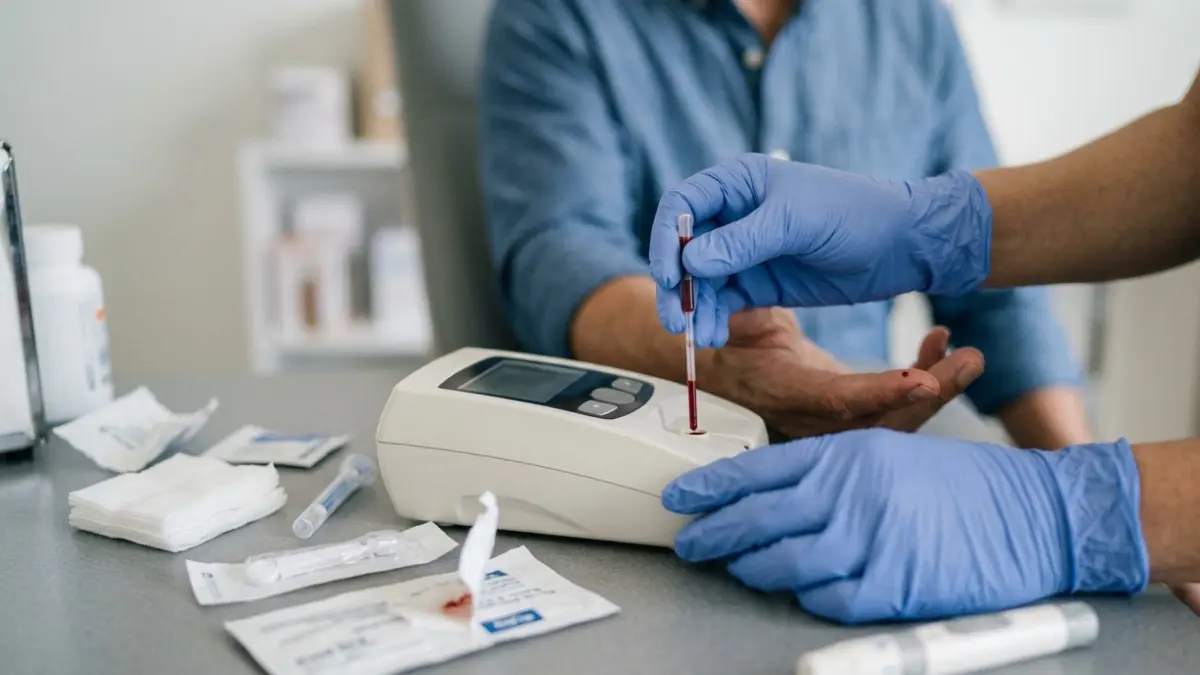
🔬 How It Works: Your LDL is not weighed directly. The analyzer measures total cholesterol, HDL and triglycerides, then feeds those three into an equation estimating how much of your cholesterol is carried as LDL. Most laboratory reports contain the same estimate — the parent guide explains how that estimate is produced.
When no LDL number comes back at all
Because that figure comes from an equation, there are circumstances in which the equation is not considered reliable. The same FDA document confirms the analyzer is built to withhold the number rather than print it, showing a blank instead — and a report that comes back with no LDL number explains why.
Five questions to ask before you hand over a card
No national article can tell you what the place nearest you offers — it varies by location and changes without notice. What it can give you is the short list that separates one counter from another. These five are our own construction, not a checklist published by any institution.
| What to ask at the counter | Key clinical detail the answer gives you |
|---|---|
| Which numbers will be on the printout? | Whether you are getting one value or a full panel |
| Finger prick, or a draw from my arm? | Which sample type, and so which kind of test this is |
| Does my sample go to an outside laboratory? | Whether you get results now or wait for them |
| Do I get a copy I can keep and share? | Whether the result can reach your own clinician |
| Is this a screening, or something a clinician asked for? | Whether anyone is expecting to follow it up |
Question three surprises people most. A send-out sample behaves like ordinary laboratory work rather than a five-minute screen — what the wait for blood test results involves covers that side of it.
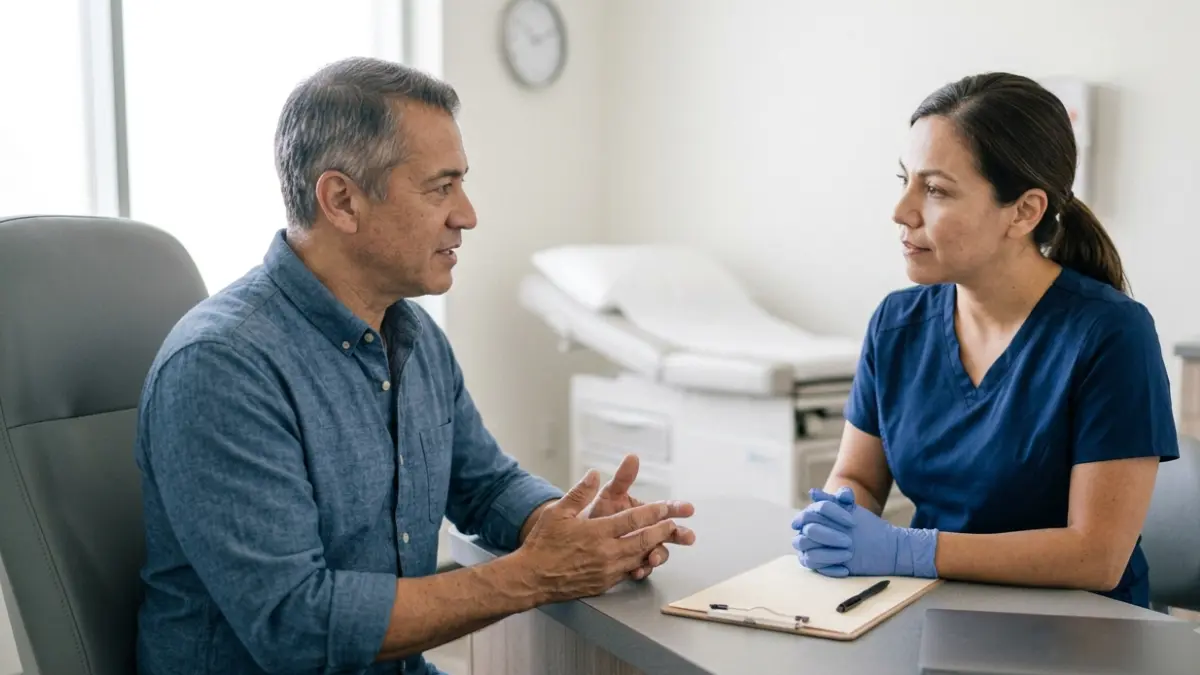
Asking on someone else’s behalf
Arranging this for a parent? Add a sixth question — ask whether the printout goes to them or to you. Question five is where repeat timing comes up, and how often this needs repeating answers it.
How much to trust a finger-prick screening number
A screening number you actually have is worth more than a perfect one you keep postponing. That is the honest starting point, and the rest of this section should be read against it.
Waived testing is the regulatory category these machines sit in. The CDC’s laboratory quality division is direct about it: waived tests must be simple and low-risk, but they are not completely error-proof, and errors occur where the manufacturer’s instructions are not followed or the person running the test is unfamiliar with it. The standard the same page sets is testing performed correctly by trained personnel, following good laboratory practice — the CDC’s page on waived testing, reviewed April 2026.
📊 Clinical Data Point: In the FDA’s review of one waived fingerstick cholesterol analyzer, the allowable total error for that device was ±8.9% for total cholesterol, ±13% for HDL and ±15% for triglycerides, with more than 95% of results inside those bands against a reference laboratory method. — Source: FDA, CLIA Waiver Approval Determination Decision Summary CW170010. These figures describe that one device in that one review, not an industry-wide standard.
Who is allowed to run the test
A site offering these tests holds a CLIA Certificate of Waiver and must follow the manufacturer’s instructions — a lower bar than a full clinical laboratory. The CDC publishes training for non-laboratory settings, including pharmacies, aimed at staff without formal laboratory training. That describes how the regulation is built, not the person who will take your sample.
Screening is not the same as settling it
A screening number tells you roughly where you sit, not what to do about it, and one reading rarely decides anything alone — what a high reading does and does not settle covers what usually follows.
Where the result goes after you leave the counter
This is the part the walk-in route quietly removes, and the reason to read this page before you go rather than after.
When a clinician orders a cholesterol screening, the result returns to whoever ordered it and lands in your record automatically. When you order it yourself, that loop does not close on its own. The result exists, you have seen it, and your practice may never know it happened.
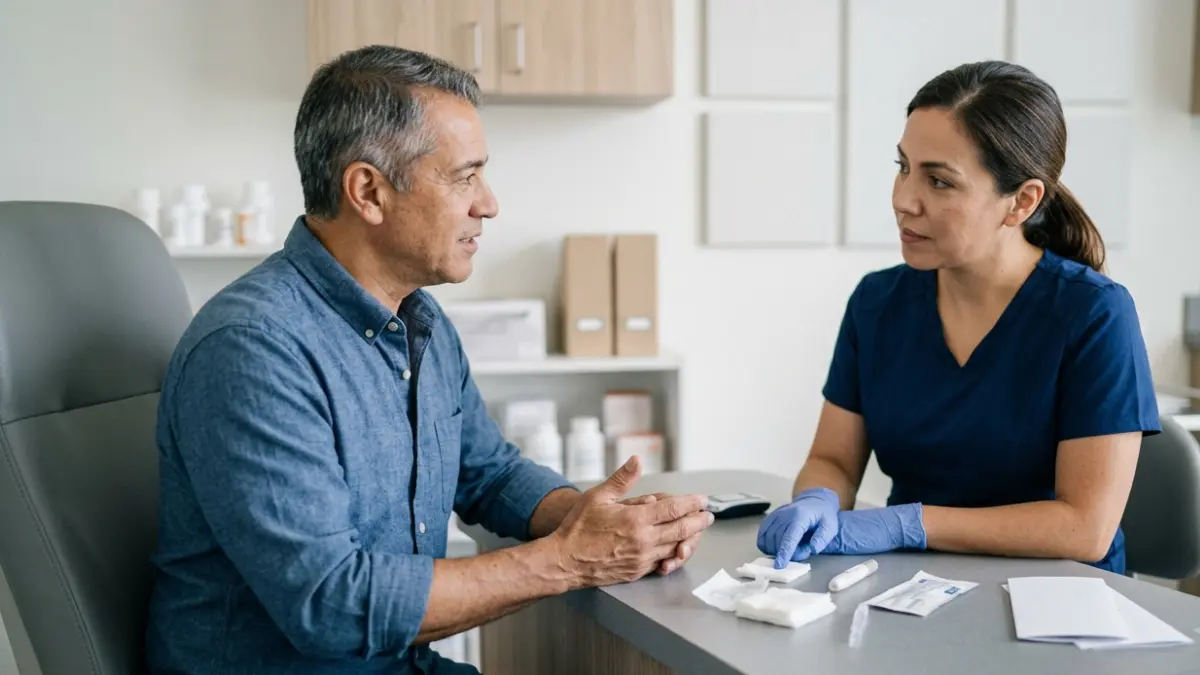
Getting a copy you can keep
Ask for a printed or emailed copy before you leave, while the person who ran the test is in front of you. Chasing it afterwards is harder than asking at the counter.
What to say at your next appointment
✅ Patient Action: At your next visit, tell your primary care physician: “I had a cholesterol test done outside your office — can it go into my record, and does it need repeating here?” Bring the printout. Those two questions do the work of the whole visit on this subject.
Whether it needs repeating in a clinical setting depends on what it showed and how it was obtained — the clinician’s call. If routine blood work is already part of your care, how a cholesterol test fits a routine blood panel sets out where it sits.
What this page cannot tell you about your area
Search results for a cholesterol test near me are almost entirely places selling you one, each answering a question it also profits from. We are not, which is why this page works differently.
What we leave out on purpose
We publish no figure for what any of this charges and no comparison of one venue against another, because those numbers vary by location and by week. It is also why no affiliate link sits behind any of this — an article telling you what to ask before you pay has no business taking a share of what you pay.
If your situation is turning out to be urgent rather than planned, what a cholesterol test in the emergency room actually involves covers different ground.
Three things worth asking your own clinician
- Whether they will accept an outside screening result, or repeat it
- Whether cholesterol testing is already planned for you anyway
- What they would want you to do with the result before your next visit
There is nothing to feel either way while you decide — why high cholesterol produces no symptoms explains why waiting for a sign is not a strategy.
Walk-in cholesterol test questions
1. Will my doctor see the result?
Not automatically. A test you arrange yourself sits outside the ordering loop your practice uses, so nothing routes the result back to them by default. Ask for a printed or emailed copy at the counter and bring it to your next appointment, where your primary care physician can decide whether it belongs in your record and whether anything follows from it.
2. Is a pharmacy cholesterol test the same as one from a laboratory?
Not identical, but closer than people assume: both usually measure total cholesterol, HDL and triglycerides and then calculate LDL from those three. What differs is the sample type, whether analysis happens on site or at an outside laboratory, and how many values reach the printout. Ask which numbers yours reports, and discuss the result with your clinician.
One thing to do before you go
Screenshot the five questions above, and ask for a copy of your result before you leave the counter.
The walk-in route is a reasonable way to find out where your cholesterol sits, and getting tested beats not getting tested. It just hands you one job the ordered route handles for you — making sure the number reaches somebody who can tell you what it means.
About this content
How this article was put together: researched from recognised health sources, drafted with the help of AI tools, and edited by hand, with sources linked throughout.

Sameer Patel is the founder and editor of My Medicine Advisor. He is not a doctor or medical professional — before starting this site he worked in banking,…
Medical disclaimer
The content on MyMedicineAdvisor is provided for general informational and educational purposes only and is not a substitute for professional medical advice, diagnosis, or treatment. Health information on this website should not be used to diagnose, treat, cure, or prevent any condition without guidance from a qualified healthcare professional. Always seek the advice of your doctor, physician, or another licensed healthcare provider with any questions you may have regarding a medical condition, symptoms, medications, or treatment decisions.