
On This Page – Quick Medical Summary
Are at-home cholesterol tests accurate?
It depends which of two products you bought. An at-home cholesterol test can mean a kit you read yourself in minutes, or a kit you use to collect a drop of blood and post to a laboratory. Those are two different products, overseen by two different parts of the federal government.
That is why the accuracy answers you find online contradict each other. Most pages answer as though the phrase named one thing.
Would rather go somewhere than order something? Start with what a walk-in cholesterol test involves. If your question is really about timing, see how often a cholesterol check is worth repeating, and for the underlying picture we cover which numbers on a lipid panel are measured and which are calculated in depth.
One thing applies to both. FDA states that home use tests should not replace periodic visits to your doctor, and that you should always see a doctor if you are worried about a possible medical condition. A test result that worries you is a reason to book an appointment — not a reason to keep testing until a better number appears.
ℹ️ Medical Disclaimer: This article is general health education about consumer testing products and the federal programs that oversee them. It does not diagnose any condition, interpret your results, endorse any product or brand, or create a doctor–patient relationship, and decisions about screening, diagnosis, medication and follow-up testing belong with a licensed clinician who knows your history. Take any result you are unsure about — from any source — to a board-certified primary care physician.
Two different products share the same name
The National Library of Medicine describes two kinds of at-home test, and that distinction is the one that matters. A self-test is one you apply a sample to and read yourself. A self-collection test is one where you take the sample at home and mail it to a laboratory.
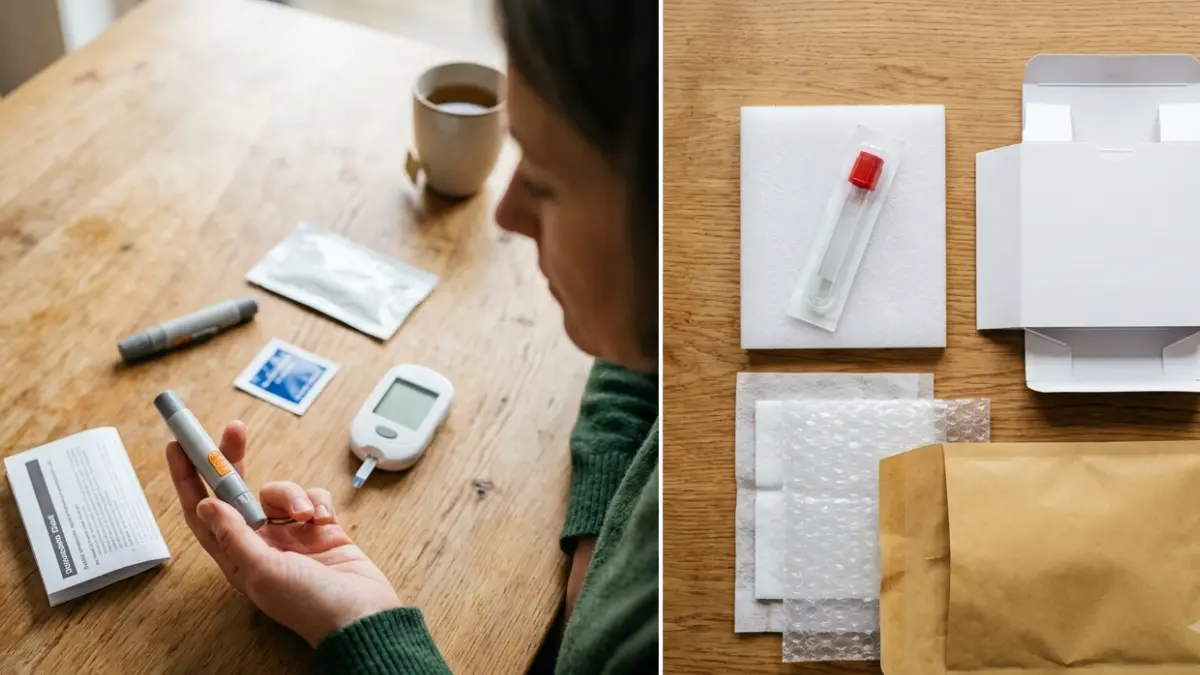
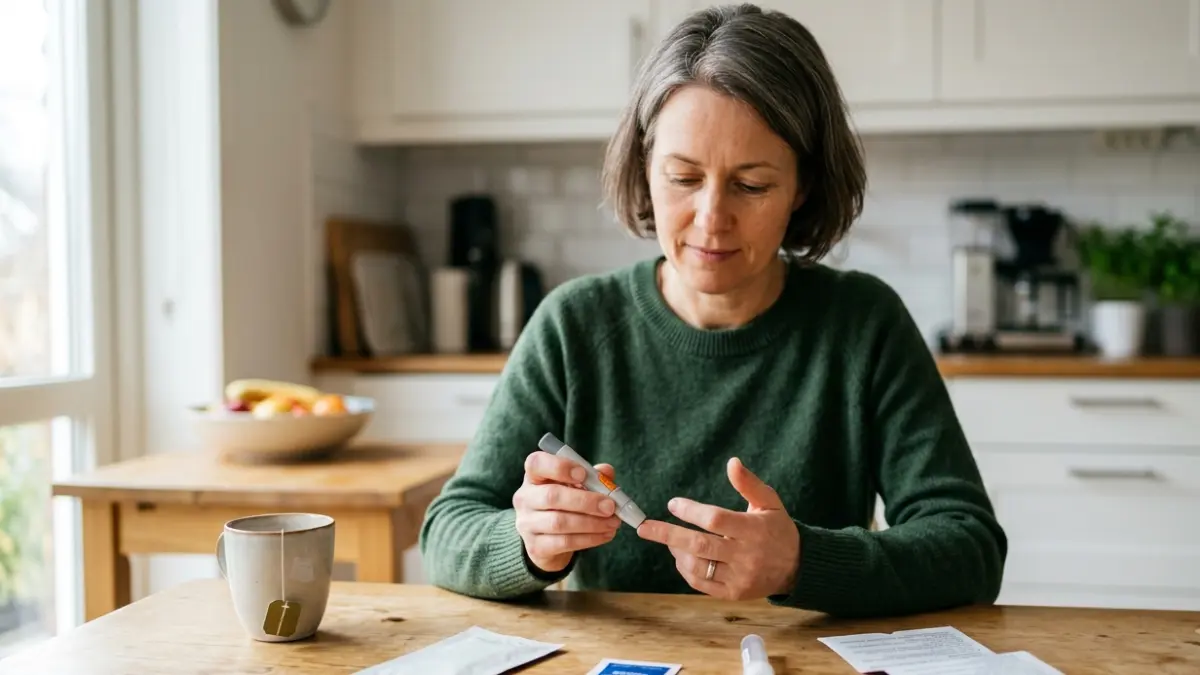
A kit you run and read yourself
Everything happens in your kitchen. The kit is an over-the-counter in vitro diagnostic, and the Food and Drug Administration keeps a searchable database of the tests and collection kits it has cleared or approved.
A kit you post to a laboratory
Here your blood leaves your house, and a second system applies. The Clinical Laboratory Improvement Amendments set federal standards for every US facility that tests human specimens to assess health or to diagnose, prevent or treat disease, and the Centers for Medicare & Medicaid Services regulates that testing.
One detail in those rules is worth knowing before you buy. In the federal rules for laboratories that test human samples, CMS states that facilities only collecting or preparing specimens, or only serving as a mailing service, are not laboratories. A company selling a mail-in kit may be exactly that — so the party accountable for your number is the laboratory that runs the sample, not necessarily the brand on the box.
Neither product is unregulated. They answer to different bodies, and CDC describes its own role as a partnership with CMS and FDA. The same split runs through other panels; we ask the same question about a blood count separately.
What “accurate” actually means here
Two honest sources can give opposite answers to “is it accurate” because they are answering different questions. The word is doing the work of three.
Is the number close to what a lab would report?
This is analytical accuracy. CDC’s Cholesterol Reference Method Laboratory Network is a group of specialized laboratories that assess the analytical accuracy and precision of total cholesterol, triglyceride, LDL-C and HDL-C tests used in patient care.
🔬 How It Works: Standardization is like checking scales against one known weight. CDC maintains reference measurements, and a manufacturer can have its test compared against them. A traceability claim says the method was checked against that reference — not that your kit was inspected.
Participation in CDC’s standardization programs is voluntary. A kit without a traceability claim has not been shown to be inaccurate; it has simply not entered a program nobody is required to join.
Did I do the test right?
User technique is the one variable you own outright. It gets its own section below.
Does the result tell me what I need to know?
Scope is whether the number you got is the one your clinician reasons from — not a question about accuracy.
| What “accurate” can mean | What actually answers it | Where you look |
|---|---|---|
| Closeness to a lab measurement | Analytical accuracy and precision of the method | Accuracy information on the package |
| A correct result on the day | Following the instructions exactly | The leaflet inside the kit |
| The right number for your question | Which values the product reports | The results list on the box |
Sources: CDC Clinical Standardization Programs; FDA guidance on home use tests. The three-way split is our own reading, not either agency’s framework.
How many numbers does a home test actually give you?
One line, or several
The FDA’s own consumer page for home cholesterol tests describes a kit that measures total cholesterol, and calls it a quantitative test — one that returns a number rather than a yes or no. Products on sale differ from one another, and the category name will not tell you how many numbers you get. The box will.
The LDL question
A laboratory lipid panel reports several values, and the one most people want is usually not measured directly — it is worked out from the others. We explain which numbers a lipid panel measures and which it calculates separately, and there are cases where an LDL line does not appear at all.
This is where a perfectly accurate home result can still leave you short. If your kit reports one value and your clinician reasons from another, no amount of measurement quality closes that gap — and non-HDL cholesterol is one number that increasingly matters and that a home kit is unlikely to print. That is a question about scope, not about at-home cholesterol test accuracy.
The part of the result you control
Following the directions is not a formality
FDA’s consumer page for this category says a home cholesterol test is about as accurate as the one a doctor uses — provided the directions are followed carefully. That condition is doing real work. Read the leaflet before you prick anything, check the expiry date, and test in the conditions the manufacturer sets.
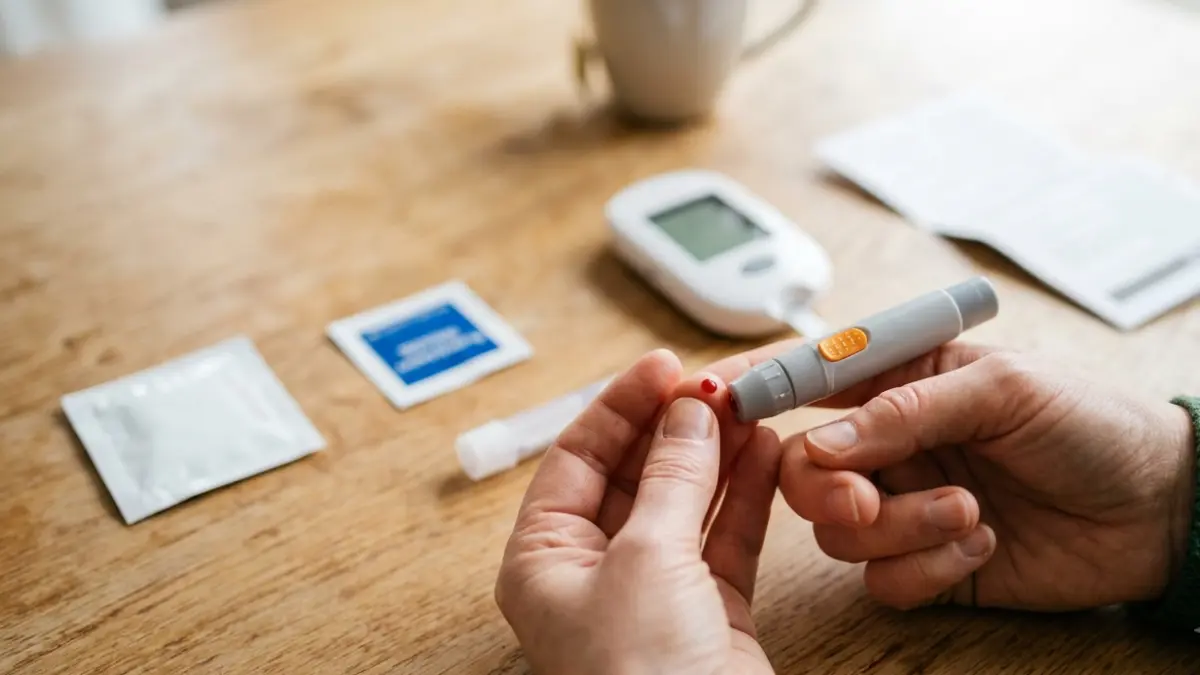
⚠️ Clinical Warning: Use only new test strips authorized for sale in the United States. FDA has issued a safety communication about the risks of previously owned strips, or strips not authorized for US sale. Strips bought loose or shipped from abroad can give a wrong number with no sign anything went wrong.
None of this argues against testing. In the FDA’s guidance on using a home test, the agency calls these products quick and confidential and notes they can detect a condition before you have symptoms — cholesterol is FDA’s own example — so treatment can start earlier, and a careful home test beats a lab test you keep postponing. On fasting, see whether a cholesterol test needs you to fast.
Buying one for someone else
If you are buying for a parent, the person doing the test is part of the equipment. Fingerstick sampling asks for steadier hands and better eyesight than the packaging suggests, so be there for the first one.
Where the number has to go next
When your home number and your lab number disagree
Two measurements from two different systems can differ without either being wrong — that is our reading of how measurement works, and no figure should be attached to it. A difference is information for a clinician to interpret, not a verdict either number can issue alone.
What you should not do is pick the number you prefer and re-test at home until it reappears. If a result concerns you, the next step is an appointment.

Taking the result to an appointment
Bring the readout and the packaging. FDA notes that most home tests are best evaluated alongside your medical history, a physical examination and other testing — which is what an appointment provides. If you are sent for a venous draw, what happens to a sample after it leaves you and what an out-of-range cholesterol result can mean will both make the wait easier.
✅ Patient Action: Ask your primary care physician: “Here is what I measured at home — do you want a venous panel before we decide anything?” That one question moves the result into a system built to act on it.
What this page cannot tell you
We cannot tell you whether the kit you are holding is a good one. We can give you the questions that do.
Three questions before you pay
These three are our own construction, drawn from the sourced facts above. No agency publishes them as a checklist.
- Is this test listed in the FDA’s over-the-counter test database? FDA states that if the database has no record of a test, it may not be FDA regulated.
- Which laboratory analyzes my sample, and does it hold a CLIA certificate? For a mail-in kit, this identifies who is accountable.
- What does the package say about accuracy? FDA states that accuracy varies from brand to brand and that the accuracy information is on the package.
Why we name no brand
We recommend no product, and the reason is not modesty. FDA says accuracy varies brand to brand and that the accuracy information is printed on the package — and we hold no package; CDC certification also lapses unless a participant keeps taking part, so any product we named would be recommended on grounds we had not checked. On price, see what a lipid panel costs when you pay for it yourself.
Common questions about at-home cholesterol tests
1. Is an at-home cholesterol test as accurate as a lab test?
The question has two answers because the category has two products: a self-test you read yourself, and a self-collection kit you post to a laboratory. Each is overseen differently, and each gives you different things to check. FDA’s guidance says accuracy varies from brand to brand and that the accuracy information appears on the package, so discuss any result with your clinician before acting on it.
2. Do I still need to see a doctor if my at-home result looks normal?
Yes. FDA is explicit that home use tests should not replace periodic visits to your doctor, and that most are best evaluated alongside your medical history, a physical examination and other testing. A reassuring home number is not a completed check-up, so if a result worries you or the instructions say to seek advice, see a clinician rather than repeating the test.
3. How do I know whether a home test is FDA regulated?
Search the FDA’s over-the-counter in vitro diagnostic database by the name of the test. FDA maintains it as a searchable listing of over-the-counter tests and collection kits it has cleared or approved, and states that if no record is found, the test may not be FDA regulated. It takes a minute and it works before you pay rather than after.

Choosing well, and knowing what you bought
There is no single verdict on at-home cholesterol test accuracy, because there is no single product. Once you know whether you hold a test you read yourself or a kit you post to a laboratory, you know which questions apply and who is answerable for the number.
The one thing worth doing today costs nothing: look at the box, and find out which of the two you have. Everything else follows from that. When you want the fuller picture of the panel itself, which numbers on a lipid panel are measured and which are calculated is the place to go next.
About this content
How this article was put together: researched from recognised health sources, drafted with the help of AI tools, and edited by hand, with sources linked throughout.

Sameer Patel is the founder and editor of My Medicine Advisor. He is not a doctor or medical professional — before starting this site he worked in banking,…
Medical disclaimer
The content on MyMedicineAdvisor is provided for general informational and educational purposes only and is not a substitute for professional medical advice, diagnosis, or treatment. Health information on this website should not be used to diagnose, treat, cure, or prevent any condition without guidance from a qualified healthcare professional. Always seek the advice of your doctor, physician, or another licensed healthcare provider with any questions you may have regarding a medical condition, symptoms, medications, or treatment decisions.