
On This Page – Quick Medical Summary
Thyroid storm is a rare, life-threatening emergency in which an overactive thyroid tips the body into sudden multi-organ failure. It is not a bad thyroid day. It needs emergency care now, not a morning appointment.
Find yourself here:
- Someone has fever, a pounding heart and new confusion right now → call 911, then read the next section.
- You are watching an older relative who seems flat, weak and has a new irregular pulse → read When a thyroid storm does not look like one.
- You have Graves’ disease and want to know what sets a storm off → read What triggers a thyroid storm.
ℹ️ Medical Disclaimer: This article explains how thyroid storm is recognised and assessed. It does not diagnose your condition, interpret your test results, recommend or adjust any medication, or advise on procedures, and no drug names or doses appear anywhere in it. Emergency symptoms need emergency services, not a website. For diagnosis, treatment and medication decisions, consult a board-certified endocrinologist; for the symptoms described in the next section, call 911.
When thyroid symptoms mean call 911 right now
Any one of the following, in a person with known or suspected hyperthyroidism, is enough to call emergency services. You do not need all of them.
The temperature and heart rate that change everything
- A high fever above 101.3°F (38.5°C)
- A resting pulse above 140 beats per minute
- New confusion, agitation, extreme drowsiness or a seizure
- Relentless vomiting, diarrhoea, belly pain or yellowing skin
MedlinePlus directs people with hyperthyroidism who develop these symptoms to call 911 or their local emergency number.
Should you call 911 or drive yourself?
Call. Dangerous heart rhythms can start on the way, and paramedics can act in the vehicle. If thyroid results have already worried you, our guide to thyroid test results that warrant urgent care explains why.
⚠️ Clinical Warning: Do not wait to see whether the fever breaks or the pulse settles. Thyroid storm carries an estimated mortality of 8% to 25% even with modern treatment, which is why early recognition matters so much. Hours count here.
What thyroid storm symptoms actually look like
Thyroid storm shows up across four body systems at once — that simultaneity is what separates it from a rough week.
The full symptom picture, system by system
- Temperature: fever, drenching sweats, skin hot to the touch
- Heart: very fast pulse, an irregular rhythm, breathlessness, swollen ankles
- Brain: agitation, delirium, unusual sleepiness, seizure or unresponsiveness
- Gut and liver: severe diarrhoea, vomiting, abdominal pain, jaundice
These four domains — thermoregulatory, cardiovascular, central nervous system, and gastrointestinal-hepatic — are the ones clinicians formally assess.
How it differs from a hyperthyroid flare
A flare makes you hot, jittery and tired. A storm adds fever, mental change and gut collapse together, over hours to days.
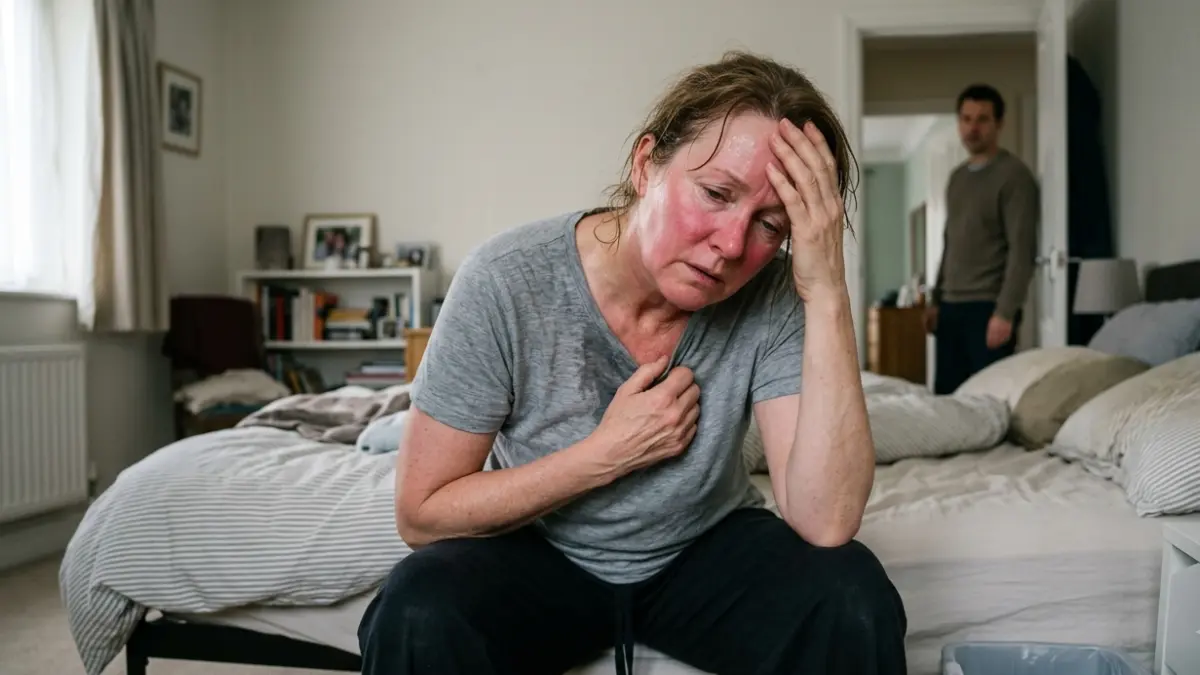
🔬 How It Works: Thyroid hormone sets your metabolic pace. In a storm, a sudden surge pushes every organ to run far beyond capacity at once — the heart races faster than it can fill, temperature control fails, and the gut and liver falter. This is why it is described as a decompensated state rather than simply severe thyrotoxicosis.
When a thyroid storm does not look like one
The version that gets missed at home is the quiet one.
Apathetic thyroid storm in older adults
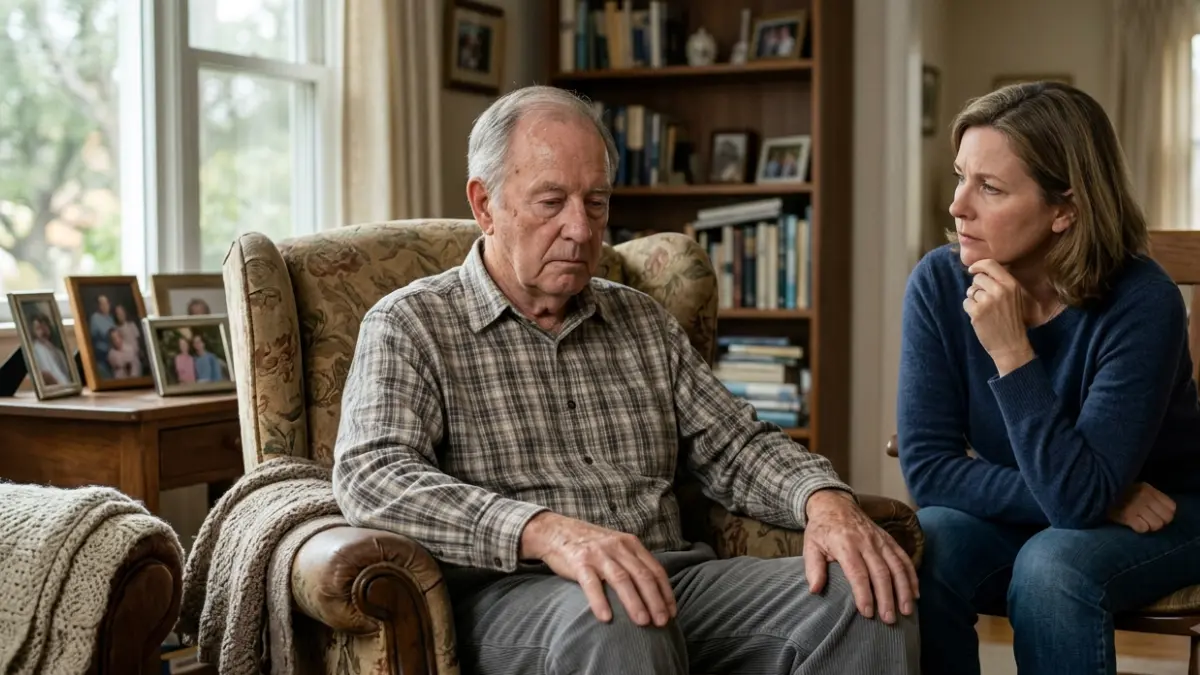
In older people, hyperthyroid symptoms can be subtle or masked, appearing instead as fatigue, weight loss and new atrial fibrillation — a pattern called apathetic thyrotoxicosis. Published case reports describe an apathetic form of storm marked by lethargy, weakness or low mood rather than fever and agitation, classically in older patients but also in younger ones. Interpreting results in this age group differs too; see TSH ranges in older adults.
Can it happen without a fever?
Yes. Absence of fever does not rule it out. Unexplained heart failure or a new irregular rhythm in someone drained and confused deserves urgent assessment.
When you were never diagnosed with a thyroid problem
A storm can be the first sign of undiagnosed Graves’ disease.
📊 Clinical Data Point: Graves’ disease affects nearly 1 in 100 Americans, and about 4 out of 5 US cases of hyperthyroidism are caused by it — Source: NIDDK, Graves’ Disease, 2026.
What triggers a thyroid storm
A storm almost always has a trigger sitting on top of thyroid disease that was untreated or not fully controlled.
Infection and acute illness
Infection is among the most commonly reported precipitants — pneumonia, upper respiratory infections and gut infections can all set one off. Other reported triggers include diabetic ketoacidosis, heart attack, stroke, heart failure and drug reactions.
Stopping antithyroid medication
Running out of a prescription counts, not only deliberately stopping. This is the most avoidable trigger on the list.
Surgery, injury, childbirth and iodine
Surgery was historically the most frequent trigger and is now uncommon. Radioactive iodine treatment for Graves’ disease rarely triggers a storm, sometimes a week or more afterwards. Large iodine loads from seaweed or supplements can cause or worsen hyperthyroidism, as NIDDK’s hyperthyroidism page explains.
✅ Patient Action: Before any planned surgery, iodinated contrast scan or radioiodine treatment, ask your endocrinologist: “Is my thyroid controlled enough for this procedure, and what is my plan if I get sick beforehand?”
What happens when you get to the emergency room
Knowing the sequence makes going in easier.
The tests they run first
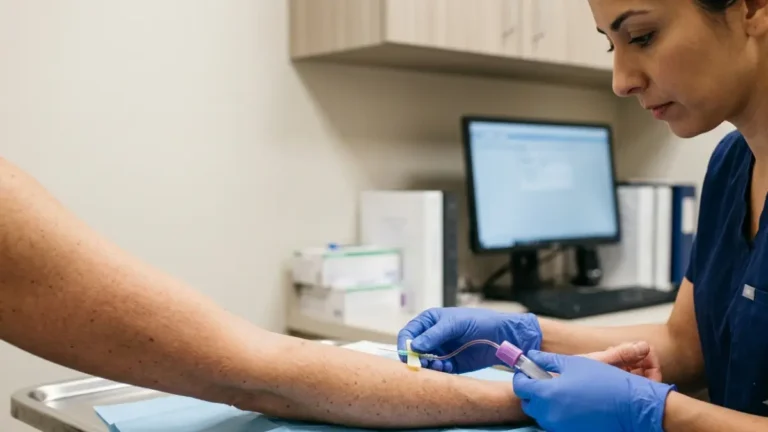
Vital signs come first, then bloods. Thyroid blood tests include TSH, T4, T3 and thyroid antibody tests — see the thyroid blood tests explained. The expected pattern is a suppressed TSH with a high free T4 or T3; our TSH levels chart by age shows how TSH normally reads.
The score doctors use, and why you should not score yourself
The Burch-Wartofsky Point Scale adds up points for temperature, mental state, gut and liver signs, heart rate, heart failure, atrial fibrillation and a trigger; 45 or more strongly suggests thyroid storm, 25 to 44 suggests an impending one, and under 25 makes it unlikely.
🩺 Editor’s Note: The diagnosis is clinical — doctors weigh the whole picture rather than one test. Using the scale also assumes blood tests have already confirmed thyrotoxicosis, which is exactly why it is not a self-assessment quiz. Reaching a number at home changes nothing; getting assessed does.
How serious is a thyroid storm, honestly
You will find very different survival figures online. Both are real; they count different patients.
What the survival figures actually say
| Population counted | Reported in-hospital death rate | Key clinical detail |
|---|---|---|
| ICU and referral case series | 8–25% | Captures the sickest patients who reach intensive care |
| National inpatient databases | 1.2–3.6% | Captures everyone coded with storm, including milder cases |
| Thyrotoxicosis without storm | 0.1–0.4% | The comparison that shows what storm itself adds |
Sources: StatPearls, NCBI Bookshelf; peer-reviewed epidemiology review, 2026. Verified September 2026.
Storm accounts for roughly 1–2% of hospital admissions for hyperthyroidism, so it is uncommon — and treated early, most people survive it.
Lowering your risk if you have Graves’ disease
Staying on treatment and knowing your own numbers is the lever you control. Understanding what a low TSH result means helps you read your monitoring.
Thyroid storm questions people ask
1. What is a thyroid storm?
A rare, life-threatening emergency where an overactive thyroid causes sudden failure across several organ systems at once.
2. What are the first thyroid storm symptoms?
Fever, a racing pulse, and a change in alertness or behaviour, usually appearing together rather than one at a time.
3. What temperature and heart rate signal thyroid storm?
A fever above 101.3°F with a resting pulse above 140 beats per minute warrants emergency assessment immediately.
4. Should I call 911 or drive to the ER?
Call 911. Dangerous heart rhythms can begin during the journey, and paramedics can treat them en route.
5. How fast does a thyroid storm develop?
Symptoms typically build over hours to days once a trigger, such as an infection, lands on uncontrolled hyperthyroidism.
6. Can you have a thyroid storm without a fever?
Yes. Reported cases describe lethargy and weakness without fever, particularly in older adults, so absence of fever rules nothing out.
7. What triggers a thyroid storm?
Infection most commonly, plus stopping antithyroid medication, surgery, injury, childbirth, iodine exposure and other acute illness.
8. Can it happen if I’ve never been diagnosed?
Yes. A storm can be the first sign of undiagnosed hyperthyroidism, most often from Graves’ disease.
9. How is thyroid storm diagnosed in the ER?
Clinically, from the overall picture, supported by thyroid blood tests. Ask the treating team what triggered yours.
10. What is the survival rate for thyroid storm?
Reported death rates range from 1.2% in national databases to 25% in intensive-care series, depending on who is counted.
11. How do I lower my risk with Graves’ disease?
Stay on prescribed treatment and attend monitoring. Ask your endocrinologist for a written sick-day plan.
What to do next
If someone has a fever above 101.3°F, a pulse above 140 and new confusion, call 911 now and bring their medication bottles. If you are reading this calmly, with Graves’ disease or an overactive thyroid, the useful move is smaller: keep your prescription filled and ask your endocrinologist what to do the next time you get an infection.
About this content
How this article was put together: researched from recognised health sources, drafted with the help of AI tools, and edited by hand, with sources linked throughout.

Sameer Patel is the founder and editor of My Medicine Advisor. He is not a doctor or medical professional — before starting this site he worked in banking,…
Medical disclaimer
The content on MyMedicineAdvisor is provided for general informational and educational purposes only and is not a substitute for professional medical advice, diagnosis, or treatment. Health information on this website should not be used to diagnose, treat, cure, or prevent any condition without guidance from a qualified healthcare professional. Always seek the advice of your doctor, physician, or another licensed healthcare provider with any questions you may have regarding a medical condition, symptoms, medications, or treatment decisions.