
On This Page – Quick Medical Summary
What you’re really asking when you ask if these tests work
You are probably in one of two situations, and each needs a different answer.
If you haven’t tested yet
Something is off — tiredness, weight change, feeling cold when nobody else is — and a kit is sitting in your cart. Check whether the symptoms that usually prompt a TSH test match yours, or check whether your symptoms warrant thyroid testing first.
If you’re holding a result right now
Your number sits just outside the printed range and you want to know whether to believe it. At-home thyroid test accuracy is two separate questions: is the blood sample good enough, and is the laboratory analysing it accountable? This article keeps them apart.
ℹ️ Medical Disclaimer: This article explains how thyroid testing works. It does not diagnose thyroid disease, interpret your individual result, recommend or adjust any medication including levothyroxine, or advise on insurance coverage. Before acting on any thyroid result — home or laboratory — consult a board-certified primary care physician or endocrinologist.
What an at-home thyroid test actually measures
Almost every kit measures thyroid-stimulating hormone, or TSH.
🔬 How It Works: TSH is a pituitary signal, not a thyroid hormone. When thyroid output falls even slightly, the pituitary raises TSH sharply — which is why TSH moves before symptoms do, and why it is the standard first-line test.
Mail-in kits: your blood, a real laboratory
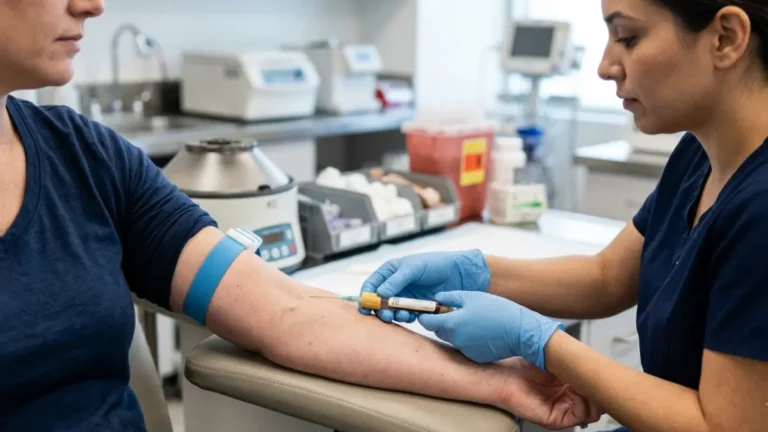
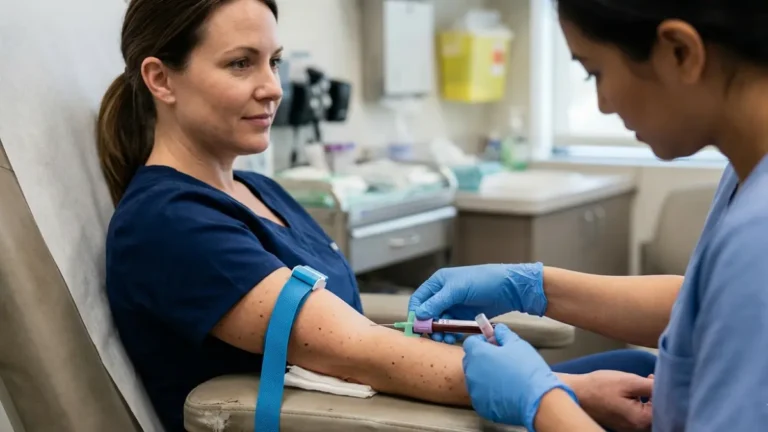
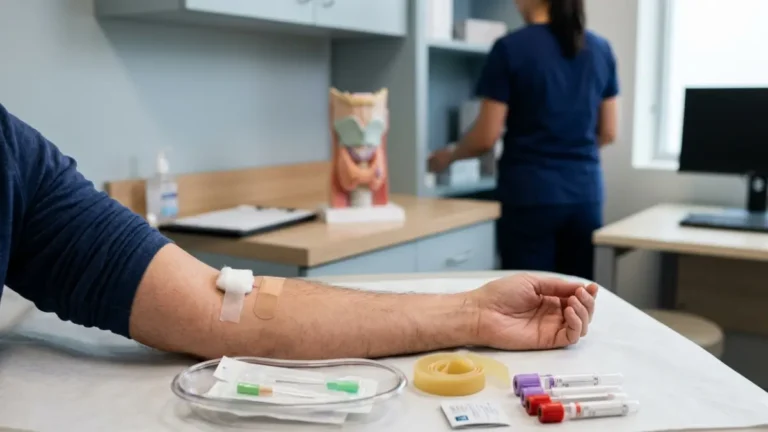
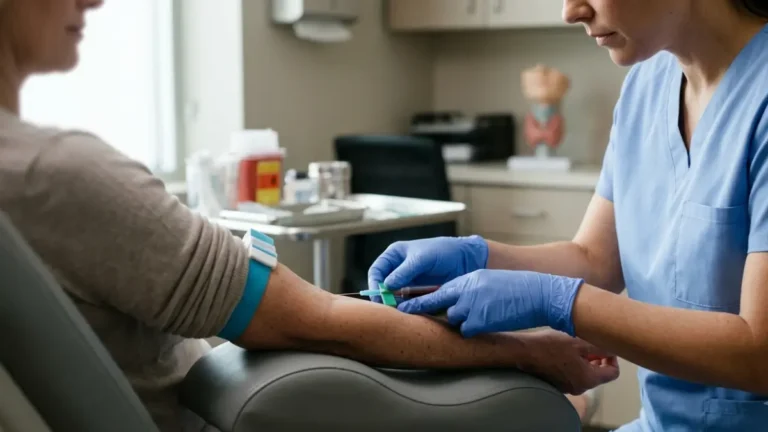
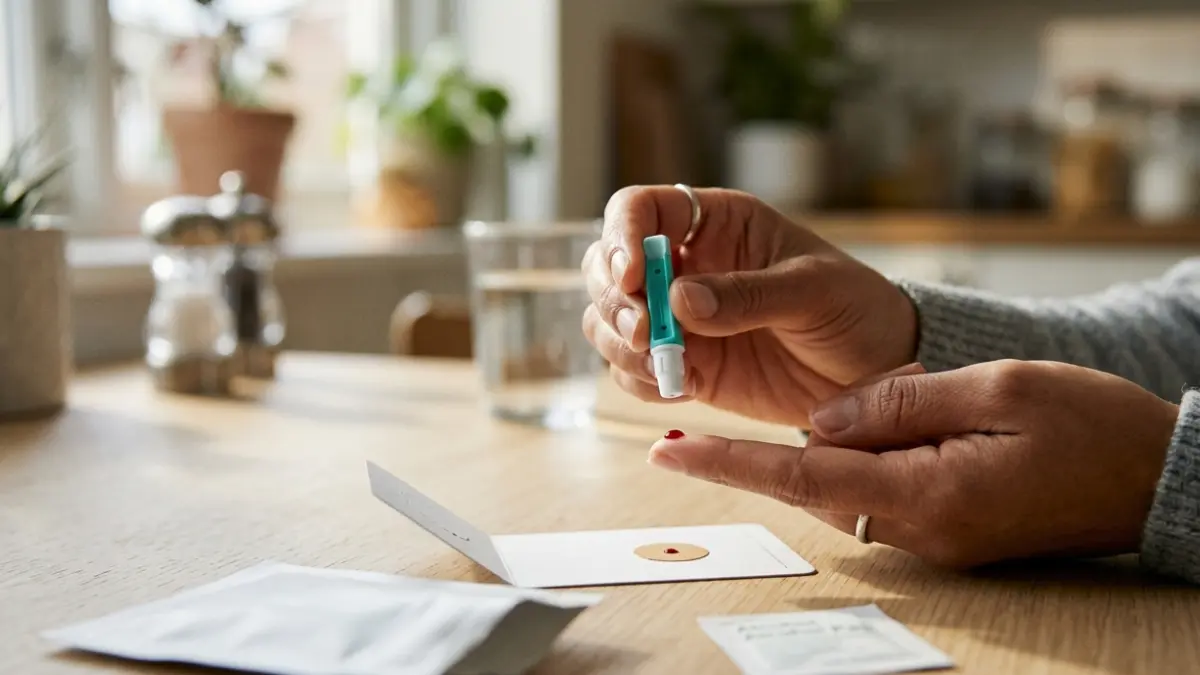
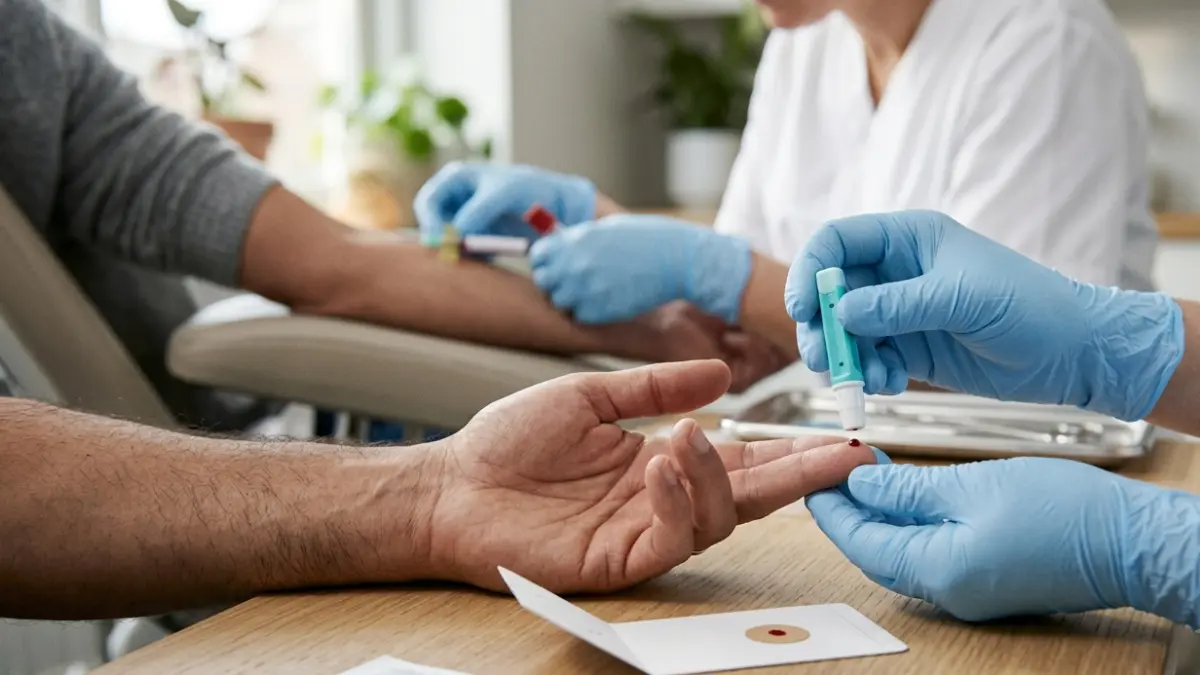
You prick a finger, apply blood to a card or small tube, and post it to a certified lab. In a 2023 method-comparison study, dried blood spots held stable for at least four days between −20°C and +30°C, so ordinary postal transit does not automatically spoil a sample.
Rapid strip tests: read at your kitchen table
A smaller category uses a lateral-flow strip and a handheld reader, with no laboratory involved. Same category name, different product, different performance.
TSH alone, or a full panel
Panels vary. Some kits report TSH only; others add free T4, free T3 or thyroid antibodies. A TSH-only result cannot separate a mild biochemical shift from a clearer thyroid problem.
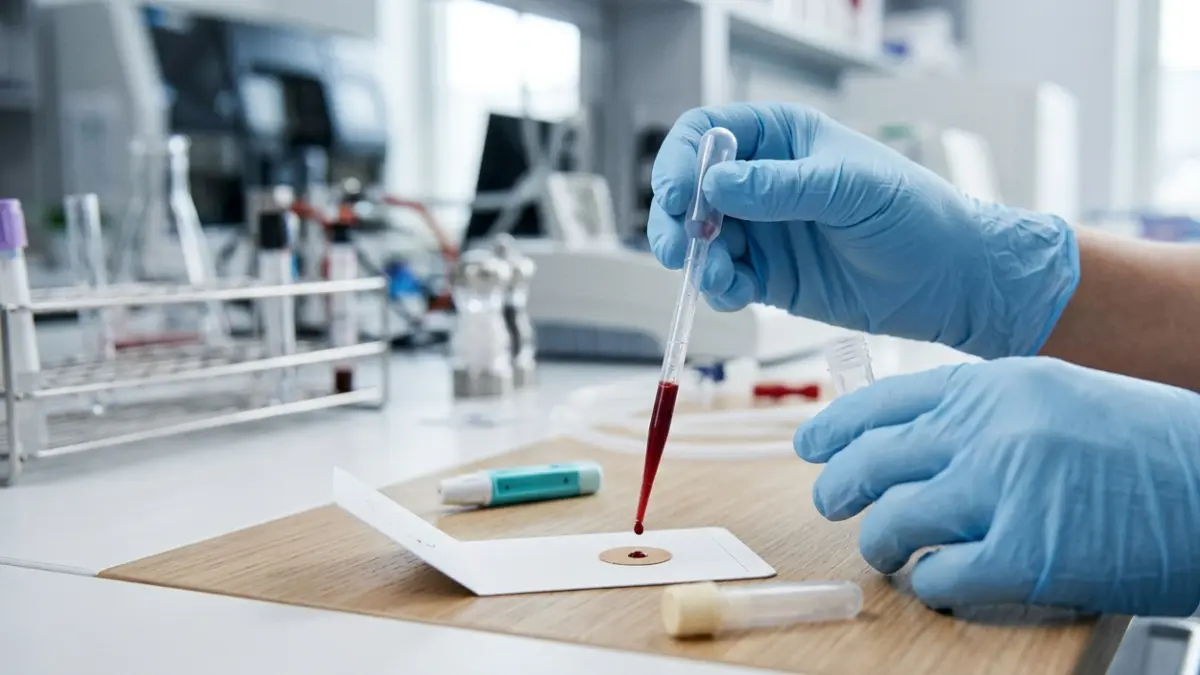
How close is a finger prick to a vein draw?
For TSH, a finger prick comes close to a vein draw — when the sample goes to a certified laboratory. A 2023 method comparison found capillary dried blood spots tracked venous plasma with an R² of 0.988. Rapid strip tests read at home performed measurably worse.
What the mail-in comparison data shows
📊 Clinical Data Point: Finger-stick dried blood spot TSH versus venous plasma TSH: R² = 0.988 (95% CI 0.986–0.990) — Source: Schakelaar et al., Thyroid, 2023.
In that study the dried spots correctly identified six of seven hypothyroidism cases and twelve of fourteen low-TSH cases, with no false positives.
Where rapid strip tests fall behind
| Sample and method | Sensitivity | Specificity | Key clinical detail |
|---|---|---|---|
| Laboratory serum | 90.5% | 96.3% | Reference-grade agreement |
| Fingerstick whole blood, rapid strip | 85.7% | 90.0% | Agreement slips on both measures |
Source: fluorescence lateral-flow TSH evaluation, 2023, against a Roche reference analyser.
Both studies evaluated specific assays. They describe those tests — not every kit sold.
Who regulates these tests, and what “CLIA-certified” means
Most at-home thyroid kits are not FDA-approved devices, and the box rarely says so plainly.
FDA approval and CLIA certification are not the same
CLIA certification, administered by the Centers for Medicare & Medicaid Services, covers the laboratory analysing your sample — its methods, staff and quality control. It is not FDA approval, and it certifies nothing about the collection kit in your hand.
What changed in 2025
The FDA’s May 2024 rule treating laboratory-developed tests as medical devices was vacated by a federal court on March 31, 2025. The government did not appeal, and the FDA issued a final rule rescinding it on September 18, 2025. Oversight sits with CMS under CLIA.
Will your doctor accept the result?
Many clinicians repeat an abnormal home result on a venous sample before acting on it. That reflects how thyroid results are confirmed in general, not distrust of your kit.
Your result came back abnormal — what that does and doesn’t mean
One TSH value is a snapshot of a hormone that moves.
Why one TSH is not a diagnosis
TSH release is pulsatile and follows a daily rhythm, so repeat measurements in the same person differ. Federal evidence reviews define thyroid dysfunction by persistently abnormal values — one reading, home or laboratory, does not meet that bar.
Mildly high TSH with normal T4
Subclinical hypothyroidism means a raised TSH alongside a normal free T4. Federal evidence reviews commonly split it into mildly elevated (4.5–10 mIU/L) and markedly elevated (above 10 mIU/L), while stating plainly that those cut-offs are conventional rather than biologically fixed. Our guide to mildly elevated TSH with normal T4 covers what clinicians weigh next.
Reading your result against the right range
Upper limits differ between laboratories and assays; typical reference intervals sit near 0.1–4.5 mIU/L. Compare your number against the range printed on your own report and the TSH levels chart by age.
✅ Patient Action: Ask your primary care physician: “Should this be repeated on a venous sample, and should free T4 and TPO antibodies be drawn at the same time?”
At-home test or lab draw: how to choose
Choose a lab draw if any of these apply:
- You have no symptoms and are testing out of curiosity — the US Preventive Services Task Force found the evidence insufficient to recommend screening asymptomatic, non-pregnant adults.
- You are pregnant, trying to conceive, or managing thyroid results in later life.
- Your home result was abnormal and needs a confirmatory value.
- You take thyroid medication and your prescriber manages the dosing.
An at-home kit is reasonable when
You have symptoms, no thyroid diagnosis, and want a first look before booking an appointment — or your clinician already knows you are checking between reviews.
If you’re already on thyroid medication
Monitoring follows the schedule your prescriber sets, on the laboratory they use.
✅ Patient Action: Ask your prescribing clinician: “Can I use a mail-in panel between our reviews, or do you want these drawn at your laboratory?”
Four things that can make your result wrong
Most bad home results are collection problems, not laboratory problems.
Biotin supplements
🔬 How It Works: Biotin breaks the chemistry some assays use. In sandwich assays like TSH it pushes results falsely low; in competitive assays like free T4 and free T3 it pushes them falsely high. Not every TSH assay uses biotin-based chemistry, so interference depends on the platform.
The FDA’s safety communication on biotin interference has stood since 2017 and was updated in 2019. Follow how long to stop biotin before a thyroid test as your kit specifies.
Timing and collection technique
TSH peaks overnight and early morning. Squeezing the fingertip or under-filling the card also degrades a sample.
When symptoms need a doctor, not a retest
⚠️ Clinical Warning: Severe or rapidly worsening symptoms — confusion, a very slow heart rate, chest pain, collapse — are reasons to seek medical assessment now. They are not reasons to order another kit.
Common questions about at-home thyroid test accuracy
1. Are at-home thyroid tests accurate?
For TSH, mail-in kits analysed by a laboratory track venous results closely; rapid strip tests read at home are less reliable.
2. Is a finger prick TSH the same as a venous TSH?
Nearly. One 2023 comparison found capillary dried blood spots matched venous plasma TSH with an R² of 0.988.
3. Do doctors accept at-home thyroid test results?
Many clinicians repeat an abnormal home result on a venous sample first. Bring the printout and ask your physician directly.
4. Are at-home thyroid tests FDA approved?
Usually not. Most are laboratory-developed tests overseen by CMS under CLIA rather than approved by the FDA as devices.
5. What does CLIA-certified mean on a thyroid test?
It certifies the laboratory analysing your sample — methods, staff, quality control. It does not certify the collection kit.
6. Can biotin affect an at-home thyroid test?
Yes. Biotin can push TSH falsely low and free T4 falsely high on assays built with biotin-based chemistry.
7. What time of day should I take an at-home thyroid test?
TSH peaks overnight and early morning, so keep collection time consistent rather than comparing samples taken hours apart.
8. Does one high TSH mean I have hypothyroidism?
No. Thyroid dysfunction is defined by persistently abnormal values, so a single raised TSH needs repeating. Discuss it with your physician.
9. Should an at-home thyroid test include free T4?
A TSH-only result cannot separate mild from clearer thyroid problems, so panels including free T4 give more usable information.
10. Can I monitor levothyroxine with an at-home test?
Only with your prescriber’s agreement, since dose monitoring follows their schedule and laboratory. Ask them before substituting a mail-in panel.
11. Is an at-home thyroid test worth it if I have no symptoms?
The US Preventive Services Task Force found the evidence insufficient to recommend screening asymptomatic, non-pregnant adults for thyroid dysfunction.
What to do with your result
If you haven’t tested yet, decide with the four criteria above rather than the marketing. If you’re holding an abnormal number, don’t act on it alone — book with your primary care physician, bring the printout and the collection date, and ask whether it should be repeated on a venous sample with free T4.
About this content
How this article was put together: researched from recognised health sources, drafted with the help of AI tools, and edited by hand, with sources linked throughout.

Sameer Patel is the founder and editor of My Medicine Advisor. He is not a doctor or medical professional — before starting this site he worked in banking,…
Medical disclaimer
The content on MyMedicineAdvisor is provided for general informational and educational purposes only and is not a substitute for professional medical advice, diagnosis, or treatment. Health information on this website should not be used to diagnose, treat, cure, or prevent any condition without guidance from a qualified healthcare professional. Always seek the advice of your doctor, physician, or another licensed healthcare provider with any questions you may have regarding a medical condition, symptoms, medications, or treatment decisions.