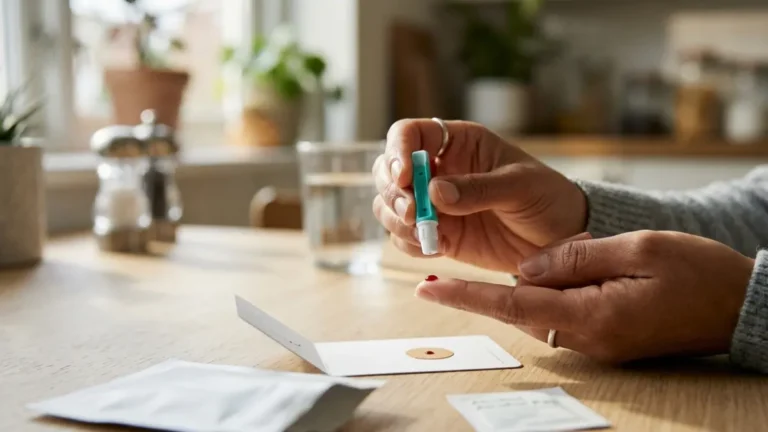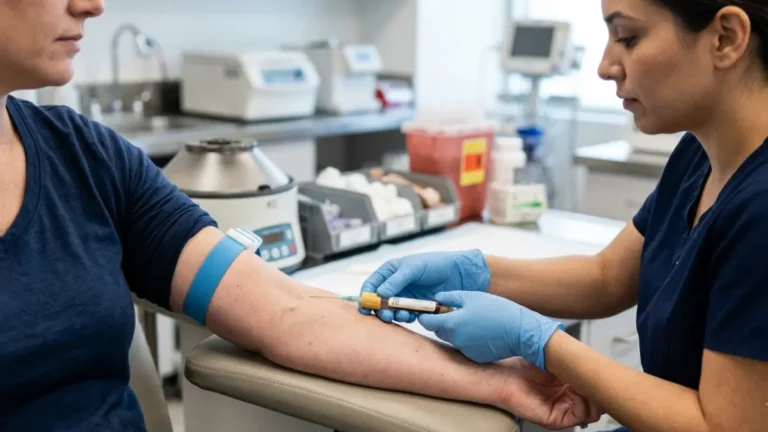

On This Page – Quick Medical Summary
How long to stop biotin before a TSH test
Stopping biotin 72 hours before a thyroid blood test is the conservative margin, and it clears every common over-the-counter dose. Laboratory guidance sets the floor at eight hours after 5–10 mg; the American Thyroid Association advises at least two days.
If your blood draw is still ahead of you
Find the milligram amount on the supplement facts panel, not the product name, and count backward from your appointment.
If your result already came back strange
A suppressed TSH that does not match how you feel is answerable. Start with the TSH levels chart by age.
ℹ️ Medical Disclaimer: This article explains how a supplement distorts lab results. It does not diagnose thyroid disease, interpret your numbers, or tell you to change a prescribed medication. Those decisions belong with a board-certified endocrinologist.
Why biotin changes your TSH number
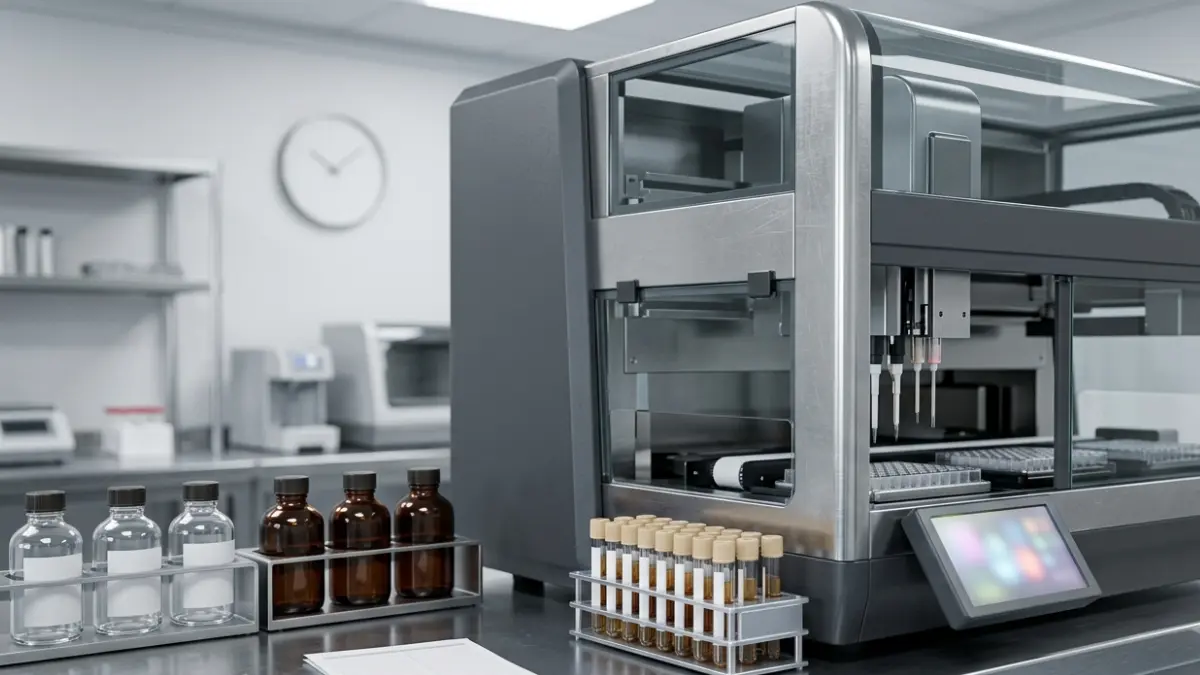
Hormone immunoassays rely on a binding step between biotin and a protein called streptavidin. Extra biotin competes for that step, so the analyzer misreads the sample.
What the test is actually doing
TSH is measured by a sandwich assay; free T4 and free T3 by competitive assays. Per laboratory guidance on biotin interference, high biotin causes negative interference in the first and positive interference in the second.
Why TSH goes down while free T4 goes up
The result is a mismatched pair: falsely low TSH with falsely high free T4 and free T3 — on paper, an overactive thyroid.
🔬 How It Works: Interference happens inside the analyzer, to the sample already drawn. Biotin taken afterward cannot change it, and a fresh sample drawn after a washout usually reads normally.
How much biotin it takes, and how long it lingers
Micrograms versus milligrams on your label
The adult adequate intake is 30 mcg daily. A “10,000 mcg” beauty supplement is 10 mg — the amount running through the case reports.
What the clearance data shows by dose
| Oral dose | Typical source | Hours below 20 ng/mL | Key clinical detail |
|---|---|---|---|
| 1 mg | B-complex | ~1 | Clears before most appointments |
| 5 mg | Hair and nail formulas | ~5.5 | Eight-hour minimum wait advised |
| 10 mg | Extra-strength formulas | ~20 | Interference reported within 24 hours |
| 100 mg | Prescribed only | ~108 | Seventy-two-hour minimum advised |
| 300 mg | Prescribed only | ~146 | Clearance runs past six days |
Clearance times: ADLM (formerly AACC) guidance, 2020. Kidney impairment lengthens every row.
Does a multivitamin count?
Multivitamin biotin sits near the adequate intake and has not been reported to interfere. Beauty-supplement doses produce the suppressed TSH reading worth questioning.
📊 Clinical Data Point: A single 10 mg dose has interfered with thyroid tests run within 24 hours — Source: NIH biotin fact sheet, reporting Biscolla et al., Thyroid, 2017.
You already took biotin before your test
This is common and fixable. It is not something you can settle by staring at the number.
What to tell your provider and the lab
Give the dose and when you last took it. MedlinePlus guidance on the TSH test tells patients to raise biotin use before thyroid testing.
When a repeat draw is the right ask
Interference is resolved two ways: rerunning the sample on a platform that does not use biotin, or drawing again after a washout.
✅ Patient Action: Before any diagnosis or dose change, ask your endocrinologist: “Given the biotin dose I was taking, should this panel be repeated after a washout first?”
What to pause before a thyroid blood draw
Where biotin hides on a label
The product name will not tell you. Multivitamins, prenatal formulas, collagen blends and energy products all carry biotin, in amounts that vary by brand.
What to say at the blood draw
- Count back 72 hours and stop non-prescribed biotin.
- Photograph the supplement facts panel of everything you take.
- Tell the phlebotomist the milligram amount, not “I take vitamins.”
- Ask that biotin use be noted on the requisition.
Our guide to what a TSH test costs and shows covers the rest of the panel.
Biotin interference versus real thyroid disease
Why the lab picture can look like Graves’ disease
Case reports describe results falsely indicating Graves’ disease and severe hyperthyroidism in people taking 10–300 mg of biotin daily, including children on high doses for metabolic disease.
Why your lab’s platform matters
In a washout study across three platforms, two systems showed interference at 5 and 10 mg daily while a third showed none — a real finding, from ten adults. Ranges also differ between laboratories.
Does biotin change thyroid function itself?
No. Interference and genuine thyrotoxicosis cannot be separated by reading the numbers; only a second measurement does that. Our symptom checker is a starting point, not a replacement for that draw.
What the FDA says, and who should not stop biotin
Why no washout period is guaranteed
The FDA safety communication of November 2019 states that sufficient information is not available to know whether stopping biotin for any number of hours before testing prevents incorrect results.
Prescribed high-dose biotin is different
Guidance sets a 72-hour minimum at 100 mg daily or more — unless stopping is medically contraindicated, which only the prescriber can judge.
Other tests biotin can distort
Reported effects reach vitamin D and other hormone assays. The FDA still receives reports of falsely low troponin results linked to biotin.
⚠️ Clinical Warning: If your biotin was prescribed — for multiple sclerosis, biotinidase deficiency or an inherited metabolic disease — do not stop it for a blood test. Ask the prescribing specialist how to time the test instead.
Common questions about biotin and TSH tests
1. How long before a thyroid test should I stop biotin?
Seventy-two hours is the conservative margin for supplement doses; eight hours is the published floor. Confirm with your provider.
2. Does biotin raise or lower TSH?
Biotin pushes TSH falsely low and free T4 and free T3 falsely high, mimicking an overactive thyroid.
3. Can the biotin in a multivitamin affect my TSH test?
Multivitamin amounts sit near the 30 mcg adequate intake and have not been reported to interfere.
4. How much biotin interferes with a TSH test?
A single 10 mg dose has interfered within 24 hours; case reports involve 10 to 300 mg daily.
5. Does biotin actually change my thyroid function?
No. It changes what the assay measures, not what your thyroid does. Discuss abnormal results with your clinician.
6. I already took biotin before my test — what now?
Tell your provider and the lab your dose and timing. A repeat draw or different platform resolves it.
7. Can I take biotin right after my blood draw?
Yes. Interference depends on biotin in the sample at collection, so a later dose cannot affect it.
8. Do all labs’ thyroid tests react to biotin?
No. In one ten-adult study, two platforms showed interference at 5 and 10 mg daily; a third did not.
9. How long does biotin stay in your blood?
Published data puts levels below 20 ng/mL about 20 hours after 10 mg and 146 hours after 300 mg.
10. Should I stop biotin that my doctor prescribed?
No. Never stop a prescribed dose on your own — ask the prescriber how to time your test.
11. What other blood tests does biotin affect?
Vitamin D, troponin and other hormone assays built on biotin-streptavidin binding, per FDA and NIH reporting.
What to do before your next draw
Two things change the outcome. Pause non-prescribed biotin with the margin your dose calls for, and say “biotin,” with a number attached, to whoever draws your blood.
About this content
How this article was put together: researched from recognised health sources, drafted with the help of AI tools, and edited by hand, with sources linked throughout.

Sameer Patel is the founder and editor of My Medicine Advisor. He is not a doctor or medical professional — before starting this site he worked in banking,…
Medical disclaimer
The content on MyMedicineAdvisor is provided for general informational and educational purposes only and is not a substitute for professional medical advice, diagnosis, or treatment. Health information on this website should not be used to diagnose, treat, cure, or prevent any condition without guidance from a qualified healthcare professional. Always seek the advice of your doctor, physician, or another licensed healthcare provider with any questions you may have regarding a medical condition, symptoms, medications, or treatment decisions.