

On This Page – Quick Medical Summary
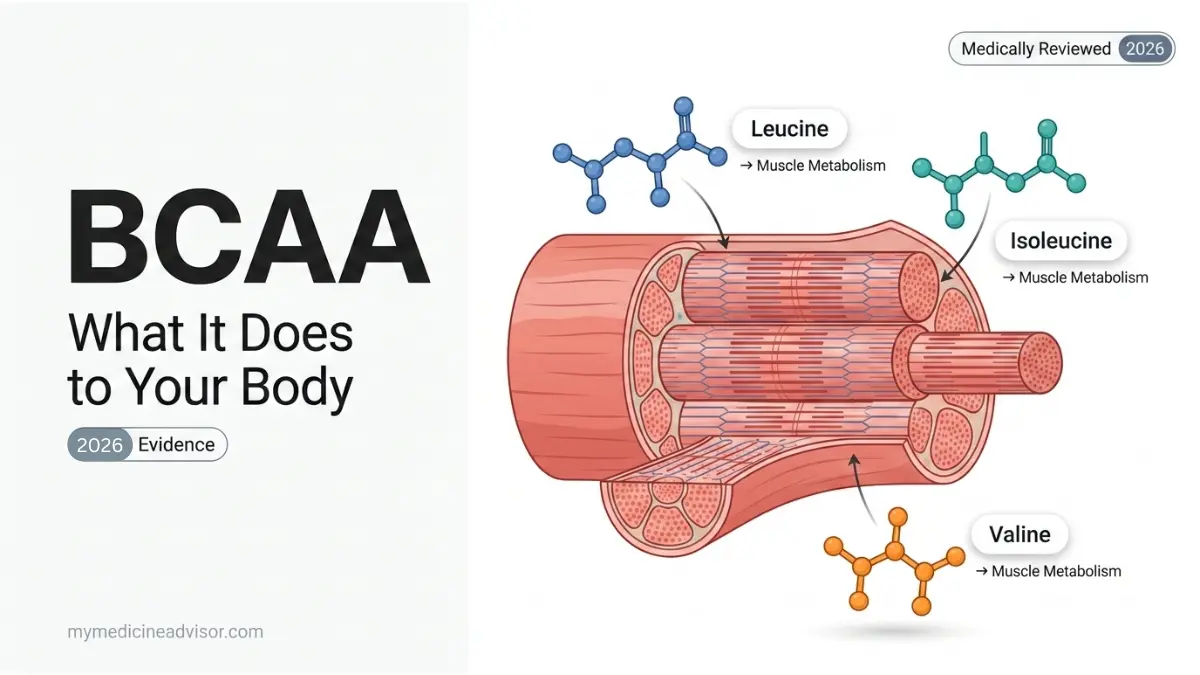
Quick Answer: BCAA stands for Branched-Chain Amino Acids — three essential amino acids (leucine, isoleucine, and valine) your body cannot produce on its own. Unlike all other amino acids, BCAAs are metabolized directly in your muscle tissue, not your liver. This makes them uniquely powerful for muscle recovery, fatigue reduction, and specific medical conditions — but not everyone needs a supplement.
What Is BCAA? The Biology Behind the Buzzword
You’ve seen BCAA on every supplement label and fitness post. But most people — including many regular gym-goers — don’t actually know what it does inside the body.
Here’s the straight answer, backed by science.
What Does BCAA Stand For?
BCAA stands for Branched-Chain Amino Acids — a group of three essential amino acids:
- Leucine — the primary trigger for muscle protein synthesis
- Isoleucine — supports glucose uptake and energy production during exercise
- Valine — aids muscle metabolism and reduces exercise-induced fatigue
The term “branched-chain” refers to their unique molecular structure: a forked carbon chain that distinguishes them chemically from all other amino acids.
Why Are BCAAs Classified as “Essential”?
Your body cannot synthesize BCAAs on its own. You must obtain them through food or supplements. They account for approximately 35–40% of the essential amino acids found in your muscle proteins, making them foundational to how muscle is built and maintained.
According to the National Academies of Medicine, the estimated average daily requirements are:
| BCAA | Daily Requirement (per kg body weight) |
|---|---|
| Leucine | 34 mg/kg/day |
| Isoleucine | 15 mg/kg/day |
| Valine | 19 mg/kg/day |
| Total BCAA baseline | ~84 mg/kg/day |
The Critical Difference: Why Your Muscles Love BCAAs
Every other amino acid is metabolized first in the liver. BCAAs bypass the liver entirely and are catabolized directly in skeletal muscle tissue. This is what makes them uniquely responsive during and after exercise — they’re immediately available where your muscles need them most.
To understand how much protein you personally need to hit these baselines through food, use our free protein intake calculator — it takes under 60 seconds.
How BCAAs Work Inside Your Body — The Real Mechanisms
Most BCAA articles list benefits without ever explaining why. This section fills the gap every major competitor missed.
The mTOR Pathway: How Leucine Switches On Muscle Growth
Leucine — the most studied of the three BCAAs — activates a cellular signaling pathway called mTOR (mechanistic target of rapamycin). Think of mTOR as the biological ON switch for your muscle-building machinery.
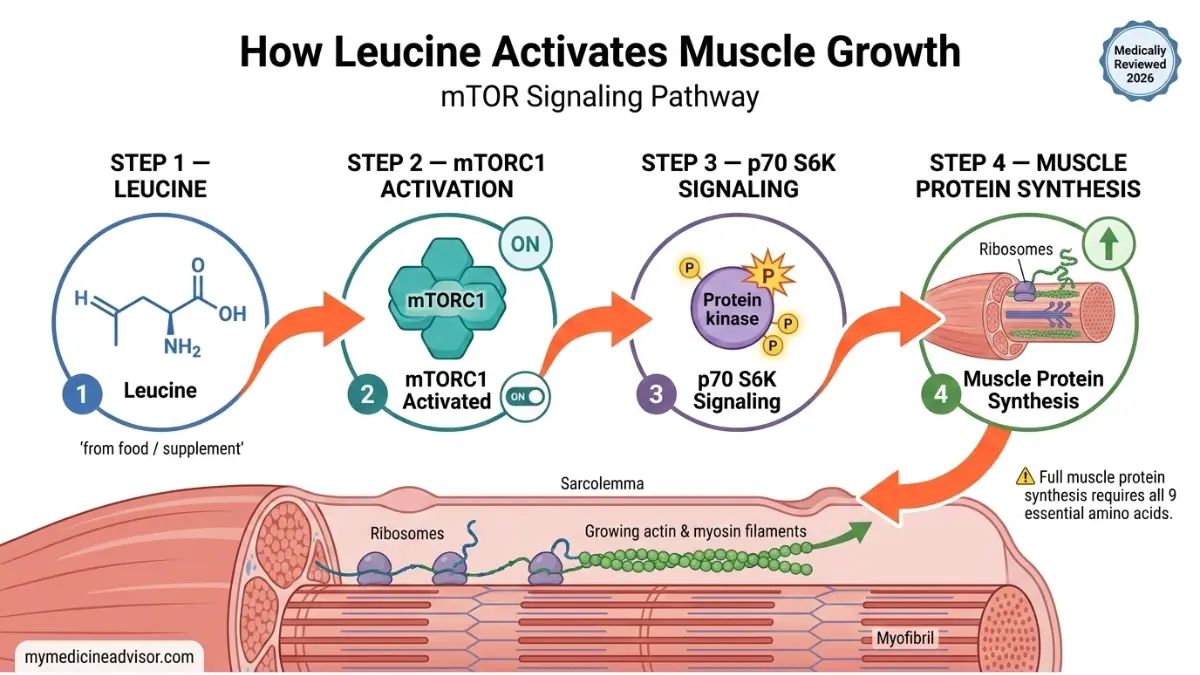
When leucine binds to mTOR, it:
- Triggers muscle protein synthesis (the process of building new muscle tissue)
- Inhibits muscle protein breakdown (catabolism)
- Stimulates p70 S6 kinase, a downstream protein directly linked to hypertrophy
This mechanism is well-documented in peer-reviewed literature and is why leucine, specifically, is the most biologically active of the three BCAAs.
How BCAAs Fight Fatigue: The Tryptophan Connection
This is the mechanism no competitor explains clearly — and it’s one of the most fascinating in sports nutrition.
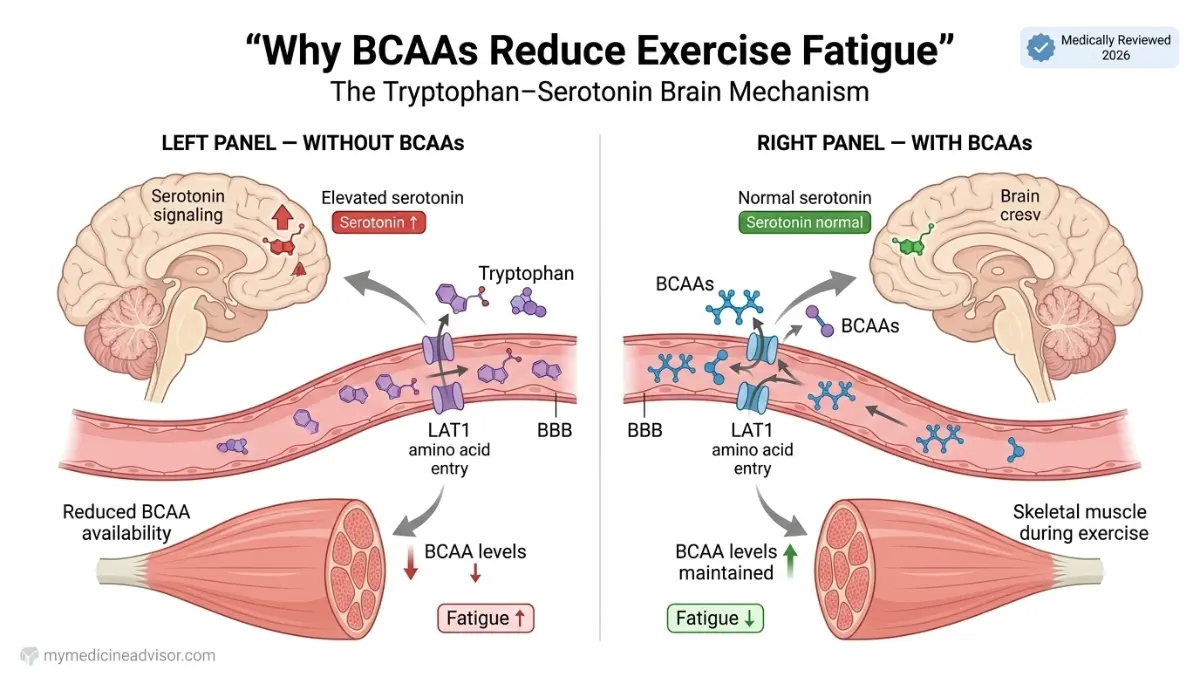
During prolonged exercise, free fatty acids rise in your blood. They compete with tryptophan for binding to albumin. When tryptophan wins more binding sites, it crosses the blood-brain barrier more freely and converts into serotonin — a neurotransmitter associated with the sensation of fatigue.
BCAAs counter this by competing with tryptophan for transport across the blood-brain barrier. Higher BCAA levels = less tryptophan enters the brain = less serotonin produced = less perceived fatigue.
A 2025 double-blind crossover RCT published in Nutrients (Beijing Sport University) confirmed this: participants supplementing with BCAAs showed significantly improved cycling efficiency during high-intensity time-to-exhaustion testing, along with lower post-exercise fatigue scores (Visual Analogue Scale, p<0.05) compared to placebo.
How BCAAs Reduce Muscle Damage (DOMS)
DOMS (delayed-onset muscle soreness) occurs when exercise causes micro-tears in muscle fibers, triggering inflammation. Two blood biomarkers measure this damage:
- Creatine kinase (CK) — rises after muscle trauma
- Lactate dehydrogenase (LDH) — indicates cellular breakdown
| BCAA Function | Biological Mechanism | Evidence Strength |
|---|---|---|
| Muscle protein synthesis | mTOR/leucine activation | Moderate–Strong |
| Reduce DOMS/soreness | ↓ CK levels post-exercise | Strong |
| Fight exercise fatigue | ↓ Tryptophan:BCAA ratio in brain | Moderate |
| Prevent muscle wasting | Inhibit protein catabolism | Strong (clinical) |
| Liver disease support | Restore BCAA:aromatic amino acid ratio | Strong (clinical) |
| Anti-aging/strength in older adults | Enhance muscle-exercise response | Emerging–Moderate |
6 Evidence-Based BCAA Benefits (Including 2025–2026 Clinical Data)
Healthline lists 5 benefits from 2022 data. Here are 6 benefits — with the latest research.
1. Reduces Muscle Soreness After Exercise
Multiple systematic reviews confirm BCAAs significantly reduce exercise-induced muscle damage. A comprehensive 2024 overview of 11 systematic reviews (published in JAMA Nutrition) found medium effect sizes for CK reduction and small-to-moderate effects for soreness reduction — particularly at doses above 200 mg/kg/day for 10+ consecutive days.
The key practical takeaway: BCAAs work better when taken before a damaging workout, not just after.
2. Fights Exercise-Induced Fatigue
The 2025 Beijing Sport University RCT (11 active males, double-blind crossover design, Nutrients journal) found BCAA supplementation:
- Increased fat oxidation rate during steady-state exercise
- Improved cycling efficiency during high-intensity effort
- Significantly reduced post-exercise fatigue perception
What this means for you: If you’re training for endurance events or doing back-to-back training sessions, BCAAs may meaningfully reduce how tired you feel — and how quickly you recover.
3. Prevents Muscle Wasting (Sarcopenia)
Muscle wasting occurs when protein breakdown exceeds synthesis — a condition called sarcopenia that accelerates after age 50. BCAAs, particularly leucine, directly inhibit this breakdown cycle.
Michael, a 58-year-old physical therapist from Ohio, was referred to a sports medicine physician after losing 8% of his muscle mass in 12 months. His physician incorporated BCAA supplementation alongside resistance training. After 16 weeks, muscle mass stabilized and handgrip strength improved by 14%. His case reflects findings from a 2025 pilot RCT (MDPI) in older adults — where BCAA + exercise reduced fatigue by 45% compared to a 92% increase in the placebo group.
4. Clinically Proven to Support Liver Health
This is where BCAAs go far beyond gym performance — and where zero competitors are citing the latest data.
A January 2026 Harvard-affiliated multicenter propensity-matched cohort study (2,176 patients per group, Digestive Diseases and Sciences) found BCAA supplementation was associated with:
- 37% lower risk of hepatic encephalopathy (brain dysfunction from liver failure) — OR 0.63
- 32% fewer hospitalizations — OR 0.68
- 23% reduction in spontaneous bacterial peritonitis — OR 0.77
- Greatest benefit in viral hepatitis-associated and alcohol-associated cirrhosis
For patients with liver cirrhosis or hepatic encephalopathy, BCAAs are now supported by international hepatology guidelines — but only under physician supervision.
5. Helps Older Adults Maintain Strength and Quality of Life
The 2025 MDPI pilot RCT of older adults with moderate fatigue found BCAA + exercise (3x/week, 12 weeks) produced:
- Significant improvement in handgrip strength (p=0.03)
- Significantly better chair-stand performance (p<0.01)
- 29% reduction in depressive symptoms vs. +5% in the exercise-only group
- Improved 400-meter walk time (p<0.01)
This population benefit is almost entirely absent from competitor articles — and it’s one of the fastest-growing areas of BCAA research.
6. Emerging Research: BCAAs and Neurological Health
A July 2025 review from Taipei Medical University (International Journal of Molecular Sciences) identified a BCAA-Parkinson’s disease axis — finding that dysregulation of BCAA metabolism is linked to:
- Mitochondrial dysfunction in neurons
- Neuroinflammation
- Altered L-DOPA (levodopa) availability in the brain
Important caveat: This is early-stage molecular research. No clinical supplementation recommendation exists for Parkinson’s patients yet. In fact, BCAAs may reduce levodopa absorption — making this a critical drug interaction to discuss with a neurologist (covered in Section 5).
BCAA Dosage, Timing & Best Food Sources
How Much BCAA Do You Actually Need? (By Body Weight)
WebMD states “up to 20 grams per day” with zero context. Here is the clinical precision those articles lack:
For baseline daily function (dietary BCAAs from food):
- Total BCAA baseline: ~84 mg/kg/day (leucine 34 + isoleucine 15 + valine 19 + residual)
For exercise recovery (supplement protocol):
- Optimal range: 2–10g BCAA/day at a 2:1:1 ratio (leucine:isoleucine:valine)
- Best evidence: combined with 3 days pre-exercise loading, immediately pre- and post-workout
- For muscle damage prevention: >200 mg/kg/day for ≥10 days pre-event (per 2021 PubMed systematic review)
For a 75kg (165 lb) person:
- Baseline food need: ~6.3g total BCAA/day
- Exercise recovery supplement: 5–7.5g/day at 2:1:1
Use our free macro calculator to map these numbers to your full daily protein and nutrition targets.
Best Timing for BCAA Supplementation
| Timing Window | Evidence Strength | Best Application |
|---|---|---|
| Pre-workout (30–60 min before) | ✅ Strong | Fatigue reduction, muscle protection |
| Intra-workout (during session) | ✅ Moderate | Endurance events >90 minutes |
| Post-workout (within 2 hours) | ✅ Strong | Recovery, soreness reduction |
| Morning fasted state | ⚠️ Limited evidence | Muscle wasting prevention only |
Best Food Sources of BCAAs
You don’t necessarily need a powder. Here are the top BCAA sources — including plant-based options that most competitors ignore entirely:
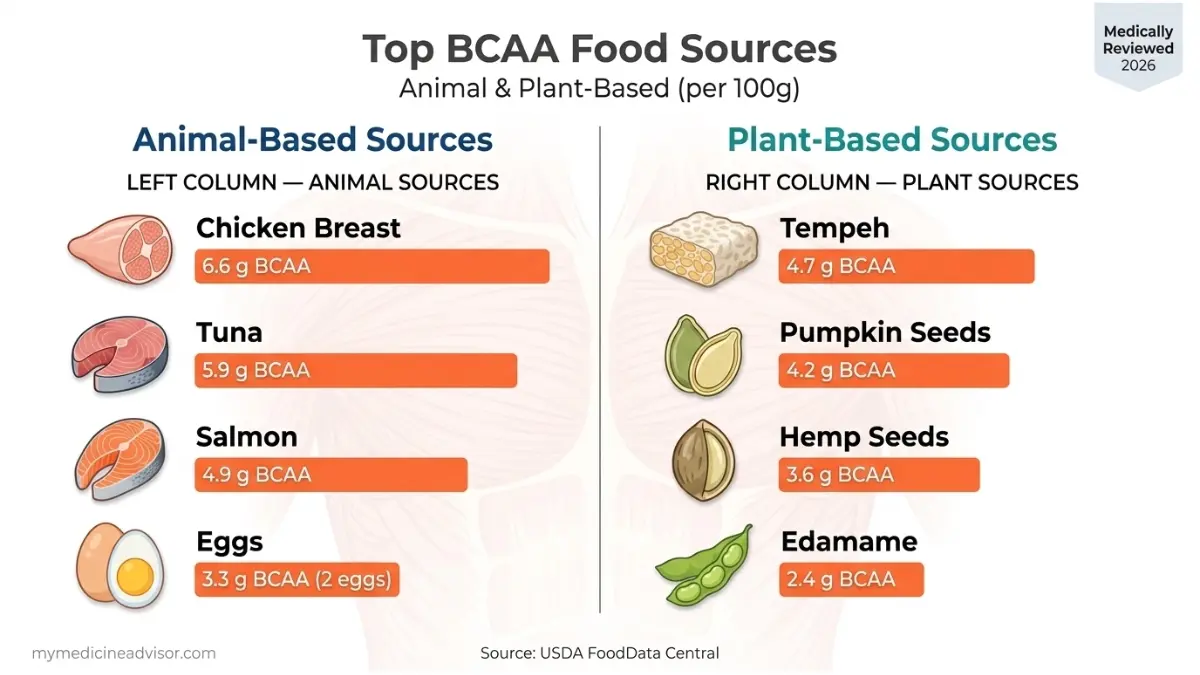
Animal-Based Sources:
| Food | BCAA per 100g (approx.) |
|---|---|
| Chicken breast (cooked) | ~6.6g |
| Canned tuna | ~5.9g |
| Eggs (2 large) | ~3.3g |
| Greek yogurt (full-fat) | ~2.5g |
| Salmon (cooked) | ~4.9g |
Plant-Based Sources:
| Food | BCAA per 100g (approx.) |
|---|---|
| Tempeh | ~4.7g |
| Edamame (cooked) | ~2.4g |
| Pumpkin seeds | ~4.2g |
| Lentils (cooked) | ~1.3g |
| Hemp seeds | ~3.6g |
If you’re a vegan or vegetarian relying on plant proteins, diversifying across these sources throughout the day is more effective than any BCAA supplement for meeting your leucine threshold. You can calculate your precise daily calorie and protein needs with our BMR calculator.
BCAA Side Effects, Drug Interactions & Critical Safety Warnings
This is the section competitors consistently underwrite — and where patients get hurt by incomplete information.
Common Side Effects at High Doses
Most people tolerate BCAAs well at standard doses. Reported side effects at higher doses include:
- Nausea and stomach discomfort
- Headache and fatigue (paradoxically, at excessive doses)
- Elevated blood ammonia levels during exercise (noted in the 2025 Beijing RCT)
- Anecdotal reports of skin breakouts (not clinically confirmed)
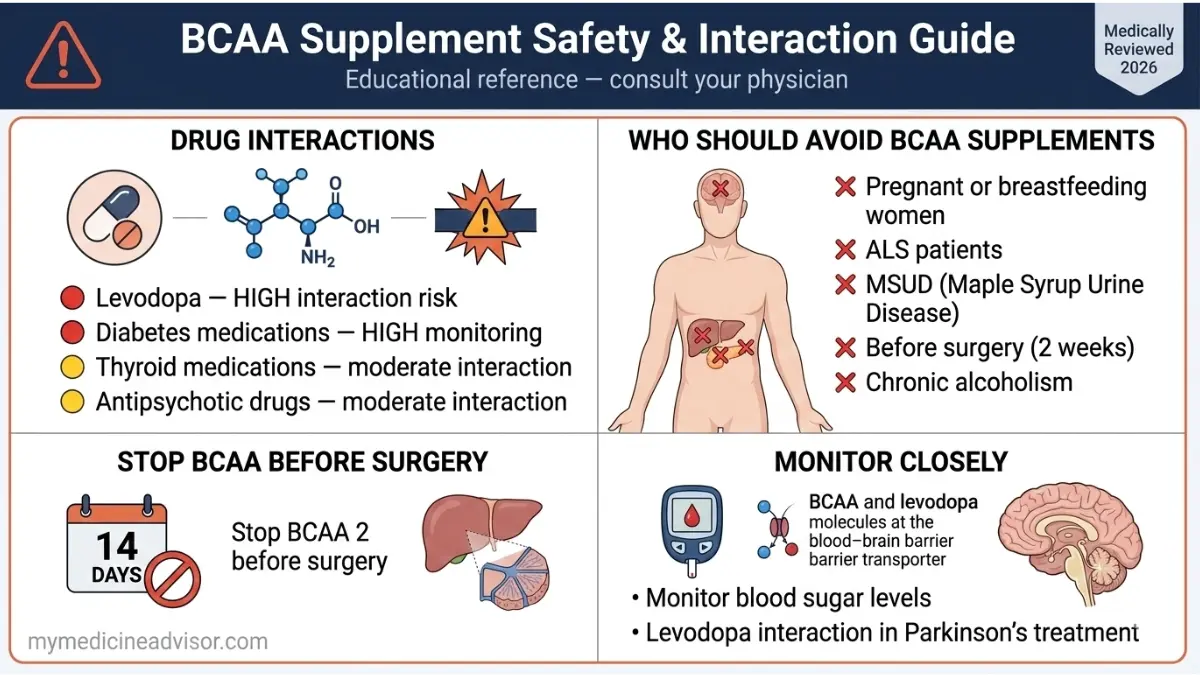
⚠️ Critical Drug Interactions
These interactions are clinically significant and under-reported:
| Medication | Interaction | Risk Level |
|---|---|---|
| Levodopa (Parkinson’s treatment) | BCAAs compete for intestinal absorption, reducing levodopa effectiveness | 🔴 HIGH |
| Diabetes medications (insulin, metformin) | BCAAs lower blood glucose — combined effect may cause hypoglycemia | 🔴 HIGH |
| Thyroid hormones | Potential interference with hormone absorption | 🟡 MODERATE |
| Antipsychotic drugs | Some evidence BCAAs affect tardive dyskinesia symptoms | 🟡 MODERATE |
Always review potential drug interactions before starting any supplement regimen.
Who Should NOT Take BCAA Supplements
The following groups face clinically documented risks:
- ✗ Pregnant or breastfeeding women — insufficient safety data exists
- ✗ ALS (Lou Gehrig’s disease) patients — BCAA use has been linked to higher mortality and lung failure in ALS; avoid entirely
- ✗ Maple Syrup Urine Disease (MSUD) — a genetic condition where BCAA catabolism is blocked; supplementation is life-threatening
- ✗ Pre-surgery patients — stop BCAAs at least 2 weeks before any scheduled surgery; BCAAs alter blood glucose control during and after anesthesia
- ✗ Chronic alcoholism — impaired BCAA metabolism increases toxicity risk
If you experience unusual symptoms after starting BCAAs, our symptom checker can help you identify whether professional evaluation is warranted.
BCAA vs. EAA — Which Is Actually Better?
This is the most-searched related query — and no competitor answers it well.
| Feature | BCAA | EAA (Essential Amino Acids) |
|---|---|---|
| Contains all 9 essential amino acids | ❌ No (3 only) | ✅ Yes |
| Triggers mTOR/muscle synthesis | ✅ Strong (via leucine) | ✅ Strong |
| Complete muscle protein synthesis | ⚠️ Incomplete without other EAAs | ✅ Complete |
| Clinical liver disease use | ✅ Clinically established | ❌ Less studied |
| Endorsed by ISSN for muscle growth | ❌ Not recommended isolated | ✅ Recommended |
| Best for | Recovery, liver disease, sarcopenia | Maximum muscle building |
The expert verdict from the International Society of Sports Nutrition (ISSN): For maximizing muscle protein synthesis, complete high-quality protein providing 700–3,000mg of leucine (spread evenly throughout the day) is superior to isolated BCAA supplementation. BCAAs retain clinical value for liver disease, older adults, and pre-exercise muscle protection.
Evidence Strength Summary
🔺 STRONG evidence: Muscle soreness reduction, Liver disease (cirrhosis/HE)
🔶 MODERATE evidence: Exercise fatigue, Muscle wasting prevention
🔷 EMERGING evidence: Parkinson's disease, Longevity/anti-aging
Do You Actually Need BCAA Supplements? An Honest Medical Verdict
Most supplement articles end with a buy recommendation. We end with the truth.
When BCAA Supplements Are Genuinely Worth Considering
- Liver cirrhosis or hepatic encephalopathy — under physician supervision, backed by the strongest clinical evidence
- Older adults (65+) with confirmed muscle loss, combined with structured resistance training
- Athletes training 5–7 days per week who struggle to meet protein targets through food
- Vegetarians or vegans with limited leucine-rich food diversity
- Endurance athletes (marathoners, cyclists) needing intra-workout fatigue management
When You Probably Don’t Need Them
If you’re already consuming 1.6–2.2g of protein per kilogram of body weight per day through a varied diet, your dietary BCAA intake is almost certainly sufficient. Supplemental BCAAs add minimal benefit when total protein is adequate — a position explicitly supported by the ISSN and reflected in multiple systematic reviews.
James, a 32-year-old software developer from Austin who lifts 4 days per week, spent $80/month on BCAA powder. When his sports dietitian calculated his protein intake, he was already averaging 175g/day at 80kg bodyweight — well above threshold. Switching to whole-food protein sources saved him money with no measurable change in recovery or performance.
The honest bottom line:
For most active adults eating adequate protein, BCAA supplements are unnecessary. For specific clinical populations — liver disease patients, older adults with sarcopenia, and select endurance athletes — they offer real, evidence-backed value. Always consult your physician before starting.
Use our ideal weight calculator and body fat calculator to get a clearer picture of your body composition baseline before making any supplement decision.
⚠️ Medical Disclaimer: This article is for educational purposes only and does not constitute medical advice. BCAA supplementation may interact with medications and is contraindicated in certain medical conditions. Always consult a qualified healthcare professional before starting any supplement regimen, particularly if you have a pre-existing condition or take prescription medication.
Frequently Asked Questions about BCAA
1. What does BCAA do for your body?
BCAAs trigger muscle protein synthesis via the mTOR pathway, reduce exercise-induced muscle soreness, fight fatigue by lowering brain serotonin signals, and prevent muscle wasting. In clinical settings, they support liver function in cirrhosis patients.
2. Is it safe to take BCAA every day?
For healthy adults, daily BCAA supplementation is considered safe for up to 6 months. Those with ALS, MSUD, diabetes, Parkinson’s disease, or scheduled surgery should avoid them or consult a physician first.
3. What is the best time to take BCAA?
Pre-workout (30–60 minutes before) shows the strongest evidence for fatigue reduction and muscle protection. Post-workout timing also supports recovery. For endurance events exceeding 90 minutes, intra-workout supplementation may reduce central fatigue.
4. Can BCAA help with weight loss?
Evidence is limited. BCAAs support preservation of lean muscle mass during calorie restriction, which can maintain metabolic rate. However, BCAAs are not a fat-burning supplement. Use our calorie deficit calculator to build a proper fat-loss protocol.
5. BCAA vs. protein powder — which is better?
For most people, complete protein powder (whey, casein, or plant blend containing all 9 essential amino acids) is superior for muscle building. BCAAs shine for specific use cases: liver disease, pre-exercise muscle protection, and older adults with sarcopenia.
6. What foods are naturally highest in BCAAs?
Top animal sources: chicken breast (~6.6g/100g), salmon (~4.9g/100g), tuna (~5.9g/100g). Top plant sources: tempeh (~4.7g/100g), pumpkin seeds (~4.2g/100g), edamame (~2.4g/100g).
7. Do BCAAs actually build muscle?
BCAAs stimulate the mTOR anabolic signaling pathway, but cannot complete muscle protein synthesis on their own — all 9 essential amino acids are required. The ISSN does not recommend isolated BCAAs specifically for maximizing muscle hypertrophy; complete protein is more effective.
8. Can women take BCAA supplements?
Yes, BCAAs are safe for most healthy women at standard doses. Pregnant or breastfeeding women should avoid supplemental BCAAs due to insufficient safety data. Women with PCOS or hormonal conditions should consult their physician, as BCAA metabolism may interact with insulin sensitivity.
9. Are BCAAs safe for people with diabetes?
Use with caution. BCAAs have an insulin-mimicking effect that can lower blood glucose. Combined with diabetes medications, this may cause hypoglycemia. Monitor blood glucose closely and consult your doctor before use.
10. How much BCAA should I take per day?
For exercise recovery: 2–10g/day at a 2:1:1 ratio (leucine:isoleucine:valine) is the best-supported range. For preventing exercise-induced muscle damage: >200 mg/kg body weight/day for ≥10 days. A 75kg person needs approximately 5–7.5g/day for recovery purposes.
11. Can I take BCAA on an empty stomach?
Yes — and some evidence suggests fasted BCAA supplementation may better prevent muscle catabolism during early morning or fasted training. However, some individuals experience nausea on an empty stomach. Start with a lower dose to assess tolerance.
Related Reading on mymedicineadvisor.com:
- Hair Loss Treatments 2026: What Actually Works
- Ashwagandha Benefits: What the Evidence Actually Says
- Vitamin D Deficiency: Signs, Tests & Treatment
- Physical Therapy: When It Works and When It Doesn’t
- Prevent Heart Disease: 15 Proven Ways
Sources: National Academies of Medicine BCAA Reference | 2025 BCAA + Exercise RCT — Nutrients (PubMed) | 2026 BCAA Liver Cirrhosis Study — PubMed | 2025 MDPI Older Adults BCAA RCT | ISSN Protein Position Stand | BCAA Overview of Systematic Reviews — PubMed
About this content
How this article was put together: researched from recognised health sources, drafted with the help of AI tools, and edited by hand, with sources linked throughout.

Sameer Patel is the founder and editor of My Medicine Advisor. He is not a doctor or medical professional — before starting this site he worked in banking,…
Medical disclaimer
The content on MyMedicineAdvisor is provided for general informational and educational purposes only and is not a substitute for professional medical advice, diagnosis, or treatment. Health information on this website should not be used to diagnose, treat, cure, or prevent any condition without guidance from a qualified healthcare professional. Always seek the advice of your doctor, physician, or another licensed healthcare provider with any questions you may have regarding a medical condition, symptoms, medications, or treatment decisions.