
On This Page – Quick Medical Summary
Ryan, a 41-year-old high school teacher from Houston, was prescribed amoxicillin for a dental abscess on a Monday. By Wednesday, he was convinced it wasn’t working. By Thursday, he stopped taking it early. Two weeks later, the infection returned — worse, and harder to treat.
His doctor’s message was simple: “You didn’t give it a chance — and now the bacteria are stronger.”
Amoxicillin is one of the most prescribed antibiotics in the United States, yet millions of Americans take it incorrectly, stop it too early, or don’t know what to expect when they start. This guide covers everything your doctor wants you to know — but rarely has time to tell you.
What Is Amoxicillin — And How Does It Actually Work?
What Is Amoxicillin?
Amoxicillin is a penicillin-class antibiotic approved by the U.S. Food and Drug Administration (FDA) and used to treat bacterial infections in adults and children. It is one of the most widely prescribed drugs in America, appearing on the MedlinePlus drug database as a first-line treatment for a broad range of common bacterial infections.
It is available only by prescription and comes in several forms:
| Form | Common Use | Notes |
|---|---|---|
| Capsule (250mg, 500mg) | Adults — most infections | Swallow whole with water |
| Tablet (500mg, 875mg) | Adults — moderate/severe | Can be taken with food |
| Chewable Tablet (125mg, 250mg) | Children | Must be fully chewed |
| Oral Suspension (Liquid) | Infants and toddlers | Shake well; refrigerate after mixing |
How Amoxicillin Kills Bacteria — In Plain English
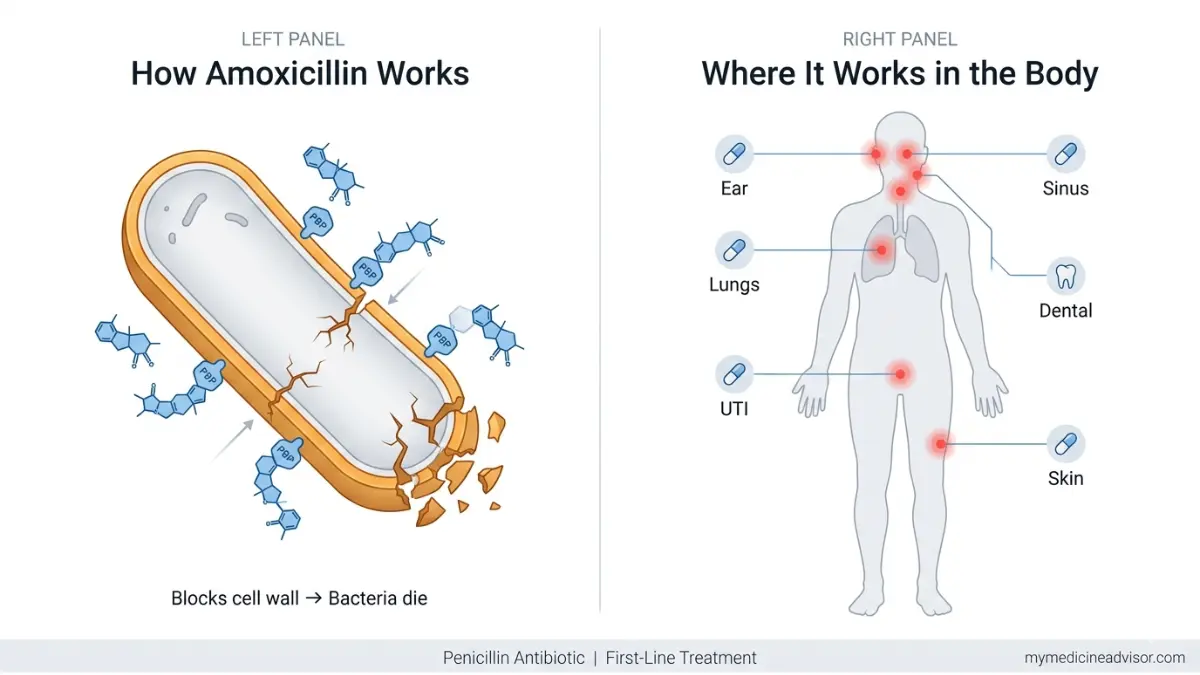
Bacteria need a rigid outer wall to survive. Amoxicillin works by blocking the proteins bacteria use to build that wall. Without it, the bacterial cell falls apart and dies. Think of it like removing the structural support from a building — the walls collapse.
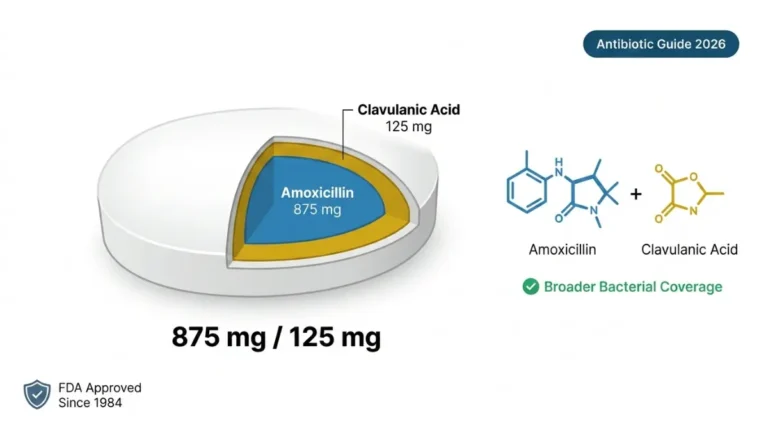
This mechanism works specifically on beta-lactamase-negative bacteria. Bacteria that produce an enzyme called beta-lactamase can break down amoxicillin before it works. This is a key reason why amoxicillin sometimes fails — and why doctors may upgrade you to Augmentin (amoxicillin + clavulanate) instead.
✅ What This Means For You: Amoxicillin starts working in your body quickly — usually within 1–2 hours of your first dose. But you won’t feel better immediately. Bacterial death takes time, and your immune system still needs to clean up the damage. Feeling unwell for the first 24–48 hours is completely normal.
If you’re unsure whether your symptoms match a bacterial infection, use our Symptom Checker to assess what you’re experiencing before your doctor’s visit.
What Amoxicillin Treats — And What It Absolutely Cannot
Bacterial Infections Amoxicillin Is Prescribed For
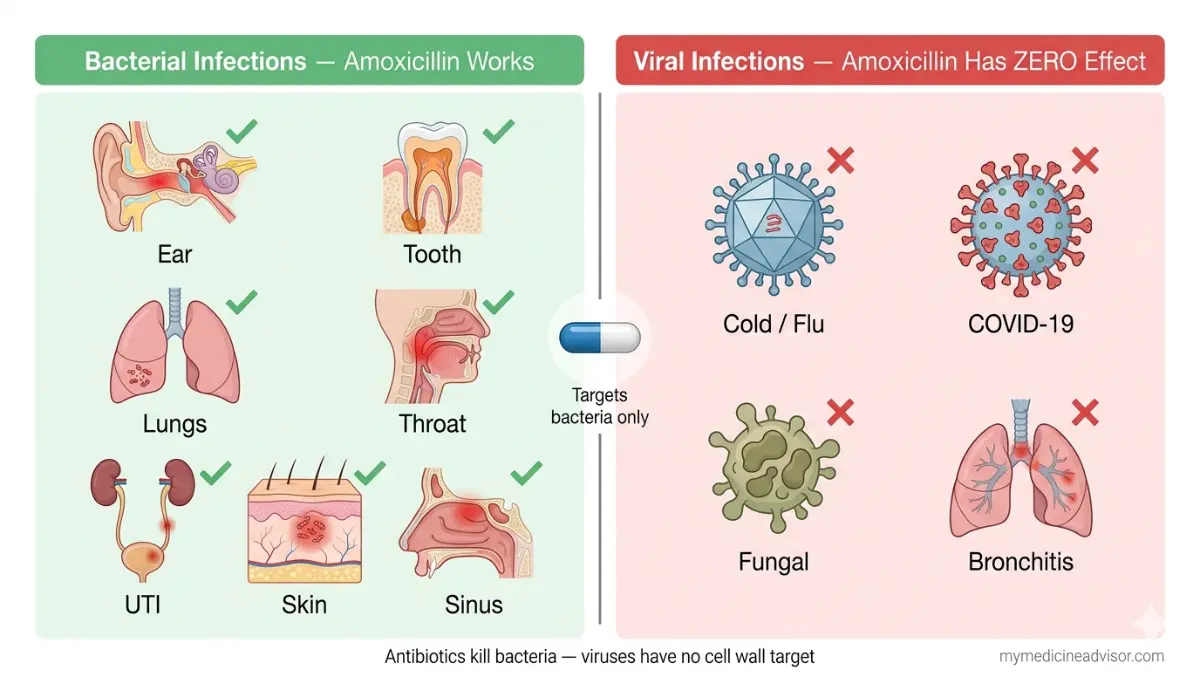
Amoxicillin is a broad-spectrum antibiotic, meaning it works against many types of bacteria. Here is the complete breakdown of conditions it is used to treat in the U.S.:
| Infection Type | Amoxicillin Used? | Typical Adult Dose | Duration |
|---|---|---|---|
| Strep throat | ✅ Yes | 500mg 3x/day | 10 days |
| Ear infection (otitis media) | ✅ Yes | 500mg 3x/day | 7–10 days |
| Sinus infection (bacterial) | ✅ Yes | 875mg 2x/day | 5–7 days |
| Urinary tract infection (UTI) | ✅ Yes | 500mg 3x/day | 3–7 days |
| Dental/tooth infection | ✅ Yes | 500mg 3x/day | 5–7 days |
| Skin and soft tissue infection | ✅ Yes | 500mg 3x/day | 7–10 days |
| Community-acquired pneumonia (mild) | ✅ Yes | 875mg 2x/day | 5–7 days |
| H. pylori (stomach ulcer) | ✅ Yes (combo therapy) | With other drugs | 10–14 days |
| Common cold | ❌ No | — | — |
| Influenza (flu) | ❌ No | — | — |
| COVID-19 | ❌ No | — | — |
| Fungal infections | ❌ No | — | — |
The Mistake Millions of Americans Make Every Year
The CDC reports that antibiotics are frequently prescribed for viral infections where they provide zero benefit. Amoxicillin does not kill viruses — period. Taking it for a cold, flu, or COVID-19 won’t help you recover faster, but it will contribute to antibiotic resistance.
Key rule: If your doctor hasn’t confirmed a bacterial infection, you don’t need amoxicillin.
Amoxicillin vs. Augmentin — Which One Do You Actually Need?
This is one of the most searched questions online, and zero top competitors answer it clearly. Here is the comparison:
| Feature | Amoxicillin | Augmentin (Amoxicillin + Clavulanate) |
|---|---|---|
| Best for | Simple bacterial infections | Resistant or complex infections |
| Covers beta-lactamase bacteria | ❌ No | ✅ Yes |
| Common for | Strep, ear infections, basic UTIs | Sinusitis, animal bites, recurrent UTIs |
| Side effects | Mild | More GI side effects (diarrhea common) |
| Cost | Lower | Higher |
Our related guide on drug interactions explains how combination antibiotics like Augmentin affect other medications you may already be taking.
Amoxicillin Dosage — Adults, Children, and Special Cases
Adult Dosage in 2026
Dosage depends on the type and severity of infection. Your doctor determines this — never adjust your dose without consulting them.
Standard adult dosing:
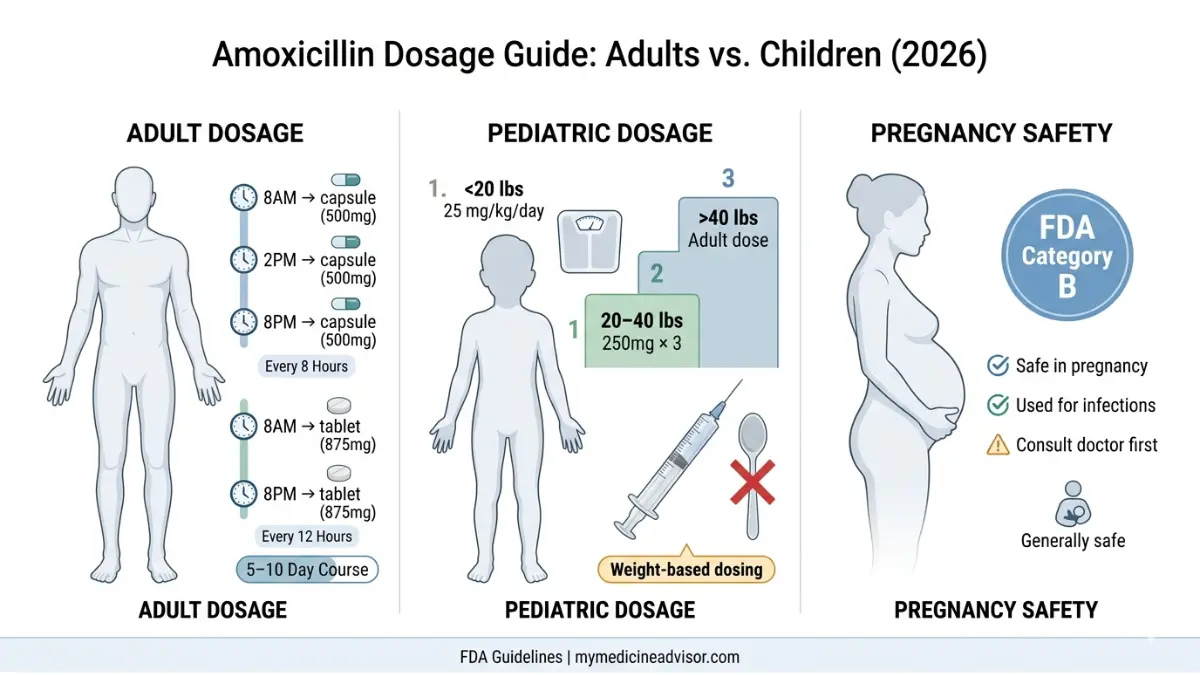
- Mild to moderate infections: 500mg every 8 hours (3x/day) OR 875mg every 12 hours (2x/day)
- Severe infections: 875mg every 12 hours or 500mg every 8 hours
- H. pylori (with other drugs): 1,000mg twice daily for 10–14 days
Pediatric Dosage — What Every Parent Needs to Know
For children, amoxicillin dosing is weight-based, not age-based. This is the section that Healthline and WebMD both fail to present clearly.
| Child’s Weight | Mild Infection | Severe Infection |
|---|---|---|
| Under 20 lbs (< 9 kg) | 25 mg/kg/day (divided doses) | 45 mg/kg/day (divided doses) |
| 20–40 lbs (9–18 kg) | 250mg every 8 hours | 500mg every 8 hours |
| Over 40 lbs (> 18 kg) | Adult dose applies | Adult dose applies |
⚠️ Important: Always use the oral syringe provided by the pharmacy — never a household spoon. Even small overdoses can affect your child’s kidneys.
If you are tracking your pregnancy or managing a newborn’s health, our Pregnancy Due Date Calculator and Fetal Growth Percentile Calculator may be useful tools during this stage.
Is Amoxicillin Safe During Pregnancy and Breastfeeding?
Pregnancy: Amoxicillin is classified as FDA Pregnancy Category B, which means animal studies show no harm to the fetus and it is considered one of the safer antibiotics during pregnancy. It is commonly prescribed for UTIs and other infections in pregnant women.
Breastfeeding: A small amount passes into breast milk, but it is generally considered safe. However, always inform your doctor or midwife before taking any antibiotic while breastfeeding.
What to Do If You Miss a Dose
- If you remember within a few hours: Take it immediately
- If your next dose is very close: Skip the missed dose — do not double up
- Never take two doses at once to make up for a missed one
- Set a phone alarm for every dose — antibiotic timing matters for effectiveness
How Fast Does Amoxicillin Work? (Day-by-Day Recovery Timeline)
The Question Every Patient Asks — That No Competitor Answers
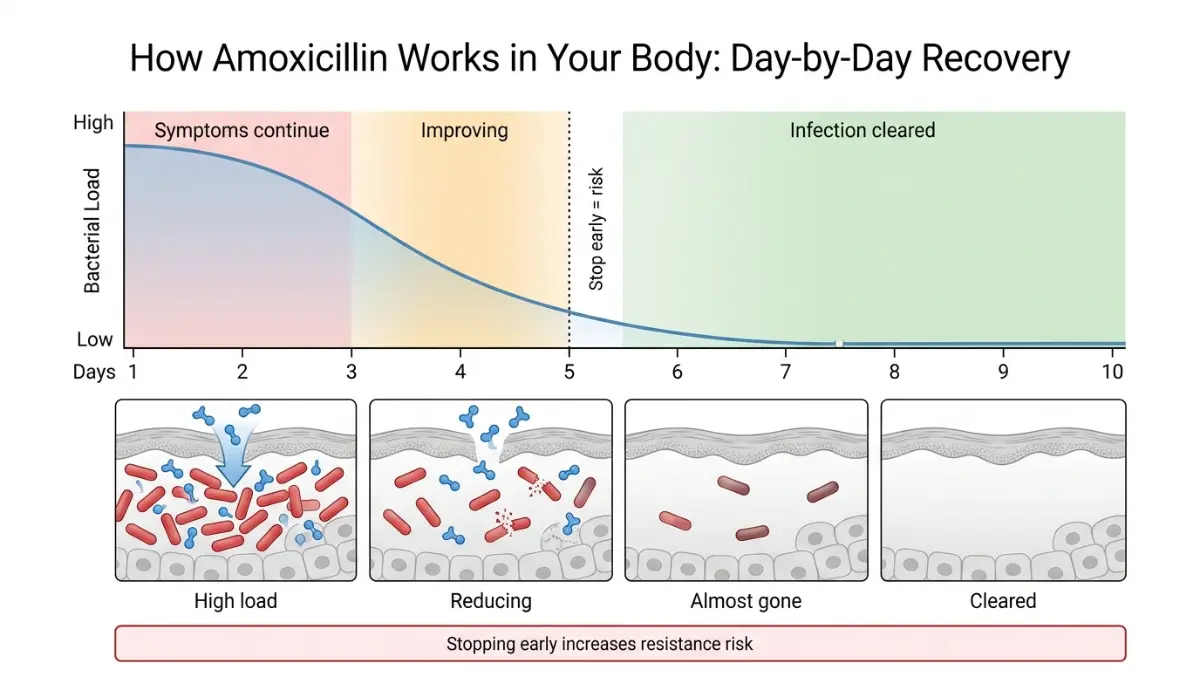
This is the most searched question about amoxicillin, and it is completely absent from Mayo Clinic, Healthline, and WebMD’s main pages. Here is the honest answer.
| Day | What’s Happening in Your Body | What You Typically Feel |
|---|---|---|
| Day 1–2 | Amoxicillin binds to bacterial cell walls; bacterial load begins dropping | Little change; possible mild nausea or loose stools |
| Day 3–4 | Bacterial count significantly reduced; immune system starts cleanup | Symptoms begin noticeably improving |
| Day 5–7 | Infection largely cleared in most cases | Feeling much better — do not stop here |
| Day 8–10 | Residual bacteria eliminated; resistance prevention | Fully recovered in most cases |
The critical rule: Feeling better does not mean you are cured. Stopping amoxicillin early is one of the leading causes of treatment failure and antibiotic resistance in the U.S.
Why Isn’t Amoxicillin Working? — 4 Possible Reasons
If you are on Day 4 and feel no improvement, consider these possibilities:
- The infection is viral, not bacterial — Amoxicillin has zero effect on viruses. If your doctor assumed bacterial without testing, this is likely.
- Antibiotic resistance — The bacteria causing your infection may be resistant to amoxicillin. A culture test can confirm this.
- Insufficient dose — An underdose won’t achieve therapeutic levels in your bloodstream.
- Wrong antibiotic for the bacteria type — Some infections require Augmentin, azithromycin, or a different antibiotic class entirely.
✅ What This Means For You: If symptoms are not improving after 72 hours on amoxicillin, call your doctor — do not wait, and do not stop on your own. Use our Symptom Checker to document your symptoms before calling.
For context on how antibiotic resistance affects treatment outcomes across the U.S. in 2026, the WHO’s Global Antibiotic Resistance Surveillance Report 2025 offers the most current global data available.
Amoxicillin Side Effects — From Mild to Serious (With the Rash Protocol)
What’s Normal and What Needs a Doctor
Most amoxicillin side effects are mild and temporary. Knowing the difference between a normal reaction and a dangerous one can be life-saving.
| Side Effect | Severity Level | What to Do |
|---|---|---|
| Diarrhea | Mild | Stay hydrated; eat yogurt with live cultures |
| Nausea / upset stomach | Mild | Take amoxicillin with food |
| Headache | Mild | Rest; monitor |
| Flat, non-itchy skin rash | Moderate | Call your doctor within 24 hours |
| Hives or itchy raised welts | Serious | Stop immediately + call doctor same day |
| Swelling of lips, tongue, or face | Emergency | Call 911 now — possible anaphylaxis |
| Difficulty breathing | Emergency | Call 911 now |
| Severe or bloody diarrhea | Serious | Stop + call doctor — possible C. diff |
| Yellowing of skin or eyes (jaundice) | Serious | Stop + seek emergency care |
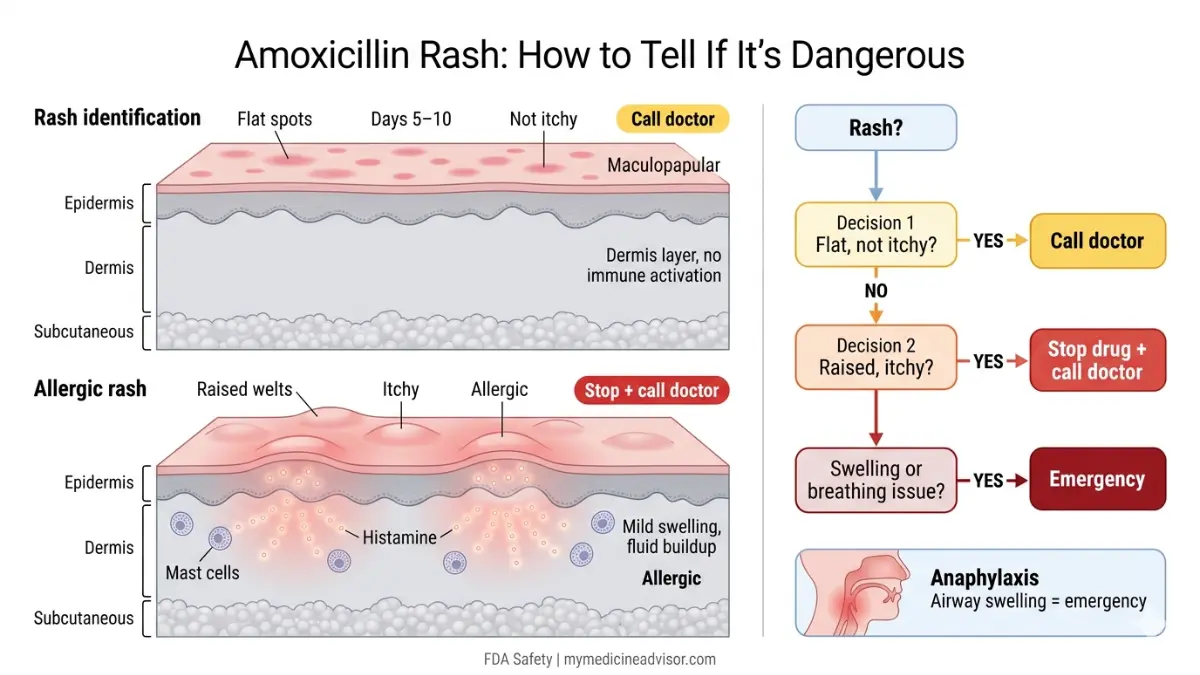
The Amoxicillin Rash — When to Worry, When to Wait
Not all amoxicillin rashes are allergic reactions. There are two distinct types:
Type 1 — Non-allergic rash (maculopapular):
- Appears as flat, pink-red spots
- Usually develops 5–10 days into treatment
- Not itchy, does not spread rapidly
- Often not dangerous — but always report it to your doctor
Type 2 — Allergic rash (urticaria/hives):
- Raised, intensely itchy welts
- May appear with swelling, wheezing, or difficulty breathing
- Can progress to anaphylaxis — a life-threatening emergency
- Stop amoxicillin immediately and call your doctor
⚠️ If you have hives AND any difficulty breathing or swelling of the face/throat — call 911 immediately.
Can I Drink Alcohol While Taking Amoxicillin?
Amoxicillin does not have a direct chemical interaction with alcohol. However, alcohol can:
- Worsen nausea and diarrhea
- Dehydrate you, slowing recovery
- Suppress your immune response when you need it most
The medical consensus: Occasional, moderate alcohol is not medically dangerous during amoxicillin treatment — but it is not recommended. Prioritize recovery.
Amoxicillin and Birth Control — What Many Patients Don’t Know
Older data suggested amoxicillin could reduce oral contraceptive effectiveness. Current evidence shows this risk is very low — but the FDA still recommends using a backup method (condoms) during your antibiotic course and for 7 days after, out of an abundance of caution.
Protecting Your Gut During Treatment
Amoxicillin kills harmful bacteria — but it also disrupts your gut’s beneficial bacteria. To protect your digestive health:
- Take a probiotic (Lactobacillus rhamnosus or L. acidophilus) 2–3 hours after each amoxicillin dose
- Eat yogurt with live active cultures daily
- Increase your fluid intake — our Water Intake Calculator can help you find your daily target during illness
Drug Interactions, Storage, and Why Finishing the Full Course Is a Global Health Issue
Key Drug Interactions With Amoxicillin
Always tell your doctor and pharmacist every medication you take before starting amoxicillin.
| Drug | Type of Interaction | Risk Level | Action |
|---|---|---|---|
| Warfarin (Coumadin) | Increases bleeding risk | Moderate | Monitor INR closely |
| Methotrexate | Increases methotrexate toxicity | High | Inform prescriber immediately |
| Probenecid (gout medication) | Slows amoxicillin clearance from body | Moderate | Doctor may adjust dose |
| Oral contraceptives | Possible reduced efficacy | Low | Use backup contraception |
| Allopurinol (gout) | Increases risk of skin rash | Moderate | Monitor skin closely |
| Other antibiotics | Reduced effectiveness when combined | Variable | Never self-combine |
For patients managing blood sugar alongside an infection, our Blood Sugar Converter can help you track glucose levels, as some infections and antibiotic courses can temporarily affect glycemic control in diabetic patients.
How to Store Amoxicillin Correctly
| Form | Storage Requirement | Shelf Life After Dispensing |
|---|---|---|
| Capsules / Tablets | Room temperature (68–77°F / 20–25°C) | Until expiration date |
| Oral liquid suspension | Refrigerate between 36–77°F (2–25°C) | Use within 14 days — discard after |
Never use expired amoxicillin — degraded antibiotics are not only ineffective, they can be harmful.
Why Completing the Full Course Is Now a Global Health Issue
This is the most important thing your doctor wants you to understand in 2026.
More than 2.8 million antimicrobial-resistant infections occur in the U.S. each year, and more than 35,000 people die as a result. Every time a patient stops an antibiotic course early, surviving bacteria are exposed to sub-lethal drug levels — the precise condition that trains them to develop resistance.
The CDC’s 2026 Antibiotic Stewardship Update emphasizes appropriate antibiotic use as a key strategy to optimize patient safety and combat antimicrobial resistance in the United States.
When you stop amoxicillin early:
- The weakest bacteria die first
- Tougher, more resistant bacteria survive
- Those survivors multiply and pass on resistance
- Future infections in your body — and others you contact — become harder to treat
This is not just about your recovery. Every course of antibiotics that is not completed correctly contributes to a global public health emergency.
✅ What This Means For You: Even if you feel 100% better on Day 6, complete Day 7, 8, 9, and 10. Set alarms. Finish the bottle. It takes minutes — and it matters far beyond your own recovery.
For patients who are also managing related health conditions, our guides on doxycycline and metronidazole cover similar antibiotic stewardship considerations that your doctor will want you to understand.
Frequently Asked Questions About Amoxicillin
Q1. What is amoxicillin used for?
Amoxicillin treats bacterial infections including strep throat, ear infections, sinus infections, UTIs, dental abscesses, skin infections, and mild pneumonia. It does not treat viral infections.
Q2. How long does amoxicillin take to work?
Most patients notice symptom improvement within 72 hours. The antibiotic begins killing bacteria within hours of the first dose, but full clinical improvement takes 3–5 days.
Q3. What is the standard amoxicillin dosage for adults?
The most common dose is 500mg every 8 hours or 875mg every 12 hours. Your doctor may adjust this based on your infection type and severity.
Q4. Can I take amoxicillin on an empty stomach?
Yes — amoxicillin can be taken with or without food. However, taking it with food reduces nausea for many patients and is generally recommended.
Q5. What are the most common amoxicillin side effects?
The most common side effects are diarrhea, nausea, and headache. These are usually mild and resolve after completing the course.
Q6. Is amoxicillin safe during pregnancy?
Yes. Amoxicillin is FDA Category B and is among the most frequently prescribed antibiotics during pregnancy. Always inform your OB-GYN before taking any medication.
Q7. Can I drink alcohol while taking amoxicillin?
There is no direct chemical interaction, but alcohol can worsen side effects and slow your recovery. Moderate use is unlikely to be dangerous, but avoiding it is medically preferable.
Q8. What happens if I stop amoxicillin early?
Stopping early allows resistant bacteria to survive and multiply. Your infection may return — often harder to treat — and you contribute to antibiotic resistance in your community.
Q9. Why isn’t amoxicillin working for my infection?
Possible reasons include: the infection is viral (not bacterial), the bacteria are resistant to amoxicillin, the dose is insufficient, or a different antibiotic is needed. Contact your doctor if symptoms don’t improve after 72 hours.
Q10. What is the difference between amoxicillin and Augmentin?
Augmentin contains amoxicillin plus clavulanate, which blocks beta-lactamase enzymes that some bacteria use to destroy amoxicillin. Augmentin is prescribed for more resistant or complex infections.
Q11. Can amoxicillin cause a rash, and is it serious?
Yes. A flat, non-itchy rash is common and usually not dangerous — but always report it to your doctor. A raised, itchy rash (hives), especially with swelling or breathing difficulty, may signal a serious allergic reaction. Stop the medication and seek care immediately.
Sources: MedlinePlus — Amoxicillin | CDC Antibiotic Use Facts | WHO Global AMR Surveillance Report 2025 | CDC 2026 Antibiotic Stewardship Update
About this content
How this article was put together: researched from recognised health sources, drafted with the help of AI tools, and edited by hand, with sources linked throughout.

Sameer Patel is the founder and editor of My Medicine Advisor. He is not a doctor or medical professional — before starting this site he worked in banking,…
Medical disclaimer
The content on MyMedicineAdvisor is provided for general informational and educational purposes only and is not a substitute for professional medical advice, diagnosis, or treatment. Health information on this website should not be used to diagnose, treat, cure, or prevent any condition without guidance from a qualified healthcare professional. Always seek the advice of your doctor, physician, or another licensed healthcare provider with any questions you may have regarding a medical condition, symptoms, medications, or treatment decisions.