

On This Page – Quick Medical Summary
What Is Circadian Rhythm? (The Answer in 60 Words)
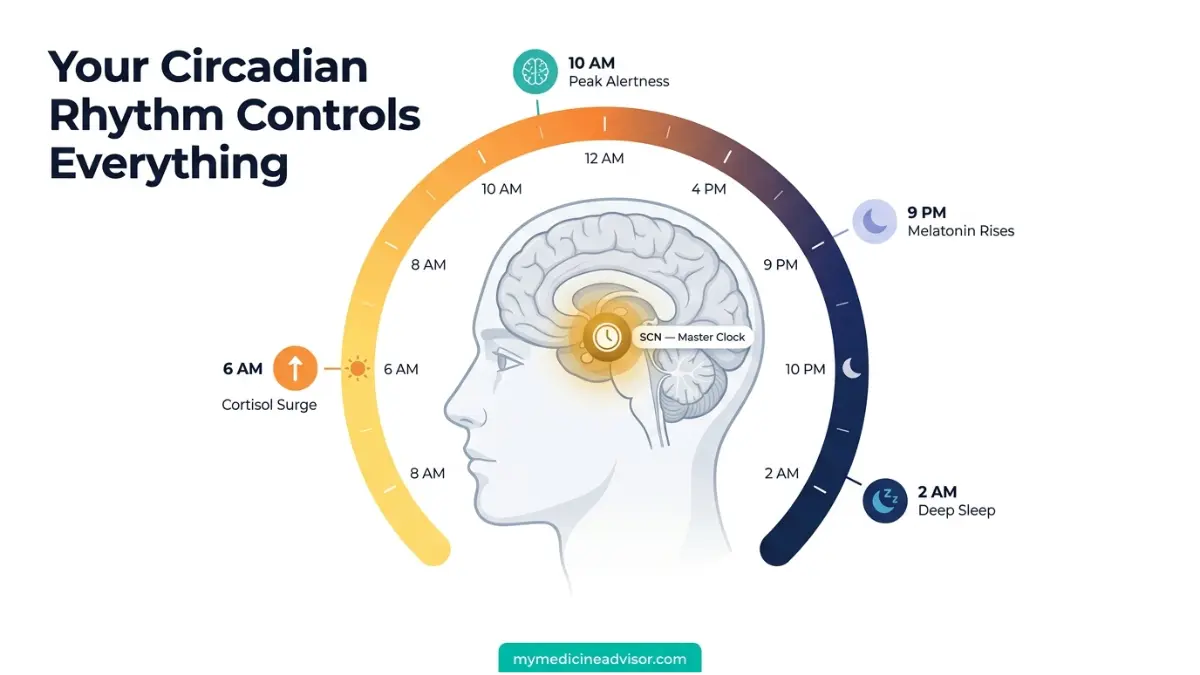
Your circadian rhythm is your body’s internal 24-hour biological clock. It controls when you feel sleepy, when you feel alert, when hormones are released, and when your organs perform at their peak. Governed by a tiny cluster of 20,000 neurons in your brain called the suprachiasmatic nucleus (SCN), your circadian rhythm runs automatically — but it can be disrupted, reset, and optimized.
James, a 41-year-old software engineer from Austin, Texas, had struggled with exhaustion for two years. He went to bed at 11 PM but couldn’t fall asleep until 2 AM, woke up groggy at 7, and crashed every afternoon. His doctor’s diagnosis wasn’t insomnia — it was a disrupted circadian rhythm. Within 10 days of targeted interventions, James was sleeping by 11:30 PM and waking refreshed at 6:30 AM. This article explains exactly what he changed — and why it worked.
The word circadian comes from the Latin circa (approximately) and dies (day). Every human, animal, plant, and even microorganism on Earth has one. According to the National Institute of General Medical Sciences, nearly every tissue and organ in the human body has its own internal clock, all coordinated by the brain’s master clock. And in 2017, the Nobel Prize in Physiology or Medicine was awarded specifically for the molecular mechanisms behind the circadian rhythm — confirming how fundamental it is to human health.
Not sleeping well? Use our free Sleep Calculator to find the exact bedtime that aligns with your natural sleep-wake cycle.
How Does Circadian Rhythm Control Your Sleep? The Brain Science Explained
The SCN: Your Brain’s Master Clock
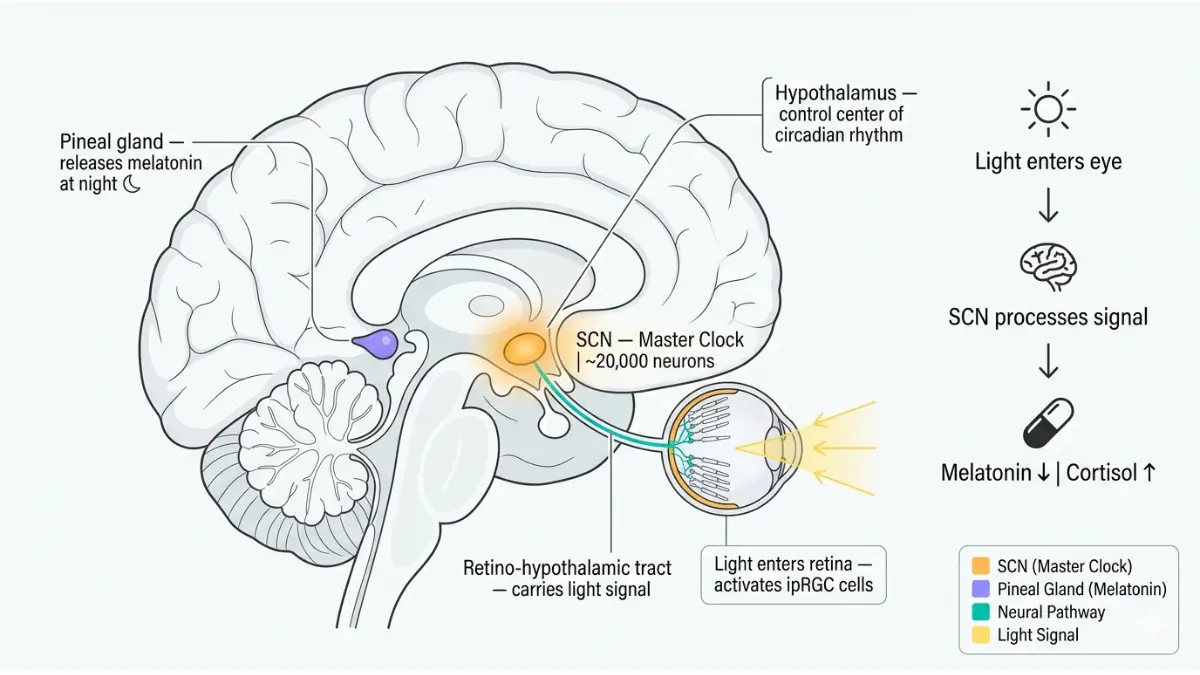
The suprachiasmatic nucleus (SCN) sits in the hypothalamus, directly above where the two optic nerves cross. This location is not accidental. Light-sensitive cells in your retina send real-time signals about day and night directly to the SCN, which then coordinates every biological clock in your body.
Your SCN operates on a cycle that’s naturally slightly longer than 24 hours — approximately 24.2 hours in most adults. Every single day, it recalibrates itself using light exposure to stay perfectly synced with Earth’s rotation. Miss that light cue, and your body clock starts to drift — which is exactly what causes jet lag, shift-work fatigue, and chronic sleep problems.
The Melatonin–Cortisol Seesaw
Two hormones drive your sleep-wake cycle in opposition to each other:
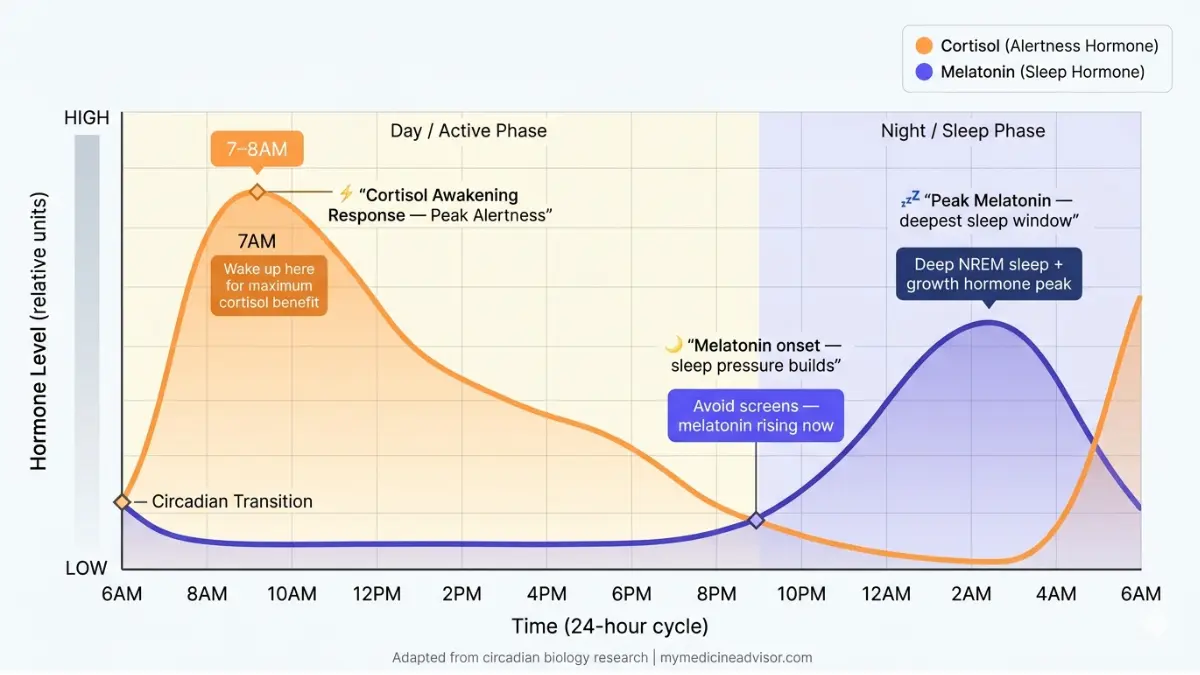
- Melatonin — your darkness hormone. Produced by the pineal gland, it begins rising around 9–10 PM (when light fades), signals your brain that sleep time is approaching, and peaks at 2–3 AM.
- Cortisol — your alertness hormone. It surges sharply between 6–8 AM (the Cortisol Awakening Response), driving you out of sleep and into wakefulness. It then gradually declines through the day.
When these two hormones are in sync with your environment, you fall asleep easily and wake feeling rested. When they’re disrupted — by late-night screens, alcohol, or irregular schedules — the entire cascade collapses.
The Two-Process Model of Sleep (Why You Can’t Force Sleep)
Sleep scientists describe sleep regulation through two interacting processes:
- Process S (Sleep Pressure): A chemical called adenosine accumulates in your brain the longer you are awake. The more adenosine, the stronger the drive to sleep. Sleep clears it. Caffeine works by blocking adenosine receptors — not by giving you energy.
- Process C (Circadian Drive): This is the SCN’s timing signal. It tells your body when to be sleepy, regardless of how much sleep pressure has built up.
Both processes must align for deep, restorative sleep to happen. This is why night shift workers are chronically exhausted — their Process C says “be alert,” while their Process S says “sleep now.”
To understand how much sleep each age group actually needs based on both processes, read our guide on Hours of Sleep by Age.
Your Body Clock: Hour-by-Hour
| Time | What Your Body Is Doing | What This Means For You |
|---|---|---|
| 6–7 AM | Cortisol Awakening Response peaks | Natural energy surge — no need for coffee immediately |
| 10–11 AM | Core alertness window | Best time for deep focus, complex decisions |
| 2–3 PM | Circadian trough — melatonin micro-rise | Post-lunch dip is biological; a 15–20 min nap is optimal |
| 5–7 PM | Peak body temperature & muscle performance | Ideal window for exercise and physical activity |
| 9–10 PM | Melatonin secretion begins | Screens are most harmful at this time |
| 11 PM–2 AM | Deep NREM sleep dominates | Growth hormone released; tissue repair occurs |
| 2–4 AM | Lowest body temperature | Deepest sleep; cognitive consolidation |
| 5–6 AM | Cortisol begins building again | Light sleep; easier to wake naturally |
💡 Key Takeaway: Schedule your hardest work at 10 AM. Your circadian rhythm has physiologically primed your brain for peak performance at exactly that time.
Circadian Rhythm Disruption: 8 Silent Causes Wrecking Your Sleep and Health
A disrupted circadian rhythm does not just mean poor sleep. Research published in Nature Reviews Neuroscience (2024) links chronic circadian misalignment to a 29% higher risk of obesity, elevated cardiovascular disease risk, weakened immune response, and accelerated cognitive decline. The CDC’s sleep health data confirms that 1 in 3 American adults regularly fails to get sufficient sleep — and disrupted body clocks are a leading cause.
The 8 Major Circadian Disruptors
1. Blue Light After 9 PM Screens (phones, tablets, laptops) emit blue wavelength light that directly suppresses melatonin production — in some studies by up to 3-fold. Your SCN cannot distinguish between screen light and sunlight. Even 30 minutes of screen use at 10 PM delays sleep onset by 45–90 minutes.
2. Irregular Wake Times Your body clock anchors to your wake time, not your bedtime. Even a 90-minute difference between weekday and weekend wake-up times — called social jetlag — is enough to shift your SCN and fragment your circadian rhythm. Social jetlag affects an estimated 87% of working adults in industrialized countries.
3. Night Shift Work Between 15–20% of American workers rotate or work night shifts. According to Harvard Medical School’s Division of Sleep Medicine, shift workers experience chronic misalignment between their internal clock and their required schedule — resulting in up to 4 hours less sleep per 24-hour period than day workers.
4. Jet Lag Traveling east is harder than traveling west because the SCN finds it easier to extend the day than to shorten it. The general rule: allow one day of recovery per time zone crossed.
5. Late-Night Eating Your gut, liver, and pancreas each have their own peripheral clocks — synchronized by the SCN but also influenced by when you eat. Eating a large meal at 11 PM sends a conflicting “daytime” signal to these organ clocks while your brain is in “nighttime mode,” causing metabolic desynchrony. This is why aligning meals with your Intermittent Fasting Calculator window matters for both sleep and metabolic health.
6. Alcohol Alcohol may help you fall asleep faster, but it dramatically suppresses REM sleep in the second half of the night and fragments sleep architecture. Even one drink within 3 hours of bedtime reduces sleep quality by up to 24%.
7. Chronic Stress and Cortisol Dysregulation Chronic psychological stress elevates evening cortisol levels — the opposite of what your body clock requires. This delays melatonin onset, shortens sleep, and creates a self-reinforcing cycle of insomnia and anxiety.
8. Artificial Light Pollution at Night Urban environments with streetlights, glowing electronics, and ambient light leaking through windows all suppress nocturnal melatonin. Even a typical living room at night (100–300 lux) is bright enough to meaningfully delay the circadian clock.
Disrupted vs. Aligned Circadian Rhythm: At a Glance
| Factor | Aligned Circadian Rhythm | Disrupted Circadian Rhythm |
|---|---|---|
| Sleep onset | Within 20 minutes | 45+ minutes |
| Morning alertness | High by 8 AM | Groggy until 11 AM |
| Afternoon energy | Managed dip, recovers | Severe crash, hard to function |
| Mood | Stable, regulated | Irritable, anxious, low |
| Immune response | Strong NK cell activity | Reduced immune surveillance |
| Metabolic function | Efficient insulin response | Elevated insulin resistance risk |
| Weight management | Hormones balanced | Elevated ghrelin, reduced leptin |
Since circadian misalignment is directly linked to weight gain and metabolic dysfunction, it’s worth regularly tracking your health metrics — use our free BMI Calculator as a starting point.
Chronotypes Explained: Are You a Lion, Bear, Wolf, or Dolphin?
Most people think being a “morning person” or “night owl” is just a preference. It is not. It is a genetically influenced biological trait called your chronotype — your personal circadian phase preference.
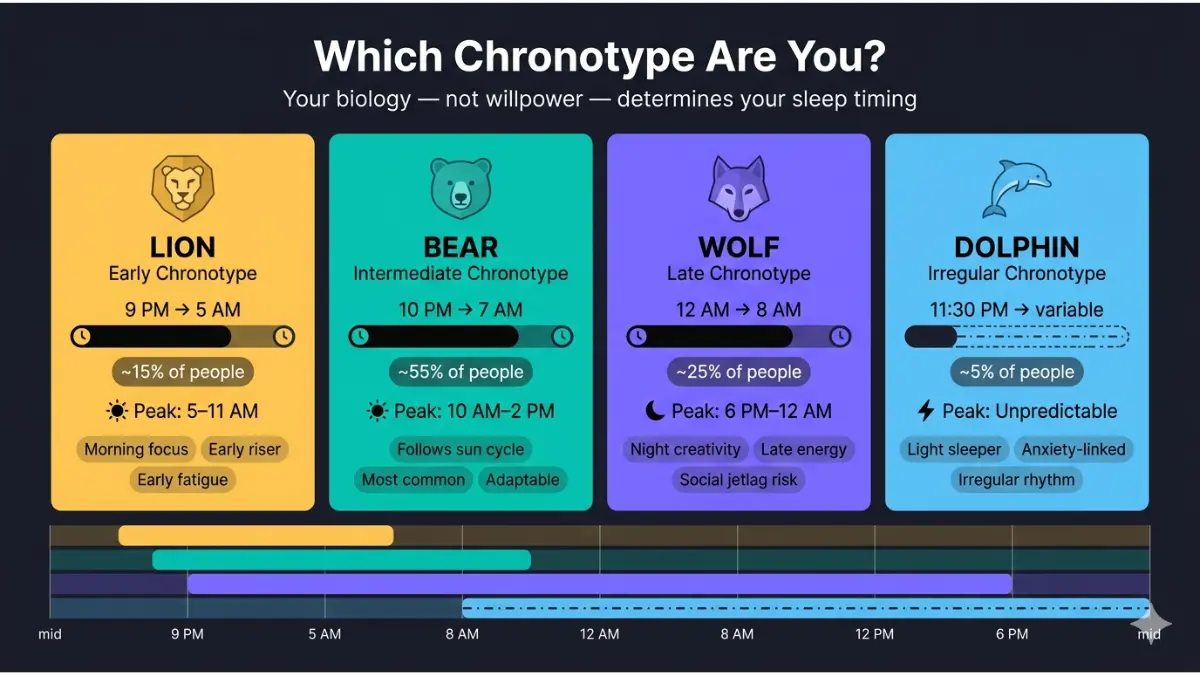
Research from circadian biologist Dr. Michael Breus identifies four primary chronotypes, each with distinct optimal sleep timing and peak performance windows:
| Chronotype | Nickname | % of Population | Natural Bedtime | Peak Energy |
|---|---|---|---|---|
| Early riser | Lion | ~15% | 9–10 PM | 5–11 AM |
| Flexible | Bear | ~55% | 10–11 PM | 10 AM–2 PM |
| Night owl | Wolf | ~25% | 11 PM–12 AM | 6 PM–12 AM |
| Light sleeper | Dolphin | ~5% | 11:30 PM | Variable |
How Chronotype Changes With Age
Chronotypes are not fixed forever. They shift predictably across the lifespan:
- Children: Strong early chronotype (lions). Natural early wake times.
- Adolescents: A 2-hour biological phase delay occurs at puberty — this is not laziness, it is driven by hormonal changes in the SCN. Teenagers genuinely cannot fall asleep early.
- Adults 25–55: Stabilizes toward the Bear (neutral) chronotype for most people.
- Adults 60+: A gradual return to earlier timing. Many older adults naturally shift toward the Lion pattern.
What Is “Social Jetlag”?
Social jetlag is the chronic mismatch between your biological clock and your required social/work schedule. If your body wants to sleep at midnight but your job requires a 6 AM alarm, you are running a daily sleep deficit — even if you never travel across a time zone. Research in Current Biology estimates that social jetlag affects the majority of the working population in the United States and is independently associated with higher rates of obesity, depression, and cardiovascular disease.
💡 Key Takeaway: You cannot permanently reprogram your chronotype. But you can make small strategic shifts of 30–60 minutes with consistent behavioral cues.
For a related look at how sleep stages interact with your chronotype, read our deep-dive on Sleep Stages Explained.
How to Fix Your Circadian Rhythm: A Science-Backed 7-Day Reset Plan
This is the section no competitor offers. You can reset a disrupted circadian rhythm in 3 to 7 days — but only if you use the right biological levers in the correct sequence. Here’s the exact protocol.
The 5 Master Reset Levers
1. Morning Light Anchoring (The Single Most Powerful Tool) Get 10–15 minutes of bright outdoor light (ideally 2,500+ lux — natural sunlight) within 30 minutes of waking. This directly activates the SCN, halts lingering melatonin production, and locks your body clock to a firm wake anchor. According to NIOSH at the CDC, morning light exposure is the most direct, non-pharmacological intervention for circadian health — and it’s free.
2. Fixed Wake Time — Not Bedtime Most people focus on when they go to bed. The research says your wake time is the anchor. Set an alarm and keep it identical every day — including weekends — for at least 7 consecutive days. Harvard sleep researchers describe the consistent wake time as the single most impactful behavioral change for circadian alignment.
3. Meal Timing as a Zeitgeber Eat your first meal within 30–45 minutes of waking to reinforce daytime signaling in your peripheral organ clocks. Avoid eating within 3 hours of your target bedtime. This is not just about digestion — it is about synchronizing your gut and liver clocks with your SCN.
4. Exercise Timing Morning exercise (7–9 AM) advances your circadian phase and makes falling asleep earlier easier. Evening exercise is acceptable if completed before 7 PM. Late-night vigorous exercise raises core body temperature and delays sleep onset. Since your Heart Rate Zone Calculator can help you optimize training intensity, pairing it with circadian-appropriate timing maximizes both fitness and sleep quality.
5. Blue Light Blackout After 9 PM Use one or more of the following: night mode/warm color settings on all screens, blue-light-blocking glasses, or simply stop screen use 60–90 minutes before bed. Replace it with dim, warm-light activities — reading, stretching, or conversation.
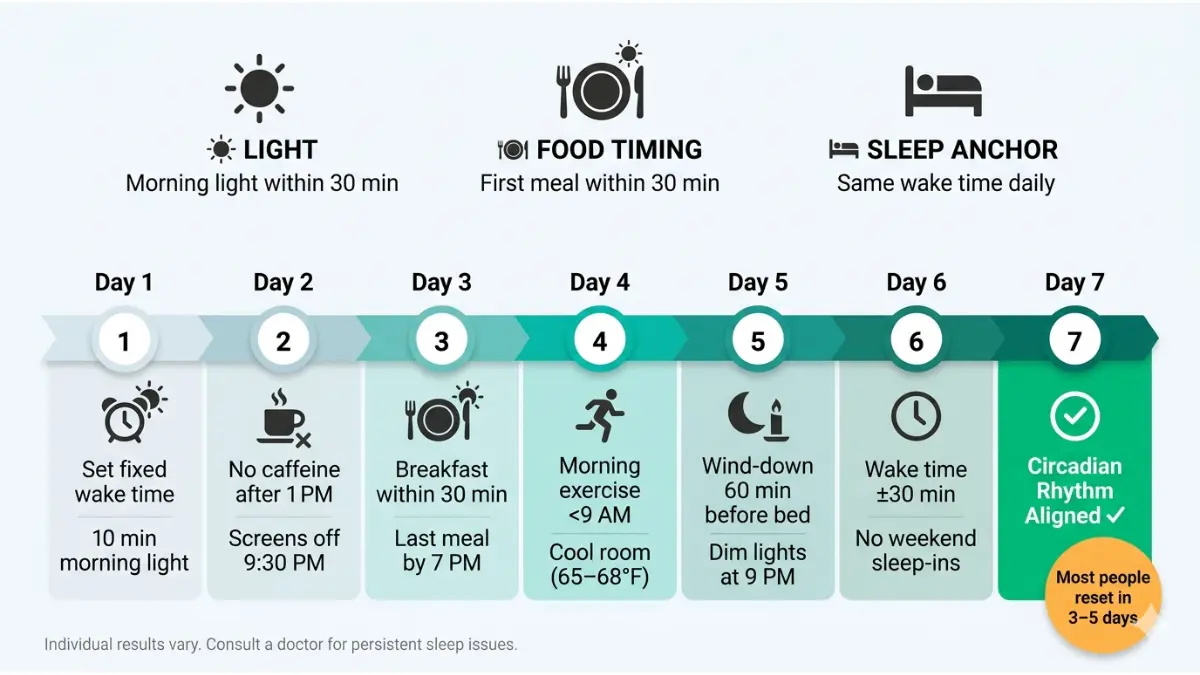
Your 7-Day Circadian Reset Protocol
| Day | Morning Action | Daytime Action | Evening Action | Goal |
|---|---|---|---|---|
| Day 1 | Set fixed wake time + 10 min outdoor light | Eat breakfast within 30 min of waking | No screens after 9:30 PM | Anchor wake time |
| Day 2 | Repeat wake time + light | Avoid caffeine after 1 PM | Dim all lights by 9 PM | Reduce stimulants |
| Day 3 | Morning walk 20 min in sunlight | Eat last meal by 7 PM | Wind-down routine at 10 PM | Add food timing |
| Day 4 | Same wake time (no snooze) | Light exercise before 7 PM | Cool bedroom (65–68°F) | Build sleep pressure |
| Days 5–7 | Maintain all of the above | Consistent meal times | Consistent bedtime ±30 min | Full rhythm entrainment |
Do Melatonin Supplements Actually Work?
Used correctly, melatonin is a clock-shifter — not a sleeping pill. Key evidence-based facts:
- Low-dose (0.5–1 mg) outperforms high-dose (5–10 mg) for circadian shifting
- Take it 90 minutes before your target bedtime — not when you want to fall asleep
- It works best for jet lag, shift work adjustment, and delayed sleep phase — not for general insomnia
- Long-term nightly use is not recommended without physician guidance
💡 Key Takeaway: The #1 free, evidence-backed circadian reset tool is morning bright light. Everything else is secondary.
Since hydration also plays a role in circadian signaling and overall sleep quality, ensure you’re hitting your daily fluid targets — our Water Intake Calculator gives you a personalized daily goal in seconds.
Circadian Rhythm Disorders: Types, Warning Signs, and When to Get Help
When circadian rhythm disruption becomes structural and persistent, it crosses into clinically recognized circadian rhythm sleep-wake disorders (CRSWDs). These are distinct medical conditions — not lifestyle issues.
6 Recognized Circadian Rhythm Sleep-Wake Disorders
| Disorder | Abbreviation | Who It Affects | Key Symptom |
|---|---|---|---|
| Delayed Sleep-Wake Phase Disorder | DSWPD | Teens and young adults | Cannot sleep before 2–3 AM; most common disorder |
| Advanced Sleep-Wake Phase Disorder | ASWPD | Adults 50+ | Falls asleep involuntarily at 7–8 PM |
| Non-24-Hour Sleep-Wake Rhythm Disorder | N24SWD | Primarily blind individuals | Sleep/wake time drifts later daily |
| Jet Lag Disorder | — | Travelers crossing 2+ time zones | 1 day of adjustment per time zone |
| Shift Work Sleep Disorder | SWSD | Rotating/night shift workers | Chronic insomnia + excessive daytime sleepiness |
| Irregular Sleep-Wake Rhythm Disorder | ISWRD | Dementia patients | Multiple fragmented naps; no consolidated sleep block |
Expert Panel Perspective (2026)
Dr. Charles Czeisler, PhD, MD, FRCP — Baldino Professor of Sleep Medicine, Harvard Medical School and Director of the Division of Sleep Medicine at Brigham and Women’s Hospital — has been among the most prominent voices linking circadian disruption to serious public health outcomes, including its connection to impaired driving, cardiovascular disease, and occupational injury.
The Nobel Prize in Physiology or Medicine was awarded in 2017 to Jeffrey C. Hall, Michael Rosbash, and Michael W. Young for discovering the molecular mechanisms controlling circadian rhythms — cementing this as one of the most consequential areas in biological science. Their work, initially funded by the National Institute of General Medical Sciences at NIH, identified the feedback loop of clock proteins (including PER and TIM) that generates the 24-hour biological cycle in every cell of the human body.
Circadian rhythm disruption is now recognized by the World Health Organization as a contributing factor to multiple chronic disease categories, including cardiovascular disease, metabolic syndrome, and certain cancers in night-shift workers.
See a Doctor If You Experience:
- Sleep difficulties persisting for more than 1 month despite consistent sleep hygiene efforts
- Extreme difficulty falling asleep before 2 AM or being unable to stay awake past 8 PM
- Chronic daytime sleepiness that impairs driving, work performance, or safety
- Sleep problems associated with dementia, blindness, or neurological conditions
- Failure of basic behavioral interventions (light exposure, schedule anchoring) after 2+ weeks
If persistent sleep disruption is affecting your daily life, run a quick initial self-check with our Symptom Checker to identify patterns worth discussing with your physician.
For a deeper understanding of what happens inside your body during each phase of the night, read our detailed guide: What Is REM Sleep?
Frequently Asked Questions About Circadian Rhythm
1. What is circadian rhythm in simple terms?
Your circadian rhythm is your body’s internal 24-hour clock. It regulates when you sleep, wake, release hormones, digest food, and reach peak physical performance — running automatically but adjusted daily by light.
2. What controls the circadian rhythm in the brain?
The suprachiasmatic nucleus (SCN) in the hypothalamus — a structure of approximately 20,000 nerve cells located directly above the optic nerves — serves as the master clock. It synchronizes all other clocks throughout the body.
3. How long does it take to reset your circadian rhythm?
With consistent behavioral interventions (fixed wake time, morning light, meal timing), most people see meaningful improvement within 3–5 days. Full reset typically takes 7–14 days depending on how severely the rhythm was disrupted.
4. Can stress disrupt your circadian rhythm?
Yes. Chronic psychological stress elevates evening cortisol, which directly delays melatonin onset and shortens deep sleep. Prolonged stress can invert the cortisol curve, making mornings feel exhausted and nights feel wired.
5. Is it bad to sleep during the day?
Short naps (15–20 minutes) during the natural post-lunch circadian trough (2–3 PM) are beneficial and do not disrupt nighttime sleep. Naps longer than 30 minutes or taken after 4 PM can suppress sleep pressure and delay bedtime.
6. What hormone controls the sleep-wake cycle?
Melatonin is the primary sleep-inducing hormone, rising at dusk and peaking at 2–3 AM. Cortisol is the primary wake-driving hormone, surging in the early morning. Both are directly regulated by the SCN in response to light.
7. Does blue light actually affect circadian rhythm?
Yes — significantly. Blue-wavelength light (from screens and LEDs) is the most potent suppressor of melatonin production. Studies show even moderate screen use between 9–11 PM can delay circadian phase by 30–90 minutes.
8. What is a chronotype and how do I find mine?
Your chronotype is your genetically influenced preference for sleep and wake timing — whether you’re naturally a morning Lion, flexible Bear, night-owl Wolf, or light-sleeping Dolphin. A validated online questionnaire called the Munich Chronotype Questionnaire (MCTQ) can identify yours.
9. Can poor circadian rhythm cause weight gain?
Yes. Circadian misalignment disrupts the balance of leptin (fullness hormone) and ghrelin (hunger hormone), increases insulin resistance, and impairs glucose metabolism — all of which promote fat storage, particularly visceral fat.
10. What foods support a healthy circadian rhythm?
Tryptophan-rich foods (turkey, eggs, nuts) support melatonin synthesis. Magnesium (leafy greens, seeds) supports deep sleep. Consistent meal timing — especially eating breakfast early and avoiding late-night meals — is the most evidence-backed nutritional lever for circadian health.
11. Are circadian rhythm disorders curable?
Most circadian rhythm sleep-wake disorders are highly treatable — not necessarily curable in the permanent sense, but controllable. Treatments include timed light therapy, low-dose melatonin, chronotherapy (gradually shifting sleep timing), and cognitive behavioral therapy for insomnia (CBT-I). Early intervention produces significantly better outcomes.
Related reading from mymedicineadvisor.com:
⚠️ Disclaimer: This article is for educational and informational purposes only. It does not constitute medical advice, diagnosis, or treatment. If you are experiencing persistent sleep difficulties, please consult a board-certified physician or sleep specialist.
Sources:
- National Institute of General Medical Sciences. Circadian Rhythms Fact Sheet. NIH.
- Harvard Medical School Division of Sleep Medicine. You and Your Biological Clock.
- Centers for Disease Control and Prevention. About Sleep.
- Hall JC, Rosbash M, Young MW. Nobel Prize in Physiology or Medicine, 2017. Molecular mechanisms controlling circadian rhythms.
About this content
How this article was put together: researched from recognised health sources, drafted with the help of AI tools, and edited by hand, with sources linked throughout.

Sameer Patel is the founder and editor of My Medicine Advisor. He is not a doctor or medical professional — before starting this site he worked in banking,…
Medical disclaimer
The content on MyMedicineAdvisor is provided for general informational and educational purposes only and is not a substitute for professional medical advice, diagnosis, or treatment. Health information on this website should not be used to diagnose, treat, cure, or prevent any condition without guidance from a qualified healthcare professional. Always seek the advice of your doctor, physician, or another licensed healthcare provider with any questions you may have regarding a medical condition, symptoms, medications, or treatment decisions.