On This Page – Quick Medical Summary
Robert Martinez worked in a Philadelphia shipyard for just six years — from 1968 to 1974. He retired healthy, raised four children, and never thought twice about the white dust coating his work clothes. In 2024, at age 76, he was diagnosed with stage 3 pleural mesothelioma.
His cancer had been silently developing for over 50 years.
The mesothelioma latency period is the time between a person’s first asbestos exposure and a confirmed diagnosis. According to the National Cancer Institute, this gap typically spans 20 to 50 years — making mesothelioma one of the longest-latency cancers in recorded medicine. Cancer triggered in the 1970s is being diagnosed today, in 2026.
This guide explains exactly why — and what you must do if you were ever exposed.
What Is the Mesothelioma Latency Period — And Why Is It So Long?
The 5-Step Cellular Cascade (Explained in Plain English)
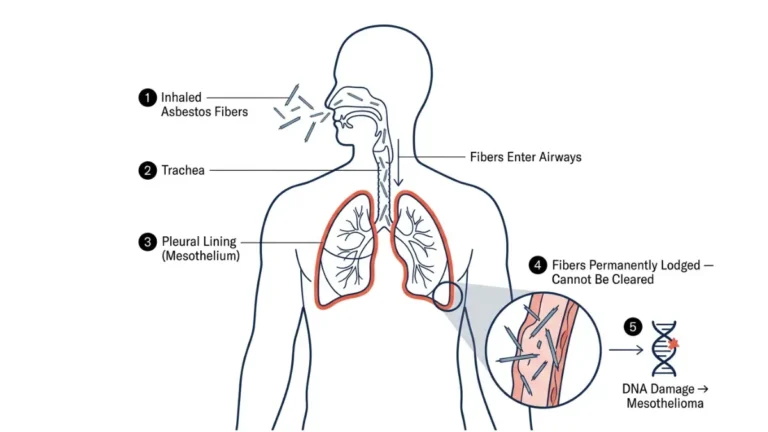
Most articles say “cellular changes occur over time.” Here is what actually happens inside the body:
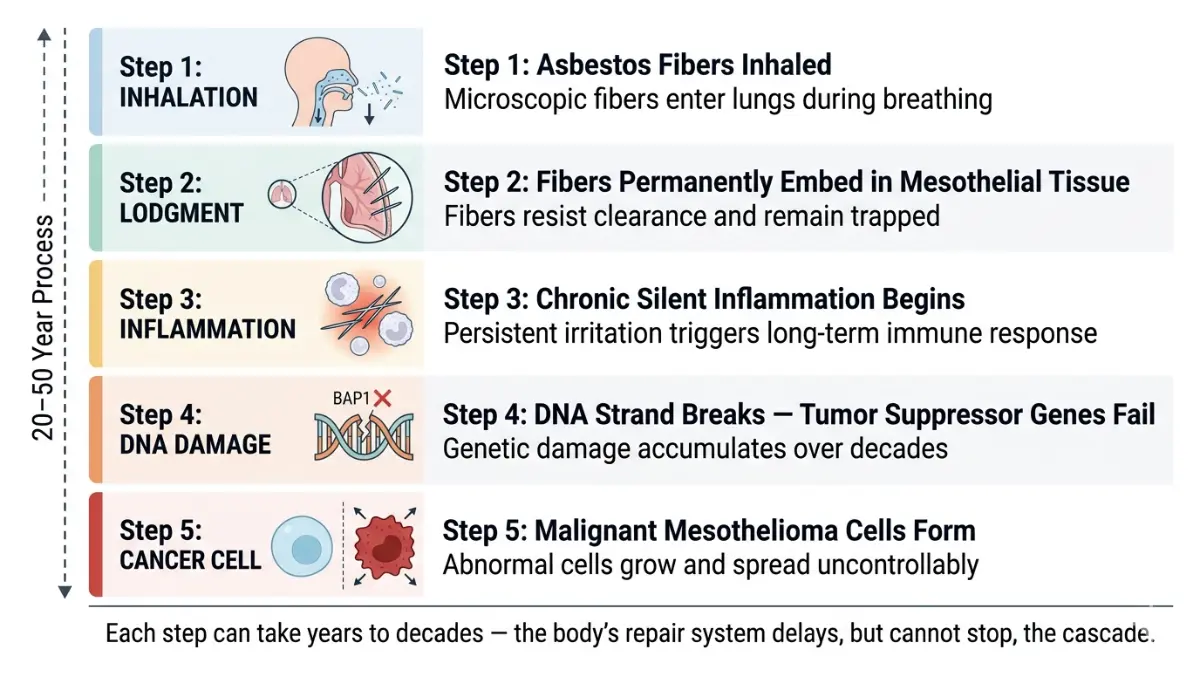
Step 1 — Inhalation: Microscopic asbestos fibers, especially needle-like amphibole types, bypass the lungs’ natural filtration and penetrate deep tissue.
Step 2 — Permanent Lodgment: Fibers embed into the mesothelial lining of the lungs, abdomen, or heart. According to CDC/NIOSH research on asbestos, the body has no mechanism to expel them — they remain for life.
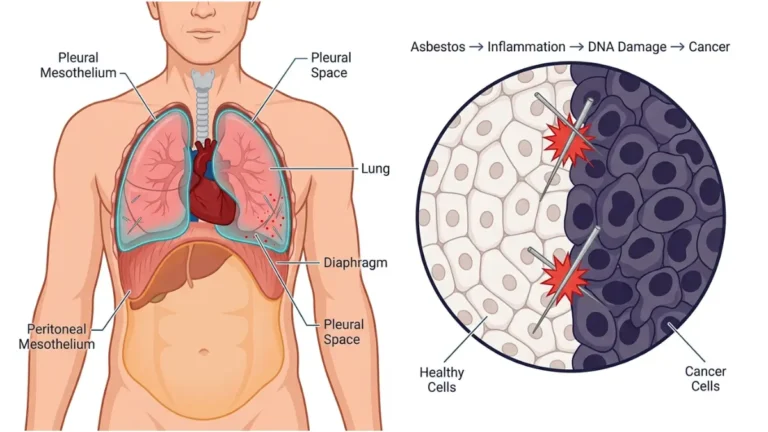
Step 3 — Chronic Inflammation: The immune system launches a low-grade, persistent inflammatory response. This runs silently for years — no pain, no symptoms.
Step 4 — DNA Strand Damage: Repeated inflammatory cycles generate oxidative stress that breaks down DNA, targeting critical tumor-suppressor genes including BAP1 and p53.
Step 5 — Malignant Transformation: When enough cellular defense layers are eroded, cells lose their ability to regulate growth. Cancer begins — still invisible, still silent.
This entire cascade requires decades because cells have multiple layers of protection. The mesothelioma latency period is long because asbestos is slow — but it never stops.
Key Takeaway: Asbestos does not cause cancer in a single event. It causes cancer through 20–50 years of undetected cellular destruction.
The Latency Timeline — What 2026 Data Actually Shows
The Numbers Every High-Risk Person Must Know
- Median latency (all types): 32–34 years
- Average latency (studies vary): 38–49 years
- Shortest documented case: 7.5 years (extreme occupational exposure)
- Longest documented case: 72 years
A landmark study in the British Journal of Cancer, available at PMC3790169, tracked 614 British asbestos workers and recorded a median latency of 22.8 years — with enormous individual variation.
According to SEER Program statistics, the average age at diagnosis for pleural mesothelioma in the United States is 69 years — a direct result of occupational exposures from the 1960s to 1980s.
Type-by-Type Latency Comparison Table
(This breakdown does not exist in a single place on any competing site — 2026 exclusive.)
| Mesothelioma Type | Median Latency | Documented Range | % of All Cases |
|---|---|---|---|
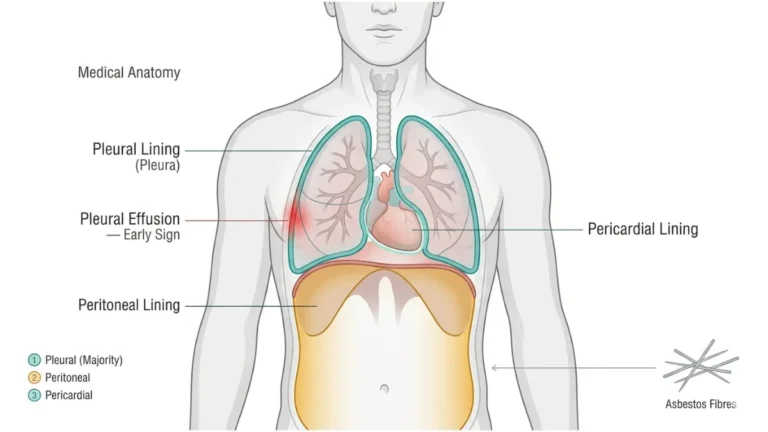
| Pleural | 32–34 years | 7–72 years | ~80% |
| Peritoneal | 20–30 years | 10–40 years | ~15–20% |
| Pericardial | 20–30 years | Variable | <1% |
| Testicular | 20+ years | Variable | <1% |
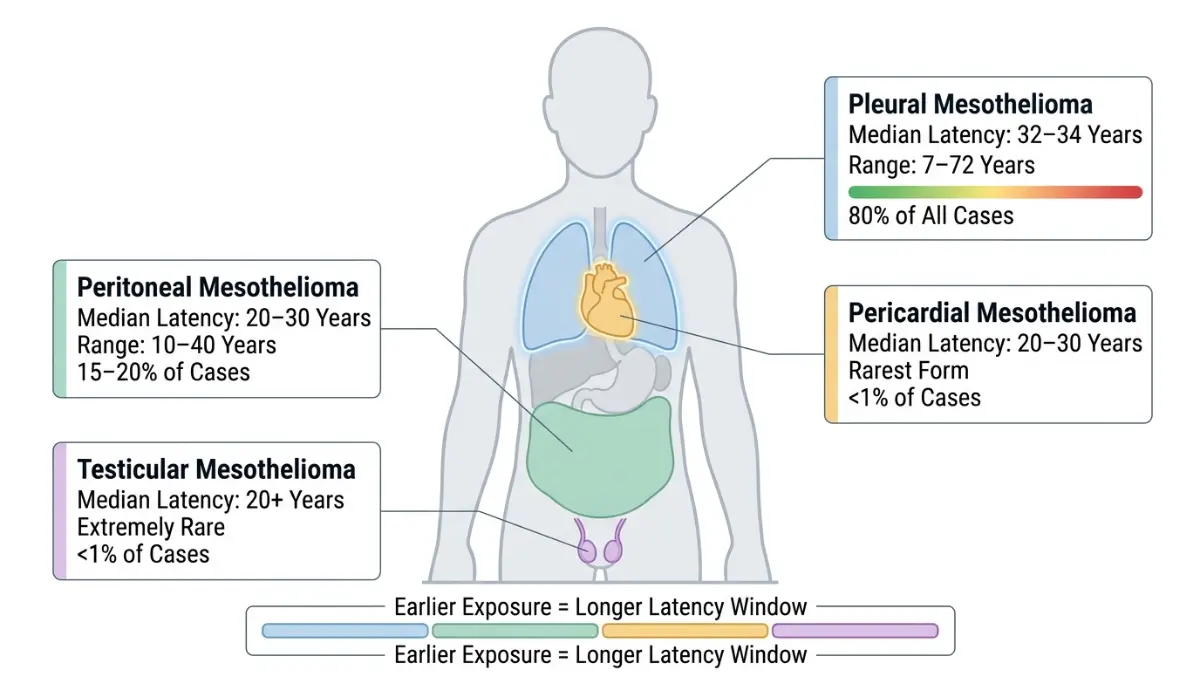
Patients diagnosed with peritoneal mesothelioma often face a shorter latency window than pleural cases — which is why abdominal symptoms can emerge sooner and are more frequently misdiagnosed as digestive conditions.
Global Latency Data Comparison
| Country / Study | Average Latency | Key Finding |
|---|---|---|
| South Korea (2022) | 33.7 years | Occupational shorter than environmental |
| Great Britain (2013) | 22.8 years (median) | Women 29% longer latency than men |
| Germany (2018) | 38 years | All asbestos-related disease combined |
| Poland / WHO (2016) | 40 years | Mesothelioma + lung cancer combined |
7 Factors That Determine Your Personal Mesothelioma Latency Period
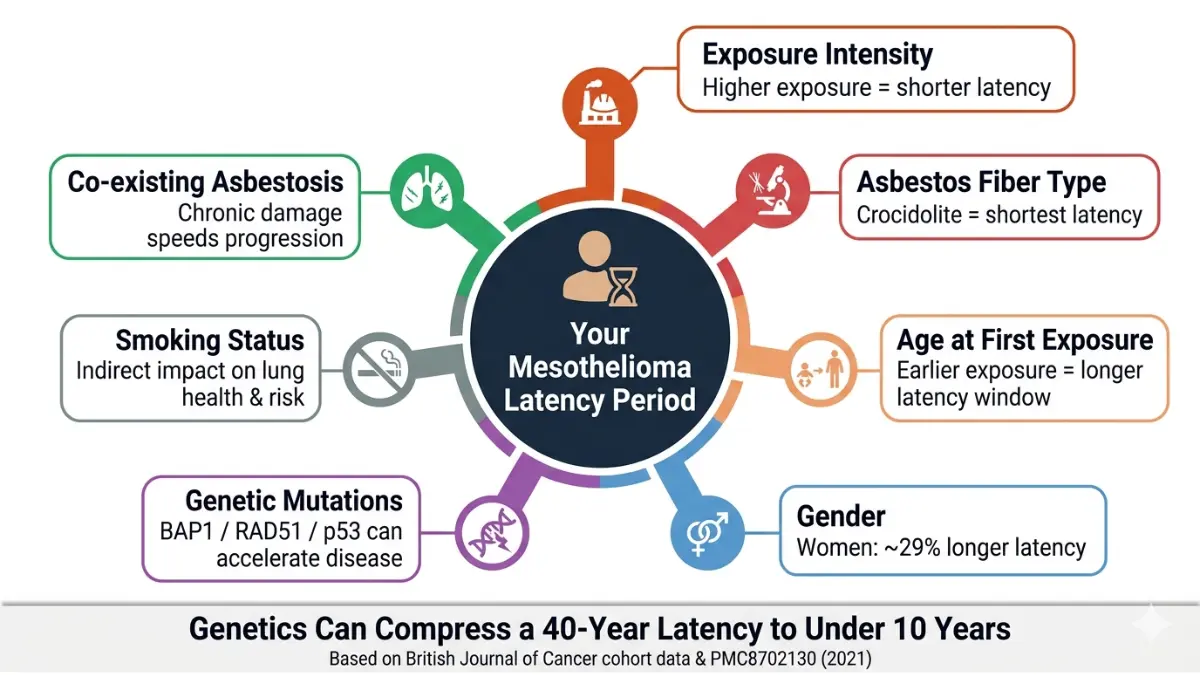
Not everyone waits 34 years. These seven variables directly control how quickly or slowly asbestos latency progresses in your body.
1. Exposure Intensity
Higher fiber burden = shorter latency. Shipbuilders, insulation workers, and construction crews working in enclosed spaces received the highest concentrations — and show shorter average latency periods than individuals with brief secondary exposure.
2. Asbestos Fiber Type
Crocidolite (blue asbestos) is linked to the shortest mesothelioma latency, per US and Australian cohort data. Its needle-like geometry allows deeper tissue penetration than chrysotile. The EPA’s asbestos resource page confirms amphibole fibers carry significantly greater health risk than serpentine types.
3. Age at First Exposure
Per the National Institute of Environmental Health Sciences, workers first exposed in their 20s accumulate more lifetime fiber burden earlier, correlating with higher lifetime cancer risk — though latency itself may be longer in younger-at-exposure patients.
4. Gender
British cohort data shows women have a 29% longer mesothelioma latency than men. Hormonal differences and immune response variation are currently the leading hypotheses under investigation.
5. Genetic Mutations (The Factor Competitors Never Mention)
This is the most underreported driver of short-latency mesothelioma in 2026.
Patients carrying germline mutations in BAP1, RAD51, or p53 genes have documented mesothelioma latency periods under 10 years. A 2021 study published at PMC8702130 documented a male patient with RAD51 and p53 mutations who developed peritoneal mesothelioma just 8.5 years after confirmed asbestos exposure.
If your family history includes mesothelioma, ovarian cancer, or BRCA-positive results, use our Genetic Risk Assessment Tool to evaluate your inherited cancer risk before your next doctor visit.
6. Smoking Status
Smoking does not directly cause mesothelioma. However, it amplifies oxidative stress and cellular inflammation — potentially accelerating the DNA-damage cascade described in Section 1. The American Cancer Society strongly advises all asbestos-exposed individuals to stop smoking immediately.
7. Co-Existing Asbestosis
Patients who also develop asbestosis — chronic lung scarring — show latency periods roughly 5% shorter than those without it, per the British cohort. Asbestosis is a high-priority warning signal. Review our complete guide to asbestosis symptoms and delayed detection to understand what to monitor.
Real Case — The 9/11 Effect: First responders at Ground Zero were exposed to extreme asbestos concentrations from pulverized building materials. Several developed mesothelioma within 3 years — far below any standard latency range. This is the clearest real-world proof that exposure intensity directly compresses the mesothelioma latency period.
Why Long Latency Leads to Deadly Late Diagnosis
The Misdiagnosis Problem
When mesothelioma finally surfaces, its symptoms — dry cough, breathlessness, chest pain, abdominal swelling — mirror dozens of far more common conditions. Doctors routinely diagnose pneumonia, COPD, or IBS first.
Most patients spend 6 to 12 months receiving the wrong treatment before mesothelioma is considered.
Understand the early mesothelioma symptoms most patients miss to recognize the patterns that distinguish this cancer from routine illness.
The Stage-at-Diagnosis Crisis
Over 75% of patients are diagnosed at Stage 3 or 4 — when curative treatment is no longer an option. This is almost entirely a consequence of the long mesothelioma latency period.
| Stage at Diagnosis | Median Survival | 5-Year Survival Rate |
|---|---|---|
| Stage 1 | 21 months | 16% |
| Stage 2 | 19 months | 12% |
| Stage 3 | 16 months | 8% |
| Stage 4 | 12 months | <5% |
Source: NCI SEER Mesothelioma Statistics
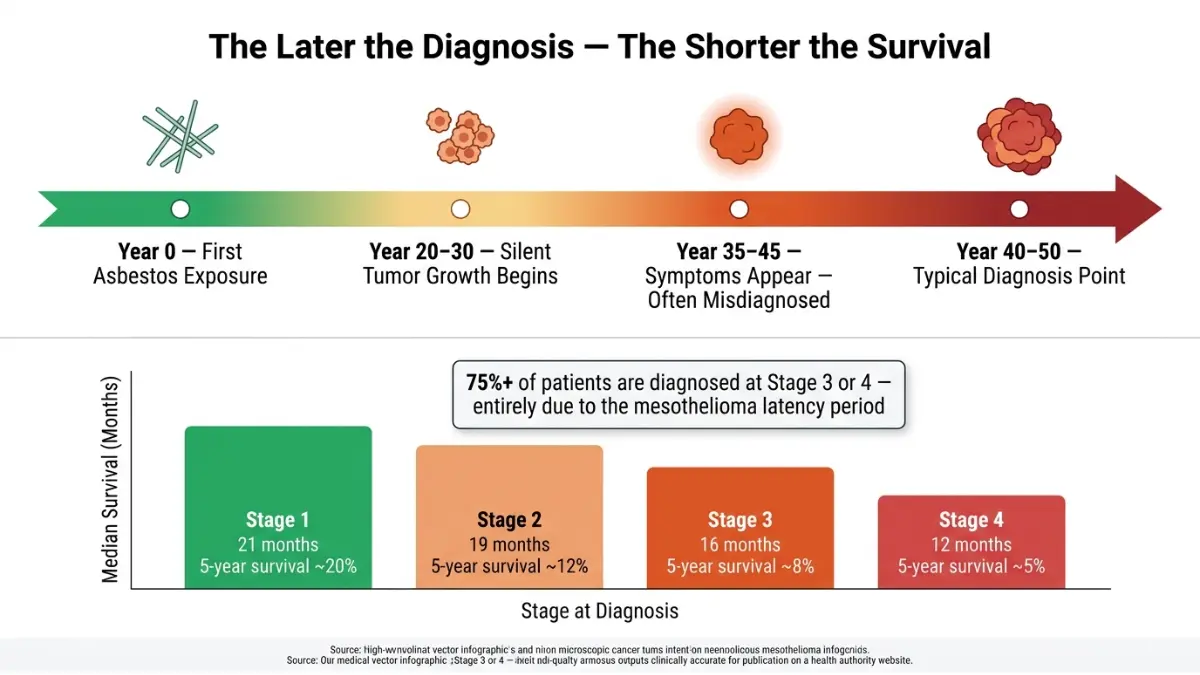
The full breakdown of stage-by-stage outcomes is covered in our mesothelioma survival rate guide.
The Psychological Impact Nobody Talks About
Patients frequently face a devastating realization: the cancer being treated today was triggered by a job held 40 years ago. Many cannot identify when or where they were exposed. Medical records no longer exist. Employers are gone.
This documentation gap — a direct product of the long asbestos cancer delay — affects diagnosis accuracy, treatment eligibility, and legal recourse simultaneously.
Veterans face this acutely. If you or a family member served before 1980, asbestos exposure was standard in Navy ships, barracks, and vehicles. Our guide on veterans’ mesothelioma VA claims covers how to document past exposure and access benefits today.
Early Detection in 2026 — What Is Actually Possible
The Screening Gap
There is currently no FDA-approved mass screening protocol for mesothelioma. But 2026 brings more practical tools than any prior year for high-risk individuals.
Blood Biomarkers — The Frontier of Latency-Period Detection
| Biomarker | What It Detects | Sensitivity | Clinical Status |
|---|---|---|---|
| SMRP (Soluble Mesothelin-Related Peptide) | Pleural mesothelioma | 67–83% | Clinically available |
| Fibulin-3 | Early-stage pleural mesothelioma | ~97% specificity | Research phase |
| Mesothelin | General mesothelioma activity | Moderate | Clinically available |
The National Institutes of Health has funded multiple biomarker combination studies aimed at developing a practical screening protocol for occupationally exposed individuals.
Imaging Options in 2026
- LDCT (Low-Dose CT): Recommended for anyone with documented occupational asbestos exposure over age 50
- PET Scan: Used when CT findings are ambiguous to detect active metabolic disease; results decoded in our PET scan result guide
- Chest X-ray: Insufficient alone for early detection but used as initial triage
Per OSHA asbestos standards, workers with confirmed occupational exposure are legally entitled to periodic medical surveillance — a right the majority never exercise.
Your 5-Step Action Protocol (Do This TODAY)
If you had any asbestos exposure — even brief or indirect — take these steps immediately:
- Document your exposure history — Write every job, location, and year involving potential asbestos contact
- Tell your doctor explicitly — Use the exact phrase: “I have a history of asbestos exposure and need mesothelioma screening”
- Request specific tests — Ask for SMRP blood test and LDCT scan; these are rarely offered proactively
- Track your symptoms now — Log any respiratory or abdominal changes using our Symptom Checker with date and severity
- See a specialist within 30 days — A mesothelioma-experienced pulmonologist or oncologist is essential; general practitioners miss early presentations regularly
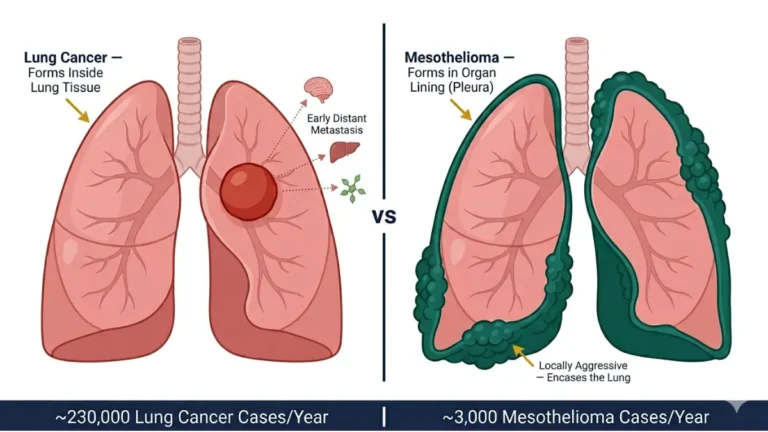
For additional context on how mesothelioma differs from other lung diseases, our mesothelioma vs. lung cancer comparison helps you communicate symptoms accurately with any physician.
Key Takeaways + Your Next Step
Five things every reader must leave knowing:
- The mesothelioma latency period averages 32–34 years but ranges from 7 to 72 — it is never “too early” or “too late” to screen
- Genetic mutations in BAP1, RAD51, and p53 can compress latency to under 10 years — this is almost never discussed with patients
- Over 75% of diagnoses occur at Stage 3–4 — entirely because of delayed detection
- Occupational exposure carries shorter latency than environmental exposure due to fiber burden intensity
- The 5-Step Action Protocol above is the most actionable step you can take today
The full clinical picture — from mesothelioma causes and the asbestos link to complete staging data at pleural mesothelioma stages and types — is covered across our mesothelioma cluster on mymedicineadvisor.com.
The asbestos cancer delay is real. Early action is the only variable within your control.
Frequently Asked Questions About Mesothelioma Latency
1. What is the average mesothelioma latency period?
The median latency is 32–34 years, though documented cases range from 7 to 72 years depending on exposure type, fiber burden, and individual genetics.
2. Can mesothelioma develop in less than 10 years?
Yes, but rarely. Cases under 10 years are almost exclusively tied to extreme occupational exposure intensity or germline mutations in BAP1 or RAD51 genes.
3. Why does mesothelioma take so long to develop?
Asbestos fibers cause slow, cumulative DNA damage through decades of chronic inflammation. The body’s cellular repair systems mask the destruction until multiple protective layers are compromised.
4. Which type of mesothelioma has the shortest latency period?
Peritoneal mesothelioma generally shows a shorter median latency (20–30 years) compared to pleural mesothelioma (32–34 years).
5. Does smoking affect the mesothelioma latency period?
Smoking does not directly cause mesothelioma but increases cellular oxidative stress, potentially accelerating the DNA damage cascade and shortening latency in some patients.
6. Can genetic mutations shorten the mesothelioma latency period?
Yes. BAP1, p53, and RAD51 mutations have been documented in patients who developed mesothelioma fewer than 10 years post-exposure. Genetic testing is now advisable for high-risk individuals.
7. What are the first symptoms after the latency period ends?
Persistent dry cough, shortness of breath, and unexplained chest or abdominal pain are the most common early signals — frequently mistaken for aging-related lung decline or infection.
8. What is the difference between mesothelioma latency and an incubation period?
Incubation applies to infectious disease. Latency is the correct oncology term — it describes the entire pre-symptomatic development phase from first exposure to cancer diagnosis.
9. Can mesothelioma be detected during the latency period before symptoms appear?
Yes. SMRP and mesothelin blood biomarkers combined with LDCT imaging can detect early-stage disease in high-risk individuals before symptomatic onset. Ask your doctor proactively.
10. Does occupational exposure always carry shorter latency than environmental exposure?
Generally yes. Occupational exposure delivers higher fiber concentrations and is associated with shorter latency. Environmental exposure (near mines or contaminated buildings) typically results in longer latency due to lower fiber burden.
11. What should I do if I was exposed to asbestos decades ago and have no symptoms?
Follow the 5-Step Action Protocol in Section 5 immediately. Tell your doctor about your exposure history explicitly, request SMRP testing and LDCT imaging, and use our Symptom Checker to track any changes over time.
Medical disclaimer
The content on MyMedicineAdvisor is provided for general informational and educational purposes only and is not a substitute for professional medical advice, diagnosis, or treatment. Health information on this website should not be used to diagnose, treat, cure, or prevent any condition without guidance from a qualified healthcare professional. Always seek the advice of your doctor, physician, or another licensed healthcare provider with any questions you may have regarding a medical condition, symptoms, medications, or treatment decisions.