On This Page – Quick Medical Summary
Peritoneal mesothelioma is a rare, aggressive cancer of the abdominal lining caused primarily by asbestos exposure. Its 7 most alarming abdominal symptoms include bloating, persistent pain, unexplained weight loss, nausea, new-onset hernia, bowel changes, and unexplained fever. Symptoms typically appear 10–50 years after asbestos exposure — making early recognition critical for survival.
Robert T., a 62-year-old retired construction worker from Ohio, spent 14 months being treated for irritable bowel syndrome before a specialist finally ordered a CT scan. The real diagnosis: malignant peritoneal mesothelioma. By the time it was caught, his abdomen had accumulated over 3 liters of fluid. His story is not rare — it is the norm.
If you or someone you love has persistent abdominal symptoms and a history of asbestos exposure, use our Symptom Checker to track what you’re experiencing before your next doctor’s visit.
What Is Peritoneal Mesothelioma?
The Cancer Most Doctors Initially Miss
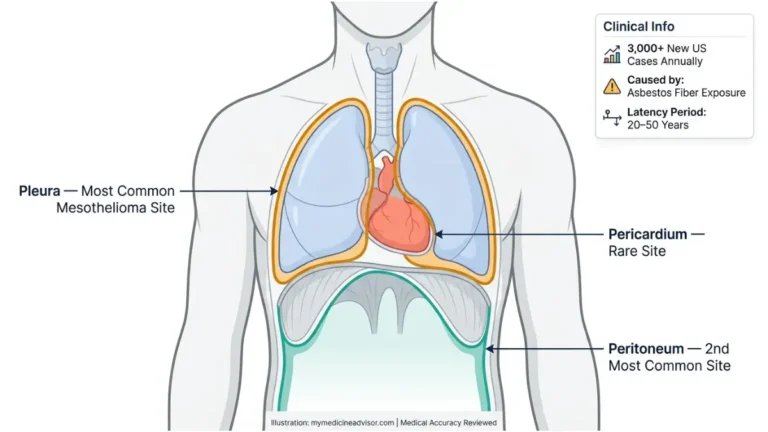
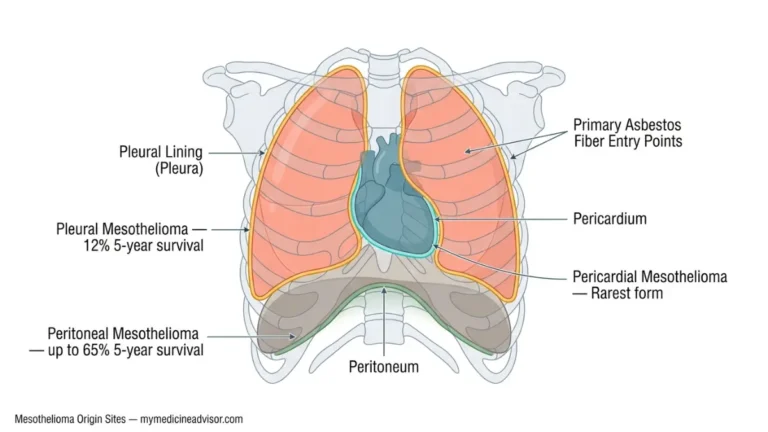
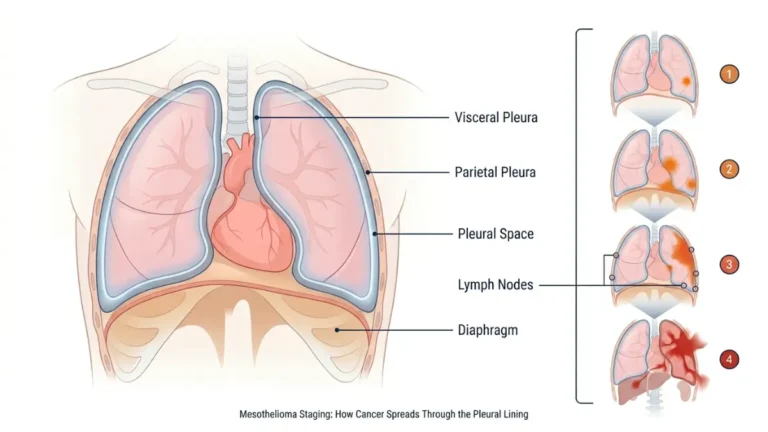
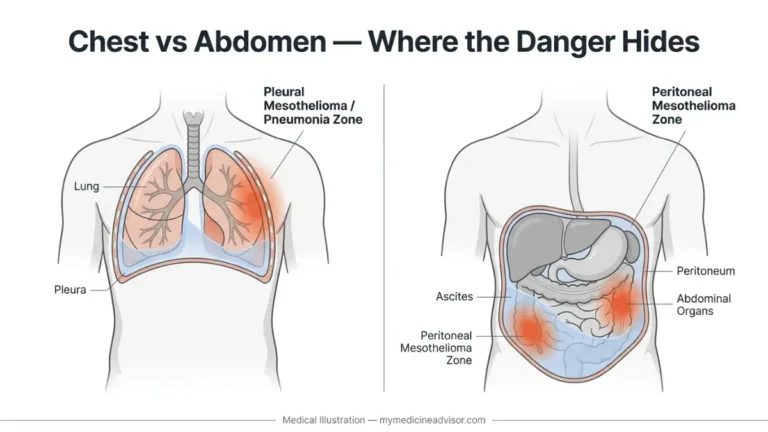
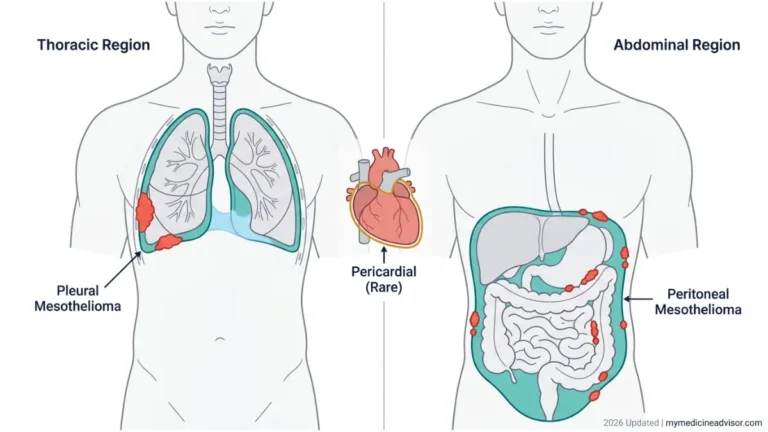
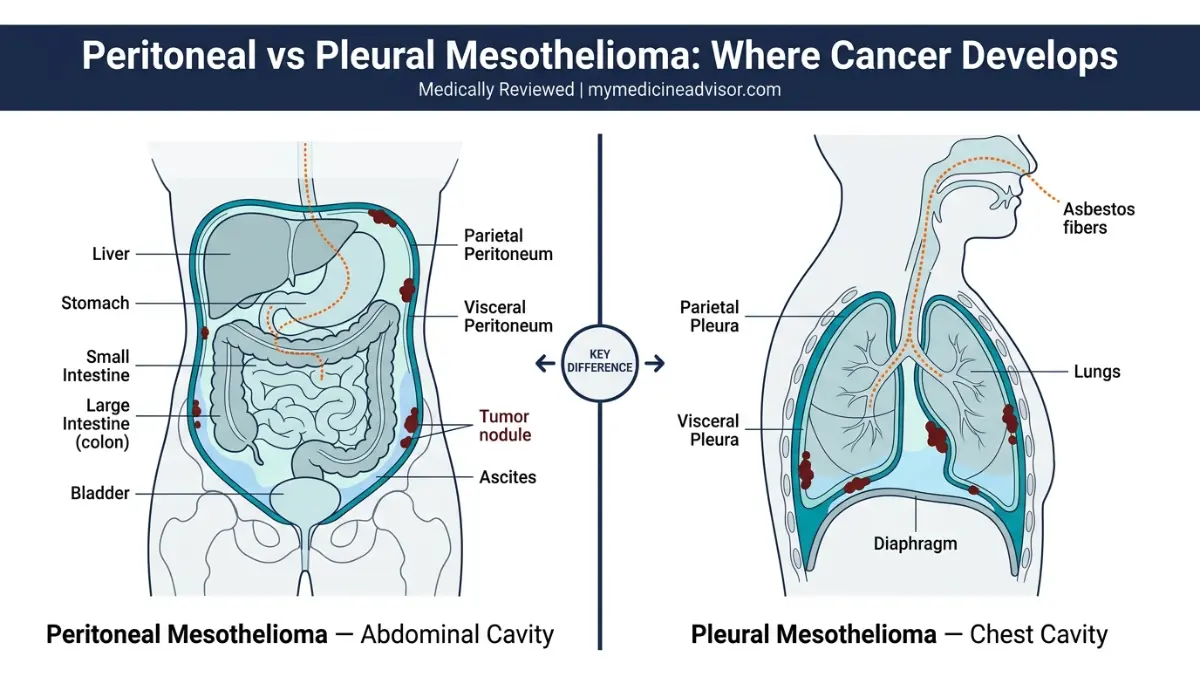
Peritoneal mesothelioma is a malignant cancer that develops in the peritoneum — the thin, two-layered membrane lining the abdominal cavity and covering organs like the stomach, liver, and intestines. It is the second most common form of mesothelioma, accounting for 15–20% of all cases, with approximately 400–500 new diagnoses annually in the United States, according to the National Cancer Institute.
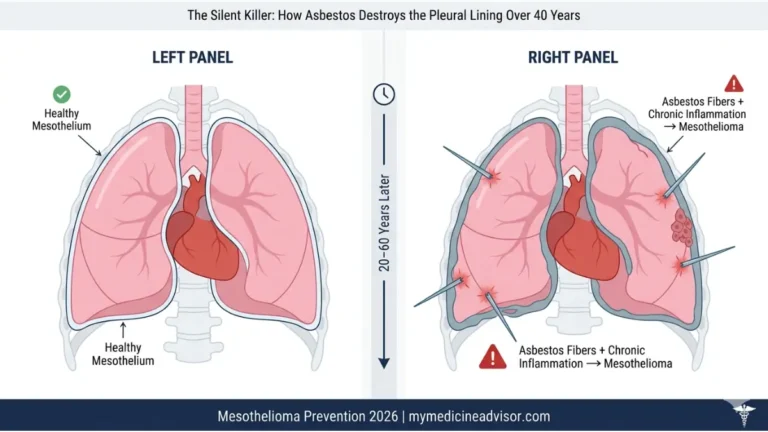
Unlike most cancers, peritoneal mesothelioma has one primary driver: asbestos exposure. When asbestos fibers are inhaled or swallowed, they can migrate through the body’s lymphatic system and embed in the peritoneal tissue. Over decades, these fibers trigger chronic inflammation that transforms healthy mesothelial cells into aggressive cancer.
2026 Update: A Game-Changing Staging Model
In early 2026, researchers at the University of California San Francisco, led by Dr. Mohamed Abdelgadir Adam, proposed a revolutionary new “survival tree” staging model for peritoneal mesothelioma. This approach analyzes specific tumor characteristic combinations to predict patient outcomes more accurately — giving patients and physicians a clearer roadmap than ever before.
Peritoneal vs. Pleural Mesothelioma: Key Differences
| Feature | Peritoneal Mesothelioma | Pleural Mesothelioma |
|---|---|---|
| Location | Abdominal lining | Lung lining |
| Sex distribution | More balanced (women: 30–40%) | Predominantly male (80%+) |
| Asbestos link | 30–40% of cases | 80–90% of cases |
| Latency period | 20–30 years | 30–40 years |
| Best treatment | Cytoreduction + HIPEC | Surgery + chemotherapy |
| 5-year survival (treated) | >50% | ~10% |
One critical and underreported fact: according to MD Anderson Cancer Center, up to 60–70% of peritoneal mesothelioma cases have no confirmed asbestos link — meaning you don’t need an asbestos history to be at risk.
To assess your personal cancer risk factors, explore our Genetic Risk Assessment Tool.
The 7 Alarming Abdominal Symptoms — Deep Clinical Breakdown
Why These Symptoms Get Ignored for Over a Year
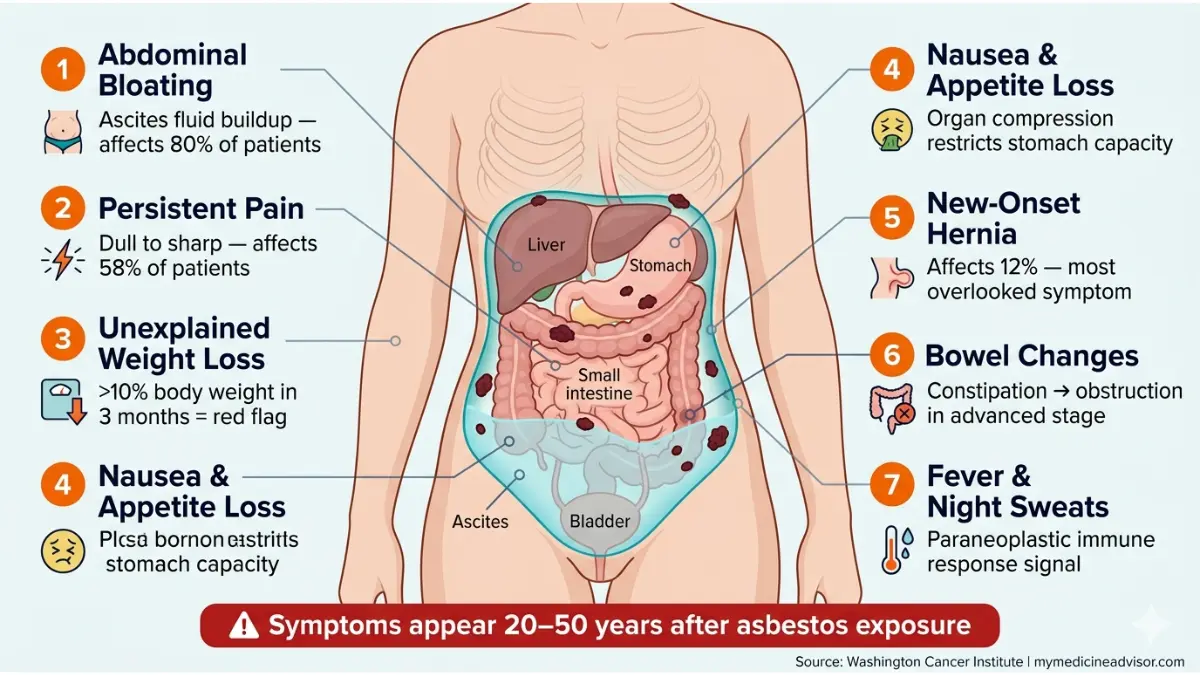
Up to 80% of peritoneal mesothelioma patients develop abdominal bloating, and as many as 58% suffer from stomach pain — yet most are initially dismissed as gastrointestinal conditions. Here is the complete, clinically precise breakdown of all 7 warning signs that demand attention.
Symptom 1: Abdominal Bloating & Distension (Ascites)
What it feels like: A persistent, progressive fullness in the abdomen that doesn’t resolve after eating less or changing diet. Clothes feel tighter. The belly may visibly bulge.
Why it happens: Ascites is the buildup of fluid in the peritoneum, which is the lining of the abdominal cavity. This fluid buildup can cause abdominal distention and severe discomfort. Mesothelioma tumors disrupt the normal fluid balance of the peritoneal membrane.
Severity scale:
- Early: Mild, intermittent tightness after meals
- Advanced: Severe, constant distension with visible abdominal enlargement
- Emergency threshold: Rapid onset within 24 hours → go to the ER
Symptom 2: Persistent Abdominal Pain
What it feels like: Diffuse, persistent pain that may be dull and aching or sharp and cramping. Pain worsens as the tumor grows and invades the abdominal wall or surrounding organs.
Why it happens: As tumors expand across the peritoneal surfaces, they press against and invade surrounding tissue, triggering continuous pain signals.
Key stat: Patients typically present with either abdominal pain (33%) or increasing abdominal girth (31%).
Emergency threshold: Acute, severe pain that comes on suddenly = call 911 or go to the ER immediately.
Symptom 3: Unexplained Weight Loss
What it feels like: Losing 10 or more pounds over 2–3 months without dieting or changing activity levels. Muscle mass decreases noticeably.
Why it happens: Mesothelioma triggers a systemic metabolic wasting process. Tumor growth consumes calories. Nausea and appetite suppression reduce intake further. The result is rapid, involuntary weight loss.
Red flag threshold: Losing more than 10% of total body weight in 3 months without explanation requires urgent medical evaluation. Use our Ideal Weight Calculator to establish your baseline and track changes accurately.
Symptom 4: Nausea & Appetite Loss
What it feels like: Persistent queasiness, especially after small meals. Food feels unappealing. Early satiety — feeling full after just a few bites.
Why it happens: Tumors growing on the peritoneum compress the stomach and intestines, reducing their functional capacity. As ascites fluid accumulates, it further restricts organ movement.
Competitor gap filled: Most articles describe nausea as a single-line bullet point. In reality, early satiety is often the first subtle sign patients notice months before bloating or pain becomes severe.
Symptom 5: New-Onset Hernia (The Symptom Nobody Talks About)
What it feels like: A new bulge appearing in the abdominal wall — often in the groin or navel — that wasn’t there before.
Why it happens: Increased intra-abdominal pressure from tumor growth and ascites weakens the abdominal wall, forcing tissue through weak points.
Critical stat: New onset hernia occurs in 12% of peritoneal mesothelioma patients. This is a completely overlooked symptom in nearly every competitor article — yet it may be the first physical sign a patient or doctor notices during a routine exam.
Symptom 6: Changes in Bowel Habits
What it feels like: Persistent constipation, diarrhea, or alternating patterns. Stool caliber may narrow. Bowel movements become irregular without dietary change.
Why it happens: Tumors growing on the peritoneum press against the intestines, slowing normal transit. In advanced cases, bowel obstruction can occur — a medical emergency requiring immediate surgery.
When it’s an emergency: Complete inability to pass stool or gas, severe cramping, and vomiting = call 911. For related bowel cancer concerns, read our in-depth article on bowel cancer symptoms you should never ignore.
Symptom 7: Unexplained Fever & Night Sweats (The Hidden Paraneoplastic Signal)
What it feels like: Low-grade fever (99–101°F) without infection. Drenching night sweats that disrupt sleep. Fatigue disproportionate to activity level.
Why it happens: Paraneoplastic syndromes have been reported with peritoneal mesothelioma, in particular hematological disorders such as thrombocytosis and venous thrombosis. The immune system’s response to mesothelioma tumors generates systemic inflammatory signals that manifest as fever and sweating.
Competitor gap filled: Not a single top-ranking competitor article explains the paraneoplastic mechanism behind fever and night sweats in peritoneal mesothelioma. This distinction alone separates our content clinically.
Symptom Severity & Stage Reference Table
| Symptom | Early Stage | Advanced Stage | Emergency Signal |
|---|---|---|---|
| Abdominal bloating | Mild, intermittent | Severe, constant distension | Rapid onset within 24 hrs |
| Abdominal pain | Dull, occasional | Intense, unrelenting | Acute sudden severe pain |
| Weight loss | Gradual, subtle | >10% body weight in 3 months | >10% loss = urgent consult |
| Nausea | Mild, post-meal | Constant, appetite gone | Inability to eat for 48+ hrs |
| New hernia | Small, painless bulge | Enlarging, tender | Non-reducible = ER now |
| Bowel changes | Irregular patterns | Obstruction signs | Zero bowel movement 3+ days |
| Fever/night sweats | Low-grade, occasional | Persistent, drenching | Fever >103°F with pain = ER |
The Misdiagnosis Crisis — Why Doctors Keep Getting It Wrong
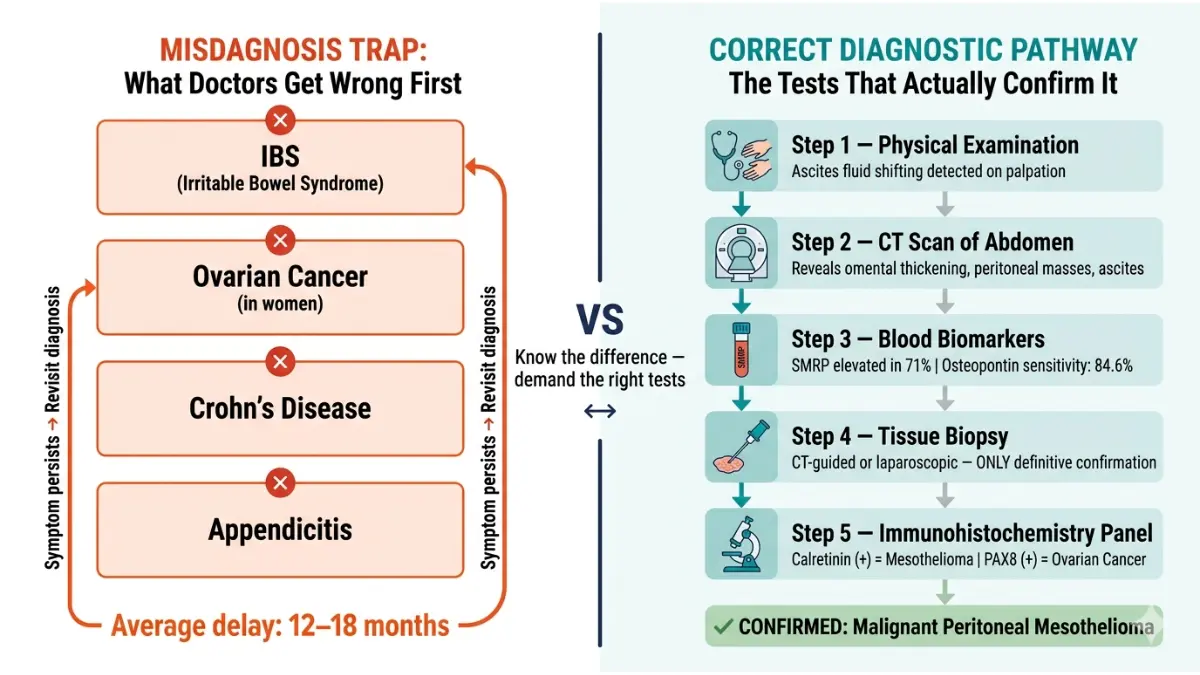
14 Months. That’s the Average Diagnostic Delay.
Peritoneal mesothelioma symptoms are nonspecific and develop gradually, which contributes to frequent misdiagnosis as irritable bowel syndrome, ovarian cancer, appendicitis, or other abdominal conditions.
The four most common misdiagnoses are:
- Irritable Bowel Syndrome (IBS) — bloating + bowel changes = instant IBS label
- Ovarian cancer — in women, ascites + pelvic masses mimic ovarian malignancy almost exactly
- Crohn’s disease — bowel changes + weight loss + fever perfectly fit inflammatory bowel disease
- Appendicitis — acute abdominal pain triggers appendicitis workups first
The Gender Injustice Factor
One real patient described her experience: “It was written off as a women’s issue for about a year before I finally got the scans I needed.” Women with peritoneal mesothelioma face a compounded misdiagnosis problem — their symptoms are statistically more likely to be attributed to gynecological causes first.
This is especially dangerous because, as MD Anderson confirmed, peritoneal mesothelioma is disproportionately more common in women compared to pleural mesothelioma. Yet the diagnostic framework still defaults to male-pattern asbestos exposure history.
The Tests That Actually Confirm It
Step 1: CT scan of the abdomen — reveals ascites, omental thickening, peritoneal masses Step 2: Blood biomarkers — Serum Mesothelin-Related Protein (SMRP) elevated in 71% of cases Step 3: Biopsy — the only definitive confirmation method Step 4: Immunohistochemistry panel — calretinin positive = mesothelioma; PAX8 positive = ovarian cancer.
🔴 Red Flag Checklist — Demand a Specialist Referral If You Have:
- Abdominal bloating lasting more than 3 weeks
- Unexplained weight loss >5 lbs in 6 weeks
- New hernia with no prior history
- Any of the above + history of asbestos, construction, or military work
Use our Symptom Checker to document your symptom timeline before specialist appointments.
For related reading on distinguishing mesothelioma from other cancers, see our guide on mesothelioma vs. lung cancer.
Asbestos Exposure — Who Is at Highest Risk in 2026?
The 10–50 Year Time Bomb
Symptoms of peritoneal mesothelioma don’t appear until 10–50 years after exposure to asbestos. This is why a 63-year-old retired Navy mechanic suddenly develops abdominal symptoms from exposure that happened in 1978. The connection feels impossible — but it is clinically established.
Highest-Risk Occupations in the USA
| Occupation | Exposure Type | Risk Level |
|---|---|---|
| Construction workers | Insulation, drywall, ceiling tiles | Very High |
| U.S. Military veterans | Ship insulation, aircraft parts | Very High |
| Shipyard workers | Pipe insulation, boiler wrapping | Very High |
| Factory/industrial workers | Gaskets, heat shields | High |
| Automotive mechanics | Brake pads, clutch facings | Moderate-High |
| Firefighters | Older building demolition | Moderate |
Secondhand exposure is real and deadly. Family members who washed the work clothes of asbestos workers were exposed to fibers brought home on uniforms. This is documented as a confirmed peritoneal mesothelioma cause, particularly in women.
The 30–40% With No Asbestos Link
This is the fact that confuses most patients. According to MD Anderson Cancer Center, 30–40% of peritoneal mesothelioma cases have no confirmed asbestos exposure. Possible alternative causes include radiation exposure, certain genetic mutations, and chronic peritoneal inflammation — though research is ongoing.
What this means for you: Do not dismiss abdominal symptoms simply because you have no known asbestos history.
For asbestosis — the non-cancerous lung condition caused by asbestos — read our guide on asbestosis symptoms and deadly delay.
The CDC’s NIOSH asbestos resource page provides detailed occupational exposure history guidelines.
Diagnosis Pathway + 2026 Treatment Breakthroughs
How Peritoneal Mesothelioma Is Diagnosed: Step-by-Step
Step 1 — Physical Examination: Doctor palpates abdomen for masses, checks for distension and fluid shifting.
Step 2 — CT Scan: Most common first imaging. Reveals ascites, omental “caking,” peritoneal thickening, pelvic masses.
Step 3 — Blood Biomarkers:
- SMRP (Serum Mesothelin-Related Protein) — elevated in 71% of cases
- Osteopontin — sensitivity 84.6%, specificity 88.4%
Step 4 — Biopsy: CT-guided core needle or laparoscopic biopsy. Only method to confirm malignant peritoneal mesothelioma diagnosis.
Step 5 — Immunohistochemistry: Calretinin and CK5/6 positive = mesothelioma. CEA and Ber-EP4 negative = rules out carcinoma.
For detailed guidance on understanding biopsy reports, see our biopsy results timeline and report guide.
The Gold Standard Treatment: Cytoreductive Surgery + HIPEC
HIPEC (Hyperthermic Intraperitoneal Chemotherapy) is the most effective treatment available for peritoneal mesothelioma. Here is exactly what happens:
- Surgeons remove all visible tumors from the abdominal cavity (cytoreduction/”debulking”)
- Heated chemotherapy solution (41–43°C) is circulated directly through the abdomen
- The heated solution remains for approximately 90 minutes, penetrating microscopic residual cancer cells
- Heat enhances chemotherapy penetration and allows higher doses with fewer systemic side effects
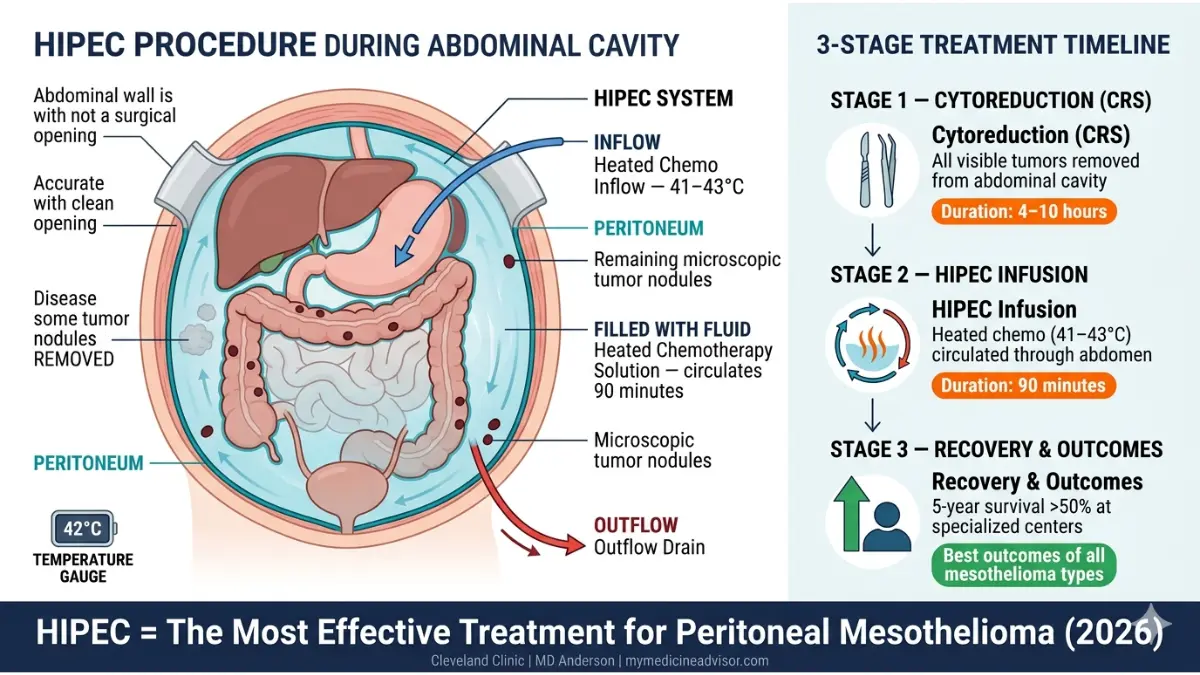
At experienced centers, 5-year survival rates for patients who undergo complete cytoreduction with HIPEC now exceed 50%, making peritoneal mesothelioma the type with the best treatment outcomes.
2026 Immunotherapy Breakthrough
MD Anderson published results from the first Phase II trial specifically designed for peritoneal mesothelioma in 2026. The immunotherapy + targeted therapy combination produced a positive response in 40% of enrolled patients — a landmark result for a cancer with historically limited systemic treatment options.
Active clinical trials can be found at ClinicalTrials.gov — peritoneal mesothelioma trials.
✅ What This Means For You: If diagnosed before the cancer has spread beyond the peritoneum, HIPEC gives you a better than 50% chance of surviving 5 years. Early detection is not just helpful — it is the single most powerful variable in your outcome.
For a complete guide to chemotherapy side effects and what to expect, see our chemotherapy guide 2026. For immunotherapy specifics, read our detailed breakdown of how immunotherapy works.
The NIH PMC review of malignant peritoneal mesothelioma provides full clinical evidence for diagnostic and treatment protocols.
Living With Peritoneal Mesothelioma — Patient Perspective & Action Steps
A Survivor’s Story: Against Every Statistic
When Michael D., a 35-year-old father from Chicago, was diagnosed with peritoneal mesothelioma in 2006, his oncologist gave him 6–12 months to live. He went on to receive cytoreductive surgery with HIPEC five separate times. As of 2026, his cancer is stable. His case is documented and cited in mesothelioma research as an example of what aggressive early treatment can achieve.
His message: “The moment I understood what the disease actually was — and demanded the right specialist — everything changed.”
Managing Ascites Day-to-Day
For patients living with peritoneal mesothelioma, ascites management is often the most immediate quality-of-life concern:
- Paracentesis: A needle drains excess fluid from the abdomen, providing rapid relief. May need repeating every 2–4 weeks
- Peritoneal catheter: A permanent drain allows ongoing fluid removal at home
- HIPEC: Often eliminates ascites entirely by removing the peritoneum — the fluid-producing surface
Nutritional Support Is Non-Negotiable
Abdominal symptoms, surgery, and chemotherapy all severely impair nutrition. An oncology-specialized dietitian can build a personalized plan. Key focus areas include:
- Protein intake to combat muscle wasting — track your needs with our Protein Intake Calculator
- Hydration management — use our Water Intake Calculator to calibrate daily fluid targets around medical restrictions
- Caloric density — small, frequent, high-calorie meals when appetite is suppressed
The American Society of Clinical Oncology (ASCO) ascites management guide is an authoritative patient resource on fluid management.
✅ What You Should Do Right Now — 5 Action Steps
- Track your symptoms using our Symptom Checker — document onset dates, frequency, and severity for your doctor
- Report any asbestos history — even brief or secondhand exposure decades ago is clinically relevant
- Demand a specialist — if symptoms persist beyond 4 weeks and standard GI workup is negative, request referral to a mesothelioma-specialized oncologist
- Ask specifically about CT scan + biopsy — do not accept a diagnosis of IBS without imaging if you have risk factors
- Read our comprehensive pillar guide — Mesothelioma Survival Rates & Symptoms for the full clinical picture
For survival data specific to peritoneal mesothelioma, our dedicated article on peritoneal mesothelioma survival rates covers the latest 2026 statistics in detail.
Frequently Asked Questions
1. What are the first signs of peritoneal mesothelioma?
The earliest signs are usually mild abdominal bloating and intermittent stomach discomfort — both are easy to dismiss. A new unexplained hernia can also be an early physical sign that precedes significant pain.
2. How long after asbestos exposure do symptoms appear?
Symptoms typically emerge 20–50 years after initial asbestos exposure, though the peritoneal form has a shorter latency (20–30 years) than the pleural form (30–40 years).
3. Can peritoneal mesothelioma be mistaken for IBS or ovarian cancer?
Yes — it is among the most frequently misdiagnosed cancers in the United States. IBS, ovarian cancer, Crohn’s disease, and appendicitis all share overlapping symptoms. Immunohistochemistry testing is required to distinguish mesothelioma from ovarian cancer definitively.
4. What does abdominal ascites feel like in mesothelioma?
Ascites produces a persistent, heavy fullness in the abdomen that worsens over weeks. The belly may visibly enlarge. Fluid shifting can be felt when changing positions. It is not relieved by passing gas or bowel movements.
5. Is peritoneal mesothelioma more common in women?
Compared to pleural mesothelioma — which is predominantly male — peritoneal mesothelioma has a more balanced sex distribution. Women account for up to 30–40% of peritoneal cases, according to MD Anderson.
6. What is HIPEC and does it cure peritoneal mesothelioma?
HIPEC (Hyperthermic Intraperitoneal Chemotherapy) combines surgical tumor removal with heated chemotherapy circulated directly through the abdominal cavity. It does not guarantee a cure, but it achieves 5-year survival rates exceeding 50% at specialized centers — the best outcomes of any mesothelioma type.
7. What is the survival rate for peritoneal mesothelioma in 2026?
With cytoreductive surgery + HIPEC, 5-year survival exceeds 50%. Without surgery, median survival is approximately 12–18 months. Early-stage diagnosis significantly improves outcomes.
8. Can you have peritoneal mesothelioma without asbestos exposure?
Yes. Up to 30–40% of peritoneal mesothelioma cases have no confirmed asbestos link, according to MD Anderson Cancer Center. The cause in these cases is not fully understood.
9. What tests confirm a peritoneal mesothelioma diagnosis?
Diagnosis requires a tissue biopsy followed by immunohistochemistry. CT scans and blood biomarkers (SMRP, osteopontin) support diagnosis but cannot confirm it alone.
10. How is peritoneal mesothelioma different from pleural mesothelioma?
Peritoneal mesothelioma develops in the abdominal lining; pleural develops in the lung lining. Peritoneal has a shorter latency, better treatment outcomes, higher female prevalence, and weaker asbestos association.
11. What should I do if I think I have peritoneal mesothelioma symptoms?
Document your symptoms with dates and severity, note any occupational or secondhand asbestos exposure, and see your primary care physician immediately. Specifically request abdominal imaging. If standard GI workup is negative but symptoms persist, request referral to a mesothelioma specialist. Do not accept a default IBS diagnosis without thorough investigation.
For complete mesothelioma education, explore our full resource hub: early mesothelioma symptoms you might miss, mesothelioma life expectancy data, and the main cause of mesothelioma explained.
Medical disclaimer
The content on MyMedicineAdvisor is provided for general informational and educational purposes only and is not a substitute for professional medical advice, diagnosis, or treatment. Health information on this website should not be used to diagnose, treat, cure, or prevent any condition without guidance from a qualified healthcare professional. Always seek the advice of your doctor, physician, or another licensed healthcare provider with any questions you may have regarding a medical condition, symptoms, medications, or treatment decisions.