On This Page – Quick Medical Summary
In 2026, mesothelioma research has entered its most promising era in history. CAR-T cell therapy — a precision immunotherapy that reprograms your own immune cells to destroy cancer — is now showing a median survival of 23.9 months in clinical trials, compared to 12–14 months with standard chemotherapy alone. Multiple Phase I and Phase II trials are actively enrolling U.S. patients right now.
Why 2026 Is a Turning Point for Mesothelioma Patients
Richard Calloway spent 28 years as a Navy pipefitter in Newport News, Virginia. In 2023, at age 67, he was diagnosed with malignant pleural mesothelioma. His local oncologist told him surgery was not an option. By late 2024, Richard had enrolled in a CAR-T clinical trial at a major cancer center. Today, he remains stable — alive, active, and watching his grandchildren grow up.
His story is not an outlier. It reflects a real, measurable shift in mesothelioma research.
What Has Actually Changed?
For decades, mesothelioma treatment barely moved. Only two FDA approvals occurred between 2000 and 2020. Median survival after diagnosis hovered at just 8 to 14 months, and patients faced devastatingly limited options.
The 2026 landscape is fundamentally different:
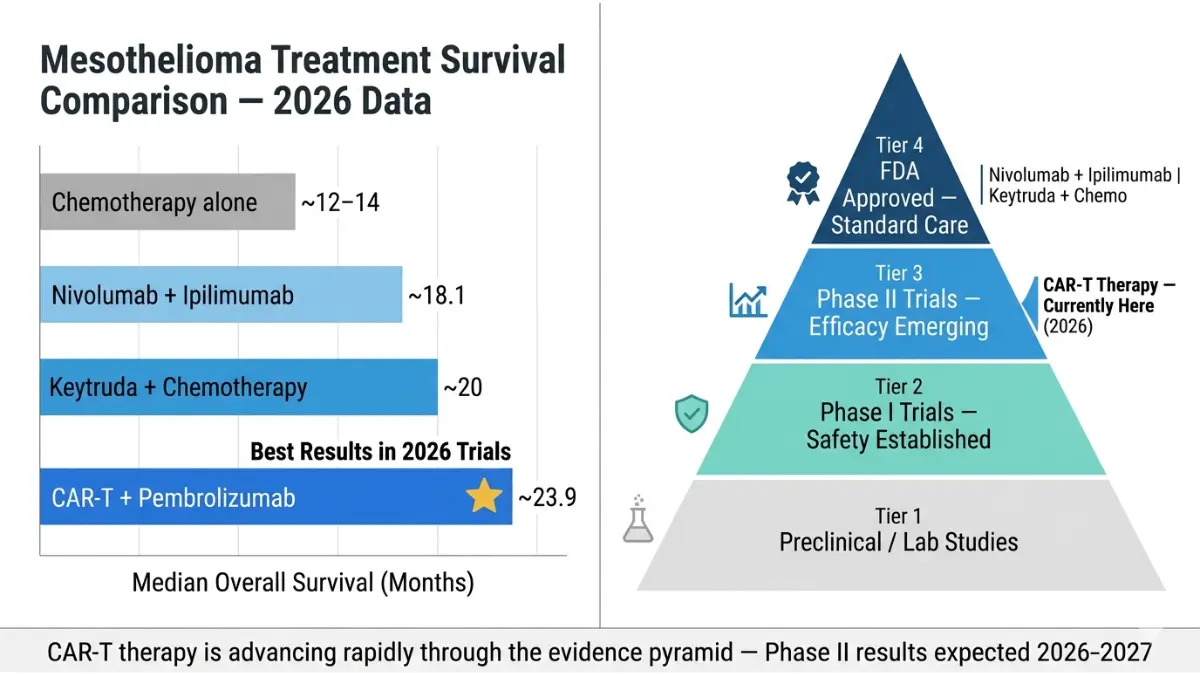
- ✅ Nivolumab + Ipilimumab (Opdivo + Yervoy) — FDA-approved 2020 | Median OS: 18.1 months
- ✅ Keytruda (Pembrolizumab) + Chemo — FDA-approved September 2024 | Highest first-line response rate: 52%
- ✅ Optune Lua (TTFields) — FDA-approved wearable add-on therapy
- 🔬 Mesothelin-Targeted CAR-T Therapy — Phase I/II trials | Median OS: 23.9 months | 1-year survival: 83%
A 2026 peer-reviewed review published in Therapeutic Advances in Medical Oncology (NIH/PMC) confirmed that immunotherapy is now a cornerstone of first-line pleural mesothelioma treatment — a statement that would have been medically impossible five years ago.
If you are currently noticing unusual respiratory or chest symptoms, using our Symptom Checker can help you identify patterns worth discussing with your physician immediately.
📌 What This Means For You: If you or a loved one received a mesothelioma diagnosis in the past 12 months, the treatment options available in 2026 are dramatically better than even two years ago. Ask your oncologist specifically about CAR-T clinical trial eligibility on your next visit.
How CAR-T Therapy Works — The Science Made Simple
CAR-T therapy stands for Chimeric Antigen Receptor T-cell therapy. It is one of the most targeted forms of cancer immunotherapy in current mesothelioma research.
Unlike chemotherapy — which broadly attacks all fast-dividing cells, including healthy ones — CAR-T therapy is a surgical strike at the molecular level. It reprograms your own immune cells to hunt and destroy only cancer cells.
Why Mesothelioma Is the Ideal CAR-T Target
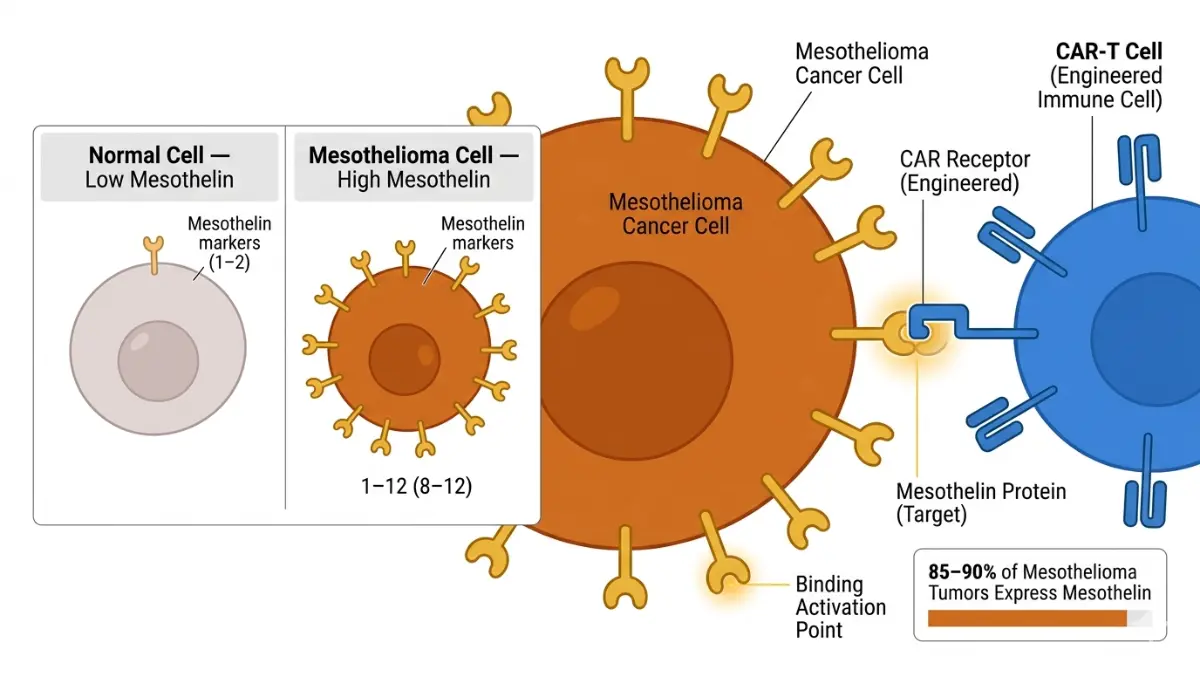
Mesothelioma cells express extremely high levels of a protein called mesothelin. This protein is present in 85–90% of all malignant mesothelioma tumors, according to NIH/PMC clinical research, but has very limited presence on normal healthy tissue.
This creates a precise, exploitable biological difference. CAR-T cells engineered to recognize mesothelin can attack the tumor while largely sparing surrounding tissue — a key advantage that standard chemotherapy simply cannot replicate.
Our Genetic Risk Assessment Tool can help you understand your personal biological risk profile, which is increasingly relevant as precision oncology expands.
The 4-Step CAR-T Process
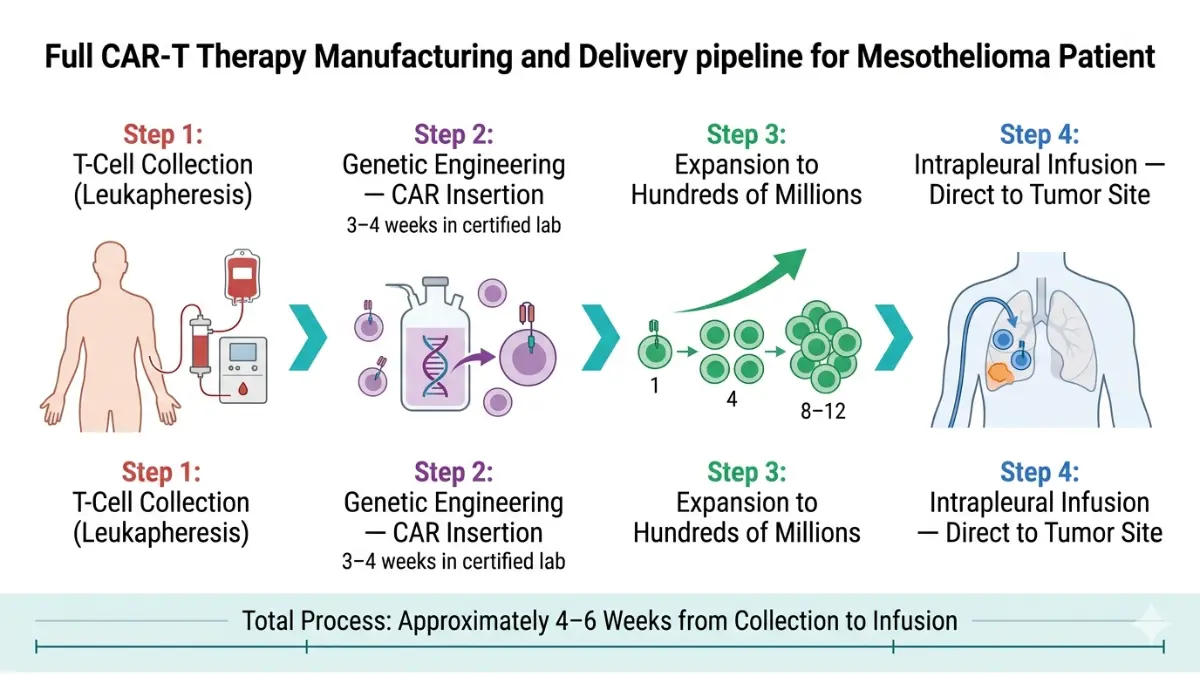
- Leukapheresis — Your T-cells are collected from your blood through a specialized filtering process
- Lab Engineering — T-cells are genetically modified to express a chimeric antigen receptor (CAR) targeting mesothelin
- Expansion — Modified cells are multiplied into hundreds of millions in a certified manufacturing facility over 3–4 weeks
- Infusion — Engineered CAR-T cells are reinfused into your body to locate and destroy mesothelioma cells
Intrapleural vs. IV Delivery — The 2026 Innovation Most Articles Miss
Standard CAR-T approaches deliver cells intravenously through the bloodstream. Researchers at Memorial Sloan Kettering Cancer Center pioneered a breakthrough alternative: intrapleural delivery — injecting CAR-T cells directly into the chest cavity where mesothelioma lives.
| Factor | Intrapleural Delivery | IV (Intravenous) Delivery |
|---|---|---|
| Precision | High — cells go directly to tumor site | Lower — circulates systemically |
| Activation Speed | Faster — T-cells recognize tumor immediately | Slower onset |
| Side Effect Profile | More localized response | More systemic exposure |
| 2026 Trial Status | Phase II active (MSK) | Phase I active (multi-site) |
| Best Suited For | Pleural mesothelioma | Peritoneal/disseminated disease |
This distinction is critical — and almost no competitor article explains it clearly. The intrapleural method is the primary reason MSK’s trial results outperform earlier CAR-T attempts.
The 4 Most Important CAR-T Trials in 2026 — Right Now
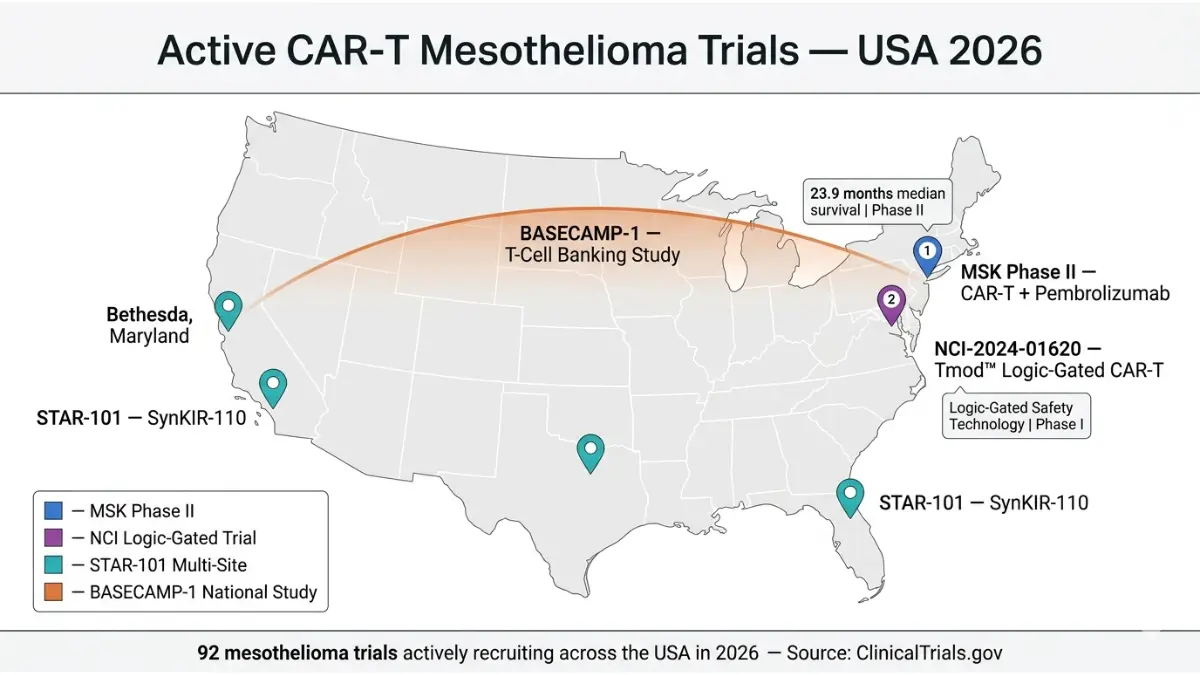
As of early 2026, 92 clinical trials are actively recruiting mesothelioma patients across the United States. Here are the four most critical CAR-T trials every patient needs to know about.
1. MSK Phase II — Intrapleural CAR-T + Pembrolizumab
- Institution: Memorial Sloan Kettering Cancer Center, New York
- Method: Intrapleural CAR-T cells (fixed dose: 6×10⁷ cells/kg) followed by pembrolizumab checkpoint inhibitor four weeks later
- Phase I Result: Median overall survival 23.9 months | 1-year survival 83% | 2 patients achieved complete metabolic response on PET scan
- Published In: Cancer Discovery, November 2021 — full Phase I data on PubMed
- 2026 Status: Converted to Phase II — actively enrolling
- Why It Matters: Pembrolizumab “rescued” exhausted CAR-T cells weeks after infusion, dramatically extending their anti-tumor effectiveness
2. BASECAMP-1
- Focus: Studying how mesothelioma cells evade immune detection by losing HLA antigens, and banking T-cells early for future CAR-T use
- Eligibility: Unresectable mesothelioma patients
- 2026 Status: Expected to complete enrollment in 2026
- Why It Matters: Foundational mesothelioma research that will inform next-generation CAR-T cell design
3. NCI-2024-01620 — Logic-Gated Tmod™ CAR-T
- Institution: National Cancer Institute, Bethesda, MD
- Method: Advanced logic-gated CAR-T cells that only activate when both a tumor antigen is present and a healthy tissue marker is absent — dramatically reducing off-tumor toxicity
- Target: Solid tumors including malignant mesothelioma
- 2026 Status: Phase I active
- Why It Matters: This is next-generation safety engineering — the most significant leap in CAR-T architecture since the therapy was first developed
4. STAR-101 — SynKIR-110 Mesothelin-Targeted
- Method: Proprietary synthetic receptor (SynKIR-110) targeting mesothelin-expressing cancers
- Target: Mesothelioma, ovarian cancer, primary peritoneal cancer
- Phase: I — multi-site enrollment
- 2026 Status: Actively enrolling U.S. patients
📊 2026 Active CAR-T Trial Master Table
| Trial | Phase | Target | Delivery Method | Status | Key Location |
|---|---|---|---|---|---|
| MSK Phase II | II | Pleural mesothelioma | Intrapleural + Pembrolizumab | Active | NYC, USA |
| BASECAMP-1 | Observational | HLA / T-cell banking | Blood biomarker study | Enrolling | USA |
| NCI-2024-01620 | I | Solid tumors / Meso | Tmod™ Logic-Gated | Active | NCI, Bethesda |
| STAR-101 | I | Mesothelin+ tumors | SynKIR-110 | Enrolling | Multi-site USA |
Search all currently enrolling mesothelioma CAR-T trials at ClinicalTrials.gov.
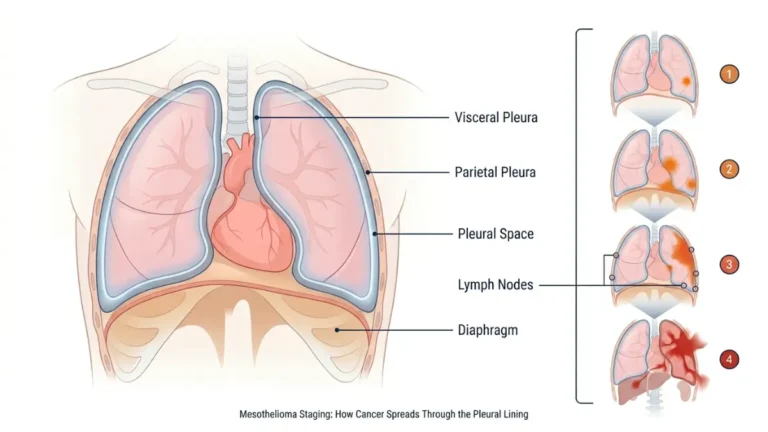
To understand how your mesothelioma stage affects your clinical trial eligibility, our guide on mesothelioma stages and survival explains exactly what staging criteria mean for your treatment pathway.
📌 What This Means For You: You do not need to wait for FDA approval to access CAR-T therapy. Clinical trial enrollment is the pathway available right now — and most sponsored trials cover the investigational treatment cost entirely.
CAR-T vs. Every Other 2026 Mesothelioma Treatment
Mesothelioma research in 2026 has produced more options than at any point in the disease’s history. The question every patient asks is honest and reasonable: “Is CAR-T actually better than what I’m currently taking?”
Here is the complete, data-driven answer.
📊 Full 2026 Mesothelioma Treatment Comparison
| Treatment | FDA Approved? | Median OS (2026 Data) | Best Candidate | Primary Limitation |
|---|---|---|---|---|
| Cisplatin + Pemetrexed | ✅ Yes | 12–14 months | First-line, all stages | Limited long-term durability |
| Nivolumab + Ipilimumab | ✅ Yes (2020) | 18.1 months | Unresectable, first-line | ~20% non-responders |
| Keytruda + Chemo (KEYNOTE-483) | ✅ Yes (2024) | ~20 months | Inoperable, first-line | Side effect burden |
| CAR-T + Pembrolizumab (Trial) | 🔬 Trial Only | 23.9 months | Pre-treated/refractory | Trial access required |
| Gene Therapy (Intrapleural) | 🔬 Trial | Variable | Localized pleural disease | Very early stage |
| TTFields (Optune Lua) | ✅ Yes | +2–4 months added | Add-on to standard care | Wearable burden |
The 5-year survival data from CheckMate-743, published in 2026, showed that 14% of patients on nivolumab + ipilimumab were alive at five years, compared to 6% on chemotherapy alone. For non-epithelioid subtypes, the difference was dramatic: 12% versus just 1%.
CAR-T Side Effects — What to Know Before Enrolling
CAR-T therapy is powerful, but carries real risks every patient must understand:
- Cytokine Release Syndrome (CRS): Most common serious side effect. Activated CAR-T cells flood the body with cytokines, triggering systemic inflammation. Symptoms include high fever, low blood pressure, rapid heartbeat, and in severe cases, organ stress
- Neurotoxicity: Can cause confusion, headaches, or neurological symptoms in a minority of patients
- Infection Risk: Elevated due to immune reconditioning before and after infusion
- Fatigue and Breathlessness: Common during the weeks following infusion
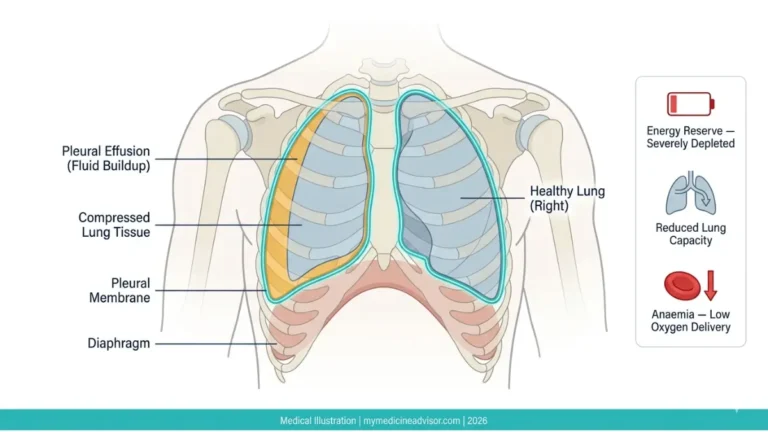
All side effects in the MSK trial were managed safely in a specialized clinical setting, with no off-tumor toxicities reported. Understanding and managing energy depletion during treatment is critical — our guide on mesothelioma fatigue and breathlessness covers exactly what to expect and how to support your body through it.
For a full comparison of every FDA-approved and investigational option available today, our mesothelioma treatment options guide covers all current pathways in one place. The American Cancer Society’s updated 2026 mesothelioma research page also covers gene therapy and cancer vaccine approaches running alongside CAR-T.
How U.S. Patients Can Access CAR-T Therapy Right Now
CAR-T therapy for mesothelioma is currently only available through clinical trial enrollment. It is not offered at standard oncology practices outside of research settings. This is not a barrier — it is the access pathway.
Step-by-Step Access Guide for U.S. Patients
- Request a mesothelioma specialist referral — not a general oncologist. Specialists at academic cancer centers have direct trial access. Community oncologists typically do not
- Ask for mesothelin expression testing on your tumor biopsy. A result of ≥10% mesothelin expression confirms CAR-T eligibility in most trials
- Search ClinicalTrials.gov — filter by “Mesothelioma” + “CAR-T” + “Recruiting” to find open trials near you
- Contact trial coordinators directly — most offer free eligibility screening calls before requiring travel
- Ask about financial coverage — most NCI-sponsored and institution-sponsored trials cover the investigational therapy cost entirely
Financial Support for Mesothelioma Patients
The financial pressure of mesothelioma treatment is real. However, multiple major resources exist specifically for these patients:
- NCI-Sponsored Trial Costs: Covered within the trial protocol for most investigational therapies
- Asbestos Trust Funds: Over $30 billion has been set aside in U.S. mesothelioma asbestos litigation trust funds
- VA Benefits: Veterans with asbestos exposure history may qualify for additional compensation and trial access
For a complete guide to every financial program available to U.S. mesothelioma patients in 2026, our article on mesothelioma financial aid and benefits covers trust funds, VA claims, and patient assistance programs in full detail.
The NCI’s mesothelioma clinical trial listings are updated in real time and represent the most comprehensive and authoritative directory of currently recruiting trials in the United States.
Optimizing Your Health for Trial Participation
Patients who enter CAR-T trials in stronger baseline health consistently tolerate the therapy better and qualify more easily for dosing escalation. Two areas are especially important:
Staying properly hydrated is critical during immunotherapy — particularly to support kidney function during the lymphodepletion conditioning before CAR-T infusion. Use our Water Intake Calculator to calculate your optimal daily hydration target based on your body weight and activity level.
Maintaining high protein intake supports immune cell recovery and T-cell expansion after infusion. Our Protein Intake Calculator helps you set science-based daily protein targets tailored to your body weight and treatment status.
📌 What This Means For You: The single biggest barrier to CAR-T access in the U.S. is not the therapy itself — it is patients not knowing who to ask or where to look. One referral call to a mesothelioma specialist at an academic cancer center can open access to the most advanced mesothelioma research available anywhere in the world.
What Comes Next — Expert Outlook and the Future of Mesothelioma Research
The momentum behind mesothelioma research in 2026 has no precedent in this disease’s history. Three critical milestones are expected in the next 12–18 months that could reshape treatment permanently.
3 Research Milestones That Will Define 2026–2027
Milestone 1: MSK Phase II Full Results The ongoing Phase II expansion of the intrapleural CAR-T + pembrolizumab trial will produce the most comprehensive efficacy dataset yet for this combination. If Phase II confirms Phase I’s 23.9-month median survival — in a larger, more diverse patient cohort — FDA Breakthrough Therapy Designation becomes a realistic near-term possibility. This would dramatically accelerate the approval timeline.
Milestone 2: eVOLVE-Meso Phase III Readout This Phase III trial is testing volrustomig, a next-generation bispecific antibody that targets both PD-L1 and CTLA-4 simultaneously, combined with chemotherapy. It is the most ambitious checkpoint innovation in mesothelioma research to date. Results expected in 2026–2027 could establish an entirely new standard of care.
Milestone 3: Logic-Gated CAR-T Phase I Data (NCI) The Tmod™ platform’s Phase I safety and dosing data from the NCI-2024-01620 trial will define whether next-generation logic-gated CAR-T can overcome the primary obstacle preventing CAR-T from becoming standard care: off-tumor toxicity in solid tumors. This is the most closely watched mesothelioma research development of 2026.
What the Research Community Is Saying
Published findings from the landmark MSK Phase I trial concluded that CAR-T therapy combined with PD-1 blockade could represent one of the first successful CAR-T approaches for solid tumors — a statement with implications far beyond mesothelioma alone. See the full published data on PMC/NIH.
A separate 2026 immunotherapy review published in PMC confirmed that the field has now produced durable clinical benefits in relapsed and refractory patients — populations that historically had no effective options whatsoever.
The Role of Gene Therapy and What’s Emerging
While CAR-T leads the headlines in current mesothelioma research, gene therapy is advancing in parallel. 2026 trials are combining mesothelin-targeted gene therapy with immunotherapy to produce compounding anti-tumor effects. Early data shows particular promise for patients with localized pleural disease who may not meet CAR-T eligibility criteria.
The NCI’s mesothelioma research center provides the most authoritative and continuously updated resource on where these parallel research programs stand.
For patients weighing surgical options alongside emerging immunotherapy access, our detailed guide on mesothelioma surgery — EPP vs. P/D explains which surgical approach pairs most effectively with current and emerging CAR-T protocols. For a foundational understanding of how immunotherapy broadly functions across cancer types, our guide on how immunotherapy works provides clear, evidence-based context.
The Bottom Line
There is no cure for mesothelioma yet in 2026. But for the first time in this disease’s history, patients are achieving survival beyond 23 months in clinical trials — nearly double the historical baseline. The convergence of CAR-T therapy, checkpoint inhibition, and precision delivery methods is pushing malignant mesothelioma from one of oncology’s most resistant diagnoses toward a genuinely treatable condition.
Mesothelioma research in 2026 has never offered more reason for genuine hope.
📌 Final Takeaway: If you are a mesothelioma patient or caregiver, 2026 is the year to pursue specialist referral, mesothelin testing, and clinical trial enrollment with maximum urgency. The research has never been better — and the window to access it is open right now.
⚠️ Medical Disclaimer: This article is for educational purposes only and does not constitute medical advice. Treatment outcomes vary based on mesothelioma stage, histological subtype, age, and overall health status. Always consult a board-certified oncologist or mesothelioma specialist before making any treatment decisions.
Frequently Asked Questions: Mesothelioma Research & CAR-T Therapy 2026
Q1. What is CAR-T therapy for mesothelioma?
CAR-T (Chimeric Antigen Receptor T-cell) therapy is a precision immunotherapy that genetically engineers your own T-cells to recognize and destroy mesothelioma cells. It specifically targets the mesothelin protein, which is overexpressed in 85–90% of mesothelioma tumors.
Q2. Is CAR-T therapy FDA-approved for mesothelioma in 2026?
No. CAR-T therapy for mesothelioma remains experimental in 2026 and is only accessible through clinical trial enrollment. It is not yet FDA-approved for this specific indication.
Q3. What survival outcomes does CAR-T therapy show for mesothelioma?
In the MSK Phase I trial combining intrapleural CAR-T with pembrolizumab, patients achieved a median overall survival of 23.9 months with a 1-year survival rate of 83% — significantly outperforming standard treatment benchmarks.
Q4. How is mesothelioma research in 2026 different from previous years?
2026 marks the convergence of two FDA-approved immunotherapy combinations plus multiple active Phase I/II CAR-T trials producing real survival data in human patients. The volume, quality, and clinical relevance of current mesothelioma research is unprecedented.
Q5. Which CAR-T clinical trials are enrolling mesothelioma patients in 2026?
The four key trials are the MSK Phase II (intrapleural CAR-T + pembrolizumab), BASECAMP-1, NCI-2024-01620 (Tmod™ logic-gated CAR-T), and STAR-101. Search for current trial status at ClinicalTrials.gov.
Q6. What is mesothelin and why is it the target for CAR-T in mesothelioma?
Mesothelin is a cell-surface protein massively overexpressed in mesothelioma tumor cells but present in very limited amounts on normal healthy tissue. This creates a precise biological target that allows CAR-T cells to attack cancer while minimizing damage to surrounding tissue.
Q7. What are the primary side effects of CAR-T therapy for mesothelioma?
The most significant side effects include cytokine release syndrome (CRS) — an overactive immune response causing fever, fatigue, and blood pressure changes — plus potential neurotoxicity and increased infection risk. All side effects in published trials were manageable in specialized clinical settings.
Q8. How do I qualify for a mesothelioma CAR-T clinical trial?
Typical eligibility requirements include: confirmed malignant pleural mesothelioma, unresectable disease, prior treatment failure, mesothelin expression ≥10% on tumor biopsy, and adequate organ function. Specific criteria vary by trial — ask your oncologist to formally assess your eligibility.
Q9. What makes intrapleural CAR-T delivery better than IV delivery?
Intrapleural delivery injects CAR-T cells directly into the chest cavity, where they activate immediately upon contact with mesothelioma cells. This produces faster and stronger anti-tumor activity, better T-cell persistence, and fewer systemic side effects compared to intravenous delivery.
Q10. How is CAR-T therapy different from standard immunotherapy drugs like Opdivo?
Standard immunotherapy drugs such as nivolumab (Opdivo) work by removing checkpoint “brakes” on your existing immune cells. CAR-T therapy creates entirely new, engineered immune cells specifically designed to find and kill mesothelioma. CAR-T is more targeted, more personalized, and currently far more complex to produce and administer.
Q11. Can mesothelioma patients outside major cities access CAR-T trials?
Yes. Most major trial sites — including MSK, NCI, and Baylor — now offer telemedicine-based eligibility screening. Patients outside major cities can often complete initial assessments remotely before traveling for treatment. Contact trial coordinators directly to confirm remote screening availability.
Medical disclaimer
The content on MyMedicineAdvisor is provided for general informational and educational purposes only and is not a substitute for professional medical advice, diagnosis, or treatment. Health information on this website should not be used to diagnose, treat, cure, or prevent any condition without guidance from a qualified healthcare professional. Always seek the advice of your doctor, physician, or another licensed healthcare provider with any questions you may have regarding a medical condition, symptoms, medications, or treatment decisions.